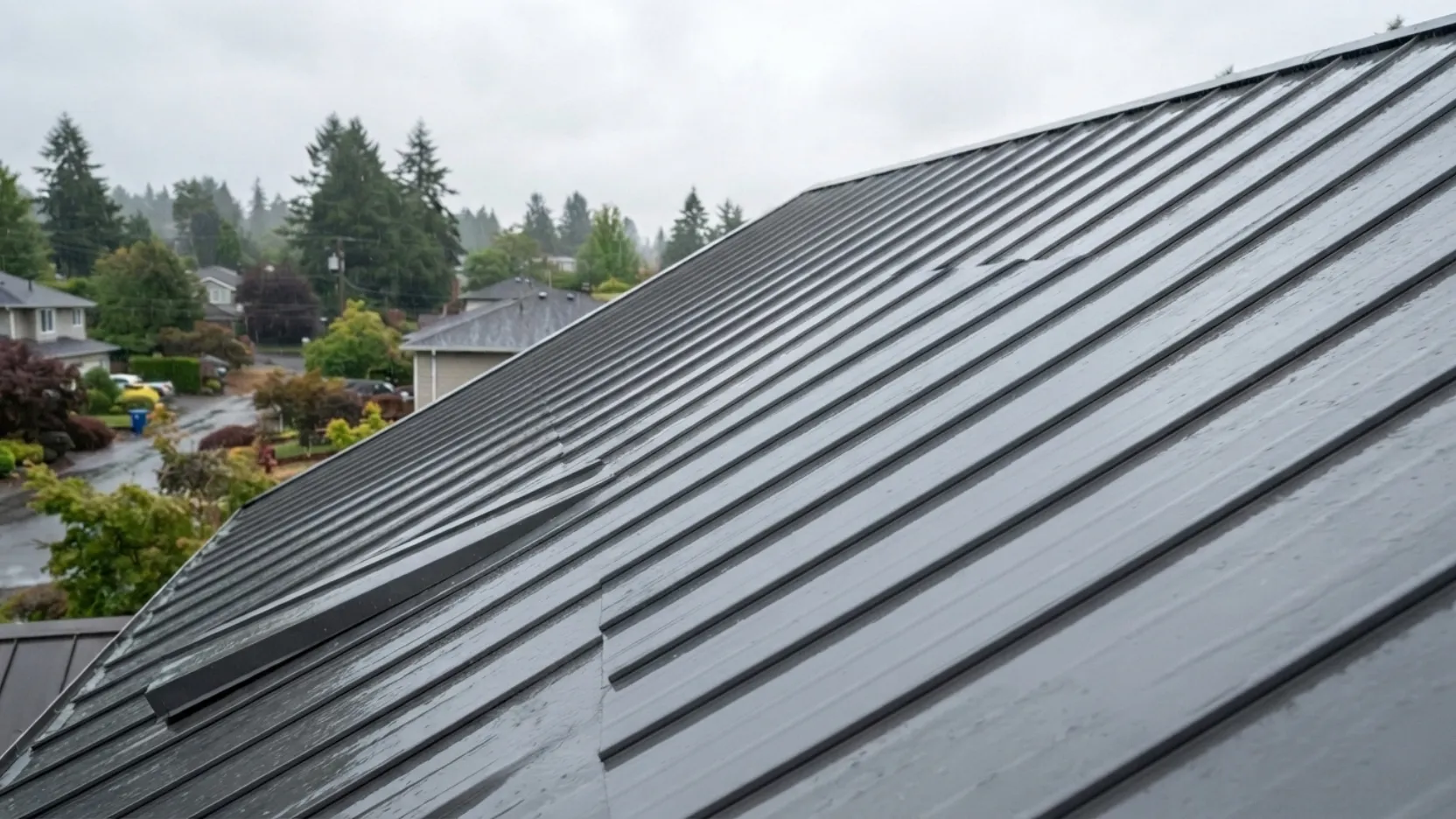
Metal roofs do have a smoother surface than asphalt shingles, but whether that makes them dangerously slippery depends on the panel type, the pitch of your roof, and the conditions at the time. This guide explains the real traction differences between metal roof styles, when a metal roof is genuinely hazardous to walk on, and what San Antonio homeowners and contractors do to work on them safely.
The short answer is yes, metal roofs can be slippery, but the full picture is more nuanced than that. A low-slope corrugated metal roof on a carport is nothing like a steep standing seam roof after a Texas rainstorm. The traction you get depends on the panel surface finish, the pitch of the roof, the weather conditions, and the footwear the person walking it is wearing.
Most San Antonio homeowners asking this question are thinking about one of two scenarios: can a roofer safely do maintenance or repair work on their metal roof, or is a metal roof going to be a danger to anyone who ends up on it during an emergency. Both are reasonable concerns. This guide addresses both, along with the real safety differences between the most common metal roof types found on homes and commercial buildings across Bexar County.
No matter how gentle the slope or how experienced the person walking it, a metal roof surface can become extremely hazardous the moment conditions change. Morning dew, a light mist, algae buildup, or a patch of wet leaves can turn a dry metal panel into a surface with very little grip. Professional roofing crews in San Antonio use rubber-soled footwear rated for metal roofing and deploy safety harness systems before stepping onto any metal roof steeper than 4:12. Homeowners should not walk their own metal roofs for any reason without this setup in place.
The traction you get on a metal roof starts with the surface finish on the panels. A smooth painted Galvalume panel and a stone-coated steel panel behave very differently underfoot, even at the same pitch. Understanding the common panel types installed on San Antonio homes helps you know what you are actually dealing with.
Standing seam panels: These have a smooth painted or Galvalume finish between the raised seams. The flat field of the panel offers moderate traction when dry and becomes quite slippery when wet. The raised seams themselves can serve as foot placement points for experienced crews, but they are not designed as traction features. Standing seam is the most common high-end metal roofing system on San Antonio homes.
Corrugated metal panels: The ridged profile of corrugated panels creates a natural channel for water to drain quickly, and the ridges themselves offer better footing than a flat panel. Corrugated metal is commonly found on garages, agricultural buildings, and some residential installations in the San Antonio area. It is generally more walkable than standing seam on the same pitch.
Stone-coated steel panels have a granule surface applied over the base metal, similar to the texture of asphalt shingles. This gives them noticeably better traction than any smooth-finished metal panel. Stone-coated systems like those common in San Antonio residential installations are much more forgiving underfoot, though they still require caution on steep slopes and in wet conditions.
- Stone-coated steel: best traction among metal roof types, comparable to asphalt shingles on moderate slopes
- Corrugated metal: above-average grip due to ridged profile and fast drainage
- R-panel and exposed-fastener panels: moderate traction on the flat fields between ribs
- Standing seam smooth painted: moderate dry, significantly reduced wet traction
- Bare Galvalume or unpainted metal: lowest traction of all metal roof surfaces
Even the most grippy metal roof surface becomes dangerous as the pitch increases. The steeper the slope, the more any slip becomes a fall. Professional roofing crews in San Antonio use a simple guideline: fall protection equipment is required for any roof work on a slope steeper than 4:12, regardless of the surface material. Below 4:12, the work may still proceed with careful footing, but the risk of injury from a slip increases sharply as the pitch climbs.
| Pitch range | Walkability on dry smooth metal | Walkability on wet smooth metal | Professional safety requirement |
|---|---|---|---|
| 2:12 to 3:12 (low slope) | Manageable with proper footwear | Caution required; reduced grip | Non-slip boots; harness recommended |
| 4:12 to 6:12 (moderate) | Requires deliberate foot placement | High risk; harness required | Fall protection required by OSHA standards |
| 7:12 to 9:12 (steep) | Difficult; harness and anchor points required | Do not walk; serious fall risk | Harness, anchor, and roof jacks required |
| 10:12 and above (very steep) | Trained crews only with full fall arrest systems | No walking; drone or ladder-only inspection | Full fall arrest system; scaffolding may be needed |
If you are not sure what pitch your San Antonio roof is, do not guess from the ground and step onto it. A roof that looks like a gentle 4:12 from the driveway may be a 6:12 or steeper in person. A professional roofer can measure the pitch from inside the attic or using a digital pitch gauge from the eave before anyone steps onto the surface. This is worth confirming before any maintenance, inspection, or emergency response on a metal roof.
- Roof pitch measured and confirmed before any crew member steps onto the surface
- Any slope at 4:12 or steeper requires OSHA-compliant fall protection equipment
- Steep-slope metal roofs (7:12 and above) require anchor points rated for metal roofing installed before work begins
- Wet or recently rained-on metal roofs are treated as one pitch category steeper for safety planning
- San Antonio homeowners should not walk any metal roof steeper than 3:12 without professional safety equipment
Dry metal roofing is manageable. The surface still has less friction than asphalt shingles, but experienced crews with proper footwear can work on it safely. The situation changes completely when moisture is introduced. Water on a smooth metal panel reduces friction significantly, and the effect is immediate. A brief shower at noon on a dry San Antonio summer day can leave a standing seam panel almost frictionless until it dries out, which can take longer than you expect in shaded areas.
Algae growth deserves specific attention on San Antonio metal roofs. In shaded or north-facing sections of a roof, algae and organic growth can accumulate on the panel surface over time. This biological film does not always look slippery it may appear as a faint dark streaking or simply as a darker color on the panels. But even a thin algae layer on a metal roof reduces traction significantly, both in wet and dry conditions. Crews cleaning algae from metal roofs always treat these sections as high-risk surfaces regardless of the weather.
- No metal roof work started immediately after rain; surface must be fully dry or fall protection must be deployed
- Morning dew is treated as a wet surface condition on slopes steeper than 3:12
- Algae or biological growth identified before any crew member steps onto that roof section
- Debris cleared from walking path before starting any work wet leaves on metal panels are a serious hazard
- San Antonio afternoon weather monitored throughout work day; harness systems rigged before weather windows close
Walking a metal roof safely comes down to two things: what is on the roofer's feet, and what is keeping them attached to the structure if they do slip. Both matter equally. Neither alone is sufficient on a steep metal roof. Professional crews working on San Antonio metal roofs use rubber-soled footwear specifically rated for roofing work, combined with a harness system anchored to a ridge anchor or penetrating anchor installed before anyone steps onto the slope.
Rubber-soled roofing boots: Standard work boots with a hard sole are not appropriate for metal roofing. Roofing crews use boots with a soft rubber compound that grips the panel surface and flexes with the foot. Vibram-soled boots and purpose-built roofing shoes maximize contact area and friction on smooth metal. Athletic shoes with worn soles, leather-soled work boots, and hard plastic outsoles are hazardous on metal panels at any pitch.
Harness and anchor systems: OSHA standard 1926.502 requires fall protection on any roof work at heights over 6 feet. For metal roofing specifically, temporary anchor points are installed through the panel into the structural members below. A full body harness connected by a self-retracting lanyard or a fixed-length lanyard to the anchor point limits a fall to a safe distance. Ridge anchors designed for metal roofing clamp onto standing seam raised ribs without penetrating the panel.
If you are hiring a contractor to inspect or repair your metal roof in San Antonio, ask them specifically what fall protection system they will use before approving the work. A reputable metal roofing contractor will describe their anchor setup, harness requirements, and how they handle weather changes mid-job. A contractor who walks a steep metal roof in regular boots without any fall protection is not just putting themselves at risk a worksite injury on your property creates serious liability exposure for you as the homeowner. Always verify contractor insurance and ask about their safety protocols before the crew arrives.
- Roofing-rated soft rubber-soled footwear confirmed for all crew members before stepping onto the metal roof
- Hard-soled work boots, athletic shoes with worn soles, and leather-soled footwear excluded from metal roof work
- Fall protection anchor points installed and load-tested before any work begins on slopes steeper than 4:12
- Full body harness confirmed as ANSI Z359 compliant not a construction belt or waist harness
- Self-retracting lanyards preferred over fixed-length lanyards to reduce fall distance on steep slopes
- Contractor certificate of insurance verified before roof work begins at minimum $1 million general liability
The most common reason homeowners end up on their own metal roofs is to look for a leak source, clear debris from valleys and gutters, or assess storm damage after a hail event. All three of these tasks can be handled more safely from the ground, a ladder at the eave, or by a qualified roofing contractor. Understanding what is reasonable to do yourself and what should be left to a professional with proper equipment is the most important safety information in this guide.
| Task | Homeowner DIY? | Safer alternative |
|---|---|---|
| Visual inspection after a storm | From the ground only | Binoculars from ground level; call a contractor for on-roof assessment |
| Clearing gutters and eave debris | From a ladder at the eave; do not step onto the roof | Gutter-clearing tools on extension poles from ladder level |
| Clearing valley debris | Not recommended without safety equipment | Schedule with a metal roofing contractor as part of annual maintenance |
| Identifying a leak source | No do not walk the roof to locate leaks | Document interior water entry point and call a contractor for roof diagnosis |
| Installing a TV antenna or satellite dish | Never without fall protection and roofing footwear | Professional installation only on metal roofs steeper than 3:12 |
| Photographing hail damage for insurance | From the ground; use a zoom lens or drone | Drone photography or contractor documentation is sufficient for insurance claims |
Most metal roofing falls happen not during the work itself but during the transition back to the ladder. A homeowner or untrained worker who has made it onto the roof successfully can be caught off guard when they turn, shift their weight, or step on a wet or shaded panel section they did not notice on the way up. Experienced crews always set their footing deliberately on the return path, keep a hand on an anchor line, and treat the last five feet back to the ladder as the highest-risk section of any metal roof job.
- Do not walk any metal roof without roofing-rated rubber-soled footwear and fall protection
- Storm damage assessment is done from the ground with binoculars or by a qualified contractor
- Gutter cleaning is completed from a ladder at eave level, not by walking the roof slope
- Leak source identification is a job for a roofing contractor, not a DIY roof walk
- Any task that requires stepping past the eave edge onto the panel surface should be contracted out
- Drone photography is the safest way to document hail damage or storm impact for an insurance claim
This table summarizes the relative traction level of the most common metal roofing types installed on San Antonio homes and commercial buildings. All ratings assume proper roofing footwear. In wet conditions, every category drops at least one level.
| Metal roof type | Dry traction | Wet traction | Safe DIY walkable? | Common in San Antonio? |
|---|---|---|---|---|
| Stone-coated steel | Good (similar to asphalt) | Moderate | Low slopes only with proper footwear | Yes, residential |
| Corrugated metal panels | Moderate to good | Moderate (ridges help drainage) | Low slopes with proper footwear | Yes, agricultural and some residential |
| R-panel (exposed fastener) | Moderate | Low to moderate | Low slopes only; harness recommended | Yes, commercial and agricultural |
| Standing seam (painted) | Moderate | Low | No; professional crews only | Yes, premium residential |
| Bare Galvalume (unpainted) | Low to moderate | Very low | No; professional crews only | Less common; agricultural |
- Roof pitch confirmed by measurement, not by estimate from the ground
- Metal panel type and surface finish identified: stone-coated, painted standing seam, corrugated, or bare
- Surface conditions assessed: completely dry, any wet sections, algae or debris present
- Footwear verified: rubber-soled roofing boots, not hard-soled work boots or athletic shoes
- Weather forecast checked for the full work window, including afternoon storm probability
- Anchor points installed into structural members before the first crew member steps onto the slope
- Anchor load rating confirmed for the harness and lanyard system being used
- Full body harness fitted correctly, not a waist belt or construction harness
- Lanyard type confirmed: self-retracting preferred on steep metal roofs
- Roof jacks and planks set up on any slope steeper than 7:12
- Contractor certificate of insurance received and verified before work begins
- Contractor describes fall protection setup in advance, not after the crew arrives
- No contractor is walking your steep metal roof in regular work boots without a harness
- Any deviation from proper safety protocols is grounds to pause work and get a second opinion
Need a safe metal roof inspection in San Antonio?
Do not risk a fall assessing your own metal roof. Our licensed crews use proper fall protection on every inspection and repair job. We will inspect your roof safely, document any damage, and give you a clear written estimate at no cost.


