
[et_pb_section fb_built=”1″ admin_label=”section” _builder_version=”4.16″ global_colors_info=”{}”][et_pb_row admin_label=”row” _builder_version=”4.16″ background_size=”initial” background_position=”top_left” background_repeat=”repeat” global_colors_info=”{}”][et_pb_column type=”4_4″ _builder_version=”4.16″ custom_padding=”|||” global_colors_info=”{}” custom_padding__hover=”|||”][et_pb_code _builder_version=”4.27.7″ _module_preset=”default” hover_enabled=”0″ sticky_enabled=”0″]
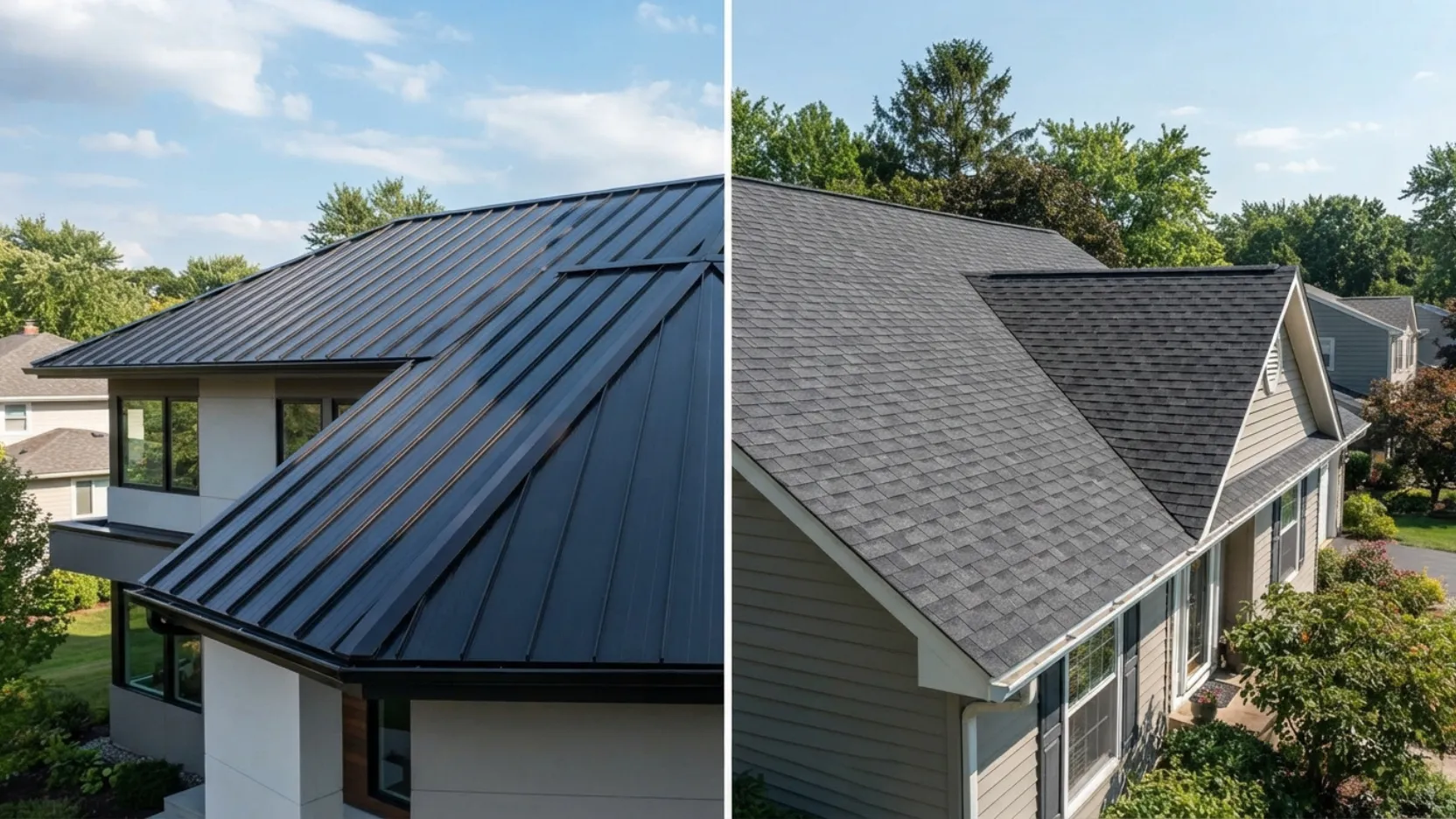
Metal roofing and asphalt shingles are the two most common roof choices for San Antonio homeowners. This guide breaks down every factor that matters: cost, lifespan, heat performance, storm protection, and long-term value, so you can make the right call for your home and your budget.
San Antonio homeowners replacing a roof in 2026 face the same core question that has come up for decades: is metal roofing actually worth the higher upfront cost, or do asphalt shingles still make more sense for most homes? The honest answer is that it depends on your timeline, your budget, and what you want your roof to do for you over the next 20 to 50 years.
This guide covers every factor that separates metal roofing from asphalt shingles in a real Texas climate. We are not going to tell you metal roofing is always the right answer, because it is not. But we will give you the full picture so you can make an informed decision instead of guessing.
Most people compare the installed price of metal roofing to the installed price of asphalt shingles and stop there. That comparison makes metal look expensive and shingles look like the obvious choice. The comparison that actually matters is the total cost over the life of the roof, including replacements, maintenance, energy savings, and insurance discounts. When you run those numbers for a San Antonio home, the gap between metal and shingles shrinks significantly, and for many homeowners it disappears entirely.
Lifespan
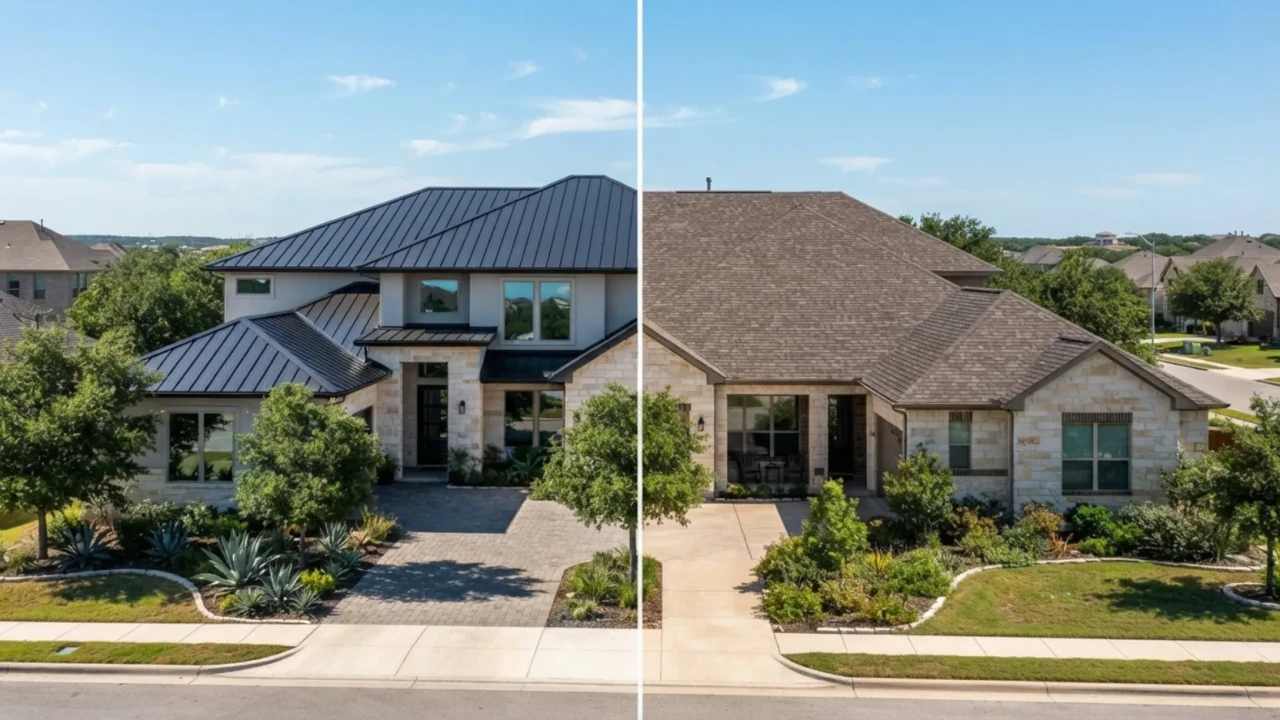
Asphalt shingles installed on a San Antonio home today will last somewhere between 15 and 25 years under normal conditions. The upper end of that range assumes a quality architectural shingle product, proper attic ventilation, and no significant storm damage. Three-tab shingles typically fall on the shorter end. In San Antonio’s climate, which combines intense summer UV exposure, high heat, and periodic severe hailstorms, the real-world lifespan of an asphalt shingle roof trends toward the lower half of the manufacturer’s warranty window.
Metal roofing installed correctly on a San Antonio home today will last 40 to 70 years with routine maintenance. Standing seam systems, which are the premium metal roofing format for residential applications, routinely reach 50 years and beyond. Stone-coated steel and corrugated metal panel systems fall in the 40 to 50 year range. In the same Texas climate that shortens the life of asphalt shingles, metal roofing is essentially unaffected. Metal does not absorb heat the same way, it does not crack or curl from UV exposure, and properly coated metal panels do not degrade from the same thermal cycling that stresses asphalt over time.
- What is the actual manufacturer warranty on the shingles or metal panels being installed?
- Is the warranty prorated, and at what point does the prorated value drop below replacement cost?
- How does the contractor’s workmanship warranty align with the product warranty?
- What maintenance is required to preserve the full warranty term?
- What is the track record of this specific product in San Antonio’s climate?
Cost Comparison
On a typical San Antonio home with 1,500 to 2,000 square feet of roof surface, the installed cost of an asphalt shingle roof runs roughly $8,000 to $18,000 depending on the shingle grade, roof complexity, and whether the decking needs work. Metal roofing on the same home runs $18,000 to $45,000 depending on the panel type chosen, with standing seam at the top of that range and corrugated metal panels at the lower end.
That gap is real, and it is the main reason most homeowners install asphalt shingles. But the gap looks very different when you account for the full 50-year picture. An asphalt shingle roof replaced twice over that period accumulates two full installation costs on top of the first one. Metal roofing installed once and maintained properly carries no replacement cost within that window. Add in energy savings, insurance discounts, and avoided repairs, and the long-run math frequently favors metal.
Metal roofing is increasingly available through home improvement financing at competitive rates in San Antonio. If the higher upfront cost of metal is the only barrier, ask your contractor about financing options before defaulting to shingles. A monthly payment that reflects the full cost of metal over 10 to 15 years can be lower than you expect, and you are building a longer-lasting asset into the home’s value at the same time.
- Get a written estimate for both metal and shingle options before deciding
- Ask for the total lifetime cost estimate, not just the day-one installation price
- Confirm whether current homeowners insurance offers a premium discount for impact-resistant metal roofing
- Ask about available financing terms if upfront cost is a barrier to metal
- Factor in the cost of a second shingle replacement if you plan to stay in the home 25 or more years
Energy Performance
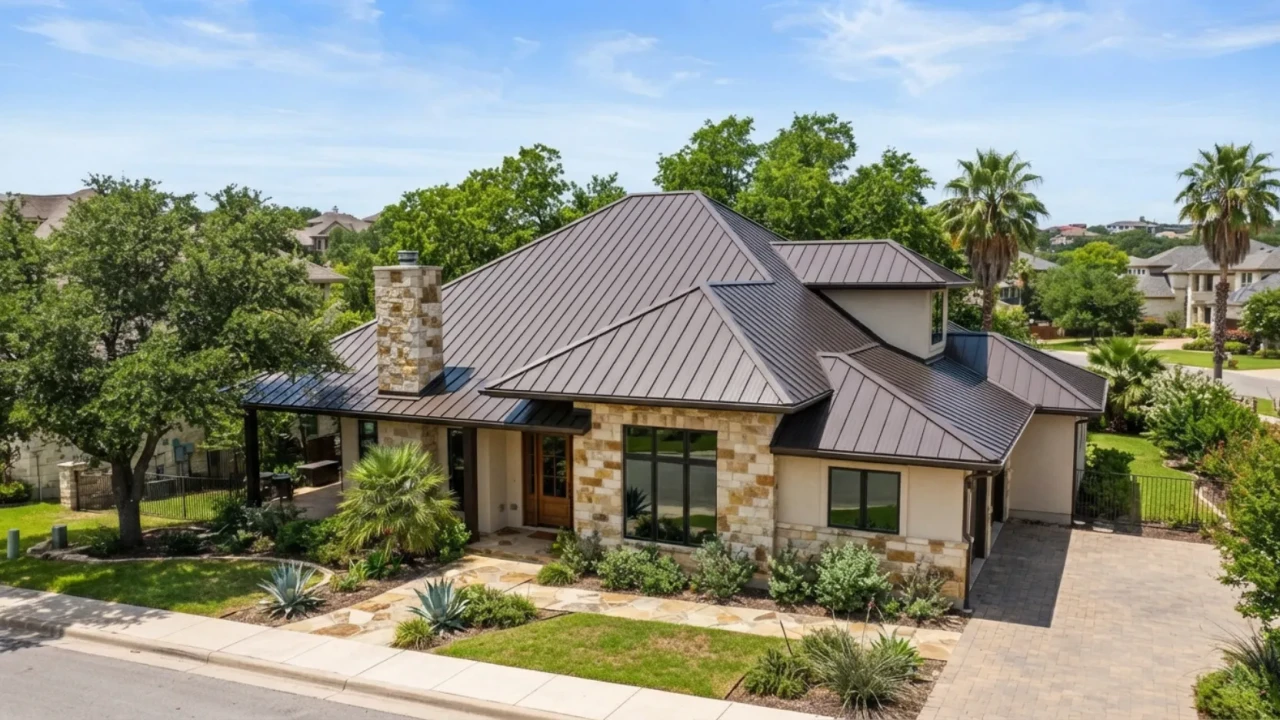
San Antonio summers are long, intense, and expensive on air conditioning. The roof directly above your living space is one of the biggest drivers of attic heat gain, and attic heat gain is one of the biggest drivers of summer cooling costs. This is one area where metal roofing holds a clear, measurable advantage over asphalt shingles in Texas conditions.
Asphalt shingles absorb solar radiation. On a hot summer day in San Antonio, an asphalt shingle roof surface can reach temperatures above 160 degrees Fahrenheit. A significant portion of that heat transfers through the decking and into the attic space. Even with good attic insulation, a shingle roof running at 160 degrees is pushing heat into the living space and driving up the AC load all afternoon and into the evening.
Metal roofing with a reflective coating or a cool-roof finish reflects a large portion of that solar radiation rather than absorbing it. Metal roofs also emit heat more quickly once the sun goes down, which means they cool off faster in the evening. The combination of higher reflectivity and faster cooling results in lower attic temperatures and measurably lower summer cooling bills for San Antonio homeowners who make the switch from asphalt to metal.
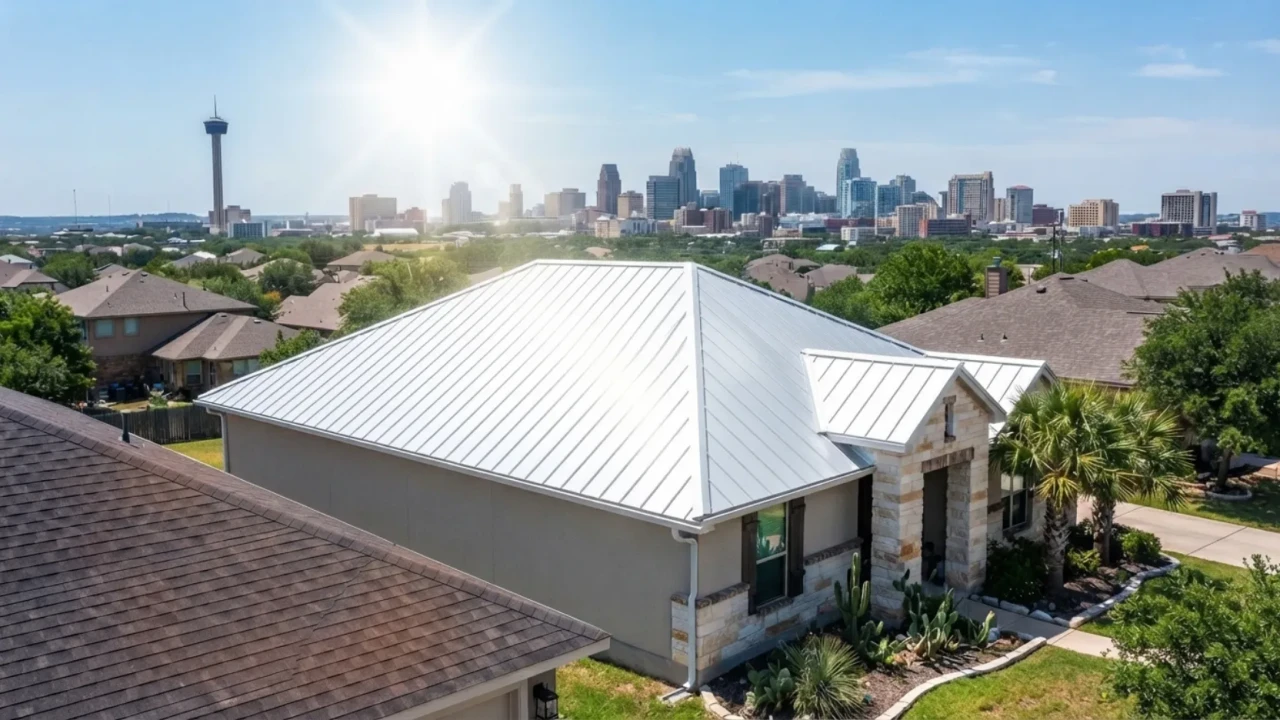
Reflective coatings and cool-roof finishes: Most residential metal roofing installed today comes with a painted or coated finish that meets Energy Star cool-roof standards. These coatings reflect a high percentage of solar energy before it reaches the decking, keeping attic temperatures significantly lower than a comparable asphalt shingle roof on the same home.
Air gap ventilation in metal systems: Metal panel systems, particularly standing seam, are often installed over a ventilated air gap above the roof deck. That air gap creates a thermal break between the hot metal surface and the decking below, further reducing heat transfer into the attic and living space.
- Ask whether the metal roofing product being quoted carries an Energy Star reflective coating rating
- Confirm whether the installation includes an air gap or thermal barrier above the roof deck
- Ask about ridge vent and soffit vent specifications, which affect total attic ventilation performance
- Request an estimate of expected energy savings based on the home’s square footage and current utility costs
- Check whether the Texas Comptroller or local utility offers a rebate for cool-roof certified metal roofing
Storm Performance
Hail is the most significant weather threat to San Antonio roofs. Bexar County experiences multiple hail events every year, and periodically takes a major hail storm with stones large enough to cause significant roof damage across entire neighborhoods. Asphalt shingles and metal roofing respond to hail very differently, and the difference shows up in both the physical damage and in the insurance picture.
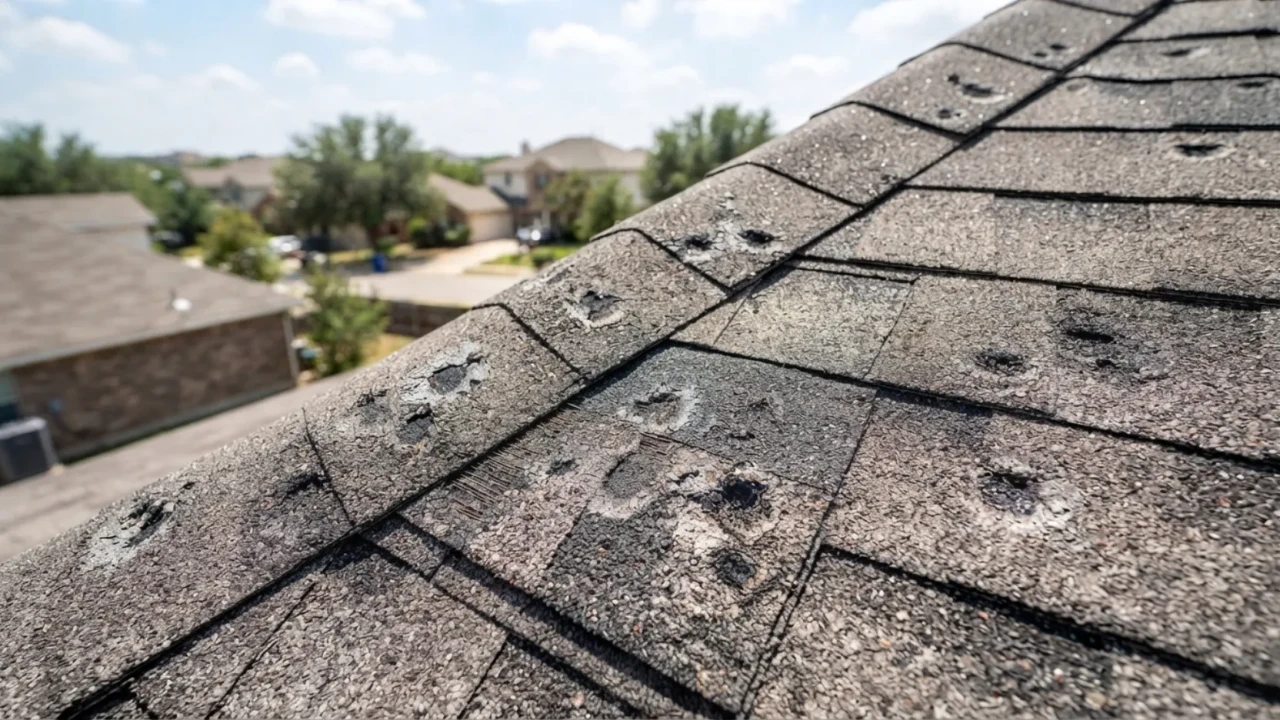
Asphalt shingles are rated for impact resistance on a scale from Class 1 to Class 4, with Class 4 representing the highest rating. Even Class 4 rated shingles will show granule loss, bruising, and potential cracking under large hail events of 1.5 inches or greater. Once granules are lost, the underlying mat is exposed to UV and the shingle begins degrading faster than its normal wear rate. Many San Antonio homeowners have filed insurance claims for hail damage on shingle roofs only to have the problem repeat itself in the next major storm cycle.
Metal roofing of most types will sustain cosmetic denting from large hail but is far less likely to sustain a structural breach or lose its weatherproofing integrity. Standing seam metal panels in particular are exceptionally resistant to hail damage because there are no exposed fasteners and no granule coating to lose. Stone-coated steel panels can experience coating chip loss under large hail but the underlying steel remains intact. Both metal systems are significantly more likely to survive a major San Antonio hail event without requiring insurance claims or emergency repairs.
Many Texas homeowners insurance carriers offer significant premium discounts for Class IV impact-resistant roofing. On a standing seam or impact-rated metal roof, these discounts can run 20 to 30 percent off the dwelling coverage portion of your premium. Call your insurer before choosing between metal and shingles and ask specifically what discount applies to each roofing type. The annual premium savings may shift the cost comparison more than you expect.
- Confirm the UL 2218 impact resistance rating of the specific product being quoted
- Call your homeowners insurance carrier and ask what premium discount applies to Class IV roofing
- Ask whether the metal product carries a separate hail warranty from the manufacturer
- For shingle replacement after hail damage, ask about impact-resistant shingle upgrades at time of reinstall
- Confirm whether the contractor’s workmanship warranty covers storm-related installation failures
Maintenance
Asphalt shingle roofs require periodic attention to catch problems before they become expensive. Flashings around chimneys, vents, and skylights need to be checked every few years because sealant fails over time. Shingles that have been lifted by wind or cracked by age need to be identified and replaced before the area beneath them develops water damage. Gutters need to be kept clear because granule runoff from aging shingles accelerates gutter clogging and can cause backup under the shingle edges. An asphalt shingle roof that is never inspected will develop problems faster than one that gets attention every three to five years.
Metal roofing requires maintenance too, but less of it and less frequently. Screw-down metal panel systems need periodic fastener inspection because screws back out over time from thermal expansion and contraction. Sealant at flashings and ridge caps needs to be checked every five to seven years. Other than that, a properly installed metal roof in good condition needs little more than periodic cleaning to remove debris from valleys and gutters. Standing seam systems with concealed fasteners have the lowest maintenance profile of any common residential roofing product, with no exposed fasteners to fail and no granules to shed.
- Asphalt shingles: schedule professional inspection every three to five years
- Metal (screw-down systems): fastener and sealant inspection every five to seven years
- Metal (standing seam): inspection every seven to ten years; seam integrity check after major storms
- Both systems: keep gutters and valleys clear of debris year-round
- Both systems: check flashing condition after every significant hail or wind event in San Antonio
Home Value
Asphalt shingles are what most buyers expect on a San Antonio home, which means a new shingle roof reads as normal and well-maintained to the average buyer. It does not typically produce a premium, but it also does not trigger any concern. An aging shingle roof is one of the most commonly negotiated items in San Antonio real estate transactions. Buyers and their agents will ask for a credit or a replacement if the roof is past its useful life or has known hail history, and this is a very common situation in a market that sees regular hail activity.
A well-installed metal roof, particularly standing seam or stone-coated steel, tends to generate a positive reaction from buyers who understand what they are looking at. A roof with 30 years of remaining useful life is a meaningful selling point. Appraisers are increasingly accounting for the remaining useful life of the roof in valuations, which means a metal roof installed today that has 40 or more years of life remaining contributes real appraised value compared to a shingle roof that will need replacement in 10 years.
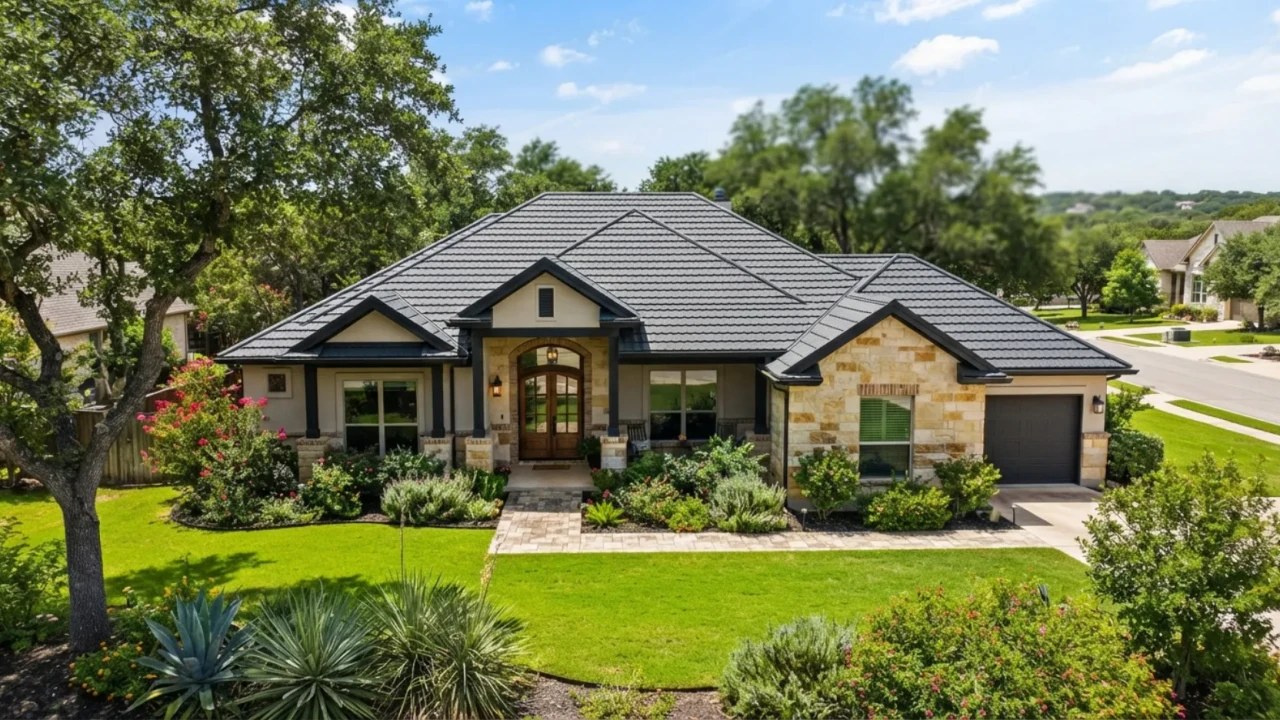
On the aesthetic side, metal roofing has expanded dramatically. Stone-coated steel products are designed to mimic the look of traditional shingles, tile, or slate at a fraction of the weight. Standing seam systems have a distinctive clean line that reads as modern and high-end in many neighborhoods. If you are concerned about fitting your home’s look to the street, there is a metal roofing product that will achieve the right appearance for almost any architectural style common in San Antonio.
- Ask your contractor to show samples or renderings of the metal product on a home similar to yours
- Check whether your HOA (if applicable) has approved the specific metal roofing color and profile
- Ask a local San Antonio real estate agent whether metal roofing is viewed positively in your neighborhood price range
- Request documentation of the remaining useful life for disclosure in any future home sale
- Confirm the manufacturer warranty is transferable to a future buyer
The right answer is not the same for every homeowner. Here is when each option is the stronger choice for a San Antonio home.
- You plan to stay in the home 15 or more years and want to avoid a second replacement
- Summer energy costs are a significant monthly burden and you want to reduce them
- Your neighborhood has been hit by hail more than once and you want to stop filing claims
- You qualify for an insurance premium discount that offsets a portion of the cost difference
- You want the roof to be a long-term asset when you sell rather than a negotiation item
- You can finance the difference between metal and shingle cost over 10 to 15 years
- You want the lowest possible maintenance requirement over your ownership period
- You plan to sell the home within 5 to 8 years and the investment in metal will not be recovered
- Budget is the primary constraint and the upfront difference cannot be financed
- You need a replacement completed quickly and metal panel lead times are an issue
- Your HOA restricts metal roofing or requires a specific shingle profile
- A Class IV impact-resistant shingle product meets your storm protection needs at lower cost
- The insurance discount for metal in your specific policy does not offset enough of the premium
| Factor | Metal roofing | Asphalt shingles | Edge |
|---|---|---|---|
| Lifespan | 40 to 70 years depending on product type | 15 to 25 years in San Antonio conditions | Metal |
| Installed cost | $18,000 to $45,000 for a typical SA home | $8,000 to $18,000 for a typical SA home | Shingles |
| 50-year total cost | One installation plus maintenance | Two to three installations plus maintenance | Metal |
| Summer energy savings | 20 to 30% cooling cost reduction typical | Minimal reflective benefit unless cool-roof rated | Metal |
| Hail resistance | Class IV; superior real-world performance | Class IV available; granule loss still occurs | Metal |
| Wind resistance | 130+ mph with concealed fastener systems | 110 to 130 mph with premium architectural products | Metal (slight) |
| Maintenance frequency | Inspection every 5 to 10 years depending on type | Inspection every 3 to 5 years recommended | Metal |
| Insurance discount | Up to 30% premium reduction for Class IV metal | Discount available for Class IV impact-resistant | Metal (typically) |
| Home resale value | Strong selling point; transferable warranty | Neutral if new; negotiation item if aged | Metal |
| Noise in rain | Louder on exposed metal; minimal with solid decking | Quiet under all conditions | Shingles |
| Installation speed | Typically 2 to 4 days | Typically 1 to 2 days | Shingles |
| Aesthetic options | Wide; standing seam, stone-coated, corrugated | Wide; hundreds of color and profile options | Tie |
| Weight | 50 to 150 lbs per square (lighter than tile) | 200 to 350 lbs per square depending on product | Metal |
- Decide on your expected timeline in the home: under 10 years, 10 to 20 years, or 20-plus years
- Call your homeowners insurance carrier and ask what discount applies to Class IV metal roofing vs. Class IV shingles
- Check your HOA rules if applicable: confirm both metal and shingle options are permitted
- Review your last three summer electricity bills to understand the potential energy savings opportunity
- Identify whether you have a budget ceiling for the upfront cost or whether financing is available to you
- Ask each contractor to quote both a metal option and a shingle option on your specific roof
- Ask for the expected lifespan and warranty terms for each product quoted
- Ask for the estimated total cost over 50 years, including anticipated replacement cycles for shingles
- Confirm the impact resistance rating (Class I through IV) for every product being quoted
- Ask whether the product being quoted qualifies for any Energy Star or cool-roof certification
- Verify that the contractor is licensed to install the specific metal roofing product being quoted
- Confirm whether the manufacturer’s warranty is a contractor-installed warranty or a direct manufacturer warranty
- Get the workmanship warranty period in writing and confirm it covers both materials and installation
- Ask whether the warranty is transferable to a future buyer if you sell the home
- Review the payment schedule: a reputable contractor does not require full payment upfront
Is metal roofing really worth the extra cost in San Antonio?
Does metal roofing make a house hotter in the San Antonio summer?
Will a metal roof be loud in rain or hail?
Can I put metal roofing over my existing asphalt shingles?
What metal roofing type is most popular with San Antonio homeowners?
How do I find a reputable metal roofing contractor in San Antonio?
Get a free roofing estimate in San Antonio
Tell us about your roof and what you are trying to accomplish. We will give you honest side-by-side estimates for metal and shingle options so you can make the right call for your home and your budget.
[/et_pb_code][/et_pb_column][/et_pb_row][/et_pb_section]