
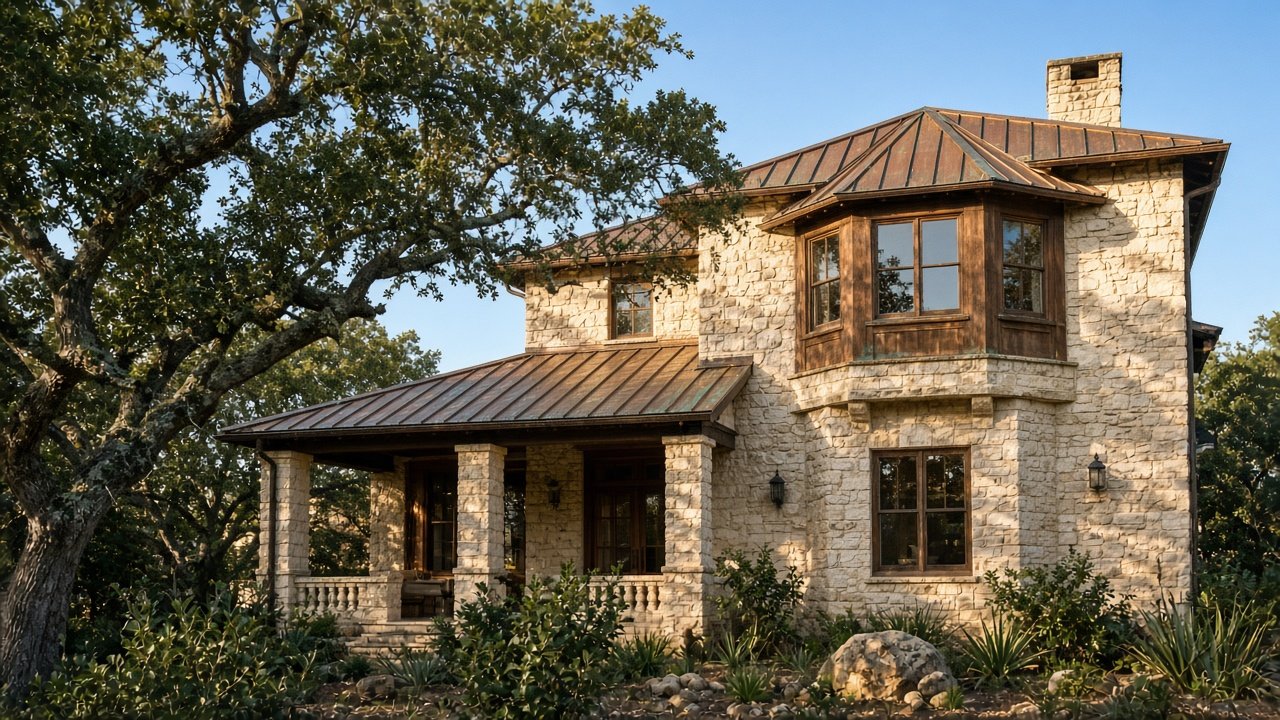
Metal roofing · San Antonio, Texas
Copper Roof Maintenance in San Antonio: Patina, Seams, and What to Leave Alone
A copper roof, whether it covers the whole house or just a porch or bay window, needs less care than most roofs. The care it does need is specific. This guide covers the patina, debris, seams, contact with other metals, storm checks, and which jobs belong to a roofer experienced with copper.
The short answer
Copper roof maintenance is mostly about leaving the copper alone and catching problems early. Let the patina develop instead of scrubbing it off, keep leaves and debris out of valleys and seams, check seams, edges, and attachments from the ground after storms, and keep aluminum and galvanized metal from touching the copper. Soldering, re-forming seams, and refastening panels are jobs for a roofer experienced with copper, not for a quick sealant patch.
Copper roof maintenance starts with leaving the patina alone
The patina is not dirt or damage. It’s the copper protecting itself. The Copper Development Association explains that patina forms as acidic moisture reacts with copper and provides a protective layer against further weathering. [2]
IBHS’s roof guide for copper describes the color moving from bright copper through black, gray, and brown, and finally to green. It notes that copper in arid areas, or areas not exposed to rainfall, may mature only to a deep brown, and that color changes are never uniform: north and south slopes and runoff areas can look different. [1] In San Antonio, it’s normal to see a copper porch roof that’s brown on one slope and streaked with green on another.
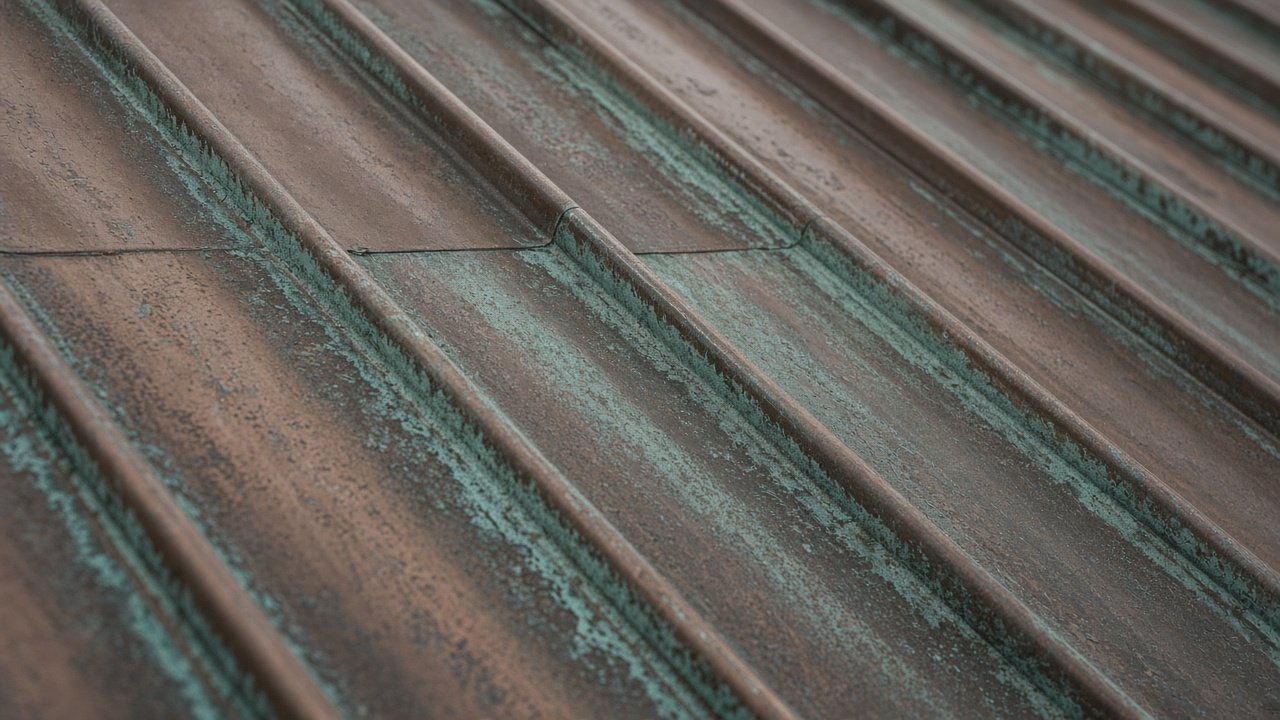
Don’t scrub, sand, or acid-clean the patina off. If you deliberately want bright copper again, that’s a specialist job, not a weekend project. And don’t paint or “seal” copper without professional advice; IBHS notes that copper is rarely painted. [1]
What San Antonio weather means for a copper roof
Copper handles Texas heat well, but sun, storms, and trees still shape how you care for it.
Intense sun and heat make metal expand and contract, which is why copper roofs are built with seams and cleats that let panels move. IBHS lists alterations that restrict thermal movement among the things that can cause damage and leaks. [1] Sudden thunderstorms bring hail and wind that can dent panels or lift edges. And live oaks drop leaves and twigs that collect in valleys and against seams.
One thing you don’t have to worry about much is growth: IBHS notes that copper roofs stop algae and moss from forming. [1] For more on how copper performs here, see RRSATX’s copper metal roofing in San Antonio page and our guides to the pros and cons of copper roofing and the lifespan of a copper roof.
How to inspect a copper roof: ground, roof level, and attic
Start from the ground, and leave the close look to a pro. IBHS says inspection can start from the ground with binoculars but is best done at roof level, including roof edges, ridge and hip areas, and the roof deck seen from inside the building. [1]
IBHS describes standard copper maintenance as periodic inspection for loose or damaged flashings, clearing standing water, and removing debris. [1] From the yard, look for lifted panel edges, seams that look opened or crushed, debris piled in valleys, and anything new attached to the roof. If you can reach the attic safely, look at the decking under the copper with a flashlight for stains or damp spots.
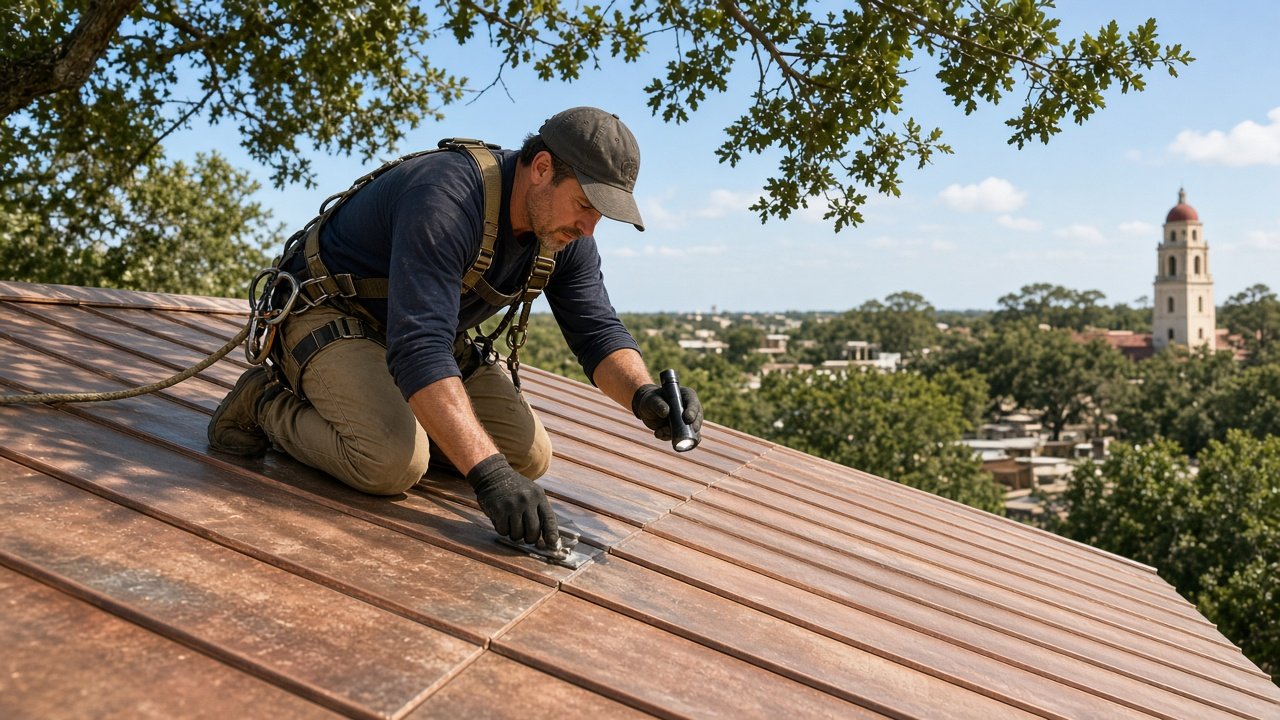
RRSATX offers a metal roof inspection in San Antonio for copper and other metal roofs, and a general roof inspection when copper is only an accent on a shingle or tile roof.
Checking copper seams, solder joints, and fasteners
Seams and attachments are where copper roofs usually need attention.
- Standing and batten seams. Look for seams that are flattened, bent, or opened. IBHS notes that standing seams can be flattened or bent but can often be straightened. [1]
- Soldered seams. Cracks in a solder bead, often on low-slope areas and small accent roofs, can let water through.
- Cleats and fasteners. IBHS says signs of fastener failure are usually panel uplift or pull-off, most commonly from less noble fasteners that corrode. [1]
- Edges, ridges, and hips. Lifted or loose trim at these spots is easy to see from the ground.
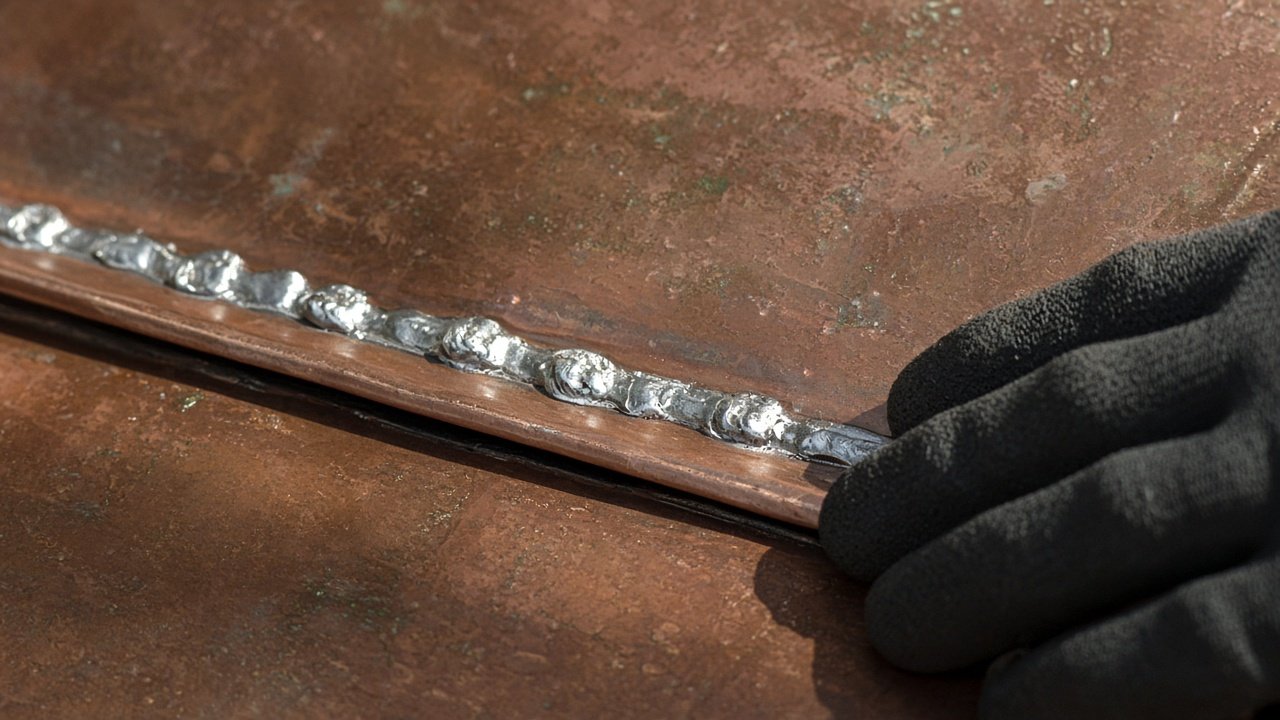
Seam re-forming, soldering, and refastening are pro work. RRSATX handles these through its metal roof repair in San Antonio.
Keeping leaves and debris off copper valleys and seams
Debris holds water against the copper and blocks the paths water needs to run off. IBHS says valley areas should be kept clear of debris. [1]
Oak leaves and twigs pile up in valleys, against standing seams, and behind chimneys. Clear what you can reach from a ladder or the ground with a soft tool, or have a pro do it. Don’t walk the roof to get to it. IBHS recommends removing dirt and foliage and then rinsing with clean water. [1]
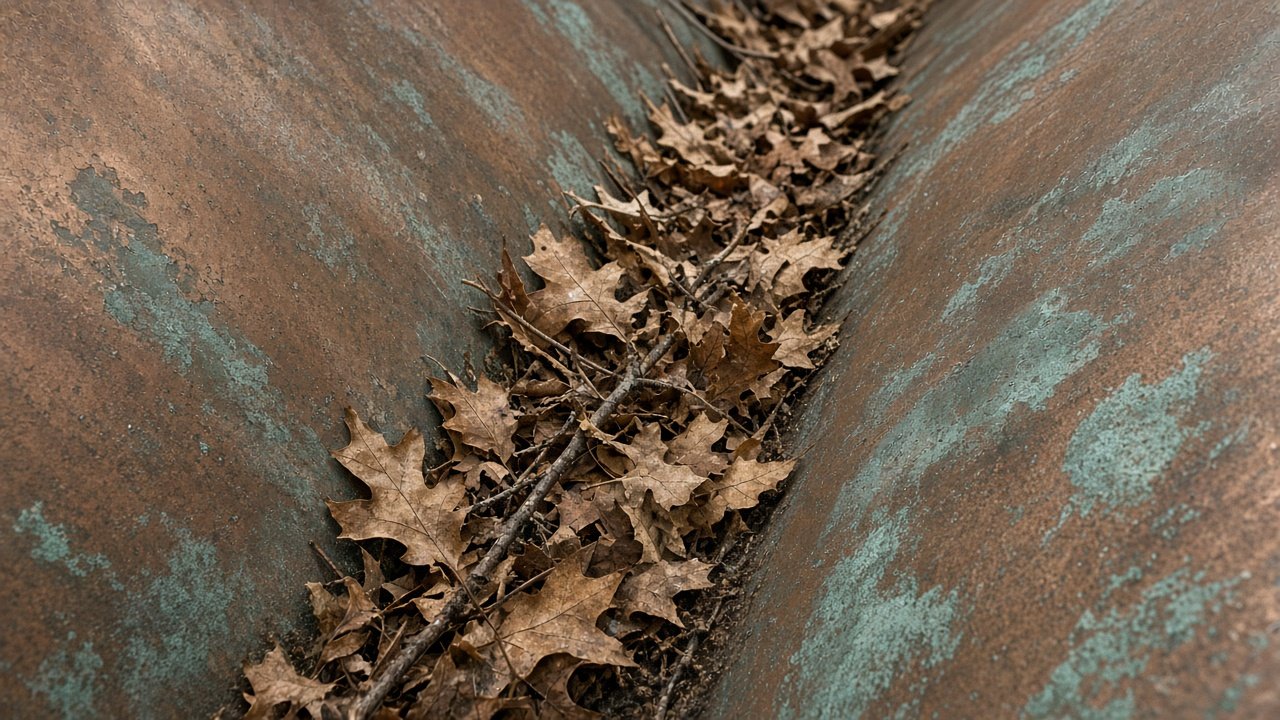
Skip the pressure washer at close range. If someone suggests power washing, IBHS guidance is that a low-pressure wash should be tested on a small area first and should not disturb the patina. [1] RRSATX also recommends avoiding harsh or chlorinated cleaners on copper.
Keep other metals and runoff away from copper
Copper is the stronger metal in most pairings, so it damages what it touches. The Copper Development Association explains that when dissimilar metals are in contact in the presence of an electrolyte such as rain water, galvanic action deteriorates the less noble metal. Copper is not harmed, but it causes corrosion of the other metal. [2]
The principal metals of concern are aluminum and zinc, according to the same handbook. [2] Galvanized steel is coated with zinc, so galvanized fasteners and brackets count too. Watch for satellite dish brackets, antenna mounts, aluminum flashing, galvanized screws, and other add-ons touching the copper. The handbook recommends separating materials such as specific paints or gaskets where contact can’t be avoided, and says wash from copper surfaces should not drain onto exposed aluminum. [2] IBHS likewise advises making sure accessories and attachment methods are galvanically compatible with copper. [1]
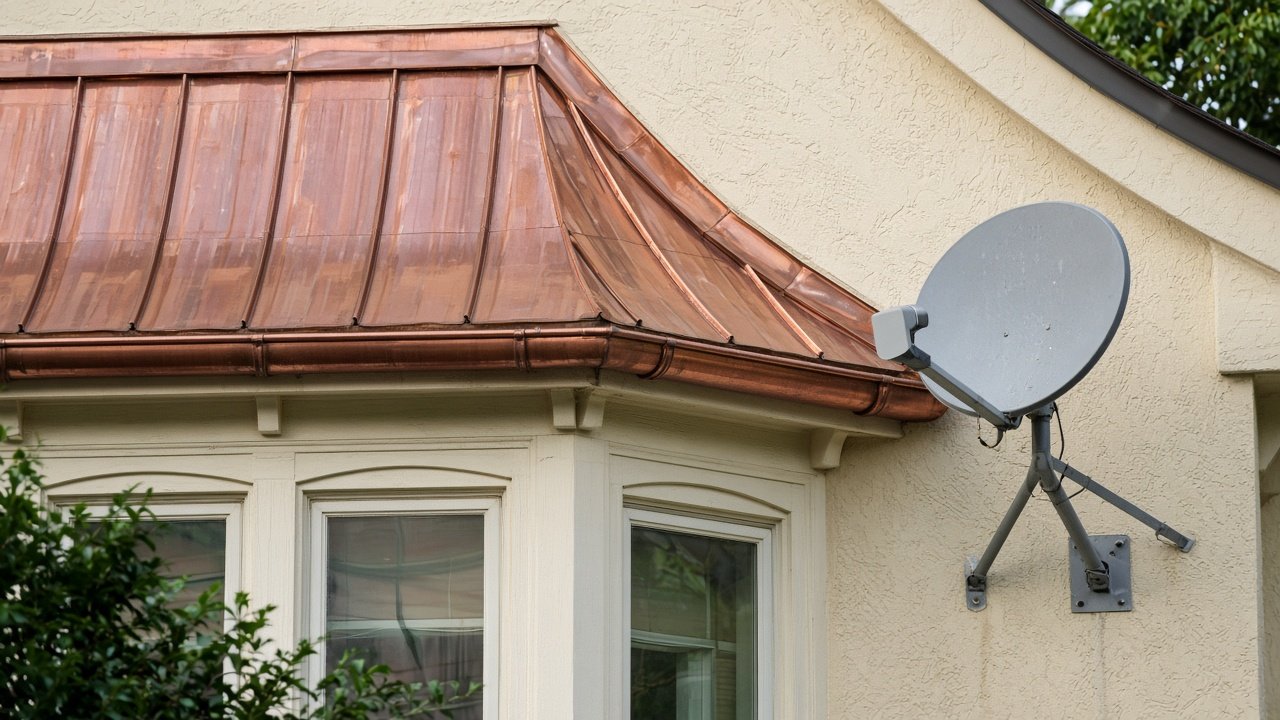
Runoff works the other way too. The handbook describes “erosion corrosion” that can occur when acidic water collected over a large non-copper roof, such as tile, slate, wood, or asphalt, is concentrated onto a small copper area. [2] If a big shingle or tile roof drains onto a small copper accent, have a roofer look at that transition.
Why a copper roof isn’t a walkway
Every step on copper risks bending a seam. IBHS says metal roofing should not be used as a primary roof access walkway, and if walking is necessary, footwear should be clean and non-scuffing. [1]
IBHS also lists physical damage from maintenance, moving heavy objects, and new penetrations among the causes of copper roof damage and leaks. [1] If a technician needs to reach a chimney, antenna, or other equipment across your copper roof, ask how they plan to protect the seams, and hire someone experienced with copper.
Checking a copper roof after hail and wind
Small dents are usually cosmetic. Tears, punctures, and loose seams are not. IBHS notes that minor dents generally do not pose a problem and that a disturbed patina re-oxidizes. [1]
After a San Antonio storm, look from the ground for tears or punctures, seams that look loosened, edges or trim that have lifted, and branches resting on the roof. Photograph what you see, note the storm date, and keep a simple photo log so changes are easier to spot next time.
Copper roof maintenance: what you can do and what to leave to a pro
Homeowners can watch, document, and keep things clear. Repairs belong to a pro. IBHS warns that temporary fixes with sealant or membrane roofing material can be extremely difficult to remove or can compromise a more permanent solution. [1]
| Task | Do | Don’t |
|---|---|---|
| Patina | Let it develop, even if the color is uneven | Scrub, sand, acid-clean, paint, or seal it without professional advice |
| Debris | Clear reachable leaves from a ladder and rinse with clean water | Walk the roof or use harsh or chlorinated cleaners |
| Washing | Ask a pro to test any low-pressure wash on a small area first | Pressure-wash at close range |
| Inspection | Check from the ground with binoculars and keep a photo log | Climb onto copper to look closer |
| Add-ons | Keep dish brackets, antennas, and aluminum or galvanized parts off the copper | Let anyone screw new equipment into copper without asking a roofer |
| Trees | Keep live oak branches trimmed back from the roof | Let branches rub against seams |
| Repairs | Hire someone experienced with soldering, seams, and copper splices | Patch copper with generic sealant or membrane |
If you’re weighing copper against other metals, RRSATX’s metal roofing page and our guide to copper roof installation explain how these roofs are put together.
A simple copper roof maintenance checklist
Use this list after storms and whenever you’re doing a walk-around of the house.
- Look over the roof from the ground with binoculars: edges, ridge, hips, and seams.
- Photograph anything that looks lifted, opened, torn, or newly dented.
- Clear leaves from valleys and seams you can reach safely from a ladder.
- Keep live oak branches trimmed back from the copper.
- Check that no aluminum or galvanized brackets, mounts, or fasteners touch the copper.
- Look at where other roofs drain onto copper accents.
- Check the attic under the copper for stains or damp decking.
- Call a roofer experienced with copper for any seam, solder, or fastener problem.
For how copper fits into general metal roof care, see our guide on how often metal roofs need maintenance.
Local roofing service
About Affordable Roofing Contractors San Antonio
Affordable Roofing Contractors San Antonio, also known as RRSATX, provides metal roofing, including copper roofing, metal roof repair, metal roof inspections, and roof inspections in San Antonio. When you call, tell us whether the copper covers the whole roof or an accent like a porch or bay window, and what you’ve noticed. Photos from the ground help.
- Phone
- (713) 504-2341
- sales@affordableroofingcontractorssanantonio.com
- Address
- 4324 Monterey St, San Antonio, TX 78237
- Contact
- Request a free roof inspection
Copper roof maintenance in San Antonio: questions answered
Should I clean the green patina off my copper roof?
No. The patina is a protective layer, not damage. [2] Restoring bright copper is a specialist job and something to decide on deliberately, not a routine cleaning step.
Why is my copper roof brown instead of green?
IBHS notes that copper in arid areas or areas not exposed to rainfall may mature only to a deep brown, and that color is never uniform across a roof. [1] A brown copper porch roof in San Antonio is normal.
Can I pressure-wash a copper roof?
Not at close range. IBHS says a low-pressure power wash should be tested in a small area first and should not disturb the patina. [1] Most of the time, clearing debris and rinsing with clean water is enough.
Is it a problem if a satellite dish bracket touches my copper roof?
It can be. Copper causes corrosion of aluminum and zinc it contacts in the presence of rain water. [2] Galvanized steel is zinc-coated, so treat a galvanized bracket the same way. Ask a roofer to move or isolate the bracket.
Do hail dents on copper need repair?
Minor dents generally don’t pose a problem, and disturbed patina re-oxidizes. [1] Tears, punctures, loosened seams, or lifted edges do need a roofer.
Can I seal a leaking copper seam myself?
It’s better not to. Generic sealant or membrane patches can be extremely difficult to remove and can compromise a permanent repair. [1] Call (713) 504-2341 or use the contact page instead.
Explore the roofing topic
More help with copper and metal roofs
Have your copper roof checked by a pro
Ask RRSATX for a free roof inspection and written findings for your San Antonio copper roof.