
[et_pb_section fb_built=”1″ admin_label=”section” _builder_version=”4.16″ global_colors_info=”{}”][et_pb_row admin_label=”row” _builder_version=”4.16″ background_size=”initial” background_position=”top_left” background_repeat=”repeat” global_colors_info=”{}”][et_pb_column type=”4_4″ _builder_version=”4.16″ custom_padding=”|||” global_colors_info=”{}” custom_padding__hover=”|||”][et_pb_code _builder_version=”4.27.7″ _module_preset=”default” hover_enabled=”0″ sticky_enabled=”0″]
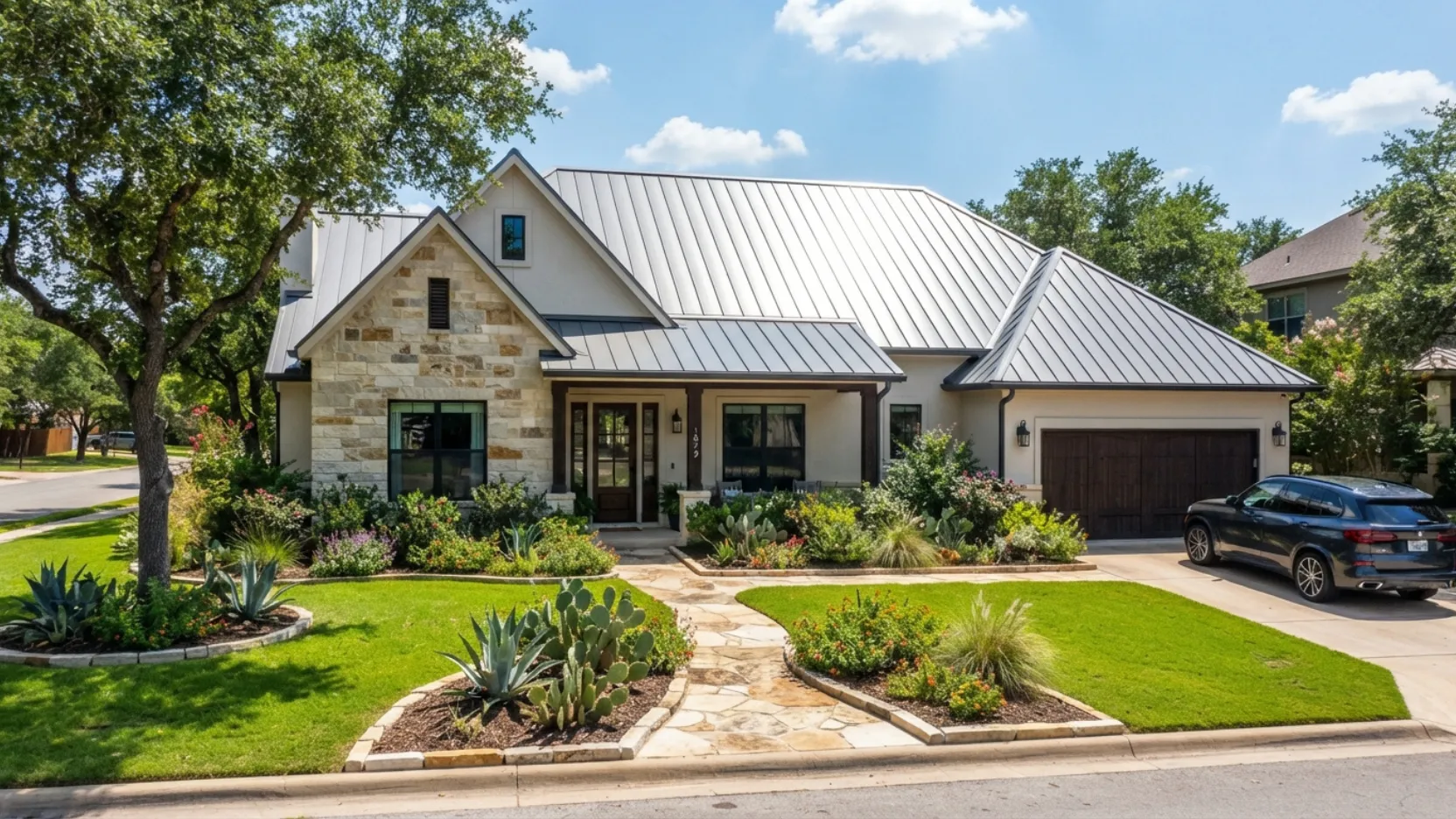
San Antonio’s heat, hailstorms, and high winds push asphalt shingle roofs to their limits. This complete guide explains why metal roofing consistently outperforms every other roofing material in the Texas Hill Country climate, and what San Antonio homeowners need to know before making the switch.
If you own a home in San Antonio, your roof faces conditions that most of the United States never has to deal with. Summer temperatures routinely push past 100 degrees Fahrenheit, UV exposure is relentless from March through October, hailstorms roll through Bexar County every year with increasing frequency, and the wind events that come with those storms regularly exceed what a standard asphalt shingle roof is designed to handle. Asphalt shingles are what most builders install because they are cheap. They are not what most roofing professionals would choose for their own homes in this climate.
Metal roofing was built for exactly these conditions. It handles heat, wind, hail, and UV exposure in ways that asphalt simply cannot match. The upfront cost is higher than asphalt, and that is the honest starting point of every metal roofing conversation. But when you run the numbers over a realistic ownership period, and when you account for what asphalt shingles actually cost San Antonio homeowners in repeated replacements, storm repairs, energy bills, and insurance claims, the comparison looks very different.
The cheapest roof to install is almost never the cheapest roof to own. A standard asphalt shingle roof in San Antonio costs $8,000 to $14,000 installed and lasts 15 to 20 years in this climate. A metal roof costs $15,000 to $30,000 installed and lasts 50 or more years. Over a 50-year period, the asphalt shingle homeowner replaces their roof two to three times, pays higher energy bills every summer, files more insurance claims after storms, and sells their home at a lower price than the neighbor with a metal roof. This guide puts exact numbers on every one of those differences.
Heat and UV
Asphalt shingles degrade in direct sunlight. The petroleum-based binders that hold asphalt shingles together break down under sustained UV exposure, causing the shingles to crack, curl, and shed granules over time. In cooler, cloudier climates, this process takes 25 to 30 years. In San Antonio, where the sun is intense and summer temperatures regularly heat a roof surface to 150 to 180 degrees Fahrenheit, the same process happens in 12 to 18 years. The shingles that carried a 30-year warranty in the manufacturer’s test lab are not being tested in a Texas Hill Country summer.
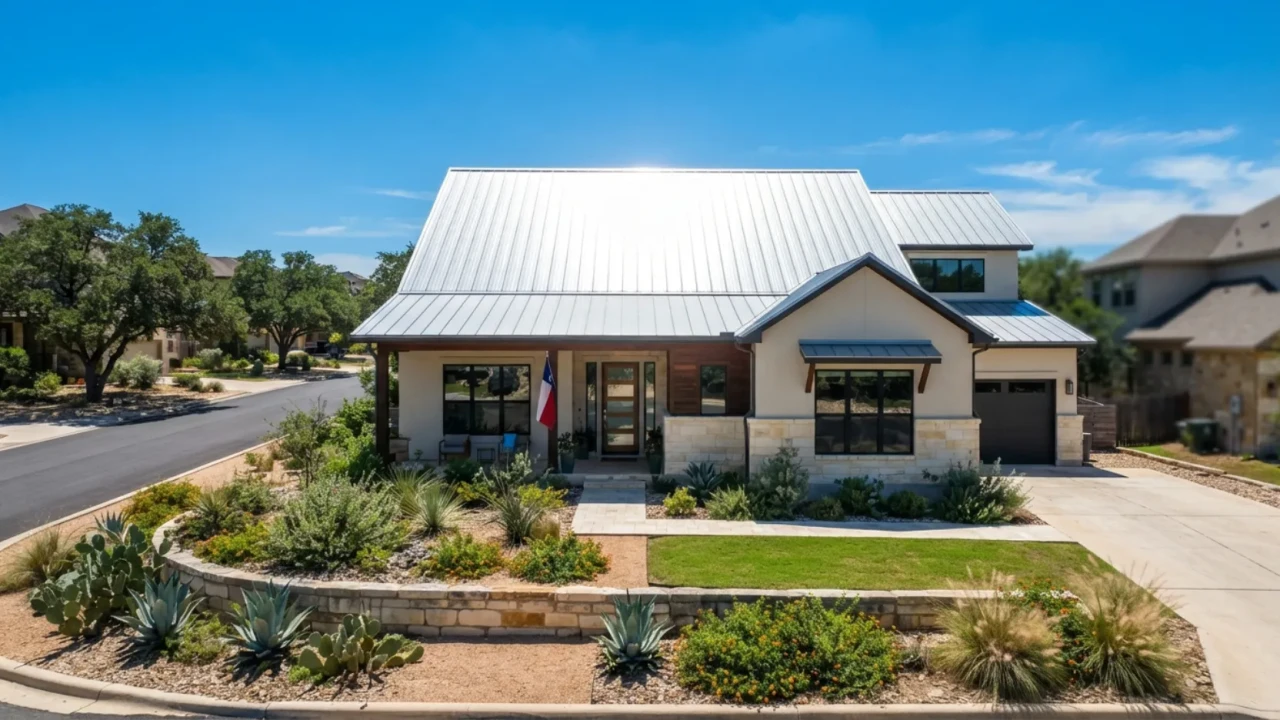
Metal roofing handles heat differently. A bare metal surface absorbs heat, but metal roofing panels installed in San Antonio are coated with reflective PVDF (Kynar) paint systems or cool-roof-rated finishes that reflect a significant portion of solar radiation rather than absorbing it. An Energy Star-rated metal roof reflects up to 70 percent of solar energy that strikes it. The roof surface stays cooler, the attic stays cooler, and the air conditioning system runs less to maintain comfortable indoor temperatures.
Metal does not deteriorate from heat. Unlike asphalt, the coating on a metal roof panel is not being broken down by UV exposure year after year. The PVDF coatings used on quality metal roofing panels are rated to maintain their reflectivity and color for 30 or more years without significant degradation. The panel underneath is steel or aluminum, which heat does not degrade.
- Cool-rated metal roofing reflects up to 70 percent of solar radiation, versus 5 to 25 percent for asphalt
- Asphalt shingles in San Antonio typically degrade in 12 to 18 years due to UV and heat exposure
- Metal roof surface temperatures run 40 to 60 degrees cooler than asphalt under the same sun conditions
- Summer cooling cost reductions of 25 to 40 percent are consistently reported by San Antonio metal roof owners
- PVDF (Kynar) coatings maintain reflectivity for 30 or more years without significant degradation
- Energy Star-rated metal roofing may qualify for federal energy efficiency tax credits
Wind Resistance
San Antonio is not a coastal city, but it is not insulated from high-wind events. Derecho storms, severe thunderstorm cells, and the occasional tropical system remnant that tracks inland from the Gulf Coast all bring winds that regularly exceed 60 miles per hour across Bexar County. Asphalt shingle roofs are typically rated to withstand 60 to 90 mph winds, and that rating applies only when the shingles are new and properly adhered. As shingles age and the adhesive seal strips degrade, effective wind resistance drops well below the rated value. A 10-year-old asphalt shingle roof in San Antonio is not providing 90-mph wind protection.
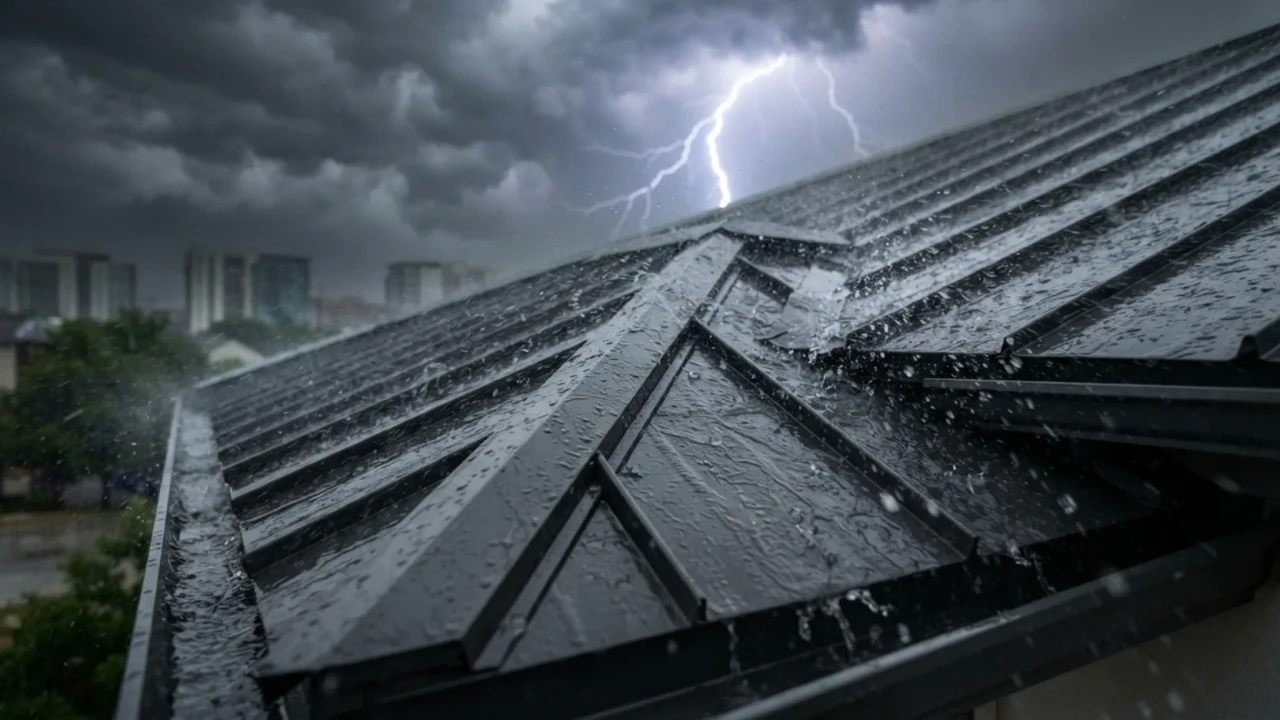
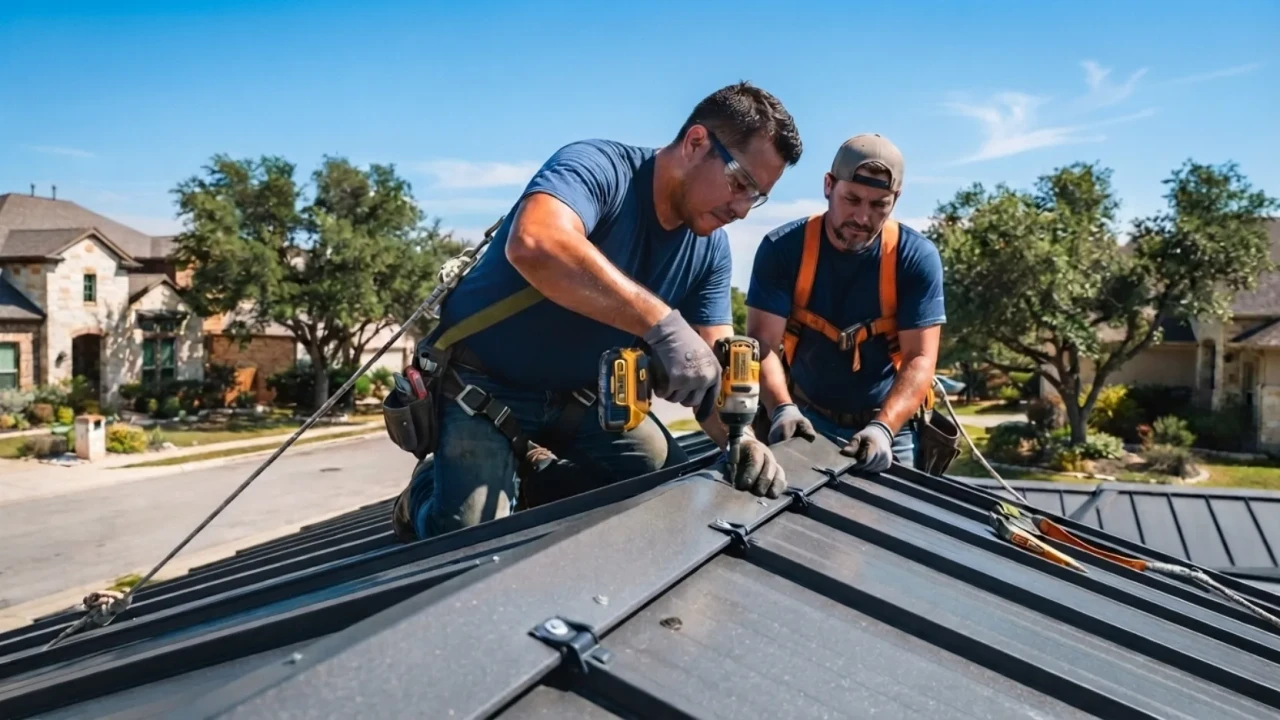
Standing seam metal roofing achieves wind ratings of 140 mph and higher when properly installed because the panel system works differently from asphalt shingles. Instead of individual shingles held down by adhesive strips and a few roofing nails, a standing seam panel runs continuously from ridge to eave and is secured at concealed clips that lock into the raised seams. There are no exposed edges for wind to get under. The panels cannot peel back individually the way shingles do.
Exposed-fastener metal panels carry lower wind ratings than standing seam but still outperform asphalt in most scenarios. The key difference is that metal panels, even with exposed fasteners, are installed in large continuous sections that do not have the same weak points at every course line that asphalt shingles do.
Many Texas homeowners insurance companies offer premium discounts for homes with wind-rated metal roofing. The discount varies by insurer and policy, but discounts of 20 to 35 percent on the wind and hail portion of a homeowners insurance premium are achievable with a properly documented metal roof installation. Ask your insurance agent specifically about discounts for Class 4 impact-rated and high-wind-rated metal roofing before your next renewal. The savings can meaningfully offset the higher upfront cost of metal over the ownership period.
- Standing seam metal roofing is rated to 140 mph or higher when properly installed
- Asphalt shingle wind resistance degrades significantly as the roof ages past 8 to 10 years
- Metal panels do not have the individual shingle edge weakness that lets wind peel asphalt roofs
- A wind-rated metal roof can qualify for homeowners insurance discounts in Texas
- Metal roof wind ratings remain effective for the life of the roof, unlike asphalt adhesive strips
- Concealed clip systems in standing seam panels provide the highest level of wind uplift resistance
Hail Protection
San Antonio and Bexar County sit within one of the most hail-prone regions in the entire country. The National Weather Service records multiple significant hail events across the greater San Antonio area most years, including events with hailstones reaching golf ball size and larger. A single hail event in March 2023 produced losses exceeding $1 billion in insured property damage across the San Antonio metro. For homeowners in this market, hail is not a low-probability event. It is a regular operating condition.
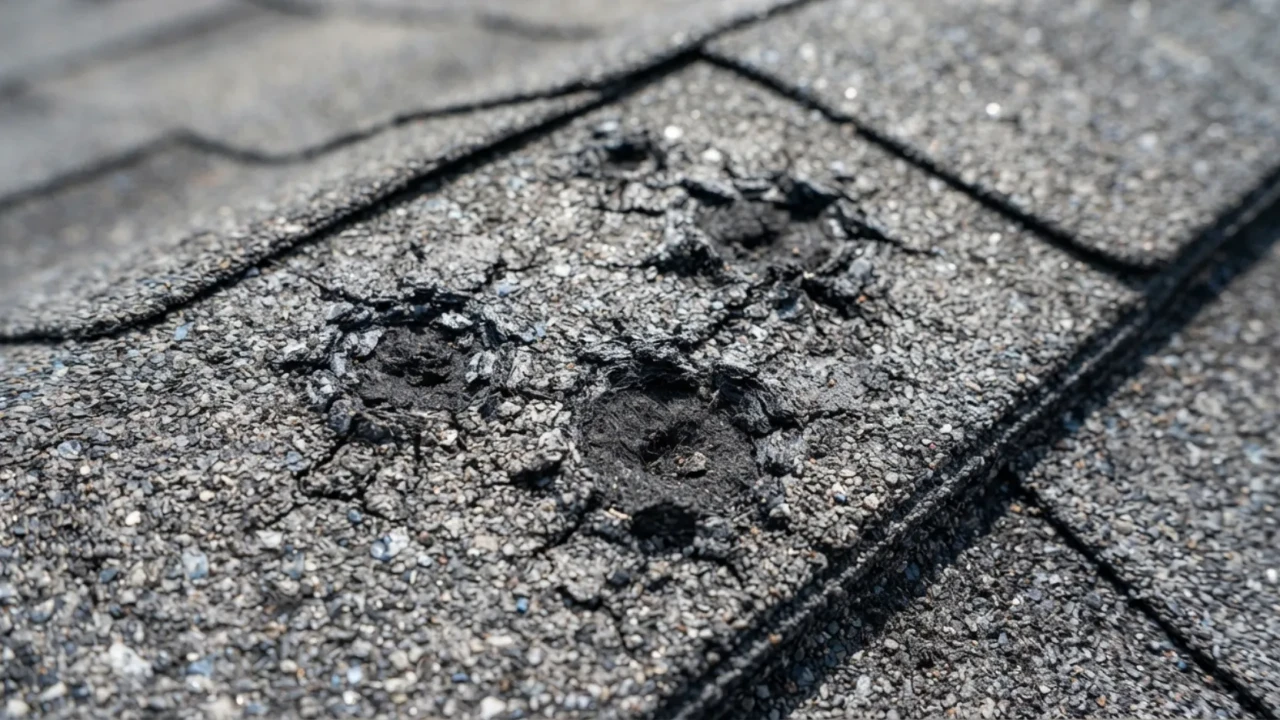
Asphalt shingles and hail are a poor combination. Even moderate hail, in the three-quarter inch to one-inch range, can bruise asphalt shingles and break down the granule coating that protects the underlying mat from UV and moisture. Larger hail cracks the shingle, exposing the base material to water intrusion. The damage may not cause an immediate leak, but it shortens the remaining lifespan of the roof significantly. After a major hail event in San Antonio, roofing contractors spend months replacing asphalt roofs across the affected area.
Class 4 impact-rated metal roofing is tested to withstand 2-inch steel ball impact at 88 mph without fracturing or cracking. That rating corresponds to larger-than-golf-ball hailstone impacts. Steel roofing panels with a Class 4 rating absorb hail impact through slight surface denting without the coating fracturing or the panel’s structural integrity being compromised. After a hail event that devastates an asphalt roof, a Class 4 metal roof typically shows minor cosmetic denting that has no effect on the roof’s performance or remaining lifespan.
- San Antonio is one of the most hail-active metro areas in the United States
- Class 4 UL 2218 impact-rated metal roofing withstands 2-inch hailstone impact without fracturing
- Asphalt shingles sustain granule loss and mat exposure from hail events as small as three-quarter inch
- Class 4 metal roofing qualifies for significant wind and hail insurance premium discounts in Texas
- Metal roofing does not lose its impact rating over time the way asphalt loses its integrity
- Cosmetic hail denting on metal panels does not affect performance or require immediate repair
Energy Efficiency
The average San Antonio household spends significantly more on electricity for cooling than the national average. Summer runs from late April through October, not just the three peak months that the national averages reflect. An asphalt shingle roof that absorbs solar heat and radiates it into the attic for hours after sunset is one of the largest contributors to a San Antonio home’s cooling load. Reducing that load is not just a comfort improvement. It is a monthly cost reduction that compounds over the life of a 50-year metal roof.
The energy efficiency advantage of metal roofing in San Antonio comes from two mechanisms working together. The first is solar reflectance: cool-rated metal roof coatings reflect a large portion of incoming solar radiation before it is absorbed into the roof structure. The second is thermal emittance: metal panels release absorbed heat quickly rather than holding it, which means the roof cools down rapidly after sunset rather than radiating stored heat into the attic through the night.
The color of your metal roof affects its energy performance significantly. Lighter colors (white, light gray, light tan) have the highest solar reflectance values and deliver the biggest cooling cost reductions. Darker colors (charcoal, dark bronze, dark red) have lower reflectance but can still outperform asphalt shingles in energy efficiency if they carry a cool-roof-rated pigment coating. Ask your contractor to provide the Solar Reflectance Index (SRI) rating for any panel color you are considering. For maximum energy savings in San Antonio, target a SRI of 29 or higher for steep-slope roofing applications.
- Cool-rated metal roofing reflects 50 to 70 percent of solar radiation versus 5 to 25 percent for asphalt
- San Antonio homeowners consistently report 25 to 40 percent cooling cost reductions after switching to metal
- Metal panels cool rapidly after sunset rather than holding heat like asphalt does
- Energy Star-rated metal roofing may qualify for federal tax credits under current IRS guidelines
- Lighter panel colors deliver higher Solar Reflectance Index (SRI) values and bigger energy savings
- The energy savings compound over a 50-year metal roof lifespan into significant total cost reductions
Cost and Lifespan
The most common objection to metal roofing is the upfront cost. A metal roof installation in San Antonio typically runs $15,000 to $30,000 for a standard residential home, versus $8,000 to $14,000 for asphalt shingles. That difference is real, and it matters. What also matters is what happens to that cost difference over time when you account for everything a roof actually costs you over your ownership period.
| Cost category | Asphalt shingles (50-yr total) | Metal roofing (50-yr total) |
|---|---|---|
| Installation cost | $8,000 to $14,000 x 2 to 3 replacements = $16,000 to $42,000 | $15,000 to $30,000 for one installation |
| Storm repair costs | $2,000 to $8,000 across multiple hail and wind events | $500 to $2,000 for minor maintenance only |
| Cooling cost premium | $45,000 to $90,000 in extra cooling costs over 50 years | Baseline (30%+ lower cooling costs vs. asphalt) |
| Insurance premium savings | No discount for standard asphalt | $200 to $600 per year x 50 years = $10,000 to $30,000 in savings |
| Resale value | Standard market expectation | 6 percent or more average premium on home value |
| Estimated 50-year total cost | $63,000 to $140,000+ | $15,000 to $30,000 (plus modest maintenance) |
- Metal roofing in San Antonio lasts 50 to 70 years versus 15 to 18 years for asphalt shingles
- Two to three asphalt replacements over 50 years cost more in materials and labor than one metal roof
- Energy savings of $900 to $1,800 per year reduce the effective cost of the metal roof premium every year
- Insurance discounts of $200 to $600 per year are achievable with Class 4 impact-rated metal roofing
- Most San Antonio homeowners recover the metal roof premium through savings alone within 7 to 12 years
- A metal roof adds 6 percent or more to home resale value compared to an aging asphalt shingle roof
Home Value
Real estate agents in San Antonio consistently report that a metal roof is a meaningful selling point that affects both buyer interest and negotiating position. In a market where buyers are increasingly aware of how San Antonio’s weather affects roofing costs, a home with a 5-year-old metal roof and a 45-year remaining service life is in a categorically different position than a home with a 12-year-old asphalt shingle roof that will need replacement within the next five years.
The documented resale value premium for metal roofing ranges from 1 to 6 percent of home value depending on the study and the market. In a San Antonio market where median home values are well above $300,000 in most established neighborhoods, a 6 percent premium translates to $18,000 or more in added sale price. That figure alone covers a significant portion of the premium that metal roofing costs over asphalt at installation time.
Beyond the appraised value increase, a metal roof changes the buyer negotiation dynamic. A home inspection on a house with an aging asphalt roof in San Antonio almost always produces a comment about the roof’s age and remaining estimated life. Buyers use that information to negotiate price reductions or repair credits. A home with a metal roof eliminates that negotiation entirely and removes the roof from the list of buyer concerns. In a competitive market, that clarity is worth something beyond the appraised premium.
- Metal roofing adds 1 to 6 percent to home resale value versus a comparable asphalt shingle roof
- On a $320,000 San Antonio home, a 6 percent premium means approximately $19,000 in additional sale price
- A metal roof removes the roof from buyer inspection concerns and deferred maintenance negotiations
- Buyers increasingly recognize the 50-year lifespan advantage and price accordingly in the San Antonio market
- Listing agents report faster offers on homes with documented recent metal roof installations
- The resale premium partially offsets the upfront metal roof premium at the time of sale
Maintenance
One of the quieter advantages of metal roofing in San Antonio is what it does not require. Asphalt shingle roofs in this climate need regular inspection for granule loss, cracking, and curling. Shingles that have started to fail need to be identified and replaced before they allow water infiltration. After every significant storm, the responsible homeowner should have the roof inspected to assess whether hail or wind damage has compromised the shingles’ remaining life. For an asphalt roof homeowner in San Antonio, the roof is a recurring maintenance and worry item throughout the year.
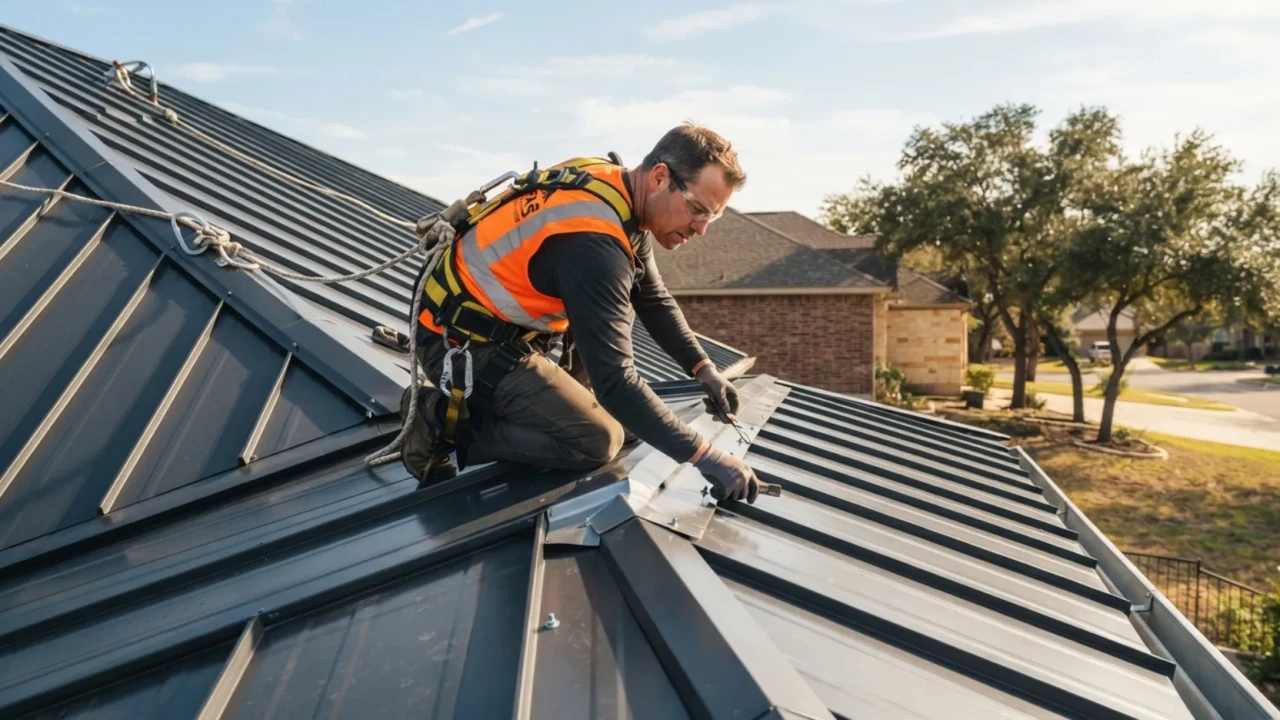
A metal roof requires significantly less ongoing attention. The primary maintenance tasks for a steel or aluminum roof in San Antonio are periodic professional inspection every two to three years to check fasteners, sealants, and flashing; gutter cleaning to prevent debris accumulation against the panel edges; and prompt treatment of any areas where the protective coating has been scratched or damaged to prevent rust development on steel panels. None of these tasks require a new roof or major expense.
What metal roofing does require is honest acknowledgment that it is not maintenance-free. Fasteners on exposed-fastener panels back out over time under San Antonio’s extreme thermal cycling. Sealants around flashings, penetrations, and ridge caps degrade over a decade or more and need to be inspected and replaced before they become leak sources. A metal roof that is genuinely neglected for 20 years will develop problems. A metal roof that receives the routine inspection and maintenance it is designed for will reach 50 or more years without major issues.
- Professional metal roof inspection every 2 to 3 years is all that is required in most cases
- Fasteners and sealants at penetrations need periodic inspection and replacement over the roof’s life
- Steel panels require coating touch-up when scratched to prevent rust from developing at bare metal spots
- Gutters should be kept clear to prevent debris accumulation against panel edges and eave trim
- A metal roof maintained properly requires no major repair or partial replacement work for decades
- Total maintenance cost over a 50-year metal roof lifespan is a fraction of the asphalt replacement cost
Every meaningful difference between metal roofing and asphalt shingles for a San Antonio home is captured in the table below. Use it as a reference when evaluating roofing options or comparing contractor proposals.
| Category | Metal roofing | Asphalt shingles | Advantage |
|---|---|---|---|
| Installed cost (San Antonio) | $15,000 to $30,000 | $8,000 to $14,000 | Asphalt (upfront) |
| Expected lifespan in SA climate | 50 to 70 years | 15 to 18 years | Metal |
| Wind rating | 120 to 140+ mph (standing seam) | 60 to 90 mph (new only) | Metal |
| Hail resistance | Class 4 impact rated | Class 3 or lower; degrades with age | Metal |
| Summer cooling costs | 25 to 40% lower than asphalt | Standard (higher baseline) | Metal |
| Maintenance requirements | Low inspection every 2 to 3 years | Higher regular inspection and repair | Metal |
| Insurance premium impact | Up to 35% discount (wind and hail) | Standard rate | Metal |
| Home resale value | 1 to 6% premium documented | No premium; aging roof is a liability | Metal |
| Environmental impact | Recyclable; 25 to 95% recycled content | Petroleum-based; landfill waste at end of life | Metal |
| 50-year total cost of ownership | $15,000 to $30,000 plus modest maintenance | $63,000 to $140,000+ (all factors included) | Metal |
- Assess your current roof’s age and condition roofs over 10 years old in San Antonio are worth replacing with metal rather than patching
- Determine your ownership horizon if you plan to stay 10 or more years, metal delivers clear total cost advantages
- Check with your Texas homeowners insurer about Class 4 impact rating and wind-rated metal roof discounts before getting quotes
- Evaluate whether your home’s framing can support the weight of the metal system being considered (your contractor will assess this)
- Confirm that your HOA, if applicable, permits metal roofing and the color you are considering
- Decide between standing seam and exposed-fastener panels based on your wind resistance priority and budget
- Choose steel or aluminum based on your location, budget, and structural load considerations
- Select a panel color with a high Solar Reflectance Index (SRI) rating to maximize energy savings in San Antonio summers
- Confirm that the panel you select carries a Class 4 impact rating if insurance premium discounts are a goal
- Verify the coating type being proposed: PVDF (Kynar) coatings are the standard for long-term color and reflectivity performance
- Confirm the contractor holds a valid Texas roofing contractor license and carries at least $1M general liability insurance
- Ask for specific experience with the panel profile and material you have selected, not just general metal roofing experience
- Request a minimum of three local San Antonio references for completed metal roof installations within the past two years
- Verify that the quote includes underlayment, flashing, ridge cap, fasteners, and disposal of the existing roof
- Confirm the workmanship warranty period and what it covers, separate from the panel manufacturer’s material warranty
- Get at least two written quotes before making any deposit or signing any contract
How much does metal roofing cost in San Antonio?
Is metal roofing worth it for a San Antonio home?
Does metal roofing make a house hotter in San Antonio summers?
How does metal roofing handle the hail we get in San Antonio?
Is metal roofing noisy when it rains in San Antonio?
How long does a metal roof installation take in San Antonio?
Get a free metal roofing quote for your San Antonio home
Tell us about your home and your current roof. We will inspect it at no cost, explain your metal roofing options clearly, and give you a written quote you can compare with confidence.
[/et_pb_code][/et_pb_column][/et_pb_row][/et_pb_section]