
[et_pb_section fb_built=”1″ admin_label=”section” _builder_version=”4.16″ global_colors_info=”{}”][et_pb_row admin_label=”row” _builder_version=”4.16″ background_size=”initial” background_position=”top_left” background_repeat=”repeat” global_colors_info=”{}”][et_pb_column type=”4_4″ _builder_version=”4.16″ custom_padding=”|||” global_colors_info=”{}” custom_padding__hover=”|||”][et_pb_code _builder_version=”4.27.6″ _module_preset=”default” hover_enabled=”0″ sticky_enabled=”0″]
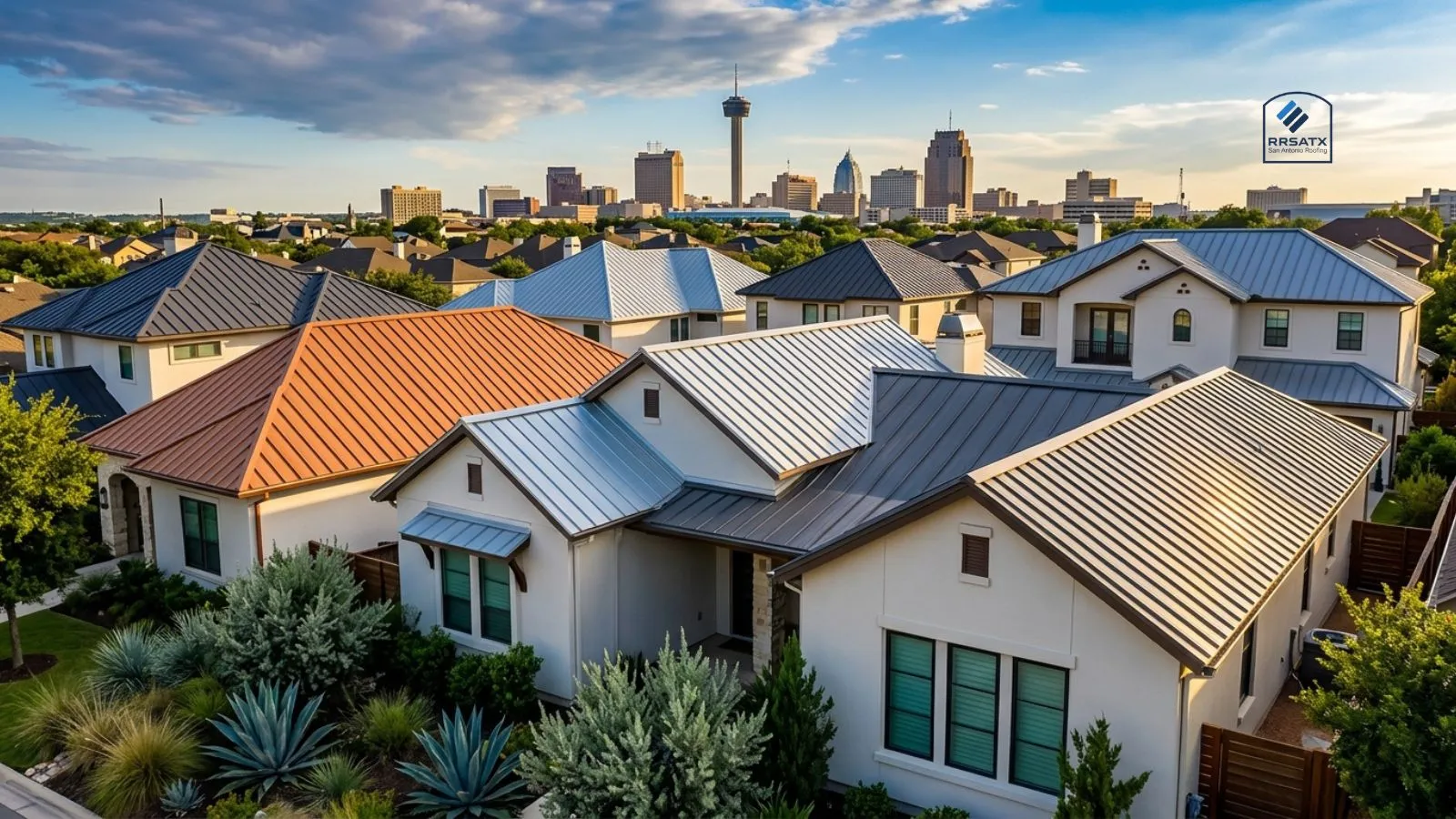
Drive through almost any San Antonio neighborhood and you will notice it: metal roofs everywhere, on new builds, ranch homes, and commercial buildings alike. This guide explains exactly why metal roofing has become the dominant choice in San Antonio, from the climate that demands it to the insurance incentives that reward it.
If you have spent any time looking at rooflines across San Antonio, you have probably noticed how often metal shows up. It is not a coincidence, and it is not just a passing trend. San Antonio sits in a climate that is genuinely hard on roofing materials, and metal roofing answers more of that climate’s specific challenges than almost any other option on the market.
This guide walks through the real reasons metal roofing has become so common across San Antonio and Bexar County: the heat, the hail, the insurance math, the long-term cost picture, and the way local building styles have shifted toward metal over the last two decades. By the end, you will understand exactly why your neighbor’s roof might be metal, and whether it makes sense for your home too.
Extreme summer heat, frequent severe hailstorms, and long roof lifespans all favor metal over asphalt shingles. Add in insurance discounts for impact-resistant roofing and rising shingle replacement costs after storms, and metal roofing has shifted from a premium niche choice to a mainstream one across San Antonio in the last 15 years.
Heat & Energy
San Antonio regularly sees more than 100 days a year above 90 degrees Fahrenheit, and summer roof surface temperatures on a dark asphalt shingle roof can climb above 160 degrees on a clear afternoon. That heat radiates directly into the attic and works its way into the living space below, forcing the air conditioning system to run longer and harder.
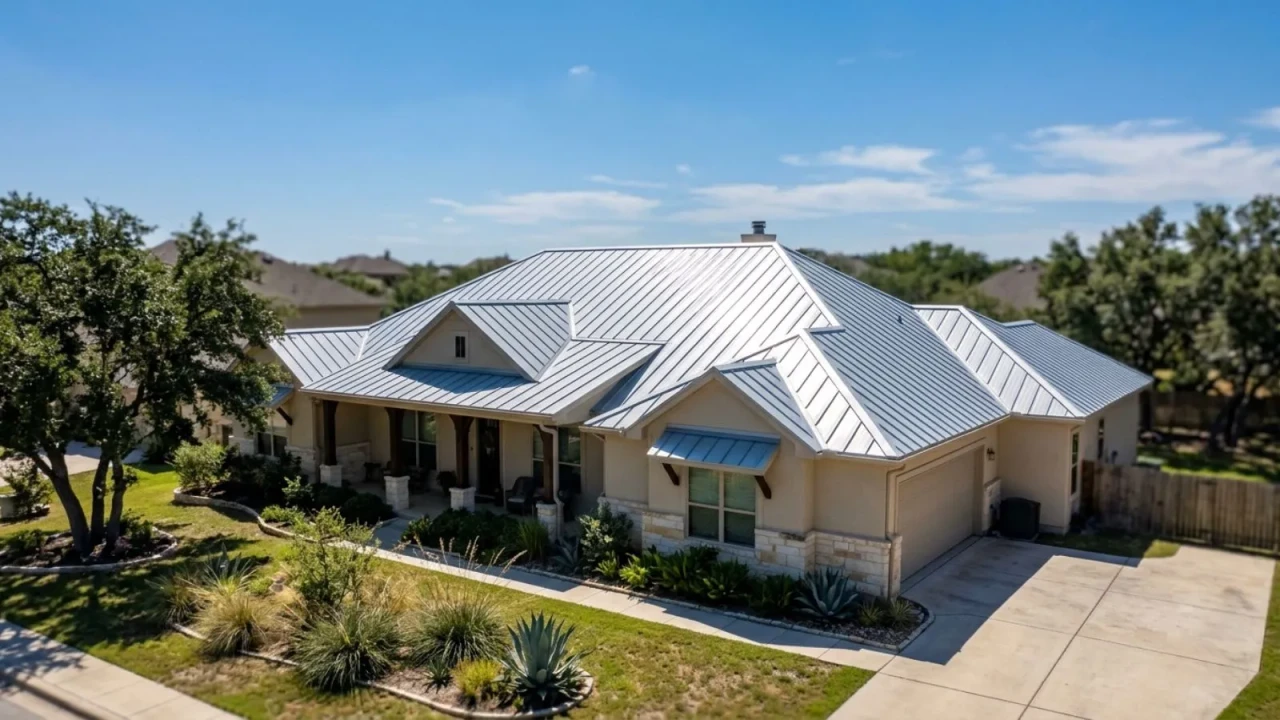
Reflective surface: Metal roofing, especially when finished with a reflective coating, reflects a large share of solar radiation instead of absorbing it the way asphalt shingles do. This single property is responsible for most of the cooling savings homeowners report.
Reduced thermal mass: Metal sheds heat quickly once the sun goes down, while asphalt shingles continue radiating stored heat into the attic well into the evening, keeping cooling systems working longer than they need to.
- Reflective or “cool roof” coating confirmed if energy savings are the primary goal
- Attic ventilation assessed alongside the roofing material, since airflow compounds the benefit
- Panel color considered: lighter colors reflect more heat than dark colors, even in metal
- ENERGY STAR rating confirmed on the specific product if pursuing utility rebates
- Existing insulation levels checked, since a reflective roof works best paired with adequate insulation
Hail & Storms
San Antonio and the broader Texas Hill Country sit inside what meteorologists call hail alley, a corridor that runs through the central United States where the right combination of warm, moist air and strong upper-level winds produces frequent and sometimes severe hailstorms. Bexar County has experienced multiple large hail events over the last two decades that caused widespread roof damage across entire neighborhoods.
Asphalt shingles take a measurable beating from hail. Granule loss, bruising, and cracked mats are common after even moderate hail events, often requiring full roof replacement after a single storm. Metal roofing, particularly standing seam and stone-coated steel systems, handles hail impact dramatically better.
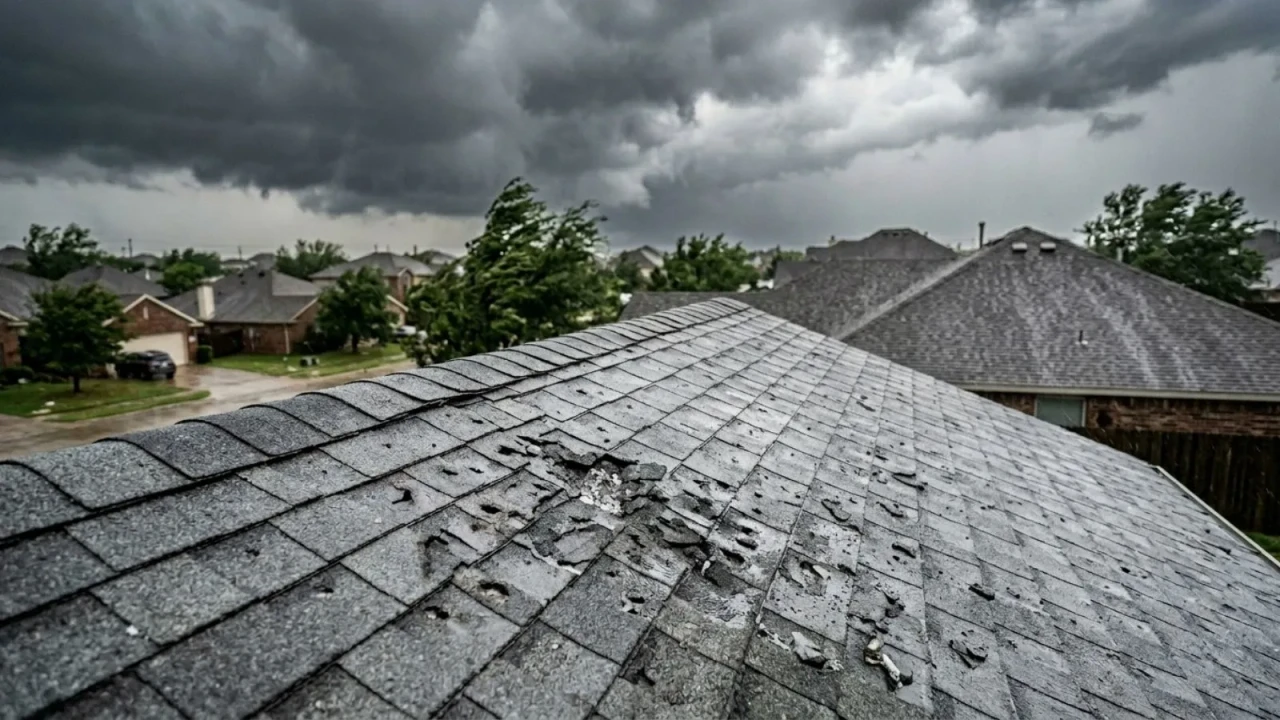
Hail alley exposure: Bexar County sits inside a corridor that produces frequent and sometimes severe hailstorms, with multiple large events causing widespread roof damage across San Antonio neighborhoods over the last two decades.
Material response: Asphalt shingles bruise, lose granules, and crack under hail impact, while standing seam and stone-coated steel panels distribute impact energy across the panel surface with far less functional damage.
Many Texas insurers offer a meaningful premium discount for Class 4 impact-resistant roofing, and metal roofing qualifies in most cases. After a hail event, an asphalt shingle roof with visible granule loss is often a straightforward total-loss claim for the insurer, while a metal roof with cosmetic denting may not trigger a full roof replacement payout at all. Ask your insurance agent specifically about the impact-resistant roofing discount before you assume metal is only a cost, not a savings.
- Impact rating confirmed in writing: UL 2218 Class 4 is the standard to look for
- Insurance discount eligibility confirmed directly with your carrier before installation
- Panel gauge and profile matched to hail exposure history for your specific neighborhood
- Manufacturer warranty checked for hail damage coverage, which varies by product line
- Installation contractor confirmed as licensed and insured for storm-related work
Cost & Lifespan
A standard asphalt shingle roof in San Antonio typically lasts 15 to 20 years, and frequently less once Texas heat and hail exposure are factored in. A properly installed metal roof commonly lasts 40 to 70 years with routine maintenance. That means a homeowner who installs a metal roof today may never need another full roof replacement, while a neighbor with asphalt shingles could face two or three replacement cycles over the same period.
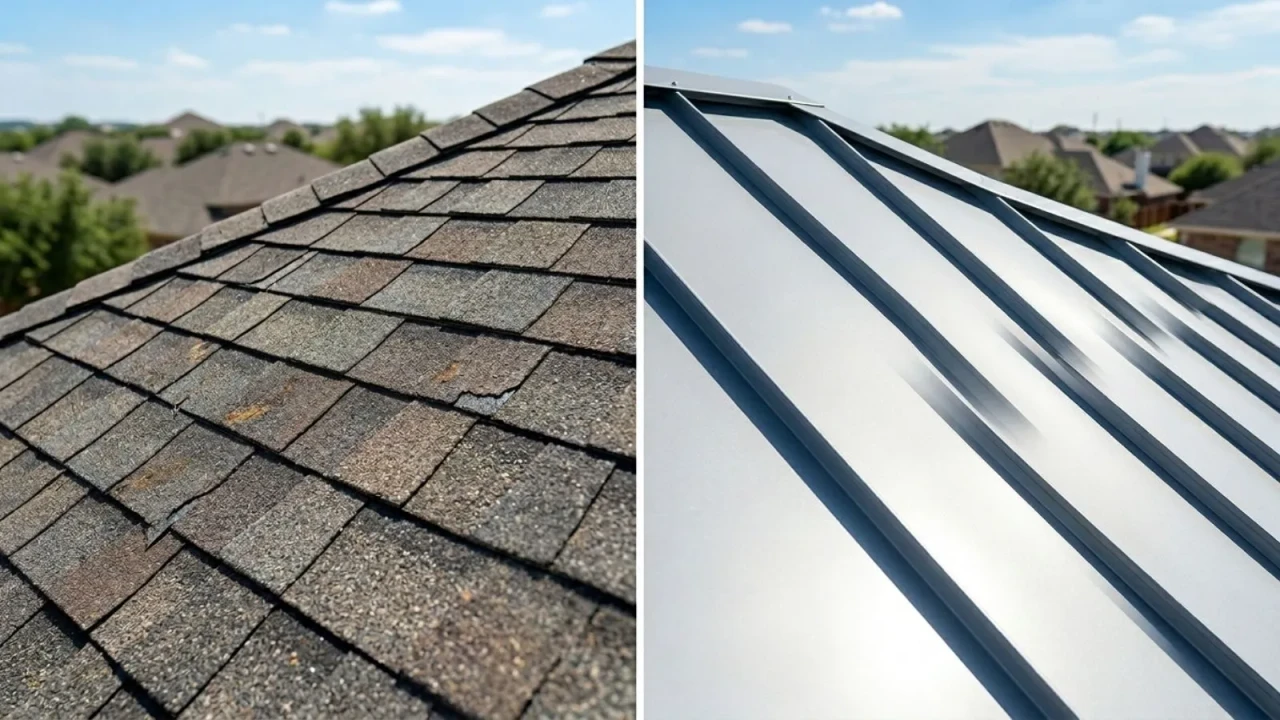
Upfront cost: Metal roofing typically costs more per square foot to install than asphalt shingles, which is the main reason some homeowners hesitate before comparing the full picture.
Life-cycle cost: When you divide total cost by years of service, metal roofing frequently comes out ahead of asphalt shingles, especially once you add in San Antonio’s higher-than-average storm damage frequency and the resulting replacement cycles.
| Factor | Asphalt shingles | Metal roofing |
|---|---|---|
| Typical lifespan in San Antonio | 15 to 20 years | 40 to 70 years |
| Hail resistance | Low to moderate | High, especially Class 4 rated |
| Heat reflectivity | Low, absorbs heat | High, especially with coatings |
| Replacement cycles over 50 years | Two to three full replacements | Zero to one, often none |
| Insurance discount eligibility | Rarely qualifies | Commonly qualifies for Class 4 discount |
Style & Trends
San Antonio’s residential construction has trended heavily toward modern farmhouse and Hill Country architectural styles over the last decade, particularly in growing suburbs and new master-planned communities. Standing seam metal roofing pairs naturally with these design languages, and it has become something of a visual signature for newer San Antonio construction.
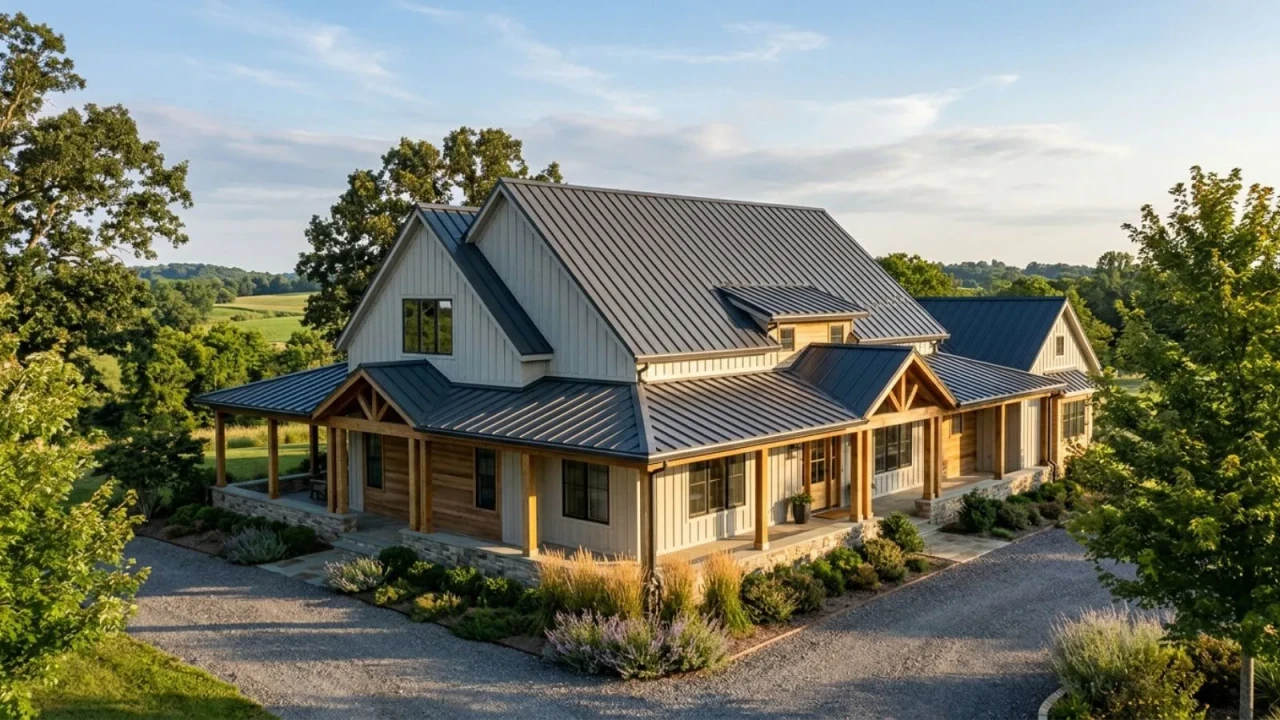
Visual signature: Standing seam’s clean vertical lines have become closely associated with the modern farmhouse and Hill Country looks dominating new San Antonio area construction.
Builder-driven adoption: Several large San Antonio area developers now specify metal as a standard or featured upgrade option, which has accelerated how familiar the look has become across newer neighborhoods.
Beyond pure aesthetics, builders and developers have also embraced metal roofing because it reduces long-term warranty callbacks related to storm damage, which matters for builder reputation in a hail-prone market. As more new neighborhoods adopt metal roofing as the default, it becomes the visible standard that other homeowners notice and ask about.
Maintenance
Asphalt shingles need periodic attention: moss and algae growth in shaded areas, granule loss that accelerates over time, and curling or cracking as UV exposure breaks down the material. Metal roofing largely avoids these issues. It does not host moss or algae the way shingles do, and there is no granule layer to wear away.
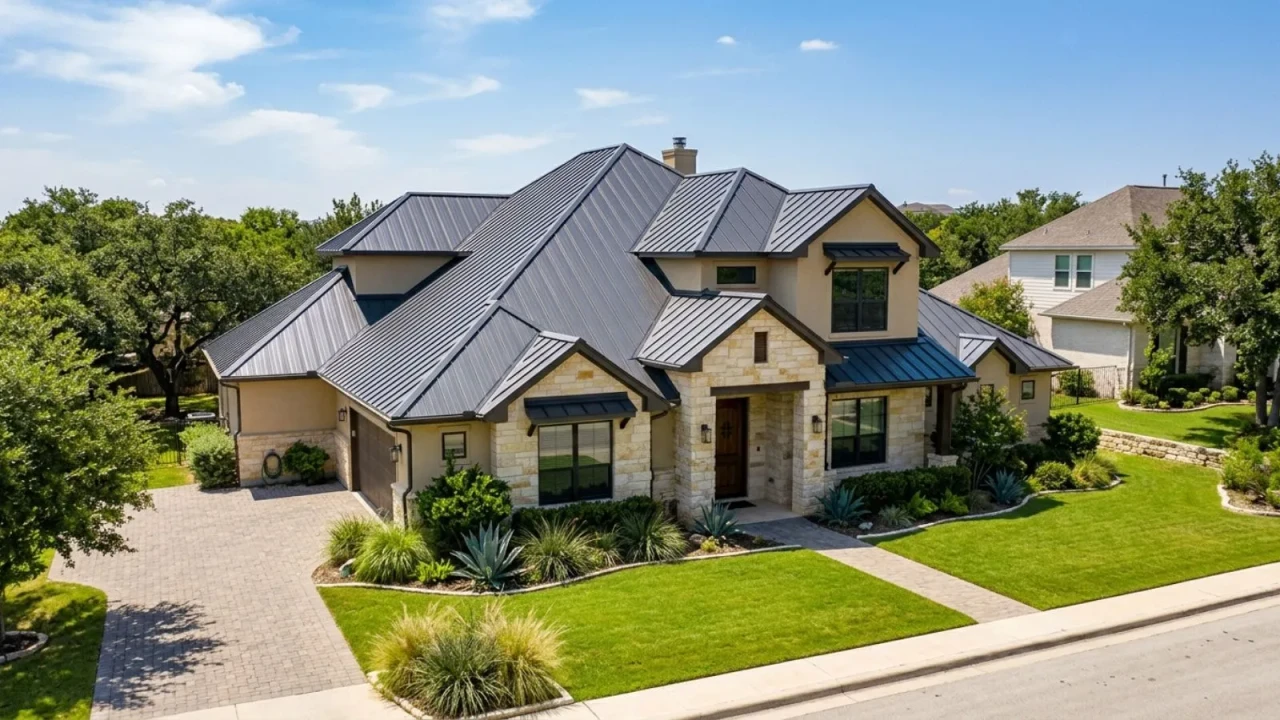
Reduced upkeep: Without a granule layer to shed or an organic surface for moss and algae to colonize, metal roofs require far less routine attention than asphalt shingles in San Antonio’s humid summer months.
Fire performance: Metal panels are noncombustible and carry a Class A fire rating, the highest classification available, which matters as drought conditions and wildfire risk increase in the surrounding Hill Country.
Fire resistance is another factor that matters in Central Texas, where wildfire risk in the surrounding Hill Country has grown along with drought conditions. Metal roofing carries a Class A fire rating, the highest available, while standard asphalt shingles vary by product and underlying construction.
- Fire rating confirmed on the specific product, especially for homes near Hill Country brush areas
- Gutter and valley areas checked periodically for debris that can trap moisture against panels
- Fastener and sealant condition reviewed every two to three years as routine maintenance
- Coating condition assessed for fading or chalking on painted metal panel systems
- Local fire code and HOA requirements confirmed before installation in wildfire-adjacent neighborhoods
Not all metal roofing is the same. San Antonio homeowners typically choose from a handful of panel types depending on budget, architectural style, and whether the building is residential or commercial.
| Panel type | Best for | Relative cost |
|---|---|---|
| Standing seam | Modern farmhouse and Hill Country style homes | Higher |
| Stone-coated steel | Homeowners who want a shingle or tile look with metal durability | Higher |
| Corrugated panel | Porches, additions, ranch-style accents, agricultural buildings | Lower |
| Exposed-fastener panel | Commercial buildings and budget-conscious residential projects | Lower to moderate |
| Metal shingles | Historic or traditional neighborhoods with HOA style restrictions | Moderate to higher |
- Summer cooling costs and current attic ventilation reviewed as part of the decision
- Hail history for your specific neighborhood checked against panel impact ratings
- Fire risk assessed if the home sits near Hill Country brush or wildfire-adjacent terrain
- Wind uplift rating confirmed for the panel system relative to local wind exposure
- Total cost of ownership compared over 30 to 50 years, not just upfront installation cost
- Insurance agent contacted directly to confirm the Class 4 impact-resistant roofing discount
- Manufacturer warranty terms compared across at least two metal roofing product lines
- Financing or payment options discussed with your contractor if upfront cost is a concern
- Contractor confirmed as licensed, insured, and experienced specifically with metal roofing
- HOA or historic district style requirements confirmed before finalizing panel type and color
- Written estimate received with specific panel gauge, profile, and coating specified
- Certificate of insurance verified with at least $1 million general liability coverage
Why do so many homes in San Antonio have metal roofs?
Is a metal roof actually worth the higher upfront cost in San Antonio?
Does a metal roof really lower air conditioning costs in Texas heat?
Will a metal roof actually survive San Antonio hailstorms?
Does homeowners insurance actually give a discount for metal roofs in Texas?
Is metal roofing noisy during San Antonio rainstorms?
Considering a metal roof for your San Antonio home?
Tell us about your current roof, your budget, and what matters most to you, whether that is energy savings, hail protection, or long-term value. We will walk you through your options and give you a clear written estimate at no cost.
[/et_pb_code][/et_pb_column][/et_pb_row][/et_pb_section]