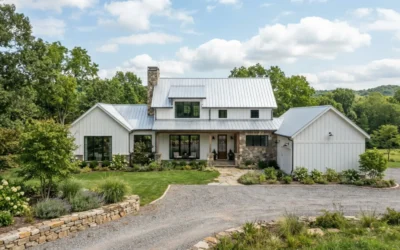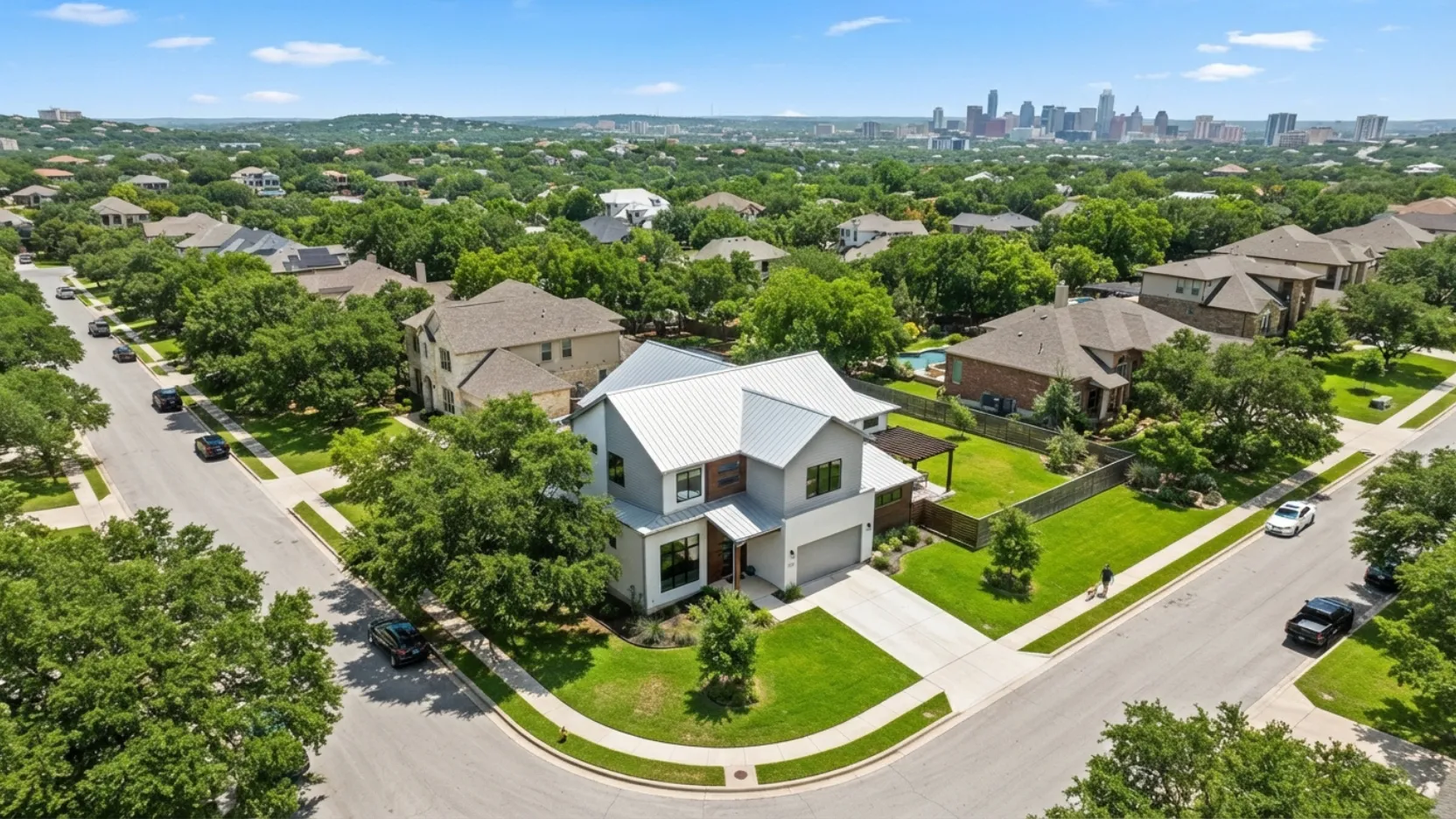
Metal roofs last 40 to 70 years in most climates, and in San Antonio they often outlast two or three generations of asphalt shingles on the same house. This guide covers every factor that determines how long your metal roof will actually last by material type, coating, installation quality, and the specific demands of the Texas climate.
When San Antonio homeowners start seriously looking at metal roofing, the lifespan question is almost always the first one they ask. And it is exactly the right question to ask, because the answer is what makes metal roofing financially attractive even at two to three times the upfront cost of asphalt shingles. A metal roof that lasts 50 years eliminates two or three full shingle replacement cycles, along with the inspection costs, warranty gaps, and weather vulnerability that come with each one.
The honest answer to "how long does a metal roof last?" is not a single number. It depends on which metal you choose, which coating system is applied to it, how well the roof is installed, how aggressively the Texas weather has treated it, and how consistently it has been maintained over the years. This guide breaks all of those factors down so you can set realistic expectations for a metal roof on your specific San Antonio property and understand exactly what makes the difference between a 40-year roof and a 70-year roof.
Material matters. Coating systems matter. Maintenance matters. But nothing has a bigger impact on how long a San Antonio metal roof actually lasts than the quality of the installation. A premium standing seam steel panel installed incorrectly will fail years before a standard corrugated panel installed by an experienced crew. Fastener placement, overlap sealing, flashing integration, ridge cap detailing, and thermal expansion allowance are all decisions made at installation time and every one of them affects how the roof performs over the next five decades. The most important investment you make in metal roof longevity is choosing the right contractor, not just the right panel.
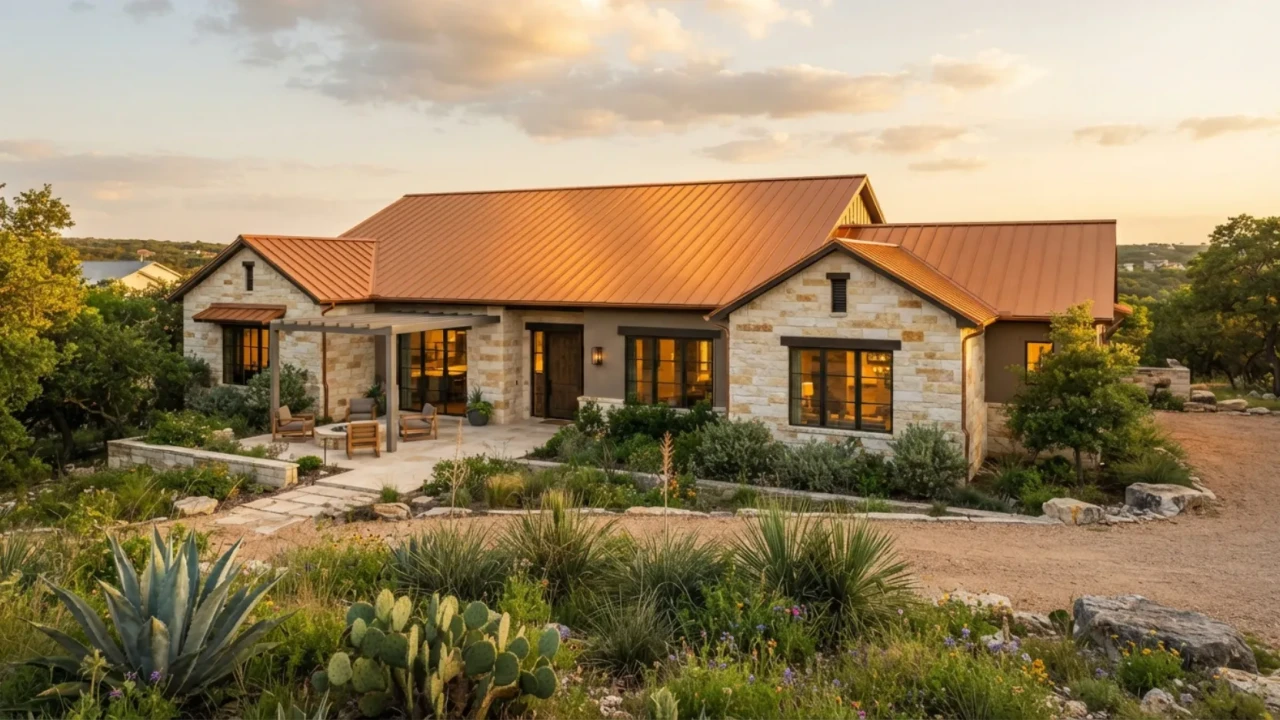
Steel is by far the most widely installed metal roofing material in San Antonio and across Texas. It is the material behind most standing seam roofs, corrugated panel systems, and stone-coated steel tile products you see on residential and commercial buildings in Bexar County. When people in San Antonio ask how long a metal roof lasts, they are usually asking about steel, whether they know it or not.
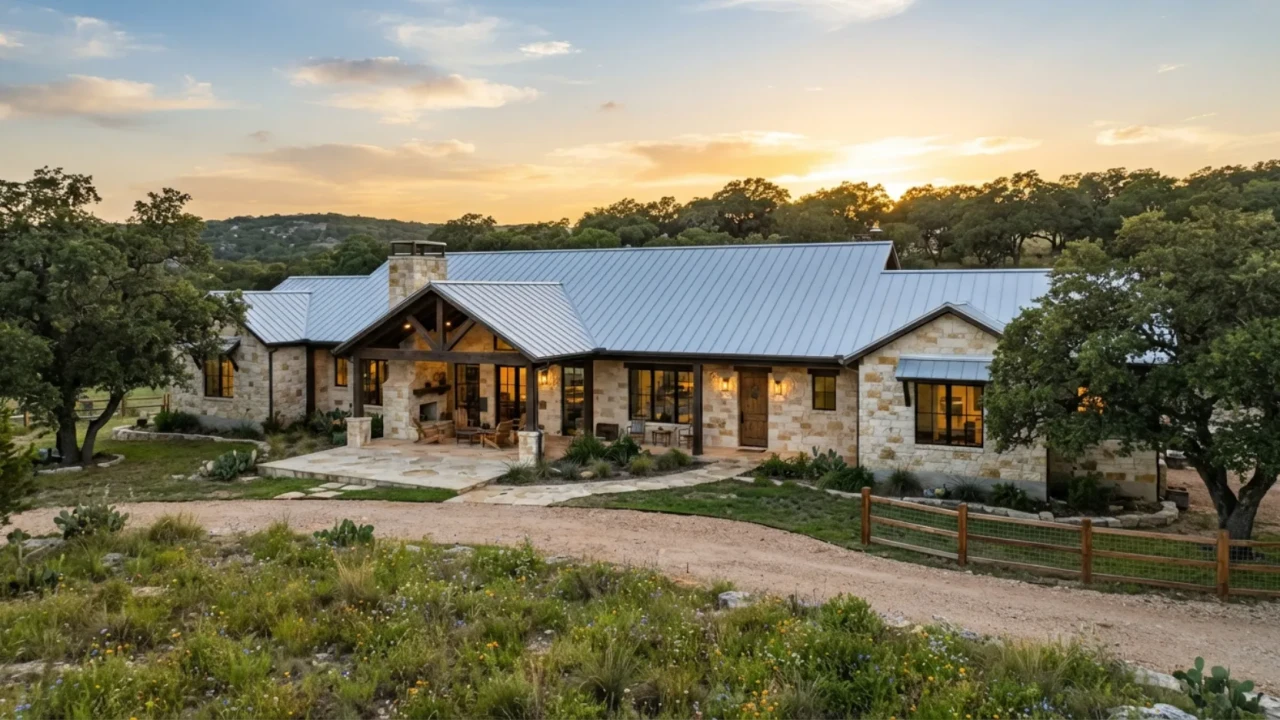
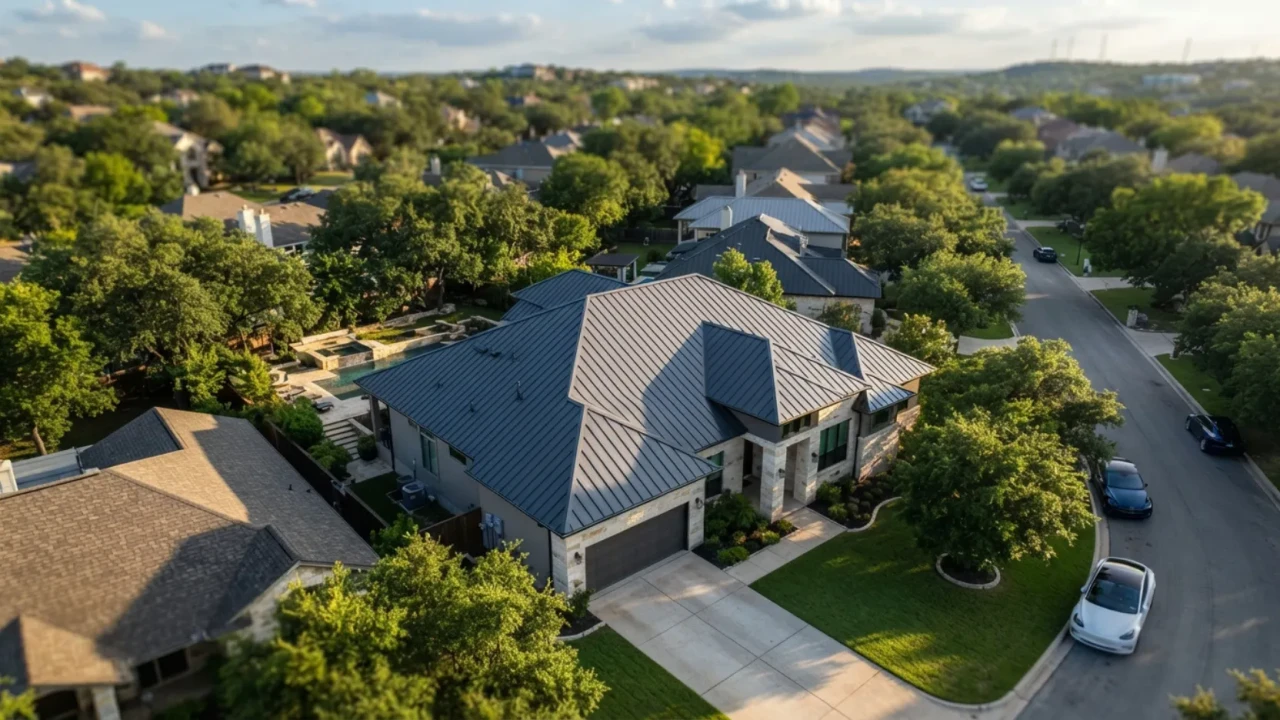
Galvalume steel is the standard for quality residential metal roofing. The Galvalume coating a zinc-aluminum alloy applied during manufacturing protects the base steel from the corrosion that would otherwise develop in Texas humidity and weather. A quality Galvalume steel roof with a Kynar paint system installed in San Antonio will typically last 40 to 70 years before replacement is needed.
Galvanized steel uses a zinc-only coating and is less corrosion-resistant than Galvalume. It was the standard for decades but has largely been replaced by Galvalume in quality residential applications. Galvanized steel roofs typically last 20 to 40 years, significantly shorter than Galvalume at the same gauge and paint system.
- Confirm the panel is Galvalume coated, not galvanized only the difference in corrosion resistance is significant
- Request 24-gauge panels rather than 26-gauge if maximizing lifespan is the priority
- Insist on a Kynar 500 or PVDF paint system for UV resistance in the intense Texas sun
- Standing seam profiles last longer than exposed-fastener systems due to better thermal movement handling
- Ask for the manufacturer's written warranty covering both the paint finish and the structural panel separately
Aluminum roofing offers a lifespan comparable to Galvalume steel in most climates typically 40 to 70 years with the significant advantage that the base metal itself cannot rust. Aluminum forms a natural oxide layer when exposed to air, and that oxide layer actually slows further oxidation rather than accelerating deterioration the way iron rust does on steel. In environments with persistent salt air, pool chemical exposure, or unusually high humidity, aluminum outlasts steel in the long run because corrosion never compromises its base metal.
In San Antonio, which sits 140 miles inland from the Gulf Coast in a semi-arid climate, aluminum's corrosion immunity is a genuine but smaller advantage than it would be in a coastal Texas city. The primary applications where aluminum earns its higher price in San Antonio are pool houses and covered patios adjacent to pools, where chlorine off-gassing accelerates corrosion on steel panels over time. For a standard San Antonio residential roof away from pools, quality Galvalume steel performs comparably over a typical roof's life.
If your property includes a pool house, an outdoor kitchen, or any structure within 20 feet of a pool, aluminum roofing is worth the price premium over steel. Chlorine gases off-gassing from pool water accelerate corrosion on Galvalume steel coatings in ways that do not occur on aluminum panels. The long-term maintenance savings on a pool-adjacent structure can offset aluminum's higher upfront cost within 15 to 20 years, making it the more economical choice over a full 50-year roof life in those specific applications.
- Minimum 0.032-inch thickness for residential applications; 0.040 inch preferred for better impact resistance and panel stiffness
- Standing seam profiles are strongly recommended for aluminum due to its higher thermal expansion rate
- Confirm the paint system: Kynar 500 or PVDF coating is the same standard required for steel and provides equivalent UV protection
- Do not allow aluminum and steel to be in direct metal-to-metal contact galvanic corrosion between dissimilar metals can occur where they meet at flashings and trim
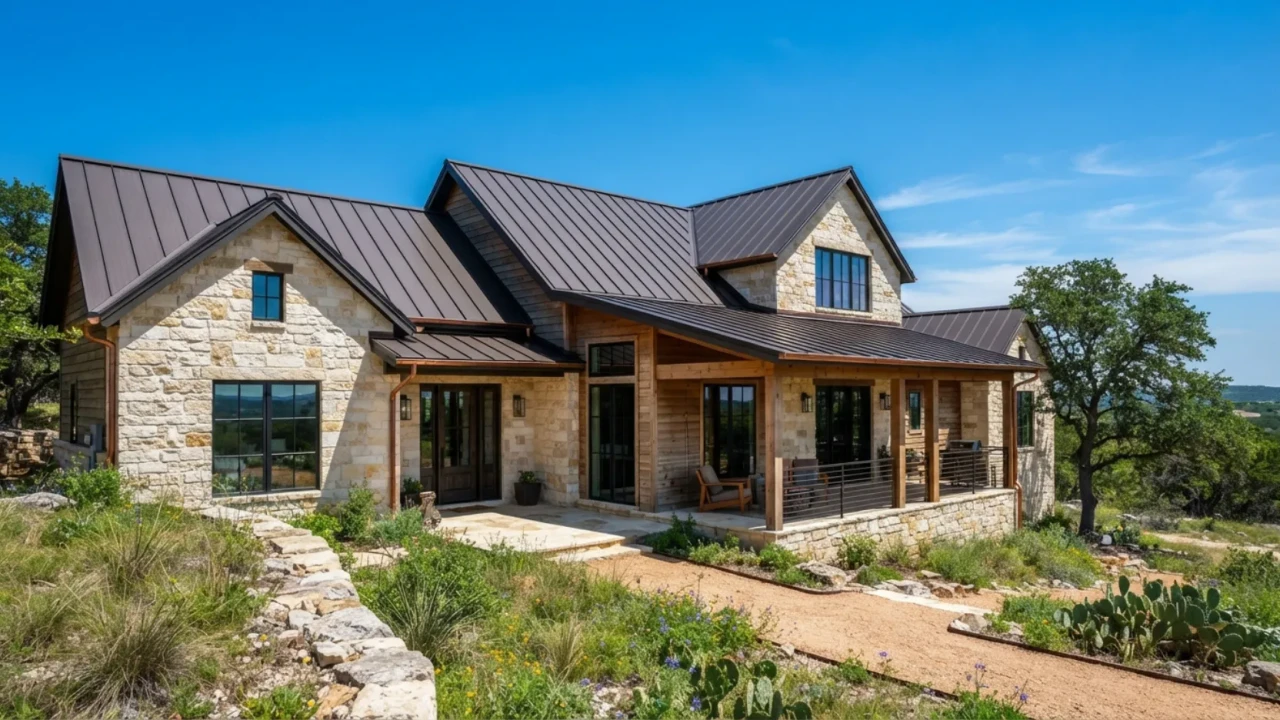
Copper is the longest-lasting roofing material available to San Antonio homeowners, full stop. Copper roofs on historic buildings in Europe have survived 300 years or more without structural failure. In the United States, copper roofing is commonly found on government buildings, churches, and high-end residences where longevity and appearance are the primary concerns and budget is a secondary consideration. A copper roof installed in San Antonio today will almost certainly outlast not just the current owners but their children and grandchildren.
Copper develops a patina over time as it naturally oxidizes. This patina the greenish-blue surface familiar from old church roofs and the Statue of Liberty is not damage. It is a stable oxide layer that actually protects the copper beneath from further corrosion. In San Antonio, where copper sees intense UV exposure and temperature swings, that patina typically develops fully within 10 to 20 years and remains protective for the century-plus lifespan of the material.
The barrier to copper roofing is cost. Copper is among the most expensive roofing materials available, typically running $15 to $30 or more per square foot installed in San Antonio depending on the profile and detailing involved. For most residential applications, the price is prohibitive. Copper is most commonly used on San Antonio homes as accent elements decorative roof sections, bay window caps, small porch roofs, and architectural details where its appearance and longevity justify the premium.
- Verify that your contractor has specific copper roofing installation experience it is a specialized skill not all crews carry
- All fasteners, flashings, gutters, and trim in contact with copper must be copper or compatible materials to prevent galvanic corrosion
- Patina is a sign of healthy copper aging, not deterioration it should never be cleaned off or coated over
- Copper is the correct material for historic San Antonio properties where preservation standards require original or period-appropriate materials
Zinc is the dominant architectural metal roofing material in Europe, particularly in Germany and France, where zinc roofs on 19th-century buildings are still in active service. It is far less common in the United States and in San Antonio specifically, but it is gaining traction in higher-end residential projects where architects and homeowners want a premium material with a distinctive appearance and an extraordinary lifespan. Zinc roofs in appropriate applications can last 80 to 100 years or more.
Zinc's most remarkable property is its ability to self-repair minor surface scratches. The zinc carbonate patina that forms on weathered zinc actually migrates slightly across the surface over time, filling in small scratches and protecting exposed areas. This self-healing characteristic means that unlike steel, where a scratch down to bare metal creates an immediate corrosion risk, minor surface damage on a zinc roof tends to resolve itself rather than progressively worsen.
The primary limitation of zinc in San Antonio is the relative scarcity of contractors with genuine zinc installation experience. Zinc requires specific installation techniques, including attention to ventilation on the underside of panels to prevent condensation-related corrosion, and proper allowances for zinc's thermal expansion behavior. Choosing an inexperienced installer is the fastest way to dramatically shorten the lifespan of a zinc roof that could otherwise last a century.
- Verify contractor experience specifically with zinc installation requirements differ meaningfully from steel or aluminum
- Adequate underside ventilation is required to prevent moisture-related corrosion on the zinc panel backing
- Do not paint or coat zinc panels the natural patina is the protection system and must be allowed to develop
- Zinc expansion behavior must be accounted for in the panel attachment design, similar to aluminum but with its own specific requirements
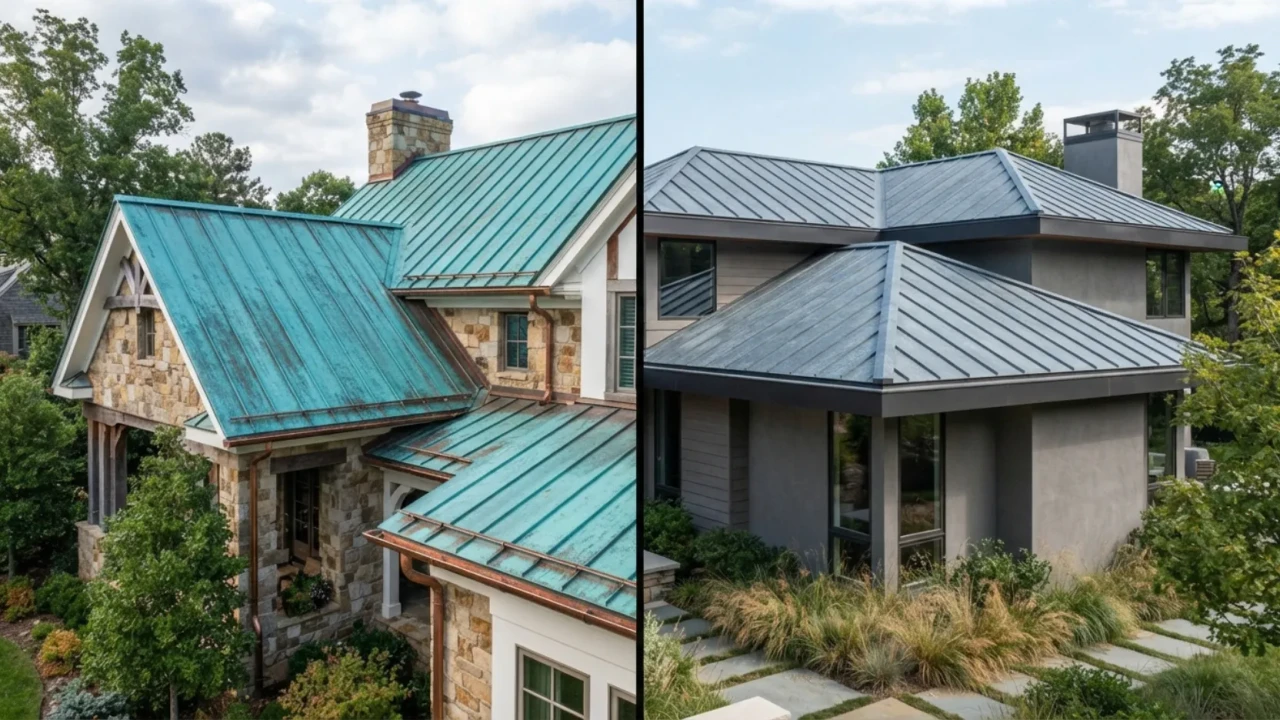
The table below summarizes expected lifespans, typical installed costs in the San Antonio market, and the key factors that determine where on the range a given roof lands. All figures reflect properly installed, quality-grade systems not budget installations or minimum-spec panels.
| Material | Lifespan Range | San Antonio Installed Cost | Key Lifespan Factor | Best Application |
|---|---|---|---|---|
| Galvalume Steel | 40-70 years | $6-$12/sq ft (standing seam) | Coating integrity and gauge | Most San Antonio residential and commercial roofs |
| Aluminum | 40-70 years | $9-$15/sq ft (standing seam) | Coating system; corrosion immunity at base | Pool-adjacent structures; coastal properties |
| Copper | 100-150+ years | $15-$30+/sq ft | Installation quality; compatible materials | Accent sections; historic renovations; prestige residential |
| Zinc | 80-100+ years | $12-$25+/sq ft | Underside ventilation; contractor experience | High-end architectural residential |
| Galvanized Steel | 20-40 years | $4-$8/sq ft | Zinc coating thickness; environment | Agricultural buildings; temporary structures |
| Stone-Coated Steel | 30-50 years | $8-$14/sq ft | Stone chip adhesion; coating durability | Homeowners wanting a tile aesthetic with metal performance |
| Asphalt Shingles (comparison) | 15-25 years | $3.50-$6/sq ft | Wind uplift; UV degradation; heat | Budget-driven projects; short-term ownership |
No factor has more influence over how long a metal roof lasts than the quality of the installation. The best panel in the world premium Galvalume, correct gauge, Kynar-coated will underperform and fail early if the installation is done incorrectly. And the failures that result from poor installation are often slow-moving ones that are not obvious until significant damage has already occurred: water intrusion through a poorly sealed ridge cap, rust working its way in through unsealed cut edges, or fasteners loosening over years of thermal cycling that was never accounted for in the panel spacing.
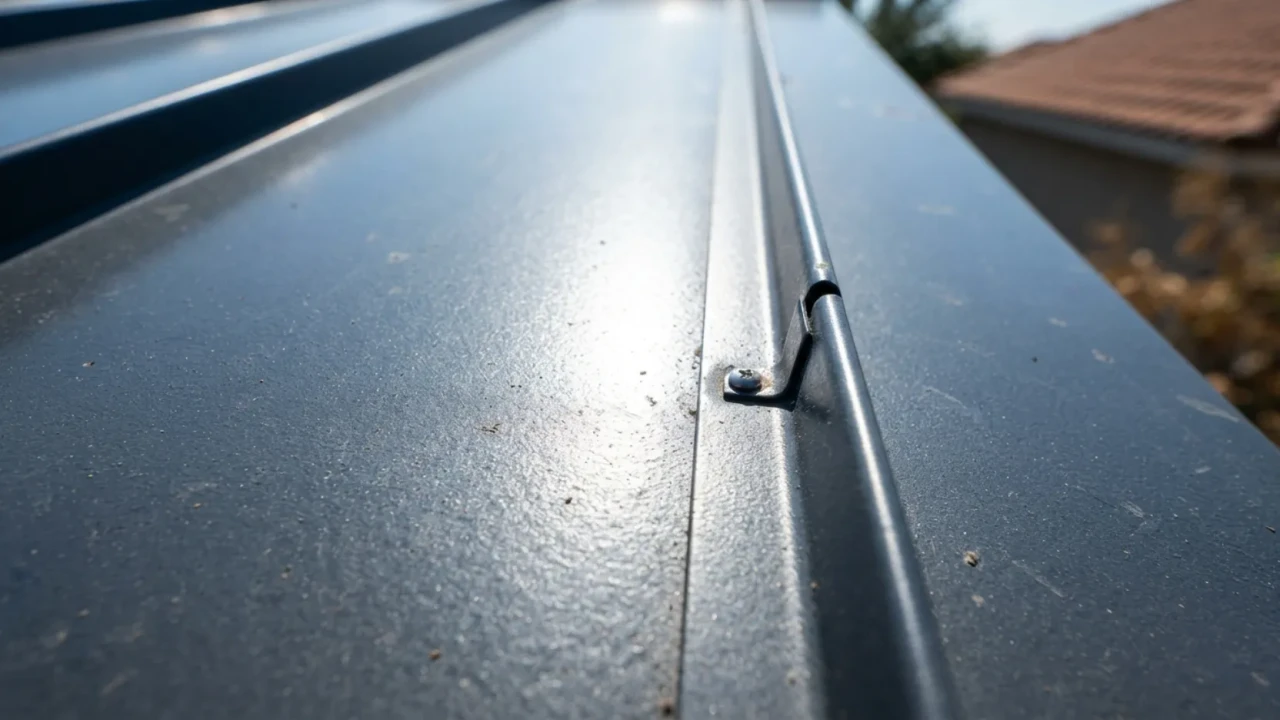
Fastener placement and type affect lifespan on exposed-fastener systems directly. Over-driven screws crush the rubber washer and create a poor seal. Under-driven screws back out over time. Incorrect fastener spacing allows panel flex that works seams apart over years. Every one of these errors accelerates the age of the roof from its first day on the job.
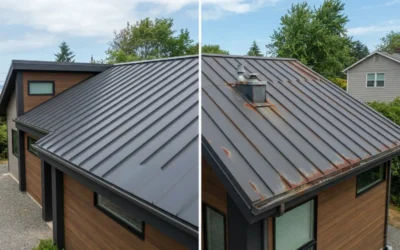
Flashing integration is the most common source of long-term metal roof failures in San Antonio. Flashings at chimneys, skylights, HVAC curbs, pipe penetrations, and wall terminations must be properly integrated with the panel system and sealed with compatible sealants. Flashings that are simply caulked against a panel rather than properly integrated behind it will fail within five to ten years regardless of panel quality.
- Ask for references from completed metal roofing projects at least 5-10 years old
- Confirm the contractor is experienced specifically with the panel profile and material being installed
- Request a written installation spec that includes fastener type, spacing, and torque requirements
- Ask how cut edges on steel panels will be treated to prevent rust
- Confirm that flashings will be integrated behind panels rather than surface-applied over them
- Verify the contractor carries both general liability and workers' compensation insurance
The paint and coating system applied to a metal roof panel is not just cosmetic. It is the primary protection system for the base metal, and in San Antonio's climate intense UV exposure, extreme summer heat, occasional freezes, and hail the difference between a quality coating system and a budget coating system can subtract 15 to 20 years from the roof's total lifespan.
San Antonio receives among the highest annual UV index readings in the continental United States. A polyester paint system that might hold up reasonably well in the Pacific Northwest will chalk, fade, and lose adhesion significantly faster under the Texas sun. Kynar 500 (a PVDF fluoropolymer coating) is the industry standard for quality metal roofing because it was specifically engineered for UV resistance, chalk resistance, and color retention in harsh sun exposure conditions which describes San Antonio almost perfectly.
Never let a contractor substitute an SMP coating system for Kynar without explicitly telling you about the change and reducing the price accordingly. Some contractors quote Kynar in their proposal and install SMP-coated panels because SMP costs less. Ask to see the panel manufacturer's data sheet confirming the coating type before installation begins not just the contractor's word. The coating name will be printed on the product documentation and on the manufacturer warranty certificate.
- Require Kynar 500 or PVDF fluoropolymer coating for all San Antonio residential metal roofing applications
- Ask for the manufacturer data sheet confirming the coating type before panels are ordered
- Request the paint warranty document separately from the structural panel warranty they are different coverages
- For maximum energy efficiency, specify cool roof pigments or infrared-reflective coatings in the lightest available color for your aesthetic preference
- Confirm the Solar Reflectance Index rating if Energy Star certification or utility rebates are a goal
One of the genuine advantages of metal roofing over asphalt shingles is that it requires very little maintenance relative to its lifespan. A well-installed metal roof does not need annual inspections, does not lose granules into your gutters, and does not develop the progressive surface deterioration that makes asphalt roofs look aged within a decade. But "low maintenance" is not the same as "no maintenance," and the difference between those two phrases matters when you are trying to get 60 years out of a roof instead of 40.
The maintenance tasks that matter most for metal roof longevity in San Antonio are not complicated. They require periodic inspection rather than ongoing upkeep. The goal is to catch the small failure points a sealant joint that has cracked, a fastener that has backed out slightly, a flashing that has lifted at a corner before they become water intrusion problems that degrade the underlying structure and force a repair that costs far more than the inspection would have.
- Schedule a professional inspection at 1-2 years post-installation to catch any early settling issues
- Inspect every 5 years for sealant condition, flashing integrity, and fastener tightness
- After any hail event, have the roof professionally inspected before deciding whether to file an insurance claim
- Keep gutters and valleys free of debris to prevent standing water on the roof surface
- Touch up any coating scratches on steel panels promptly with manufacturer-supplied touch-up paint to prevent rust
- Trim back any overhanging tree limbs to prevent abrasion on the panel surface during wind events
- At 20-25 years, evaluate whether a roof coating application can extend service life versus a full re-roof
Metal roofing performs exceptionally well in San Antonio compared to asphalt shingles and one of the reasons is that metal handles the specific stressors of the Texas climate better than most alternative roofing materials. But understanding how San Antonio weather specifically affects metal roof lifespan helps you make smarter decisions about material selection, panel gauge, coating systems, and maintenance intervals.
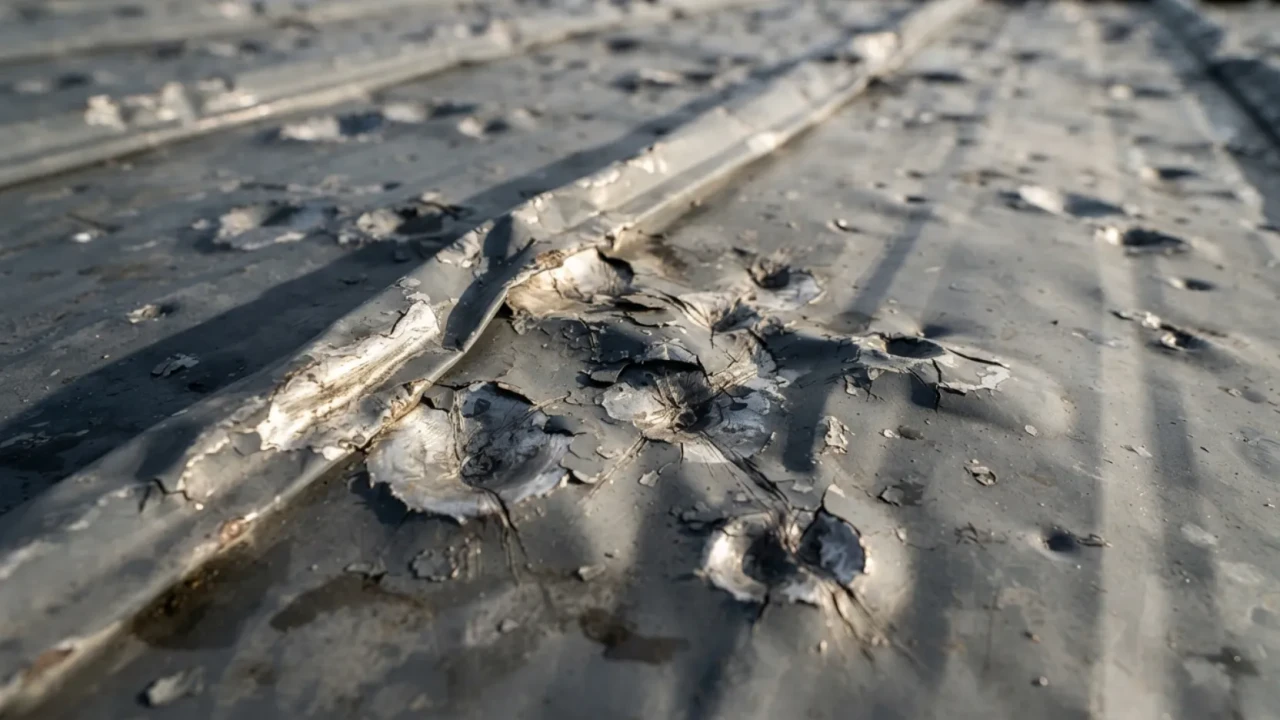
Extreme heat and UV exposure. San Antonio's average summer temperatures push roof surface temperatures well above 150 degrees Fahrenheit on clear days. This UV intensity is the primary reason Kynar coatings are non-negotiable in this market polyester systems chalk and fade within 10 years under Texas sun, while Kynar retains adhesion and color for 30 to 40 years.
Hail. San Antonio sits in one of the most active hail corridors in the United States. Baseball-sized hail events are a documented part of Bexar County's weather history. Metal roofing handles hail far better than asphalt a Class 4 impact-rated steel panel can take hail that would require a full shingle replacement but hail damage to coatings on steel panels should be addressed promptly to prevent rust.
A Class 4 impact rating the highest available from accredited testing labs means the panel has been tested against a 2-inch steel ball dropped from 20 feet without cracking or splitting. In San Antonio's hail environment, specifying a Class 4 rated panel in 24-gauge Galvalume steel provides meaningful protection against coating damage that would otherwise open the base metal to corrosion after a major hail event. Many San Antonio homeowners' insurance carriers also offer premium discounts for Class 4 rated roof materials, which can offset a portion of the cost premium over the roof's life.
- Specify Kynar 500 or PVDF coating not SMP or polyester for long-term UV performance under Texas sun
- Ask about Class 4 impact resistance ratings and whether your homeowner's insurance carrier offers a premium discount for them
- For standing seam systems, confirm that the attachment clip design accommodates San Antonio's wide thermal movement range
- After any significant hail event, have the roof professionally inspected even if no interior water intrusion is visible
- Light-colored finishes reflect more solar heat and are the better long-term choice for both energy efficiency and coating longevity under Texas UV
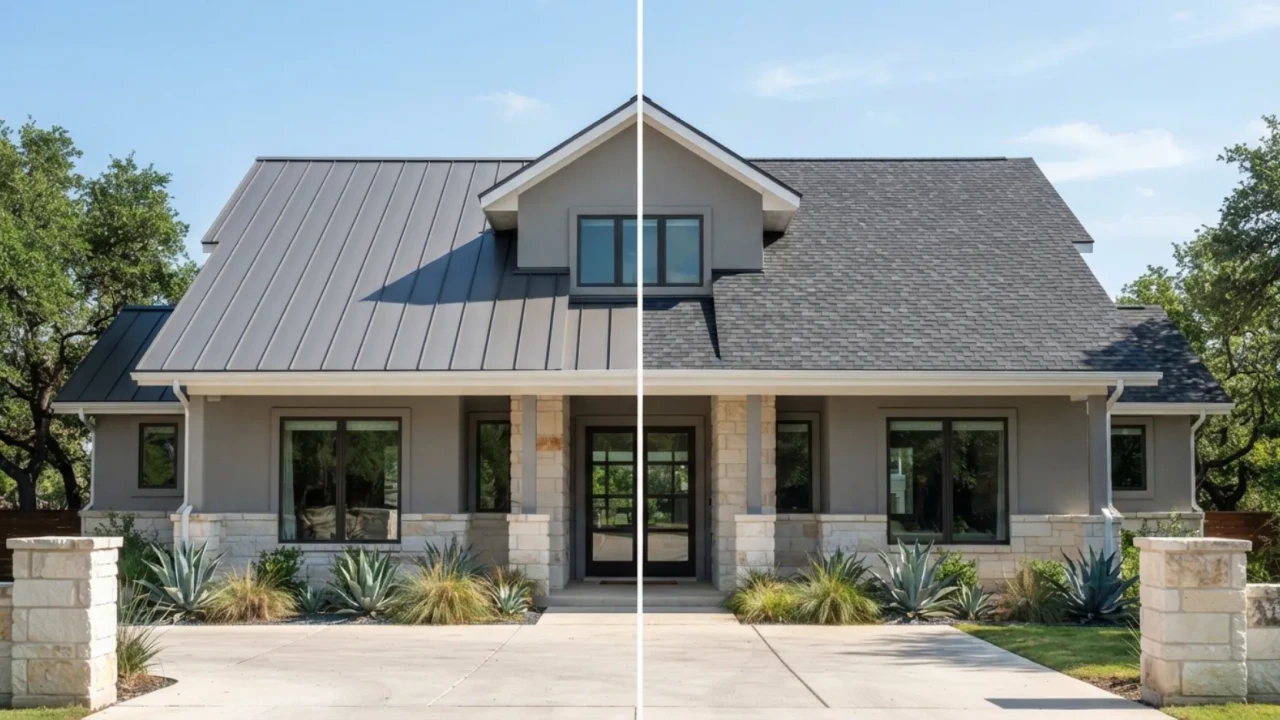
- Galvalume steel (not galvanized only) for standard San Antonio residential roofs
- 24-gauge minimum for maximum hail resistance and lifespan; 26-gauge acceptable for budget-conscious projects
- Aluminum for pool-adjacent structures or any application with ongoing corrosive chemical exposure
- Copper or zinc only with a contractor who has demonstrable experience with the specific material
- Kynar 500 or PVDF fluoropolymer coating confirmed in writing before panels are ordered
- Manufacturer data sheet showing coating type provided before installation begins
- Separate written warranties for paint finish (30-40 years) and structural panel
- Cool roof or infrared-reflective pigments considered for maximum energy efficiency and UV longevity
- Contractor references for completed projects at least 5 years old requested and verified
- Standing seam profile preferred over exposed-fastener for maximum San Antonio lifespan
- Written installation spec covering fastener type, spacing, and cut edge treatment
- Flashings to be integrated behind panels at all penetrations, not surface-applied over them
- Thermal expansion allowances confirmed for the specific panel profile being installed
- Licensed and insured contractor with both general liability and workers' compensation coverage
- Professional inspection scheduled at 1-2 years post-installation
- 5-year routine professional inspection on the calendar going forward
- Post-storm inspection protocol agreed with your contractor before installation is complete
- Touch-up paint provided by the contractor at project completion for future coating repairs
- Paint system re-evaluation at the 20-25 year mark before deciding between roof coating and full replacement
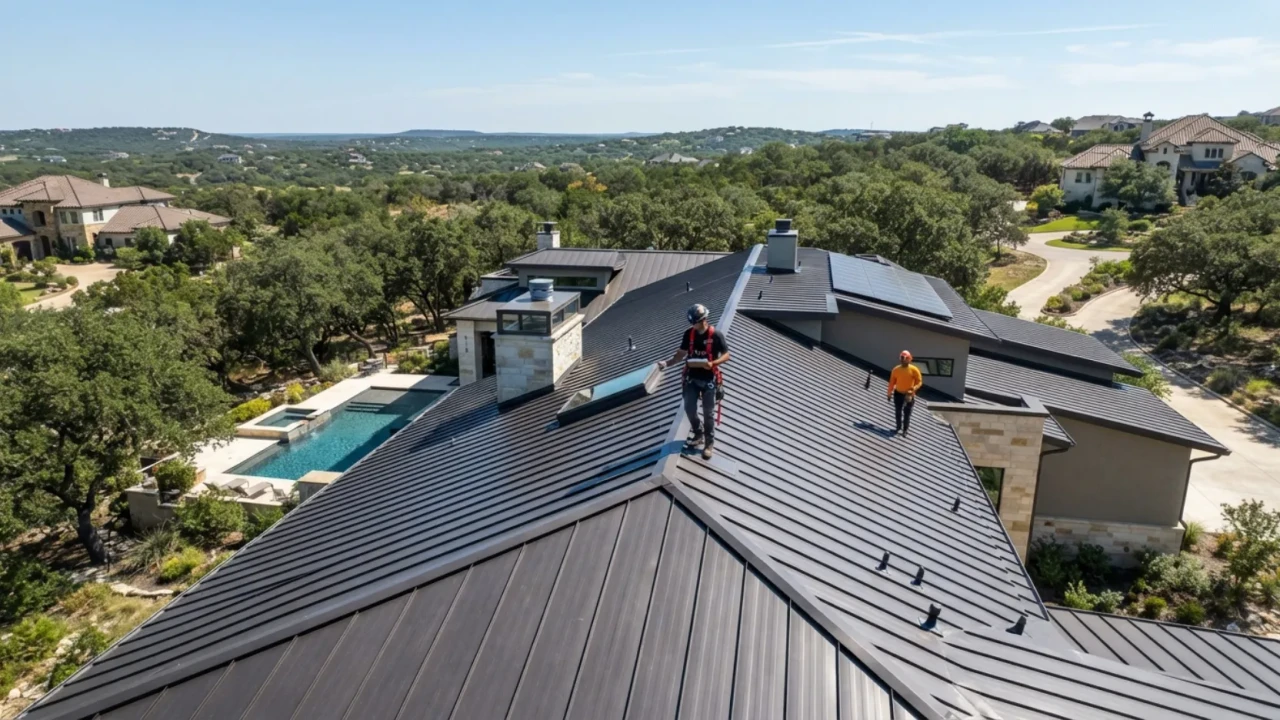
Ready to put a 50-year roof on your San Antonio home?
Our team has been installing metal roofs across Bexar County for over 30 years. We will walk your property, give you an honest recommendation on material and profile, and back the installation with a workmanship warranty that reflects our confidence in the work.