
[et_pb_section fb_built=”1″ admin_label=”section” _builder_version=”4.16″ global_colors_info=”{}”][et_pb_row admin_label=”row” _builder_version=”4.16″ background_size=”initial” background_position=”top_left” background_repeat=”repeat” global_colors_info=”{}”][et_pb_column type=”4_4″ _builder_version=”4.16″ custom_padding=”|||” global_colors_info=”{}” custom_padding__hover=”|||”][et_pb_code _builder_version=”4.27.7″ _module_preset=”default” hover_enabled=”0″ sticky_enabled=”0″]
The short answer is: it depends on your local building code, your deck condition, and the type of metal roofing system being installed. This guide covers every factor that determines whether a metal roof over two layers of shingles is permitted, structurally sound, and worth doing or whether a tear-off is the smarter call for your San Antonio home.
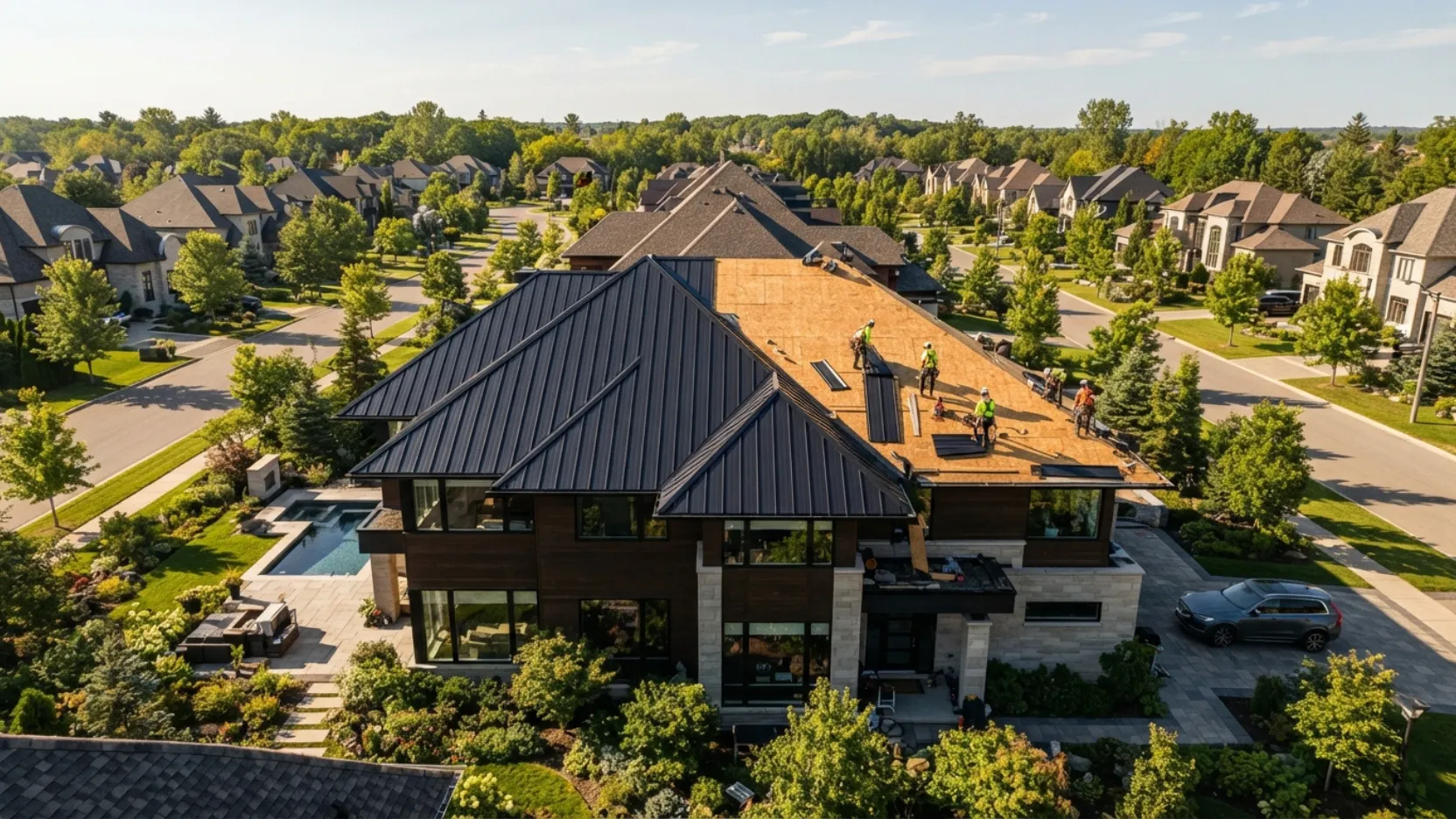
Installing a metal roof over an existing shingle roof is one of the most common questions we get from San Antonio homeowners who want the durability and energy savings of metal without the cost and mess of a complete tear-off. The idea is appealing: skip the labor of removing existing shingles, reduce project time, and save money upfront. But whether it is actually the right move for your specific home requires an honest look at several factors that most contractors skip over in their sales pitch.
This guide covers the building code requirements that govern this question in San Antonio and Bexar County, how to evaluate whether two layers of existing shingles can structurally support a metal system, the types of metal roofing that work over shingles and those that do not, what the cost difference actually looks like, and the long-term performance trade-offs that determine whether you will be glad you went this route five years from now.
The International Residential Code which San Antonio and most of Bexar County follows limits residential roofs to two layers of roofing material. If your home already has two layers of shingles, you must tear off both layers before installing metal. There are no code exceptions for metal roofing specifically. The weight of a third layer, the inability to inspect the deck, and the structural load concerns are the reasons this rule exists. Any contractor who tells you a third layer is acceptable in San Antonio should not be doing work on your home.

Code Rules
San Antonio and Bexar County follow the International Residential Code, which sets a hard limit of two total layers of roofing material on a residential structure. That means the number of existing shingle layers already on your roof determines whether overlay is even on the table as an option.

One existing layer of shingles: In this situation, installing metal over the existing shingles is code-compliant in most San Antonio jurisdictions. The metal roofing system counts as your second layer. A permit is still required, and the deck must be inspected and found sound before the overlay is approved.
Two existing layers of shingles: You are already at the code maximum. Metal cannot go over two layers under any circumstance permitted by San Antonio building code. Both existing layers must be removed before a new roofing system metal or otherwise can be installed. There is no special permit pathway or variance for this.
One important nuance: some San Antonio homeowners assume that because metal roofing is lighter than a new shingle layer, the code limit should not apply. The IRC does not make that distinction. The two-layer limit is not purely about weight it is also about the inability to inspect and certify the roof deck when it is buried under multiple layers of material. A failed deck discovered after installation is a much more expensive problem than the cost of a proper tear-off upfront.
- Existing layer count physically confirmed at the roof edge not estimated
- San Antonio or Bexar County building permit pulled before installation begins
- Permit documents confirm overlay is approved for this specific structure
- Deck inspection included as part of the permit scope, not skipped
- Contractor carries current San Antonio roofing license not just a general contractor license
- Written confirmation that the installation method meets IRC Section R905 requirements

Deck Assessment
Even when your home has only one layer of shingles and an overlay is code-permitted, the condition of the roof deck is the factor that determines whether overlay is actually a good idea. Installing metal over shingles that are covering a damaged, rotted, or structurally compromised deck is one of the most expensive mistakes a San Antonio homeowner can make. The problem will not go away because it is covered up. It will get worse, and when it finally forces action, the cost will be significantly higher because the metal roof must come off first.
The roof deck assessment for a potential metal overlay needs to cover three things: the physical condition of the sheathing itself, the integrity of the fastener field holding the existing shingles, and any evidence of past or present moisture intrusion that may have caused hidden damage.
San Antonio’s heat and humidity cycle is hard on roof decks. Summers regularly push attic temperatures above 140 degrees Fahrenheit, and the rainy season brings sustained moisture events that can penetrate around failed flashing long before they show up as a visible ceiling stain. A deck that looks sound from the attic in January may have areas of concealed moisture damage that only a physical inspection from the roof surface will catch. Any contractor quoting a metal overlay without walking the deck and probing soft spots is not doing the job correctly.
If any portion of the deck is found to be damaged during inspection, it must be repaired or replaced before metal goes on even on an overlay job. This typically means cutting out the affected sheathing sections and installing new material, which adds cost to an overlay project. If the damage is widespread, the cost of repairing the deck plus the overlay may exceed the cost of a full tear-off and replacement, at which point the tear-off becomes the more rational choice economically and structurally.
- Contractor physically walks the entire roof surface and probes for soft spots before quoting
- Attic inspection completed to check for moisture staining, mold, or compromised decking from below
- Any soft or damaged sections identified, measured, and included in the written repair scope
- Existing shingle fastener field confirmed solid shingles should not move under pressure
- Roof line checked for sagging or irregularities that indicate structural framing issues
- Deck repair costs included in the total project estimate before you approve the overlay
System Selection
The type of metal roofing system you are installing is a significant factor in whether overlay is appropriate. Some systems are designed with overlay applications in mind and perform well over existing shingles. Others require a flat, clean substrate to perform correctly and should not be installed over existing roofing material of any kind.

Standing seam metal panels: The most suitable metal system for overlay applications. Standing seam panels attach through concealed clips rather than through the panel face, which means the fastener pattern does not depend on hitting a perfectly flat substrate. The floating clip system also accommodates the slight unevenness of an existing shingle surface better than exposed-fastener panels.
Exposed-fastener metal panels (corrugated and R-panel): Can be installed over existing shingles but require more care. The existing shingle surface must be reasonably flat and consistent. Significant shingle cupping or curling creates high and low points that cause fasteners to enter at inconsistent angles, producing poor seals. Battens or hat channels are typically installed over the shingles first to create a level nailing surface before the panels go on.
Stone-coated steel panels are another system that performs well in overlay applications. These products, such as DECRA and Gerard brands, are specifically marketed as re-roofing systems and are engineered to be installed over existing shingles. They are also among the lighter metal roofing options, which matters when the existing shingles add weight to the structure. For San Antonio homeowners interested in the look of tile or shake without the tile weight penalty, stone-coated steel over a single shingle layer is a legitimate and durable option.
Do not install metal shingles or stamped metal panels directly over two layers of shingles under any circumstances even if a contractor tells you the product is light enough to qualify. The product weight is not the issue. The building code layer limit is the issue, and no metal product is exempt from it. In San Antonio, installing any roofing product as a third layer without a permit and an approved variance (which does not exist under IRC) exposes you to a failed inspection, a stop-work order, and the cost of removal.
- Standing seam confirmed as the recommended system if the existing shingles have any cupping or curling
- Exposed-fastener systems only approved if battens are included in the installation scope
- Stone-coated steel manufacturer specs reviewed to confirm overlay compatibility for the specific product
- Panel weight per square foot confirmed and checked against the roof structure’s load capacity
- Manufacturer warranty confirmed as valid for overlay applications some warranties are void over existing shingles
- No metal product installed as a third layer under any circumstances

Cost Guide
The primary appeal of installing metal over existing shingles is cost savings. Tear-off and disposal of existing shingles adds labor and material costs to every project. Understanding exactly where those savings come from and where they do not helps you evaluate whether the overlay approach is genuinely the better financial decision for your specific situation.
One cost factor that many overlay proposals leave out is the flashing. When metal goes over existing shingles, every penetration chimney, vent pipes, skylights, HVAC curbs should receive new flashing. The old flashing under the shingles is not visible or accessible after installation and cannot be inspected or maintained. Installing new metal roofing over existing failed or aging flashing creates a high-probability leak point within a few years. Any overlay estimate that does not include new flashing at all penetrations is not a complete price.
- Both overlay and tear-off estimates received from the same contractor on the same visit
- Overlay estimate includes batten installation if exposed-fastener panels are specified
- Overlay estimate includes new flashing at all penetrations not reuse of existing flashing
- Deck repair allowance discussed and documented before signing not a hidden add-on
- Disposal fees confirmed: some contractors quote low and add dump fees at the end
- Manufacturer warranty validity confirmed for overlay application some void coverage over existing shingles
Performance
The decision between overlay and tear-off is not just a financial calculation at the time of installation. The approach you choose affects how the roof performs for the next 40 to 50 years, how accessible it is for maintenance and future repairs, and what condition it will be in when the metal panels eventually reach end of life.

Ventilation and heat performance: Metal roofs installed over a clean deck with a proper air gap and underlayment system perform better thermally than those installed directly over shingles. The old shingles trap heat and reduce the effectiveness of the air channel between the metal and the deck. In San Antonio’s climate, where attic cooling is a meaningful energy cost, this difference matters across decades of operation.
Future repair access: When a metal roof installed over shingles needs a repair and all roofs eventually do accessing the deck for any work means going through both the metal panels and the existing shingle layer. This adds complexity and cost to every future maintenance event compared to a metal roof over a clean deck.
Moisture management: This is the most important long-term consideration. A metal roof installed over existing shingles creates a layered system where any moisture that penetrates past the metal at a failed fastener, a cracked sealant joint, or a compromised flashing point cannot evaporate easily. It is trapped between the metal and the shingles. Over years, this creates a deteriorating moisture environment that accelerates deck decay. On a tear-off installation with proper underlayment, the same moisture event is more likely to dry out before causing damage.
For San Antonio homeowners planning to stay in their home long-term, we recommend a tear-off in most cases even when an overlay is technically permitted. The combination of our climate’s heat and humidity cycles, the difficulty of managing moisture in a layered system, and the lack of deck visibility during an overlay makes the tear-off the more reliable path to a 40-plus year metal roof. If upfront cost is the primary constraint, an overlay with proper battens, new flashing, and a sound deck is a legitimate approach. But go in knowing that you are trading some long-term performance for near-term savings.
- Batten or hat channel system included in overlay to create air gap between shingles and metal panels
- All flashings replaced not the existing flashing buried under the old shingles
- Attic ventilation system assessed and upgraded if necessary before metal installation
- Written documentation of the deck condition at time of overlay for future reference
- Manufacturer warranty reviewed for overlay-specific exclusions or reduced coverage periods
- Re-inspection scheduled every three years to catch any moisture-related concerns early
Use this table to align your specific situation with the recommended approach. When in doubt, a written estimate for both options from the same contractor is the most reliable way to make this decision with real numbers rather than assumptions.
| Your situation | Recommended approach | Reason |
|---|---|---|
| One layer of shingles, deck in good condition | Overlay is viable | Code-compliant and structurally sound. Batten system and new flashings are still required. |
| Two layers of shingles | Full tear-off required | No code variance exists in San Antonio. Both layers must be removed before any new roofing. |
| One shingle layer with soft spots or deck damage | Tear-off recommended | Deck repairs are easier and more thorough with shingles removed. Overlay risks burying an unsolved problem. |
| Shingles showing significant curling or cupping | Tear-off or batten overlay | Severely distorted shingles create an uneven surface that causes fastener and seal problems in exposed-fastener systems. |
| Budget is the primary constraint | Overlay with full prep | Acceptable approach if deck is sound and full prep steps are included: battens, new flashings, permit, and deck inspection. |
| Planning to stay in the home 20-plus years | Tear-off recommended | Long-term moisture and ventilation performance is meaningfully better on a clean deck installation in San Antonio’s climate. |
| Standing seam system specified | Either approach can work | Standing seam’s concealed clip system handles overlay applications better than exposed-fastener panels. |
| Home to be sold within 5 years | Overlay may be sufficient | The new metal roof will convey well in a sale. Buyers and inspectors typically view any metal installation positively if permitted correctly. |
- Existing shingle layer count physically confirmed at the roof edge by the contractor
- San Antonio or Bexar County building permit confirmed as required and pulled by the contractor
- Deck condition assessed with contractor walking the full roof surface and probing for soft spots
- Attic inspected for moisture staining or compromised decking from below
- Both an overlay estimate and a tear-off estimate received in writing for comparison
- Metal panel type confirmed as suitable for overlay application if overlay is chosen
- Permit posted at the job site before any work starts
- Deck repair scope documented and approved in writing if any damage was found
- Batten or hat channel system included in scope for exposed-fastener panel overlay projects
- New flashing specified at all penetrations: chimney, vents, skylights, and HVAC curbs
- Panel profile and color confirmed in writing before material is ordered
- Certificate of insurance received and verified minimum $1 million general liability coverage
- Permit inspection passed and inspection record provided to the homeowner
- All new flashing points verified as sealed and properly lapped under the metal panels
- Ridge cap and hip cap fasteners and sealant confirmed as correct for the panel system
- Job site debris cleared: metal scraps, old fasteners, and packaging material
- Warranty documents received with panel manufacturer and contractor information
- First follow-up inspection scheduled for 12 months post-installation
Can you put a metal roof over 2 layers of shingles in San Antonio?
Is it better to put metal roofing over shingles or tear off first?
How do I know how many layers of shingles are on my roof?
What type of metal roofing is best for installation over shingles?
Does installing metal over shingles cause any problems with ventilation?
How much does it cost to install a metal roof over shingles in San Antonio?
Get a free metal roof estimate in San Antonio overlay and tear-off options both quoted
Tell us about your existing roof and what you are trying to accomplish. We will assess the layer count, inspect the deck, and give you a written estimate for both approaches so you can make the right call with real numbers.
[/et_pb_code][/et_pb_column][/et_pb_row][/et_pb_section]