
[et_pb_section fb_built=”1″ admin_label=”section” _builder_version=”4.16″ global_colors_info=”{}”][et_pb_row admin_label=”row” _builder_version=”4.16″ background_size=”initial” background_position=”top_left” background_repeat=”repeat” global_colors_info=”{}”][et_pb_column type=”4_4″ _builder_version=”4.16″ custom_padding=”|||” global_colors_info=”{}” custom_padding__hover=”|||”][et_pb_code _builder_version=”4.27.6″ _module_preset=”default” hover_enabled=”0″ sticky_enabled=”0″]
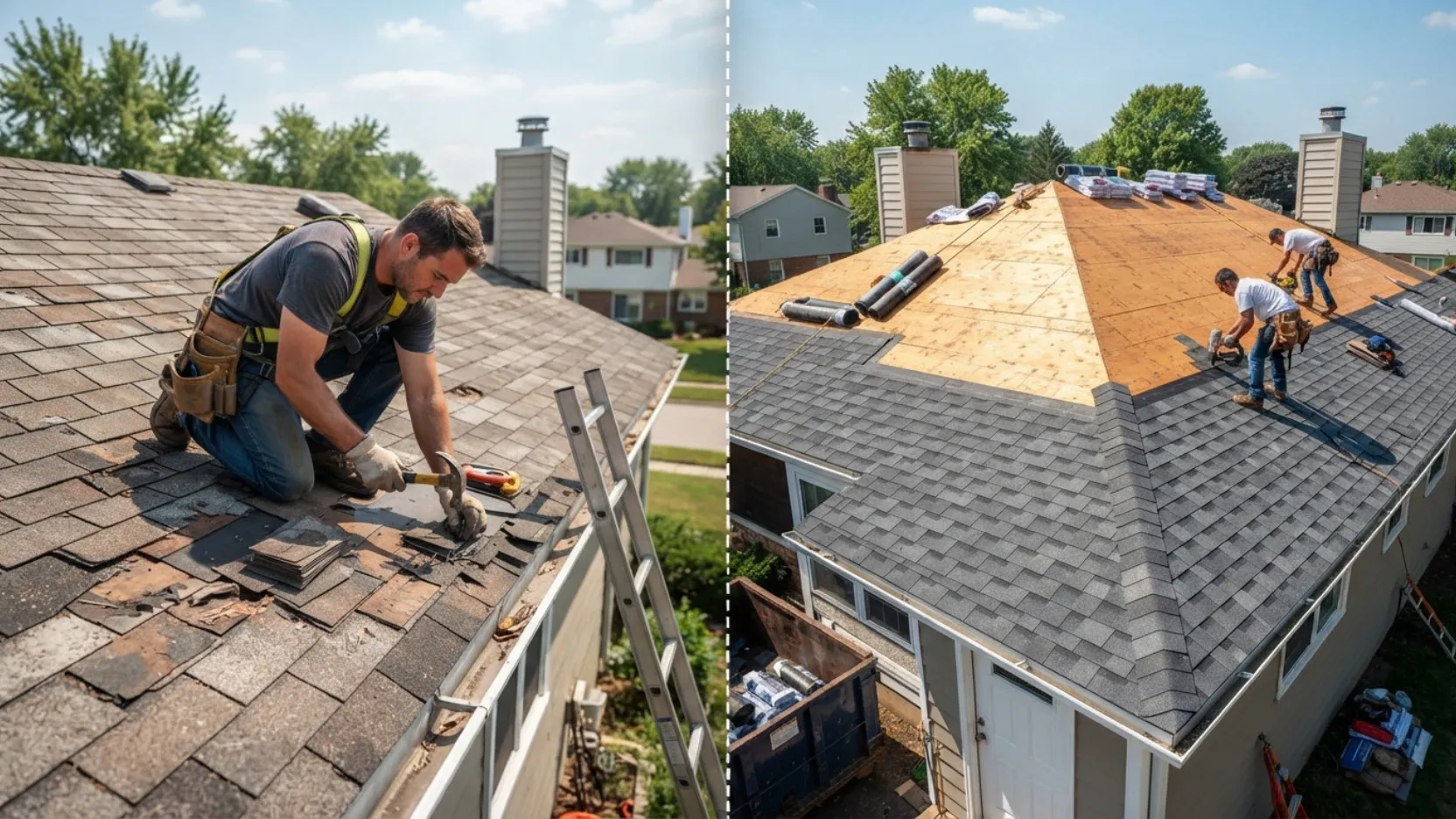
A straightforward, no-fluff guide to help San Antonio homeowners decide whether a repair will solve the problem or whether it is time to invest in a full roof replacement before spending a dollar on either.
The repair-or-replace question is one of the most common conversations we have with San Antonio homeowners, and it is also one of the most frequently answered wrong. Some contractors push replacement on roofs that have years of serviceable life left because the margins are better. Others patch roofs that genuinely need to come off, leaving homeowners with recurring problems and mounting repair bills. Neither outcome serves you.
This guide gives you a clear, honest framework for making this call yourself, or at minimum for walking into any contractor conversation knowing exactly what questions to ask and what answers should raise a flag. The decision comes down to six primary factors, and we cover each one in detail below.
The single most expensive mistake San Antonio homeowners make is accepting a repair or replacement quote from a contractor who has not physically inspected the roof. A leak stain on your ceiling does not tell you whether your roof needs a $400 fastener repair or a $14,000 replacement. Only a thorough on-roof inspection does that. Any contractor who quotes major work without walking your roof is not giving you an honest number, and you should not be signing anything they put in front of you.
Roof Age
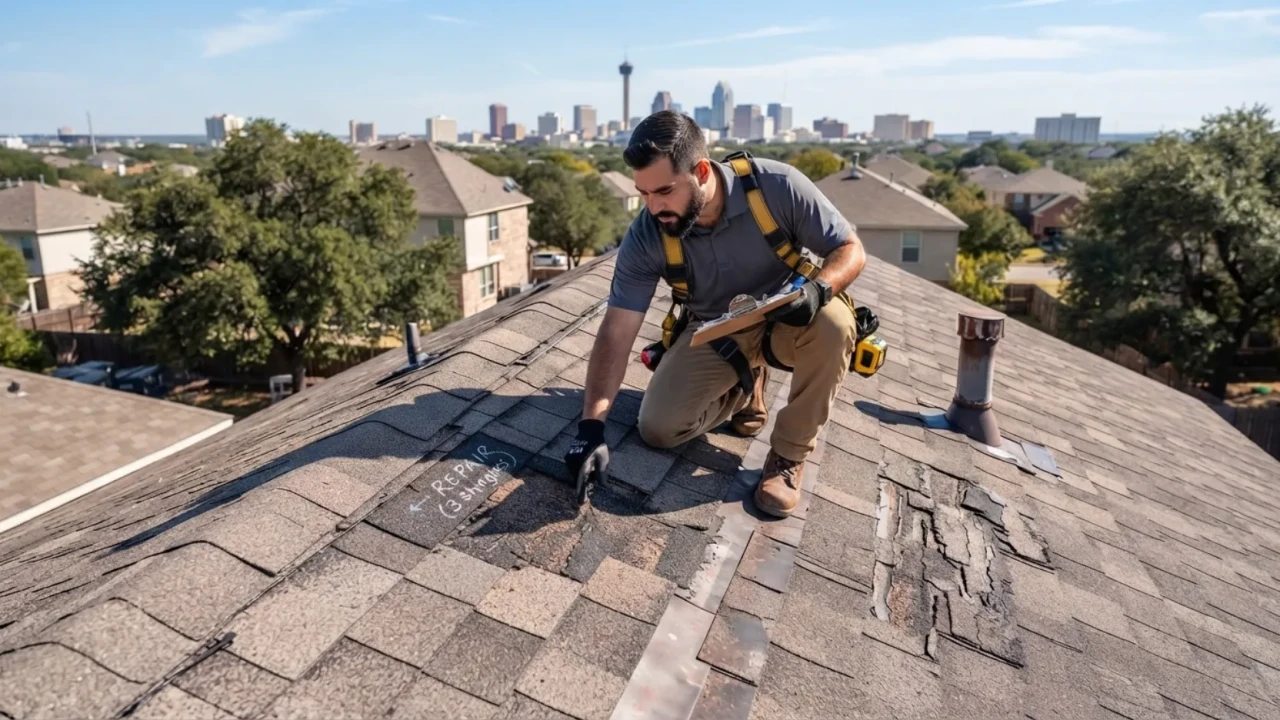
Roof age is the first thing any honest contractor should ask about. A roof that is 8 years old with a leak has decades of serviceable life ahead of it and almost certainly warrants repair. A roof that is 22 years old with the same leak is a completely different situation: the underlying system has likely reached the end of its engineered lifespan, and patching a single failure point while the surrounding materials continue to deteriorate is rarely a sound investment.
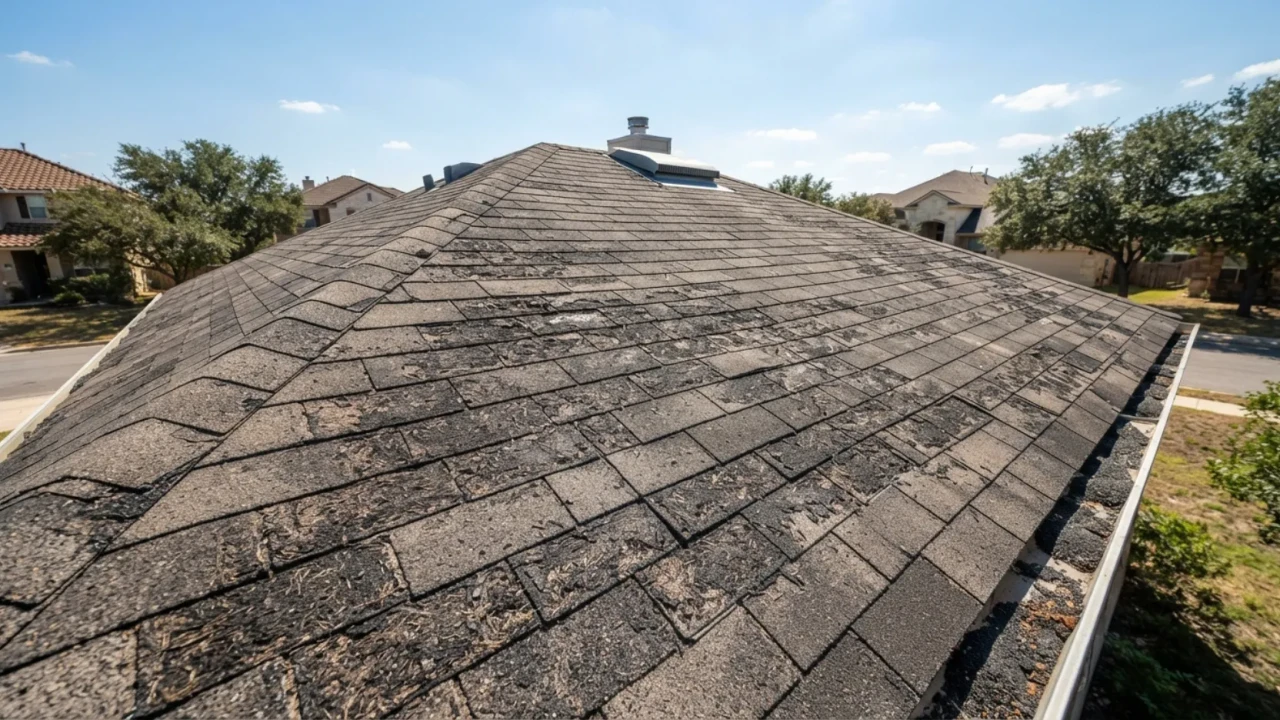
Standard 3-tab asphalt shingles installed in San Antonio typically reach end of life in 15 to 20 years. The combination of intense UV exposure, summer heat that regularly pushes attic temperatures above 140 degrees Fahrenheit, and occasional severe hail events accelerates aging well beyond what national shingle warranties suggest.
Architectural (dimensional) asphalt shingles carry longer warranties, typically 25 to 30 years, and perform better in the Texas climate. A well-installed architectural shingle roof in San Antonio realistically lasts 20 to 25 years before replacement is warranted.
Premium impact-resistant shingles (Class 4 rated) can last 25 to 30 years in San Antonio conditions and often qualify for insurance premium discounts in Texas because of their superior hail resistance.
- Confirm the year your roof was installed check your home purchase documents or prior roofing permits
- Identify shingle type: 3-tab (shorter lifespan) vs architectural vs impact-resistant
- Ask the contractor for their honest estimate of remaining service life after any proposed repair
- If you do not know the install year, have the contractor assess age indicators: granule loss, brittleness, and curling
- Factor age into the cost comparison: a repair on a 5-year-old roof has a very different value than the same repair on an 18-year-old roof
Damage Extent
Not all roof damage is equal, and the location and spread of damage matters as much as its severity. A single missing shingle over your front door is a repair. Widespread granule loss across three roof slopes combined with multiple soft spots in the decking is a replacement. The key question is whether the damage is isolated to one or two specific areas, or whether it reflects a condition that is developing across the whole roof system.
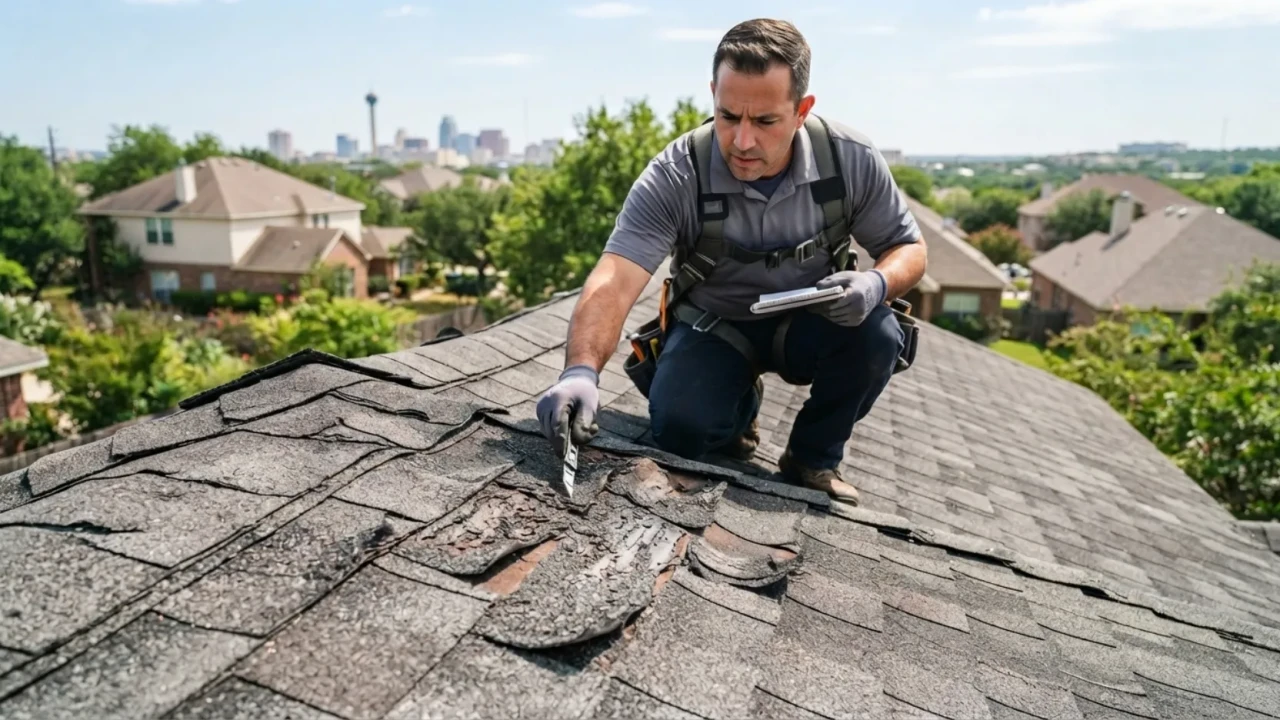
Beyond the percentage of surface affected, pay attention to what is damaged. Shingles are a surface material and are relatively straightforward to replace. Decking damage, structural rafter issues, or widespread underlayment failure are deeper problems that make repair significantly more expensive and complicated. If your contractor finds rotted decking during an inspection, that cost needs to be factored into the repair estimate before you can make a valid comparison against a full replacement.
When a contractor tells you a repair will fix the problem, ask these two follow-up questions: First, “Is this the only area of the roof with this type of damage, or are there other areas developing the same issue?” Second, “If you were replacing this entire roof today, what condition would you describe the decking and underlayment in?” Those two answers will tell you a great deal about whether repair is genuinely sufficient or whether you are being steered toward the lower-cost option for other reasons.
- Total percentage of roof surface affected by damage estimated and documented in writing
- Damage type identified at each affected area: shingles, flashing, underlayment, or decking
- Decking inspected for soft spots, rot, or delamination across the full roof, not just the visible damage area
- Underlayment condition assessed beneath damaged shingle sections
- Inspector confirms whether damage pattern is isolated or indicative of a systemic condition developing across the roof
Cost Benchmark
The 50% rule is a straightforward financial benchmark that professional roofing contractors and insurance adjusters use to evaluate repair vs replacement decisions. It works like this: if the cost of a repair exceeds 50% of what it would cost to replace the entire roof, you are almost always better served financially and practically by replacing the roof.
The logic is sound. At 50% of replacement cost, you are spending a significant amount of money on a partial fix that does not extend the roof’s lifespan the way a full replacement would. You do not get a new product warranty. You do not get new underlayment across the whole surface. You do not reset the age clock on the roofing system. You get a patched roof that still has the original aging materials across the majority of its surface.
- Written repair estimate received from a contractor who physically inspected the roof
- Written replacement estimate received from the same contractor for direct comparison
- Repair cost divided by replacement cost to calculate the percentage threshold
- Remaining service life factored in: a repair on a 5-year-old roof has far more value than the same repair on an 18-year-old roof
- Second written estimate obtained from a different contractor to verify both numbers are reasonable for the San Antonio market
Leak History
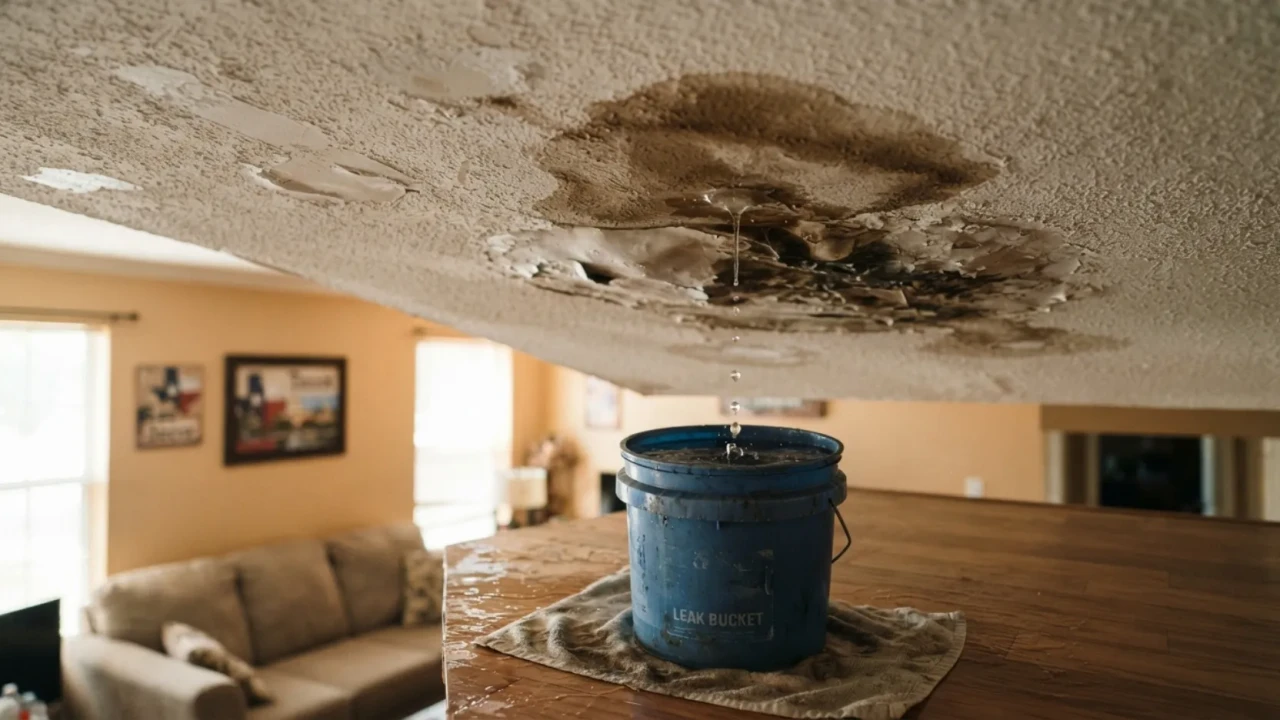
One leak in a well-maintained roof is an event. Two or three leaks in the same roof over three to five years is a pattern. Recurring leak problems are one of the strongest indicators that a roof has crossed from maintenance-and-repair territory into end-of-life territory, even when each individual leak appears to be isolated.
This happens because roofing systems age as a whole, not as individual components. When a shingle fails in one area, the underlying cause is often that the adhesive strip holding shingles down has softened with age across the whole roof, that the granule coating has worn away from UV exposure everywhere, or that the sealant at every flashing joint has dried and cracked. Fixing the leak you see does not fix the condition that is causing leaks to develop. You are simply playing catch-up with a system that is progressively failing.
One repair in the past 5 years: Normal maintenance. Repair the current issue and monitor the roof annually.
Two repairs in the past 3 years: Evaluate carefully. The frequency suggests developing systemic issues. Ask your contractor to assess whether the repairs have been addressing truly isolated problems or whether they reflect broader material degradation.
Three or more repairs in the past 5 years: This is a strong replacement signal. At this frequency, the total cost of repairs is likely approaching or exceeding what a replacement would have cost, and you still do not have a new roof or a new warranty at the end of it.
Add up what you have spent on roof repairs in the past 5 years before accepting another repair quote. Many San Antonio homeowners discover when they do this math that they have spent $4,000 to $6,000 patching a roof that could have been replaced for $9,000 to $12,000, and they still do not have a new roof. If your cumulative repair spending over 5 years exceeds 40% of current replacement cost, replacement is very likely the better financial decision going forward.
- Total number of roof repairs completed in the past 5 years compiled and documented
- Total dollars spent on roof repairs in the past 5 years calculated
- Cumulative repair spending compared against current replacement cost estimate
- Pattern of leak locations reviewed: isolated to one area vs multiple areas across the roof
- Contractor asked directly: “Is there a systemic condition causing these recurring leaks, or is each one truly isolated?”
Storm and Insurance
San Antonio sits in one of the most active hail corridors in the United States. When a significant hail or wind event qualifies as a covered loss under your homeowners insurance policy, the repair-or-replace calculation changes dramatically. If your insurer covers the full cost of replacement, the financially correct decision almost always becomes replacement, even if the damage would otherwise be in repair territory.
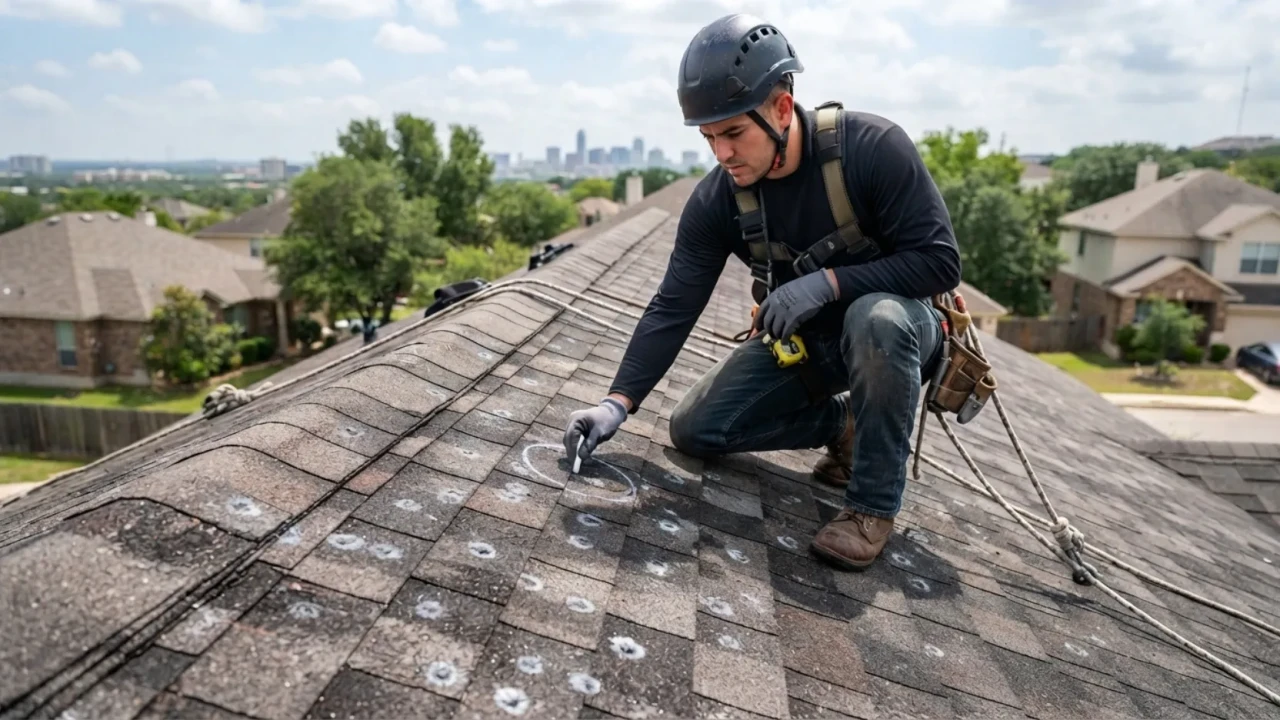
Texas homeowners insurance policies typically cover roof damage from sudden storm events: hail, high winds, falling trees, and lightning strikes. They do not cover damage from normal wear and aging. After a qualifying storm event, you have a right to file a claim and receive an independent assessment from a roofing contractor of your choosing, separate from whatever the insurance adjuster assesses.
- Storm event date documented immediately after any significant hail or wind event
- Professional roof inspection completed within 30 days of the storm
- Damage documented with dated photos before any temporary repairs are made
- Insurance policy type confirmed: ACV or RCV, and deductible amount reviewed
- Insurance claim filed within the Texas one-year window after any qualifying storm event
- Independent contractor estimate obtained separately from the insurance adjuster’s assessment
- If adjuster scope is significantly lower than contractor estimate, a public adjuster review is requested
Replacement Value
Homeowners often compare repair cost to replacement cost purely in dollar terms, which understates the value of replacement. A full roof replacement does not just fix the current problem. It delivers a new system with new warranties, new underlayment, inspected and repaired decking, and a fresh service life clock. When you frame it that way, the cost-per-year of service life often compares more favorably to repair than the raw upfront numbers suggest.
There is also a home sale consideration worth noting. If you are planning to sell your San Antonio home within the next 3 to 5 years, the age and condition of your roof will appear in the buyer’s inspection report and affect your negotiating position. A recent roof replacement eliminates that negotiation point and can meaningfully improve buyer confidence. A patched aging roof that is noted in the inspection report as “near end of life” typically results in either a price reduction request or a repair credit demand from the buyer.
| What you get | With a repair | With a replacement |
|---|---|---|
| Current leak fixed | Yes | Yes |
| New shingle manufacturer warranty | No | Yes 25 to 30 years on architectural shingles |
| New workmanship warranty | Partial on repaired area only | Yes full roof, typically 5 to 10 years |
| New underlayment | No existing underlayment remains | Yes complete new underlayment layer |
| Decking inspected and repaired | Only in the repair area | Full roof decking inspected and repaired as needed |
| New flashing at all penetrations | Only in the repair area | Yes all flashings replaced fresh |
| Roof age reset for home sale purposes | No | Yes buyer’s inspector notes a new roof |
| Potential insurance premium reduction | Unlikely | Possible with Class 4 impact-resistant shingles in Texas |
- Manufacturer shingle warranty terms for the proposed replacement product reviewed and confirmed
- Contractor workmanship warranty period and coverage terms confirmed in writing
- Underlayment type and coverage included in the replacement scope
- Decking inspection and replacement pricing included or addressed as an allowance in the replacement estimate
- Impact-resistant (Class 4) shingle option discussed with your contractor and its insurance premium impact explored with your insurance agent
- Home sale timeline factored into the repair vs replace decision if applicable
Use this table to orient your thinking before your contractor inspection. These are guidelines based on real San Antonio conditions in 2026. Every situation is different, and a physical inspection by a licensed contractor is always the definitive step.
| Your situation | Likely decision | Key reasoning |
|---|---|---|
| Roof is under 10 years old with one isolated leak | Repair | Significant remaining service life. Repair the specific failure point and monitor annually. |
| Roof is 10 to 15 years old with minor storm damage | Likely repair | Evaluate damage extent carefully. Apply the 50% rule. Remaining life likely justifies repair if damage is under 15% of surface area. |
| Roof is 15 to 20 years old with any significant damage | Evaluate carefully | Gray zone. Run the 50% cost comparison. Factor in whether this is the first repair or a recurring issue. |
| Roof is over 20 years old | Replace | Most asphalt roofs in San Antonio are near or past end of service life at this age. Replacement delivers far more value than another repair. |
| Hail damage covered by insurance with an RCV policy | Replace | If insurance covers full replacement cost, take it. You get a new roof at deductible cost. |
| Repair cost exceeds 50% of replacement cost | Replace | The 50% rule applies. You are spending too much for too little benefit compared to a full replacement. |
| Three or more repairs in the past 5 years | Replace | Recurring problems indicate systemic failure. The roof is telling you it is done. |
| Damage covers more than 30% of the roof surface | Replace | At this extent, piecemeal repair is rarely cost-effective. A full replacement gives you a complete system with a fresh warranty. |
| Selling the home within 2 to 3 years | Depends on age | If the roof is near end of life, replacing it before listing avoids inspection-report issues and buyer credit requests. If the roof has years of life left, repair and disclose. |
- Confirm the year your roof was installed from purchase documents or prior permits
- Identify the shingle type: 3-tab, architectural, or impact-resistant
- Count the number of roof repairs completed in the past 5 years and total the cost
- Document any recent storm events with dates and reported hail size for your neighborhood
- Review your homeowners insurance policy type: ACV or RCV, and confirm your deductible
- Contractor physically walks the roof not just a visual from the ground or attic
- Percentage of roof surface affected by damage estimated and stated in writing
- Decking condition assessed across the full roof, not just the damaged area
- Underlayment condition assessed where possible
- Contractor asked directly for both a repair estimate and a replacement estimate side by side
- Contractor asked for honest remaining service life estimate after any proposed repair
- Repair cost divided by replacement cost to test the 50% rule
- Roof age factored into the value of the repair
- Leak history evaluated: isolated event vs recurring pattern
- Insurance claim filed if storm damage is present and within the one-year Texas window
- Second estimate obtained from a different licensed contractor to verify both numbers
- Home sale timeline considered if selling within 3 to 5 years
- All work scope items listed in writing on the signed contract
- Materials specified by brand, product name, and warranty period
- Workmanship warranty period confirmed in writing for both repair and replacement options
- Contractor license number verified with the Texas Department of Licensing and Regulation
- Certificate of insurance reviewed: minimum $1 million general liability, workers compensation confirmed
- Payment schedule confirmed: never pay more than 10 to 30% upfront before work begins
How do I know if my roof needs repair or replacement?
How much does roof repair cost in San Antonio compared to full replacement?
Can a leaking roof be repaired without full replacement?
Will homeowners insurance pay for my roof repair or replacement in San Antonio?
How long does a roof repair last on a San Antonio home?
What are the signs that my roof needs to be replaced rather than repaired?
Not sure if you need a repair or a full replacement?
We will inspect your roof for free, walk you through exactly what we find, and give you an honest written estimate for both options so you can make the right call with real numbers in hand.
[/et_pb_code][/et_pb_column][/et_pb_row][/et_pb_section]