
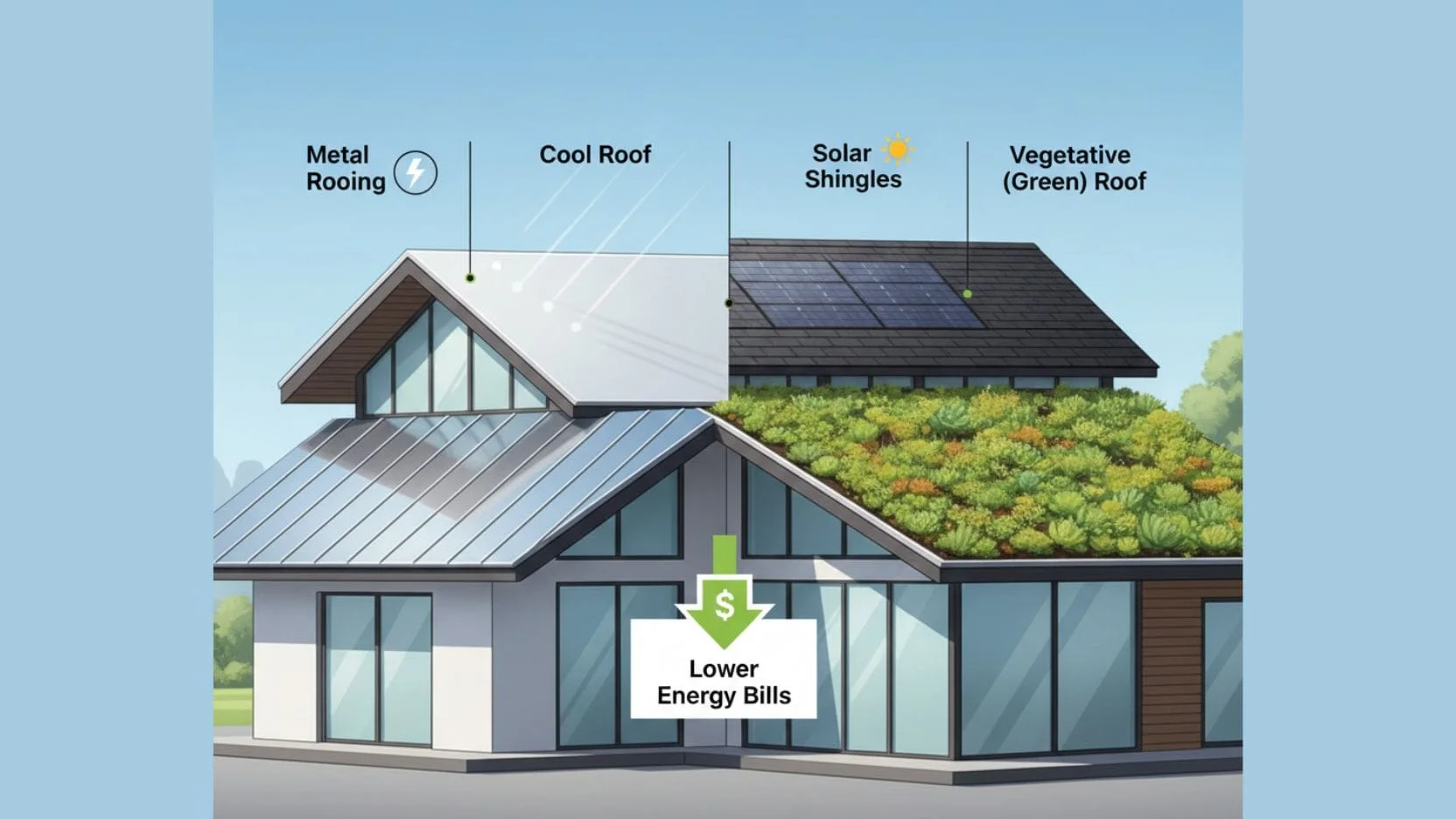
Choosing a green roofing option is one of the easiest ways to make your home more energy-efficient. Many homeowners say things like, “I just want a roof that keeps my home cool without costing a fortune.” The good news is that modern materials can do exactly that.
Eco-friendly roofs can also lower energy bills and help your home last longer. According to energy-efficient roofing data, some roofing materials can reduce cooling needs by up to 15%. Let’s walk through your options and how to choose the right one.
What Makes a Roof “Green”?
A roof is considered green when it helps save energy, uses sustainable materials, or reduces heat absorption.
Green roofing can mean:
- Using recycled materials.
- Installing a roof that reflects sunlight.
- Making space for plants or solar power.
According to green roofing basics, these roofs help reduce heat, improve insulation, and even support local wildlife.
Many homeowners say, “If it cuts my bills and helps the planet, I’m interested.”
Popular Green Roofing Options
Here are the most common choices for homes today.
1. Metal Roofing
Metal roofs last a long time and can often be recycled at the end of their life.
They reflect heat well, which helps keep your home cool.
2. Cool Roofs
Cool roofs use special coatings or light-colored shingles to reflect sunlight.
They work well in hot climates where heat buildup is a problem.
3. Solar Shingles
These look like regular shingles but generate electricity.
They offer long-term savings, especially in sunny areas.
4. Vegetative (Green) Roofs
Plants grow on top of a waterproof membrane. These roofs improve air quality and reduce heat.
You can explore these choices more through professional roofer insights.
Homeowners on eco-friendly roof discussions often mention that metal and cool roofs offer the best balance of affordability and performance.
How to Choose the Right Green Roofing Option
Choosing the best option depends on your climate, budget, and long-term plans.
Here’s what to consider:
Climate
Hot areas benefit most from reflective or cool roofing materials.
Budget
Some materials cost more upfront but save money over time.
Local Rules
Check HOA guidelines or city codes before installing solar or vegetative roofs.
As one contractor says, “The best roof is the one that makes sense for your home, not just the trendiest one.”
For more details, review green roofing basics.
How to Get Started (Step-by-Step)
Here’s a simple way to begin your green roofing project.
1. Research Your Options
Look at benefits, costs, and what works best in your region.
2. Get an Energy Audit
This helps you understand how much energy your home uses and where improvements are needed.
3. Compare Contractors
Look for companies with strong reviews and experience in eco-friendly materials.
You can browse roofing contractor reviews to find trusted pros.
4. Request Material Samples
Seeing the materials helps you decide what fits the look of your home.
5. Schedule the Installation
Work with your contractor to set a timeline and learn how to maintain your new roof.
Conclusion
Green roofing is a smart way to lower energy bills, protect your home, and help the environment. Whether you pick metal, cool shingles, solar, or a living roof, each option offers long-term benefits.
With the right contractor and materials, going green is easier than most homeowners expect