
[et_pb_section fb_built=”1″ admin_label=”section” _builder_version=”4.16″ global_colors_info=”{}”][et_pb_row admin_label=”row” _builder_version=”4.16″ background_size=”initial” background_position=”top_left” background_repeat=”repeat” global_colors_info=”{}”][et_pb_column type=”4_4″ _builder_version=”4.16″ custom_padding=”|||” global_colors_info=”{}” custom_padding__hover=”|||”][et_pb_code _builder_version=”4.27.7″ _module_preset=”default” hover_enabled=”0″ sticky_enabled=”0″]
Metal roofs have one of the strongest environmental profiles of any roofing material available today. This guide covers the full picture: recycled content, energy savings, lifespan, landfill impact, and what that means for San Antonio homeowners who want a greener home without sacrificing performance.
When San Antonio homeowners start researching metal roofs, the environmental question comes up quickly. Is a metal roof actually more eco-friendly than asphalt shingles? The answer is yes, and by a significant margin, but the reasons are more specific and more interesting than most people expect.
The eco-friendly case for metal roofing is built on four distinct pillars: the recycled content in the material itself, the energy it saves over its lifetime through solar reflectivity, the sheer length of time it stays on your roof before needing replacement, and the fact that it is 100 percent recyclable at the end of its service life. This guide breaks down each of those factors, explains what they mean for a San Antonio home specifically, and compares metal roofing directly against asphalt shingles on every environmental measure that matters.
The eco-friendly advantage of metal roofing is not just about recycled content at installation. It is about what does not happen over the next 50 years. An asphalt shingle roof in San Antonio will be torn off and sent to a landfill two or three times before a metal roof installed at the same time needs to be replaced. Every shingle tear-off generates roughly 2 to 3 tons of non-recyclable waste. A metal roof avoids all of that, and when it finally does reach end of life, the material gets melted down and used again. That full-lifecycle picture is where metal roofing’s environmental advantage is the most dramatic.
Recycled Content
Most metal roofing panels are manufactured with a substantial percentage of recycled material. Steel roofing panels typically contain between 25 and 95 percent recycled steel, depending on the manufacturing process used. Aluminum roofing, which is popular for its corrosion resistance, often contains 90 to 95 percent post-consumer recycled content. This is a stark contrast to asphalt shingles, which are a petroleum-based product with essentially no recycled content in the core material.
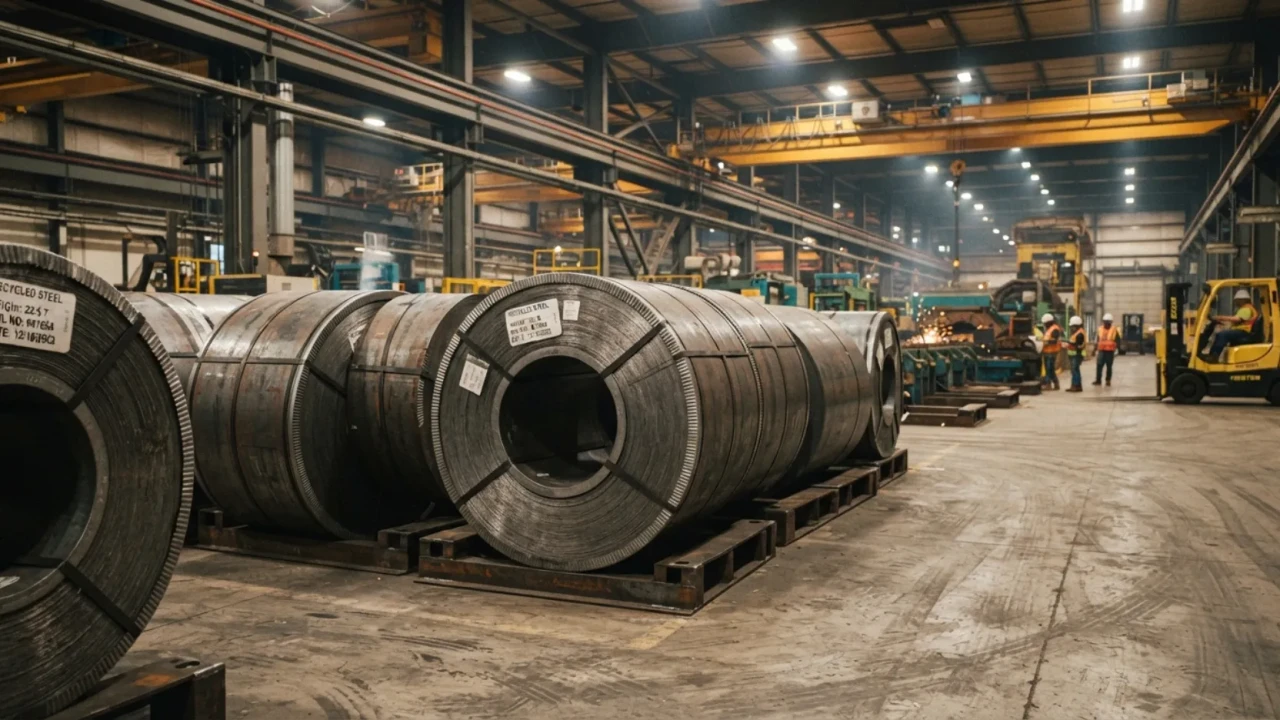
Steel roofing panels are manufactured from steel coils that are formed, coated, and cut to profile at the factory. The steel itself is produced in electric arc furnace mills that use recycled scrap steel as their primary feedstock. This manufacturing method produces significantly lower carbon emissions than traditional blast furnace steel production.
Aluminum roofing panels take this further. Recycled aluminum requires only about 5 percent of the energy needed to produce new aluminum from raw bauxite ore. When a manufacturer uses post-consumer recycled aluminum for roofing panels, the embodied energy in the product drops dramatically compared to almost any other roofing material on the market.
- Request the recycled content percentage for the specific panel product being quoted
- Ask whether the manufacturer uses electric arc furnace (EAF) production for steel panels
- Confirm whether the product carries any environmental certification such as an EPD (Environmental Product Declaration)
- For aluminum panels, ask whether the product is produced from post-consumer or post-industrial recycled content
- Verify the coating system: some high-performance coatings have lower VOC content than standard paint systems
Energy Savings
San Antonio’s climate makes energy efficiency one of the most tangible eco-friendly advantages of a metal roof. The city averages over 220 sunny days per year, with summer temperatures regularly exceeding 100 degrees Fahrenheit. A dark asphalt shingle roof in those conditions can reach surface temperatures of 150 to 175 degrees. That heat radiates into the attic and directly increases the load on your air conditioning system every afternoon from May through September.
A metal roof with a reflective coating works differently. Rather than absorbing solar radiation, it reflects a large portion of it back into the atmosphere. Metal roofing products that meet ENERGY STAR criteria reflect at least 25 percent of solar radiation for low-slope applications and at least 15 percent for steep-slope systems. In practice, many modern painted metal roofing systems achieve solar reflectance values well above those thresholds, especially in lighter colors.
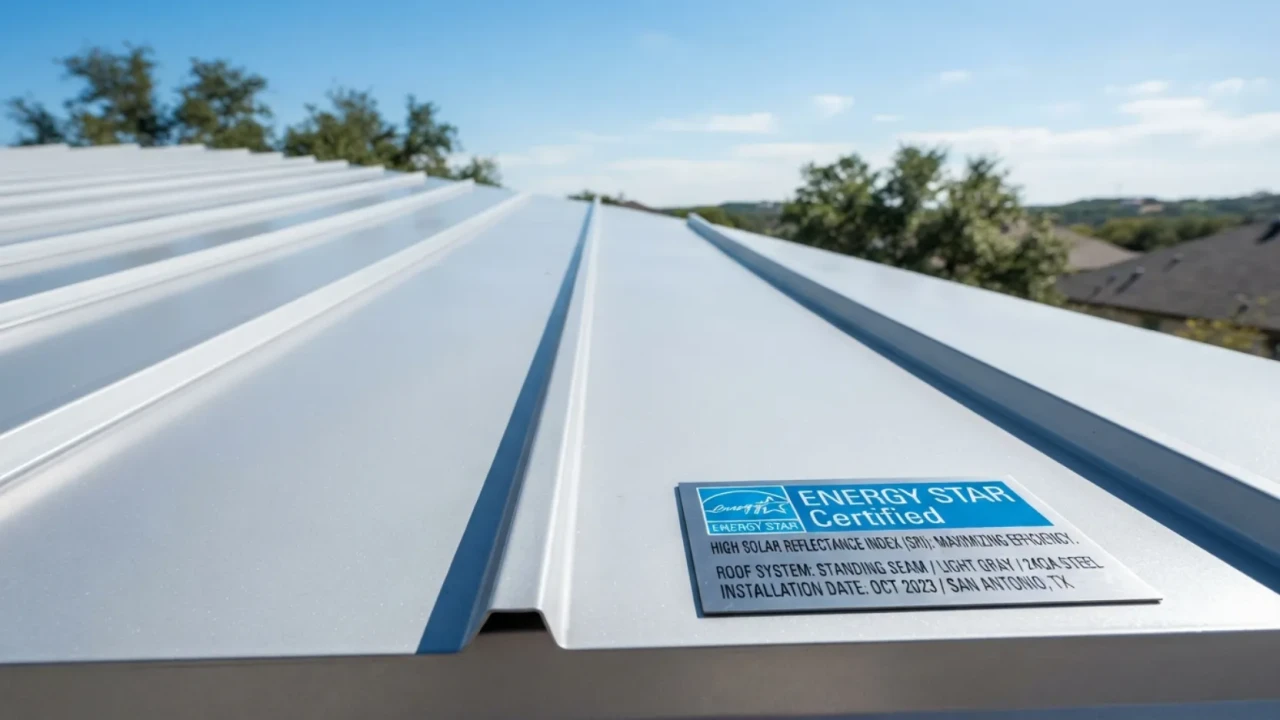
Beyond reflectance, metal roofing also benefits from thermal emittance, the ability to release absorbed heat at night. Metal roofs shed heat quickly once the sun goes down, while asphalt shingles retain heat longer into the evening. In a San Antonio summer where nights can still be warm, a metal roof that cools faster reduces the residual heat load on the home during the nighttime hours when your AC system is trying to recover.
Color matters significantly in San Antonio’s climate. A standing seam metal roof in a light gray or tan finish will dramatically outperform a darker color on energy savings. If your goal is to maximize the environmental and financial return from your new roof, choosing a lighter color is one of the most impactful decisions you can make at the time of installation. Most metal roofing manufacturers offer a full color palette, and the price difference between a light and dark color in the same product line is usually minimal.
| Roofing material | Typical surface temp (San Antonio summer) | Attic temp impact | Cooling cost effect |
|---|---|---|---|
| Dark asphalt shingles | 150 to 175 degrees F | Attic can exceed 140 degrees | Highest cooling load |
| Light asphalt shingles | 130 to 150 degrees F | Moderate improvement | Modest improvement |
| Metal roof, dark color | 120 to 140 degrees F | Better than asphalt; high emittance helps | Moderate savings vs. asphalt |
| Metal roof, light color (ENERGY STAR) | 95 to 120 degrees F | Attic can be 20 to 40 degrees cooler | Up to 40% cooling cost reduction |
- Choose a product that is ENERGY STAR certified for maximum reflectance verification
- Select a lighter color finish to maximize solar reflectance in the Texas climate
- Confirm the panel’s thermal emittance rating in addition to its solar reflectance value
- Ask your contractor about vented ridge cap installation to promote attic ventilation alongside the reflective roof
- Check whether your roof replacement qualifies for any federal or local energy efficiency tax credits
Lifecycle Impact
The landfill story is where the environmental comparison between metal roofing and asphalt shingles becomes stark. Asphalt shingles are the most commonly installed roofing material in the United States, and they generate an enormous volume of waste. Most asphalt shingle roofs last between 15 and 25 years in San Antonio’s harsh climate, which means they get replaced multiple times over the lifespan of a home. Each replacement generates 2 to 3 tons of shingle waste per average residential roof. That material goes to a landfill in the vast majority of cases.
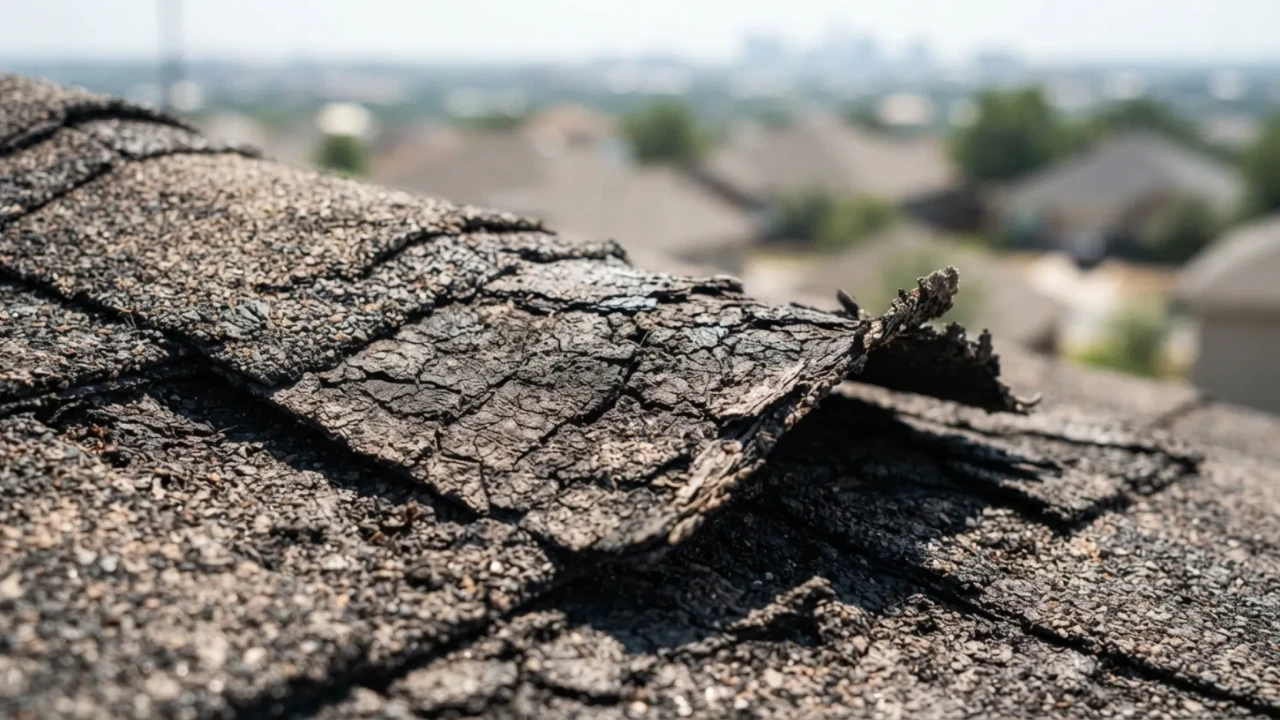
A metal roof installed today in San Antonio will likely still be on that home in 50 years. In that same time frame, the same home with an asphalt shingle roof would have gone through two or three full replacements, generating 4 to 9 tons of landfill waste across those cycles. The metal roof avoids all of that. It does not create shingle waste at the 15-year mark or the 30-year mark. It simply keeps performing.
Asphalt shingles are technically recyclable into road paving material, but the actual recycling rate for shingles is low, and the infrastructure to accept them is not universally available. In practice, the overwhelming majority of torn-off asphalt shingles in San Antonio end up in landfills. Metal, by contrast, is consistently recycled because it has meaningful scrap value. When a metal roof eventually reaches the end of its life, the panels get sold to a metal recycler rather than hauled to a dump.
The San Antonio climate is harder on asphalt shingles than national average data suggests. The intense UV exposure, extreme heat cycles, and periodic severe hail events shorten the effective lifespan of asphalt roofs in this region. Many asphalt roofs in Bexar County that were installed with a 30-year warranty rating are showing significant degradation by year 18 to 20. When you compare lifespans honestly for this specific climate, the gap between metal and asphalt grows even wider than national statistics indicate.
- A San Antonio metal roof installed today is likely to outlast 2 full asphalt roof replacements on the same home
- Each avoided asphalt tear-off eliminates approximately 2 to 3 tons of landfill waste
- Asphalt shingle warranties are rated under standard conditions; San Antonio heat and UV shorten real-world performance
- Metal roofing scrap has commercial value; it gets recycled rather than landfilled at end of life
- When calculating total environmental cost, always include the impact of replacements, not just the initial installation
Full Lifecycle
When a metal roof finally reaches the end of its useful life, it does not become a waste problem. Steel and aluminum are among the most recycled materials on earth. A metal roofing panel that is removed after 50 or 60 years of service gets sold to a scrap metal dealer, melted down, and turned into new steel or aluminum products. The material does not degrade in quality through this process. Steel can be recycled indefinitely without losing its fundamental properties. This closed-loop potential is something no asphalt roofing product can match.
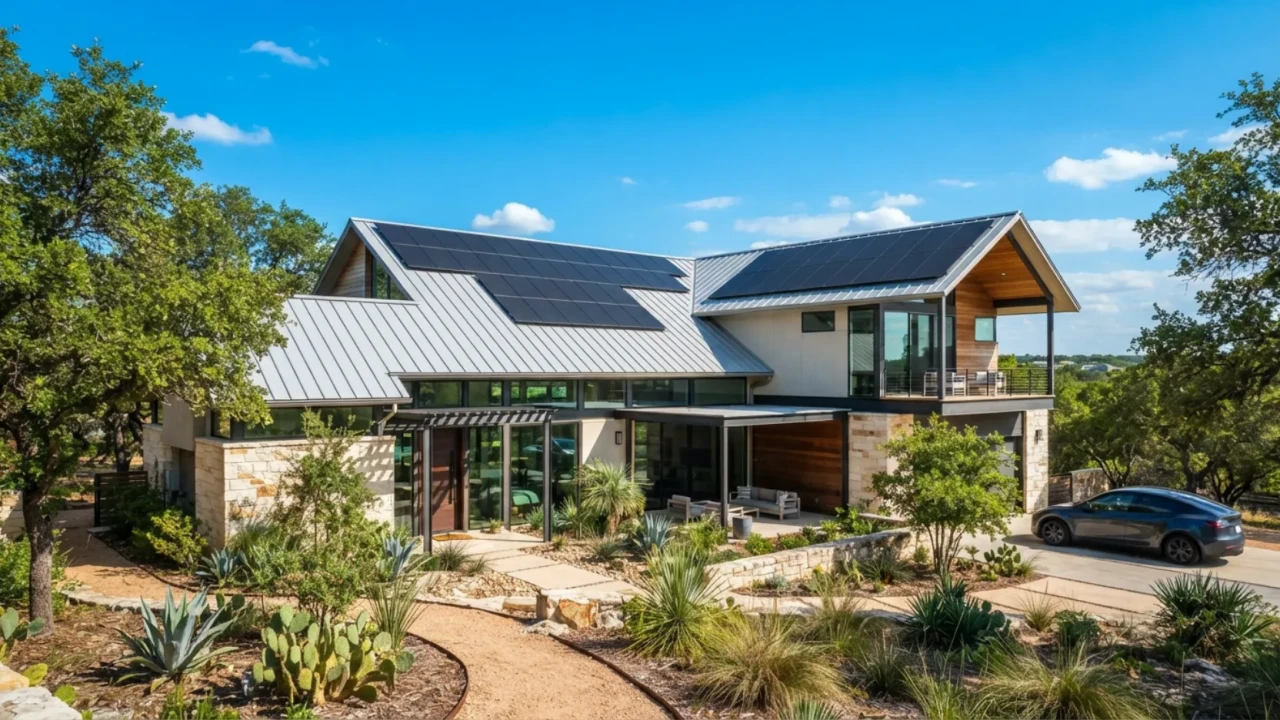
Beyond recyclability, metal roofing unlocks several additional green benefits that compound its environmental advantage over time.
Solar panel compatibility is a major green benefit that is often overlooked. Standing seam metal roofs allow solar panels to be attached using clamp systems that grip the raised seams without penetrating the roof surface at all. This means you can add solar at any point during the roof’s life without creating leak points. Asphalt roofs require screws to be driven through the shingles for solar attachment, creating dozens of potential leak points and voiding the shingle warranty in many cases. If solar is part of your long-term plan for this home, a standing seam metal roof is the most compatible starting point you can choose.
Rainwater collection is another benefit that matters increasingly in South Texas, where water conservation is a growing concern. Metal roofing surfaces produce cleaner runoff than asphalt shingles, which shed petroleum-based granules and additives into rainwater as they age. For homeowners interested in capturing rainwater for landscape irrigation, a metal roof provides a cleaner starting point.
Texas is one of the most rainwater-collection-friendly states in the country. State law explicitly allows residential rainwater collection for potable and non-potable uses. If you are planning a rainwater harvesting system, the roof material matters. Metal roofing produces runoff that is simpler to filter and treat than asphalt shingle runoff, which contains petroleum residue and granule particles that increase the contamination load your filtration system has to handle.
- Standing seam metal roofs are the preferred substrate for solar panel installation with no penetrations
- Metal roofing produces cleaner rainwater runoff suitable for collection and landscape irrigation
- Metal does not support algae or moss growth that would require chemical biocide treatments
- No granule shedding means no petroleum-based particles entering your gutters or soil
- Metal panels are 100 percent recyclable at end of life with commercial scrap value
- Lower maintenance requirements mean fewer chemical products and less repeat labor over the roof’s life
Side by Side
Putting all of the factors together in a direct comparison makes the environmental case for metal roofing easy to understand. The advantage is not limited to one area. Metal roofing leads on recycled content, energy efficiency, lifespan, landfill impact, and end-of-life recyclability simultaneously. Asphalt shingles have a lower upfront cost, but they cannot match metal on any of the environmental measures that matter.
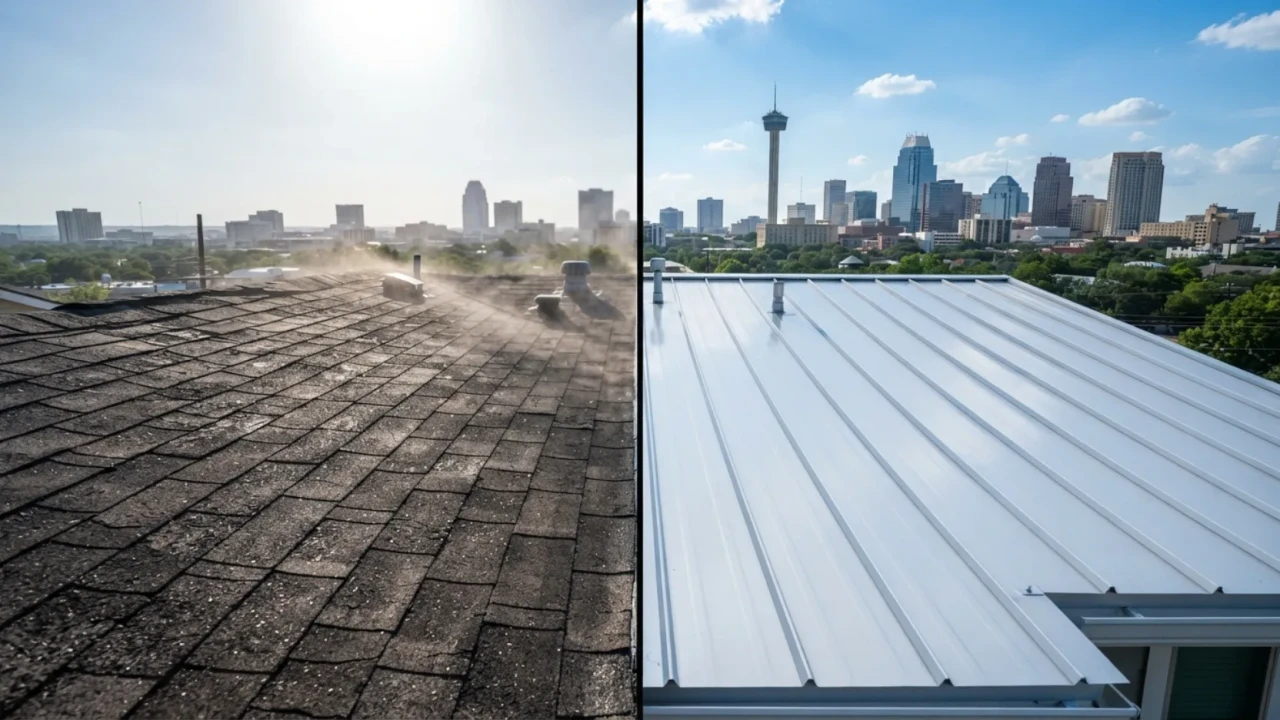
| Environmental measure | Metal roofing | Asphalt shingles |
|---|---|---|
| Recycled content at installation | 25 to 95 percent recycled content typical | Petroleum-based; essentially no recycled feedstock |
| Energy efficiency (San Antonio) | Up to 40% cooling cost reduction with light color and ENERGY STAR rating | Dark surfaces absorb heat; minimal reflectance benefit |
| Expected lifespan in San Antonio | 40 to 70 years with proper maintenance | 15 to 25 years; shorter due to UV and heat |
| Landfill waste generated | None over the same period (one installation) | 4 to 9 tons over 50 years from 2 to 3 replacements |
| End-of-life recyclability | 100 percent recyclable; commercial scrap value | Low actual recycling rate; majority goes to landfill |
| Solar panel compatibility | Excellent; clamp-on attachment requires no penetrations | Requires roof penetrations; may void warranty |
| Rainwater quality | Clean runoff; suitable for collection systems | Petroleum residue and granules in runoff |
| Maintenance chemicals needed | None typical; no algaecide or sealant required | Algae and moss treatments, sealants over time |
- Ask your contractor to provide a total cost comparison over 50 years, including projected replacement costs for asphalt
- Factor in energy savings: a 20 to 40 percent reduction in cooling costs has real dollar value in San Antonio summers
- Consider the avoided waste: each asphalt replacement generates 2 to 3 tons of landfill material you will not create with metal
- If solar panels are part of your plan, weigh the installation compatibility advantage of a standing seam metal roof
- Check whether the metal roofing product qualifies for any federal energy efficiency incentives under current tax law
- Confirm recycled content percentage for the specific panel product being quoted
- Look for ENERGY STAR certification on the product for verified solar reflectance performance
- Choose a lighter color finish to maximize cooling savings in the San Antonio climate
- Ask whether the manufacturer provides an Environmental Product Declaration (EPD)
- Consider standing seam if solar panels are in your future plan
- Verify that ventilation is properly addressed: a reflective roof works best with adequate attic ventilation alongside it
- Ask whether your existing roof will be torn off or if the metal can be installed over it (over-installation reduces landfill waste)
- Confirm that the contractor will haul away old roofing material responsibly if a tear-off is required
- Request that all metal scraps from the installation be collected and recycled, not discarded
- Schedule a roof inspection every two to three years to keep the system performing at its best
- Keep gutters clear so water flows freely and does not back up against panel edges
- Check the coating condition after any major hail event to address any areas before corrosion starts
- If you eventually add solar, use a qualified installer who is experienced with metal roof clamp systems
- When the roof eventually reaches end of life, sell the panels to a metal recycler rather than disposing of them
Is a metal roof more eco-friendly than asphalt shingles?
How much can a metal roof reduce my energy bills in San Antonio?
How much recycled content is in a metal roof?
Can I install solar panels on a metal roof?
What happens to a metal roof at the end of its life?
Is it worth paying more for a metal roof if I care about the environment?
Get a free metal roof estimate in San Antonio
Ready to make the switch to a more durable, energy-efficient, and eco-friendly roof? We will inspect your current roof, walk you through the best metal options for your home, and give you a clear written estimate at no cost.
[/et_pb_code][/et_pb_column][/et_pb_row][/et_pb_section]