
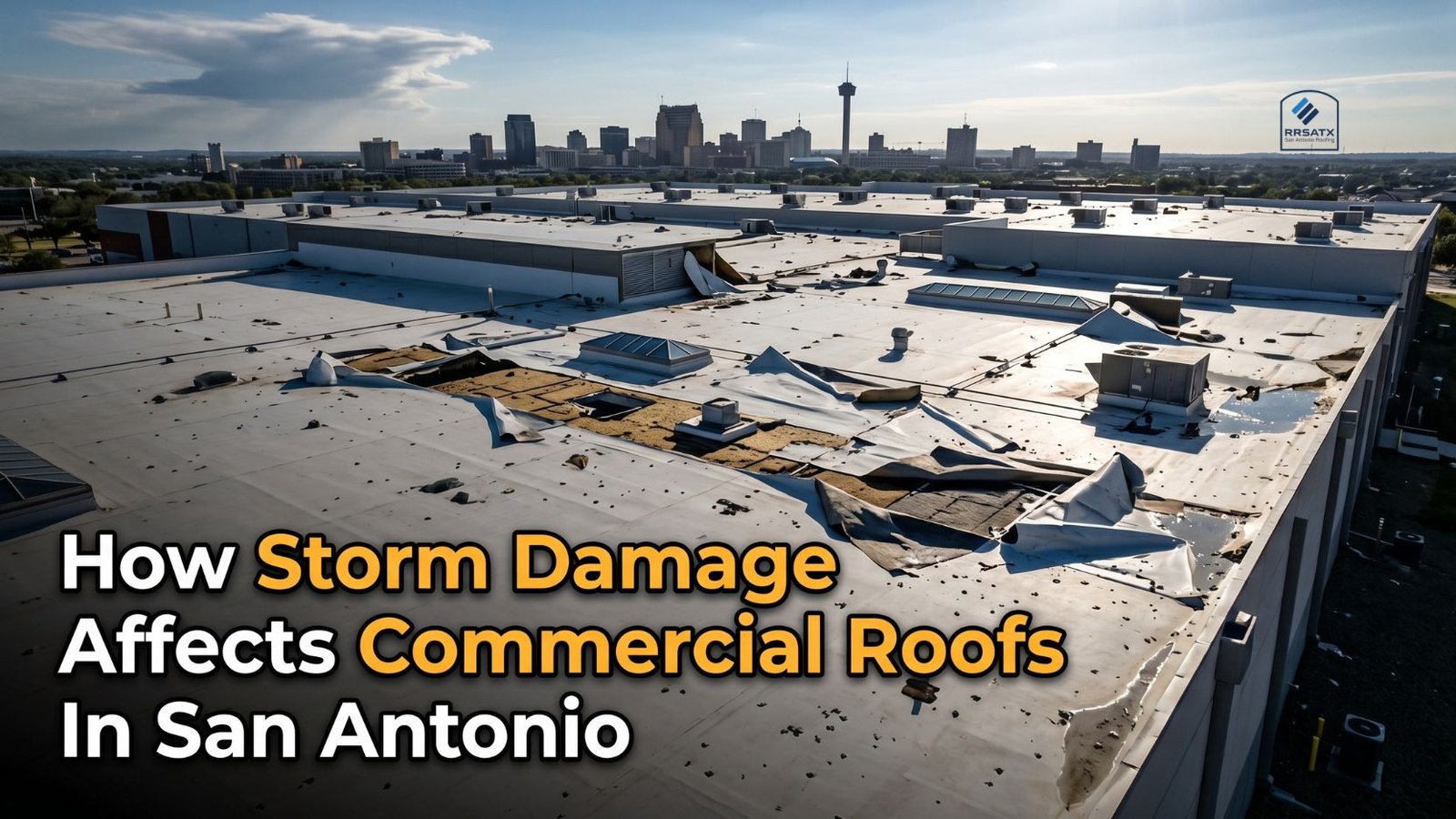
San Antonio’s commercial roofs face unique weather threats year-round, from hail storms to hurricane-force winds. Storm damage on commercial roofs typically manifests as membrane punctures, flashing displacement, water pooling, and structural compromise issues that can escalate from minor repairs costing $2,000–$5,000 to full replacements exceeding $50,000 if not addressed within 72 hours of a storm event.
RRSATX: San Antonio Roofing Company has inspected over 400 commercial properties across the greater San Antonio area, including the Monterey and Nakoma districts, documenting how Texas storms create cascading failures in flat and low-slope commercial roofing systems.
What Types Of Storm Damage Impact Commercial Roofs Most?
Hail, wind, and flash flooding cause 89% of commercial roof damage in San Antonio, according to recent insurance claim data from Bexar County.
Commercial roofs experience damage differently than residential systems:
- Hail damage: Creates divots in TPO, EPDM, and modified bitumen membranes that compromise waterproofing layers
- Wind damage: Lifts membrane edges, tears flashing, and displaces rooftop equipment
- Water accumulation: Flash floods overwhelm drainage systems, creating pooling that penetrates seams within 24–48 hours
- Debris impact: Fallen branches puncture single-ply membranes and damage HVAC units
Key takeaway: Flat commercial roofs are 3x more vulnerable to water intrusion than sloped residential roofs because water doesn’t naturally shed off the surface.
How Quickly Does Storm Damage Escalate On Commercial Buildings?
Untreated storm damage can double repair costs every 7–10 days due to water migration through roofing layers.
Here’s the typical progression:
| Timeline | Damage Stage | Typical Cost Range |
| 0–72 hours | Surface membrane damage | $2,000–$5,000 |
| 4–14 days | Insulation saturation | $8,000–$15,000 |
| 15–30 days | Deck deterioration | $20,000–$35,000 |
| 30+ days | Structural compromise | $50,000+ |
Water that enters through a small puncture spreads horizontally between membrane and insulation layers, often traveling 30–50 feet from the initial breach point before showing interior ceiling stains.
Property managers often mistake delayed interior leaks (appearing 2–3 weeks post-storm) as unrelated issues, missing the critical insurance claim window.
What Should Commercial Property Owners Do After San Antonio Storms?
Schedule a professional inspection within 48 hours of any severe weather event even if no visible damage appears from ground level.
Immediate action steps:
- Document everything: Photograph all rooftop areas, drainage systems, and HVAC equipment
- Check interior ceilings: Look for water stains, discoloration, or soft spots
- Review drainage: Ensure scuppers, gutters, and drains are clear of debris
- Contact your insurer: Most policies require damage reporting within 72 hours
- Get professional assessment: Infrared scanning can detect hidden moisture without destructive testing
Commercial roofs in San Antonio’s Monterey and Nakoma areas face additional challenges from mature tree coverage; fallen branches during storms create concentrated impact damage that isn’t immediately visible.
RRSATX: San Antonio Roofing Company provides free storm damage assessments with infrared moisture scanning, helping property owners identify hidden problems before they escalate.
Can Storm Damage Be Prevented On Commercial Roofs?
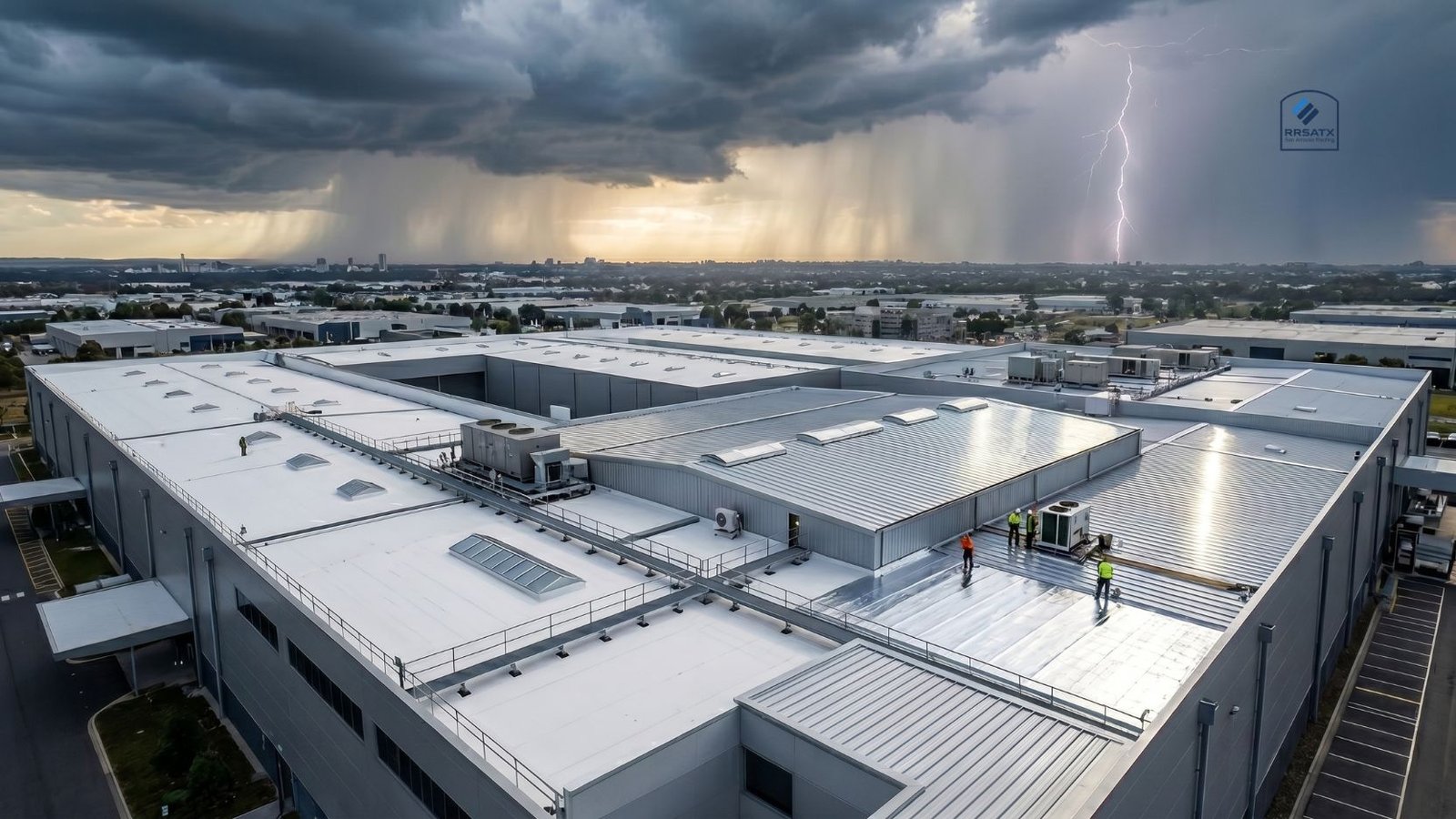
While you can’t prevent storms, preventive maintenance reduces damage severity by 60–70% compared to neglected roofs.
Critical preventive measures:
- Quarterly inspections: Identify and repair vulnerable areas before storm season
- Drainage maintenance: Clear debris monthly, especially before May–October storm season
- Flashing reinforcement: Secure edges and penetrations that wind targets first
- Membrane coating: Apply reflective coatings that add puncture resistance
- Tree management: Trim overhanging branches within 10 feet of roof surface
Roofs aged 15+ years are 4x more likely to experience catastrophic storm damage than newer installations. Property owners with aging commercial roofs should consider proactive replacement before major weather events.
How Do Insurance Claims Work For Commercial Storm Damage?
Most commercial policies cover sudden storm damage but exclude pre-existing conditions and deferred maintenance making documentation critical.
Successful claim requirements:
- Professional inspection report within 72 hours
- Photographic evidence linking damage to specific weather event
- Moisture testing results showing active leaks
- Repair estimates from licensed contractors
- Maintenance records proving regular upkeep
Insurance adjusters often dispute claims when property owners can’t prove the damage occurred during a specific storm event versus gradual deterioration.
Keep detailed maintenance logs and inspection reports; these documents separate covered storm damage from excluded wear-and-tear issues.
FAQs
How Long Do I Have To File An Insurance Claim After Storm Damage?
Most commercial policies require notification within 72 hours and formal claims within 30 days of the damage event. Delays can result in claim denials, especially if secondary damage occurs.
What’s The Average Cost To Repair Commercial Storm Damage In San Antonio?
Minor repairs average $3,000–$7,000 for membrane patches and flashing replacement. Moderate damage requiring insulation replacement runs $12,000–$25,000. Severe structural damage often exceeds $50,000 and may require full roof replacement.
Should I Repair Or Replace A Storm-Damaged Commercial Roof?
If damage affects more than 30% of the roof surface, or if the roof is already 20+ years old, replacement typically provides better long-term value than extensive repairs. A professional assessment can determine the most cost-effective approach.