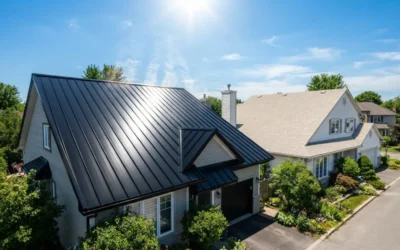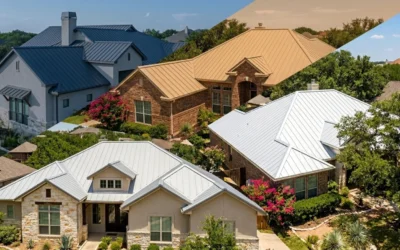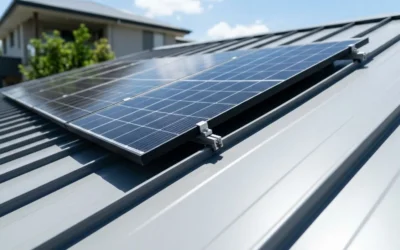
The short answer is no. How metal roofing actually handles heat in San Antonio is more interesting than a simple yes or no. This guide covers the science, the real-world numbers, and what makes one metal roof dramatically cooler than another in the Texas summer.
It is one of the most common questions we get from San Antonio homeowners considering a roof replacement: will a metal roof make my house hotter? The concern makes sense. Metal conducts heat. San Antonio summers are brutal. If you put a giant piece of metal on top of your house, it seems logical that the heat would come pouring in.
The reality is the opposite. A properly specified metal roof (meaning the right panel type, the right coating, and the right installation details) keeps a San Antonio home significantly cooler than a standard dark asphalt shingle roof. The key word is "properly specified." Not all metal roofs are created equal when it comes to heat performance, and the difference between a metal roof that dramatically reduces your cooling bills and one that performs only marginally better than old shingles comes down to a few specific choices.
This guide explains the actual science behind how metal roofs handle heat, what variables matter most in a Texas climate, how to compare your options before you buy, and what specific questions to ask any roofing contractor before you sign a contract.
A metal roof surface in the San Antonio sun will get hot. Any surface will. What separates metal from asphalt is what happens next. A properly coated metal roof reflects a large portion of that solar energy back into the atmosphere before it ever converts to heat. The small amount that does absorb is emitted back outward rapidly, rather than conducting slowly through the structure into your attic and living spaces. Understanding this distinction between reflection and emissivity versus conduction is what makes the whole picture clear.
When the sun hits a roofing surface, three things happen. Some of the solar energy is reflected away from the surface. Some is absorbed and converted to heat at the surface. Of the heat that is absorbed, some is emitted back outward into the atmosphere, and some conducts inward through the roof assembly into the attic and ultimately the living space. These three processes, reflection, emissivity, and conduction, determine how much heat your home absorbs from the roof above it.
Standard dark asphalt shingles perform poorly on every one of these measures. They reflect very little solar energy, they have a high thermal mass that stores enormous amounts of heat over the course of the day, and they conduct that stored heat slowly but persistently into the attic throughout the afternoon and evening. On a San Antonio July afternoon, a dark asphalt roof surface can reach 150 to 160 degrees Fahrenheit, and it holds that heat well into the night.
A reflective metal roof with a quality cool-roof coating behaves differently at every step. It reflects 60 to 70 percent of incoming solar energy immediately, so far less is ever absorbed in the first place. The metal surface itself has very low thermal mass, meaning it does not store heat the way asphalt does. And metal has high emissivity, meaning the heat it does absorb is radiated back outward efficiently. The practical result is a roof surface that can run 50 to 70 degrees cooler than an equivalent asphalt surface under the same San Antonio sun.
- Solar reflectance index (SRI) of 29 or higher qualifies as a cool roof under most utility rebate programs
- Thermal emittance of 0.85 or higher means the panel releases absorbed heat efficiently
- ENERGY STAR certification on the specific panel color and coating you are considering
- Cool roof ratings are color-specific: verify the rating for your chosen color, not just the panel line
When San Antonio homeowners ask about metal roof heat performance, the conversation quickly turns to panel type: standing seam versus corrugated versus stone-coated steel. While the panel type does matter for durability and installation quality, the coating and color are what drive the heat performance numbers. Two metal roofs with identical panel profiles can have dramatically different heat characteristics depending on the finish applied to them.
The worst-performing metal roofs from a heat standpoint are bare galvanized or galvalume panels with no coating. These reflect a moderate amount of solar energy, but they absorb more than a coated system and their reflectance degrades as the surface weathers. At the other end of the spectrum, metal panels with premium Kynar 500 or PVDF coatings in light to medium colors, specifically formulated for solar reflectance, can reduce cooling loads by 20 to 30 percent in a San Antonio climate.
You do not have to choose white or light gray to get meaningful cooling benefits from a metal roof. Modern "cool-color" pigment technology allows darker colors to reflect near-infrared solar radiation, which carries a large portion of the sun's heat energy, while still absorbing visible light. A medium-tone Galvalume or Kynar-coated metal panel in charcoal or terra cotta with cool-color pigments can outperform a standard medium-gray asphalt shingle significantly in heat performance, while still complementing the color palette of your San Antonio home. Ask your contractor to show you the cool-roof rating sheet for the specific color you are considering.
- Request the cool roof rating certificate for the specific panel and color combination, not just the product line
- Verify PVDF or Kynar 500 content in the coating if premium performance is the goal
- Confirm the coating carries a manufacturer fade and chalk warranty of at least 30 years
- Ask whether the color you want is available with cool-color infrared-reflective pigments
- Check whether CPS Energy in San Antonio offers a rebate for ENERGY STAR or cool roof products on your chosen system
San Antonio's climate makes this comparison particularly meaningful. The city averages over 220 sunny days per year and regularly records summer temperatures above 100 degrees Fahrenheit. The heat load on a residential roof here is among the highest of any major American city. That makes the performance gap between a well-specified metal roof and a standard asphalt shingle roof larger here than it would be in, say, Seattle or Minneapolis.
| Performance factor | Standard dark asphalt shingles | Cool-coated metal roof |
|---|---|---|
| Peak surface temp (July afternoon, San Antonio) | 150 to 165 degrees F | 90 to 110 degrees F |
| Peak attic temp impact | Attic can reach 140 to 160 degrees F | Attic typically 30 to 45 degrees cooler |
| Solar reflectance (typical) | 5 to 15 percent | 60 to 75 percent (cool-coated) |
| Thermal emittance | 0.85 to 0.91 (high, but moot if surface is very hot) | 0.85 to 0.92 with much lower absorption |
| Cooling cost impact | Baseline (highest cooling load) | 15 to 25 percent reduction typical |
| Heat retention after sunset | High: radiates stored heat overnight | Low: surface cools rapidly after sun sets |
| UV degradation effect on performance | Granule loss reduces reflectance over time | Minimal degradation with quality coatings |
| Expected lifespan in Texas climate | 12 to 18 years with San Antonio UV and heat | 40 to 70 years with proper maintenance |
- Ask for the solar reflectance index (SRI) number for the specific product being quoted, not a general claim
- Request the estimated peak attic temperature reduction the contractor expects based on your current roof and attic insulation
- Verify whether the new roof system qualifies for any CPS Energy efficiency incentives in San Antonio
- Confirm the lifespan warranty for the specific coating and metal gauge being installed
The metal roof itself is only one part of the thermal system protecting your home. Even a perfectly specified cool-coated metal roof installed over an attic with inadequate insulation and poor ventilation will underperform. The roof handles the first defense reflecting and emitting solar energy before it enters the structure. The attic insulation and ventilation handle whatever heat does make it through. When both are properly specified together, the results for San Antonio homeowners are significantly better than either element can achieve alone.
Attic ventilation is particularly important with metal roofing in San Antonio's climate. Proper ridge and soffit ventilation allows any heat that builds up in the attic space to escape before it conducts into the living area below. An unventilated or poorly ventilated attic under a metal roof is still going to build up heat during the day, regardless of how good the roof's reflectance numbers are. Most metal roofing installations in San Antonio should be paired with a review of existing attic ventilation, and corrected if it is undersized for the roof area.
If your contractor is quoting a metal roof in San Antonio without mentioning your attic insulation or ventilation, ask about it directly. A responsible metal roofing contractor will walk your attic or ask about your current insulation depth and ventilation layout before finalizing the system specification. In many San Antonio homes built before 2000, attic ventilation is undersized for the roof area, and attic insulation is below the current recommended levels for the Texas climate. Addressing both during a metal roof replacement is the most cost-effective time to correct those deficiencies, and it maximizes the heat reduction benefit of the new roof investment.
- Current attic insulation depth measured and compared against the DOE recommendation for San Antonio (R-38 to R-49)
- Soffit and ridge ventilation assessed for the 1:150 net free vent area ratio for your attic square footage
- Radiant barrier considered as an add-on, especially on west- and south-facing roof sections with maximum sun exposure
- Air sealing at attic penetrations confirmed insulation works much better when air leaks are also addressed
- CPS Energy rebate eligibility verified for both the cool roof and any insulation upgrades being completed at the same time
The concern that metal roofs make a house hotter persists partly because of real experiences with poorly specified metal buildings, and partly because the intuition that metal gets hot is not wrong. Metal does heat up in the sun. The problem is that this surface-level observation gets confused with what happens inside the home, which is a different question entirely. Here are the four misconceptions we hear most often from San Antonio homeowners, and what the evidence actually shows.
Myth 1: Metal roofs get hotter than shingles in the sun. The surface of a bare or dark-painted metal panel does heat up quickly in direct sun. But a cool-coated metal panel reflects the majority of that solar energy before it ever becomes heat. More importantly, even when the surface gets warm, metal's low thermal mass means it cools rapidly and does not conduct that heat slowly into the structure the way asphalt does. The metric that matters is not what temperature the surface reaches, but how much heat moves into your home.
Myth 2: You have to pick a white or very light roof to get cooling benefits. Cool-color pigment technology has advanced significantly. Dark charcoals, medium earth tones, and classic terra cotta shades are all available with infrared-reflective coatings that dramatically reduce heat absorption compared to conventionally pigmented paints in the same color. A certified cool-roof dark metal panel reflects significantly more solar heat than a standard unpigmented dark asphalt shingle in the same color. Your color options are much broader than most homeowners realize.
Myth 3: Metal roofs are loud in the rain. This applies to bare metal installed over open framing, which is common in agricultural and commercial buildings. Residential metal roofing installed over solid decking with an underlayment is no louder during rain than a standard shingle roof. Most San Antonio homeowners report the sound level is identical or quieter than their previous asphalt shingle roof.
Myth 4: Metal roofs attract lightning. Metal is a conductor, but lightning seeks the path of least resistance to ground, which is determined by height and geometry, not material. A metal roof is no more likely to attract a lightning strike than a shingle roof of the same height and profile. If lightning does strike, metal roofing is actually safer because it is non-combustible, unlike wood framing or asphalt shingles, which can ignite.
Every homeowner who asks about a metal roof in San Antonio eventually gets to the same question: what will it actually do to my energy bill? The honest answer involves a range, because the savings depend on your current roof condition, your attic insulation, your home's orientation, your thermostat habits, and the specific metal roof system you choose. But the data from Texas homes is consistent: a cool-coated metal roof reduces cooling costs meaningfully in San Antonio's climate.
The Oak Ridge National Laboratory research on reflective metal roofing in hot-dry climates found annual cooling cost reductions averaging 20 to 30 percent for homes that replaced dark asphalt shingles with reflective metal roofing and addressed attic ventilation at the same time. Florida Solar Energy Center data shows similar ranges for hot-humid climates. San Antonio's climate is hot-dry to hot-mixed, depending on the season, which puts it squarely in the range where these benefits apply.
CPS Energy periodically offers rebate programs for ENERGY STAR certified roofing products and attic insulation improvements. The availability and amounts change year to year, so confirm current program details with CPS Energy or ask your roofing contractor to check eligibility before your project begins. Even without a rebate, the energy savings over a 40-plus-year metal roof lifespan represent a significant return on the additional investment over a standard asphalt roof replacement.
- Choose a cool-roof certified panel with an SRI of 29 or higher and verify the specific color, not just the product family
- Pair the roof with attic insulation at or above R-38 for San Antonio's climate zone
- Correct any ventilation deficiencies at the time of installation, not after the fact
- Consider a radiant barrier on south- and west-facing roof sections with maximum afternoon sun exposure
- Ask your contractor to verify current CPS Energy rebate eligibility before signing the contract
- Request a written estimate of expected cooling cost reduction based on your specific home, attic, and the proposed system
These performance ranges reflect real-world data for San Antonio's climate. Actual results depend on attic insulation, ventilation, home orientation, and thermostat settings. All estimates assume proper installation over solid decking with appropriate underlayment.
| Metal roof type | Typical solar reflectance | Cooling cost reduction (SA) | Best for |
|---|---|---|---|
| Standing seam, cool-coated PVDF light color | 65 to 75 percent | 20 to 30 percent | Maximum energy performance, long-term value |
| Standing seam, cool-coated PVDF dark color | 40 to 55 percent | 15 to 22 percent | Aesthetic preference with meaningful cooling benefit |
| Exposed fastener panels, light painted | 45 to 60 percent | 12 to 20 percent | Budget-conscious projects with good baseline performance |
| Stone-coated steel, light colors | 25 to 40 percent | 10 to 18 percent | Traditional aesthetics with improved thermal performance |
| Bare Galvalume, no coating | 35 to 50 percent | 8 to 15 percent | Agricultural and utility applications, not recommended for residential |
| Standard dark asphalt (baseline) | 5 to 15 percent | Baseline (no reduction) | Comparison baseline only |
- Cool-roof rating certificate reviewed for your specific panel, coating, and color combination
- Solar reflectance index (SRI) confirmed at 29 or higher if ENERGY STAR or CPS Energy rebate eligibility matters
- Coating type confirmed: PVDF or Kynar 500 for maximum longevity of reflectance performance
- Cool-color infrared-reflective pigments verified if choosing a medium to dark color
- Panel gauge confirmed: 24 or 26 gauge for residential standing seam, 26 or 29 gauge for exposed fastener
- Attic insulation depth measured and compared to R-38 to R-49 recommendation for San Antonio
- Attic ventilation assessed for 1:150 net free area ratio contractor should document existing condition
- Radiant barrier option discussed and quoted separately if south- or west-facing roof sections are an issue
- CPS Energy rebate eligibility confirmed for the specific products being installed
- Contractor insurance certificate reviewed: $1 million minimum general liability
- Manufacturer warranty document reviewed: coating warranty separate from panel structural warranty
- Installation reviewed and signed off before final payment, including ridge ventilation and any new soffit vents
- Cool-roof product documentation saved for CPS Energy rebate application if applicable
- First summer CPS Energy bills compared to the same months the prior year to verify savings
- Roof inspected at the 12-month mark to confirm coating condition and fastener integrity
- Attic temperature spot-check done on a hot afternoon to confirm ventilation is working correctly
Get a free metal roof estimate in San Antonio
Tell us about your home, your current roof, and your energy goals. We will give you a clear written estimate with specific product recommendations and an honest projection of the cooling savings you can expect.