
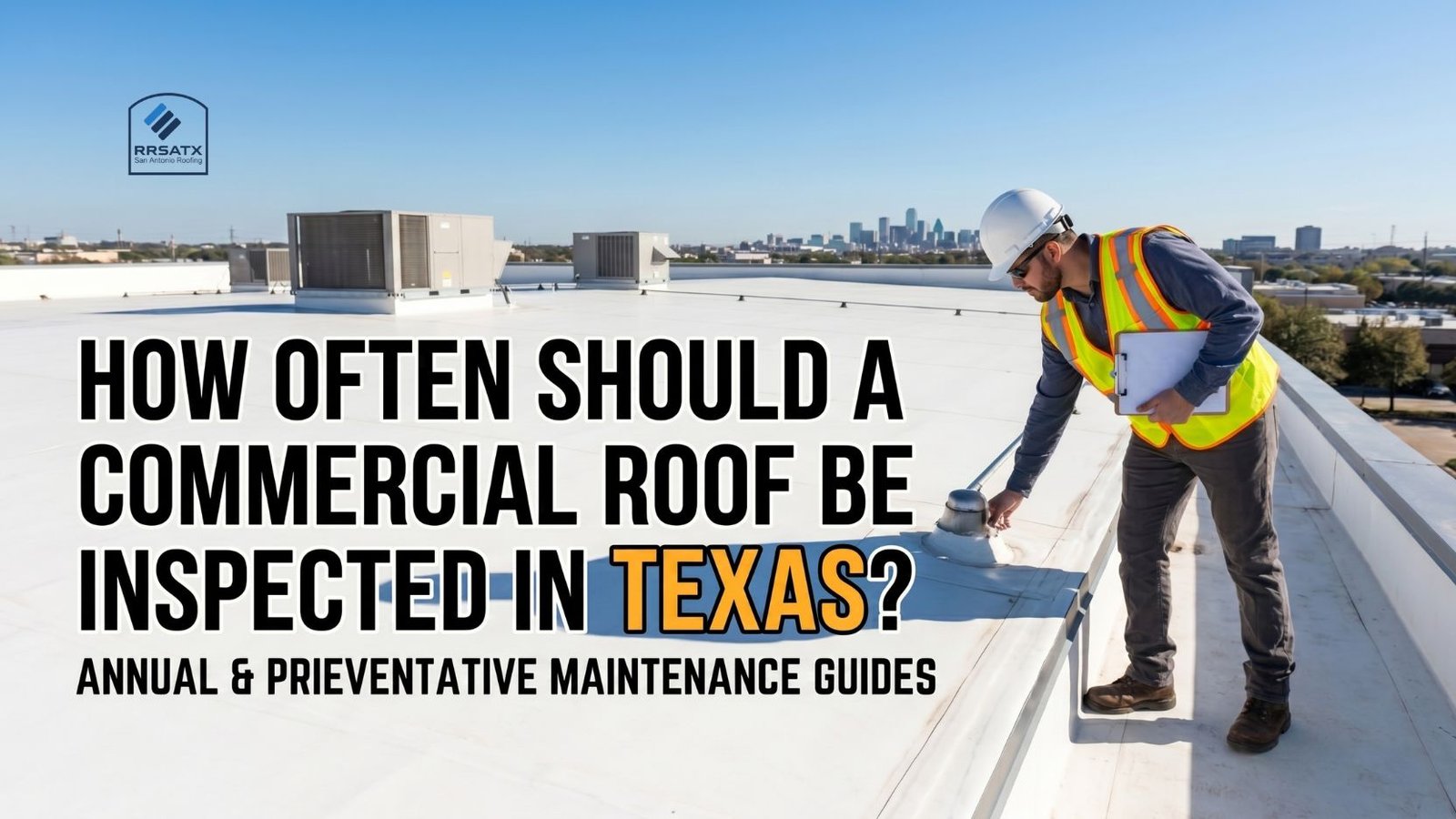
As a roofing professional serving San Antonio’s commercial property sector for over a decade, I’ve seen how Texas’s extreme weather from hailstorms to scorching heat accelerates roof deterioration. Commercial roofs in Texas should be inspected at least twice per year (spring and fall), with additional inspections after major weather events like hail, windstorms, or hurricanes.
This biannual schedule isn’t arbitrary. Texas’s climate inflicts unique damage patterns that catch property owners off-guard, often leading to costly emergency repairs that could have been prevented with routine monitoring.
Why Texas Commercial Roofs Need More Frequent Inspections
Texas weather is exceptionally hard on commercial roofing systems. The combination of intense UV exposure, thermal cycling, severe storms, and occasional freeze events creates conditions that demand proactive maintenance.
Most commercial roofing manufacturers require documented inspections to maintain warranty coverage. Missing these inspections can void your warranty entirely, leaving you financially exposed when problems arise.
Here’s what makes Texas different:
- Temperature extremes: Roof surfaces can reach 170°F in summer, then drop to freezing in winter
- Hail corridors: San Antonio sits near “Hail Alley,” experiencing multiple hail events annually
- Wind damage: Straight-line winds and occasional tornadoes can lift membrane edges and damage flashing
- Monsoon-style rain: Sudden, intense rainfall tests drainage systems beyond their normal capacity
The Recommended Commercial Roof Inspection Schedule For Texas Properties
Best practice for Texas commercial properties: inspect in April (before summer heat) and October (before winter weather). These timing windows allow you to address minor issues before seasonal stress amplifies them.
Baseline Inspection Schedule
| Property Type | Minimum Annual Inspections | Additional Triggers |
| Standard commercial building | 2 (spring & fall) | After storms, hail, or high winds |
| Flat/low-slope roofs | 2-3 | After heavy rain events |
| Roofs 15+ years old | 3-4 | Quarterly monitoring recommended |
| Multi-tenant properties | 2-3 | Before lease renewals |
| Buildings with HVAC on roof | 3 | After equipment maintenance |
Event-Triggered Inspections
Don’t wait for your scheduled inspection if your property experiences:
- Hail of any size: Even small hail can cause cumulative damage to membranes and coatings
- Winds over 50 mph: Can lift membrane seams, damage flashing, and dislodge rooftop equipment
- Heavy debris accumulation: From nearby construction or storm damage
- Interior water stains: Always inspect immediately visible leaks mean hidden damage has progressed
RRSATX: San Antonio Roofing Company recommends documenting every inspection with photos and written reports, creating a maintenance history that supports insurance claims and extends roof lifespan.
What Commercial Roof Inspectors Check In Texas
A thorough commercial roof inspection in Texas goes beyond walking the roof surface. Professional inspectors evaluate both visible damage and early warning signs that predict future failures.
Critical Inspection Points
Membrane condition: Inspectors examine TPO, EPDM, or modified bitumen for punctures, shrinkage, blistering, and seam separation all accelerated by Texas heat.
Flashing and penetrations: Roof penetrations (vents, pipes, HVAC units) are the most common leak sources. Texas thermal cycling causes sealants to crack and metal flashing to separate.
Drainage systems: Clogged drains and scuppers cause ponding water, which degrades roofing materials and adds structural load. San Antonio’s sudden downpours make functional drainage critical.
Fastener integrity: Wind uplift tests fastener strength, particularly around roof edges and corners where wind forces concentrate.
Interior inspection: Professionals check ceilings, insulation, and decking from inside for moisture stains, mold, or structural sagging.
Cost Of Skipping Regular Commercial Roof Inspections
Deferred inspections don’t save money, they multiply costs. A minor membrane repair costing $800 can escalate into a $15,000+ emergency tear-off if water penetrates the decking.
Real Cost Comparison
- Biannual inspection: $300-$600 per visit
- Minor repair caught early: $500-$2,000
- Emergency leak repair: $3,000-$8,000
- Premature roof replacement: $80,000-$250,000+ (depending on building size)
Texas commercial property owners also face:
- Lost business revenue during emergency closures
- Inventory damage from water intrusion
- Increased insurance premiums after claims
- Voided warranties from undocumented maintenance
- Tenant disputes and potential lease terminations
How Aging Roofs Change Inspection Frequency
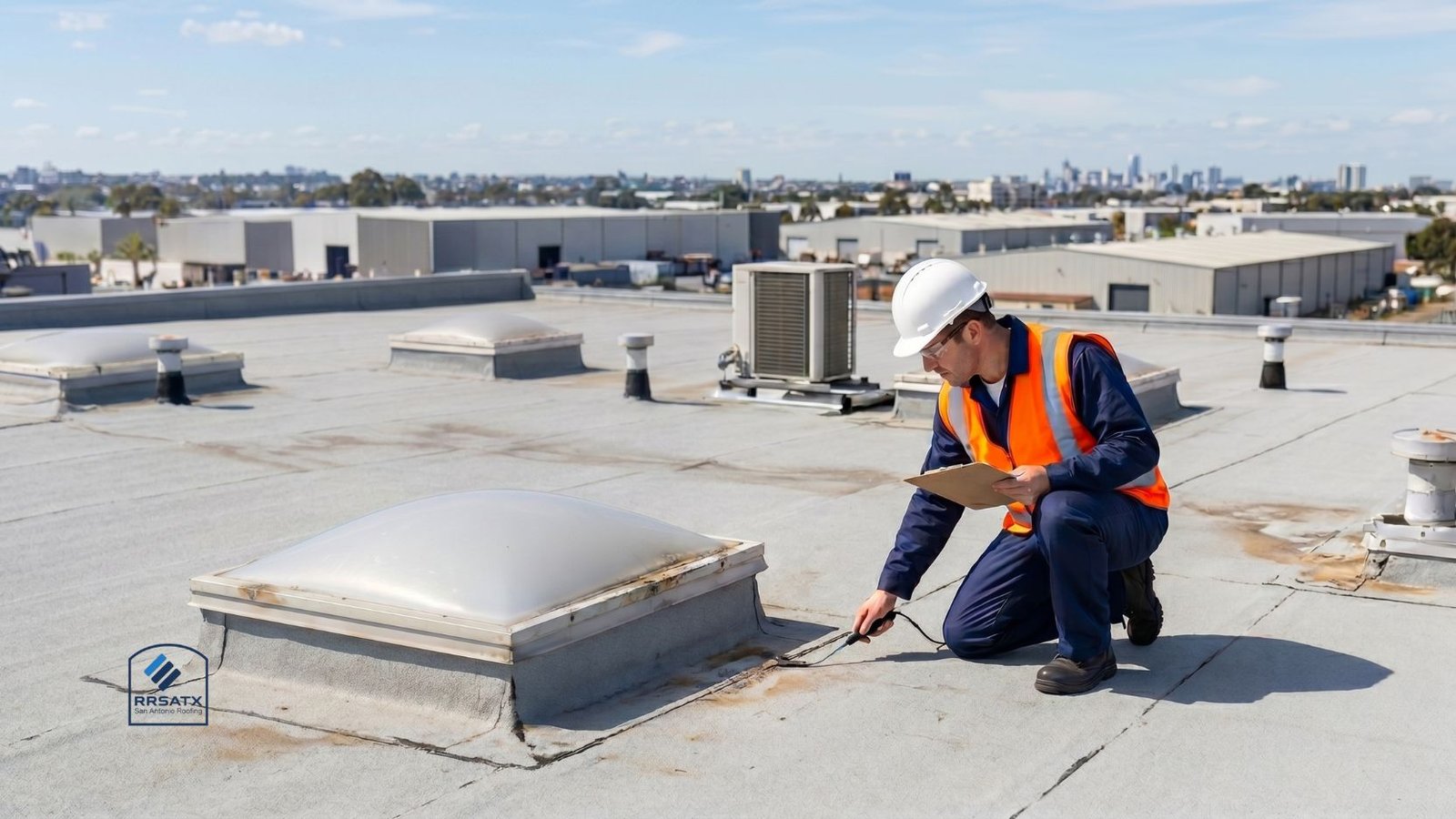
Commercial roofs older than 15 years need quarterly inspections in Texas. Material degradation accelerates exponentially as roofs age, and Texas conditions speed this timeline.
For aging roofs:
- Increase monitoring frequency to catch deterioration early
- Budget for more frequent minor repairs
- Document condition thoroughly for replacement planning
- Consider restoration coatings to extend serviceable life 5-10 years
Property owners near San Antonio’s 78237 and 78216 areas should note that aging commercial roofs combined with Texas weather create liability exposure both for property damage and potential injuries from falling debris or structural failure.
When To Call A Professional VS. DIY Monitoring
Never perform commercial roof inspections yourself. Commercial roofs require specialized knowledge, safety equipment, and liability insurance that property owners don’t possess.
Professional inspectors identify:
- Subtle membrane degradation invisible to untrained eyes
- Structural issues requiring engineering assessment
- Code compliance problems
- Warranty-voiding installation defects
- Insurance documentation requirements
Between professional inspections, property managers should monitor from ground level for obvious signs: visible debris, water stains on ceilings, unusual energy bills (indicating insulation damage), or standing water visible from windows.
FAQs
Can I Inspect My Own Commercial Roof To Save Money?
No. Commercial roof inspections require safety training, proper equipment, and technical expertise to identify problems before they cause damage. Additionally, self-inspections don’t fulfill warranty requirements or provide documentation for insurance purposes.
Does Insurance Cover Commercial Roof Inspection Costs?
Routine inspections are typically the owner’s responsibility, but many insurance policies require documented maintenance. Some insurers offer discounts for properties with regular professional inspection records, potentially offsetting the inspection cost.
What’s The Best Time Of Year To Inspect A Commercial Roof In Texas?
April and October are ideal. Spring inspections catch winter damage before summer heat, while fall inspections prepare your roof for winter weather and identify issues before holiday business peaks.