
[et_pb_section fb_built=”1″ admin_label=”section” _builder_version=”4.16″ global_colors_info=”{}”][et_pb_row admin_label=”row” _builder_version=”4.16″ background_size=”initial” background_position=”top_left” background_repeat=”repeat” global_colors_info=”{}”][et_pb_column type=”4_4″ _builder_version=”4.16″ custom_padding=”|||” global_colors_info=”{}” custom_padding__hover=”|||”][et_pb_code _builder_version=”4.27.6″ _module_preset=”default” hover_enabled=”0″ sticky_enabled=”0″]
In San Antonio, roof color is one of the single most impactful decisions you can make for your home’s cooling costs. This guide covers the science behind roof color and heat, the best colors for Texas homeowners, what cool-roof coatings actually do, and how to balance energy savings with curb appeal and resale value.
San Antonio sits in one of the hottest urban heat environments in the continental United States. From May through September, the sun beats down on rooftops for eight or more hours a day, and the difference between a roof that reflects that heat and one that absorbs it shows up directly on your electricity bill every month. Metal roofing gives San Antonio homeowners a powerful advantage that asphalt shingles simply cannot match: you can choose a color and coating that actively fights heat gain instead of surrendering to it.
But the answer to “what color metal roof is best for energy efficiency” is not as simple as “just pick white.” The right color depends on your climate zone, your home’s insulation, your HOA requirements, your utility costs, and how much you value curb appeal alongside energy performance. This guide breaks down the science, the best color choices for San Antonio specifically, the role of cool-roof coatings, and how to weigh energy efficiency against everything else you care about.
Many homeowners assume they have to choose a white or bare metal roof to get energy savings. That is not accurate. Modern cool-roof pigment technology means that a medium gray or tan metal roof can reflect nearly as much solar energy as a white one. The color you see is only part of the equation. The pigment chemistry, the coating system, and whether the product carries an Energy Star or Cool Roof Rating Council (CRRC) rating are what actually determine how much heat your roof transfers into your home on a 100-degree San Antonio afternoon.
The Science
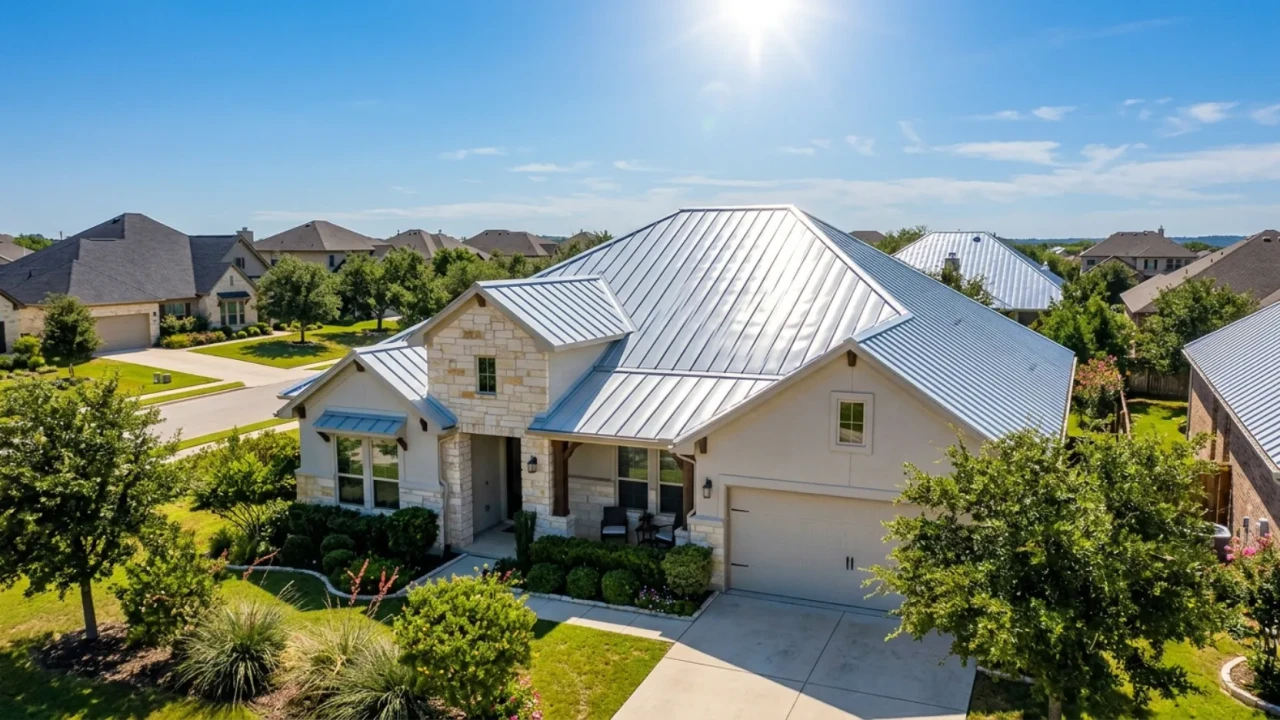
Every roof absorbs some solar radiation and reflects some of it back. The ratio between what is reflected and what is absorbed is called solar reflectance, measured on a scale from 0 to 1 (or 0% to 100%). A roof with a solar reflectance of 0.70 reflects 70% of the solar energy that hits it and absorbs the remaining 30%. The higher that number, the cooler your roof surface stays.
The second measurement that matters is thermal emittance the ability of a material to release absorbed heat rather than storing it. A roof with high thermal emittance sheds heat quickly once the sun moves. Metal naturally has good thermal emittance compared to asphalt or tile, which is one of the reasons metal roofs perform better in hot climates even when you compare similar colors.
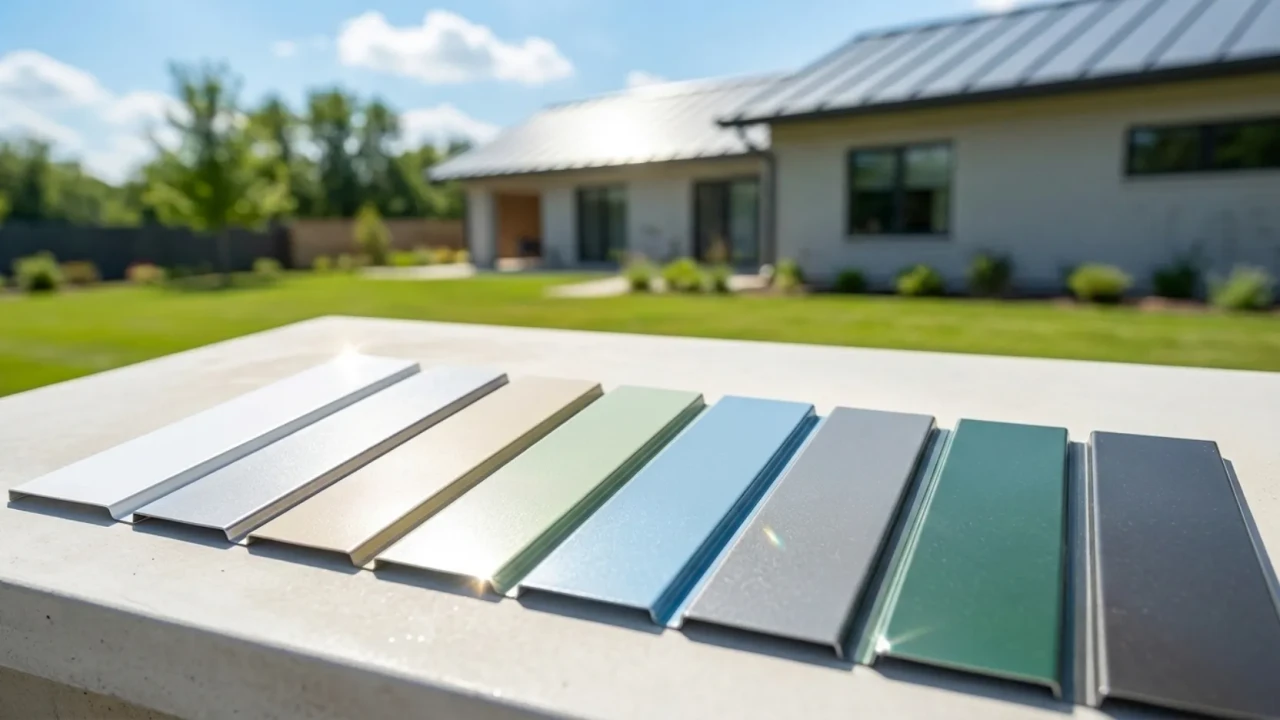
Solar Reflectance Index (SRI): The SRI combines both solar reflectance and thermal emittance into a single number. A standard black surface has an SRI of 0. A perfect white reflective surface has an SRI of 100 (some cool-roof products actually exceed 100 due to their thermal emittance properties). The ENERGY STAR program requires a minimum SRI of 29 for steep-slope roofs and higher thresholds for low-slope commercial applications.
What this means for San Antonio: San Antonio is located in IECC Climate Zone 2 one of the hottest zones in the country. The Department of Energy’s guidelines for this zone specifically recommend cool roofs with high solar reflectance for residential applications. Every point of improvement in your roof’s solar reflectance translates directly to lower attic temperatures and reduced air conditioning load.
- Solar reflectance (SR): the percentage of solar energy reflected by the roof surface higher is better for San Antonio
- Thermal emittance (TE): the ability to release stored heat metal roofs naturally perform well here
- Solar Reflectance Index (SRI): the combined score used by ENERGY STAR and the CRRC target 29+ for steep-slope residential roofs
- Cool roof pigments: infrared-reflective pigments in the coating that allow a colored roof to reflect more heat than its visible color would suggest
- ENERGY STAR certification: confirms the product meets reflectance thresholds tested by an independent lab
- CRRC rating: Cool Roof Rating Council certification provides independently verified SRI, SR, and TE data for specific products
Color Rankings
Not all light colors perform equally, and not all dark colors are a disaster. The key is knowing which colors in each range give you the best reflectance numbers when paired with a quality cool-roof coating. Here is how the main color families rank for San Antonio homeowners specifically.
| Color category | Typical SRI range | Energy performance | Best use case in San Antonio |
|---|---|---|---|
| Bright white / titanium white | 85 to 100+ | Maximum best possible cooling performance | Low-slope residential, commercial flat roofs, maximum energy savings priority |
| Light gray / silver gray | 60 to 80 | Excellent only marginally below white in real-world conditions | Residential homes where white looks too stark or does not match neighborhood character |
| Tan / sandstone / desert beige | 50 to 68 | Very good especially when cool-roof pigments are used in the coating | Traditional San Antonio home styles; excellent balance of appearance and efficiency |
| Light blue / slate blue | 40 to 60 | Good blues reflect more than they appear to from the ground | Homes with Spanish or Mediterranean architectural styles common in Bexar County |
| Medium bronze / terra cotta | 30 to 45 | Moderate acceptable with high-quality cool pigment coatings | HOA-governed communities with required color palettes; use only CRRC-rated products |
| Dark charcoal / weathered bronze | 10 to 28 | Poor for cooling significant heat gain regardless of coating | Avoid in San Antonio if energy efficiency is a priority; heat gain increase is substantial |
| Matte black / dark brown | 0 to 12 | Worst absorbs up to 95% of solar radiation | Not recommended for San Antonio residential applications |
The most practical choice for most San Antonio homeowners is a light gray, tan, or sandstone metal roof with a certified cool-roof coating. These colors land in the 55 to 75 SRI range, which qualifies for ENERGY STAR certification, fits naturally with the architectural character of most Bexar County neighborhoods, does not show dirt as aggressively as white, and still delivers real, measurable cooling savings versus darker alternatives.
Do not rely on the color swatch alone when comparing metal roof options for energy efficiency. Always ask your roofing contractor for the CRRC product rating or the ENERGY STAR certification sheet for the specific panel and coating combination you are considering. Two panels that look nearly identical in medium gray can have SRI values that differ by 20 or more points depending on the pigment chemistry in the coating. The rating sheet tells you the real performance number the color chip does not.
- Light gray, white, tan, or sandstone is the starting point for maximum cooling performance in San Antonio’s climate zone
- CRRC rating or ENERGY STAR certification requested for the specific panel and coating combination not just the color family
- SRI of 29 or higher confirmed for steep-slope applications; higher is better
- HOA color requirements reviewed before selecting a color some communities restrict whites or require traditional tones
- Dirt visibility considered: white shows debris accumulation more than gray or tan in urban areas
- Neighborhood context evaluated: a highly reflective roof in a traditional historic district may affect resale perception
Coating Technology
One of the most important developments in metal roofing over the past two decades is the widespread use of infrared-reflective (IR-reflective) pigments in roofing coatings. Traditional dark pigments work by absorbing most of the light spectrum, including the near-infrared portion that carries the most heat energy. IR-reflective pigments are engineered to reflect the infrared portion of the solar spectrum even while absorbing the visible wavelengths that produce the color you see on the roof.
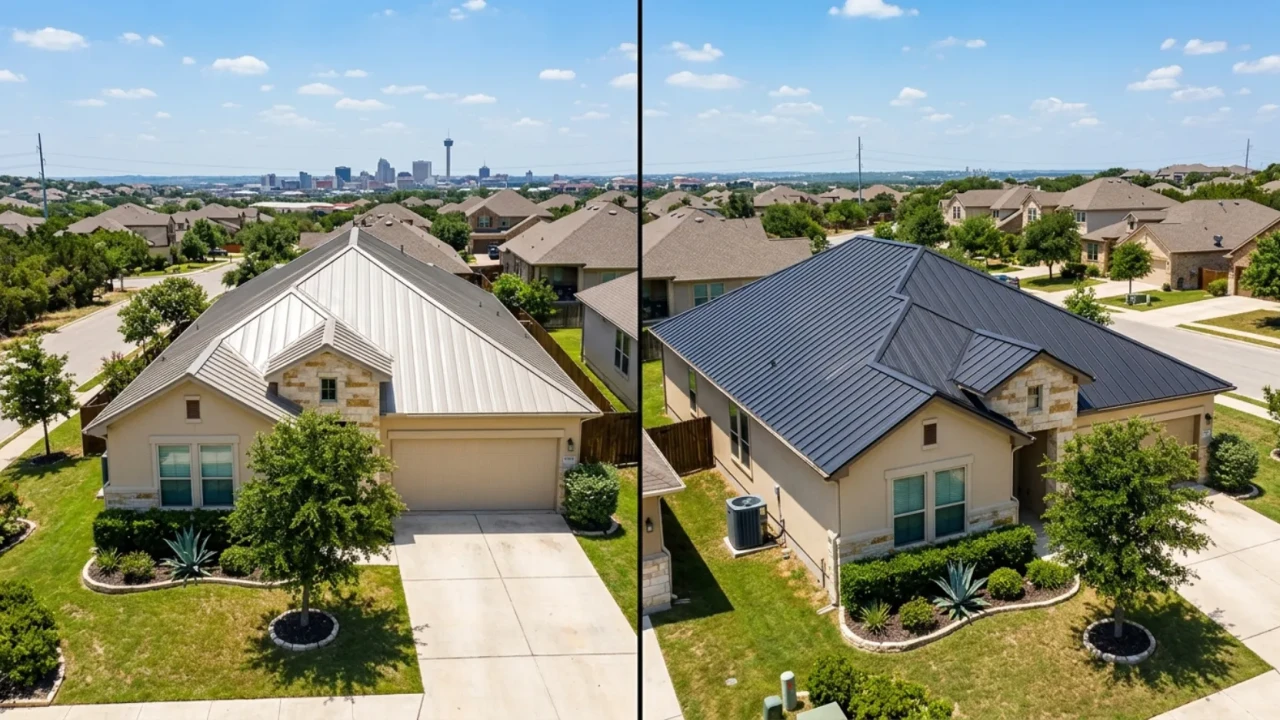
The practical result is significant: a metal roof coated with an IR-reflective dark bronze pigment can have an SRI of 35 to 45, while a traditionally formulated dark bronze roof might land at 10 to 15. The visual color is nearly identical. The thermal performance is dramatically different. For San Antonio homeowners who need to meet an HOA color requirement or prefer a warmer aesthetic, IR-reflective coatings open up the color palette without sacrificing all of the energy benefits.
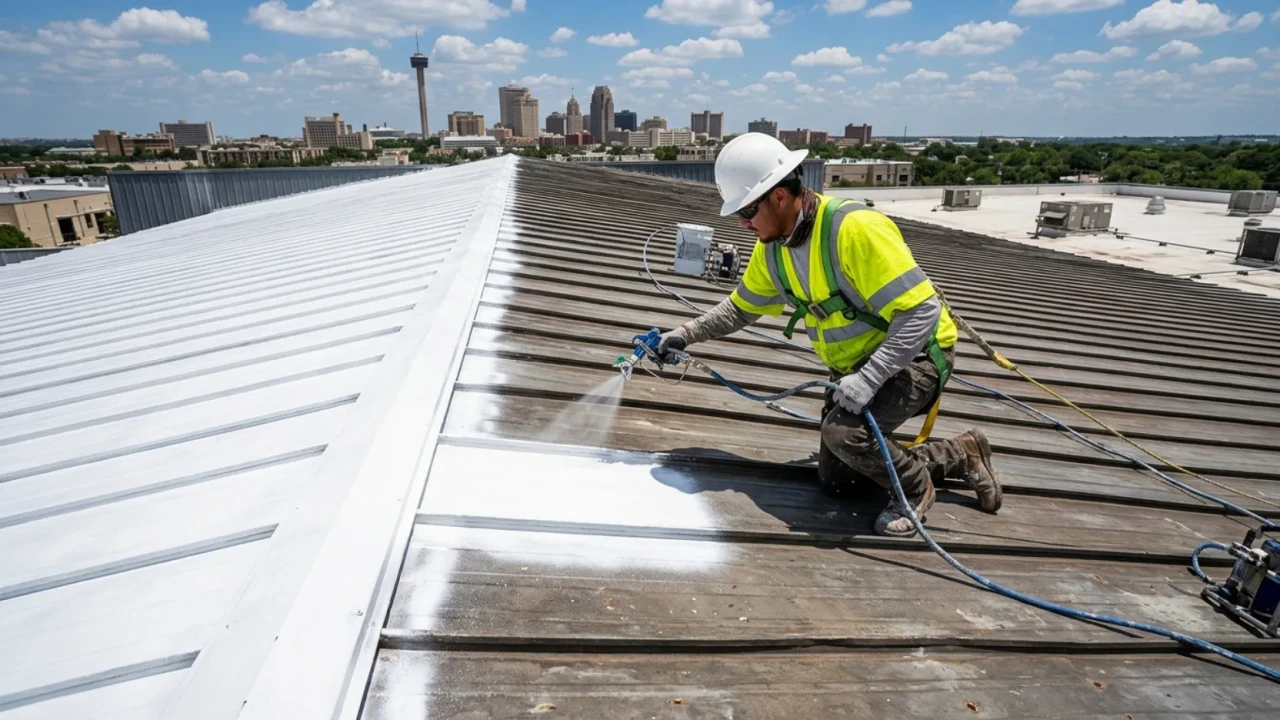
If you have an existing dark-colored screw-down or standing seam metal roof in San Antonio and you are not ready for a full replacement, applying a white or light-gray elastomeric roof coating is a proven way to significantly improve your roof’s reflectance. A professionally applied elastomeric coating can take a roof with an SRI of 10 to 15 up to an SRI of 80 to 90, reduce attic temperatures by 20 degrees or more, and extend the service life of the existing panels by protecting them from UV degradation. It is a fraction of the cost of replacement and qualifies for many utility rebate programs in the San Antonio area.
- Coating type confirmed: PVDF (Kynar 500) for new installation is the premium choice for long-term color and reflectance retention
- IR-reflective pigment option requested if you prefer a darker or warmer color tone ask for the CRRC data sheet to confirm actual SRI
- Elastomeric coating evaluated if you have an existing dark metal roof and want to improve energy performance without full replacement
- CPS Energy rebate eligibility checked before signing the contract some programs require pre-approval
- Warranty on the coating system confirmed: PVDF coatings should carry a 30-year or longer film integrity warranty from the manufacturer
- Galvalume substrate confirmed if selecting unpainted: Galvalume AZ50 or AZ55 is the standard for long-term corrosion resistance in San Antonio’s humidity
Energy Savings
The energy savings from a high-reflectance metal roof in San Antonio are real and documented, but they vary considerably based on your home’s size, insulation levels, current roof material, and the specific products involved. The Department of Energy and Oak Ridge National Laboratory have published research showing that cool roofs in hot climates like San Antonio’s can reduce cooling energy consumption by 10% to 25% depending on these variables. For a San Antonio home spending $200 per month on cooling from May through September, that is a savings of $100 to $250 over the cooling season every year.
| Scenario | Estimated annual cooling savings | Key variable |
|---|---|---|
| Dark asphalt shingle to light gray metal roof | $150 to $350 per year | Combination of improved reflectance and metal’s superior thermal emittance |
| Dark metal roof to white/light gray metal roof (same system) | $100 to $250 per year | Reflectance improvement only; material and installation quality stays constant |
| Dark metal roof with elastomeric cool-coat applied | $120 to $280 per year | SRI improvement from coating application without full replacement |
| Light metal roof plus attic insulation upgrade | $250 to $500+ per year | Combined effect; roof color and attic insulation work together the biggest savings come from doing both |
| Light metal roof in a poorly insulated home | $75 to $150 per year | Roof alone cannot compensate for inadequate attic insulation in San Antonio’s heat |
Attic insulation is the multiplier that determines whether your cool roof delivers its full savings potential. A high-reflectance metal roof reduces the surface temperature of the roof itself. Whether that reduced heat load translates into lower indoor temperatures and lower air conditioning costs depends heavily on how well your attic is insulated. San Antonio homes built before 2005 are frequently under-insulated by current standards. If your attic has less than R-38 insulation, upgrading it alongside your roofing project will deliver significantly more energy savings than the roof alone. Ask your contractor about both during the estimate process.
Calculating your payback period: A metal roof in San Antonio typically costs $8 to $15 per square foot installed, depending on the panel type and the scope of the project. A high-reflectance coating upgrade on an existing metal roof runs $1.50 to $3.50 per square foot installed. If your cooling savings run $200 per year, an elastomeric coating on a 2,000-square-foot roof costing $5,000 to $7,000 has a payback period of 25 to 35 years on the coating cost alone. However, that calculation changes significantly when you factor in the coating extending the life of your existing panels by 10 or more years, reducing future repair costs, and any CPS Energy rebates that lower the upfront cost.
- Current attic insulation level assessed before projecting energy savings from roof color alone R-38 or higher is the target for San Antonio
- Cooling season utility bills for the past 12 months pulled as a baseline before your project
- ENERGY STAR certification on the metal roof product confirmed required for federal tax credit eligibility under the Inflation Reduction Act
- CPS Energy rebate application submitted before installation if a qualifying program is available
- Payback period calculated using real project cost, estimated annual savings, and any rebate or tax credit offsets
- Post-installation utility bills monitored for two cooling seasons to measure actual savings against projections
The Full Decision
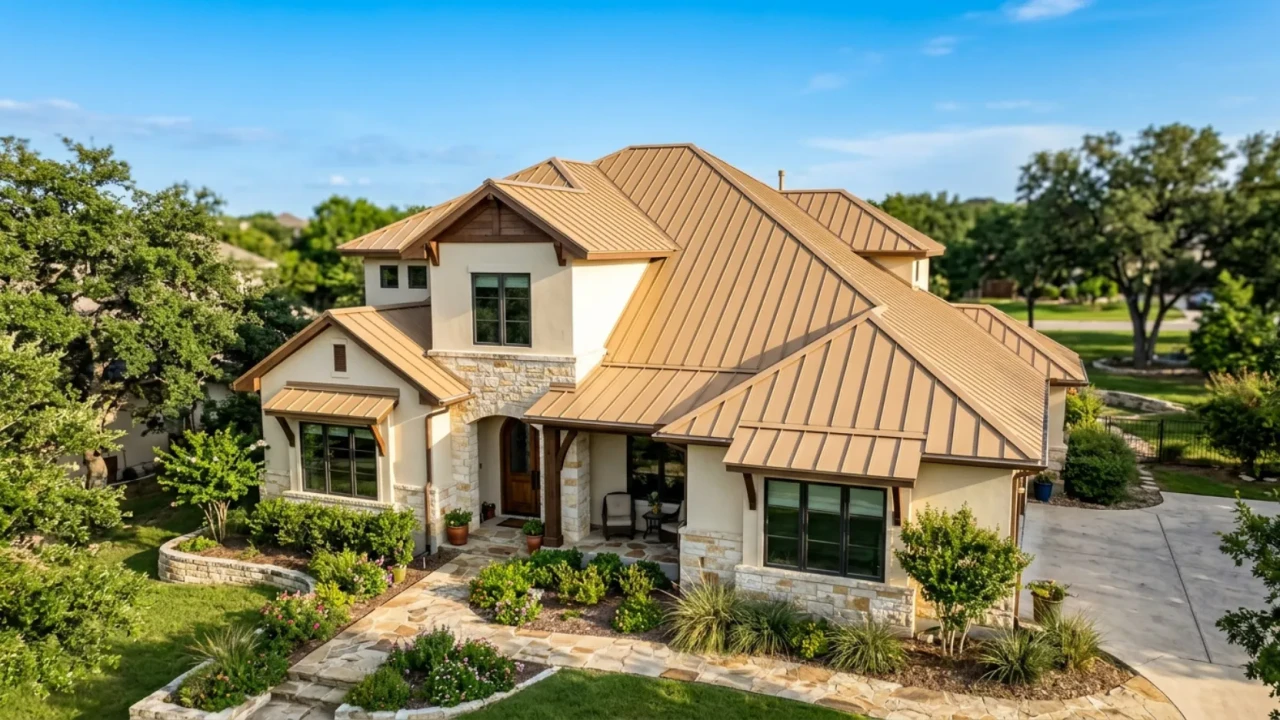
Energy efficiency is the primary driver for most of our San Antonio customers when they ask about metal roof color but it is rarely the only factor. HOA restrictions, neighborhood character, personal taste, and resale value all play a role. The good news is that the color choices that perform best for energy efficiency in San Antonio also tend to align well with the regional architectural palette.
San Antonio’s traditional residential architecture draws heavily from Spanish Colonial, Texas Hill Country, and craftsman styles. Tan, sandstone, terracotta, light gray, and weathered silver tones fit naturally into this palette and also happen to perform well for energy efficiency when paired with the right coatings. You do not have to choose between a roof that looks right for San Antonio and one that saves you money on your utility bills.
The resale value question: Metal roofs in general add measurable resale value in the San Antonio market. Buyers understand that a metal roof represents decades of remaining service life, lower insurance costs with some carriers, and reduced maintenance. The specific color is less impactful to resale value than the material itself. A medium gray or tan metal roof will appeal to a broader range of buyers than a pure white one, but neither is a liability compared to an aging asphalt shingle roof in need of replacement.
- HOA architectural guidelines reviewed and color palette options confirmed in writing before any deposit is placed
- At least two or three color options selected that all meet or exceed an SRI of 29 choose appearance within that shortlist
- Sample panels viewed on the actual roof or in direct sunlight colors look different in the showroom than they do in the San Antonio sun
- Neighborhood context assessed: drive through your area and look at what colors are already on metal roofs nearby
- Long-term appearance considered: lighter colors may show environmental staining more; darker colors hold their appearance longer but perform worse thermally
- Final color and CRRC rating documented in the installation contract alongside the panel type, coating system, and manufacturer warranty terms
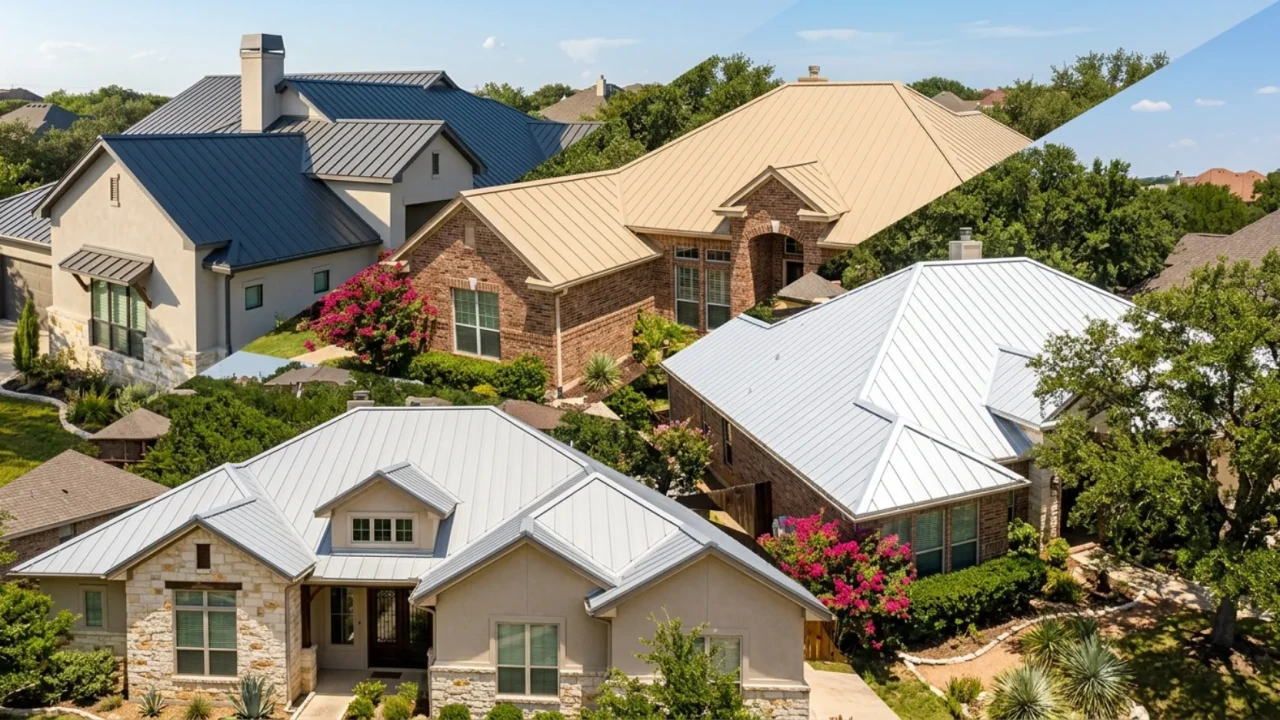
Use this table as your starting reference when comparing color options. Always confirm the SRI with the specific manufacturer product sheet for the panel and coating combination you are purchasing.
| Color family | Typical SRI range | ENERGY STAR eligible? | Best fit in San Antonio | Recommended? |
|---|---|---|---|---|
| Bright white | 85 to 100+ | Yes | Commercial, low-slope, max savings | Yes best energy performance |
| Light gray / silver | 60 to 82 | Yes | Most residential styles | Yes top recommendation |
| Tan / sandstone / beige | 50 to 68 | Yes | Traditional San Antonio homes | Yes excellent balance |
| Galvalume (bare metal) | 60 to 72 | Varies by product | Modern / industrial aesthetic | Yes naturally efficient |
| Light blue / slate | 40 to 60 | Varies | Spanish / Mediterranean styles | Yes with CRRC-rated product |
| Medium bronze / terra cotta (IR pigment) | 30 to 50 | Borderline | HOA-required warm tones | Acceptable with IR pigment coating |
| Dark charcoal (IR pigment) | 15 to 30 | Usually no | Modern / contemporary styles | Only if HOA or appearance requires it |
| Matte black / deep brown | 0 to 15 | No | Not recommended for residential | Not recommended in San Antonio |
- HOA architectural guidelines reviewed and written confirmation of approved color options received
- San Antonio climate zone confirmed (IECC Zone 2) this informs the minimum SRI target for your product selection
- CRRC product database checked for the specific panel and coating combination being quoted
- Current attic insulation level assessed upgrading insulation alongside a cool roof maximizes your savings
- CPS Energy rebate programs checked for the current year some programs require pre-approval before installation
- SRI of 29 or higher confirmed for steep-slope residential application higher is better
- ENERGY STAR certification confirmed if federal tax credit eligibility is part of your decision
- Coating type confirmed: PVDF (Kynar 500) for new panels; elastomeric for existing roof upgrades
- IR-reflective pigment option evaluated if you want a warmer or darker color with better-than-typical reflectance
- Sample panels viewed in direct outdoor sunlight before making a final decision do not rely on indoor showroom lighting
- Color, panel type, and coating system documented in the written contract with the manufacturer and product name specified
- SRI value documented in the contract or product data sheet do not accept verbal assurances only
- Manufacturer warranty confirmed: 30 years or longer for PVDF coatings is standard from reputable manufacturers
- Contractor workmanship warranty confirmed in writing alongside the product warranty
- Pre-installation utility bill baseline pulled for comparison two cooling seasons post-installation
What is the most energy efficient metal roof color for San Antonio?
How much money can a cool metal roof save me on my energy bill in San Antonio?
Does a darker metal roof perform better in winter by absorbing heat?
Can I improve my existing dark metal roof’s energy performance without replacing it?
Do metal roof colors qualify for federal tax credits in San Antonio?
Does my HOA have to approve my metal roof color choice in San Antonio?
Get a free metal roof color consultation in San Antonio
Tell us about your home, your HOA requirements, and your energy goals. We will walk you through the best color and coating options for your specific situation and give you a clear, written estimate at no cost.
[/et_pb_code][/et_pb_column][/et_pb_row][/et_pb_section]