
[et_pb_section fb_built=”1″ admin_label=”section” _builder_version=”4.16″ global_colors_info=”{}”][et_pb_row admin_label=”row” _builder_version=”4.16″ background_size=”initial” background_position=”top_left” background_repeat=”repeat” global_colors_info=”{}”][et_pb_column type=”4_4″ _builder_version=”4.16″ custom_padding=”|||” global_colors_info=”{}” custom_padding__hover=”|||”][et_pb_code _builder_version=”4.27.7″ _module_preset=”default” hover_enabled=”0″ global_colors_info=”{}” sticky_enabled=”0″]
A complete step-by-step guide to calculating what a metal roof will actually cost in San Antonio, TX covering materials, labor, roof size, pitch, panel type, and every variable that moves the final number up or down.
Estimating the cost of a metal roof is more involved than looking up a price-per-square-foot figure online and multiplying it by your roof size. That approach will get you a number, but it will not get you an accurate one. The final cost of a metal roof in San Antonio depends on at least six distinct variables: the type of metal panel you choose, the size and pitch of your roof, the complexity of the layout, local labor rates, the cost of accessories like underlayment and flashing, and the condition of the existing structure underneath.
This guide walks through each of those variables in order, shows you how to calculate each one, and gives you San Antonio-specific cost ranges based on what our crews actually quote and install in 2026. By the time you finish reading, you will have a clear framework for understanding any estimate a contractor puts in front of you, and you will know which questions to ask before you sign anything.
The biggest mistake San Antonio homeowners make when comparing metal roofing estimates is treating the total number as if it is comparable across all bids. A $14,000 quote using 29-gauge corrugated panels and a $14,000 quote using 24-gauge standing seam panels are not the same project. Always ask for the quote to be broken down into materials, labor, and accessories separately. That is the only way to do an apples-to-apples comparison and understand exactly what you are paying for.
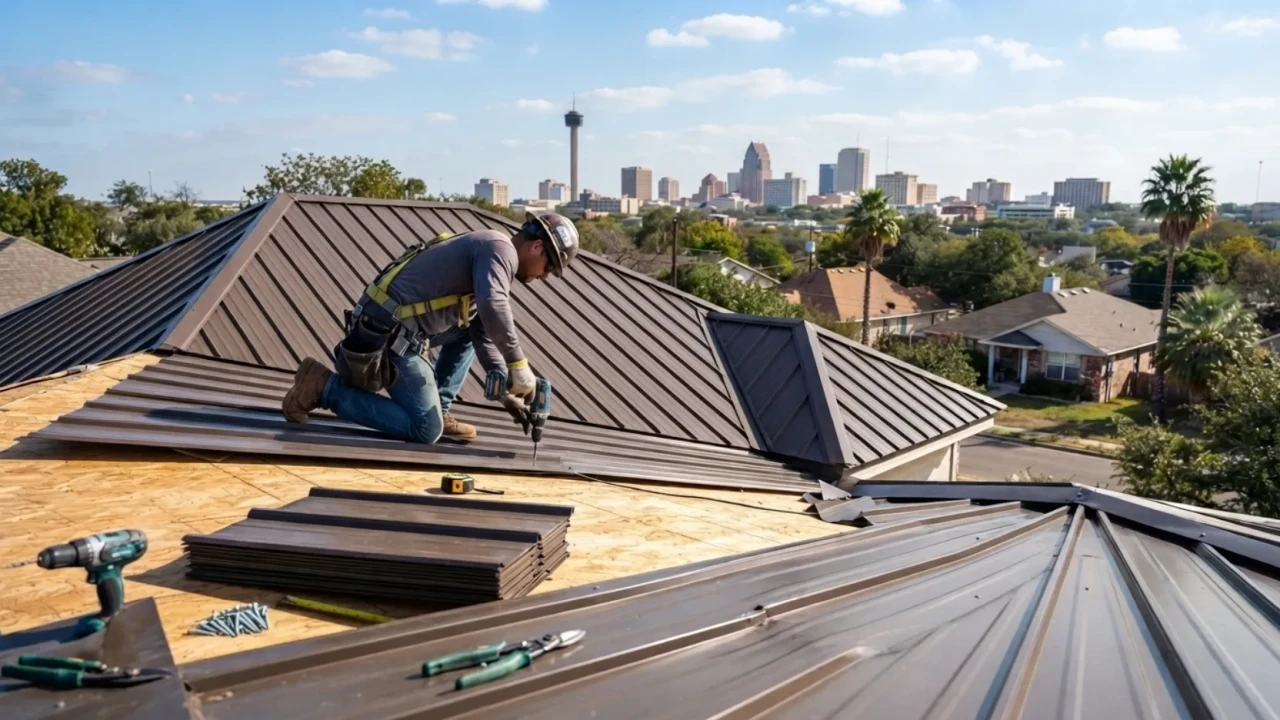
Roof Size
Every roofing estimate starts with the total roof area. Contractors measure this in roofing squares, where one square equals 100 square feet of actual roof surface. The roof surface is always larger than your home’s footprint because a pitched roof covers more area than a flat one. The steeper the pitch, the greater the difference.
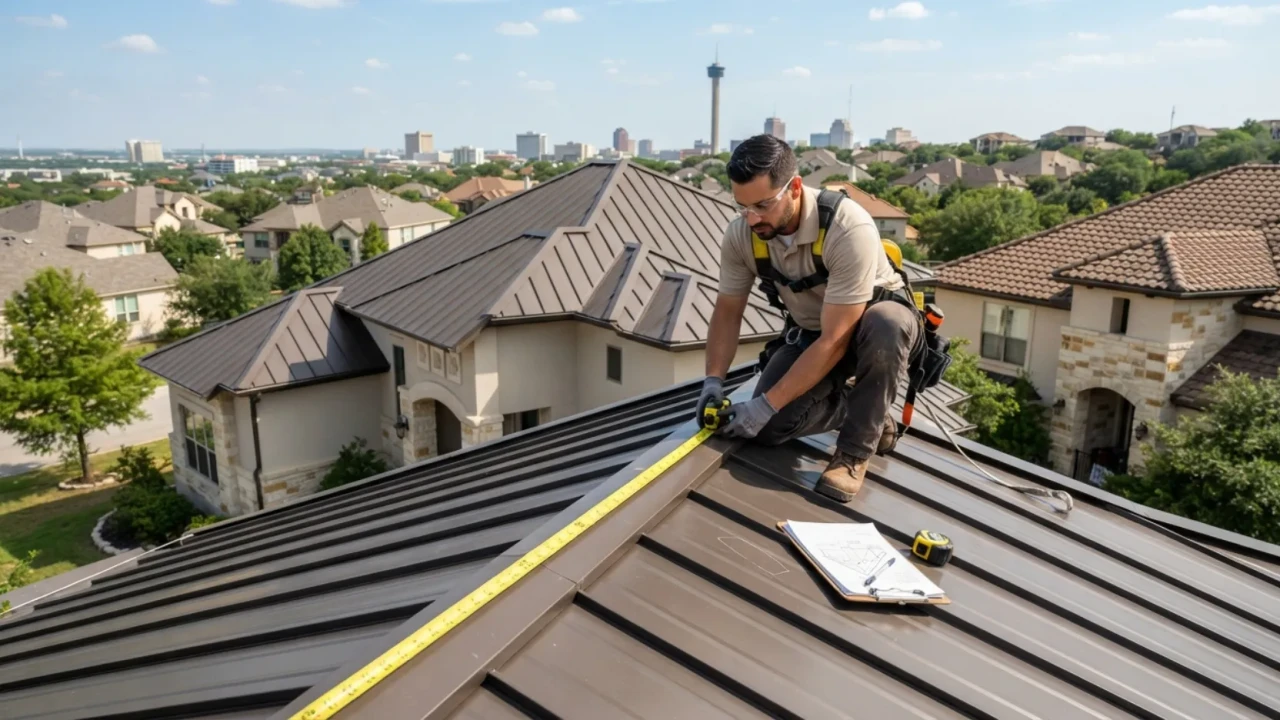
Basic calculation method: Measure the length and width of each roof plane and multiply them together. Add all the planes. This gives you the square footage. Divide by 100 to get the number of roofing squares. Add a 10 to 15 percent waste factor for cuts, overlaps, and material handling.
Pitch adjustment: A roof with a 4:12 pitch (rises 4 inches for every 12 inches of horizontal run) has a pitch multiplier of approximately 1.054. A 7:12 pitch multiplier is approximately 1.158. A 12:12 pitch multiplier is approximately 1.414. Multiply your footprint square footage by the appropriate multiplier to get actual roof area.
- Total footprint measured for every roof plane, including dormers and attached garage
- Roof pitch identified for each plane different pitches require different multipliers
- Waste factor applied: 10% for simple gable roofs, 15% or more for hip and complex layouts
- Final square count confirmed in writing on the contractor’s quote
- Contractor has physically measured the roof, not estimated from satellite images
Panel Type
The type of metal panel you select has a bigger impact on your final cost than almost any other single decision. There are three primary categories of metal roofing installed on San Antonio homes: standing seam, exposed-fastener corrugated or ribbed panels, and stone-coated steel tiles. Each occupies a different price tier, and each has different performance characteristics in the San Antonio climate.
For San Antonio homeowners weighing corrugated against standing seam: the installed cost difference between a corrugated 29-gauge roof and a standing seam 24-gauge roof on a 2,000-square-foot home is typically $8,000 to $15,000. However, standing seam roofs require significantly less maintenance over their lifespan and carry longer paint and weathertightness warranties. On a roof that will last 40 to 60 years, the lower maintenance cost of standing seam frequently offsets the higher upfront price, especially given San Antonio’s temperature extremes and UV exposure.
- Panel gauge confirmed: 24-gauge for standing seam residential, 29-gauge minimum for corrugated
- Steel grade confirmed: Galvalume AZ-50 is the minimum standard for San Antonio climate durability
- Paint system confirmed: PVDF (Kynar) finish outperforms polyester in UV resistance for Texas sun exposure
- Manufacturer’s paint warranty reviewed: 40-year finish warranties are available on premium panels
- Panel profile confirmed in writing so the contractor cannot substitute a lower-grade product after you sign
Labor
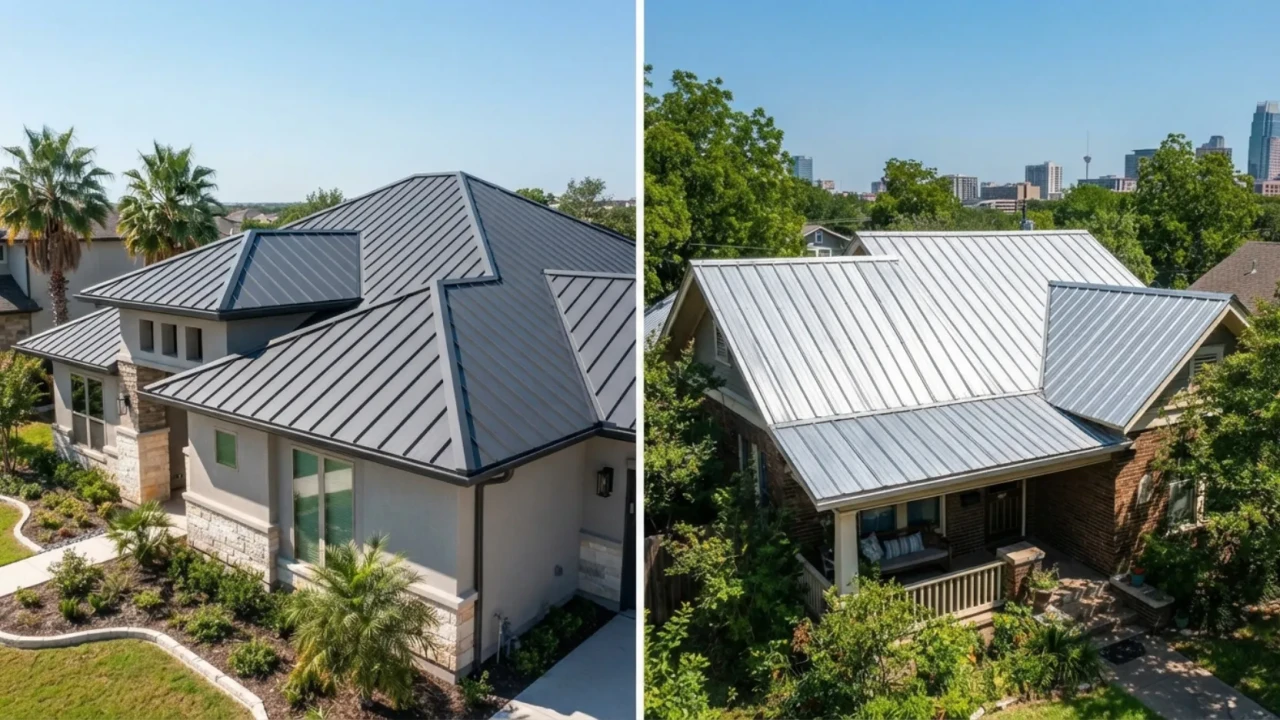
Labor is where most homeowners underestimate metal roofing costs. Installing a metal roof is significantly more labor-intensive than installing asphalt shingles, and the skill level required is higher. Standing seam installation in particular requires specialized training and tools including seamers and snap-lock formers that not every general roofing contractor owns or knows how to operate properly.
In the San Antonio market in 2026, labor rates for metal roofing run between $3.50 and $7.00 per square foot depending on the panel type, pitch, complexity, and crew experience level. That means labor alone on a 25-square (2,500-square-foot) roof runs between $8,750 and $17,500 before materials, accessories, or tearoff are included.
- Labor cost is itemized separately from material cost in the written estimate
- Crew has documented standing seam experience if that is the panel type selected
- Seaming machine (for standing seam) confirmed as part of the crew’s equipment
- Labor warranty confirmed: workmanship warranty of at least 5 years is standard on metal roofing in San Antonio
- Number of workers and estimated project duration included in the scope of work
Pitch and Complexity
Roof pitch and layout complexity are the two variables that most dramatically affect labor cost beyond the base rate. A simple gable roof with a 4:12 pitch is the easiest and fastest to install. A steeply pitched hip roof with multiple dormers, skylights, valleys, and HVAC penetrations requires more time, more safety equipment, more material cuts, and more waste. The same material on a more complex roof can cost 25 to 40 percent more to install.
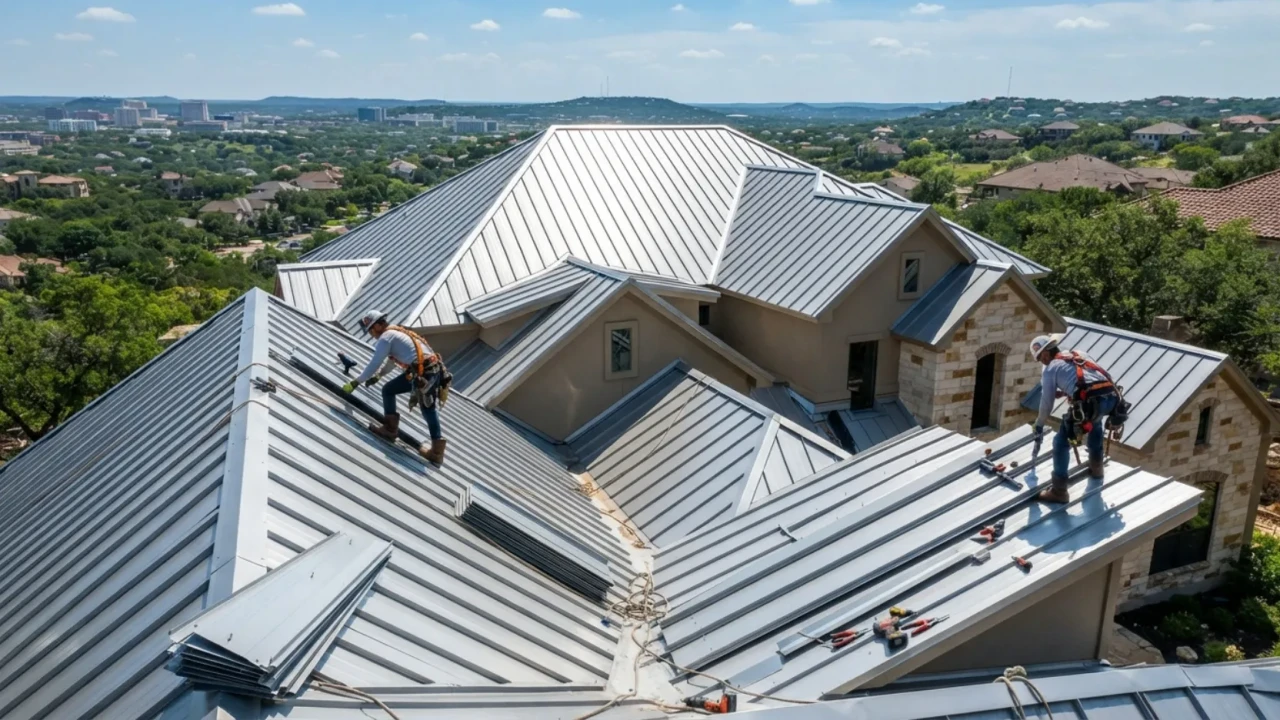
Low pitch (2:12 to 4:12): Easier access, lower safety equipment costs, faster installation. However, low-pitch metal roofs require special underlayment and panel systems rated for low-slope applications. Not all metal panels are approved for pitches below 3:12. Confirm minimum pitch requirements with your contractor before selecting a panel type.
Moderate pitch (4:12 to 8:12): The most common residential pitch range in San Antonio. Standard installation applies. Most metal panel systems are rated for this range without modifications.
Steep pitch (8:12 and above): Requires roof jacks, additional safety harnesses, and slower work pace. Labor rates increase by 15 to 30 percent above the base rate. Material waste also increases due to more cuts around hips and ridges.
Most San Antonio homes built after 1990 have hip roofs rather than gable roofs because hip roofs perform better in high-wind events and are required or encouraged by some local municipality codes in storm-prone areas of Bexar County. If your home has a hip roof with multiple valleys, budget for a complexity premium of 15 to 25 percent above the base estimate for a comparable gable roof of the same size.
- Pitch of each roof plane measured and confirmed on the estimate
- Low-pitch areas (below 3:12) identified: special low-slope panels or underlayment may be required
- Number of valleys, hips, ridges, and penetrations counted and noted in the scope of work
- Complexity premium confirmed as a separate line item or explained in the pricing breakdown
- Steep-pitch areas (above 8:12) noted: safety equipment and pace adjustment reflected in labor cost
Accessories
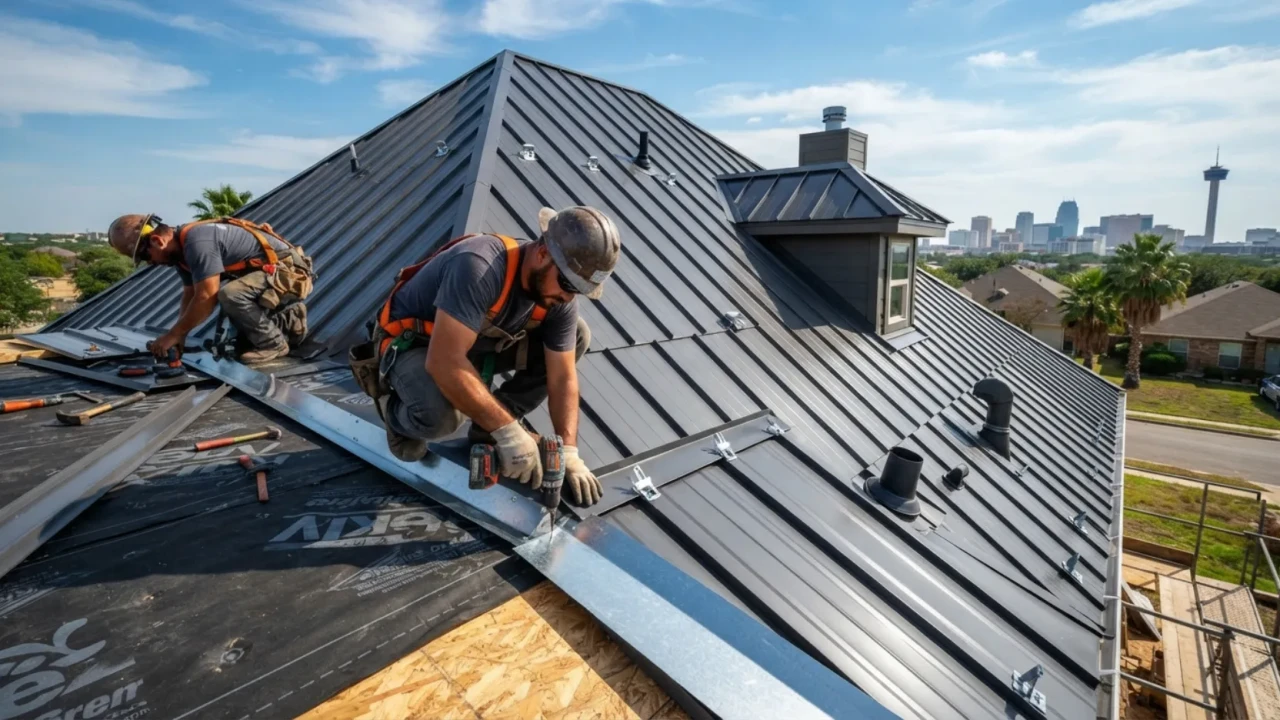
A complete metal roofing estimate includes more than just the metal panels and installation labor. Several accessory categories must be accounted for to produce an accurate total. Contractors who quote a suspiciously low price often omit some or all of these items from their initial estimate, only to add them back as change orders after the project begins. Knowing what should be on the estimate protects you from that situation.
- Underlayment type, brand, and temperature rating specified on the estimate
- All trim and flashing items listed by type: ridge cap, drip edge, valley, rake trim, and penetration flashings
- Trim material confirmed as painted steel matching the panel color, not bare galvanized
- Tearoff included or excluded confirmed in writing on the estimate
- Number of existing roofing layers confirmed before tearoff is priced
- Decking repair allowance or per-sheet pricing included in the estimate or confirmed as a potential addition
Full Estimate
With all six variables accounted for, you can now assemble a realistic total cost estimate for your specific project. The table below shows real-world total installed cost ranges for San Antonio homeowners in 2026, broken down by panel type and typical home size. These figures include materials, labor, underlayment, trim, tearoff of one existing shingle layer, and standard decking repair allowance.
| Panel type | Small home (15-18 sq) | Average home (20-25 sq) | Larger home (28-35 sq) |
|---|---|---|---|
| Corrugated / exposed-fastener (29-ga) | $12,000 to $18,000 | $16,000 to $24,000 | $22,000 to $32,000 |
| R-panel / 5-V crimp (commercial grade) | $13,000 to $20,000 | $18,000 to $26,000 | $24,000 to $36,000 |
| Standing seam (24-ga Galvalume, PVDF paint) | $18,000 to $28,000 | $24,000 to $38,000 | $32,000 to $52,000 |
| Stone-coated steel tile | $17,000 to $26,000 | $22,000 to $35,000 | $30,000 to $48,000 |
These ranges reflect a moderate-pitch gable or simple hip roof with standard complexity. Add 15 to 25 percent for steeply pitched roofs, roofs with multiple dormers, or roofs with four or more penetrations. Subtract 10 to 15 percent for direct-to-decking installation without tearoff if your existing roof does not need to be removed.
- All bids broken into at least four line items: materials, labor, accessories, and tearoff
- Panel type, gauge, paint system, and manufacturer identified on each bid
- Underlayment brand and temperature rating specified and consistent across bids being compared
- Tearoff scope confirmed: same number of existing layers assumed in each bid
- Warranty terms compared: both manufacturer product warranty and contractor workmanship warranty
- Contractor licensing and insurance verified independently, not just taken from the bid document
Use this table as a quick-reference guide to understand how each variable affects your total estimate. All figures reflect San Antonio market conditions in 2026.
| Cost variable | Low end | High end | Key factors that move the number |
|---|---|---|---|
| Material cost per sq ft (corrugated) | $3.00 | $5.00 | Gauge, paint system, panel profile |
| Material cost per sq ft (standing seam) | $8.00 | $14.00 | Panel width, gauge, PVDF vs polyester paint |
| Labor cost per sq ft (corrugated) | $3.50 | $5.00 | Pitch, complexity, crew experience |
| Labor cost per sq ft (standing seam) | $5.00 | $7.00 | Pitch, field seaming vs snap-lock, complexity |
| Underlayment (synthetic) | $0.50/sq ft | $0.80/sq ft | Brand, temperature rating, perforated vs solid |
| Underlayment (self-adhering) | $1.00/sq ft | $1.50/sq ft | Coverage area, brand, adhesive type |
| Trim and flashing package | $0.40/sq ft | $1.00/sq ft | Number of penetrations, ridge linear feet, eave footage |
| Tearoff (one shingle layer) | $1.00/sq ft | $2.00/sq ft | Nailing pattern, decking condition, disposal distance |
| Steep-pitch premium (above 8:12) | +15% | +30% | Safety equipment, slower pace, additional material waste |
| Complexity premium (hip with dormers) | +15% | +25% | Number of valleys, dormers, and penetrations |
| Decking repair (per 4×8 sheet) | $65 | $120 | OSB vs plywood, extent of rot or damage found at tearoff |
- Roof has been physically measured by the contractor, not estimated from satellite imagery
- Total square count confirmed with pitch adjustment and waste factor applied
- Every plane of the roof included in the measurement, including dormers and attached structures
- Complexity level assessed: simple gable vs hip vs multi-plane hip with dormers
- Panel type selected: corrugated, R-panel, standing seam, or stone-coated steel
- Panel gauge confirmed in writing: 24-gauge minimum for standing seam, 29-gauge for corrugated
- Steel grade confirmed: Galvalume AZ-50 or better for San Antonio climate durability
- Paint system confirmed: PVDF (Kynar) for premium performance, polyester for budget applications
- Manufacturer identified and product warranty terms reviewed before signing
- Labor cost itemized separately from material cost on the written estimate
- Crew experience with the specific panel type confirmed standing seam requires specialized training
- Seaming equipment confirmed for standing seam installations
- Workmanship warranty of at least 5 years confirmed in writing
- Contractor license number verified with the Texas Department of Licensing and Regulation
- Certificate of insurance reviewed: minimum $1 million general liability coverage
- Underlayment type and temperature rating specified on the estimate
- All trim and flashing items listed: drip edge, ridge cap, valley, rake, and penetration flashings
- Tearoff included or excluded confirmed in writing with number of existing layers noted
- Decking repair pricing or allowance addressed in the estimate scope
- At least two other written bids obtained for comparison using the same line-item breakdown format
- Total installed cost per square foot calculated and compared across all bids
How much does a metal roof cost in San Antonio, TX?
What is the labor rate for metal roofing installation in San Antonio?
Is a metal roof worth the cost compared to asphalt shingles in San Antonio?
How do I calculate the number of roofing squares I need for a metal roof?
What is the difference between a 24-gauge and 29-gauge metal roof, and how does it affect cost?
Does roof pitch affect the cost of a metal roof installation?
Get a free metal roofing estimate in San Antonio
Tell us your roof size, your panel preference, or just your address. We will measure your roof, recommend the right metal panel for your budget and home, and give you a complete written estimate at no cost or obligation.
[/et_pb_code][/et_pb_column][/et_pb_row][/et_pb_section]