
[et_pb_section fb_built=”1″ admin_label=”section” _builder_version=”4.16″ global_colors_info=”{}”][et_pb_row admin_label=”row” _builder_version=”4.16″ background_size=”initial” background_position=”top_left” background_repeat=”repeat” global_colors_info=”{}”][et_pb_column type=”4_4″ _builder_version=”4.16″ custom_padding=”|||” global_colors_info=”{}” custom_padding__hover=”|||”][et_pb_code _builder_version=”4.27.7″ _module_preset=”default” hover_enabled=”0″ sticky_enabled=”0″]
Metal roofs earn a Class A fire rating the highest available and that matters more than most San Antonio homeowners realize. This guide covers how metal roof fire resistance actually works, how different metal roofing materials compare, what the rating means for your insurance premium, and what you need to know before you buy.
The short answer is yes: metal roofs are fire resistant, and they are among the most fire-resistant roofing options available to homeowners in San Antonio today. But the longer answer involves a few important distinctions. Not all metal roofs are identical in how they are installed, and the fire resistance of any roof system depends on more than just the top surface material. Understanding what a Class A fire rating actually means, how different metal roofing products achieve it, and what factors can affect fire performance is what this guide covers.
For San Antonio homeowners, fire resistance is not an abstract concern. Texas wildfire risk has expanded in recent years, and brush fires in and around Bexar County are a real seasonal threat. A roof that resists ignition from windborne embers and direct flame exposure is not just a financial advantage on your insurance policy. It is a meaningful layer of protection for your home and your family.
A standing seam steel panel on its own is non-combustible. But every roof system is tested and rated as an assembly, not just by the surface panel. That means the underlayment, the roof deck, and the installation method all factor into the fire rating the finished roof system earns. A metal roof installed over a combustible wood deck earns a different rating than the same panel over a non-combustible concrete deck. Most residential metal roofs in San Antonio are installed over wood decking, and they still earn a Class A rating when installed with the right underlayment and fastening method. But it is worth understanding why, and what can compromise that rating.
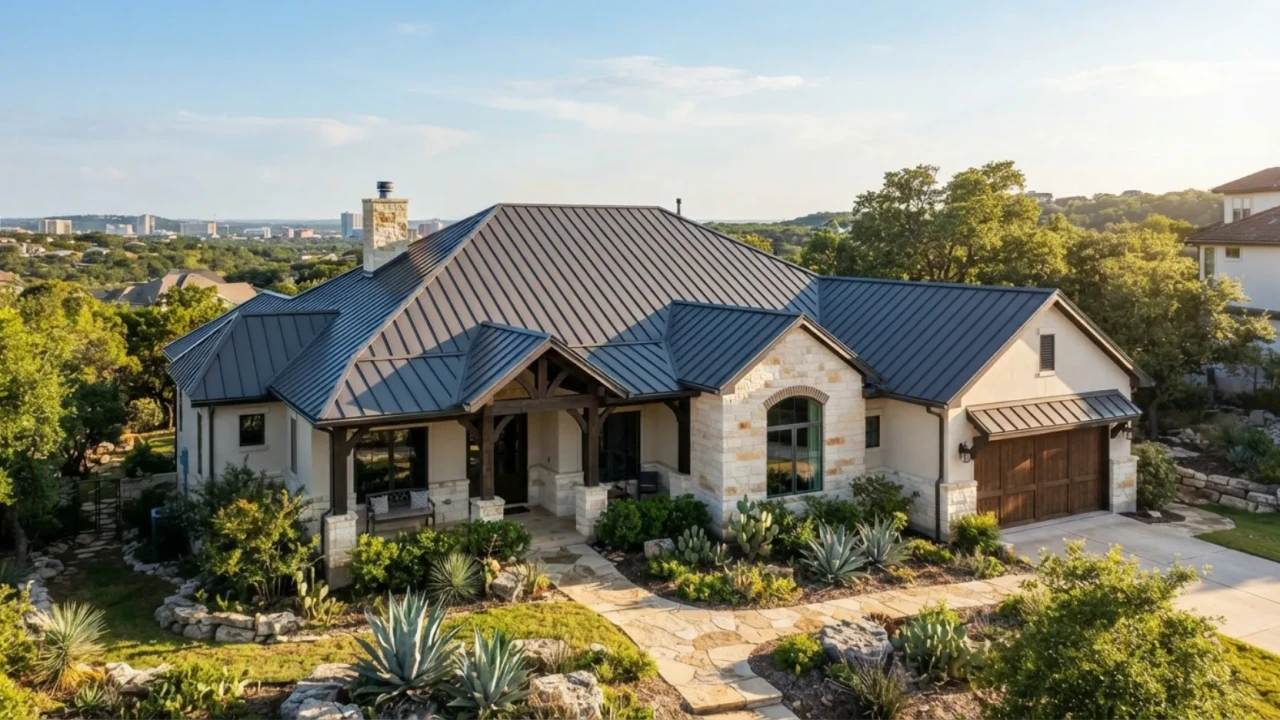
Roofing materials in the United States are tested and classified under ASTM E108, the standard fire test method for roof coverings. This testing covers three fire exposure scenarios: a flame spread test, a burning brand test (which simulates windborne embers landing on the roof surface), and an intermittent flame test. The resulting classification is either Class A, Class B, or Class C, with Class A representing the highest level of fire resistance.
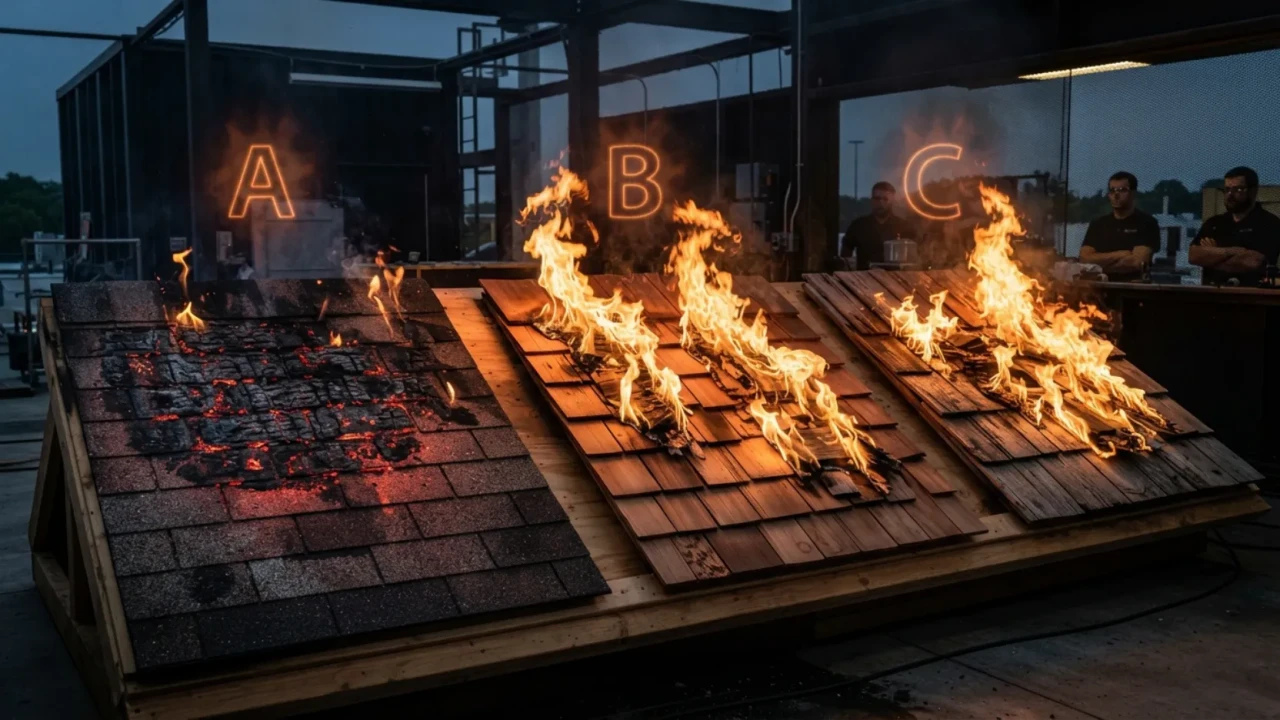
Class A: The roof covering is effective against severe fire exposures. It does not carry or communicate fire, does not produce brands (flaming debris), and offers a high degree of fire protection to the underlying roof deck. Metal roofing materials including steel, aluminum, copper, and zinc all qualify for Class A when tested as a system with the proper underlayment.
Class B: Effective against moderate fire exposure. Some treated wood products and certain composite materials fall here. The protection level is meaningfully lower than Class A.
Class C: Effective against light fire exposure only. Standard untreated wood shingles and shakes typically fall into this category. Class C roofs offer significantly less fire protection than Class A.
When you are comparing roofing options for your San Antonio home, asking about the fire rating of the complete system, not just the surface material, is the right move. A reputable roofing contractor will be able to tell you exactly which ASTM E108 classification the installed assembly earns and what underlayment and installation method is required to maintain it.
- The complete roof assembly (panel plus underlayment plus deck) is rated Class A, not just the panel alone
- The underlayment specified by your contractor is compatible with the Class A system rating
- The installation method matches the tested assembly no substitutions in underlayment or fastening
- Your contractor can provide the product’s ICC or UL listing documentation showing the Class A rating
- Your insurance provider is notified of the Class A rating at installation for premium adjustment purposes
Fire Behavior
There are three distinct ways a house fire or nearby wildfire can threaten your roof. Understanding how metal performs in each scenario is more useful than a general statement about fire resistance.
Scenario 1: Windborne embers from a wildfire or neighboring structure fire. This is statistically the most common ignition pathway in wildland-urban interface fires. Embers can travel a mile or more ahead of an active fire front and land on roofing surfaces. On a combustible roof, a single ember that lands in debris accumulated in a valley or gutter can start a smoldering fire that eventually spreads to the roof deck. Metal panels do not ignite from ember contact. The ember lands, cools, and falls away without causing ignition. This ember resistance is the single biggest fire safety advantage metal roofs provide in the San Antonio and broader Texas Hill Country context where brush fires are a seasonal reality.
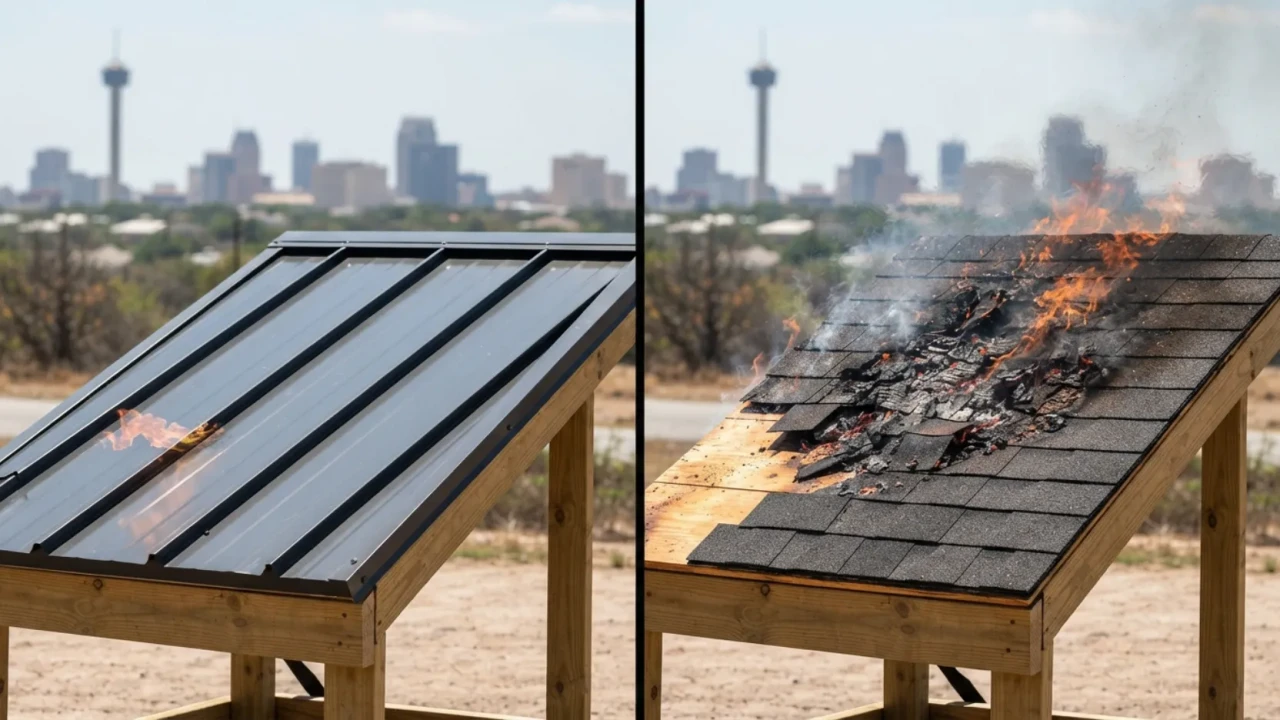
Scenario 2: Direct flame contact from a structure fire or vegetation fire reaching the home. Steel and aluminum do not combust. A direct flame source held against a metal panel will not cause the panel to catch fire. The panel will conduct heat and may eventually fail structurally at extreme and sustained temperatures, but it will not add fuel to the fire the way wood shingles, asphalt shingles, or combustible composites can. This is what makes metal roofing significantly safer than conventional roofing materials in direct fire exposure scenarios.
Scenario 3: Fire starting inside the home and burning upward toward the roof deck. This is where the assembly matters most. The metal panel on the exterior cannot prevent an interior fire from burning through the roof deck from below. The deck, insulation, and structural members will burn regardless of what is on top if the fire originates inside and goes unchecked. Metal roofing provides its fire resistance advantage primarily in keeping external fire sources from igniting the roof, not in containing internal structure fires.
Cleaning your gutters and valleys twice a year matters more than most homeowners realize for fire safety. Accumulated dry leaves and debris in gutters and roof valleys create exactly the combustible accumulation that windborne embers can ignite. Even on a Class A metal roof, a gutter full of dry organic debris is a fire hazard. Keep your gutters clear and your roof surface clean of debris accumulation, especially heading into Texas’s dry fall and winter months when wildfire risk increases.
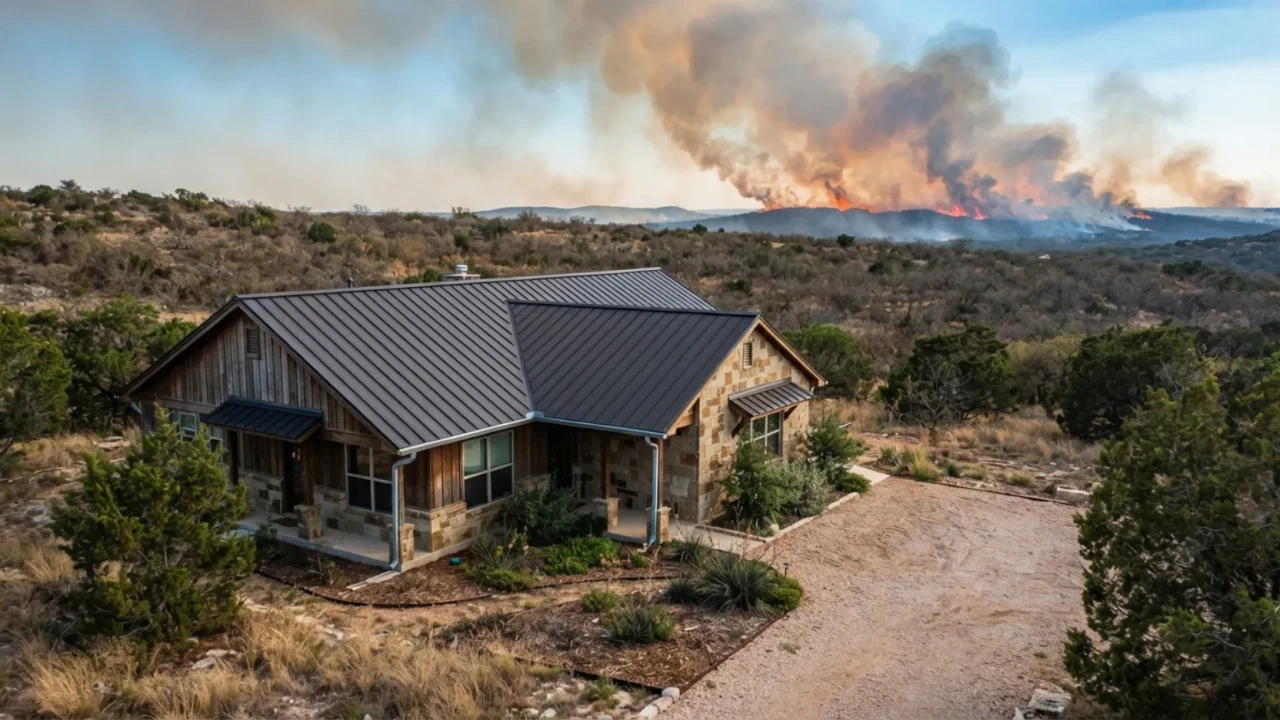
- Clean gutters at least twice per year spring and fall to remove combustible debris accumulation
- Clear leaves, pine needles, and organic material from roof valleys where debris tends to collect
- Trim overhanging tree branches that drop debris onto the roof and gutters
- Inspect roof penetrations (vents, pipes, skylights) for gaps where embers could enter the attic space
- Install ember-resistant vent covers at attic vents the attic space is a common ignition point even with a Class A roof
- Keep combustible landscaping and mulch away from the perimeter of the home
Material Comparison
The most common metal roofing materials installed on San Antonio homes are Galvalume steel, painted steel, stone-coated steel, and aluminum. Copper and zinc are available but significantly more expensive and far less common in residential applications in this market. All of them are non-combustible and earn Class A fire ratings. The differences in fire behavior between them are relatively minor in practical terms, but they are worth understanding.
| Metal type | Melting point | Fire rating | Coating fire notes | Common use in San Antonio |
|---|---|---|---|---|
| Galvalume steel | Around 2,500°F | Class A | Zinc-aluminum coating is non-combustible; no organic coating on bare Galvalume | Very common commercial and residential standing seam and exposed fastener panels |
| Painted steel | Around 2,500°F | Class A | Paint coatings are thin and do not meaningfully affect fire behavior; PVDF coatings are among the most stable | Most common residential metal roofing in San Antonio wide color range available |
| Stone-coated steel | Around 2,500°F | Class A | Acrylic binder holding stone granules can char at very high temperatures but does not sustain combustion | Common in higher-end residential applications; resembles tile or shake from the ground |
| Aluminum | Around 1,220°F | Class A | Non-combustible; lower melting point than steel but still far above standard fire exposure temperatures | Less common than steel in San Antonio but used in coastal and corrosion-sensitive applications |
| Copper | Around 1,980°F | Class A | Non-combustible; extremely corrosion resistant; no coating required | Rare in residential roofing; used for accent features, gutters, and flashing |
| Zinc | Around 787°F | Class A | Non-combustible; lowest melting point of common roofing metals but still well above standard fire exposure | Very rare in San Antonio residential market; more common in European architectural applications |
- All standard metal roofing materials sold by reputable manufacturers earn Class A fire ratings
- Stone-coated steel is Class A but confirm the specific product’s tested assembly documentation
- Request the product’s UL or FM Global listing sheet legitimate Class A ratings are documented
- The gauge (thickness) of the steel does not change the fire rating but does affect hail resistance and durability
- Painted steel panels with PVDF (Kynar) coatings offer the best long-term color and coating stability in the Texas UV environment
Insurance
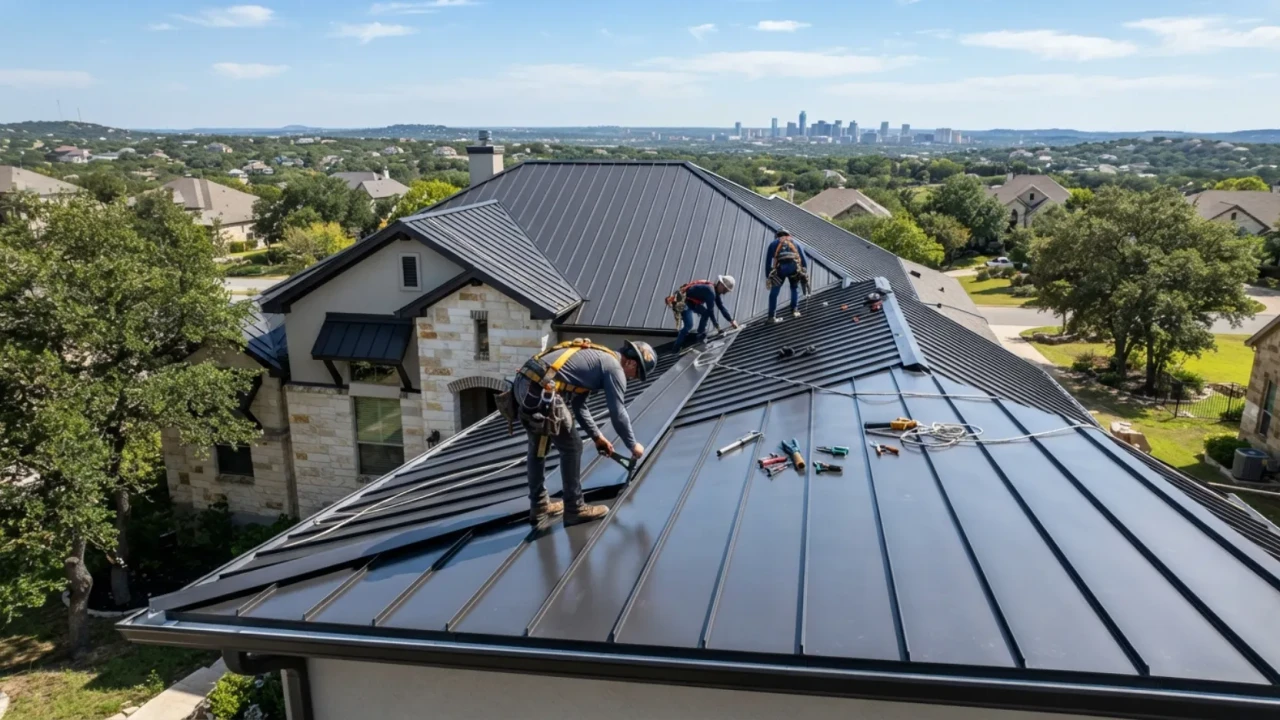
One of the most frequently asked questions we hear from San Antonio homeowners considering metal roofing is whether it will lower their insurance costs. The answer is yes, in most cases, but the amount of the discount depends on your carrier, your policy structure, and where your home is located. Here is what you can realistically expect.
Texas homeowners insurance carriers do recognize the Class A fire rating as a risk-reduction factor. Most major carriers active in the San Antonio and Bexar County market offer a discount for Class A roofs, particularly when combined with other wind and hail resistance features. The discount typically ranges from 5% to 30% depending on the carrier and the specific policy. Some carriers differentiate further between Class A roofs achieved with combustible materials (such as certain asphalt shingles with fiberglass cores) and non-combustible metal roofs, offering a higher discount for the metal system.
Beyond the fire rating discount, metal roofs often qualify for a separate impact-resistance credit in Texas. UL 2218 or FM 4473 Class 4 impact ratings (the highest level) are achievable with the right gauge of steel or aluminum panel. Many San Antonio insurers offer a separate premium reduction for Class 4 impact-rated roofs that stacks on top of the fire rating discount. If you are replacing a roof and choosing metal, ask your insurance agent specifically about both credits and what documentation they need to apply them.
Contact your insurance carrier before you install a new metal roof, not after. Some carriers require pre-approval or specific documentation to apply the discount at the time of installation. If you wait until after the job is complete to notify them, you may still receive the credit but you will have missed the window to ensure everything is properly documented. Ask your agent what product documentation they need typically a copy of the product’s UL listing, the manufacturer’s fire rating documentation, and a note from your contractor confirming the installation matched the tested assembly. Getting this right at installation time saves you the hassle of tracking down documentation later.
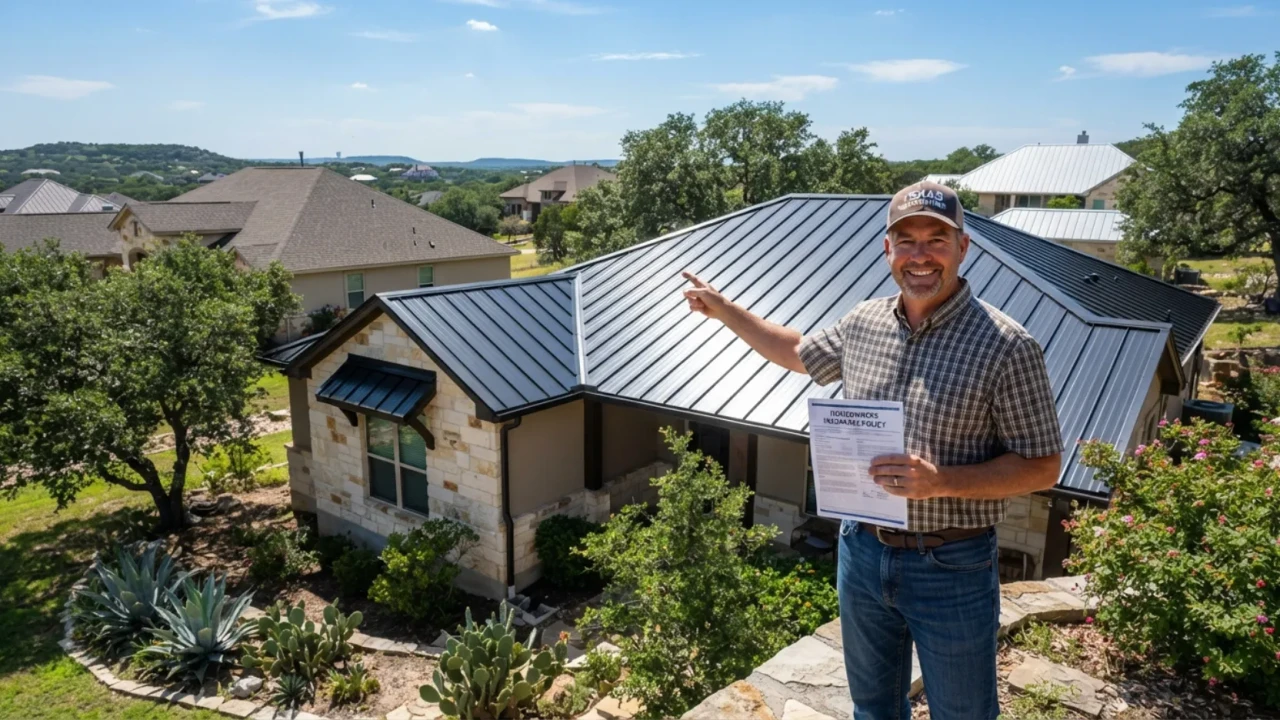
- Contact your insurance carrier before installation to confirm what documentation they require
- Request the manufacturer’s Class A fire rating documentation (UL listing sheet or ICC evaluation report)
- Ask about the impact resistance credit separately from the fire rating discount
- Confirm whether your carrier distinguishes between combustible-core and non-combustible Class A roofs
- Get confirmation in writing from your contractor that installation matched the tested fire-rated assembly
- Submit documentation to your insurer at policy renewal and request a premium review
Comparison
The roofing materials most commonly installed on San Antonio homes are architectural asphalt shingles, concrete tile, clay tile, and metal. All four can earn Class A fire ratings, but they earn that rating in different ways and with different levels of underlying fire safety. Here is an honest comparison.
| Roofing material | Fire rating (typical) | How the rating is achieved | Ember resistance | Direct flame resistance |
|---|---|---|---|---|
| Steel or aluminum metal roofing | Class A | Non-combustible material the panel itself does not burn | Excellent embers do not ignite bare metal | Excellent steel and aluminum do not combust under direct flame |
| Architectural asphalt shingles | Class A (most products) | Fiberglass mat core provides the fire resistance; asphalt itself is combustible | Good fiberglass mat limits combustion spread but granule loss over time affects rating | Good but asphalt component can sustain flame under extreme conditions |
| Concrete tile | Class A | Non-combustible material concrete does not burn | Excellent comparable to metal in ember resistance | Excellent concrete does not combust |
| Clay tile | Class A | Non-combustible material fired clay does not burn | Excellent comparable to metal and concrete | Excellent fired clay is non-combustible |
| Untreated wood shingles or shakes | Class C or unrated | No meaningful fire resistance; wood is highly combustible | Poor embers readily ignite dry wood shingles | Very poor direct flame causes rapid combustion |
| Synthetic composite (varies by product) | Class A or Class B | Varies by manufacturer and product formulation | Varies check product-specific testing documentation | Varies some plastics can sustain combustion under prolonged exposure |
The practical takeaway for San Antonio homeowners is this: metal, concrete tile, and clay tile are the three roofing material categories where the fire resistance comes from the material being genuinely non-combustible. Asphalt shingles earn their Class A rating through the fiberglass mat, which means their fire performance is dependent on the mat remaining intact, and on the granule coating remaining in place to protect it. An aged asphalt shingle roof that has lost significant granule coverage may perform meaningfully below its original Class A specification in a real fire event.
- Metal, concrete tile, and clay tile are non-combustible they earn Class A because the material itself does not burn
- Asphalt shingles earn Class A through a fiberglass mat fire performance degrades as the shingle ages and granules are lost
- Wood shingles and shakes are a significant fire hazard avoid them in any San Antonio location with brush fire exposure
- Synthetic composites vary widely always request and review the specific product’s fire rating documentation before purchasing
- The fire rating of any roof system assumes proper installation substituting underlayment or fastening method can invalidate the tested rating
- Confirm the complete roof assembly is Class A rated not just the panel, but the panel plus underlayment plus deck combination
- Request the manufacturer’s UL listing or ICC evaluation report showing the Class A fire rating
- Ask your contractor whether the underlayment specified for your project is included in the tested Class A assembly
- Confirm whether the product also carries a UL 2218 or FM 4473 impact resistance rating and what class level it achieves
- Contact your insurance carrier to confirm what documentation they need to apply the Class A fire and impact resistance discounts
- Underlayment installed matches the product specified in the fire-rated assembly no field substitutions
- Installation method matches the tested assembly, including fastener type, spacing, and seam treatment
- All roof penetrations (vents, pipes, chimneys, skylights) are sealed and flashed correctly penetrations are common ember entry points
- Attic vents are fitted with ember-resistant vent covers rated for wildfire exposure if your home is in a brush fire risk zone
- Contractor provides written documentation confirming the installed assembly matches the fire-rated system
- Gutters cleaned at least twice per year to eliminate combustible debris accumulation
- Roof valleys and low points cleared of organic material after storms and during fall leaf season
- Fire rating documentation submitted to your insurance carrier at policy renewal
- Roof inspected every two to three years to confirm no penetrations or seam gaps have developed that could allow ember intrusion
- Tree branches trimmed back from the roof surface to reduce debris deposit and direct flame pathway to the roof
Are metal roofs fire resistant?
Can a metal roof catch fire?
Will a metal roof lower my homeowners insurance in San Antonio?
Is a metal roof safer than asphalt shingles in a fire?
Does a metal roof protect against wildfires near San Antonio?
What is the fire rating of a metal roof installed over a wood deck?
Get a free metal roof estimate in San Antonio
Thinking about a Class A fire-rated metal roof for your San Antonio home? We will walk your roof, answer your questions, and give you a clear written estimate at no cost.
[/et_pb_code][/et_pb_column][/et_pb_row][/et_pb_section]