
[et_pb_section fb_built=”1″ admin_label=”section” _builder_version=”4.16″ global_colors_info=”{}”][et_pb_row admin_label=”row” _builder_version=”4.16″ background_size=”initial” background_position=”top_left” background_repeat=”repeat” global_colors_info=”{}”][et_pb_column type=”4_4″ _builder_version=”4.16″ custom_padding=”|||” global_colors_info=”{}” custom_padding__hover=”|||”][et_pb_code _builder_version=”4.27.7″ _module_preset=”default” hover_enabled=”0″ sticky_enabled=”0″]
A metal roof costs two to three times more upfront than asphalt shingles. Here is exactly when that investment pays off, what drives the timeline, and how San Antonio homeowners can calculate their own break-even point.
The payback period for a metal roof is not a single number. It depends on how much more you paid versus asphalt shingles, how much you save on energy bills, what you save on insurance premiums, how many asphalt replacements you avoid, and how long you plan to stay in the home. When all of those factors are added together, most San Antonio homeowners reach their break-even point somewhere between 15 and 25 years. After that point, a metal roof is generating pure return on every year it keeps performing.
This guide walks through every component of that payback calculation: the upfront premium, the energy savings specific to San Antonio’s climate, the insurance discounts available in Texas, the lifetime replacement cost comparison, and the home value return. If you want to know whether a metal roof is the right financial move for your home, this is the guide that gives you the honest math.
Most homeowners compare the price of a metal roof to the price of asphalt shingles and stop there. That comparison is misleading. The real question is what each roofing system costs over 40 or 50 years, which is the realistic lifespan of a metal roof. When you factor in two to three asphalt replacements, ongoing energy bill differences, insurance savings, and maintenance costs, the total lifetime cost of metal and asphalt often comes out close. In many cases, metal wins by a significant margin. The payback period is simply the point at which the cumulative savings catch up to the higher upfront investment.
Upfront Cost
In San Antonio in 2026, a standing seam metal roof on an average 2,000 square foot home typically runs between $26,000 and $42,000 installed. A comparable architectural asphalt shingle roof on the same home runs between $13,000 and $18,000. That means the premium you pay for metal upfront is generally $13,000 to $24,000 more than asphalt. That premium is the number your savings need to overcome before you reach payback.
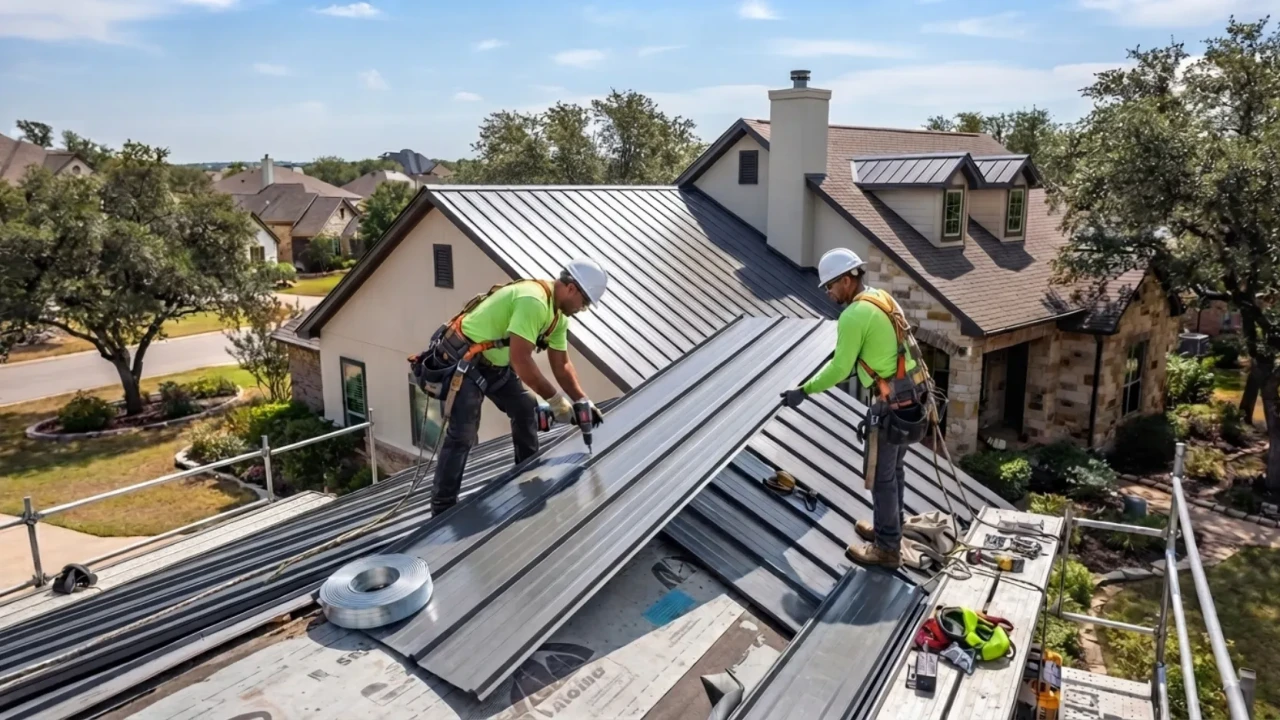
Corrugated and exposed-fastener panels represent the most affordable metal option, typically running $12 to $16 per square foot installed. They carry a shorter expected lifespan than standing seam and require more maintenance over time, which shifts the payback calculation slightly.
Standing seam systems run $16 to $22 per square foot installed in San Antonio and represent the strongest long-term investment. Concealed fasteners eliminate a major failure point, and most standing seam systems carry warranties of 40 years or longer.
- Get written quotes for both metal and architectural asphalt shingles on your actual roof not estimated averages
- Subtract the asphalt quote from the metal quote to get your true incremental premium
- Add your projected annual savings from energy, insurance, and avoided maintenance (covered in factors 2 through 4)
- Divide the premium by the annual savings to get your estimated payback year
- Verify that you plan to stay in the home long enough to reach or surpass that payback point
- Factor in future cost inflation: the asphalt roof you avoid replacing in year 20 will cost 30 to 50 percent more than it would today
Energy Savings
This is where San Antonio homeowners have a significant advantage over homeowners in cooler climates when calculating metal roof payback. San Antonio air conditioning runs from approximately May through October, with peak demand pushing electricity bills to $175 per month or more during the summer. A roof that reduces cooling load by 20 to 25 percent delivers far more annual savings in South Texas than the same roof would in a northern state.
Metal roofs achieve their energy savings through two mechanisms: reflectivity and thermal emittance. A light-colored metal roof with an energy-rated coating reflects 60 to 70 percent of solar radiation before it ever converts to heat. Asphalt shingles, by contrast, absorb 70 to 80 percent of that same radiation and transfer it directly into the attic. On a San Antonio summer afternoon, a metal roof surface can run 50 to 60 degrees Fahrenheit cooler than an asphalt shingle roof under the same sun. That temperature difference represents HVAC load that your air conditioner never has to handle.
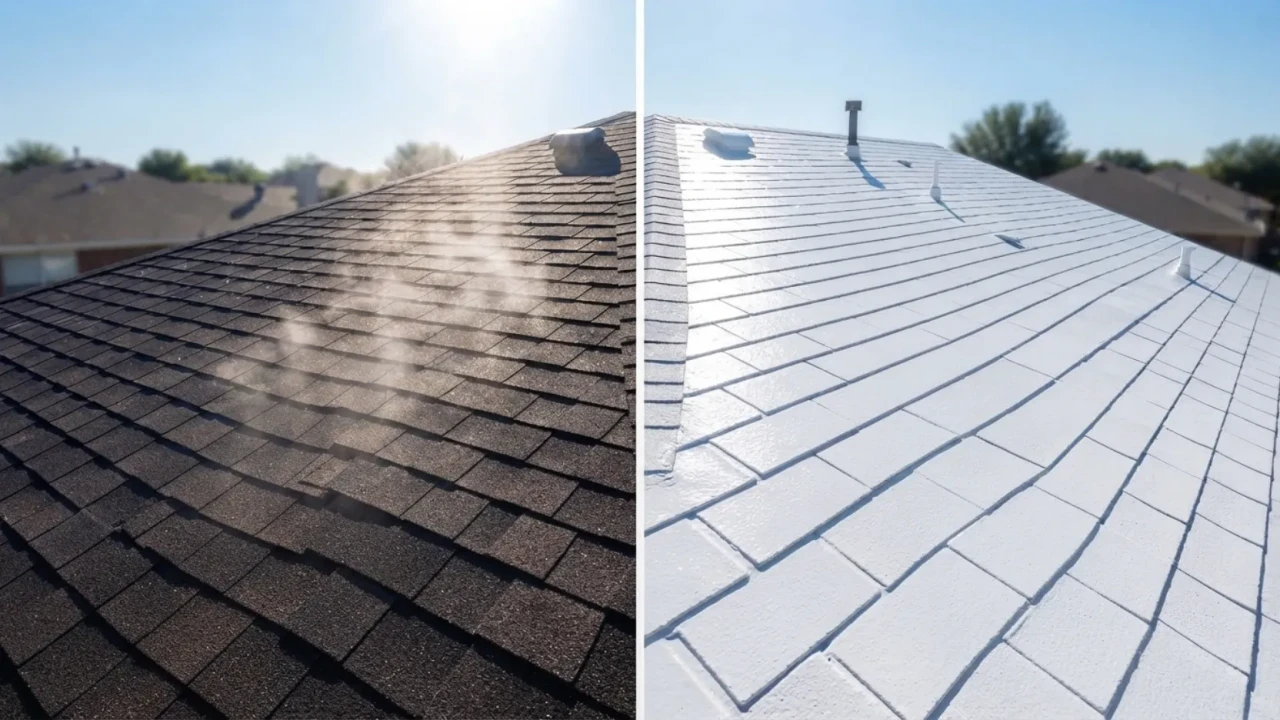
In practical dollar terms for a San Antonio homeowner: if your summer electricity bills average $200 per month from June through September, and a metal roof reduces cooling costs by 22 percent, you are saving approximately $44 per month during those peak months. Spread across a full year that accounts for milder months as well, the realistic annual energy savings for most San Antonio homes with a metal roof falls in the range of $300 to $600 per year. Over a 20-year period at current rates, that is $6,000 to $12,000 in energy savings before accounting for rate increases, which have historically trended upward in Texas.
Roof color matters more than most homeowners realize. A light gray or tan metal roof in San Antonio will save significantly more on cooling costs than a dark charcoal or bronze metal roof. Light colors reflect 65 to 80 percent of sunlight versus 30 to 40 percent for darker shades. If your HOA or personal preference allows it, choosing a lighter metal roof color shortens your payback period by compressing the energy savings timeline. A medium tan reflects enough solar energy to deliver most of the energy benefit while still looking neutral and appealing on most San Antonio home styles.
- Choose a light or medium color to maximize solar reflectivity white, light gray, or tan perform best in South Texas
- Specify an ENERGY STAR-rated coating or product when ordering it confirms the reflectivity has been independently tested
- Ensure proper attic ventilation is included in the project ventilation amplifies the cooling benefit by exhausting hot attic air
- Pair the metal roof upgrade with an attic insulation check homes below the recommended R-38 to R-60 range for South Texas leave energy savings on the table
- Track your energy bills for one full year after installation to document actual savings for tax or insurance purposes
Insurance
San Antonio sits in one of the most active hail corridors in the United States. Insurance companies know this, and they price their policies accordingly. They also know that a Class 4 impact-resistant metal roof is far less likely to generate a hail damage claim than asphalt shingles, and many carriers pass that reduced risk back to the homeowner as a premium discount. The discounts vary by carrier and policy, but most San Antonio homeowners with a Class 4-rated metal roof can expect a 10 to 30 percent reduction in their homeowners insurance premium.
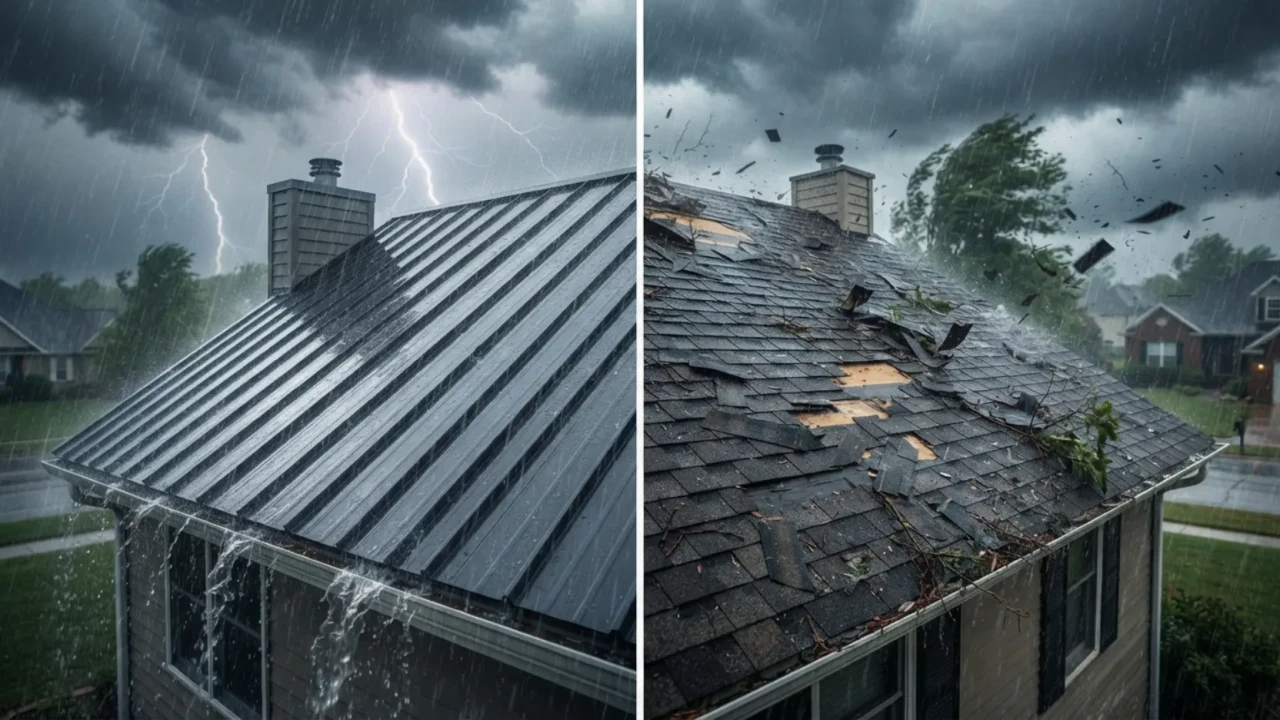
In dollar terms, if your current homeowners insurance premium is $2,400 per year, a 15 percent discount saves $360 per year. A 20 percent discount saves $480 per year. Over a 20-year period, that represents $7,200 to $9,600 in insurance savings alone, without accounting for future premium increases in the Texas insurance market, which has consistently trended upward.
To qualify for most insurance discounts in Texas, your metal roof must carry a UL 2218 Class 4 impact resistance rating, which is the highest available. Most quality steel and aluminum roofing systems meet this standard. Ask your contractor to provide documentation of the impact rating when you receive quotes, and contact your insurance carrier before installation to confirm the exact discount you will qualify for.
- Confirm your metal roof product carries a UL 2218 Class 4 impact resistance rating before signing
- Call your insurance carrier and ask specifically about discounts for Class 4 impact-resistant roofing
- Get the discount percentage in writing from your carrier before installation begins
- Request manufacturer certification of the impact rating from your roofing contractor
- Notify your carrier within 30 days of roof completion to start receiving the discount immediately
- If your current carrier does not offer a meaningful discount, use the new roof as an opportunity to shop competing carriers in Texas
Replacement Cycles
This is the payback factor that most homeowners underestimate. Asphalt shingles in Texas do not last as long as the manufacturers’ marketing suggests. The combination of intense UV exposure, temperature swings that can exceed 120 degrees between winter lows and summer highs on the roof surface, and frequent hail events compresses the realistic lifespan of San Antonio asphalt shingles to 15 to 22 years, even when they carry a 30-year warranty. A metal roof installed today is likely to outlast two full asphalt shingle replacement cycles.
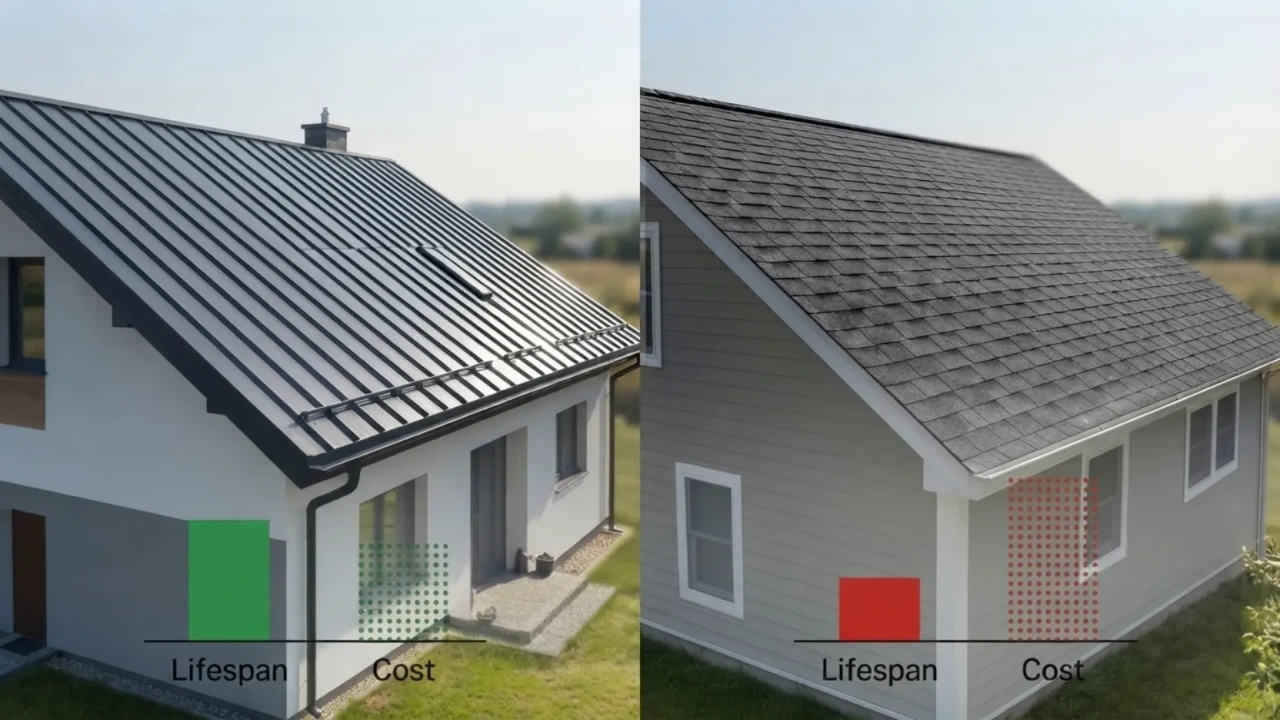
| Scenario | Year 0 | Year 20 | Year 40 | Total cost at year 40 |
|---|---|---|---|---|
| Asphalt shingles (2,000 sq ft San Antonio home) | $15,000 | $22,000 (replacement + inflation) | $28,000 (second replacement) | $65,000+ |
| Standing seam metal roof (same home) | $36,000 | No replacement needed | Still performing | $36,000 |
| Net advantage for metal by year 40 | Metal costs $21,000 more | Gap closes to $14,000 | Metal is $29,000 cheaper | Metal wins by $29,000 |
The math above does not yet include energy savings or insurance discounts, which add another $12,000 to $25,000 of cumulative benefit to the metal roof column over 40 years. It also does not account for the disruption, time, and maintenance costs associated with two full roof replacement projects that asphalt shingle homeowners would experience during the same period.
Roofing costs have increased 3 to 5 percent per year over the past decade, and there is little reason to expect that trend to reverse. When you calculate what a second asphalt shingle replacement will cost in year 20 or a third replacement in year 35, you need to apply that inflation to today’s prices. A $15,000 asphalt replacement today may cost $22,000 to $25,000 in 20 years at a 3 percent annual inflation rate. The metal roof you install today locks in your roof cost at today’s prices and eliminates that future expense entirely.
- Get an asphalt quote alongside your metal quotes to establish the true replacement-cycle baseline
- Ask about realistic local lifespan for asphalt shingles in San Antonio, not the manufacturer warranty period
- Apply a 3 to 4 percent annual inflation factor to future asphalt replacement costs when comparing totals
- Include the tear-off cost for each future asphalt replacement typically $1,500 to $3,000 per replacement cycle
- Account for maintenance costs: asphalt shingles require more frequent inspection and repair than metal over the same time period
Home Value
A metal roof adds measurable value to your home at the time of sale. Industry research generally places the resale value return on a metal roof between 60 and 85 percent of the installation cost, depending on local market conditions, home price range, and buyer demographics. In a market like San Antonio, where hail events are a known risk and buyers are increasingly aware of roofing quality, a documented metal roof with decades of remaining life is a legitimate selling point that can justify a higher asking price and reduce negotiation leverage for buyers concerned about roof condition.
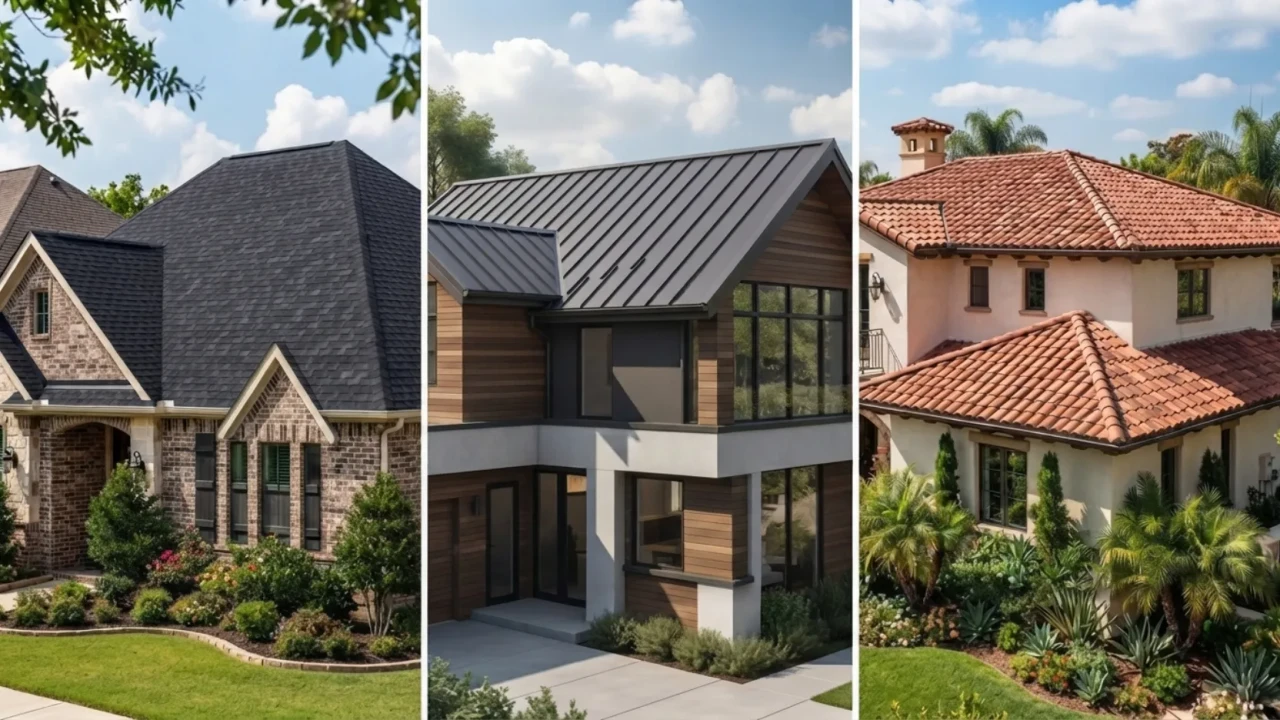
A new asphalt shingle roof also provides a resale benefit, with industry estimates typically putting the return at 60 to 70 percent of installation cost. The key difference is longevity: a new asphalt roof installed today will have used up most of its lifespan by the time you sell if you stay 15 or more years. A metal roof maintains its value proposition for decades, because a buyer looking at a 10-year-old metal roof still sees 30 to 60 years of remaining useful life. A 10-year-old asphalt roof is approaching the midpoint of its lifecycle and may already be raising concerns.
- Keep all installation documentation: warranty, product certifications, contractor license, and receipt
- Disclose the roof type and age prominently in your listing materials
- Get a pre-listing inspection that specifically documents the metal roof’s condition and remaining expected life
- List the impact resistance rating (Class 4) in your listing if applicable, as it is a selling point to buyers who have experienced hail claims
- Confirm with your real estate agent that the roof is highlighted in the MLS description and showing materials
The following table uses a representative San Antonio scenario: a 2,000 square foot home where the metal roof costs $36,000, the asphalt alternative would have been $15,000, and the homeowner qualifies for the average energy and insurance savings described in this guide. Every home is different, but these numbers represent realistic mid-range expectations for Bexar County homeowners in 2026.
| Savings category | Annual savings estimate | Cumulative savings at year 20 | Notes |
|---|---|---|---|
| Energy bill reduction (cooling) | $400 to $600 per year | $8,000 to $12,000 | Based on 20 to 25% cooling cost reduction at $175 per month average summer bills |
| Homeowners insurance discount | $300 to $500 per year | $6,000 to $10,000 | Based on 15 to 20% discount on $2,000 to $2,500 annual premium |
| Avoided asphalt replacement (year 18 to 22) | One-time at year 20 | $20,000 to $25,000 | Accounts for tear-off, new material, and labor cost inflation at year 20 |
| Reduced maintenance and repair costs | $150 to $300 per year | $3,000 to $6,000 | Metal requires significantly fewer repairs than asphalt over the same period |
| Total cumulative savings at year 20 | N/A | $37,000 to $53,000 | Exceeds the $21,000 upfront premium, confirming payback before or at year 20 |
Based on these representative numbers, the typical San Antonio homeowner reaches full payback on a metal roof investment between years 15 and 22. Every year beyond that point is pure financial return on top of having a roof that still has decades of useful life remaining.
The payback math works for homeowners who stay in their homes. It does not work as well for short-term owners. Here is the honest breakdown.
| Your situation | Metal roof recommendation | Reasoning |
|---|---|---|
| Planning to stay 20 or more years | Metal is the stronger financial choice | You will reach full payback and begin accumulating pure return well within your ownership timeline |
| Planning to sell within 5 years | Asphalt shingles are likely the better call | The upfront premium is unlikely to be fully recouped in resale value in that short a window |
| Planning to sell in 10 to 15 years | Metal can still make sense | A premium metal roof will be marketable and command value at resale, partially offsetting the premium |
| Replacing an existing roof that is already due | Metal is worth serious consideration | The incremental premium above asphalt is lower when you account for the asphalt cost you were going to spend anyway |
| Budget is constrained and upfront cost is the top concern | Asphalt shingles are the practical choice now | The long-term math favors metal, but cash flow matters. Asphalt is a reasonable decision when metal is not financially accessible |
| Home is in an active hail zone in Bexar County | Metal’s durability strengthens the case | Hail damage to asphalt shingles is a recurring cost risk. Metal’s Class 4 rating absorbs hail events that would require asphalt replacement or repair |
- Get written quotes for both metal and architectural asphalt shingles on your specific roof
- Subtract the asphalt quote from the metal quote to find your true incremental premium
- Review your last 12 months of electricity bills and identify your average summer monthly cost
- Call your insurance carrier and ask for the exact discount percentage for a Class 4 impact-rated metal roof
- Ask your roofing contractor for the expected service life of asphalt shingles in San Antonio’s specific climate
- Multiply your average summer monthly electricity bill by your carrier’s cooling savings percentage to get annual energy savings
- Add annual insurance discount savings to annual energy savings
- Estimate annual maintenance savings (typically $150 to $300 less per year for metal)
- Divide the incremental premium by total annual savings to get your base payback estimate in years
- Subtract the value of the avoided asphalt replacement at year 18 to 22 from the remaining unpaid premium at that point
- Confirm that your planned ownership period meets or exceeds the payback timeline
- Factor in the resale value contribution if you do plan to sell before full payback
- Verify the metal roof product carries a UL 2218 Class 4 impact rating to qualify for insurance discounts
- Confirm the contractor is providing a written labor warranty, not just a materials warranty
- Get at least two metal quotes to ensure you are not overpaying on the upfront investment
How long does it take for a metal roof to pay for itself in San Antonio?
Does a metal roof actually lower energy bills in San Antonio?
Is a metal roof worth it if I plan to sell my home in 10 years?
Do insurance companies give discounts for metal roofs in Texas?
Are there tax credits for metal roofs in San Antonio?
What is the best type of metal roof for the fastest payback in San Antonio?
Get a free metal roof estimate in San Antonio
We will give you side-by-side pricing for metal and asphalt shingles, walk you through the payback math for your specific home, and help you make the right long-term decision without any pressure.
[/et_pb_code][/et_pb_column][/et_pb_row][/et_pb_section]