
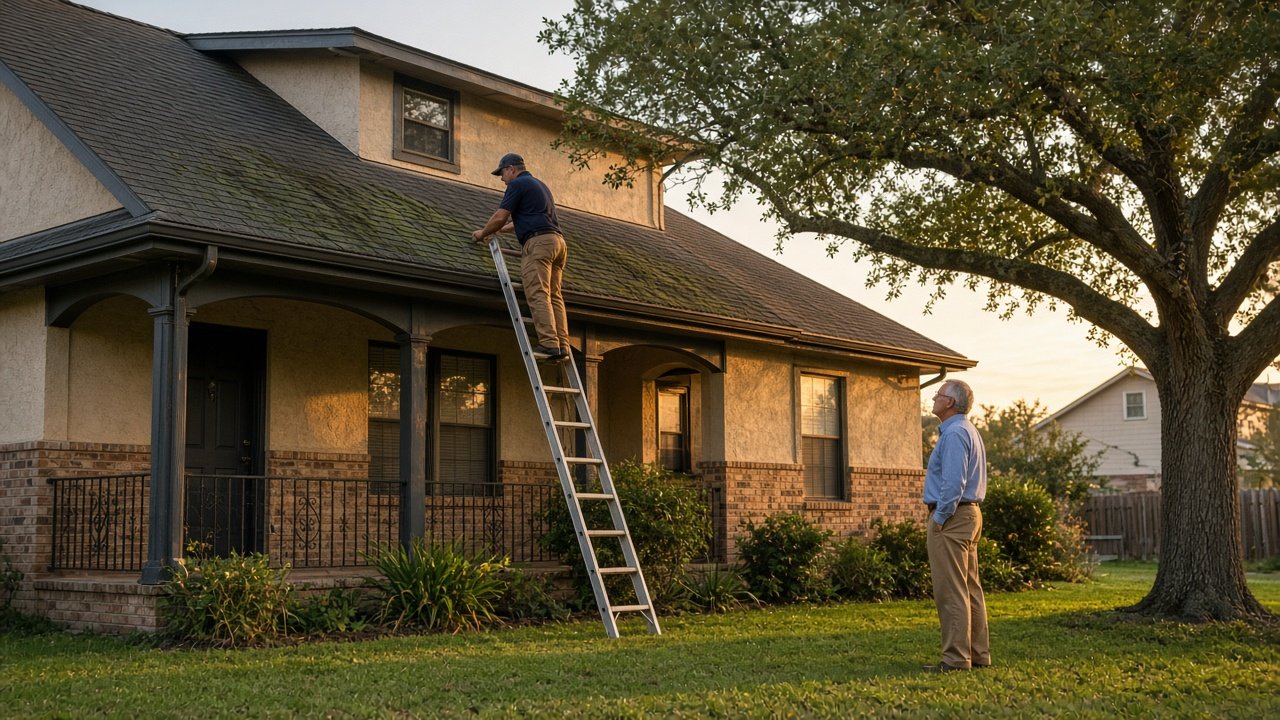
Roof care · San Antonio, Texas
Green Stuff on Roof Shingles? Algae, Moss, or Lichen in San Antonio
Dark streaks, green clumps, or crusty gray-green spots on your shingles usually mean algae, moss, or lichen. This guide helps you tell them apart, explains why they show up on San Antonio roofs, which ones can hurt your shingles, how to remove growth without damaging the roof, and how to keep it from coming back.
The short answer
Green stuff on roof shingles is often moss or lichen, while the dark streaks running down a slope are usually algae. Algae is mainly a cosmetic problem. Moss is the one to take seriously, because it holds moisture and can lift shingle edges. Lichen grows slowly and doesn’t damage shingles the way moss does. Whatever it is, never pressure wash an asphalt roof. Gentle, manufacturer-approved cleaning by a professional, more sun, and less debris are the safer path, and RRSATX can tell you which growth you have during an inspection.
What is the green stuff on roof shingles?
Growth on a shingle roof is almost always algae, moss, or lichen. They look different, grow in different spots, and don’t carry the same risk to your roof, so naming the growth comes before deciding what to do about it.
| Growth | What it looks like | Where it shows up | Does it hurt shingles? |
|---|---|---|---|
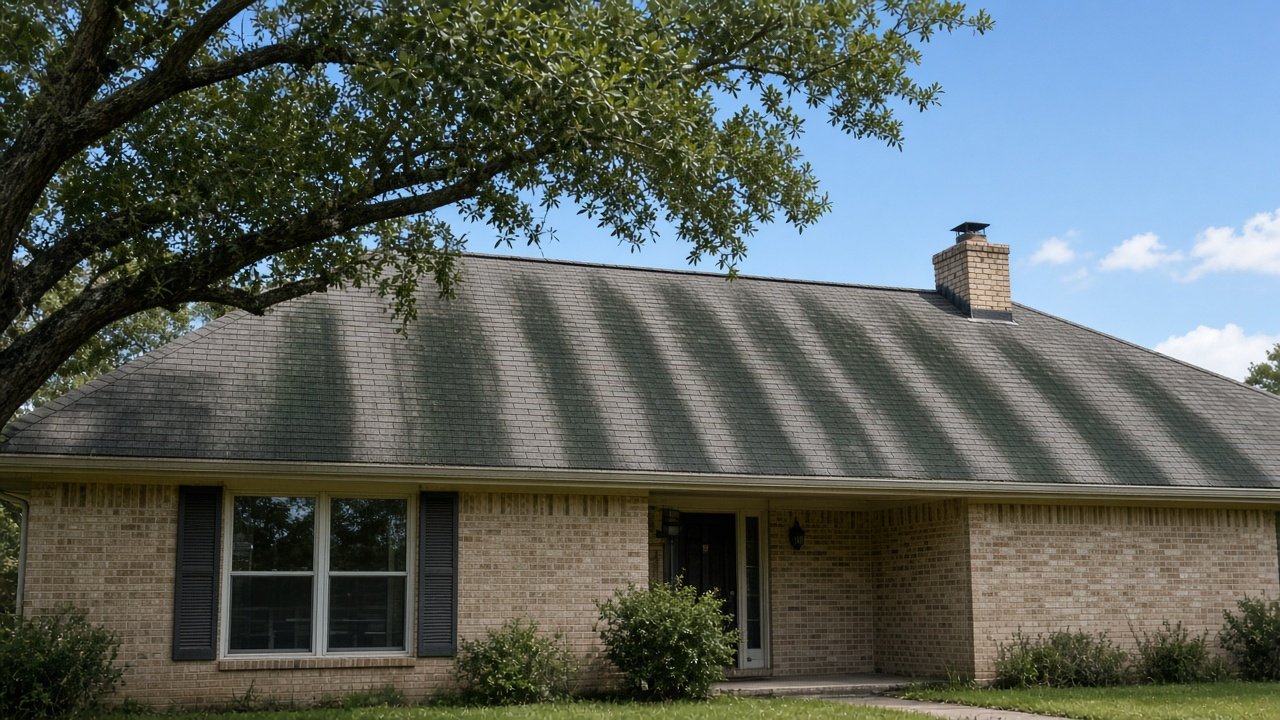
| Algae | Dark brown to black streaks or discoloration, often mistaken for dirt, soot, mold, or tree droppings [1][2] | Streaks down the slope where moisture lingers; easier to see on light-colored roofs [1] | ARMA reports no scientific evidence that algae damages asphalt shingles; it’s mainly cosmetic [2] |
| Moss | Green, raised, spongy plant growth that needs moisture to grow [2] | Shaded, damp roof planes, often north-facing or under branches [2][3] | Yes, it can lift or curl shingle edges and slow water off the roof [2][3] |
| Lichen | Crusty, flat patches formed by a partnership of fungus and algae [4] | Also grows on rocks, fences, and tree bark [4] | Oregon State University Extension says lichens don’t contribute to wood or composite shingle damage [3] |
Here’s the honest part. When homeowners describe “green stuff,” it’s most often moss or lichen. Algae usually reads dark rather than green. The Asphalt Roofing Manufacturers Association (ARMA) describes it as brown-to-black discoloration and names Gloeocapsa magma as probably the most common type. Its spores travel through the air, so it can show up on any roof that stays damp. [1]
How to tell moss from lichen on a shingle roof
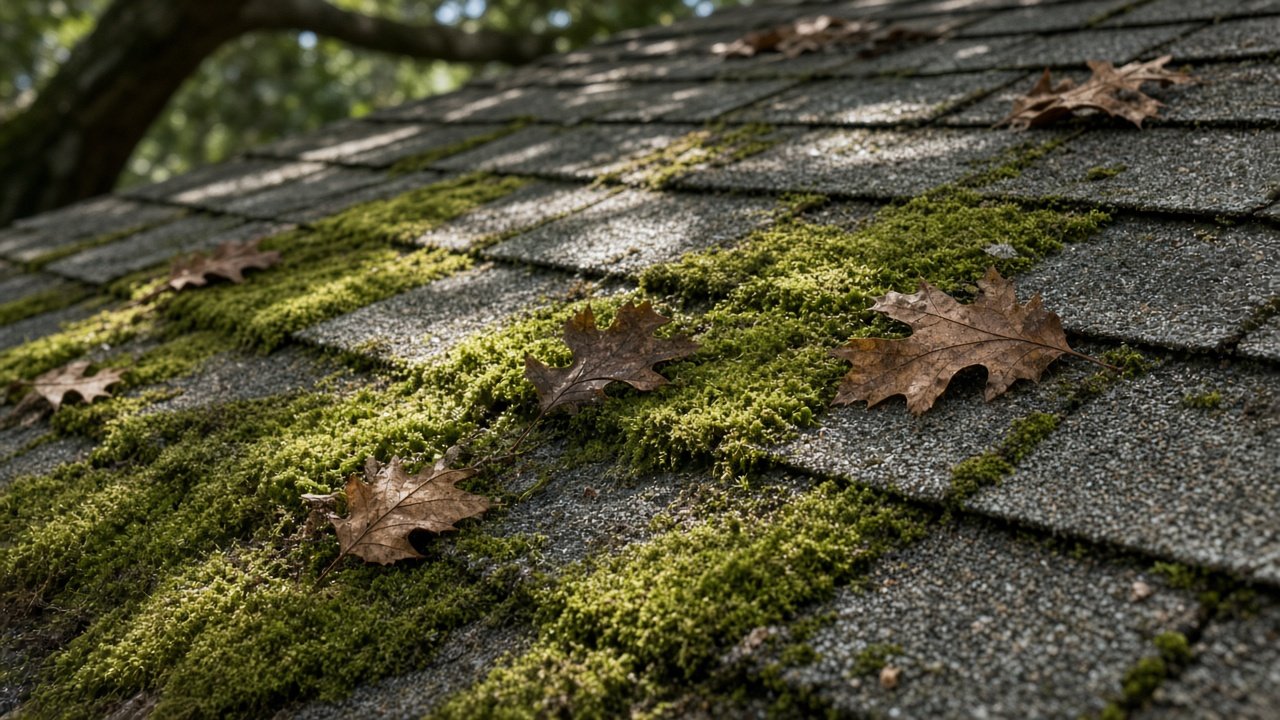
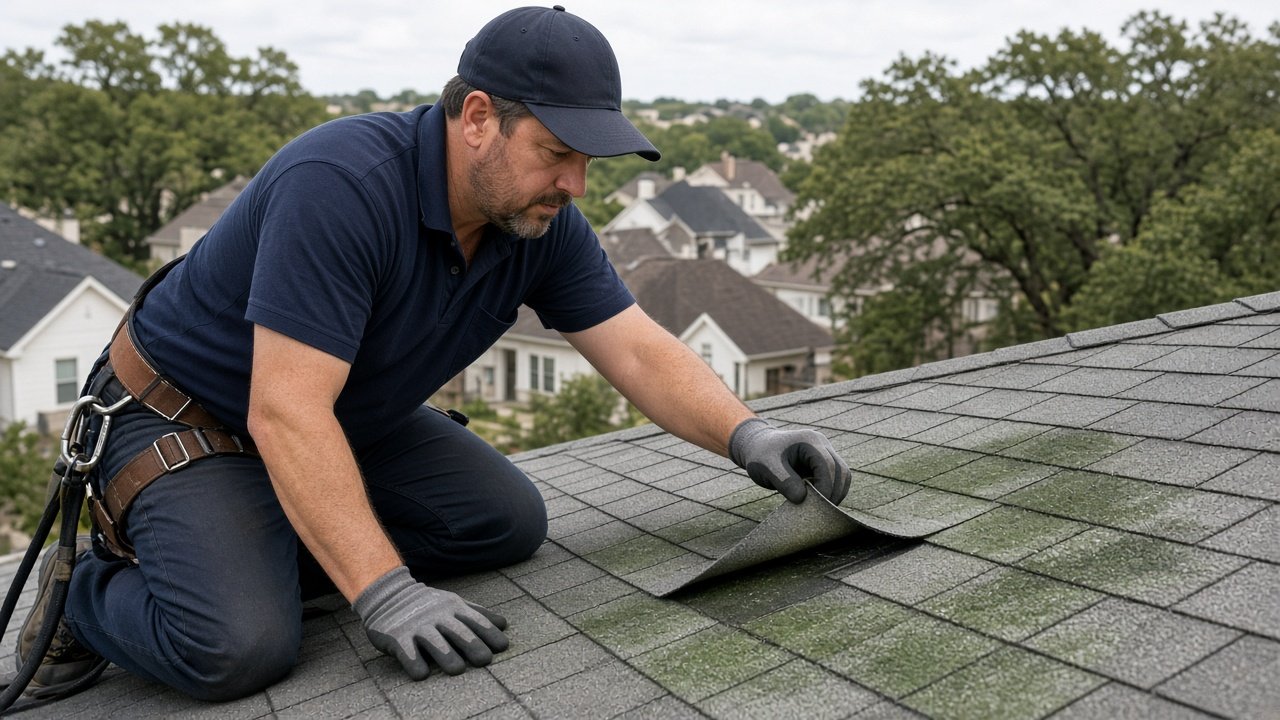
Moss is soft and raised. Lichen is flat and crusty. That difference is usually visible from a ladder or with a zoomed photo taken from the ground.
Moss is a small plant. It forms green, cushion-like clumps that grow up between shingle tabs and along the edges where water and debris collect. ARMA notes that moss needs moisture and tends to grow on north-facing roof planes that get less direct sun and stay damp. [2]
Lichen isn’t a single plant. The Texas A&M Forest Service describes it as a combination of fungi and algae living together, and it grows on non-living surfaces such as rocks and fences as well as on tree bark. [4] On a roof it looks like pale, crusty spots stuck flat to the shingle. If the same patches show up on your fence or the oak in your yard, lichen is a good bet.
Why San Antonio roofs grow algae and moss
Warmth, humidity, and shade give roof growth what it needs. San Antonio supplies all of them on the right roof.
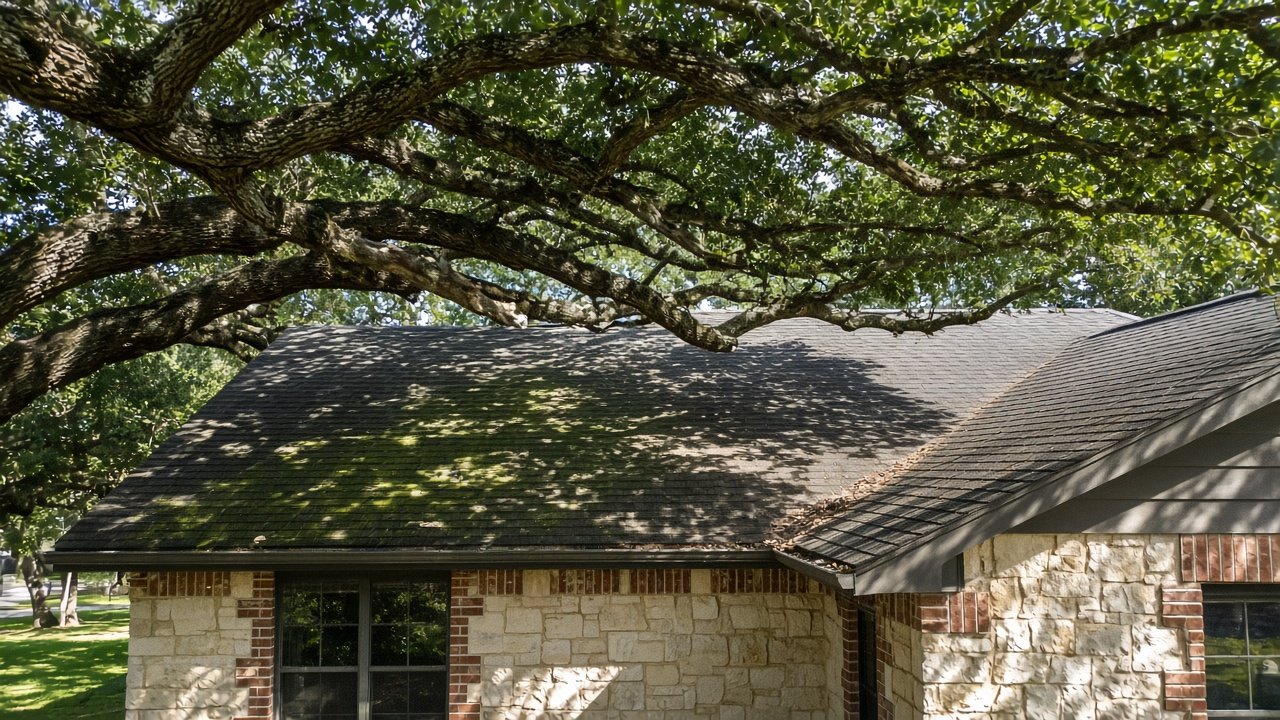
ARMA says roof algae is most widespread in the Gulf States and in warm, humid conditions, and that it forms where moisture dwells. [1][2] Moss favors north-facing planes that stay damp, and overhanging branches add shade and drop leaves and debris that hold moisture against the shingles. [2] Oregon State University Extension describes moist, shady rooftops as ideal for moss. [3]
What RRSATX sees around town lines up with that. The roofs with the most growth tend to sit under mature live oaks, which keep part of the roof in steady shade. North-facing slopes and the sections behind chimneys or upper walls dry out slowly after a storm, and humid stretches after rain give growth a chance to settle in. ARMA also notes that spores spread by wind or animals, which is why you’ll often see the same streaks on several roofs along the same street. [2]
Does green stuff on a roof damage the shingles?
Algae mostly hurts appearance, moss can cause real damage, and lichen is mostly cosmetic. The risk depends on which one you have and how much of it there is.
Algae: ARMA states there is no scientific evidence that algae damages asphalt shingles. It’s an appearance problem, though it can reduce how well a reflective “cool” roof does its job. [2]
Moss: This is the one to watch. ARMA says moss can lift or curl the leading edges of shingles, which raises the risk of blow-off in high wind. Severe build-up can push water sideways under the shingles and cause moisture damage to the roof deck or leaks. [2] Oregon State University Extension adds that moss slows or blocks water flow off the roof, can contribute to shingle damage, and that dried moss and debris are flammable. [3] If your shingles are already lifting, see our guide to curling shingles in San Antonio.
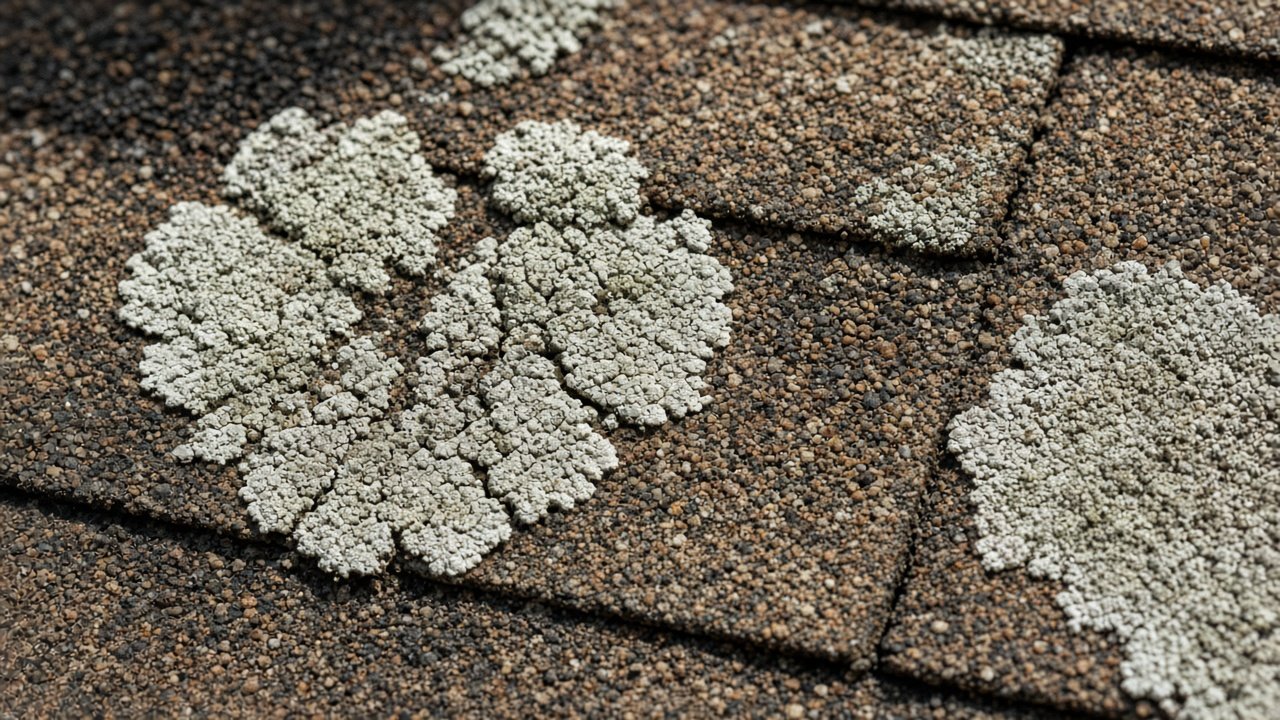
Lichen: Oregon State University Extension says lichens grow more slowly than moss and don’t contribute to wood or composite shingle damage. [3] The Texas A&M Forest Service notes that removing lichen is often only a temporary fix, since it may keep growing. [4] Scraping or scrubbing it off can loosen shingle granules.[1] Bare, dark spots after cleaning point to lost granules; our guide on what causes granule loss on shingles explains why that matters.
How to remove green stuff on roof shingles safely
Gentle cleaning by a professional protects the shingles. Force and pressure ruin them. Aggressive cleaning can do more harm to shingles than the growth itself.
ARMA says algae can be lightened with a solution of household bleach and water, but the result is temporary and the streaks may come back. Other chemicals should only be used if the shingle manufacturer approves them. Wet roofs get slippery, and ARMA encourages homeowners to hire professionals for the job. [1]
Oregon State University Extension gives similar advice for moss: avoid climbing on your roof, consult a roofing professional, and act sooner rather than later, since small patches are easier to deal with. Products that kill moss still leave dead material that has to be removed, and those chemicals can harm nearby plants and aquatic life. [3]
What to avoid on an asphalt roof
Don’t pressure wash. ARMA says not to use a power washer, brush, or broom, and that high-pressure washing is likely to damage asphalt roofing. [1] It can strip granules and lead to premature roof failure. [2] Don’t scrub, since scrubbing loosens granules. [1] Oregon State University Extension also warns that asphalt shingles damage easily and that pressure washing damages them. [3]
Metal roofs are a different case. Oregon State University Extension notes that moss doesn’t grow easily on metal roofs. [3] If you have a metal roof with dirt or staining, see how to clean metal roofs, and our metal roofing page covers metal systems in San Antonio.
When roof growth means it’s time for repair or replacement
Often the bigger question is what the growth has already done to the shingles. These signs mean it’s time for a closer look:
- Thick moss mats that have lifted or curled shingle tabs
- Bare spots or heavy granule loss, especially after someone pressure washed or scrubbed the roof
- Shingles that no longer lie flat because the seal strips have broken
- Soft spots underfoot or stains on ceilings inside the house
- Growth that keeps returning on an aging roof that also shows cracking or wear
A few lifted shingles on a sound roof are often a straightforward roof repair. When moss has held water against the deck for a long stretch, or the shingles are worn across whole slopes, a roof replacement conversation may make more sense. Our list of signs your roof needs replacement helps you weigh it.
What an RRSATX inspection checks
Which growth you have, whether shingle edges are lifted or the seal strips are broken, granule wear, soft decking, signs of water inside, and branches that shade or scrape the roof. You get the findings in writing with photos. Book a free roof inspection to get started.
How to keep algae and moss from coming back
More sun, less debris, and the right shingles at replacement time do more than any cleaning. These steps help keep growth from returning:
- Trim branches back. ARMA and Oregon State University Extension both recommend trimming or thinning overhanging branches so the roof gets more sun and less debris. [2][3] Our guide to tree damage to roofs covers branches that rub or fall.
- Clear leaves and debris gently. ARMA suggests a leaf blower or another non-abrasive method, with the air blowing down the slope so it doesn’t push under the shingles. [2]
- Ask about algae-resistant shingles when you replace. ARMA notes algae-resistant shingles are available when reroofing. [1][2] Our asphalt roofing page covers shingle options.
- Be careful with zinc or copper strips. ARMA lists them as an option at replacement but doesn’t recommend adding them to an existing roof, because exposed nails can leak and breaking the sealant bond raises the risk of wind damage. [2] Oregon State University Extension doesn’t recommend zinc strips, citing poor results, leaks from nailing, and harm to aquatic organisms. [3]
- Keep up with routine checks. Our guides on how to maintain your roof in San Antonio and the roof maintenance guide walk through what to look for.
Local roofing service
About Affordable Roofing Contractors San Antonio
Affordable Roofing Contractors San Antonio, also known as RRSATX, provides roof repair, roof replacement, roof inspections, and asphalt, metal, and tile roofing in San Antonio. When you call, tell us where the growth is, what it looks like, and whether anyone has cleaned the roof before. Photos taken from the ground help.
- Phone
- (713) 504-2341
- sales@affordableroofingcontractorssanantonio.com
- Address
- 4324 Monterey St, San Antonio, TX 78237
- Contact
- Request a free roof inspection
Green stuff on San Antonio roofs: questions answered
Is the dark or green stuff on my roof mold?
Usually not. ARMA says the black streaks often mistaken for mold or mildew are algae. [2] Raised green clumps are more likely moss, and flat, crusty patches are more likely lichen.
Can I pressure wash moss off my roof?
No. ARMA and Oregon State University Extension both warn that pressure washing damages asphalt shingles. [1][3] It strips granules and can shorten the life of the roof.
Will bleach get rid of roof algae for good?
No. ARMA says a bleach-and-water solution can lighten algae, but the effect is temporary and it may come back. [1] Algae-resistant shingles at replacement time are the longer-term answer.
Does lichen damage roof shingles?
Oregon State University Extension says lichens don’t contribute to wood or composite shingle damage the way moss can. [3] Removal is often only temporary, since lichen may keep growing. [4]
Should I nail zinc strips to my existing roof?
ARMA doesn’t recommend adding zinc or copper strips to an existing roof, because exposed nails can leak and breaking the sealant bond raises wind risk. [2] Ask about strips or algae-resistant shingles when it’s time to replace.
What should I send RRSATX before an inspection?
Send the property address, photos of the growth, which side of the house it’s on, and whether the roof has been cleaned before. Call (713) 504-2341 or use the contact page.
Explore the roofing topic
More help with roof care in San Antonio
Related guideWhat causes granule loss on shinglesWhy bare spots show up and what they mean for your roof.
Related guideHow to handle tree damage to roofsWhat to do about branches that shade, scrape, or fall on your roof.
Find out what’s growing on your roof
Ask RRSATX for a free roof inspection and written findings before you try to clean it.