

[et_pb_section fb_built=”1″ admin_label=”section” _builder_version=”4.16″ global_colors_info=”{}”][et_pb_row admin_label=”row” _builder_version=”4.16″ background_size=”initial” background_position=”top_left” background_repeat=”repeat” global_colors_info=”{}”][et_pb_column type=”4_4″ _builder_version=”4.16″ custom_padding=”|||” global_colors_info=”{}” custom_padding__hover=”|||”][et_pb_code _builder_version=”4.27.7″ _module_preset=”default” hover_enabled=”0″ sticky_enabled=”0″]
Most roof failures do not happen overnight. They start small, with a warning sign that is easy to miss from the ground. This guide covers the five key signs that mean it is time for a professional roof inspection in San Antonio, what an inspector actually checks, and what to do once you know where your roof stands.
A roof rarely fails all at once. Long before a leak shows up on your ceiling, your roof has usually been sending signals for months, sometimes years. The problem is that most of those signals are easy to miss unless you know exactly what to look for and where to look. By the time water is visibly dripping inside the home, the damage is often more extensive, and more expensive, than it needed to be.
This guide covers the five key warning signs that mean your San Antonio roof needs a professional inspection soon, not eventually. Catching any one of these early is usually the difference between a modest repair and a full roof replacement.

A missing shingle caught early costs a fraction of what water damage to decking, insulation, and drywall costs after months of undetected leaking. Regular inspections are not about finding problems for the sake of it. They are about catching small, affordable issues before Texas weather turns them into large, expensive ones.
Shingle Damage
Shingles are your roof’s first line of defense, and visible damage to them is usually the earliest sign something is wrong. San Antonio’s combination of intense summer heat, UV exposure, and sudden temperature swings puts more stress on shingles than milder climates do. Over time, that stress shows up in a few predictable ways.
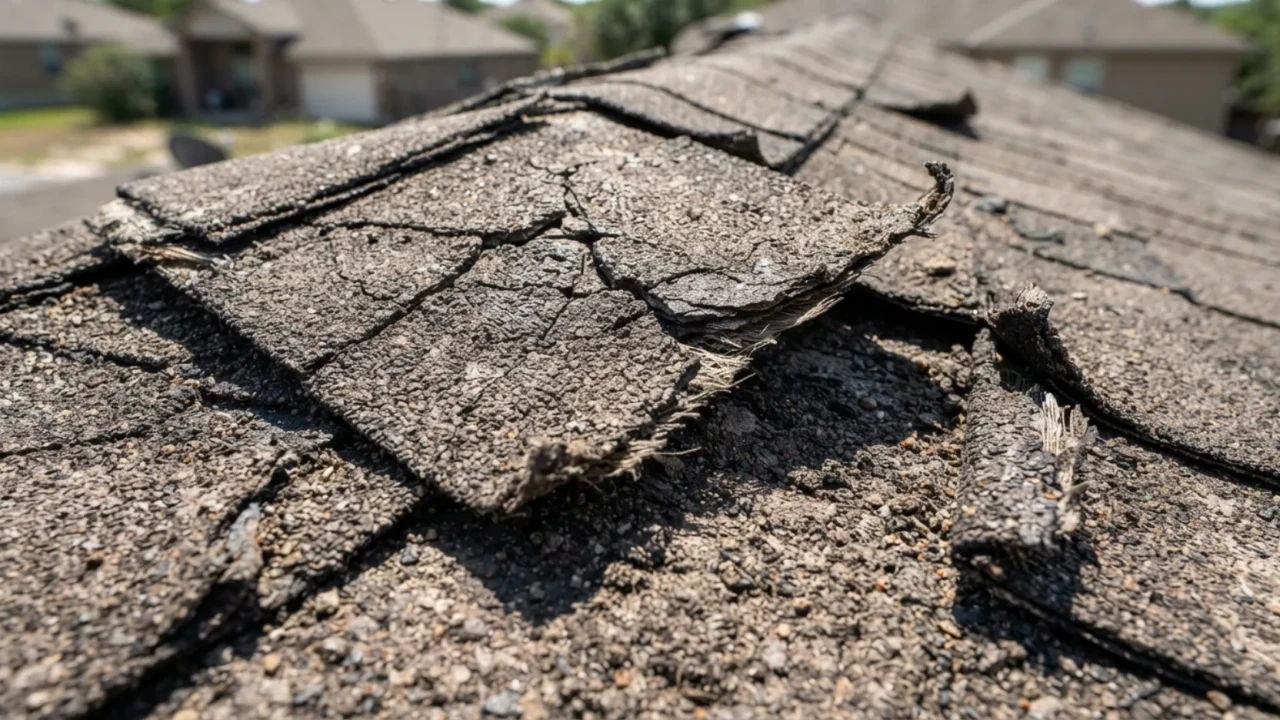
Curling shingles: Edges that lift or curl upward mean the shingle has lost flexibility and is no longer sealing properly against wind-driven rain. This is common on roofs approaching the end of their expected lifespan.
Cracked shingles: Thermal cycling between hot days and cool nights causes shingles to expand and contract. Over years, this creates surface cracks that let water reach the layers underneath.
- All roof slopes visually checked from the ground, including the back of the house
- Curling or lifting shingle edges noted, especially on the sun-facing slopes
- Any bare or missing shingle sections marked for closer inspection
- Cracks checked for pattern: isolated cracks versus widespread cracking across the roof
Granule Loss
Asphalt shingles are coated with mineral granules that protect the asphalt layer underneath from UV rays and give the shingle its color and fire resistance. As shingles age, or after a hail event, those granules loosen and wash off during rain. This is one of the most reliable early warning signs of an aging or storm-damaged roof, and one of the easiest to check without ever climbing a ladder.
After the next rain, walk your gutter line and look at what has collected at the low points and around the downspout openings. A light dusting of fine granules is normal, especially on a newer roof shedding its manufacturing excess. Handfuls of granules, or granules that keep appearing rain after rain on a roof more than 10 years old, mean the protective coating is breaking down and the shingles beneath are increasingly exposed to sun and moisture.
- Gutters and downspout openings checked after a rain for accumulated granules
- Shingle surface checked for shiny or dark bald spots where the coating has thinned
- Roof age considered, since granule loss accelerates naturally after 10 to 15 years
- Comparison made between sun-exposed slopes and shaded slopes, since wear is uneven
Interior Warning Signs
Your attic and ceilings often reveal roof problems before the roof surface itself makes the damage obvious. Water that gets past your shingles and underlayment does not always drip straight down. It can travel along rafters, insulation, and decking before showing up somewhere that looks unrelated to the actual entry point.
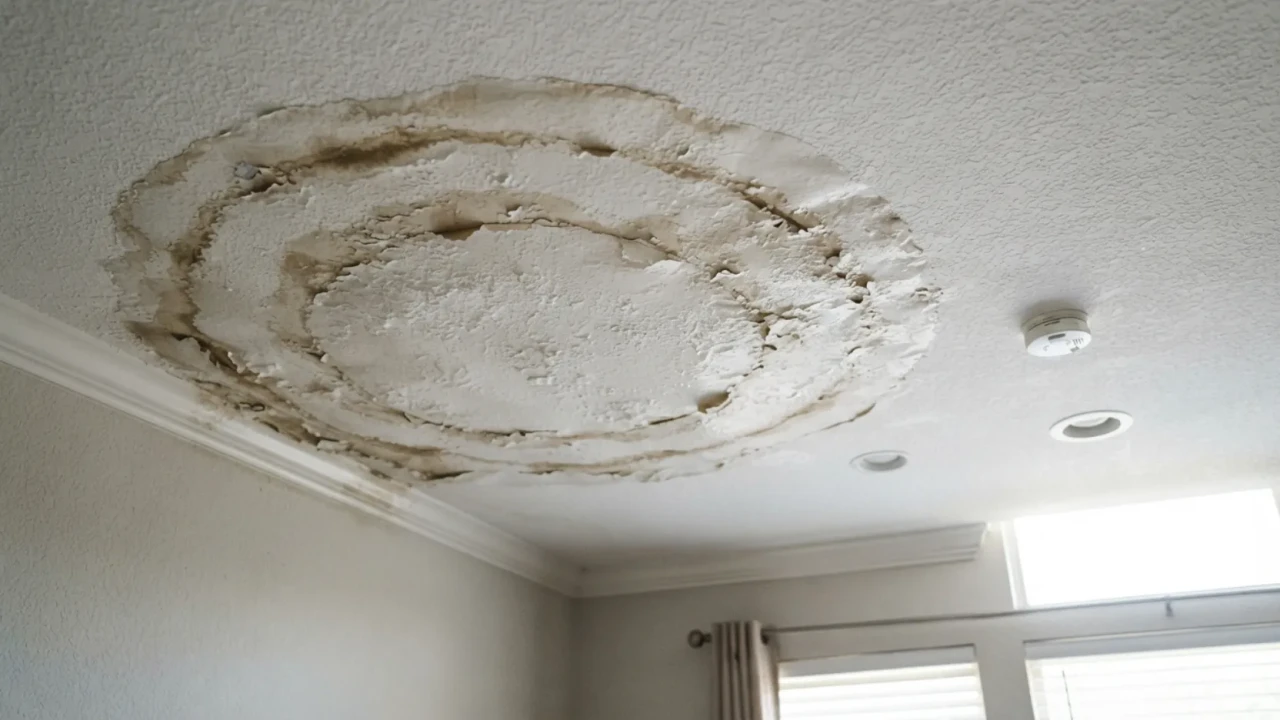
Ceiling and wall stains: Brown or yellow rings on ceilings or upper walls almost always trace back to a roof leak, even if the stain is far from the actual entry point on the roof.
Musty odors: A persistent musty smell in an upstairs room or closet often means moisture is sitting somewhere in the attic or wall cavity, even before visible mold appears.
Attic moisture and mold: A quick look in the attic with a flashlight can reveal damp insulation, dark mold spotting on the decking, or visible daylight through the roof boards, all signs that need prompt attention.
- Ceilings and upper walls checked for staining, especially after heavy rain
- Attic checked with a flashlight for damp insulation, staining, or mold on the decking
- Any musty odor in upstairs rooms or closets noted, even without visible staining
- Attic checked for visible daylight coming through roof boards during a sunny day
Storm Damage
Any significant hail or wind event in San Antonio is a reason to schedule a roof inspection, even if nothing looks obviously wrong from the ground. Hail impact damage and wind-lifted shingles are not always visible without getting on the roof, and damage that goes unaddressed for months tends to develop into leaks well before the next storm season.

File a homeowners insurance claim within the window your policy allows, typically one year in Texas, if a storm inspection finds qualifying damage. Get your own professional inspection rather than relying solely on the insurance adjuster’s assessment. A reputable San Antonio roofing contractor will document the damage with photos and give you an independent estimate, which gives you a stronger position if the adjuster’s initial scope comes back lower than expected.
- Inspection scheduled within 30 days of any significant hail or wind event
- Damage documented with dated photos before any temporary repairs are made
- Gutters, downspouts, and any metal fixtures checked for dents as a rough hail size indicator
- Insurance claim window confirmed on your policy before damage assessment begins
Roof Age
Every roofing material has an expected service life, and as a roof approaches that number, the odds of a hidden problem increase even if nothing looks wrong from the ground. An aging roof deserves more frequent, more thorough inspection than a newer one, simply because materials that have absorbed years of Texas sun and storms are more likely to be failing somewhere out of easy view.
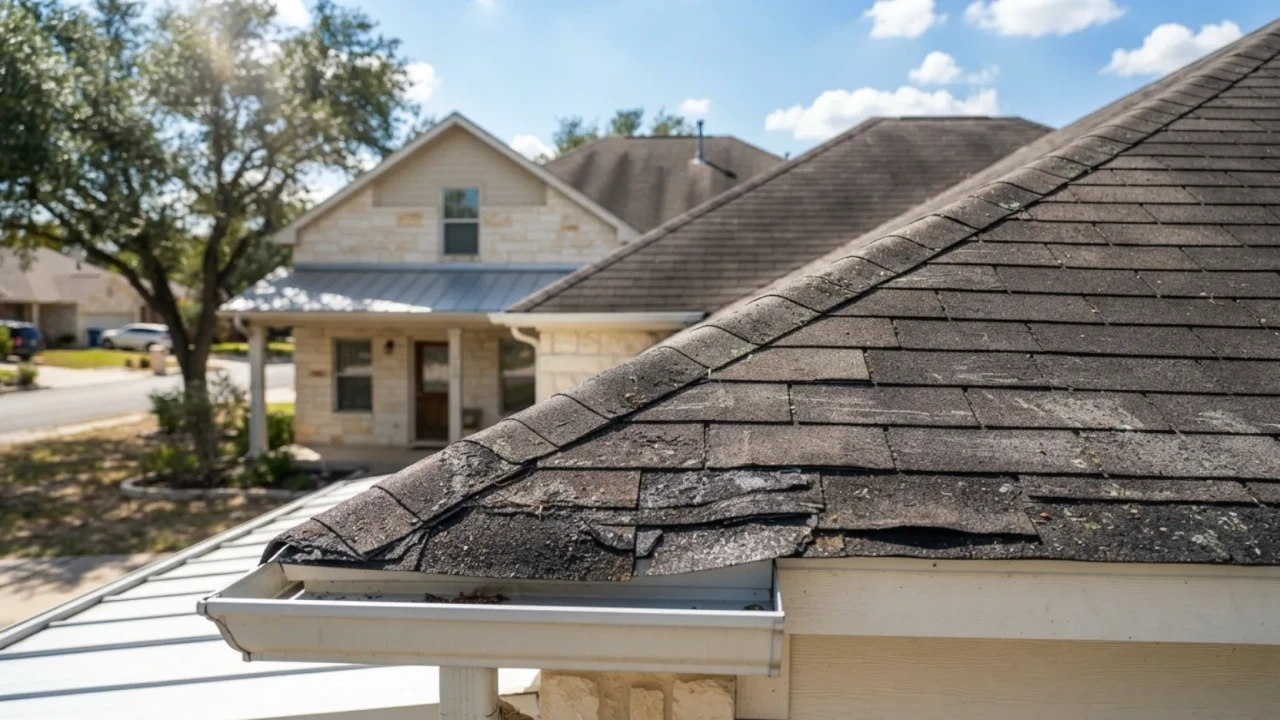
3-tab asphalt shingles: Expected lifespan of 15 to 20 years. Roofs at 12 years or older should be inspected annually rather than every few years.
Architectural shingles: Expected lifespan of 20 to 25 years. Increase inspection frequency once the roof passes the 15-year mark.
Metal roofing: Expected lifespan of 40 to 70 years, but fastener and sealant condition still deserve a check every two to three years, even on a young metal roof.
- Roof material and approximate installation year identified, from records or a contractor estimate
- Inspection frequency increased once the roof passes roughly 75% of its expected lifespan
- Warranty documents reviewed to confirm what coverage, if any, remains active
- Replacement budget planning started once a roof approaches its final few years of expected life
A thorough inspection covers more than a quick glance from the driveway. Here is what a qualified San Antonio roofing contractor typically checks during a complete inspection.
| Inspection type | What it covers | Typical cost | Best used for |
|---|---|---|---|
| Visual ground inspection | Binoculars or a quick look from the ground, gutters, visible slopes | Often free | Quick check between full inspections |
| Full walk-on inspection | Every slope, flashing, penetration, and vent walked and checked directly | Free to $150 | Annual maintenance and pre-purchase checks |
| Attic and interior inspection | Decking, insulation, ventilation, and signs of moisture from inside | Often included with a walk-on visit | Confirming interior warning signs |
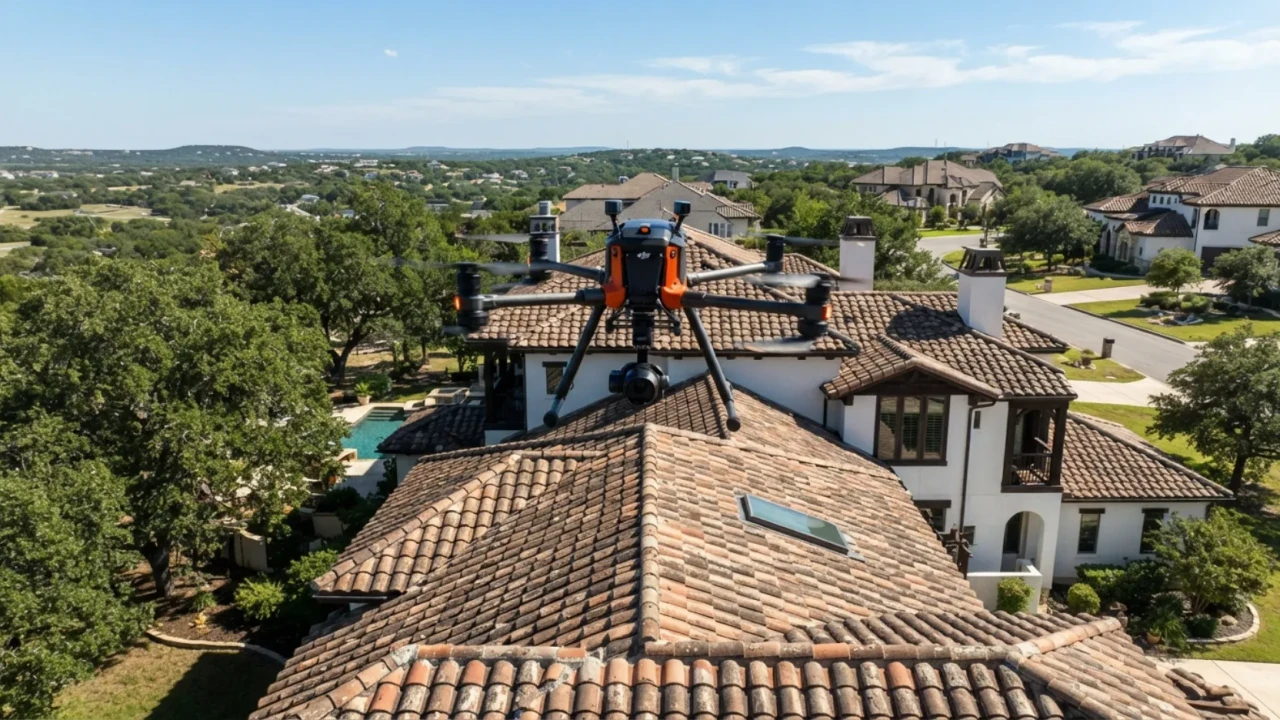
| Drone inspection | Aerial photos of hard-to-access or steep-pitch roof sections | $75 to $200 | Steep roofs or documentation for insurance |
| Post-storm inspection | Focused check for hail, wind, and debris damage after a specific event | Often free | Within 30 days of any significant storm |
- All roof slopes checked visually, including slopes not visible from the street
- Gutters and downspouts checked for granule buildup after the last rain
- Missing, curling, or cracked shingles noted from a safe vantage point
- Ceilings and upper walls checked for staining or discoloration
- Attic checked with a flashlight for moisture, mold, or visible daylight
- Any musty odor in upstairs rooms noted, even without visible staining
- Any of the five warning signs above are present on your roof
- Roof has not been professionally inspected in the past two years
- A significant hail or wind event occurred in your area within the last 30 days
- Roof is approaching or past 75% of its material’s expected lifespan
How often should I get my roof inspected in San Antonio?
Is a roof inspection free in San Antonio?
What does a professional roof inspector look for?
Can I inspect my own roof, or do I need a professional?
How long does a roof inspection take?
What happens after a roof inspection if damage is found?
Get a free roof inspection in San Antonio
Not sure if your roof needs attention? We will inspect it for free, document what we find, and give you a clear, honest recommendation with no pressure and no obligation.
[/et_pb_code][/et_pb_column][/et_pb_row][/et_pb_section]