
[et_pb_section fb_built=”1″ admin_label=”section” _builder_version=”4.16″ global_colors_info=”{}”][et_pb_row admin_label=”row” _builder_version=”4.16″ background_size=”initial” background_position=”top_left” background_repeat=”repeat” global_colors_info=”{}”][et_pb_column type=”4_4″ _builder_version=”4.16″ custom_padding=”|||” global_colors_info=”{}” custom_padding__hover=”|||”][et_pb_code _builder_version=”4.27.8″ _module_preset=”default” hover_enabled=”0″ sticky_enabled=”0″]
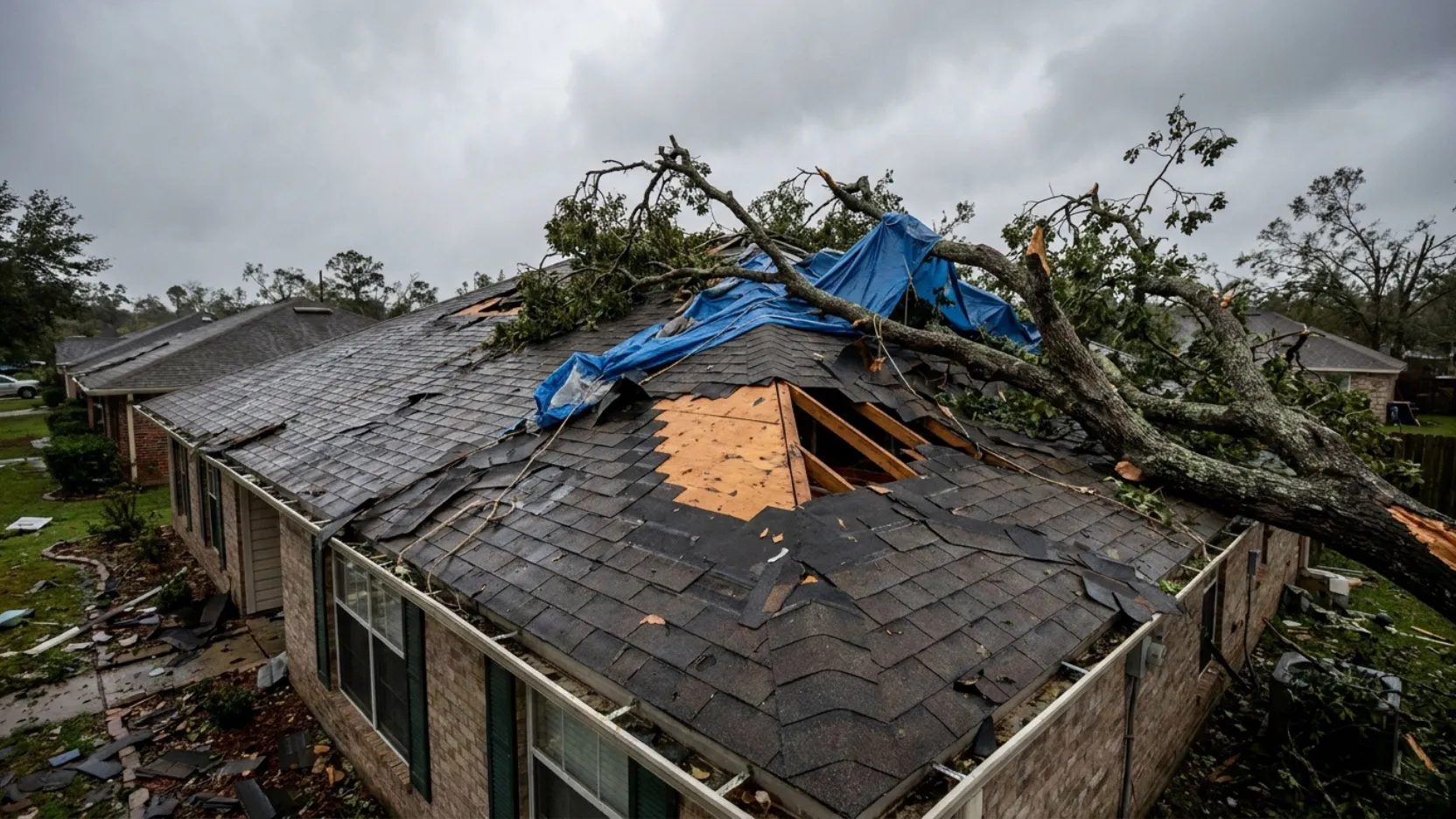
Some roof problems are legitimate weekend DIY projects. Others look manageable but put you at serious risk of injury, void your warranty, or cost far more to fix when done wrong. This guide draws a clear line between what a capable San Antonio homeowner can handle safely and what requires a licensed roofing contractor.
San Antonio homeowners deal with serious roofing challenges: blazing summer heat that cracks and curls shingles, hail events that come fast and hit hard, and afternoon thunderstorms that find every weakness in an aging roof. When something goes wrong, the first instinct for many homeowners is to get up there and fix it themselves.
That instinct is not always wrong. Some roofing problems are genuinely appropriate for a capable DIY homeowner. But the line between a safe DIY task and a job that requires a licensed contractor is not where most people think it is. Getting it wrong means more than a failed repair. It can mean a voided roof warranty, an insurance claim denial, or a serious fall on a sloped Texas rooftop in summer heat.
This guide gives you the honest breakdown: what you can safely do yourself, what you should never attempt without a contractor, and how to tell the difference before you climb the ladder.
A flat or very low-slope roof is a fundamentally different work environment from a 6/12 or steeper pitched residential roof. A task that is straightforward and safe on a low-slope surface becomes dangerous on a steep pitch, particularly on a Texas summer day when surface temperatures can reach 160 degrees Fahrenheit. Before you evaluate whether you can do a repair yourself, evaluate first whether the roof geometry and surface conditions allow you to stand, move, and work safely. If the answer to that question is anything less than certain, the repair belongs to a professional.
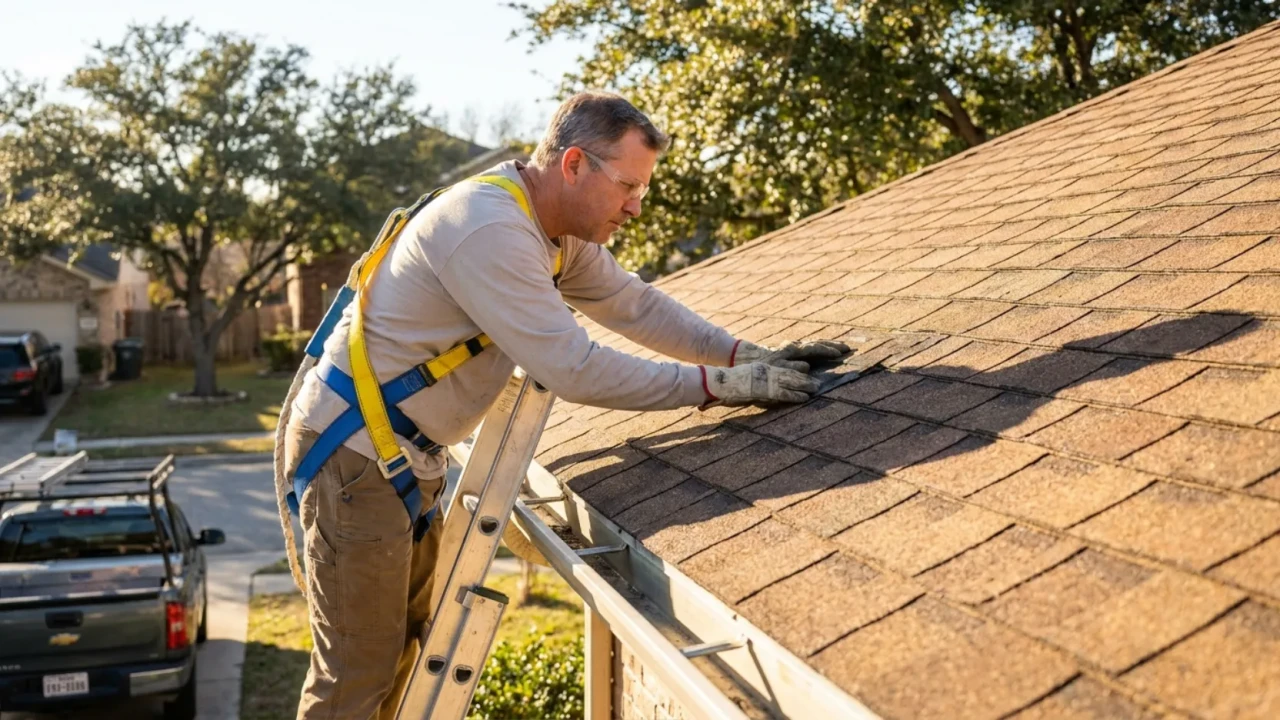
Below are the five most common categories of residential roof repair San Antonio homeowners face. Each section covers what part of the job is DIY-appropriate, what crosses the line, what tools and materials you actually need, and what a professional repair costs if you decide to skip the ladder.
DIY Possible
A missing shingle or a small cluster of cracked, curled, or blown-off shingles is the repair homeowners most commonly attempt on their own, and it is one of the few categories where DIY is genuinely appropriate with real conditions attached. The key variables are pitch, height, shingle age, and whether you can match the existing material.
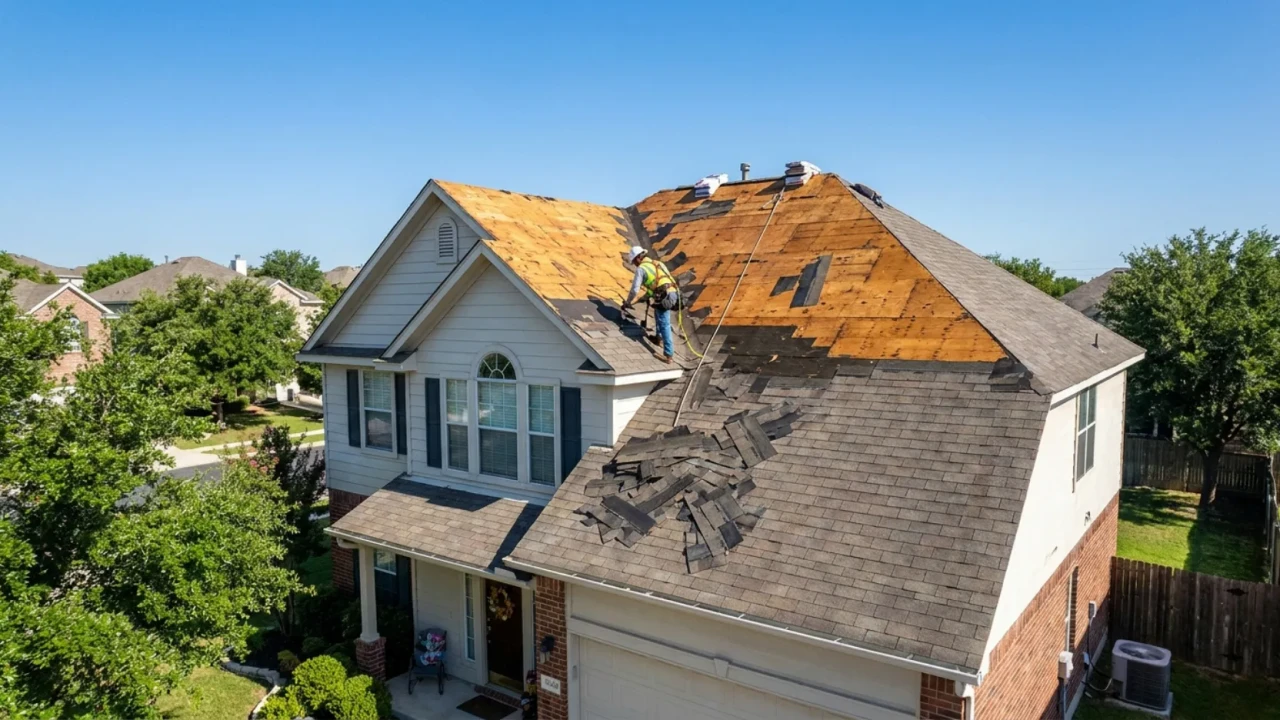
When DIY is appropriate: Three to six shingles on a low-slope roof you can access safely, with matching replacement shingles you can source from a local San Antonio supplier. If the decking underneath is dry and intact and the problem is limited to the surface layer, a careful homeowner can complete this repair correctly.
What makes it a pro job: Any repair on a pitch steeper than 4/12, a large area of missing shingles after a storm, shingles that are 15 or more years old (because you likely cannot match them), or any situation where lifting the damaged shingles reveals wet, soft, or crumbling decking underneath.
The biggest DIY mistake with shingle replacement is using the wrong nailing pattern. Each shingle requires four nails placed in the nail strip not above it, not through the tab. Over-nailed, under-nailed, or incorrectly positioned fasteners are the leading cause of shingle blow-off on otherwise healthy San Antonio roofs. If you are not certain about the nailing pattern for your specific shingle type, call a contractor instead.
- Roof pitch confirmed at 4/12 or less and accessible safely from a stable ladder
- Matching replacement shingles sourced and compared against existing material by color and profile
- Decking inspected after old shingles removed soft or discolored wood means stop and call a pro
- Four roofing nails per shingle installed in the nail strip, not the tab
- Roofing cement applied under the tab edges of the repaired shingles and the row above
- Repair completed before 9 a.m. or after 5 p.m. in summer months to avoid heat-related risk
Call a Pro
Leaks are the most misdiagnosed roofing problem San Antonio homeowners attempt to fix themselves. The reason is deceptively simple: the place where water enters your ceiling is almost never the same place where it entered the roof. Water travels along rafters, insulation, and decking before it drips. A homeowner who finds the wet spot, climbs up, and applies sealant to the nearest shingles or flashing seam has almost certainly patched the wrong location.
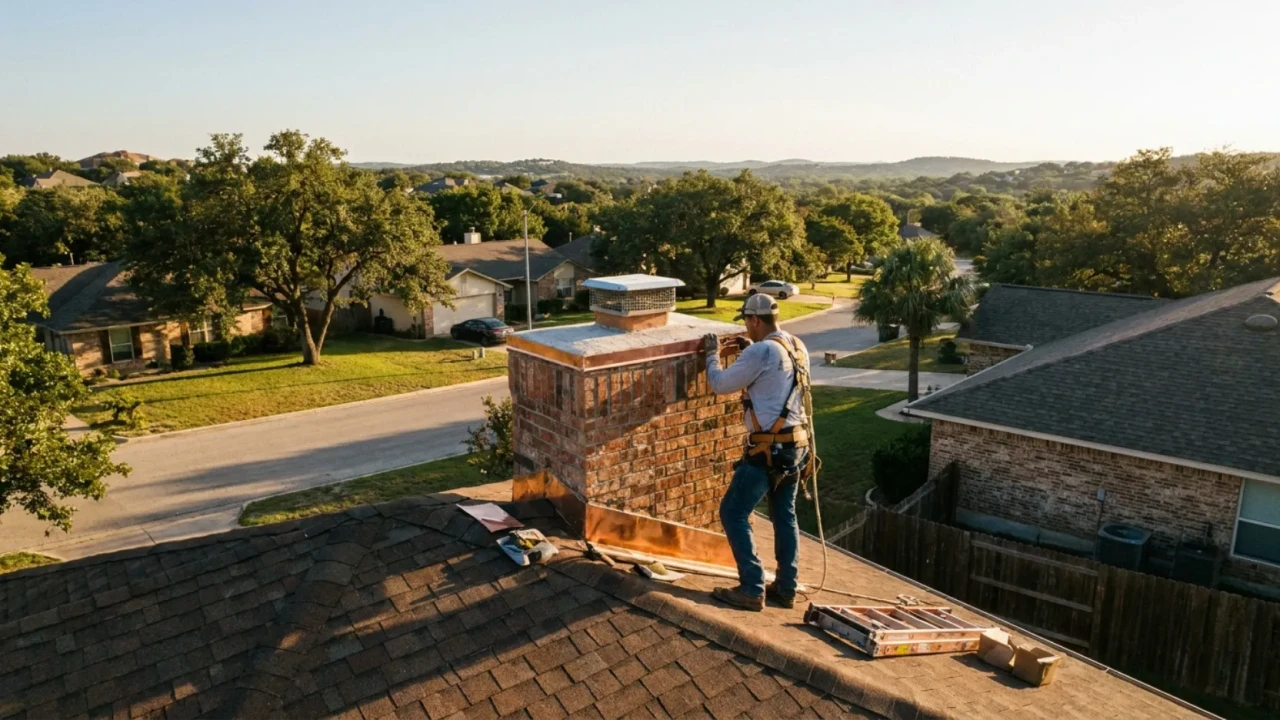
Flashing is the metal material that seals the transitions between your roof surface and vertical surfaces: chimneys, skylights, dormers, and walls. It is the leading source of roof leaks on San Antonio homes and among the most technically demanding repairs to execute correctly. Improper flashing installation allows water behind the flashing rather than shedding it away, which often does not show up as a leak for months. By the time water appears at the ceiling, significant hidden damage has accumulated.
If you find an active leak during a storm, your priority is interior protection, not roof repair. Place buckets, move furniture, and use a wet-dry vac on standing water. Roof repair during an active storm is dangerous and largely ineffective. Once the storm passes, a temporary tarp can be safely applied to cover the approximate damaged area until a contractor can inspect. Roofing cement applied to a wet surface will not bond correctly and will fail within one to two rainstorms.
- Interior damage managed first: buckets, towels, and furniture moved before going on the roof
- Temporary tarp applied over the general damaged area if access is safe
- Roofing cement applied only to visible open seams, not as a diagnostic solution
- Professional inspection scheduled within 72 hours of any active leak
- Photos taken of interior water entry point to share with the contractor for faster diagnosis
- Leak source confirmed by the contractor before any permanent repair is approved
DIY Possible
Gutter maintenance is one of the most impactful things a San Antonio homeowner can do for their roof system, and it falls squarely within DIY territory for most one- and two-story homes. Clogged or failed gutters cause water to back up under the drip edge, saturate the fascia board, and eventually allow moisture into the wall cavity and soffit. A significant portion of the “roof leaks” we are called to diagnose in San Antonio are actually gutter and drainage failures that have been building for two or three seasons.
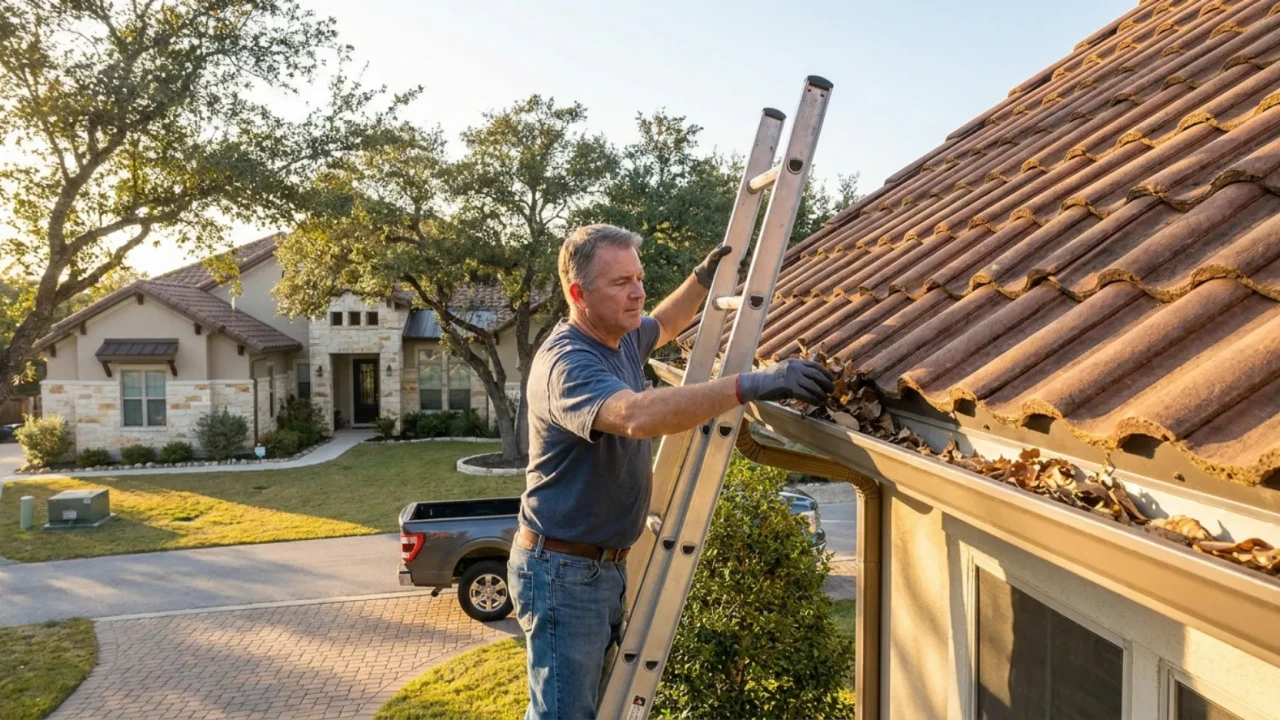
DIY gutter tasks you should handle yourself: Cleaning debris from gutters twice a year (spring and fall at minimum in San Antonio), flushing downspouts to confirm they are clear, resealing gutter seams and end caps with gutter sealant, re-securing loose gutter spikes or hangers, and reattaching sections of gutter that have pulled away from the fascia at isolated points.
When to call a contractor: Gutters that have pulled away from the roofline across more than a few feet indicate fascia board rot or failure, which is a carpentry and roofing repair that goes beyond the gutter itself. Any situation requiring work at heights above a comfortable single-story ladder reach also belongs to a professional.
San Antonio’s oak and pecan trees drop significant amounts of debris during the fall and again during spring pollen season. Gutters on homes with tree canopy overhead should be cleaned at least twice a year and after any major storm. A $25 gutter cleaning done twice a year prevents thousands of dollars in fascia rot and soffit damage over the life of a roof.
- Gutters cleaned at least twice per year: after spring oak pollen season and after fall leaf drop
- Downspouts flushed with a garden hose to confirm clear drainage to the ground
- Gutter slope checked: water should flow toward the downspout, not pool in the center
- All gutter hangers secure no sagging sections that hold standing water
- Seams and end caps resealed with gutter sealant if any separation is visible
- Fascia boards behind the gutters checked for soft spots or discoloration indicating rot
Pro Only
San Antonio’s climate makes ventilation one of the most critical and most frequently misunderstood parts of a roof system. An improperly ventilated attic in a Texas summer can reach 160 degrees Fahrenheit, which accelerates shingle aging, warps decking, drives up cooling costs, and in some cases creates conditions that promote moisture buildup and mold. When ventilation fails or is improperly installed, it is not a surface repair. It is a system-level problem.
Decking damage is similarly outside DIY scope for a clear reason: you cannot assess the full extent of decking damage from the surface, and you cannot repair it correctly without removing the roof surface layer above it. What looks like a soft spot in one section often indicates a larger moisture migration pattern across the decking that only becomes clear when the shingles are stripped back. Attempting to patch soft decking through a shingle layer without full access is a repair that fails quickly and makes the follow-on professional repair more expensive.
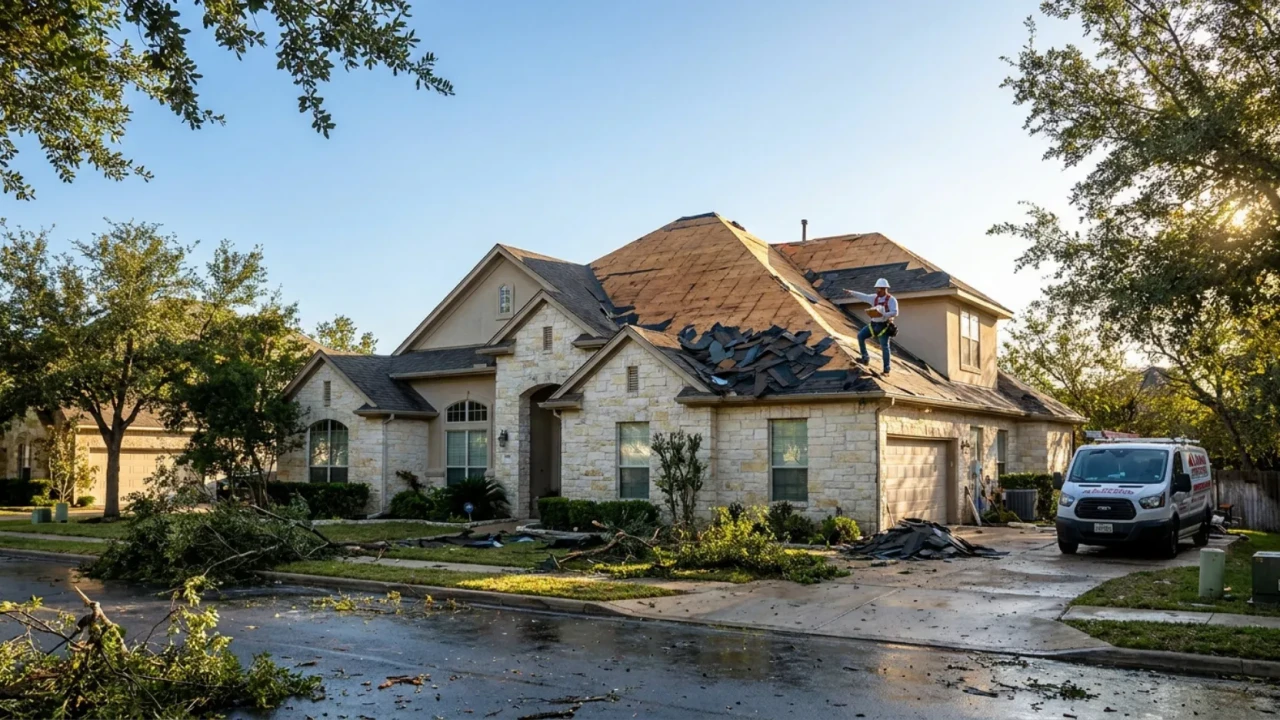
If you go into your attic after a heavy San Antonio rainstorm and see any of the following, call a licensed roofing contractor before attempting any repair: daylight visible through the roof deck, wet or darkened decking boards, soft spots when you press on the decking, or insulation that is visibly wet or compressed. These are indicators of active water intrusion that has likely been present long enough to compromise the structural integrity of the decking. The repair scope is beyond surface work and requires a proper assessment.
- Any daylight visible through the roof deck when viewed from inside the attic
- Decking that flexes or feels soft when pressure is applied during an attic inspection
- Visible mold or dark staining on rafters or decking boards
- Insulation in the attic that is wet, compressed, or discolored
- Any storm damage that involves the ridge line, hip caps, or structural shape of the roof
- A leak that has been present for more than two rainstorms despite surface patching
Safety First
Falls from roofs send more than 100,000 Americans to the emergency room every year. San Antonio adds its own specific risks on top of the standard fall hazard: surface temperatures that make a rooftop physically dangerous to stand on by 10 a.m. in July, afternoon thunderstorms that can appear with less than 30 minutes of warning on a clear morning, and steep pitches on older San Antonio neighborhoods that are not safely accessible without proper equipment and experience.
The cost-benefit math on roofing safety is straightforward. A professional repair for a mid-size shingle job costs $200 to $500. A fall from a single-story roofline causes an average of $50,000 in medical expenses. No repair, no matter how straightforward it appears, is worth a serious fall risk. There are specific conditions under which no DIY roofing attempt is appropriate regardless of the scope of the work.
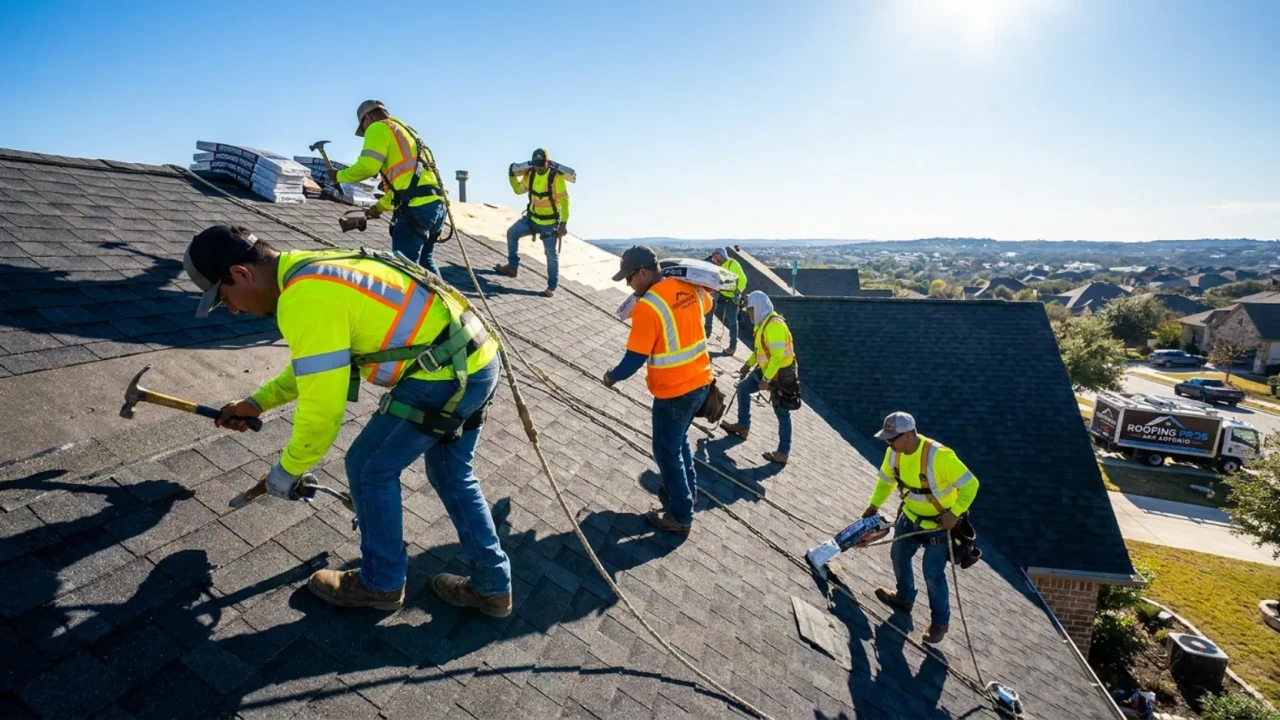
If you decide to go on your roof for any reason, these are the non-negotiable minimums: rubber-soled shoes or boots (sneakers, not sandals or work boots with leather soles), a second person on the ground who knows you are up there, a stable ladder secured at the top and extended at least three rungs above the roof edge, and a weather check confirming no storms within the next three hours. San Antonio afternoon storms develop faster than most homeowners expect. If you cannot meet every one of these conditions, wait or call a contractor.
| Condition | DIY safe? | Reason |
|---|---|---|
| Pitch 3/12 or less | Yes, with care | Gentle slope allows stable footing for a capable homeowner using proper footwear |
| Pitch 4/12 to 6/12 | Marginal | Workable for experienced DIYers with roof brackets; not recommended for first-timers |
| Pitch steeper than 6/12 | No | Fall risk is serious without professional equipment; no DIY repair justifies this hazard |
| Wet or damp surface | No | Wet shingles are extremely slippery; even a gentle slope becomes dangerous when wet |
| Temperature above 95 degrees | No | Heat exhaustion risk on a San Antonio rooftop is serious; surface temperature may reach 160 degrees |
| Working alone | No | A fall with no one present to call for help is the most preventable roofing fatality scenario |
| Storm within 2 hours of forecast | No | San Antonio afternoon storms develop quickly; thunderstorms and roof work are an unacceptable combination |
- Roof pitch confirmed at 6/12 or less for any DIY attempt
- Rubber-soled footwear on no sandals, no leather soles, no bare feet
- Second person present on the ground with access to a phone
- Ladder secured at the base and extending at least three rungs above the roofline
- Weather confirmed clear for at least three hours no storm risk in the San Antonio forecast
- Time of day confirmed: before 9 a.m. or after 5 p.m. in summer months
- Roof surface confirmed dry no dew, no recent rain, no wet moss or algae patches
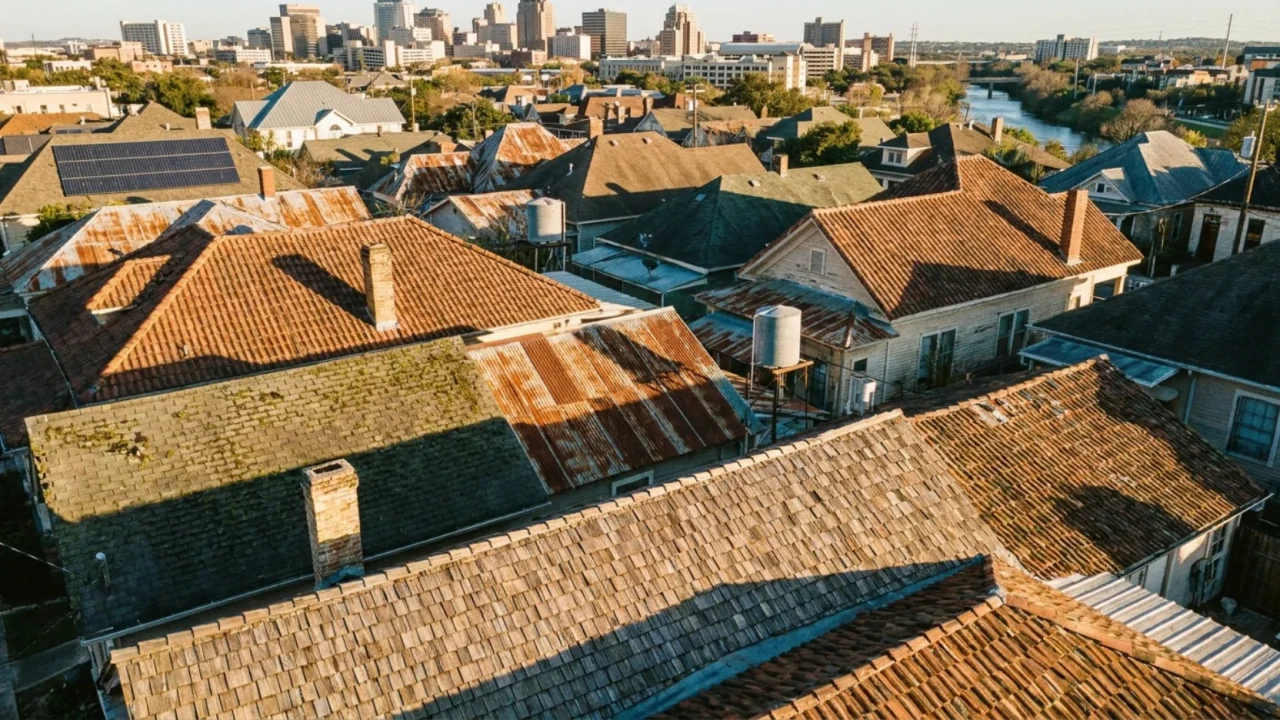
Use this table as a starting point for any roofing problem you encounter. The right column tells you the honest answer based on the conditions that apply to most San Antonio homes. Your specific situation may move a task from one column to the other based on roof pitch, height, and your own experience level.
| Repair task | DIY or Pro? | Conditions that change the answer | Typical pro cost (San Antonio) |
|---|---|---|---|
| Replacing 1 to 6 missing shingles | DIY (low pitch only) | Goes to Pro if pitch is above 4/12, decking is soft, or shingles cannot be matched | $200 to $500 |
| Applying roofing cement to open seam | DIY emergency only | Temporary measure only; a pro should confirm the leak source before permanent repair | Included in leak diagnosis |
| Flashing repair at chimney or skylight | Always Pro | No conditions where DIY flashing repair is appropriate | $300 to $700 |
| Cleaning gutters and flushing downspouts | DIY | Goes to Pro if height is above two-story or fascia rot is discovered | $150 to $350 |
| Resealing gutter end caps and seams | DIY | Standard maintenance; no pro involvement required | $50 to $150 if requested |
| Applying emergency tarp over damaged area | DIY (if pitch allows) | Goes to Pro if pitch is above 4/12 or damage area is near the ridge | $200 to $600 |
| Decking replacement | Always Pro | Requires surface removal and structural assessment; no DIY option | $500 to $1,800 |
| Ridge vent installation | Always Pro | Cuts into the ridge line and requires proper re-sealing; warranty implications if DIY | $300 to $800 |
| Identifying a persistent leak source | Always Pro | No conditions where DIY leak diagnosis reliably finds the actual water entry point | Included in repair quote |
- Roof pitch measured and confirmed 4/12 or less for DIY, anything steeper goes to a pro
- Roof surface inspected for wet areas, algae, or moss that reduce traction
- Outside temperature confirmed below 95 degrees Fahrenheit before any rooftop work
- Weather window confirmed: no storms forecast within 3 hours
- Attic inspected from inside for wet decking, visible light, or structural concerns
- Confirm repair is limited to the surface layer shingles or gutter maintenance only
- Replacement shingles sourced and confirmed to match existing by color and profile
- Decking confirmed sound: no soft spots, no discoloration, no water staining on interior surface
- No flashings involved chimney, skylight, valley, or dormer repairs always go to a pro
- Leak source confirmed visible and isolated not a persistent or recurring leak
- Three written estimates received before any work is approved
- License and insurance confirmed before signing at minimum $1 million general liability
- Repair scope documented in writing with specific materials listed, not just a dollar total
- Workmanship warranty requested in addition to material warranty
- Photos of the damage taken before the contractor arrives for your own records
- No deposit larger than 30% paid before work begins on any residential repair job
Can I fix my own roof in Texas without a license?
What is the best roofing sealant for a DIY repair in San Antonio?
How do I know if a roof leak is serious enough to require a contractor?
How much does a professional roof inspection cost in San Antonio?
What is the biggest mistake homeowners make when attempting DIY roof repairs?
Will a DIY roof repair void my warranty?
Not sure if your repair is a DIY job or a pro job?
Call us and describe what you are seeing. We will tell you honestly whether it is something you can handle yourself or whether it needs a professional assessment. Free inspections available across San Antonio and Bexar County.
[/et_pb_code][/et_pb_column][/et_pb_row][/et_pb_section]