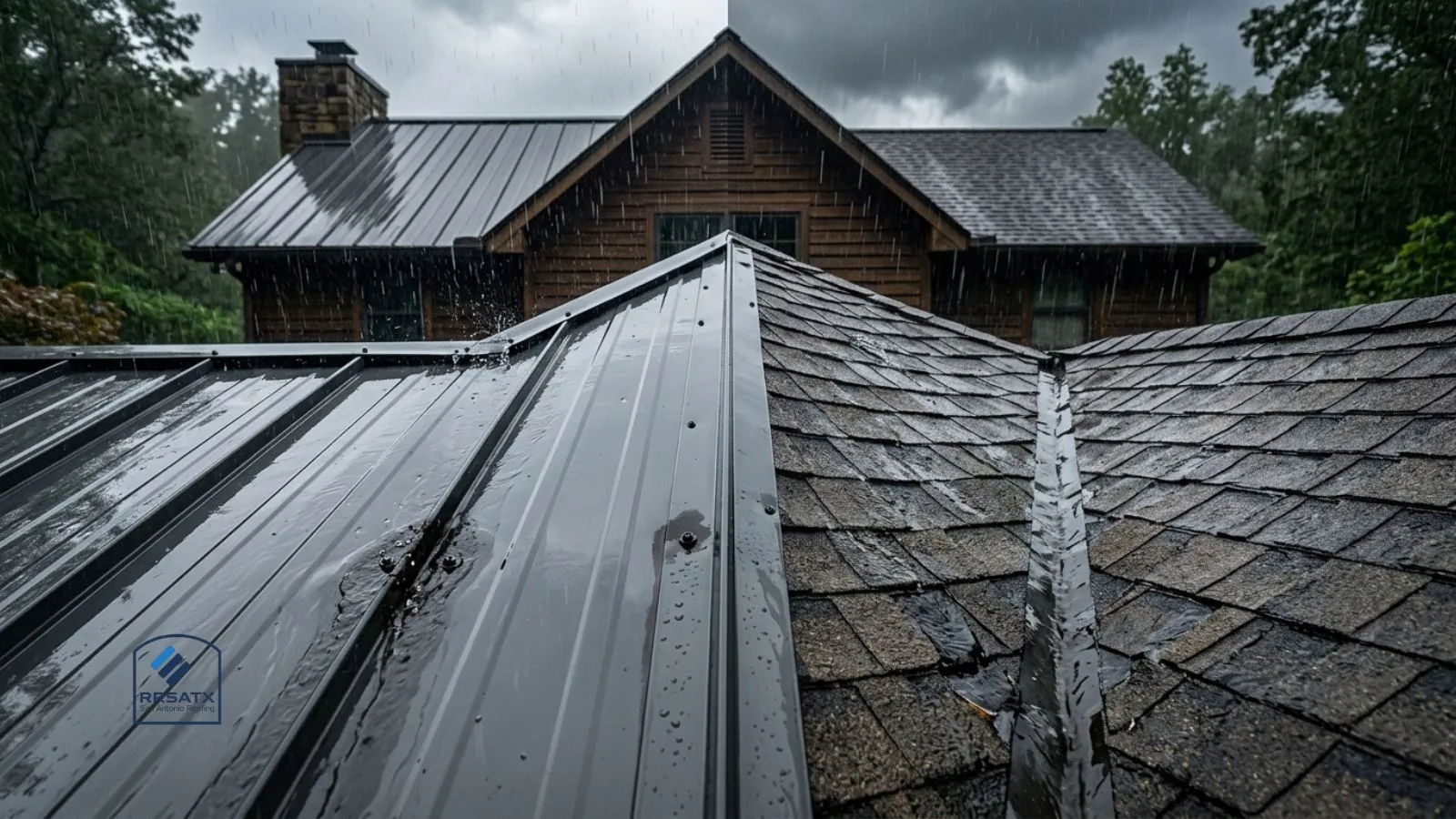
It is one of the most common objections homeowners raise before switching to metal: does it leak more than the shingles they already have. The honest answer involves installation quality, panel type, and how San Antonio weather treats each material differently. Here is the real comparison.
If you are weighing a metal roof against the asphalt shingles already on your San Antonio home, you have probably heard the same warning more than once: metal roofs leak. It sounds reasonable on the surface. Exposed screws, panel seams, and a hard surface with nowhere for water to soak in all sound like leak risks. The reality, backed by both industry data and three decades of repair calls across Bexar County, runs the opposite direction.
A properly installed metal roof does not leak more than shingles. In fact, comparative data on roofing failure rates shows metal roofs leaking far less often over their lifespan than asphalt shingle systems. The leak myth persists because when metal roofs do leak, the cause is almost always traceable to one thing: installation quality, not the metal itself.
Industry comparisons consistently show metal roofing systems with leak rates around 2 percent compared to roughly 10 percent for asphalt shingle roofs over a comparable period. The deciding factor in either case is not the material itself. It is whether the fasteners, flashing, and seams were installed by a contractor who understands the specific system being put on your roof.
Asphalt shingles are built from thousands of small overlapping pieces. Each shingle relies on the one below it to catch any water that gets past the surface layer. That layered design works well when every shingle is intact, properly nailed, and has its full granule coating. The problem is that shingles degrade gradually and often invisibly from the ground. Once granules wear away, UV rays and heat accelerate the breakdown of the asphalt mat underneath, and the shingle becomes brittle, curls at the edges, and eventually cracks.
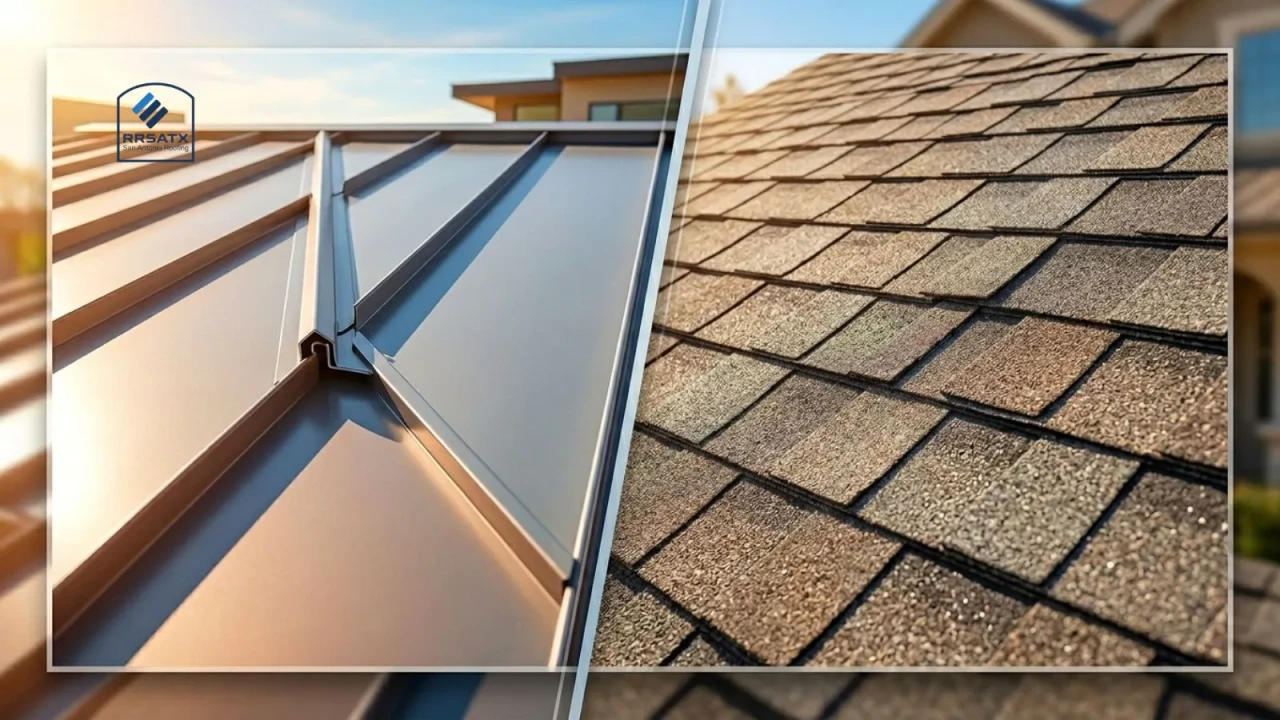
Metal roofs work differently. Instead of relying on thousands of small overlaps, metal panels form a continuous water-shedding surface with raised seams or interlocking edges. There is no granule layer to wear away and no individual piece that can crack from sun exposure the way a shingle does. When a metal roof fails, it is almost always traced back to a specific installation issue: an over-driven screw, a poorly sealed flashing joint, or a seam that was not crimped correctly.
- Shingle roofs: granule loss, curling edges, and cracked tabs visible from the ground or a ladder
- Metal roofs: fastener condition, seam crimping quality, and flashing seal at every penetration
- Both: flashing around chimneys, vents, and skylights is the single most common leak source on any roof type
- Both: roof age relative to material lifespan changes how much risk is acceptable to ignore
Every roofing material comparison eventually arrives at the same conclusion: installation quality matters more than the material itself. Metal roofing is a more specialized trade than asphalt shingle installation. Fewer contractors in San Antonio are properly trained to crimp standing seams, set fasteners to correct torque, and flash penetrations the way a metal system requires. That specialization cuts both ways. A skilled metal installer produces a roof that can go decades without a leak. An inexperienced one creates the exact problems that fuel the leak myth in the first place.
Shingle installation has a lower skill ceiling, which is part of why it remains the most common roofing choice nationwide. But low skill ceiling does not mean error-proof. Improper nailing patterns, missing or undersized underlayment, and incorrect flashing integration are common mistakes that create leaks regardless of how good the shingle product itself is.
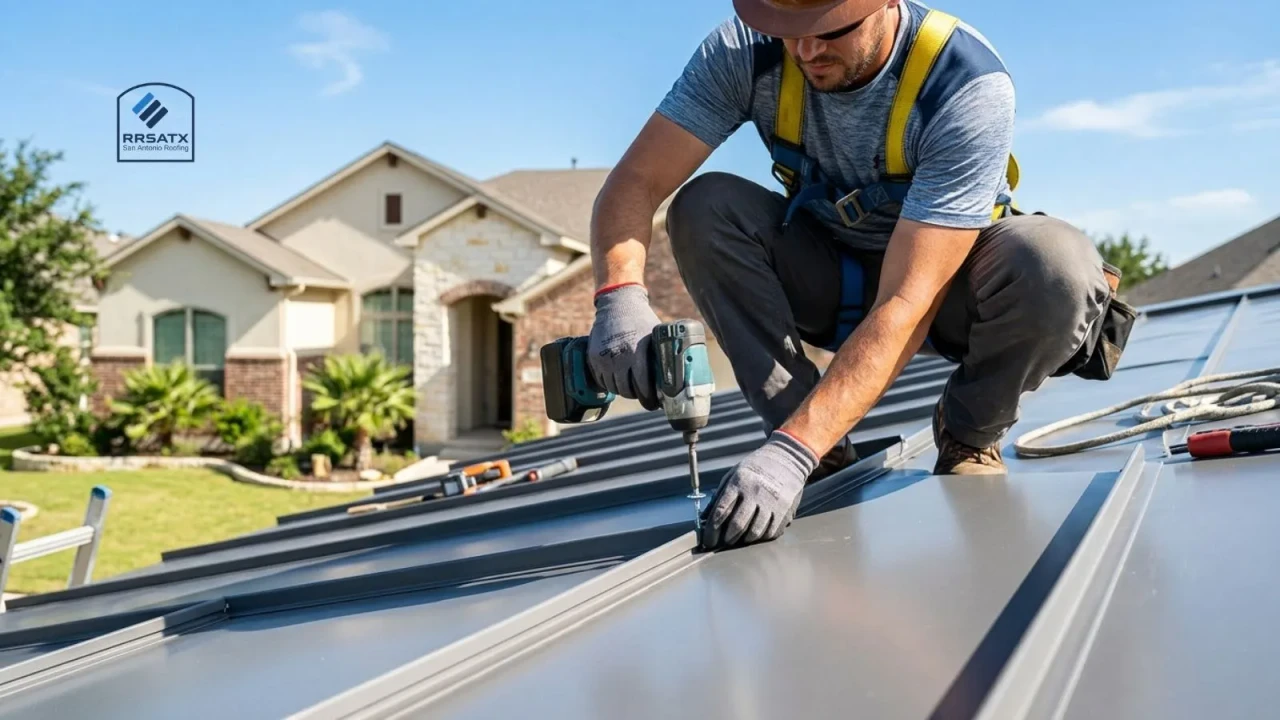
Ask any San Antonio roofing contractor how many metal roofs they have installed in the past two years, not just how many years they have been in business. Standing seam and exposed-fastener metal systems both require specific tools, fastener gauges, and crimping technique. A contractor who installs mostly shingles and occasionally takes on a metal job is a different level of risk than a crew that specializes in metal roofing day to day.
- Contractor provides verifiable recent project examples specific to the material you are installing
- Fastener gauge and spacing specified in writing, matched to the panel or shingle manufacturer's requirements
- Flashing plan reviewed before work begins, especially around chimneys, vents, and skylights
- Manufacturer-specified underlayment used, not a generic substitute to save cost
- Workmanship warranty offered separately from the material warranty
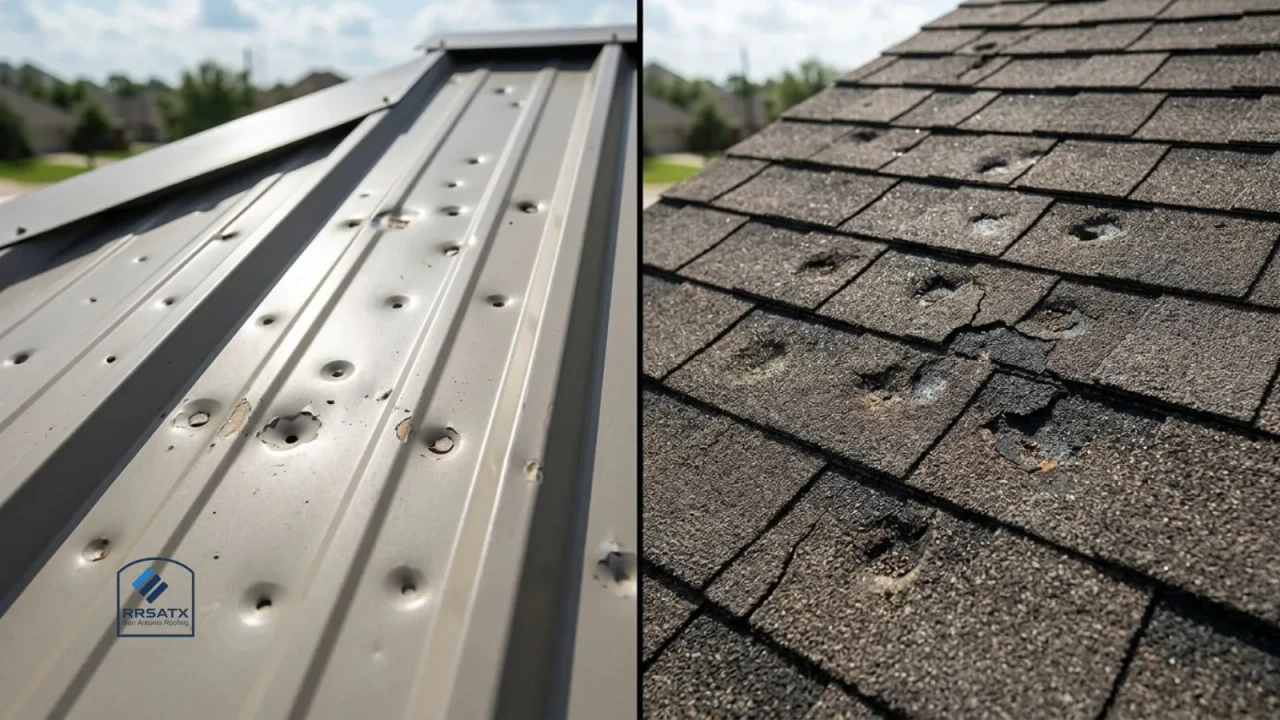
Texas leads the nation in significant hail events, and San Antonio sits inside one of the more active corridors for spring hailstorms. That single fact changes the leak conversation considerably. Hail does not just create cosmetic damage. On asphalt shingles, even moderate hail dislodges granules and bruises the mat in ways that are often invisible from the ground but accelerate water intrusion over the following seasons. On metal roofs, hail typically dents the panel without breaking the watertight seal, especially on heavier gauge steel.
San Antonio's heat creates its own challenge for both materials. Intense UV exposure breaks down asphalt shingles faster than in milder climates, shortening their effective lifespan and accelerating the granule loss that leads to leaks. Metal roofs handle heat well from a material standpoint, but the daily temperature swing between a hot San Antonio afternoon and a cool night drives thermal expansion and contraction that works fasteners loose over many years if they were not installed with the correct clip or screw spacing for that movement.
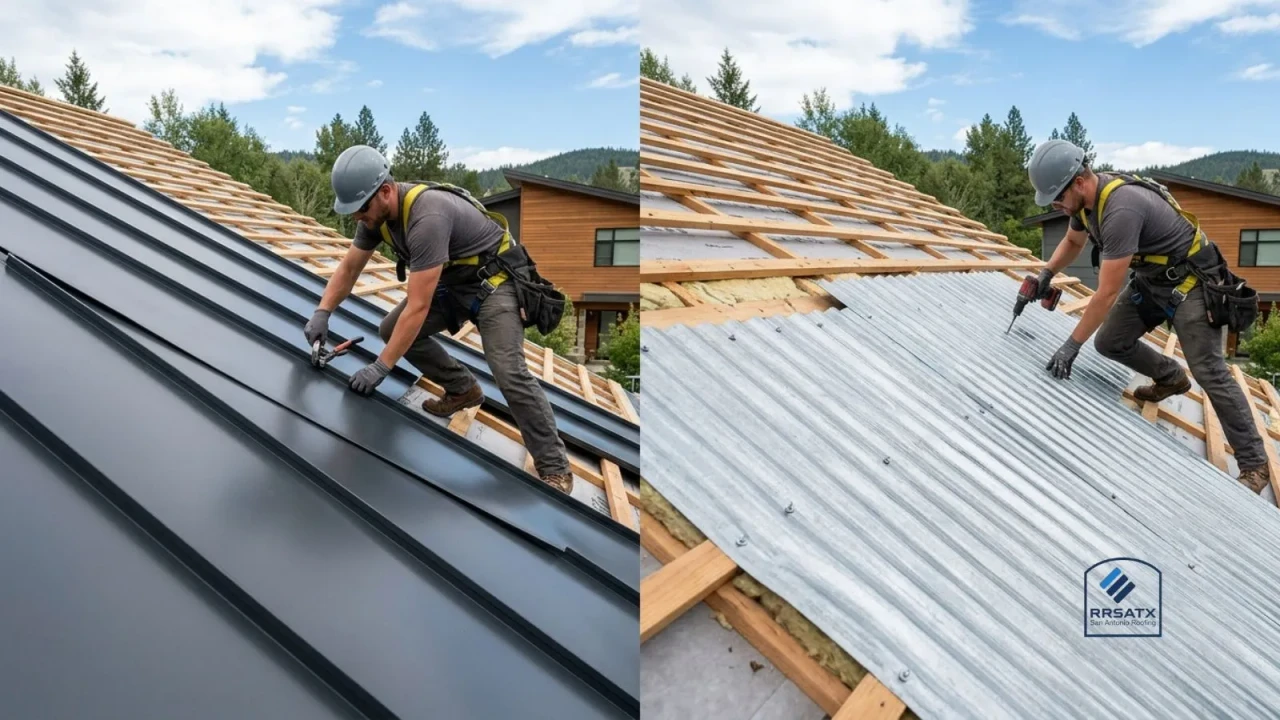
Part of the leak conversation depends on which type of metal roof is being compared to shingles. Standing seam panels use a hidden fastener system, with clips that allow the panel to expand and contract with temperature changes without stressing a screw hole. There is no exposed penetration for water to find. This is the metal roofing system least likely to leak over its lifespan, and it is the standard for most premium residential installations in San Antonio.
Exposed-fastener panels, sometimes called corrugated or ribbed panels, use screws driven directly through the panel face. Each screw is a potential entry point if the washer degrades or the screw is driven incorrectly. This system costs less to install but carries a higher leak risk over time, simply because it has thousands more penetration points than a standing seam roof of the same size.
| Panel type | Leak risk profile | Why |
|---|---|---|
| Standing seam | Lowest | Hidden fastener clips, no exposed screw penetrations through the panel face |
| Exposed-fastener (corrugated) | Moderate | Thousands of exposed screws, each a potential failure point if installed incorrectly |
| Stone-coated steel | Low to moderate | Strong impact resistance, but coating chips under large hail can expose bare metal over time |
| Asphalt shingles (for comparison) | Moderate to high as roof ages | Granule loss and UV breakdown gradually compromise the entire surface, not just isolated points |
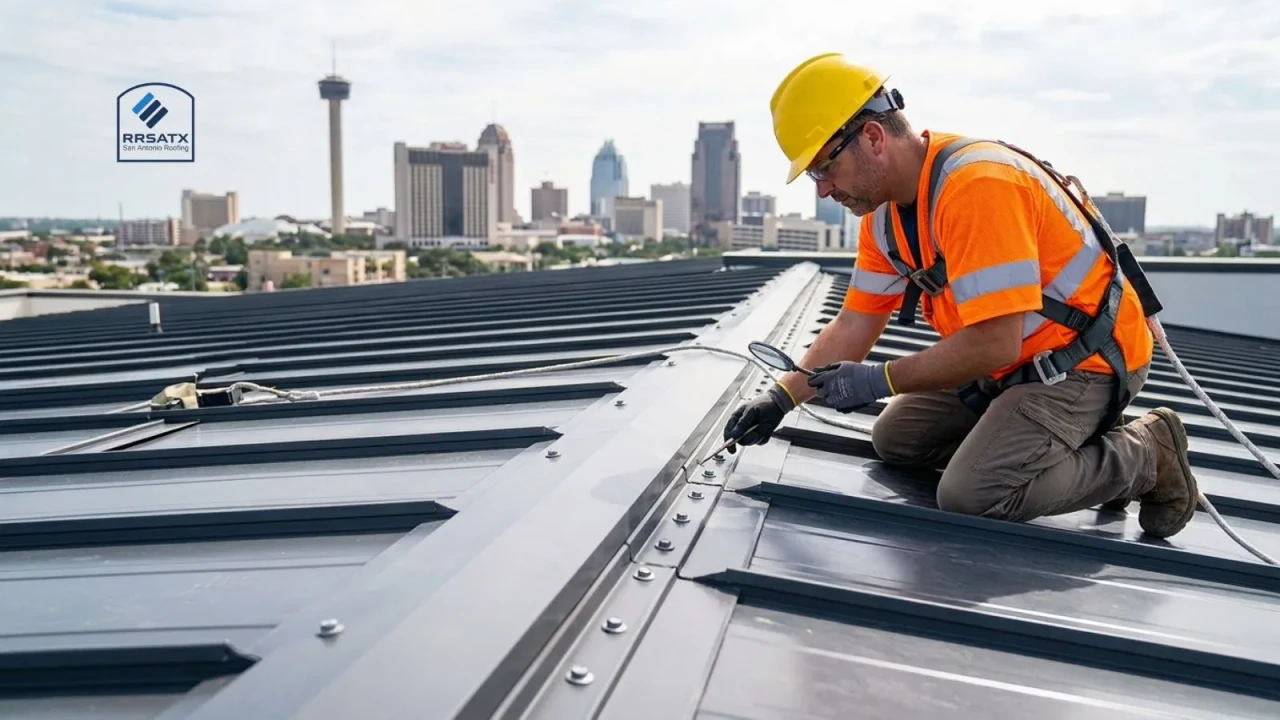
Neither roofing material is maintenance-free, despite what some marketing suggests. Metal roofs benefit from a fastener and sealant check every two to three years, since thermal cycling gradually works screws loose over a decade or more. Shingle roofs benefit from a visual inspection at least once a year, since granule loss and curling are progressive and become visible well before an actual leak develops.
The good news for metal roof owners is that the inspection itself is simpler. There are fewer components to check, and visible damage like a lifted panel or rusted fastener is usually obvious to a trained eye. Shingle inspections require checking the condition of far more individual pieces across the entire roof surface.
- Gutters and downspouts cleared of debris to prevent water backup at roof edges
- Flashing inspected at every chimney, vent, and skylight penetration
- Attic checked for water stains, daylight gaps, or musty odors after heavy rain
- Any storm event documented with photos, even if no damage is visible from the ground
- Professional inspection scheduled after hail larger than quarter size
This table summarizes how each material performs against the leak factors that matter most in San Antonio's climate. Use it as a quick reference, not a replacement for a professional inspection of your specific roof.
| Factor | Metal roof | Asphalt shingle roof |
|---|---|---|
| Typical leak rate | Around 2 percent over comparable service life | Around 10 percent over comparable service life |
| Primary leak source | Fastener failure, flashing, or seam installation error | Granule loss, curling, cracking as the roof ages |
| Expected lifespan | 40 to 70 years | 15 to 30 years |
| Hail performance | Dents but rarely breaches the seal on standard gauge steel | Granule loss and mat bruising even from moderate hail |
| Installation skill required | Higher, fewer specialized contractors available | Lower, widely available installation expertise |
| Inspection frequency recommended | Every 2 to 3 years | Annually and after major storms |
- Roof age compared against expected lifespan for the material currently installed
- Visible granule loss, curling, or cracking documented if evaluating an existing shingle roof
- Attic checked for water stains or daylight gaps as an early leak indicator
- Last professional inspection date confirmed, especially after any hail event
- Contractor's recent metal roofing project history verified, not just years in business
- Panel type selected with leak risk in mind: standing seam carries the lowest long-term risk
- Fastener gauge and spacing specified in writing before installation begins
- Flashing plan reviewed for every penetration point before work starts
- Workmanship warranty received separately from the manufacturer's material warranty
Get a free metal roofing consultation in San Antonio
Wondering if metal is the right choice for your home, or want a second opinion on a leak you are already dealing with? We will inspect your roof, answer every question honestly, and give you a clear written estimate at no cost.