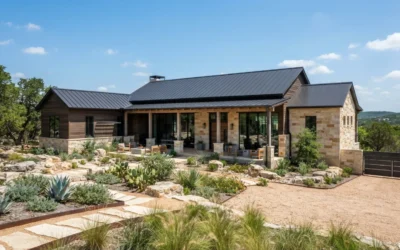
Standing seam metal roofing is the premium choice in metal roofing. This guide breaks down exactly what you pay per square in San Antonio, what drives the price up or down, and how to know whether the investment is worth it for your home.
Standing seam metal roofing is the most specified premium roofing system in San Antonio for a reason. The concealed-fastener design eliminates the exposed screw points that cause leaks in older corrugated and R-panel metal roofs, and the floating clip system allows the panels to expand and contract with Texas temperature swings without stressing the seams. But standing seam is also the most expensive metal roofing system available, and homeowners who ask about it almost always ask the same question first: what does it cost per square?
In San Antonio, the all-in installed price for a standing seam metal roof runs from $800 to $1,400 per roofing square (one square equals 100 square feet) in 2026, depending on the panel metal, the panel width and profile, the pitch and complexity of the roof, and whether the installation requires tear-off of an existing roof. This guide breaks down every variable that moves the price, explains what you are actually paying for at each price point, and gives you a clear framework for evaluating quotes from San Antonio contractors.
A 30-year architectural shingle roof on a 2,000-square-foot San Antonio home might run $12,000 to $16,000 installed. A standing seam metal roof on the same home might run $24,000 to $32,000. But the shingle roof needs replacement at 20 to 25 years under Texas heat, while the standing seam roof is still performing at 50. Over 50 years, the shingle homeowner has paid for two full replacements. The standing seam homeowner has paid for one installation and a fraction of the maintenance. The per-year cost is often comparable and standing seam wins on every other metric: wind resistance, hail performance, insurance discounts, and energy efficiency.
The metal you choose for your standing seam panels is the largest single factor in the price per square. Most San Antonio homeowners are choosing between Galvalume steel and painted aluminum. Copper is specified on high-end custom homes and historic restorations. Each material has a distinct cost range, a distinct maintenance profile, and a distinct set of trade-offs that matter in the San Antonio climate.
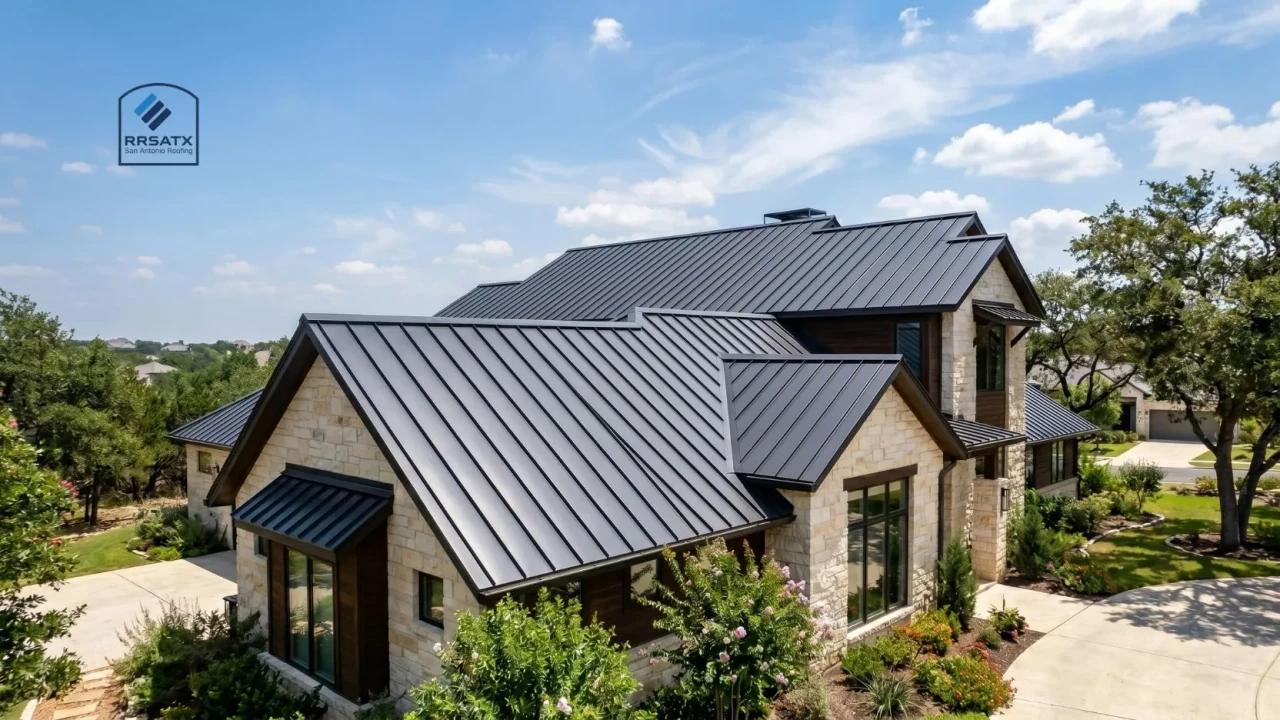
Galvalume steel (most common): A steel core coated with an aluminum-zinc alloy that provides exceptional corrosion resistance. The industry standard for residential standing seam roofing. Available in 24-gauge and 26-gauge, with 24-gauge being the recommended specification for San Antonio residential applications. Heavier, stiffer, and less expensive than aluminum at equivalent gauge.
Aluminum (best for coastal applications): Naturally corrosion-resistant without a coating, which makes it the preferred choice for properties near the Gulf Coast or in areas with higher humidity. Lighter than steel at the same gauge, which reduces structural load and makes it easier to handle on complex roof geometries. Costs more than steel per square foot of material.
- Panel gauge confirmed in the written quote 24-ga vs 26-ga makes a meaningful difference in price and performance
- Galvalume coating confirmed as meeting ASTM A792 standard if steel panels are specified
- Paint finish confirmed: PVDF (Kynar 500) coating carries a longer warranty than polyester finishes and is preferred for Texas UV exposure
- Aluminum alloy confirmed if aluminum panels are specified: 3000-series alloy is standard for roofing applications
- Panel profile and rib height confirmed: taller ribs (1.5 inch to 2 inch) shed water more aggressively and are preferred in areas with heavy rainfall
Standing seam panels come in a range of widths, typically 12 inches to 18 inches, and two seam types: snap-lock and mechanical seam. These choices affect both the look of the finished roof and the total installed price per square. Wider panels cover more area per panel run, which reduces seam count and installation time. Mechanical seam panels require a seaming machine to fold the joint closed on the roof, which adds labor but creates a tighter, more weather-resistant joint than snap-lock.
The clip system that holds the panel to the roof deck is the other key variable. Fixed clips anchor the panel at a single point and are appropriate for short panel runs. Floating clips allow the panel to slide along the clip as the metal expands and contracts, which is essential for long panel runs on a San Antonio roof where summer-to-winter temperature swings can exceed 120 degrees Fahrenheit. Floating clip systems add a small material cost but prevent the panel oil-canning and fastener stress that fixed clips create on longer runs.
For roofs with run lengths over 30 feet, always specify floating clips not fixed. When steel expands and contracts over a 30-foot run, that movement can be more than half an inch. Fixed clips resist that movement, which stresses the clip, the panel, and the fastener over time. On a San Antonio home where panels may heat to 160 degrees in July and cool to 25 degrees in a January cold snap, the cumulative stress on a fixed-clip system shortens the life of the panel and the roof dramatically. Any quote that specifies fixed clips on long panel runs should be questioned.
- Panel width confirmed in writing: 12", 16", or 18" and why that width was chosen for this roof
- Seam type confirmed: snap-lock or mechanical and whether the roof slope makes mechanical seaming required
- Clip type confirmed: floating clips specified for any panel run over 30 feet
- Rib height confirmed: 1" ribs are minimum for residential applications; 1.5" to 2" preferred in San Antonio for high-wind and heavy-rain performance
- Panel finish direction confirmed: panels run vertically (ridge to eave) on most applications confirm this is the specified direction
The price per square quoted by a standing seam contractor is never a flat number applied uniformly to every roof. The base price per square assumes a standard roof typically a 6:12 to 8:12 pitch with simple geometry, few penetrations, and no second-story access challenges. Every departure from that standard adds cost, and some San Antonio homes have enough complexity to push the all-in installed price significantly above the base range.
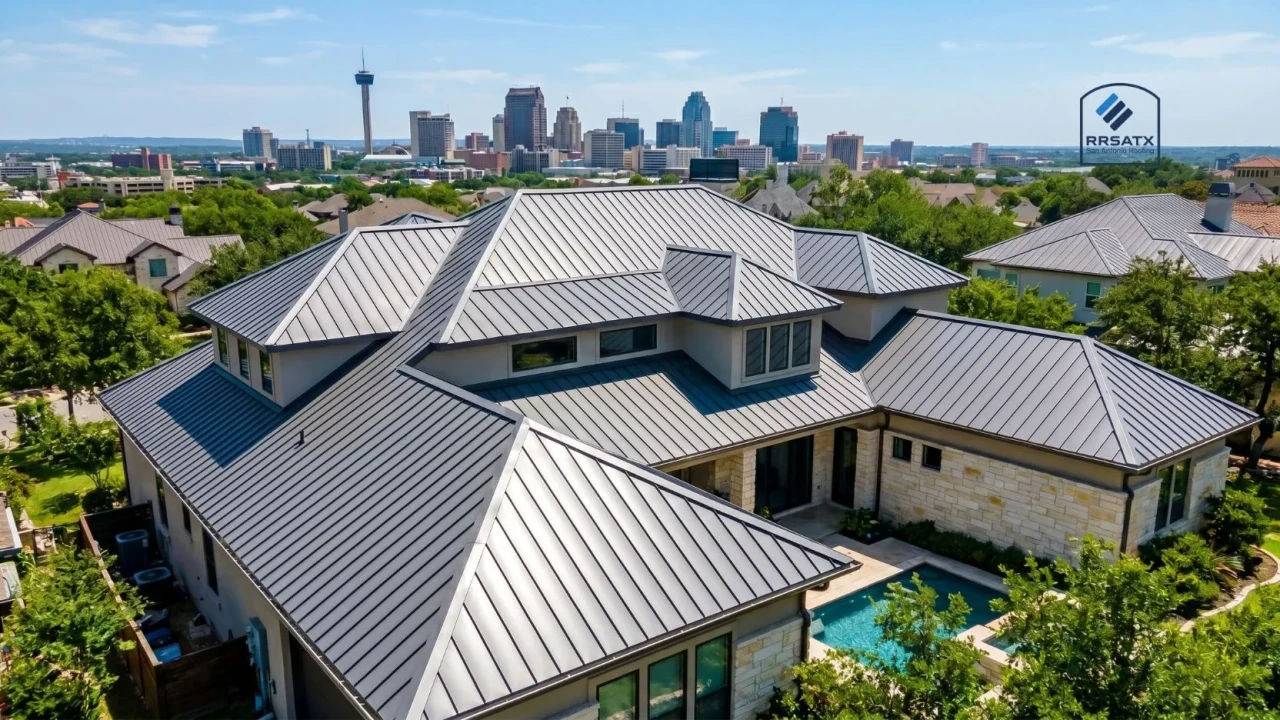
Roof pitch: Standing seam panels are manageable on slopes from low-pitch (2:12 with mechanical seaming) up to steep-slope (12:12 and above). Steeper roofs require safety equipment, slower movement across the surface, and more crew time to handle the same square footage. Expect a 10 to 20 percent labor premium on roofs over 8:12 pitch.
Valleys and hips: Each valley and hip on a standing seam roof requires custom-cut panels and precision flashing work. A simple gable roof has none. A complex hip-and-valley roof with dormers and multiple ridgelines may have a dozen or more intersections, each requiring individual attention. Complex geometry is the single biggest reason installed prices vary between homes of similar square footage.
- Quote confirms the pitch of each roof plane complex roofs often have multiple slopes
- Valley and hip count documented in the scope of work
- All penetrations listed: chimneys, skylights, pipe vents, HVAC curbs, satellite mounts
- Waste factor used in the material estimate confirmed and appropriate for your roof geometry
- Safety equipment and crew size confirmed for any roof over 8:12 pitch
- Flashing fabrication included in the quote especially at chimney and skylight penetrations
Standing seam panels are installed over a prepared substrate typically a solid wood deck with an underlayment layer. If you are replacing an existing asphalt shingle roof, that tear-off and disposal is a line item in the quote that homeowners often overlook when comparing prices. If the existing deck has damage, rotted boards or sheathing need replacement before panels go on. And the underlayment specified under the panels matters: a high-temperature self-adhering membrane protects better under a metal roof than standard felt, and it costs more.
The underlayment choice under a standing seam roof is not a place to cut costs. Metal roofs heat up significantly more than asphalt shingles in the Texas sun panels can reach 150 to 170 degrees Fahrenheit on a July afternoon. Standard felt underlayments are not rated for those temperatures and can break down over time, losing their ability to serve as a secondary water barrier. High-temperature self-adhering membranes rated for 250 degrees or higher are the correct specification under a standing seam metal roof in San Antonio.
- Tear-off and disposal confirmed as included or excluded and the price for each
- Existing deck inspection included before final contract is signed unknown deck damage is a common source of change orders
- Underlayment type specified: confirm it is a high-temperature product rated for metal roofing applications
- Deck fastening pattern confirmed: standing seam clips require solid fastening into the deck confirm the deck sheathing thickness is adequate
- Any known deck rot or soft spots noted in writing with a per-sheet repair price agreed to in advance
Labor typically represents 35 to 45 percent of the total installed cost of a standing seam metal roof in San Antonio. The rest is material, disposal, underlayment, and trim. That labor percentage is higher than it is for asphalt shingles because standing seam installation is more technically demanding: panels must be laid true and plumb from the first run or the error compounds across the entire roof, clip spacing must be consistent to allow thermal movement, and seam crimping on mechanical seam roofs must be done correctly or the joint will not be watertight.
The manufacturer warranty on a standing seam system has two components: a paint finish warranty (typically 40 years on PVDF finishes) and a panel corrosion warranty (typically 30 to 40 years on Galvalume steel). But neither warranty covers installation defects. That is covered or not covered by the contractor's workmanship warranty, which is a separate document entirely. A standing seam roof installed by a crew without specific metal roofing experience can fail at the seams, at the clips, or at the flashings within a few years, and the manufacturer warranty will not pay for it because the failure is installation-related.
Before signing a standing seam contract, ask the contractor to show you three completed standing seam installations they can walk you past in San Antonio. Not asphalt shingle roofs. Not corrugated metal roofs. Standing seam installations specifically. A contractor who does high volumes of asphalt shingle work and occasionally installs a standing seam roof is not the same as one who does standing seam routinely. The seam alignment, the trim work at eaves and rakes, and the quality of the flashing work at penetrations is visible from the ground on a completed job. That site visit is the fastest way to separate skilled standing seam installers from general roofers who will figure it out as they go on your home.
- Contractor has verifiable standing seam installations in San Antonio not just metal roofing generally
- Workmanship warranty confirmed in writing: minimum two years, five years preferred
- Manufacturer's installation certification confirmed: most major panel manufacturers offer certified installer programs
- Crew confirmed as the contractor's own employees not a subcontracted crew hired per job
- Seaming machine confirmed on-site if mechanical seam panels are specified
- Certificate of insurance received and verified before work starts at minimum $1 million general liability
The table below reflects typical all-in installed prices in the San Antonio market for a standard residential re-roofing project. All prices include tear-off of one asphalt shingle layer, high-temperature underlayment, and standard trim package. Prices do not include deck replacement or specialty penetration flashings.
| Configuration | Price per square (installed) | Best for | Notes |
|---|---|---|---|
| 26-ga Galvalume steel, snap-lock, simple gable | $800 to $1,000 | Garages, workshops, simple shed roofs | Acceptable for secondary structures; 24-ga preferred for primary residence |
| 24-ga Galvalume steel, snap-lock, standard hip | $950 to $1,150 | Standard San Antonio residential homes | Most common residential specification; best value combination for Bexar County |
| 24-ga Galvalume steel, snap-lock, complex roof | $1,150 to $1,400 | Homes with dormers, multiple ridgelines, or steep pitch | Premium driven by labor, not material; waste factor also increases |
| 24-ga Galvalume steel, mechanical seam, standard | $1,000 to $1,250 | Low-slope applications, commercial rooflines | Required for pitches under 3:12; seaming machine adds mobilization cost |
| Aluminum, snap-lock, standard hip | $1,100 to $1,400 | Coastal or high-humidity environments | Preferred where salt air or standing water is a concern |
| Aluminum, mechanical seam, complex | $1,400 to $1,800 | High-end custom homes with complex geometry | Premium aluminum + complex geometry + mechanical seaming highest residential price point |
| Copper, any profile | $1,800 to $3,000+ | Historic restoration, architectural accent sections | Material cost dominates; rarely used for full residential replacement |
- Contractor has completed standing seam installations visible in San Antonio ask for addresses, not just photos
- Contractor carries a minimum of $1 million general liability insurance verify the certificate before the site visit
- Get at least two quotes on the same scope of work standing seam pricing varies significantly between contractors
- Panel metal and gauge specified: 24-ga Galvalume steel or aluminum, not generic "metal panels"
- Panel width and seam type specified: snap-lock or mechanical seam, and the reason for that choice on your roof
- Clip type specified: floating clips for any panel run over 30 feet
- Paint finish specified: PVDF (Kynar 500) for maximum UV and chalk resistance in the Texas sun
- Underlayment specified: high-temperature self-adhering membrane, not standard 15-lb felt
- Tear-off and disposal included or explicitly excluded with a separate price
- Waste factor stated and appropriate for your roof geometry
- Workmanship warranty terms included: duration, what is covered, and the claims process
- Manufacturer warranty documentation provided: panel corrosion warranty and paint finish warranty are separate documents
- Seam alignment inspected from the ground panels should run straight and true from ridge to eave
- Trim work inspected at all eaves, rakes, and ridges no gaps or bent trim pieces
- All flashing sealed and confirmed watertight at every penetration before final payment
- Warranty documentation received and filed with your home records
- First post-installation inspection scheduled for 12 months after install
Get a free standing seam metal roof quote in San Antonio
Tell us about your home and we will measure your roof, walk you through the panel options that fit your budget and roofline, and give you a clear written price per square at no charge.