A metal roof costs more upfront than asphalt, but it does not stay more expensive forever. This guide breaks down exactly how a metal roof pays for itself in San Antonio through energy savings, insurance discounts, and the asphalt replacements you never have to buy, with the real payback math for 2026.
25%
35%
It is the question almost every San Antonio homeowner asks before they sign a metal roofing contract: the upfront price is higher than asphalt, so how long before that extra money comes back? It is a fair question, and the honest answer is more interesting than a single number. A metal roof does not pay you back in one lump sum on a fixed date. It pays you back through several streams at once, and the streams add up at very different speeds.
The short version: for most San Antonio homeowners who stay in the home, a metal roof pays for itself in roughly 10 to 20 years when you combine lower cooling bills, insurance discounts, and the asphalt replacements you no longer have to buy. The single largest driver is not energy savings, which surprises most people. It is the replacement you avoid. Below is the full breakdown, number by number, so you can run the math for your own roof.
Energy and insurance savings get all the marketing attention, but they are the slow streams. The fast stream is avoided replacement. An asphalt roof in San Antonio lasts roughly 15 to 22 years before the Texas sun forces a full replacement. A metal roof lasts 40 to 70. That means the day your asphalt roof would have needed replacing is the day a big chunk of your metal premium quietly pays itself off, because you simply skip the bill. Keep that idea in mind as you read the five numbers below.
The most common mistake homeowners make is trying to pay back the whole price of the metal roof. That is the wrong target. You were always going to spend money on a roof. The number that needs to earn its keep is the premium, meaning the extra amount a metal roof costs over a comparable asphalt roof on the same house. Everything else you would have spent anyway.
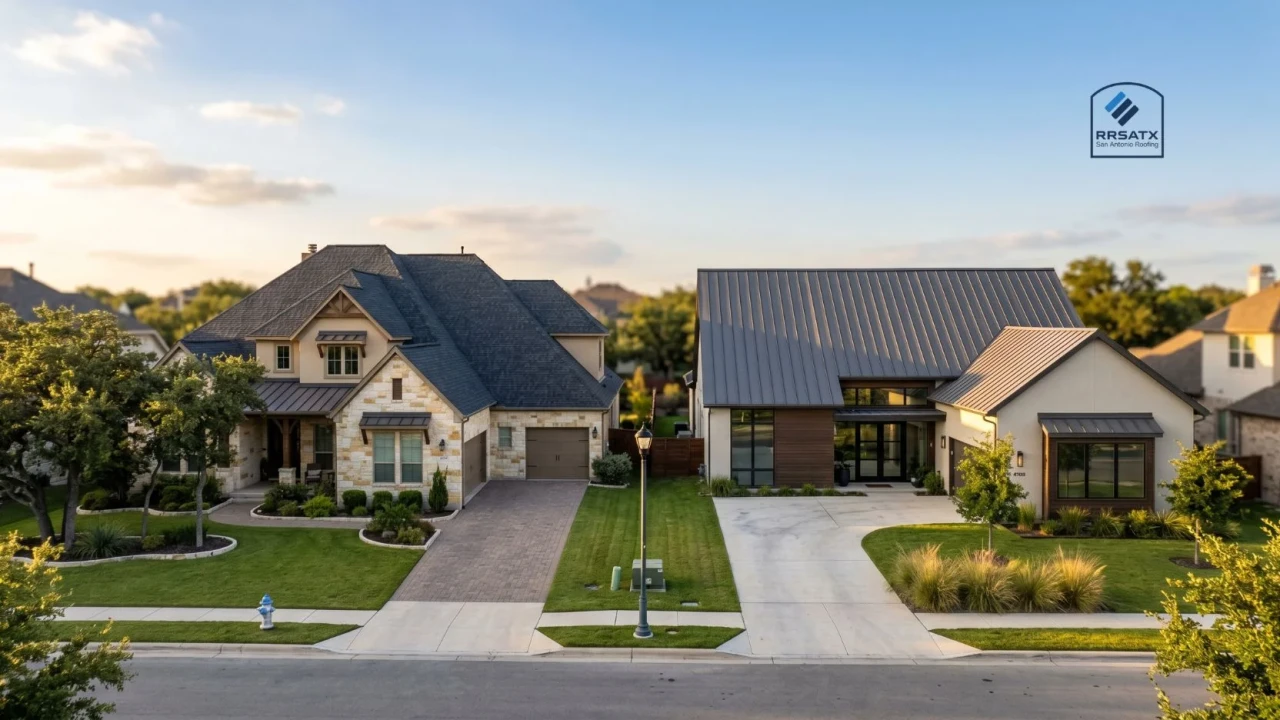
Start from the asphalt baseline: A standard asphalt shingle roof on a single-family San Antonio home runs roughly $8,000 to $15,000 installed in 2026. That is your reference point, because that is the money leaving your account no matter which material you choose.
Then add the metal step-up: A standard exposed-fastener or corrugated metal roof runs about $12,000 to $22,000. A premium standing seam system runs about $20,000 to $40,000. The gap between asphalt and metal is the real payback target, and on most homes it lands between $6,000 and $18,000.
- Get a metal quote and a comparable asphalt quote for the same roof so you know the true premium
- Confirm whether tear-off of the existing roof is included in both quotes
- Ask which metal system you are being quoted: standing seam, screw-down, or stone-coated steel
- Separate material cost from labor cost so you can compare quotes on equal terms
- Treat the premium, not the full price, as the number your savings will recover
San Antonio has one of the longest cooling seasons in the country. Air conditioning runs hard from spring well into fall, which makes the roof over your head a real factor in your electric bill. A reflective metal roof bounces a large share of the sun's radiant heat away instead of soaking it into the attic, so the air conditioner does not work as hard. This is where the energy savings come from.
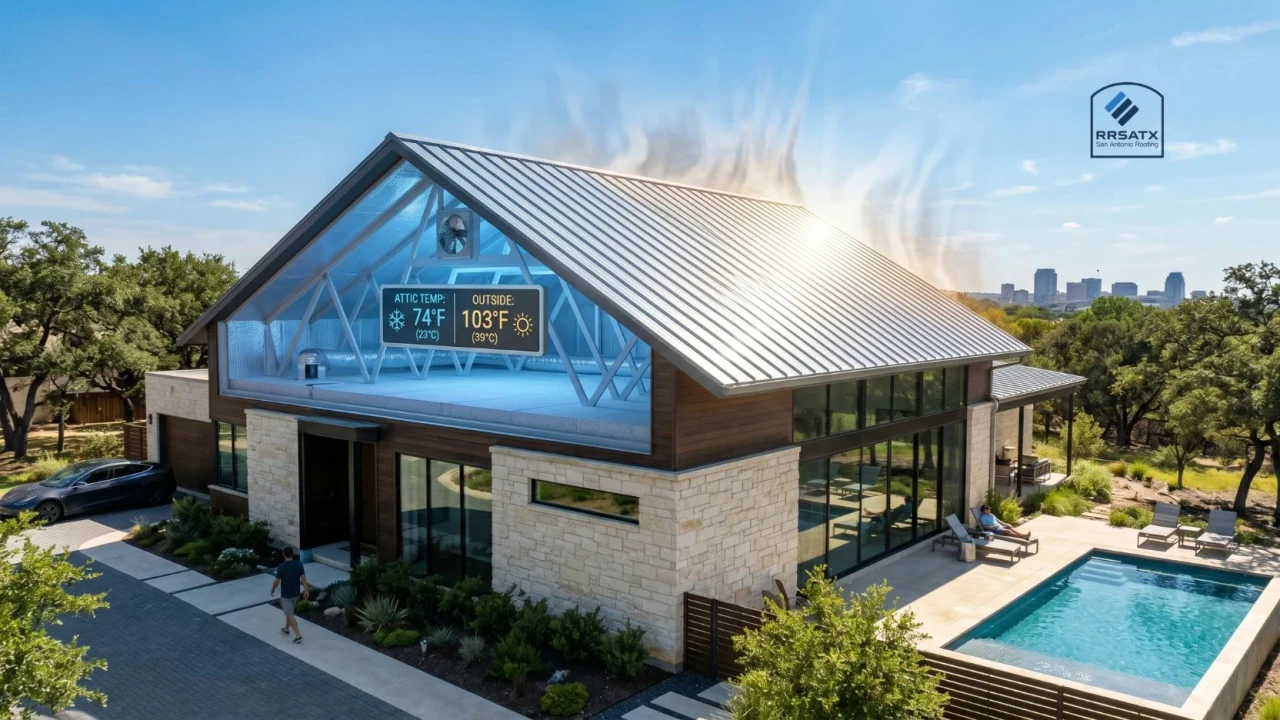
Reflective coatings do the work: A light-colored or specially coated metal roof can cut cooling costs by 10 to 25 percent compared to dark asphalt that absorbs and re-radiates heat. Unpainted Galvalume helps less than a reflective painted finish, so the color and coating you choose changes the result.
Real dollars depend on your home: A smaller, well-insulated home sees modest savings. A larger home with heavy air conditioning use and a light reflective roof sees the most. Honest expectation: most San Antonio homeowners save somewhere between $100 and $500 a year on cooling.
- Choose a reflective or light-colored finish if cooling savings are a priority
- Ask about ENERGY STAR rated or cool-roof coatings for the panels you are considering
- Add or confirm a radiant barrier in the attic to compound the savings
- Discuss above-sheathing ventilation, which lets hot air escape under the panels
- Compare a recent summer electric bill before and after to measure your own result
Texas sits in one of the most active hail corridors in the country, so insurers price wind and hail risk heavily into homeowners policies here. The upside for metal roof owners is that many Texas carriers offer a discount for impact-resistant roofing. A roof rated Class 4 under the UL 2218 impact standard is treated as more storm-resistant, and that lower risk can translate into a lower premium.
The discount is not automatic: Carriers apply the impact-resistant discount to the wind and hail portion of the premium, and the size of that discount varies widely, from around 5 percent to as much as 35 percent depending on the insurer and policy.
You have to ask and document it: Not every metal roof qualifies, and the discount is rarely applied unless you submit proof. You typically need the manufacturer's UL 2218 Class 4 certification for the exact panel installed before the carrier will adjust your rate.
Call your carrier before and after the install and get the discount in writing. Ask two questions directly: does this policy offer an impact-resistant or Class 4 roof discount, and what documentation do you need from me to apply it. Then send the manufacturer certification for the panel your contractor installed. Homeowners routinely leave $150 to $400 a year on the table simply because they never submitted the paperwork. For a full walkthrough of how this works, see our companion guide on whether metal roofs lower insurance premiums.
- Confirm the panel you are buying carries a UL 2218 Class 4 impact rating
- Ask your insurer directly whether they offer an impact-resistant roof discount
- Request the exact documentation the carrier needs to apply the discount
- Send the manufacturer certification for the specific panel installed
- Keep a copy of the certification and the discount confirmation for resale and future renewals
This is the factor most homeowners underweight, and it is the one that turns metal from a luxury into a long-term bargain. An asphalt shingle roof in the San Antonio climate lasts roughly 15 to 22 years before the relentless UV exposure and summer heat dry out the shingles and force a full replacement. A metal roof lasts 40 to 70 years. Over the lifespan of one metal roof, you would have bought, paid for, and torn off two or even three asphalt roofs.
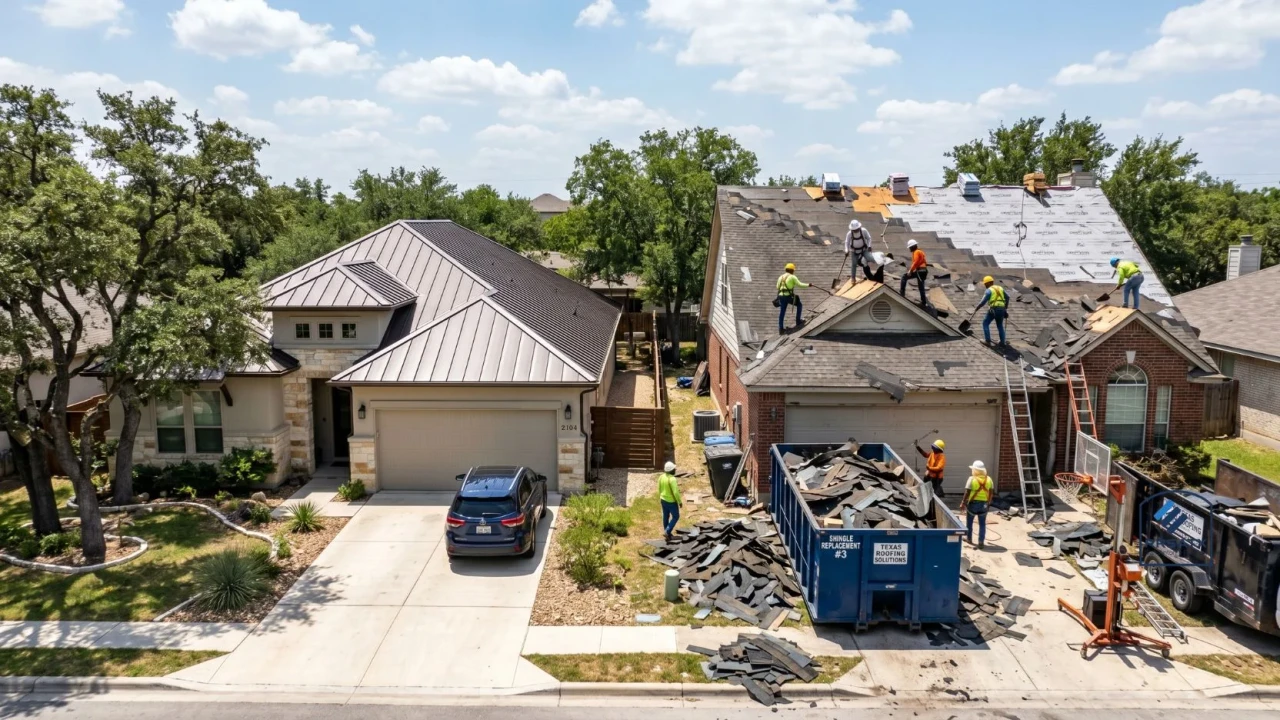
Each skipped re-roof is a lump-sum payback: Around the time your asphalt roof would have failed, you simply do not pay for a new one. That avoided $8,000 to $15,000 bill, and the inflation-driven cost of any second replacement decades later, is the largest single piece of the metal payback.
Lower maintenance adds to it: Asphalt sheds granules, curls, and needs patching over its life. A metal roof needs far less upkeep, which quietly saves on repairs and inspections across the decades you own it.
- Confirm the realistic lifespan of the metal system you are buying, in writing
- Ask what the warranty covers and for how many years, separating material from workmanship
- Compare the metal lifespan against two to three asphalt replacement cycles over the same period
- Factor in rising future roofing costs when valuing replacements decades out
- Confirm proper installation, because lifespan claims only hold up when the roof is installed correctly
Put the four numbers together and a clear picture emerges. The payback period is not fixed because it depends almost entirely on one thing you control: how long you stay in the home. Energy and insurance savings accumulate slowly year by year, the avoided replacement lands as a large lump around year 18 to 22, and resale value bridges the gap for owners who sell sooner.
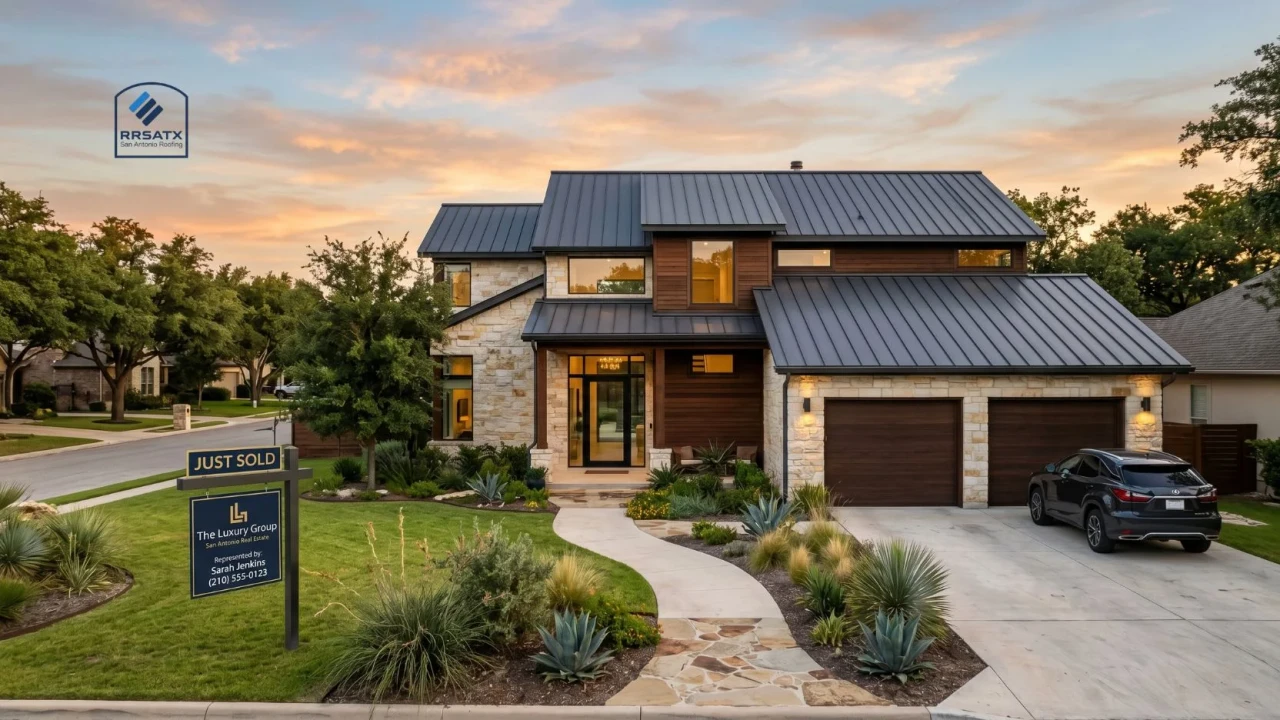
For owners who sell sooner: The payback arrives through the sale itself. A metal roof boosts curb appeal, signals a maintenance-free roof to buyers, and can shorten time on the market. You recover a meaningful share of the premium in the sale price rather than through years of bills.
For owners who stay: The combined streams cross the premium somewhere in the 10 to 20 year range, and after that the roof is pure savings for the rest of the time you own the home.
| How long you stay | Payback outcome | What drives it |
|---|---|---|
| 5 years or less | Recovered at resale, not through bills | Curb appeal, buyer appeal, and a maintenance-free roof raise the sale price and speed the sale. |
| About 10 years | Partial payback | Energy and insurance savings have added up, but the first avoided asphalt replacement is not yet due. |
| 15 to 20 years | Break-even likely | Accumulated savings plus the first skipped asphalt replacement together recover the premium. |
| 25 years or more | Clear net savings | One full re-roof avoided and a decade-plus of energy and insurance savings put metal well ahead. |
| Forever home | Strongest case by far | You avoid two asphalt replacements and enjoy decades of free roofing once the premium is recovered. |
- Decide honestly how long you expect to own the home, because it sets your payback timeline
- Add up all four streams: energy, insurance, avoided replacement, and resale
- Ask your contractor for the energy, insurance, and lifespan figures specific to your roof
- If selling soon, prioritize curb appeal and a documented warranty for the next buyer
- If staying, prioritize lifespan and the lowest fair premium to shorten the break-even point
These scenarios combine the energy, insurance, and avoided-replacement savings covered above into realistic break-even ranges. Your own result depends on your premium, your air conditioning use, your insurer, and how long you stay. Use these as a planning guide, not a guarantee.
| Your situation | Estimated break-even | What drives the payback |
|---|---|---|
| Average home, low premium, Class 4 roof, insurer discount claimed | About 10 to 14 years | A modest premium plus all three savings streams working together recovers the cost fastest. |
| Average home, mid premium, reflective roof, normal cooling use | About 14 to 18 years | Steady energy and insurance savings, with the first avoided asphalt replacement closing the gap. |
| Large home, high cooling load, light reflective metal | About 12 to 16 years | Stronger energy savings from heavy air conditioning use speed up the recovery. |
| Higher premium standing seam, no insurance discount claimed | About 18 to 24 years | Payback leans heavily on the avoided replacement, since the premium is larger and one stream is missing. |
| Homeowner who sells within 5 years | Recovered at resale | Curb appeal, buyer demand, and a transferable warranty return value at the sale rather than over time. |
| Long-term or forever-home owner | Net positive after break-even | Two avoided re-roofs plus decades of savings make this the strongest payback case of all. |
- Get a metal quote and a comparable asphalt quote so you know your true premium, not the full price
- Compare the per-sheet material cost against the labor portion to judge whether the quote is fair
- Get at least two written estimates, since a lower fair premium pays back faster than a high one
- Confirm the realistic lifespan and the warranty terms for the specific metal system in writing
- Choose a reflective or light-colored finish if cooling savings matter to you
- Confirm the panel carries a UL 2218 Class 4 impact rating so it qualifies for the insurance discount
- Ask about a radiant barrier and above-sheathing ventilation to compound energy savings
- Match the panel profile and gauge to the San Antonio climate and your roof pitch
- Submit the manufacturer Class 4 certification to your insurer and get the discount in writing
- Track a summer electric bill before and after to confirm your real energy savings
- Keep all certification, warranty, and invoice documents on file for resale value
- Schedule periodic inspections so the roof reaches its full lifespan and the avoided replacement holds true
Get a free metal roof cost and payback estimate in San Antonio
Tell us about your home and your roof, and we will give you a clear written estimate plus an honest payback breakdown for your premium, your energy savings, and your insurance discount, at no cost.