
[et_pb_section fb_built=”1″ admin_label=”section” _builder_version=”4.16″ global_colors_info=”{}”][et_pb_row admin_label=”row” _builder_version=”4.16″ background_size=”initial” background_position=”top_left” background_repeat=”repeat” global_colors_info=”{}”][et_pb_column type=”4_4″ _builder_version=”4.16″ custom_padding=”|||” global_colors_info=”{}” custom_padding__hover=”|||”][et_pb_code _builder_version=”4.27.6″ _module_preset=”default” hover_enabled=”0″ sticky_enabled=”0″]
In a city where summer cooling bills regularly spike past $300 a month, the roofing material over your head has a direct and measurable effect on your energy costs. This guide explains exactly how metal roofing reduces heat gain, what the real savings look like for a San Antonio home, and which metal roof type delivers the best performance in the Texas climate.
The short answer is yes. Metal roofing is more energy efficient than asphalt shingles in virtually every climate, and in a city like San Antonio the difference is especially significant. The Texas heat is not a minor variable. Bexar County consistently records some of the highest residential cooling loads in the country, and your roof is the single largest surface absorbing or deflecting the solar energy that drives those loads.
The longer answer is that not all metal roofs perform equally. The energy efficiency of a metal roof depends on the specific metal type, the coating or finish applied to the surface, the color, and how the installation integrates with your attic ventilation and insulation. This guide covers all of it, in plain language, with real numbers that apply to the San Antonio market.
Your roof does not cool your house. Your HVAC system does. What a metal roof does is reduce the amount of heat your HVAC system has to fight against. That difference, measured in BTUs your air conditioner never has to remove, is what shows up as a lower electric bill every month from May through October. Understanding this distinction helps you set realistic expectations and ask the right questions when comparing roofing options.
Energy Science
Every roofing material is measured by two energy performance properties: solar reflectance and thermal emittance. These two numbers, taken together, tell you how much solar energy a roof surface turns away and how effectively it releases whatever heat it does absorb. The higher both numbers are, the cooler the roof runs and the less heat transfers into your attic and living space.
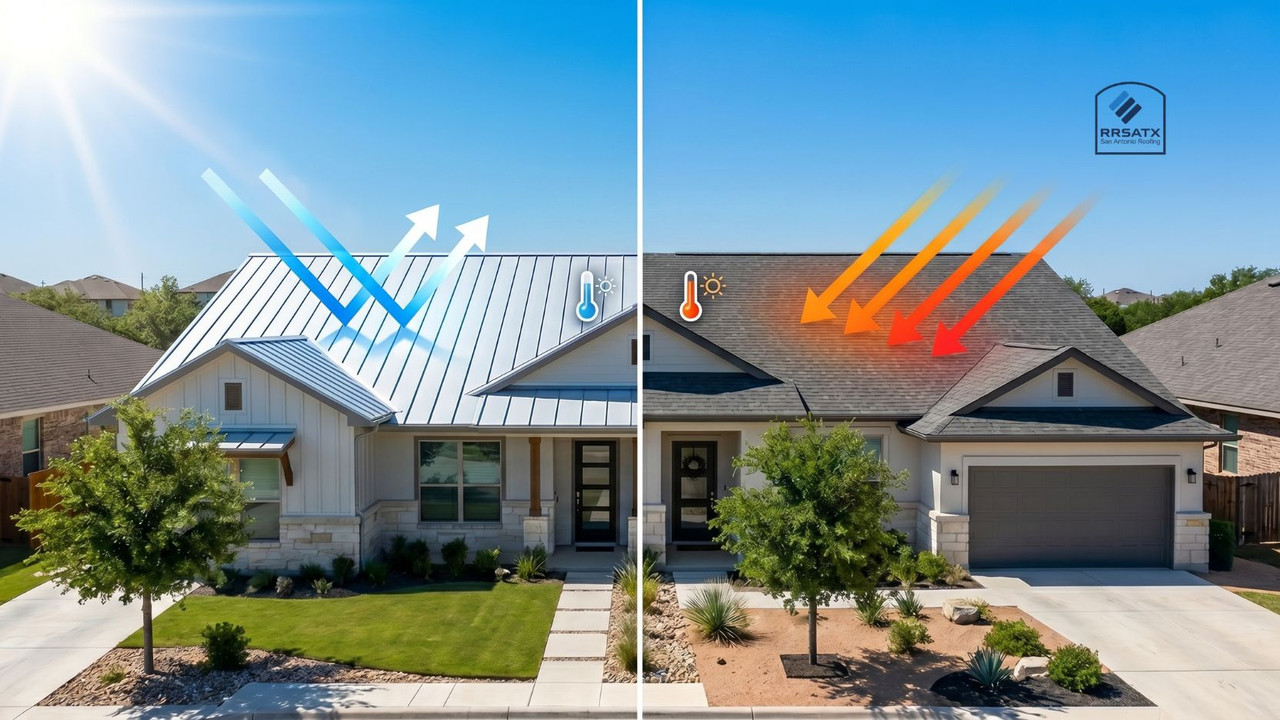
Solar reflectance is the percentage of incoming solar energy a surface reflects rather than absorbs. A perfectly reflective surface would score 1.0, or 100 percent. Standard dark asphalt shingles score between 0.05 and 0.15, meaning they absorb 85 to 95 percent of solar radiation. A cool-coated metal roof can score between 0.60 and 0.85, reflecting the majority of that same solar energy back into the atmosphere instead of into your attic.
Thermal emittance is the ability of a surface to release the heat it has absorbed. Metal naturally scores very high here, typically 0.85 or above. Even when metal does absorb some solar energy, it releases that heat quickly as the sun moves and temperatures drop in the evening. Asphalt shingles hold heat far longer and continue radiating it into the attic well into the night.
- Ask your contractor for the solar reflectance index (SRI) rating of the specific panel and color you are considering
- Confirm whether the product is Energy Star rated for solar reflectance
- Lighter colors deliver significantly better solar reflectance than darker colors in the same product line
- Stone chip texture on stone coated steel affects reflectance; ask for the specific rating, not just a general claim
- Request the thermal emittance rating alongside the reflectance rating for a complete picture
Comparison
Metal roofing is a broad category, and energy performance varies significantly within it. The three types you will encounter most often from San Antonio roofing contractors are stone coated steel, standing seam metal, and exposed-fastener painted steel or aluminum panels. Each has a different energy performance profile based on its surface characteristics, coating technology, and installation method.
| Metal Roof Type | Solar Reflectance Range | Thermal Emittance | Energy Star Eligible | Best Energy Color | Notes |
|---|---|---|---|---|---|
| Standing seam (cool coating) | 0.65 to 0.85 | 0.85 to 0.90 | Yes (most light colors) | White, light gray, beige | Highest energy performance of any residential roofing type; concealed fasteners eliminate thermal bridging points |
| Exposed-fastener painted panel | 0.45 to 0.75 | 0.85 to 0.90 | Yes (qualifying colors) | White, light gray | Good reflectance in lighter colors; exposed fasteners are minor thermal bridges but not a significant concern in residential applications |
| Stone coated steel (light colors) | 0.25 to 0.55 | 0.85 to 0.90 | Some products and colors | Tan, light brown, terracotta | Stone chip texture and aggregate coating reduce peak reflectance vs bare painted metal but still far outperform asphalt shingles |
| Stone coated steel (dark colors) | 0.10 to 0.25 | 0.85 to 0.90 | Generally no | Not applicable | Still outperforms dark asphalt on thermal emittance; darker stone coated steel releases absorbed heat more quickly than dark asphalt but reflectance advantage is smaller |
| Standard asphalt shingles | 0.05 to 0.20 | 0.85 to 0.92 | Impact-resistant versions only | White or light gray | Baseline comparison; absorbs the vast majority of solar radiation and retains heat longer due to mass and low emittance in darker varieties |
If maximum energy efficiency is your primary goal, a standing seam roof with a white or light gray Kynar-based paint finish is the top performer available today. If you want the energy benefits of metal with the aesthetic of tile, shake, or shingles, stone coated steel in a lighter color is still a dramatic improvement over asphalt. Choose the lightest color in your preferred product line that your HOA allows and your personal aesthetic is comfortable with.
Real Numbers
Energy savings claims for metal roofing are everywhere in marketing materials, and the ranges are wide. The real number for your home depends on several variables: your home’s square footage, current insulation levels, HVAC system efficiency, the direction your roof faces, tree shading, and which metal roofing product you install. What follows is a realistic framework built around actual San Antonio energy data.
The average CPS Energy residential customer in San Antonio pays roughly $150 to $180 per month annually, with summer months commonly reaching $250 to $350 or higher for homes over 2,000 square feet. Cooling accounts for approximately 50 to 60 percent of that summer electricity use. A qualified metal roof reducing the cooling load by 25 to 40 percent translates to a meaningful monthly reduction during the months when your bill is highest.
System Performance
A metal roof is one component of a thermal system that includes your roof deck, attic ventilation, insulation, and the air barrier between your attic and your living space. Installing a metal roof on a poorly ventilated attic with inadequate insulation will still improve your energy performance compared to asphalt shingles, but you will not capture the full benefit. The biggest energy efficiency wins come when the roof, ventilation, and insulation are working together.
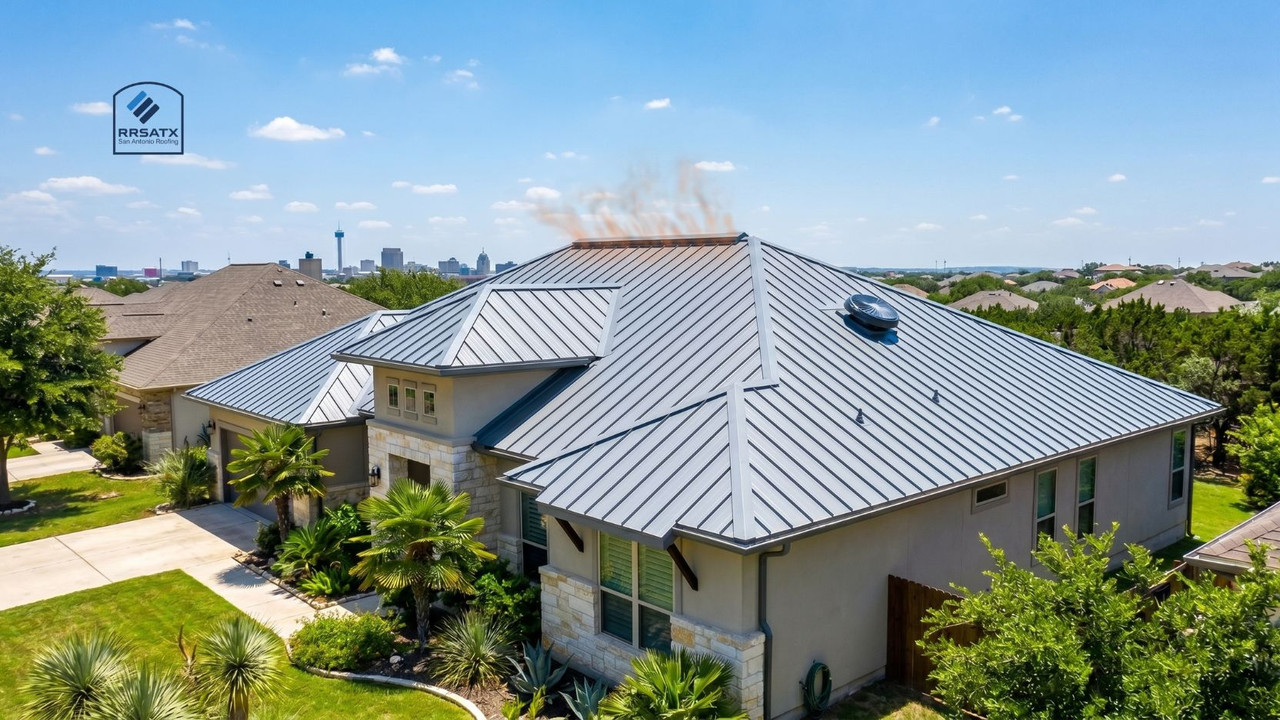
Attic ventilation: Proper ridge and soffit ventilation allows hot attic air to escape continuously rather than accumulating and transferring heat downward into your living space. Metal roofs work exceptionally well with ridge vents because the concealed or low-profile fastening systems on most quality metal products do not obstruct ventilation pathways. A good San Antonio roofing contractor will assess your current ventilation during the installation process and flag any deficiencies.
Attic insulation: The R-value of your attic insulation determines how much of the heat the roof surface generates actually reaches your living area. Texas building code requires R-38 for new construction; many older San Antonio homes fall short of this. Upgrading insulation at the time of a roof replacement is one of the most cost-effective energy improvements you can make, and the combination of new metal roofing plus upgraded insulation delivers compounding benefits.
A responsible San Antonio roofing contractor doing a metal roof installation will walk your attic before quoting the job. They should note your current insulation R-value, assess whether ridge and soffit ventilation are adequate, and identify any obvious air leakage points around penetrations and HVAC ducts. If a contractor quotes your metal roof job without mentioning attic conditions, that is a sign they are focused on the material sale and not the energy outcome you are paying for.
- Contractor has assessed attic insulation levels and confirmed current R-value
- Ridge and soffit ventilation are adequate; deficiencies are noted with a correction plan
- Radiant barrier option has been discussed and priced as an add-on if not already present
- HVAC duct condition in the attic has been noted; leaky ducts in a hot attic undermine all other energy improvements
- Insulation upgrade pricing is available if current levels are below R-38
Incentives
The financial case for metal roofing in San Antonio extends beyond monthly energy savings. Two additional financial benefits are available to qualifying homeowners: a federal tax credit for energy-efficient roofing materials and a potential insurance premium discount for Class 4 impact-rated roofing products. Understanding both helps you build the complete financial picture before making a decision.
Before signing a roofing contract, call your homeowners insurance carrier and ask two specific questions: Does my current policy offer a discount for Class 4 impact-resistant roofing? And does my carrier require installation by a specific process or documentation from the installer to activate that discount? Some carriers require a copy of the manufacturer’s Class 4 certification and the completed permit before adjusting your premium. Get the documentation requirements in writing before installation day, not after.
Buyer’s Guide
Energy efficiency claims are easy to make and hard to verify without the right questions. Any San Antonio contractor can tell you that metal roofing is more energy efficient than asphalt. The contractors worth hiring can tell you exactly how efficient, for which specific product and color, with documentation from the manufacturer and an explanation of what your home’s current attic conditions mean for your projected savings.
The questions below are the ones you should bring to every roofing consultation if energy performance is part of your decision. A contractor who cannot answer them clearly is not the right partner for this project.
- Solar reflectance index rating confirmed for the specific product and color being installed
- Energy Star certification status verified for the qualifying federal tax credit
- Class 4 UL 2218 impact rating confirmed for the insurance premium discount
- Attic insulation level assessed and any deficiencies addressed in the project scope
- Ridge and soffit ventilation verified as adequate for the new roof system
- Manufacturer’s energy performance documentation requested and received before installation
- Insurance carrier contacted to confirm the discount process and documentation required
- Review your last 12 months of CPS Energy bills to establish your current baseline cooling costs
- Note your current attic insulation level if known; if unknown, ask a contractor to assess it during the inspection
- Check the Energy Star Cool Roof product database to familiarize yourself with qualifying metal roofing products
- Contact your homeowners insurance carrier to ask what documentation is required to activate a Class 4 discount
- Check the CPS Energy rebate portal for any currently active cool roof or energy efficiency incentive programs
- Confirm each contractor walked the attic, not just the roof surface, during their inspection
- Ask each contractor for the SRI rating and Energy Star status of the specific products they are quoting
- Request that quotes include an attic insulation assessment and upgrade pricing if current levels are below R-38
- Ask whether a radiant barrier option is available and what it adds to the total project cost
- Confirm Class 4 UL 2218 impact rating for the panel product and ask for the manufacturer’s certification document
- Obtain the manufacturer’s energy performance documentation and Class 4 certification for your records
- Submit the required documentation to your insurance carrier to activate the premium discount
- Consult your tax professional about claiming the federal 25C Energy Efficient Home Improvement Credit
- Track your CPS Energy bills for the first full cooling season to measure actual savings against your pre-installation baseline
- Schedule an attic inspection 12 months after installation to confirm ventilation is performing as designed
How much can a metal roof actually reduce my electric bill in San Antonio?
Does the color of a metal roof make a big difference in energy efficiency?
Is stone coated steel roofing as energy efficient as standing seam metal?
Does a metal roof make a house hotter in winter?
What is the Energy Star cool roof program and does my metal roof qualify?
Will a metal roof help my HVAC system last longer?
Does adding attic insulation at the same time as a metal roof really make a noticeable difference?
How does a metal roof compare to a cool asphalt shingle roof for energy efficiency?
Find out how much a metal roof can save your San Antonio home
We will inspect your current roof, assess your attic conditions, and give you a clear picture of what a metal roof installation would cost and what it would save on your energy bill every year.
[/et_pb_code][/et_pb_column][/et_pb_row][/et_pb_section]