
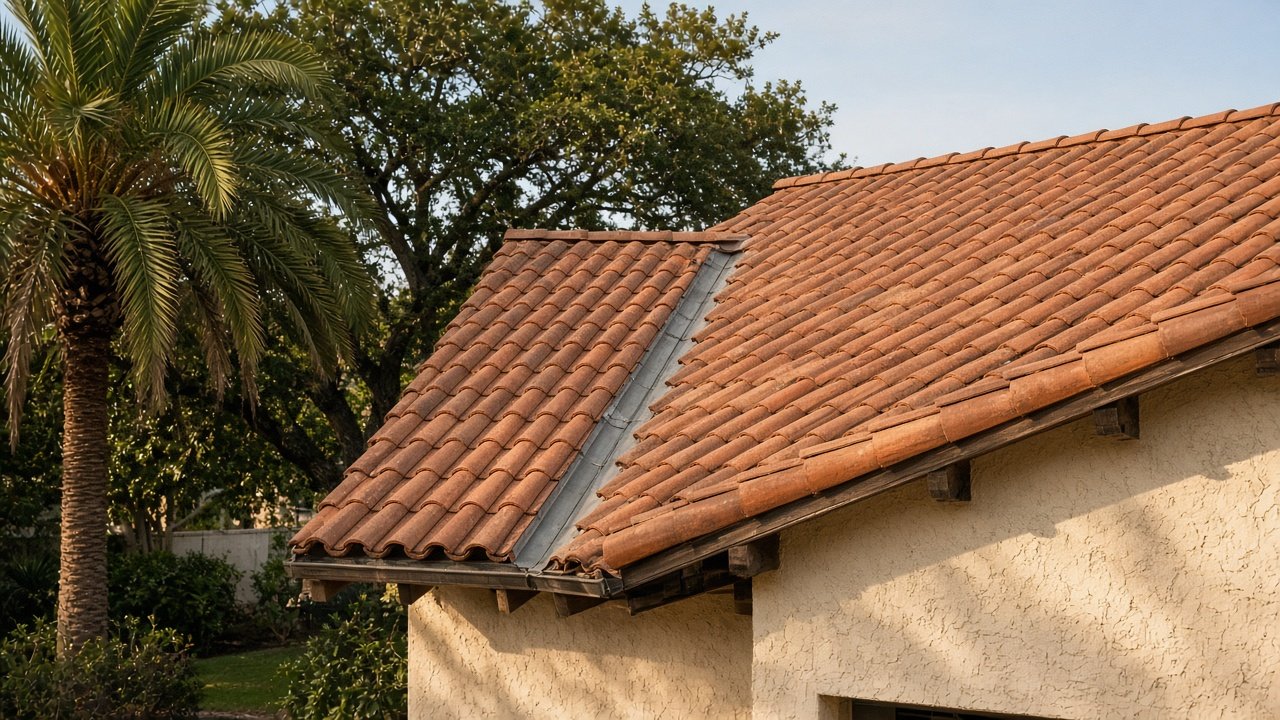
Tile roofs · San Antonio, Texas
Tile Roof Valley Flashing: How Valleys Are Built and Why They Leak
A valley collects the water from two roof slopes at once. This guide explains how valleys on clay and concrete tile roofs are flashed, the difference between open and closed valleys, what the code asks for, and what failure looks like on a San Antonio home.
The short answer
A tile roof valley is the internal angle where two roof slopes meet, and tile roof valley flashing is the corrosion-resistant valley metal laid there over extra underlayment. [2] The tiles are cut along the valley, and the metal carries the water that both slopes send into it. [1] [2] Under IRC R905.3.7, tile is applied according to the code and the manufacturer’s installation instructions. [1] When tile valleys leak, common causes include debris, damaged or rusted metal, shifted cut tiles and worn underlayment, so an inspection by a crew that knows tile is the first step.
What the code says about tile roof valley flashing
The International Residential Code sets minimums for valley flashing on clay and concrete tile roofs.
Tile is applied according to the code and the manufacturer’s installation instructions. [1] The code section for tile valley flashing spells out the basics.
IRC R905.3.8 valley flashing for tile
Valley flashing must extend not less than 11 inches from the centerline each way and have a splash diverter rib not less than 1 inch in height at the flow line. Sections must have an end lap of not less than 4 inches. For roof slopes of 3:12 and greater, the valley gets a 36-inch-wide underlayment running the full length of the valley, in addition to other required underlayment. Metal flashing must be corrosion resistant. [1]
Code requirements are adopted and amended locally, so confirm current requirements for your home with the City of San Antonio Development Services Department.
Open vs closed tile valleys
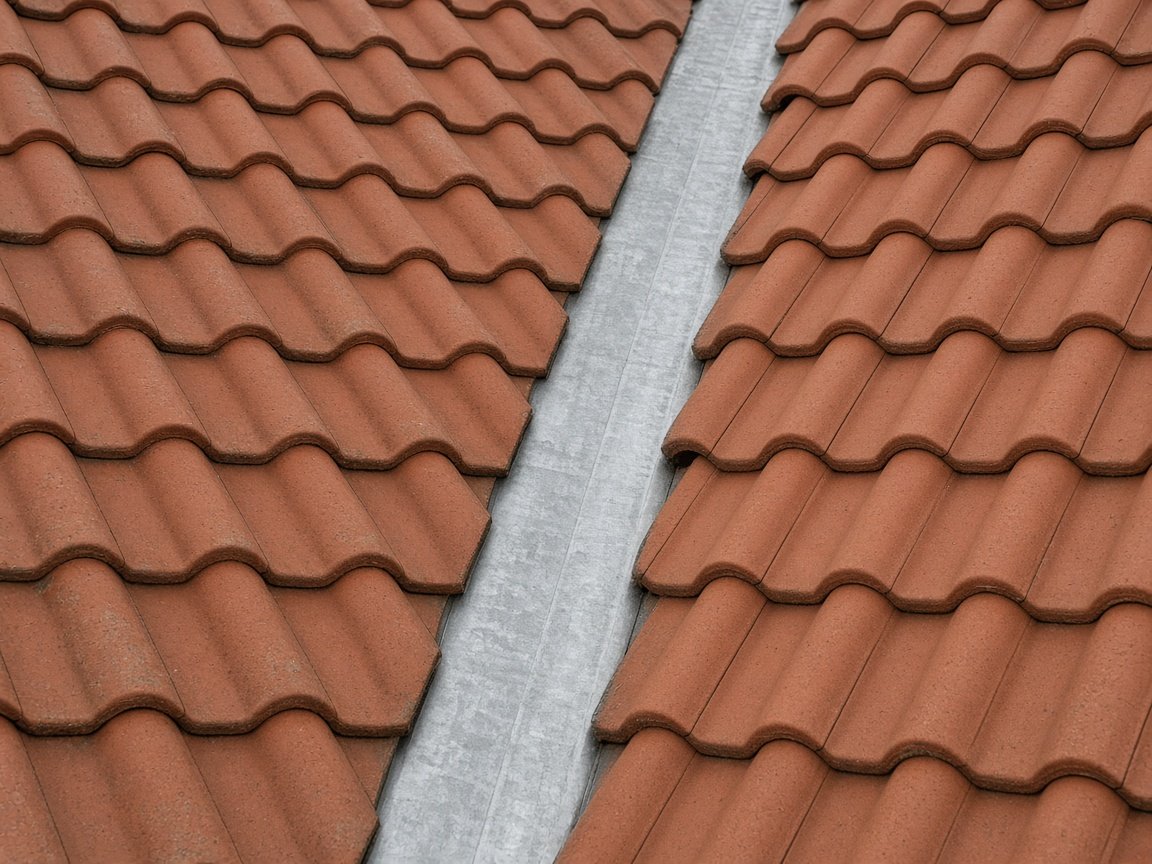
The difference is how close the cut tiles come to the center of the valley metal.
| Valley style | What you see | Notes |
|---|---|---|
| Open valley | Tiles are cut to expose the trough of the valley metal | The metal channel stays visible down the valley |
| Closed valley | Tiles are cut to meet at the center of the valley metal | When flat-profile tile is installed as a closed valley, ribbed valley metal or single-crown valley metal with a batten extension is used |
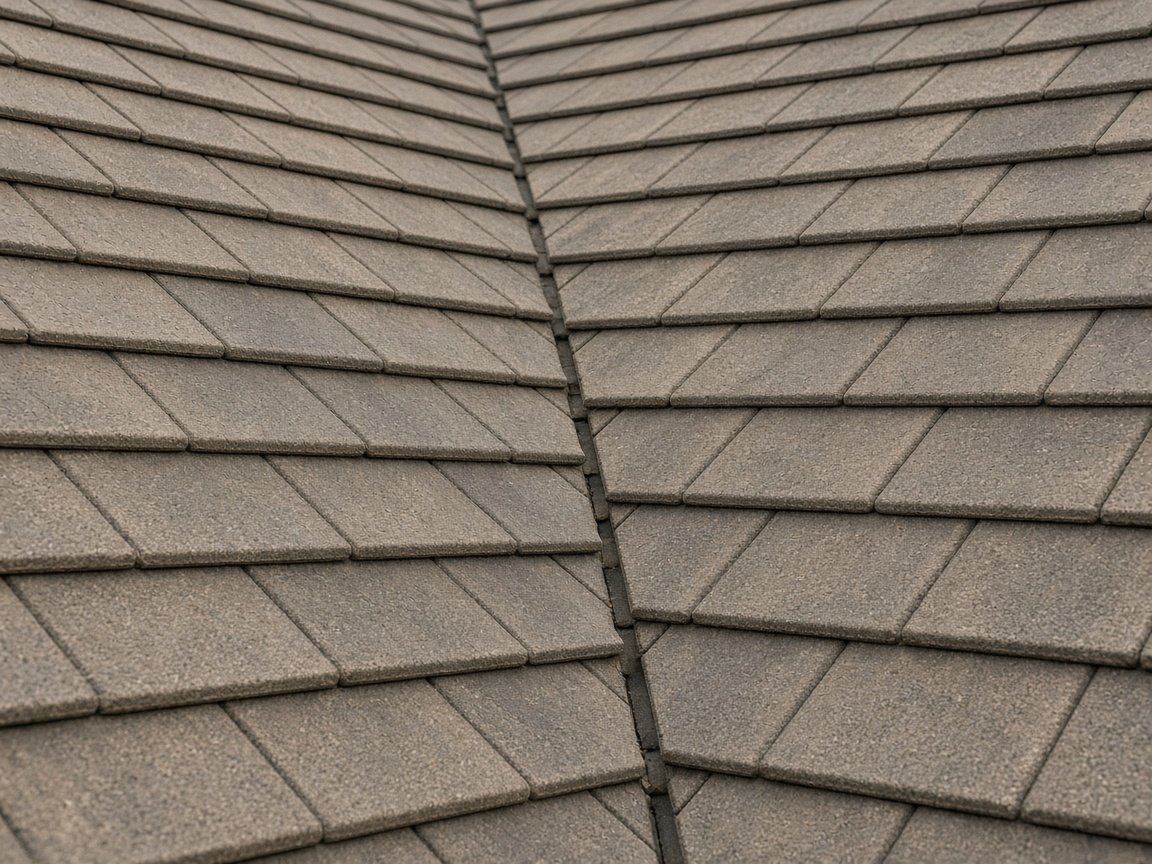
From the ground, a closed valley looks tidier, but the metal underneath still does the work. With either style, the water runs on the metal, not on the tile edges.
Neither style is automatically better. An open valley leaves the channel visible, which makes debris and rust easier to spot from the ground. A closed valley hides the metal, so a problem underneath may not show until a ceiling stain appears. If you’re not sure which you have, ask your roofer to point it out during an inspection and note it on the report, so you know what to look for later.
Valley metal profiles on tile roofs
Tile valley metal comes in shapes made to move water past thick, uneven tile edges.
TRI Alliance describes triple crown, double crown, single crown and deep trough valley metal. It says valley metal should suit the climate area and handle the expected water flow, with wider metal needed for large roof areas or long rafters. [2]
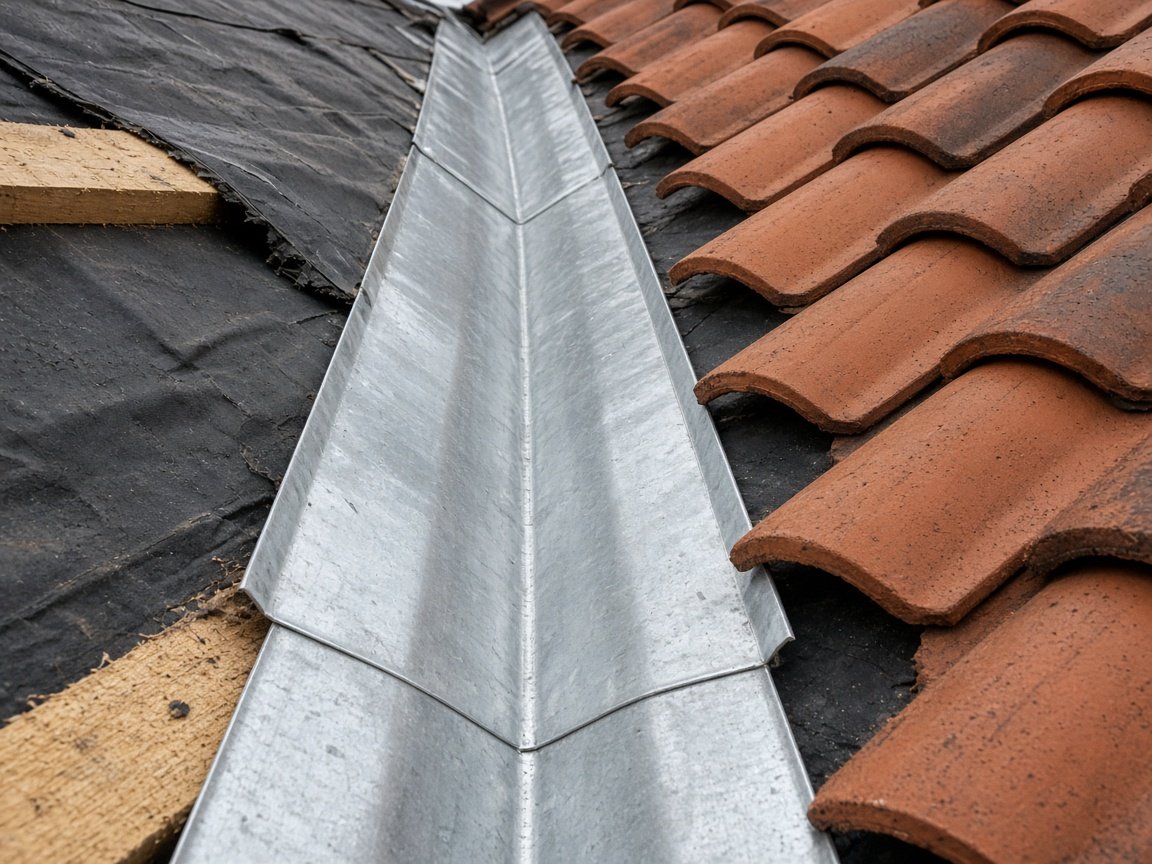
On San Antonio homes, heavy spring downpours can send a lot of water into a valley at once. That’s one reason the metal profile and width matter, and why a valley that was undersized or bent out of shape can overflow under the tiles.
How tiles are cut and secured at the valley
Cut tiles along a valley lose the fastening points a full tile has, so they need extra attention.
TRI Alliance says tile must extend a minimum of 4 inches over the valley metal. Cut tile pieces are secured with adhesive, wire ties, batten extensions, cut tile clips or other approved devices. Valley metal sections are lapped and each section is blind-nailed along its upper end. [2]
Small cut pieces near the valley have less to hold onto than full tiles. When a cut piece slides down or out of line, it can leave a gap at the edge of the valley or block part of the channel. Either way, water that should stay on the metal can find its way onto the underlayment. During a repair, ask how the cut pieces will be secured and whether loose ones will be refastened rather than just pushed back into place.
The underlayment under the valley
The valley metal isn’t the only layer. There’s underlayment beneath it, too.
TRI Alliance describes a sweat sheet, or bleeder sheet, as underlayment placed under the valley metal to keep moisture and condensation off the deck. [2] The roof’s field underlayment laps over the valley metal. [2]
Because tile roofs depend on the underlayment as the water barrier, worn underlayment under a valley can lead to a leak even when the tiles look fine. RRSATX offers tile roof underlayment replacement in San Antonio.
Why tile valleys leak
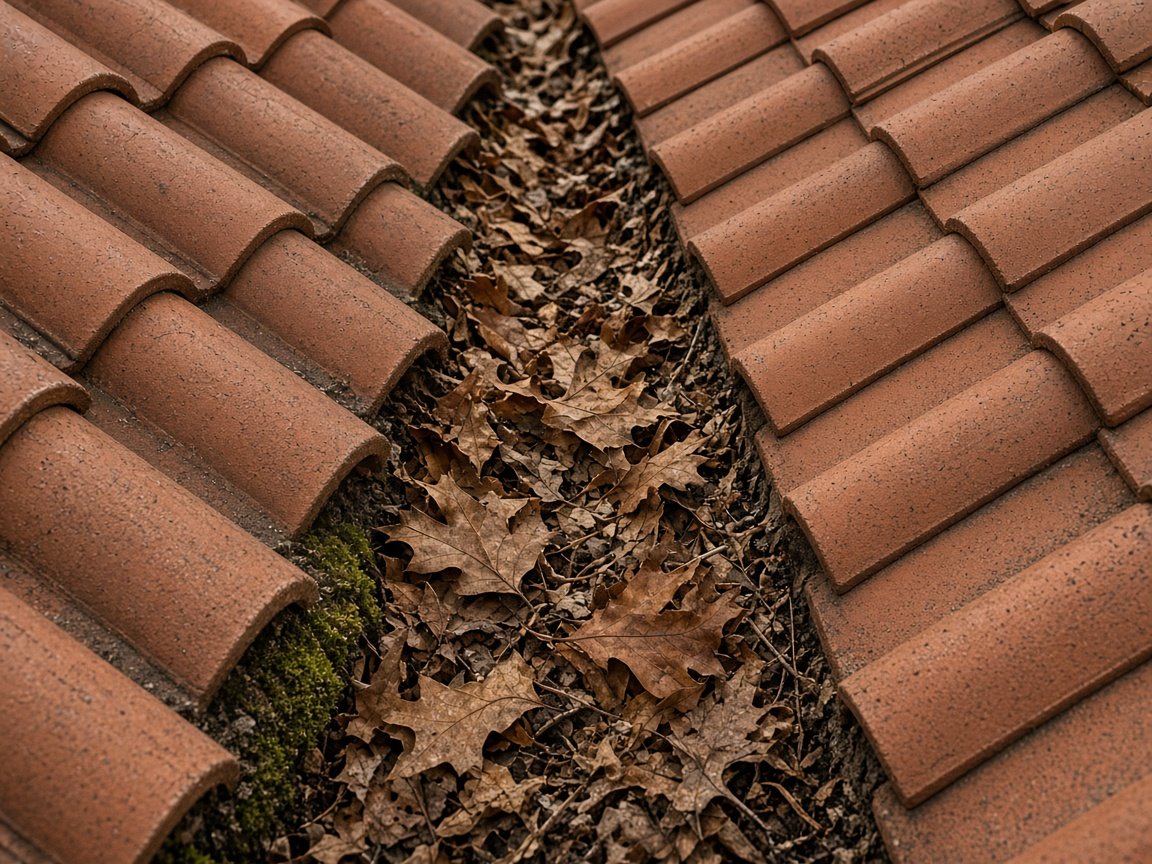
Common causes include debris, damaged metal and shifted cut tiles.
- Leaves and debris. TRI Alliance notes that moss can grow in the dirt, pine needles and other debris that builds up on the edge of the tile. A valley collects that debris from two slopes. [2]
- Rusted or holed valley metal. Older metal can wear through where water runs hardest.
- Slipped cut tiles. Cut pieces that lost their fasteners can shift and leave gaps.
- Mortar or debris dams. Anything that blocks the channel can push water sideways, under the tiles.
- Damaged metal from foot traffic. Stepping in a valley can bend the metal or crush the rib.
- Worn underlayment beneath. Once the underlayment fails, water that gets past the metal reaches the deck.
For more on valley problems in general, read what causes valley leaks and valley leaks: causes and damage.
Stay off the tile and look from the ground
Walking on a tile roof can cause the very damage you’re worried about.
TRI Alliance says walking on tile should be avoided and only done with extreme caution, and notes you may wish to contact a professional to clean the roof. [2]
From the ground, look for piles of debris in valleys, cut tiles that look out of line, and stains on ceilings below a valley. Binoculars help. If you see any of these, schedule an inspection. After a hailstorm or strong wind, it’s worth taking a look from the yard at each valley, since broken tile pieces and blown-in branches tend to end up there. If a live oak or other tree hangs over the roof, the valleys below it will collect leaves faster. Our roof tiles maintenance guide covers safe upkeep.
Tile valley repair or rebuild
The fix depends on whether the problem is on top of the metal or under it.
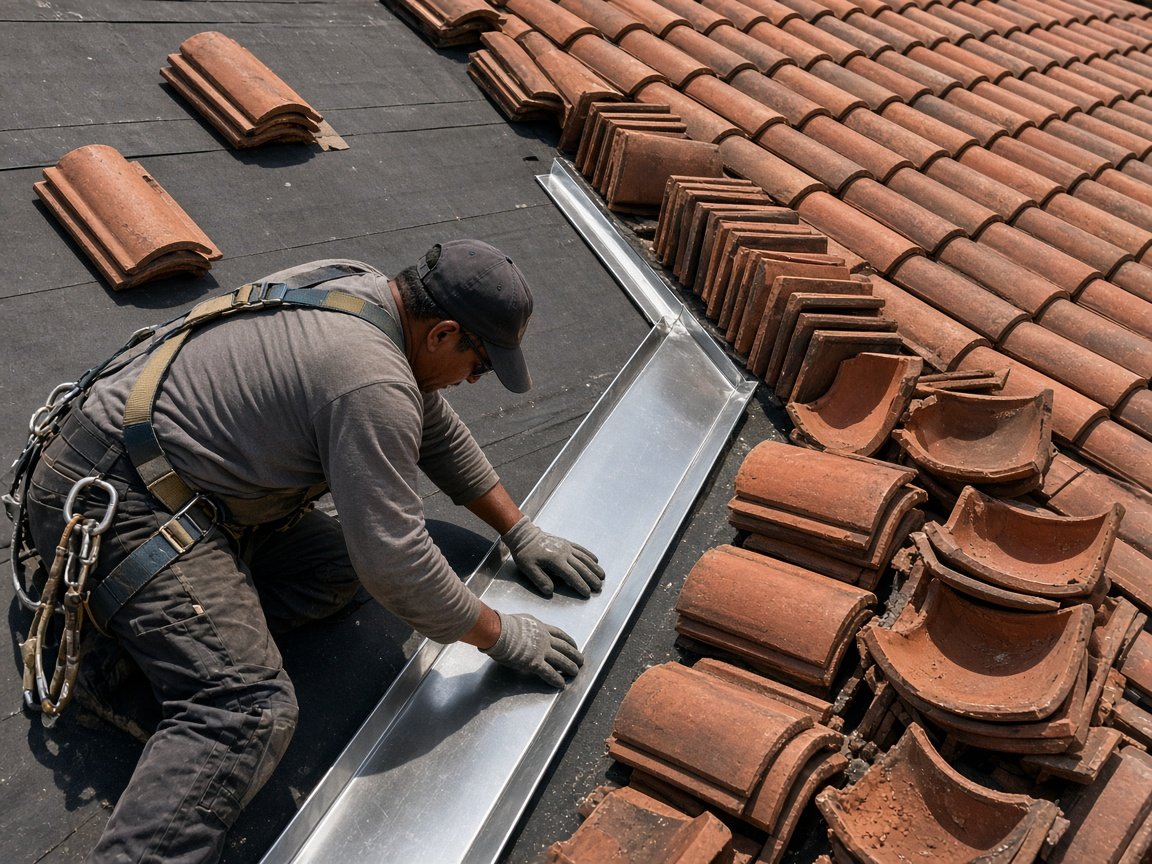
If debris or a few shifted cut tiles are to blame, clearing the valley and resetting the tiles may be enough. Replacing a damaged valley section is a bigger job: the tiles along the valley are lifted, the metal and underlayment beneath are replaced, and the cut tiles are relaid or replaced. Matching older tiles can be hard. If the underlayment is worn across the roof, a larger underlayment job may make more sense.
RRSATX offers tile roof repair, tile roof replacement and roof leak repair, along with work on concrete tile and clay tile roofs. See our tile roofing page for more. For flashing elsewhere on the roof, read roof flashing types and roof flashing repair. If a storm broke tiles near a valley, see concrete tile roof hail damage. Start with a free roof inspection.
Local roofing service
About Affordable Roofing Contractors San Antonio
Affordable Roofing Contractors San Antonio, also known as RRSATX, provides roof leak repair, roof repair, roof inspections, roof replacement, and asphalt, metal, and tile roofing in San Antonio. Our inspections are free, with no fee and no obligation, and you get a free written estimate before work starts. When you call, tell us where the stain is and which valley it’s under.
- Phone
- (713) 504-2341
- sales@affordableroofingcontractorssanantonio.com
- Address
- 4324 Monterey St, San Antonio, TX 78237
- Contact
- Request a free roof inspection
Tile roof valley flashing: questions answered
What is the difference between an open and a closed tile valley?
In an open valley, tiles are cut to expose the trough of the metal. In a closed valley, tiles are cut to meet at the center of the valley metal. [2]
What is the raised rib in the middle of the valley metal?
It’s a splash diverter rib at the flow line. The IRC requires one on tile valley flashing, as shown in the code callout above. [1]
Can I clean leaves out of my tile valleys myself?
TRI Alliance says walking on tile should be avoided and only done with extreme caution, and you may wish to contact a professional to clean the roof. [2]
Does a leaking tile valley mean I need a new roof?
Not necessarily. Some valley problems can be fixed by clearing debris, resetting cut tiles, or rebuilding the valley section. Widespread underlayment wear is a different conversation.
Can the old tiles be reused when a valley is rebuilt?
Often, if they come up without breaking. Cut pieces may need to be replaced, and matching older tiles can be hard.
How do I get my tile valleys checked by RRSATX?
Call (713) 504-2341 or use the contact page to book a free inspection.
Explore the roofing topic
More help with valleys and tile roofs
Get your tile valleys checked
Ask RRSATX for a free roof inspection and a written price for your San Antonio tile roof.