
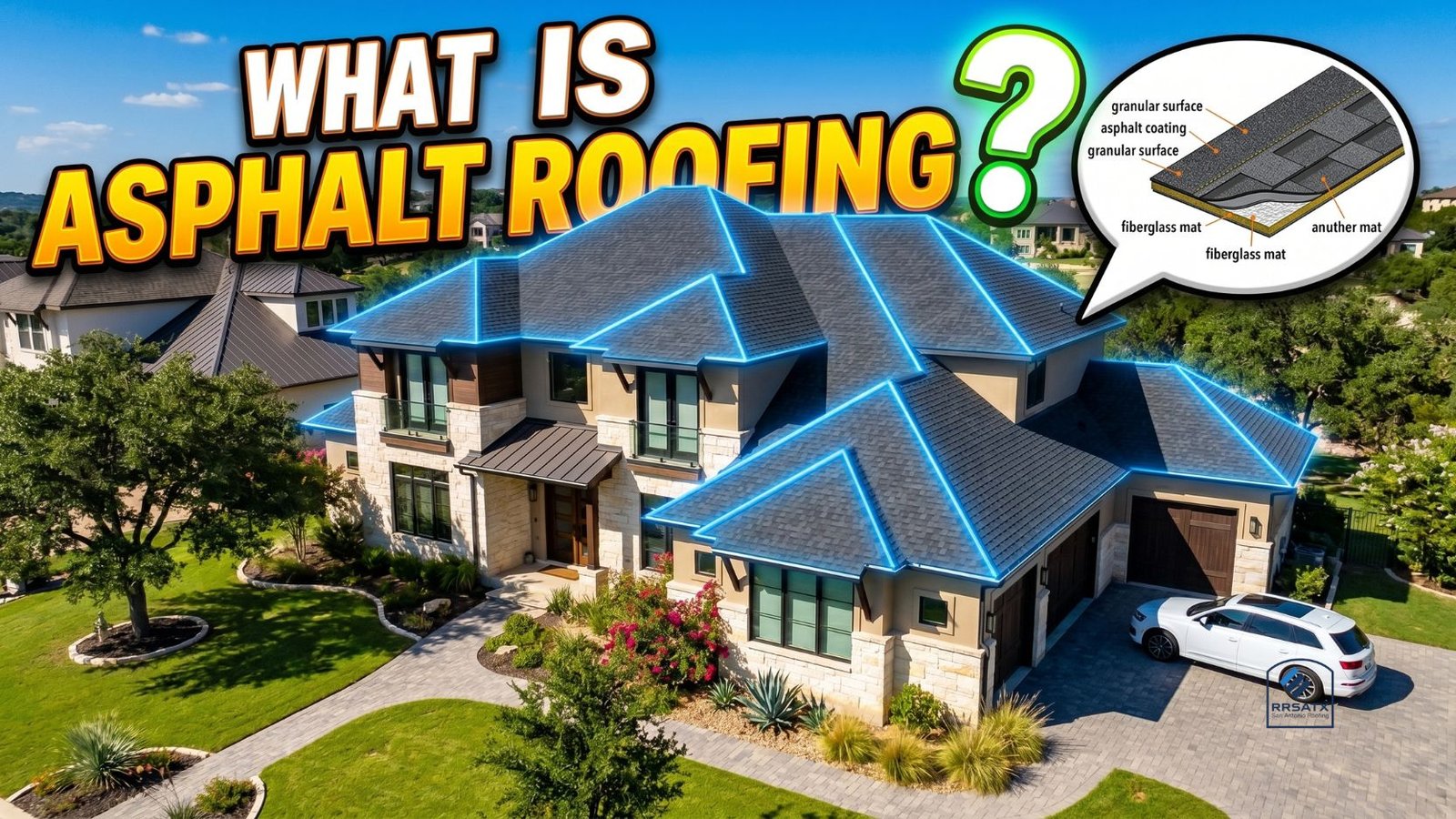
With 40 years of hands-on roofing experience and 80+ years of combined crew expertise serving South Texas, RRSATX: San Antonio Roofing Company helps homeowners and commercial property owners make informed roofing decisions. Based on real field experience with hail, heat, wind-driven rain, and storm wear, asphalt roofing (asphalt shingle roofing) is a residential roofing system built from asphalt shingles installed over underlayment, flashing, and ventilated roof decking to protect against leaks.
In simple terms, asphalt shingles are the “visible” layer but the performance comes from the full assembly: shingles plus underlayment, flashing, ventilation, and proper installation at roof edges, penetrations, and valleys.
What Exactly Counts As Asphalt Roofing?
Asphalt roofing usually refers to asphalt shingles installed as part of a complete shingle roof system.
A typical asphalt roof includes:
- Asphalt shingles (3-tab, architectural, or premium styles)
- Underlayment (adds a secondary water-shedding layer)
- Flashing around vents, chimneys, skylights, and sidewalls
- Ventilation to reduce heat/moisture buildup in the attic
- Roof decking (sheathing) that must be sound and properly nailed
Key takeaway: If shingles look fine but flashing, ventilation, or underlayment are failing, leaks can still develop especially in San Antonio’s storm cycles.
How Are Asphalt Shingles Installed For Weather Protection?
Proper installation is what turns asphalt shingles into reliable leak protection.
Even good materials can underperform if installed incorrectly. A high-performing asphalt roof depends on consistent work in critical zones:
- Edges and eaves: correct drip edge placement and sealing where needed
- Valleys: water routing is controlled to reduce overflow and leaks
- Penetrations: flashing design and fit around boots/vents matter
- Nailing patterns: correct nail placement supports wind resistance
- Ventilation: keeps attic temperatures and moisture balanced
Local context: In South Texas, intense sun and temperature swings can accelerate aging, while hail and wind can loosen edges or damage the shingle surface. That’s why a system-level inspection matters after storms, not just a quick look from the ground.
What Types Of Asphalt Shingles Are Available?
Asphalt roofing comes in multiple shingle styles, each with different durability and appearance.
| Shingle type | Common look | Typical performance focus |
| 3-tab asphalt shingles | Flat, traditional lines | Budget-friendly coverage |
| Architectural shingles | Dimensional, layered appearance | Better thickness/tear resistance |
| Premium asphalt shingles | Higher-end textures and color depth | Often chosen for curb appeal + longevity |
RRSATX commonly discusses these options based on your roof’s condition, pitch/complexity, and whether you’re planning a repair or a replacement.
How Long Does Asphalt Roofing Last In San Antonio?
Asphalt shingle roofs are often marketed with long warranties, but real lifespan depends on installation quality and weather exposure.
Manufacturers typically rate asphalt shingles in the multi-year to multi-decade range, but in real San Antonio conditions, factors that shorten or extend service life include:
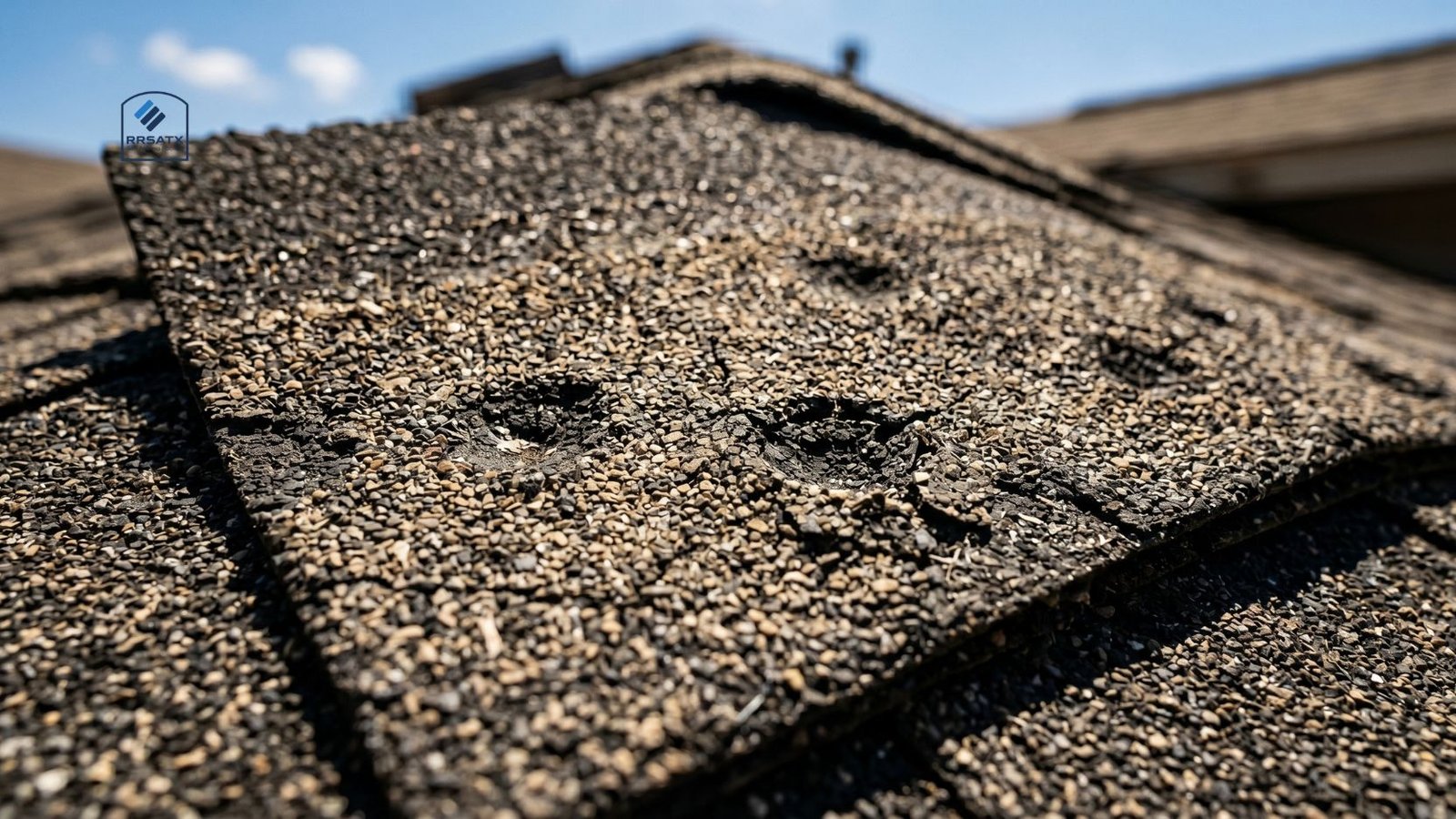
- Hail impacts and granule loss
- Wind uplift at edges, ridges, and hips
- Attic ventilation and heat/moisture management
- Underlayment age (sometimes neglected during “shingle-only” decisions)
- Roof complexity (more valleys/penetrations often increases risk points)
Key takeaway: If your roof is 15–20+ years old, it may not be “just time” it may be time to inspect the whole system.
Is Asphalt Roofing Good For Hail And High Winds?
Asphalt roofing can perform well in hail and wind when installed correctly and when the product matches local conditions but storm damage can be hidden.
After hailstorms, visible damage may include cracked/cupped shingles or exposed granules. But even when the surface looks mostly intact, asphalt roofs can develop:
- Lifted shingle edges
- Damaged sealing strips
- Micro-cracking from impact
- Hidden water intrusion pathways at flashing/valleys
For San Antonio homeowners and commercial property owners, a post-storm inspection helps document what happened, locate vulnerable areas, and confirm whether repair or replacement is the safest long-term move.
When Should You Repair Asphalt Shingles VS Replace Them?
Repair is usually best for localized problems; replacement is often smarter when damage is widespread or recurring.
Consider repair when the issue is limited, such as:
- A small leak traceable to a flashing point or vent area
- A handful of missing/cracked shingles
- Localized storm damage with no broader deterioration
Consider replacement when you see patterns like:
- Repeated leaks in multiple areas
- Large sections of damaged shingles/granule loss
- Sagging, soft decking, or structural concerns
- Ventilation or underlayment problems that can’t be fully corrected with spot fixes
If you’re deciding for a home sale, insurance claim, or commercial maintenance plan, RRSATX emphasizes clear recommendations based on what the roof system shows, not guesses.
FAQs
How Can I Tell If My Asphalt Roof Has Storm Damage?
Look for granule loss, cracked/cupped shingles, lifted edges, and signs of leaks in the attic/ceilings. Because hail and wind damage can be hidden, an inspection is the most reliable way to confirm severity.
What Causes Asphalt Shingles To Fail Early?
Common causes include poor ventilation, flashing/penetration wear, incorrect nail placement, underlayment aging, and storm impacts that gradually loosen the roof surface.
What Is The Smartest Next Step If My Roof Is Leaking?
Stop the leak pathway first (tarps/temporary mitigation if needed), then schedule a professional inspection to identify the source of often flashing, valleys, or ventilation-related moisture, not just a damaged shingle.