
[et_pb_section fb_built=”1″ admin_label=”section” _builder_version=”4.16″ global_colors_info=”{}”][et_pb_row admin_label=”row” _builder_version=”4.16″ background_size=”initial” background_position=”top_left” background_repeat=”repeat” global_colors_info=”{}”][et_pb_column type=”4_4″ _builder_version=”4.16″ custom_padding=”|||” global_colors_info=”{}” custom_padding__hover=”|||”][et_pb_code _builder_version=”4.27.6″ _module_preset=”default” hover_enabled=”0″ global_colors_info=”{}” sticky_enabled=”0″]
Metal and tile are two of the most durable roofing materials available to San Antonio homeowners, but their costs are not close. This guide breaks down what each material actually costs to install in San Antonio, how the numbers shift over time with maintenance and energy bills, and which roof gives you more value for every dollar spent.
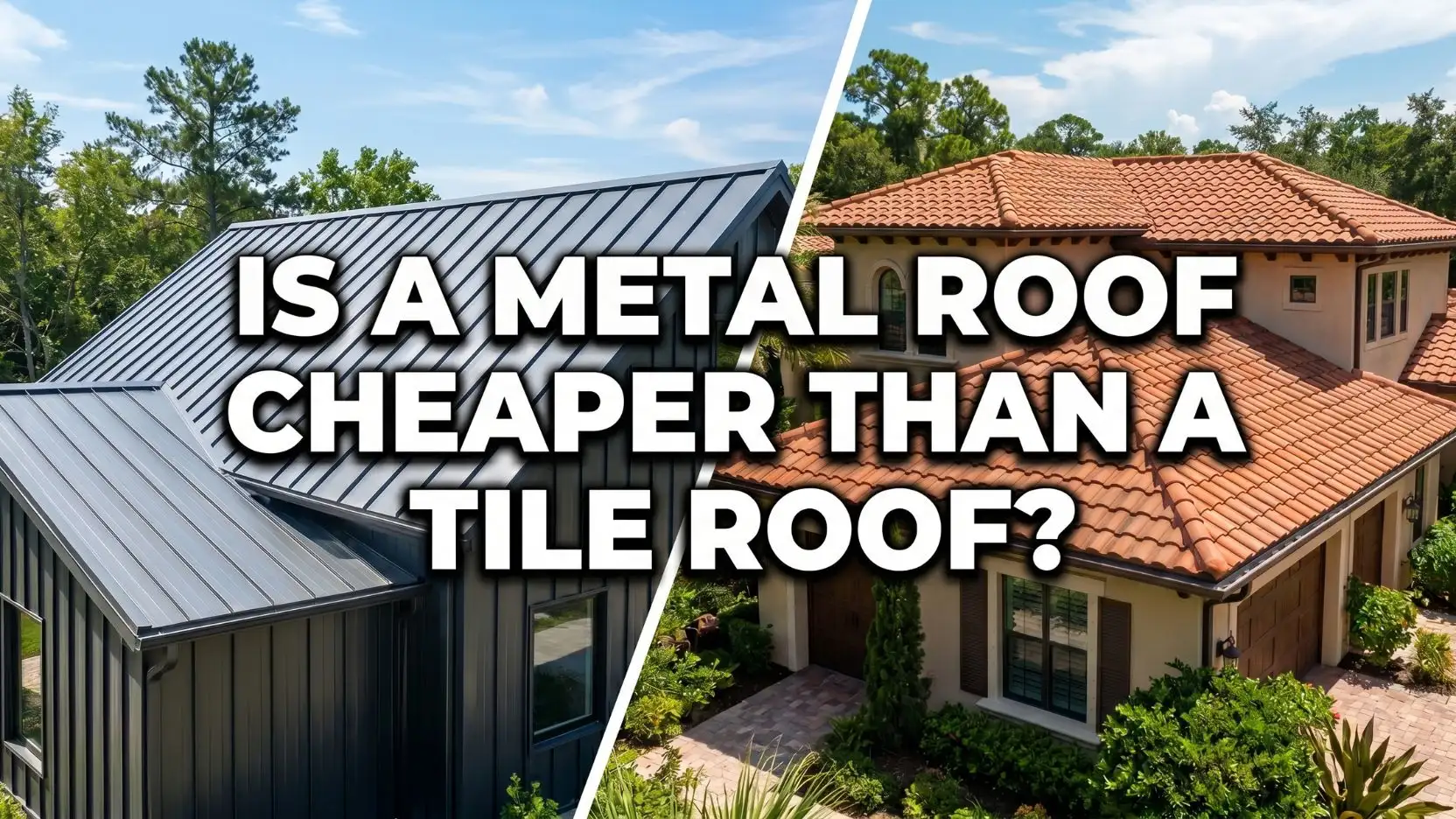
Metal roofing and tile roofing are both marketed as premium, long-lasting choices for San Antonio homes. Both are a significant step up from asphalt shingles in terms of durability and curb appeal. But when San Antonio homeowners ask whether a metal roof is cheaper than a tile roof, the honest answer is: yes, in most cases, and by a wider margin than most people expect.
The upfront installed price of a metal roof typically runs 20 to 40 percent below clay tile. That gap widens further when you factor in labor costs, structural requirements, maintenance over the life of the roof, and energy savings in the Texas heat. This guide walks through every cost category side by side so you can make an accurate comparison for your specific home and budget.
A clay tile roof and a metal roof with similar installed costs do not have the same true cost over 30 years. Maintenance frequency, energy efficiency, structural requirements, insurance rates, and the probability of needing a replacement sooner all affect the real number. This guide compares both the upfront cost and the lifetime cost so you can see the full picture before you commit to either material.
Material Cost
Roofing costs are quoted per square foot of installed roof area, and the gap between metal and tile materials is significant at every tier. Metal roofing starts at the lower end of the premium roofing range. Clay tile starts in the mid-range and climbs sharply for hand-molded or imported products. Concrete tile sits between the two in material cost but carries its own labor and structural expenses.
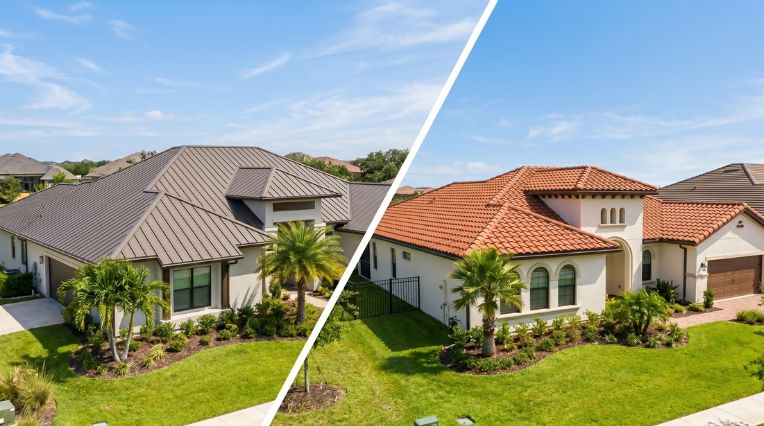
Metal roofing materials: Exposed-fastener corrugated or ribbed steel panels are the entry point, running $1.50 to $4.00 per square foot for materials alone. Standing seam metal panels, which are the premium option with concealed fasteners and better thermal performance, run $4.00 to $8.00 per square foot for materials. Aluminum panels cost slightly more than steel but are lighter and more corrosion resistant.
Tile roofing materials: Concrete tile materials run $2.50 to $5.50 per square foot. Clay tile materials start at $5.00 per square foot and can reach $15.00 or more for premium Spanish or mission-profile tiles. Slate tile is in a different cost category entirely, typically running $10.00 to $30.00 per square foot just for materials.
- Quote specifies the exact panel profile or tile type, not just “metal” or “tile”
- Underlayment type included: synthetic felt for metal, heavier felt or foam for tile
- Flashing material specified: copper, galvanized steel, or aluminum
- Ridge cap material and installation method described
- Tear-off and disposal of the existing roof included or excluded with a separate line item
- Structural assessment included or offered as a separate step before final quote
Installation
Installation labor is where the cost difference between metal and tile becomes even more pronounced. Metal roofing panels are lightweight, fast to install, and do not require the same structural support as tile. A crew can typically install a residential metal roof in one to two days. Tile installation is slower, heavier, and more physically demanding on the roof structure. For many San Antonio homes built in the last 30 to 40 years, a tile roof installation requires a structural evaluation and potential reinforcement of the roof deck and framing before the first tile ever gets lifted onto the roof.
Metal panels are installed in long runs that cover large sections of the roof quickly. Standing seam panels clip onto the deck without exposed fasteners, which speeds up the process further. Tile installation requires each piece to be individually placed, aligned, and fastened. Broken tiles during handling are common and add to the material cost. On steep-pitch San Antonio roofs, the physical difficulty of moving heavy tile increases labor hours and the risk of tile cracking before it even reaches its final position.
If you are considering tile on a San Antonio home built after 1985, budget for a structural inspection before you accept a tile quote. Many homes from this era were built with roof framing designed for asphalt shingles, which weigh 2 to 4 lbs per square foot. Adding clay or concrete tile at 6 to 12 lbs per square foot without assessing the framing is a code and safety issue. A structural engineer evaluation runs $300 to $600. If reinforcement is needed, the additional framing and decking work typically adds $1,500 to $6,000 to the project cost. Metal roofing does not trigger this requirement because it weighs less than shingles.
- Structural assessment completed before tile quote is finalized and signed
- Any required framing reinforcement included in the tile project budget as a separate line item
- Labor quote specifies the roof pitch category: low, standard, or steep
- Broken tile allowance included in the tile material quote (typically 5 to 10 percent extra)
- Metal roofing quote confirms the panel profile and whether it is exposed-fastener or standing seam
- Tear-off and disposal cost confirmed in writing for both material types
Maintenance
Metal and tile both have long lifespans when properly installed, but their ongoing maintenance profiles are very different. A metal roof in San Antonio requires periodic inspections, occasional fastener checks, and sealant maintenance around penetrations. A tile roof requires all of that plus a unique set of vulnerabilities that metal simply does not share: individual tiles crack and break, tiles slip out of position over time, the mortar used at ridges and hips deteriorates, and organic growth including moss and lichen is a more common issue on tile surfaces than on metal coatings in the Texas humidity.
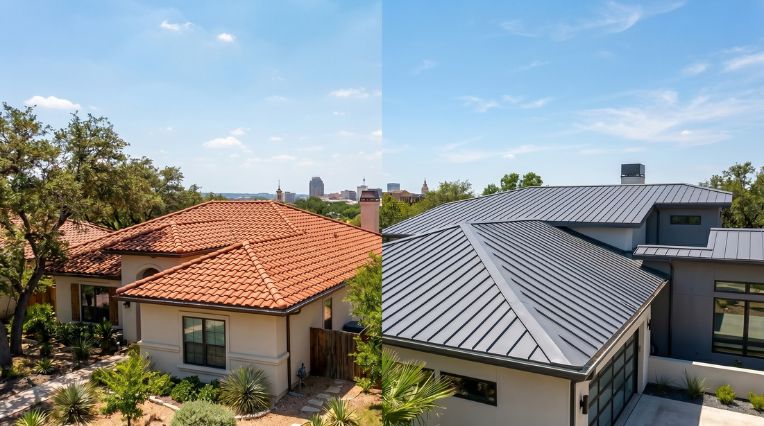
Metal roof maintenance in San Antonio: Inspect every two to three years. Check fasteners and sealant around penetrations, flashings, and ridge caps. A metal roof that was properly installed and receives basic maintenance can go 40 to 70 years without major intervention. Annual maintenance cost is typically $0 to $200 per year once the roof is past its first five-year period.
Tile roof maintenance in San Antonio: Tiles crack and break from foot traffic, hail, and the stress of thermal cycling in Texas temperatures. Replacing a single broken clay tile in San Antonio runs $150 to $400 depending on tile availability and the access required. Ridge mortar and hip mortar need re-pointing every 15 to 20 years, typically costing $800 to $2,500. Underlayment under tile typically lasts 20 to 30 years and must be replaced even if the tiles themselves are still serviceable.
- Budget a professional metal roof inspection every two to three years ($150 to $300 per visit)
- For tile roofs, confirm tile manufacturer and profile before closing on an older home – discontinued tiles are expensive to match
- Ask the tile installer for the underlayment product and warranty – it is the layer that actually keeps water out
- Metal roof: check sealant at all penetrations and flashings every three years
- Tile roof: walk the roof visually after every hail event to identify cracked or displaced tiles
- Budget ridge and hip mortar inspection for tile roofs at the 15-year mark regardless of visible condition
Hidden Savings
The cost comparison between metal and tile does not end at the installation quote. Metal roofing carries a set of financial advantages specific to the San Antonio market that reduce the true cost gap even further over time. The three most significant are energy efficiency in the Texas heat, homeowners insurance premium positioning, and resale value contribution.
San Antonio averages over 220 sunny days per year and summer temperatures that push roof surface temperatures well past 150 degrees Fahrenheit on dark-coated surfaces. A reflective metal roof with a light or medium-colored finish can reduce rooftop solar heat absorption by 40 to 70 percent compared to a dark tile surface, translating to meaningful reductions in air conditioning load and monthly energy bills. The U.S. Department of Energy has documented energy savings of 10 to 25 percent on cooling costs in hot climates from cool metal roofing systems.
Call your homeowners insurance carrier before choosing between metal and tile. In Texas, many insurers offer meaningful discounts for Class 4 impact-resistant metal roofing because it performs better in hail events than tile. Stone-coated steel and standing seam metal panels that carry a UL 2218 Class 4 impact rating can qualify for premium reductions of 20 to 35 percent with some Texas carriers. Clay tile does not typically qualify for the same impact-resistance discount because it cracks under large hail. A $200 to $400 annual insurance savings on a metal roof compounds significantly over a 30-year ownership period.
- Request a Class 4 impact rating confirmation from your metal roofing contractor before installation
- Call your insurance carrier before the roof is installed to confirm discount eligibility and documentation requirements
- Choose a lighter roof color (tan, light gray, or galvalume natural) to maximize reflectivity in the San Antonio heat
- Ensure attic insulation meets current standards before the new roof goes on – maximum energy savings require both
- Request a signed statement from the contractor confirming the panel’s impact resistance classification for your insurance file
- Track energy bills for 12 months before and after installation to document actual savings
30-Year Cost
Running the 30-year total cost of ownership comparison on a representative San Antonio home shows just how significant the difference between metal and clay tile becomes over time. The numbers below are based on a 2,200 square foot roof area, which is a typical footprint for a 2,000 square foot San Antonio home. All figures reflect 2026 San Antonio market conditions.
| Cost Category | Metal Roof (30 years) | Clay Tile (30 years) | Concrete Tile (30 years) |
|---|---|---|---|
| Installation (materials and labor) | $19,800 to $35,200 | $33,000 to $55,000 | $22,000 to $39,600 |
| Structural reinforcement | Not typically required | $1,500 to $6,000 (if needed) | $1,500 to $5,000 (if needed) |
| 30-year maintenance costs | $1,500 to $4,500 | $9,000 to $24,000 | $6,000 to $18,000 |
| Underlayment replacement | Not required in 30-year window | $3,000 to $8,000 | $2,500 to $6,000 |
| Energy savings (30 years) | -$18,000 to -$54,000 | Minimal (dark tile absorbs heat) | Low to moderate |
| Insurance premium savings (30 yrs) | -$6,000 to -$18,000 (if Class 4) | None typical | None typical |
| Estimated 30-year net cost | $0 to $16,700 (net after savings) | $46,500 to $93,000 | $32,000 to $68,600 |
The 30-year net cost figures above account for energy and insurance savings on metal only because those are the categories where metal has the most documented and consistent advantage. Tile does not disappear as an option in the comparison; clay tile, particularly on high-end San Antonio homes in historic or luxury neighborhoods, carries aesthetic and resale benefits that matter to certain homeowners in ways that are difficult to quantify in a cost table. But purely from a financial standpoint, metal roofing is less expensive to own over a 30-year period in the vast majority of San Antonio residential scenarios.
- Get written quotes for both metal and tile before making a final decision
- Ask each contractor to confirm whether a structural assessment is included in the tile quote
- Request energy performance data for the specific panel or tile being proposed
- Contact your insurance carrier for a quote under both scenarios before signing any contract
- Confirm tile availability: discontinued profiles create expensive matching problems 15 to 20 years out
- Factor in the roof’s remaining life if this is a replacement project: metal will almost certainly outlast tile on cost per year owned
This table summarizes every major cost and performance factor side by side. Use it as a reference when comparing contractor quotes or evaluating which material fits your specific home and budget.
| Factor | Metal Roofing | Clay Tile | Concrete Tile |
|---|---|---|---|
| Installed cost per sq ft (San Antonio, 2026) | $9 to $16 | $15 to $25 | $10 to $18 |
| Expected lifespan | 40 to 70 years | 50 to 100 years | 30 to 50 years |
| Weight (lbs per sq ft) | 1 to 3 | 6 to 10 | 9 to 12 |
| Structural reinforcement required? | Rarely | Often, on homes built post-1980 | Often, on homes built post-1980 |
| Hail performance | Excellent (Class 4 available) | Poor to moderate (cracks under large hail) | Poor to moderate (chips and cracks) |
| Energy efficiency in Texas heat | High (reflective coatings available) | Moderate (barrel profile allows air circulation) | Moderate |
| Average annual maintenance cost | $0 to $200 | $300 to $800 | $200 to $600 |
| Underlayment replacement needed? | No, in standard 30-year window | Yes, at 20 to 30 years | Yes, at 20 to 30 years |
| Insurance discount potential (Texas) | Yes, with Class 4 rating | No typical discount | No typical discount |
| Curb appeal in San Antonio | High, especially standing seam | Very high in traditional and luxury styles | Moderate to high |
| Suitable for older homes without structural upgrades? | Yes | Requires assessment | Requires assessment |
- Written quote received for both metal and tile from a licensed San Antonio roofing contractor
- Tile quote includes structural assessment or explicitly states that assessment is the homeowner’s responsibility
- Insurance carrier contacted to compare premium impact of metal Class 4 vs tile before signing
- 30-year cost estimate requested from the contractor or calculated using the framework in this guide
- Energy bill history pulled so post-installation savings can be tracked against a real baseline
- Home’s roof framing age confirmed: homes built before 1985 are more likely to already be sized for heavier loads
- HOA rules checked: some San Antonio neighborhoods restrict visible metal roofing or require tile
- Tile profile availability confirmed: if matching existing tile, verify the manufacturer still produces the profile
- Metal panel profile and color selected with energy reflectivity in mind: lighter colors outperform dark in San Antonio
- Class 4 impact rating confirmed in writing if insurance discount is part of the financial case for metal
- Contractor holds a valid Texas roofing license and can provide certificate of insurance with at least $1 million in general liability
- References from San Antonio metal or tile jobs completed in the last two years requested and checked
- Warranty terms confirmed in writing: manufacturer material warranty separate from workmanship warranty
- Project timeline and crew size confirmed before signing – tile installations take longer than metal
- Payment schedule reviewed: no more than 10 percent deposit required before work begins on a residential project
Is a metal roof cheaper than a tile roof in San Antonio?
Does a tile roof last longer than a metal roof?
Which is better for San Antonio weather, metal or tile?
Why is clay tile so much more expensive than metal roofing?
Does a metal roof save money on energy bills in San Antonio?
Is tile roofing ever the better choice over metal in San Antonio?
Get a free metal vs. tile roofing quote in San Antonio
Tell us about your home and we will give you a side-by-side written estimate for both metal and tile so you can compare the real numbers before you decide.
[/et_pb_code][/et_pb_column][/et_pb_row][/et_pb_section]