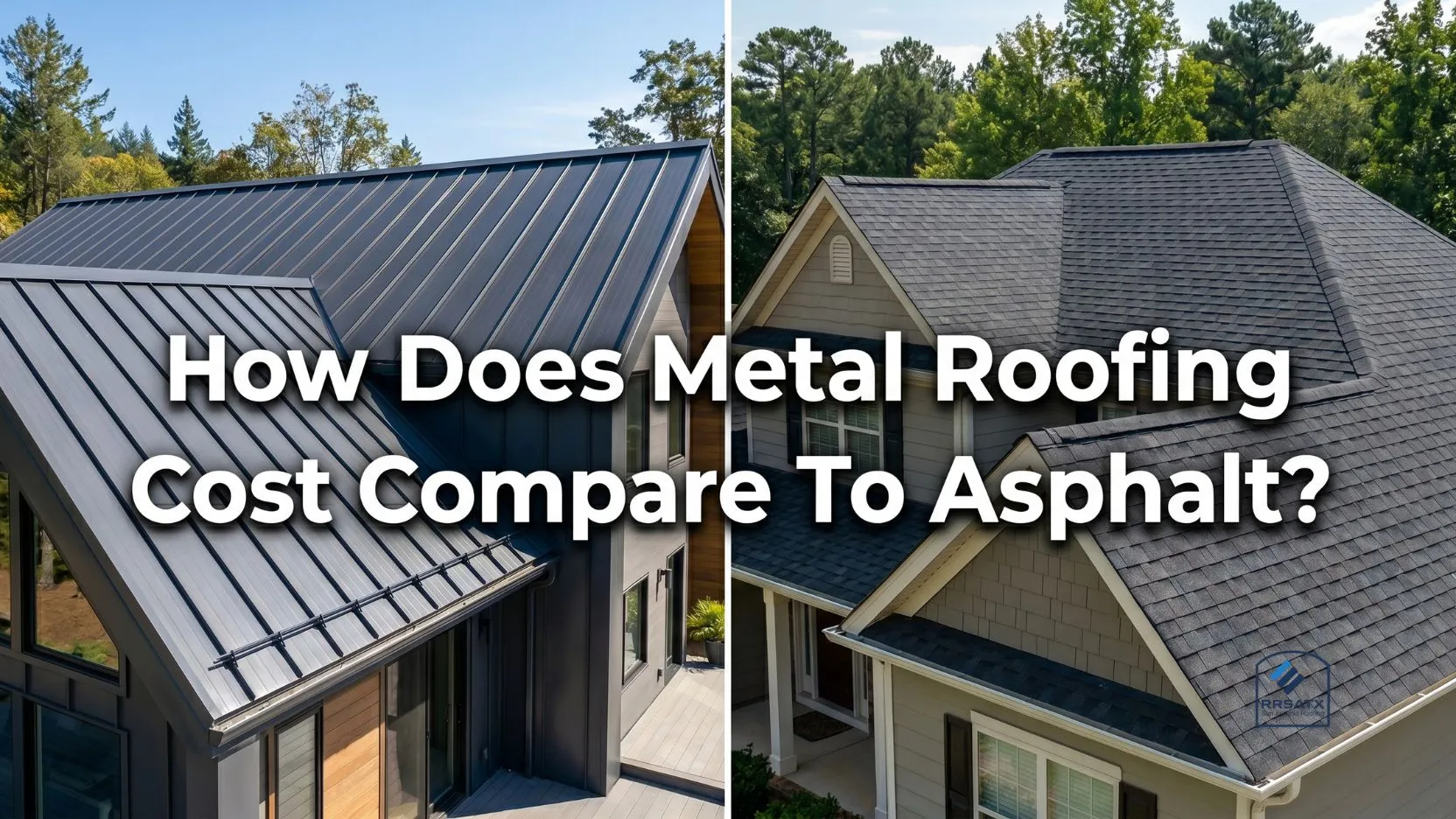
How does metal roofing cost compare to asphalt

How Does Metal Roofing Cost Compare To Asphalt?

Home 9 Metal Roofing San antonio 9 How Does Metal Roofing Cost Compare To Asphalt?
How Does Metal Roofing Cost Compare to Asphalt? San Antonio TX | Affordable Roofing Contractors San Antonio
Metal Roofing Cost Guide San Antonio, TX

Metal costs more upfront than asphalt shingles. But when you factor in lifespan, maintenance, energy savings, and resale value in the San Antonio climate, the math shifts in a direction most homeowners do not expect. This guide breaks down every number.

Metal roof cost San Antonio Metal vs asphalt shingles Cost comparison · Long-term value Residential roofing · San Antonio TX Updated 2026
R
Ted
With over 30 years of residential and commercial roofing experience across San Antonio and Bexar County, our crews have installed and replaced both metal and asphalt roofing systems on thousands of Texas homes. Every cost figure in this guide comes from real jobs we have completed in the San Antonio market, not national averages pulled from the internet.
· affordableroofingcontractorssanantonio.com · Licensed and Insured · $2M Liability Coverage · 100+ Five-Star Reviews
Part of our complete metal roofing investment guide
Is a Metal Roof a Good Investment for a Rental Property? (Complete Guide)
$4–7
Per sq ft installed cost for asphalt shingles in San Antonio (3-tab to architectural)
$9–18
Per sq ft installed cost for metal roofing in San Antonio depending on material and profile
2x+
Longer lifespan of a metal roof compared to a standard asphalt shingle roof in Texas heat
25%
Potential reduction in cooling costs for San Antonio homes with a reflective metal roof system

The most common question San Antonio homeowners ask when they are choosing between metal and asphalt is a simple one: how much more does metal cost? The short answer is that metal roofing typically runs two to three times the upfront installed price of a standard architectural asphalt shingle roof on the same house. On a 2,000-square-foot San Antonio home, that difference can range from $8,000 to $18,000 depending on the metal type, panel profile, and roof complexity.

But the upfront number is only part of the picture. Asphalt shingles in the San Antonio climate typically last 15 to 20 years before they need full replacement. A standing seam metal roof installed on the same house will last 40 to 60 years with minimal maintenance. When you calculate the cost over that full period, including two or three asphalt replacements versus one metal installation, the gap narrows significantly, and for many homeowners it reverses entirely.

This guide breaks down the real installed costs for both roofing systems in San Antonio in 2026, covers what drives the price differences within each category, and gives you the honest lifetime cost math so you can make a decision based on actual numbers rather than first impressions.

The framing principle that changes how you evaluate roofing costs: price per installation versus price per year of service

A roof that costs $12,000 and lasts 20 years costs $600 per year. A roof that costs $22,000 and lasts 50 years costs $440 per year. Most homeowners compare roofing options by the check they write today. The contractors who give you the most useful advice compare options by what you actually spend over the time you own the property. In San Antonio's climate, that framing almost always favors metal for anyone planning to stay in their home longer than 15 years.

● ● ●
Five cost categories every San Antonio homeowner should compare
Metal roofing vs. asphalt shingles: a full cost breakdown for San Antonio
01
Upfront installed cost what you pay on day one in San Antonio
The number most homeowners lead with, and the one that most often leads to the wrong decision
Upfront Cost

Installed roofing costs in San Antonio reflect labor, materials, tear-off of the existing roof, underlayment, and all associated trim and flashing work. The ranges below are based on current San Antonio market pricing for a standard residential roof with average complexity. Steeper pitches, multiple valleys, skylights, and chimneys increase the price on both systems.

$4–7/sqft
3-tab asphalt
3-tab asphalt shingles (entry level): The most affordable roofing option installed in San Antonio. Limited wind resistance and a shorter lifespan than architectural grades. Rarely the right choice for a permanent residence in Bexar County's hail corridor.
$5–8/sqft
architectural asphalt
Architectural (dimensional) asphalt shingles: The most common asphalt upgrade and the standard comparison point for most San Antonio homeowners weighing asphalt against metal. Better wind ratings, better aesthetics, and longer warranty periods than 3-tab.
$9–12/sqft
corrugated metal
Corrugated or exposed-fastener metal panels: The entry point for metal roofing in San Antonio. More affordable than standing seam and adequate for most residential applications, though fastener maintenance is required over the life of the roof.
$12–18/sqft
standing seam
Standing seam metal roofing: The premium metal option and the one with the longest expected lifespan. No exposed fasteners means no fastener maintenance and virtually no leak points outside of flashings. The highest upfront cost but the lowest long-term maintenance burden of any residential roofing system.
On a 2,000-square-foot San Antonio home with a simple to moderate roof shape, an architectural asphalt shingle replacement typically runs $10,000 to $16,000 installed. A corrugated metal installation on the same house runs $18,000 to $24,000. A standing seam system runs $24,000 to $36,000. Those are the real numbers our crews are pricing in 2026, not contractor estimates pulled from national databases.
Roof size: Every extra square of area increases the gap between systems proportionally Pitch: Steep roofs add labor cost to both systems, but metal installation is more technical Tear-off layers: Multiple asphalt layers increase the base cost before any new material goes on Complexity: Valleys, dormers, and penetrations add cost to both systems equally
What to verify in any San Antonio roofing quote
  • Tear-off and disposal of existing roofing included some contractors quote material only
  • Underlayment specified by brand and type synthetic underlayment is the San Antonio standard for both systems
  • All flashings (drip edge, chimney, valleys, pipe boots) included in the scope
  • Permit pulled by the contractor required for full replacements in San Antonio and Bexar County
  • Manufacturer warranty documentation provided at completion, not just the contractor's warranty
02
Lifespan and replacement cycles where the real cost difference lives
Asphalt and metal have very different replacement timelines in the San Antonio climate
Lifespan

Manufacturer warranties on architectural asphalt shingles often run 30 years, which gives many homeowners an inflated sense of how long the product will actually last in South Texas. San Antonio's climate intense UV exposure from June through September, temperatures that push asphalt to the edge of its thermal tolerance, and periodic hail events significantly shortens real-world shingle life compared to cooler, less severe climates.

In our experience installing and replacing roofs across Bexar County, architectural asphalt shingles in San Antonio typically need full replacement at the 15-to-20-year mark. The warranty covers manufacturing defects, not accelerated aging from climate. A metal roof installed in San Antonio today, properly maintained, should still be performing well in 40 to 60 years.

Roofing System Expected Lifespan in San Antonio Replacements in 50 Years Typical Maintenance
3-tab asphalt shingles 12 to 18 years 3 to 4 full replacements Periodic resealing; granule loss accelerates with age
Architectural asphalt shingles 15 to 22 years 2 to 3 full replacements Flashing inspection every 5 years; algae treatment in shaded areas
Corrugated / exposed-fastener metal 30 to 45 years 1 to 2 full replacements Fastener inspection and resealing every 10 to 15 years
Standing seam metal 40 to 60 years 0 to 1 full replacements Flashing inspection every 10 years; minimal otherwise
San Antonio note

Asphalt warranties are written for national averages, not for South Texas. A 30-year shingle will reach the end of its practical service life significantly earlier in San Antonio than in, say, Denver or Seattle. The UV index in San Antonio is among the highest in the continental United States, and asphalt is a petroleum-based product that degrades under sustained UV exposure. If you are comparing a 50-year metal warranty to a 30-year asphalt warranty, understand that the asphalt warranty is covering you against defects, not against the normal effects of being a San Antonio roof for three decades.

Questions to ask before accepting a roofing warranty at face value
  • Is the warranty prorated or non-prorated? Prorated warranties pay out less the older the roof is.
  • Does the warranty transfer to a new owner if you sell the home?
  • What voids the warranty? Poor ventilation is the most common warranty-voiding condition in San Antonio attics.
  • Is the installer certified by the manufacturer? Some full warranty coverage requires a certified installer.
  • What does the workmanship warranty cover, and for how long? This is the contractor's warranty, separate from the manufacturer's.
03
Ongoing maintenance costs what you spend between installations
Metal and asphalt have meaningfully different maintenance profiles over a 20-to-40-year ownership period
Maintenance

Neither metal nor asphalt is a zero-maintenance roofing system, but the maintenance demands and costs are significantly different. Asphalt shingles require periodic inspection, flashing resealing, gutter cleaning, and algae or moss treatment in shaded areas. As the shingles age, granule loss accelerates, and repair callouts become more frequent in the final five years of the roof's life.

Metal roofing requires less frequent maintenance and the repair events tend to be more isolated. On exposed-fastener systems, the primary maintenance task is periodic inspection and replacement of fasteners and sealant, typically every 10 to 15 years. Standing seam systems have virtually no fastener maintenance requirement and the most common service call is flashing resealing at chimneys, skylights, and vent penetrations.

$200–600
per event / asphalt
Asphalt shingle repair (isolated section): Blown-off shingles after high-wind events, cracked or cupped shingles in aging sections, and localized leak repairs at flashings. Frequency increases noticeably in the last five years before replacement.
$150–500
per event / metal
Metal roof maintenance event (fasteners or sealant): Fastener tightening and washer replacement, sealant reapplication at seams and penetrations, flashing adjustment. Less frequent than asphalt but important to address on schedule to prevent water intrusion.
$1,200–2,500
per roof / every 12-15 yrs
Full fastener pass on exposed-fastener metal: Every fastener on a screw-down metal roof should be inspected and any backed-out or deteriorated screws replaced on a 12-to-15-year cycle. This is a planned maintenance cost that most metal roof owners are not warned about at installation.
The maintenance cost advantage of metal over asphalt is real, but it is not zero. The homeowners who are most disappointed in their metal roofs are usually those who were told it was maintenance-free and then discovered their exposed-fastener system needed fastener and sealant work 12 years into ownership. The right framing is lower maintenance, not no maintenance.
Maintenance schedule comparison: 20-year outlook
  • Year 5: Both systems full visual inspection, gutter cleaning, flashing check
  • Year 10: Asphalt granule loss assessment, algae treatment if needed. Metal fastener and sealant inspection
  • Year 15: Asphalt likely first localized section repair or spot replacement. Metal fastener pass if exposed-fastener system
  • Year 18 to 22: Asphalt full replacement becoming necessary. Metal still in active service life with decades remaining
04
Energy efficiency and cooling costs a meaningful advantage in San Antonio
Reflective metal roofing can measurably reduce air conditioning costs in South Texas summers
Energy Savings

San Antonio's summer heat makes roof energy performance a practical financial consideration rather than a marketing talking point. A standard dark asphalt shingle roof can reach surface temperatures of 150 to 175 degrees Fahrenheit on a July afternoon in San Antonio. That heat radiates into the attic and increases the load on your air conditioning system throughout the day and into the evening.

A reflective metal roof with a light or medium-tone coating can reduce that surface temperature by 50 to 80 degrees Fahrenheit compared to dark asphalt. The Department of Energy has documented cooling cost reductions of 10 to 25 percent for homes in hot climates that install Energy Star-rated reflective metal roofing. In San Antonio, where summer air conditioning bills are a significant household expense, that reduction adds up to real savings year after year.

How does metal roofing cost compare to asphalt?

The cooling cost math for a typical San Antonio home: If your household spends $250 per month on electricity from June through September, roughly $125 of that is cooling. A 20 percent reduction from a reflective metal roof saves approximately $25 per month during the four-month peak cooling season. That is $100 per year in energy savings. Over 40 years, that adds up to $4,000 in direct savings, and that calculation uses conservative figures and does not account for rising electricity rates.

Roof color matters: Light and medium tones reflect significantly more solar energy than dark coatings Energy Star rated: Look for this certification on metal panels for documented reflectance values Attic ventilation: Proper ridge and soffit venting multiplies the benefit of a reflective roof Asphalt "cool roofs": Light-colored asphalt options exist but cannot match the reflectance of coated metal
Utility tip

CPS Energy, San Antonio's municipal utility, periodically offers rebates for Energy Star-rated roofing products. Before you finalize your roofing decision, check the current CPS Energy residential rebate program and ask your contractor whether the metal roofing system they are proposing qualifies. Rebate availability changes year to year, but when the program is active it can reduce the upfront cost gap between metal and asphalt by several hundred dollars. The CPS Energy website maintains the current rebate schedule.

Energy performance questions to ask your roofing contractor
  • Does the proposed metal panel carry an Energy Star rating for solar reflectance?
  • What is the Solar Reflectance Index (SRI) rating of the specific color and coating you are recommending?
  • Is there adequate ridge and soffit ventilation in place to allow the attic to exhaust the heat that is reflected off the roof surface?
  • Will the roof coating maintain its reflectance over time, or does it degrade with UV exposure and require recoating?
05
Lifetime cost comparison the number that actually determines which roof costs less
Over a 40-to-50-year period, the real total cost of asphalt and metal in San Antonio often ends up closer than homeowners expect
Total Value

The most useful way to compare metal and asphalt roofing costs in San Antonio is to look at what you would spend on each system over a fixed period: the expected lifespan of one metal roof installation. The example below uses a 2,000-square-foot home with an average-complexity roof and conservative cost assumptions on both sides.

Cost Category Architectural Asphalt (over 50 years) Standing Seam Metal (over 50 years)
Initial installation $13,000 (2026 dollars) $30,000 (2026 dollars)
Second full replacement (~year 18) $17,000 (estimated future cost) Not required
Third full replacement (~year 36) $21,000 (estimated future cost) Not required
Ongoing maintenance (50 years) $6,000 to $9,000 estimated $3,000 to $5,000 estimated
Energy savings offset (50 years) Minimal $4,000 to $8,000 estimated
Estimated total outlay $57,000 to $63,000 $29,000 to $35,000

These are illustrative figures that use 2026 San Antonio pricing and apply a modest 3 percent annual cost increase to future asphalt replacements, which historically understates how roofing costs have actually risen. The metal roof scenario assumes one system serves the full 50-year period with normal maintenance. Even with the significant upfront premium, standing seam metal comes out ahead on total cost over a 50-year horizon in most San Antonio scenarios.

The honest caveat: the lifetime math only works if you own the home long enough

If you plan to sell the home within 5 to 10 years, the lifetime cost advantage of metal does not have time to materialize for you personally. A fresh architectural asphalt roof raises the appraised value of a home and attracts buyers. A standing seam metal roof may or may not appraise for its full premium in the current San Antonio market. If your planning horizon is short, the upfront cost difference matters more and asphalt may be the more practical choice. If you are in your long-term home or managing a rental property you plan to hold, metal becomes the financially superior option at the 15-to-20-year mark.

Factors that shift the lifetime math toward metal in San Antonio
  • Planning to own the home for 15 or more years the crossover point where metal total cost catches up to asphalt
  • High cooling costs homes with large square footage or poor attic ventilation benefit more from metal's reflectance
  • Frequent hail exposure metal roofing sustains less damage per event than asphalt, meaning fewer insurance claims and lower deductible costs over time
  • Rental property ownership one roof installation serving a 40-year hold is a significant operating cost reduction
  • Resale positioning metal roofing is an increasingly recognized value marker in the San Antonio real estate market
● ● ●
Making the right call for your situation
When asphalt makes more sense and when metal is the better investment

There is no single right answer to the metal vs. asphalt question for every San Antonio homeowner. The right choice depends on your planning horizon, your budget, your home's existing structure, and how you weigh upfront cost against long-term ownership cost.

Decision guide for San Antonio homeowners
Use these criteria to determine which roofing system fits your specific situation
Choose architectural asphalt shingles if...
  • You plan to sell the home within 7 to 10 years and a fresh roof is primarily a resale asset
  • Your current budget does not accommodate the metal upfront premium and financing is not a preferred option
  • Your roof structure needs significant decking repair and you want to minimize total project scope
  • The neighborhood's price range limits how much roofing premium the market will support at resale
  • You want a faster, simpler installation with more installer options in the San Antonio market
Choose metal roofing if...
  • You are in your long-term home and want to do this once for the next 40 to 50 years
  • You own a rental property in San Antonio and want to minimize maintenance and replacement cycles
  • Your energy bills are high and your attic ventilation is good enough to take advantage of reflective metal's cooling benefit
  • You have had recurring hail damage claims on your asphalt roof and want a system that handles impact better
  • You want the roof to be a genuine long-term asset rather than a recurring replacement expense
  • You can finance the upfront difference at a reasonable rate the lifetime savings often cover the financing cost
● ● ●
Common questions answered
FAQs
Q
How much more does metal roofing cost than asphalt in San Antonio?
On a typical 2,000-square-foot San Antonio home, metal roofing installed costs roughly two to three times what architectural asphalt shingles cost. Architectural asphalt typically runs $10,000 to $16,000 installed. Corrugated or exposed-fastener metal runs $18,000 to $24,000. Standing seam metal runs $24,000 to $36,000. The exact gap depends on the specific metal type, panel profile, roof complexity, and current material pricing. These figures reflect 2026 San Antonio market costs from our own active job pricing.
Q
Is metal roofing worth the extra cost in San Antonio?
For homeowners who plan to stay in their home for 15 or more years, metal roofing is worth the extra upfront cost in most San Antonio scenarios. The combination of a longer lifespan, lower maintenance costs, better performance in hail events, and measurable energy savings typically closes the cost gap by year 15 to 20 and produces net savings over a 40-to-50-year ownership period. For homeowners planning to sell within 10 years, the math is less compelling and asphalt may be the more practical choice for that specific situation.
Q
How long does asphalt shingles actually last in San Antonio compared to the warranty?
In our experience replacing roofs across Bexar County, architectural asphalt shingles in San Antonio typically reach the end of their practical service life at 15 to 20 years, even though manufacturer warranties often run 30 years. Those warranties are defect warranties, not wear warranties, and they do not account for the accelerated aging caused by San Antonio's high UV index, sustained heat, and periodic hail. The 30-year number is a national average figure that does not reflect South Texas conditions. Homeowners who budget for replacement at year 20 are planning realistically; homeowners who plan on 30 years are usually surprised.
Q
Does metal roofing save money on energy bills in San Antonio?
Yes, measurably, but the savings depend on the specific metal product, the roof color, and the quality of attic ventilation. A reflective metal roof with an Energy Star rating can reduce cooling costs by 10 to 25 percent compared to a dark asphalt shingle roof on the same house in San Antonio's climate. For a household spending $200 to $300 per month on electricity during summer, that represents real annual savings. The benefit is highest on homes with good attic ventilation and a light-to-medium roof color. Attic insulation improvements paired with a reflective metal roof produce the largest combined cooling cost reductions.
Q
Can I install metal roofing directly over my existing asphalt shingles?
In many cases, yes. Most San Antonio jurisdictions allow one layer of metal to be installed over one existing layer of asphalt shingles, provided the decking is in sound condition. Installing over the existing shingles eliminates the tear-off and disposal cost, which can reduce the total project price by $1,000 to $2,500 on a typical residential job. However, it also means you cannot inspect the decking for rot or damage during installation, and the additional weight must fall within the structural limits of your roof framing. A qualified San Antonio metal roofing contractor will assess your current roof condition and the local code requirements before recommending an overlay versus a full tear-off installation.
Q
What metal roofing material is the most affordable option in San Antonio?
Corrugated steel panels and exposed-fastener Galvalume or painted steel panels are the most affordable metal roofing options in San Antonio, typically running $9 to $12 per square foot installed. These systems deliver the core benefits of metal roofing durability, impact resistance, and longevity at a price point that is closer to the high end of architectural asphalt pricing. The trade-off compared to standing seam is that exposed-fastener systems require periodic fastener and sealant maintenance and have more potential leak points over time. For homeowners who want metal performance at a lower entry price, corrugated steel is a legitimate option when installed by a contractor who is honest about the maintenance schedule.
More from Affordable Roofing Contractors San Antonio
Explore more expert resources from Affordable Roofing Contractors San Antonio, including guides on metal roofing costs, lifespan, and investment value. Learn about affordable metal roof options and professional metal roofing services in San Antonio, TX.

Get a free metal vs. asphalt roofing estimate in San Antonio

Tell us about your home, your goals, and your timeline. We will walk your roof, assess your current system, and give you a clear side-by-side cost comparison with no pressure and no obligation.