
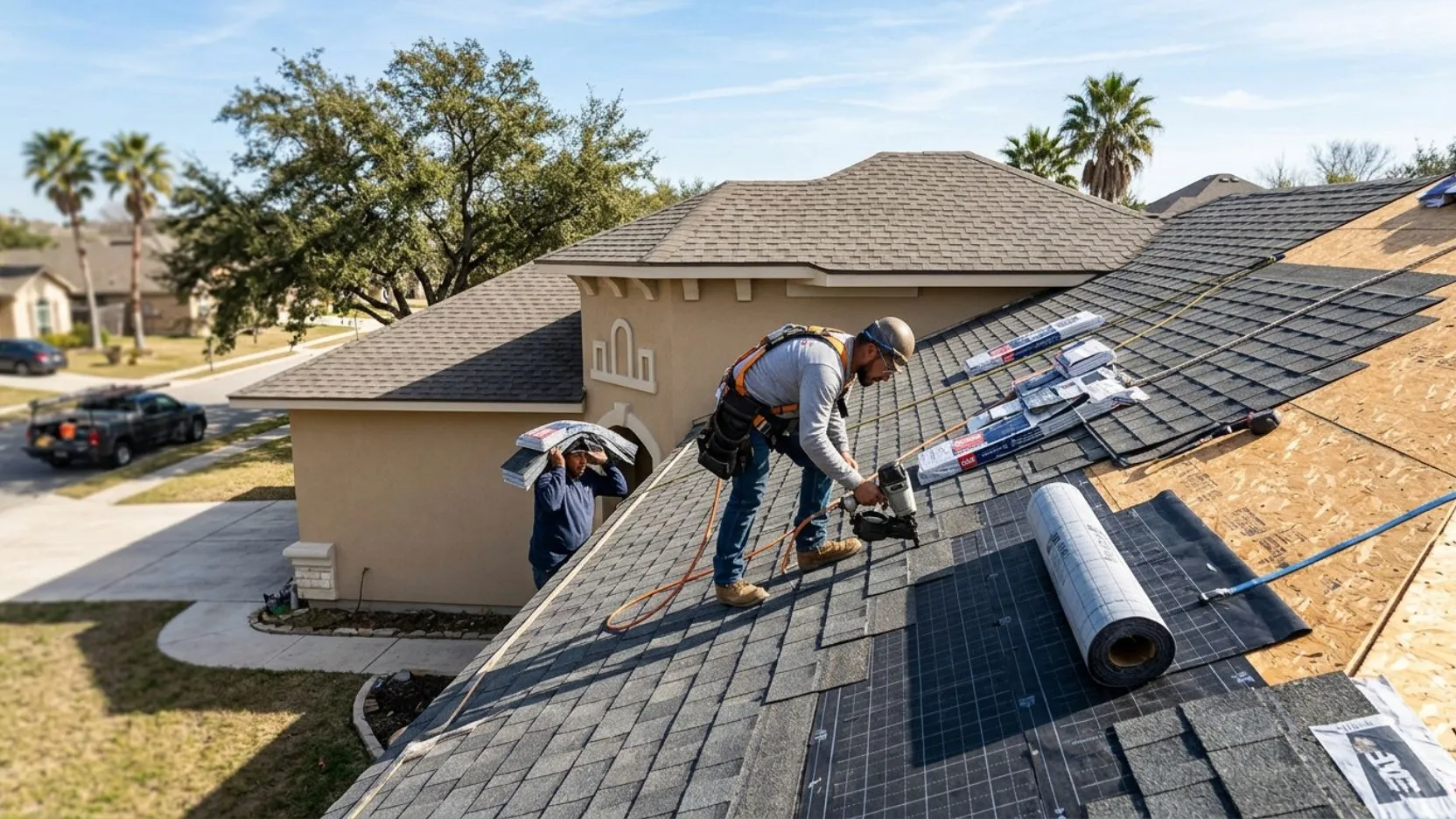
Roof installation · San Antonio, Texas
How Does a Roof Installation Work in San Antonio?
A new roof is a layered system, not just the shingles on top. This guide walks through each stage of a roof installation in San Antonio, what to ask at every step, and what to get in writing before you approve a job.
The short answer
A roof installation in San Antonio follows a set order: an on-roof inspection and written estimate, a city permit, property protection and full tear-off, a decking check, then underlayment, flashing, and the surface material, ending with cleanup and a final inspection. The City of San Antonio requires a permit to repair or replace a roof, [1] and the work must meet the building code. [2] Ask for each stage in writing before you approve a job.
Start with an on-roof inspection and a written estimate
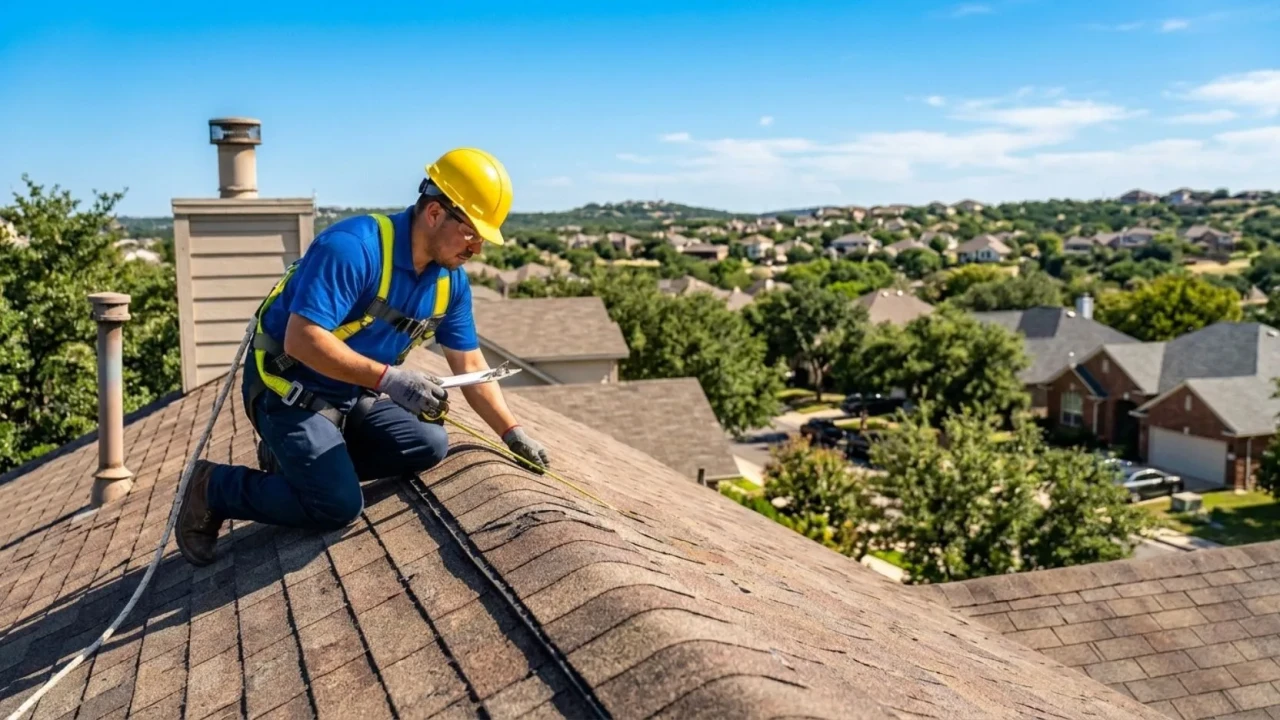
A sound installation begins with a technician on the roof, not a number over the phone.
During the inspection, the roof is measured and the pitch, access, current covering, and the condition of the deck are checked, along with any soft spots or signs of past leaks. The findings then drive the material and the scope. What you should receive is a written, itemized estimate that lists the material, the underlayment, the flashing scope, the tear-off scope, and the cleanup, rather than a single lump sum.
Decking damage can stay hidden until the old roof comes off, so it helps to ask how any deck replacement will be priced and approved before work starts. That keeps a surprise on tear-off day from becoming a large, unexplained charge.
- The roof is inspected in person, not quoted sight unseen.
- The estimate is itemized: material, underlayment, flashing, tear-off, and cleanup.
- Any decking replacement is priced and approved before work begins.
- The surface material brand, line, and color are confirmed in writing.
You can book the first step through the RRSATX free roof inspection service. For a deeper look at the paperwork, read roof layers explained for new installs.
Choosing a roofing material for San Antonio
There is no single right material, only the right fit for your home, your roof shape, and your budget.
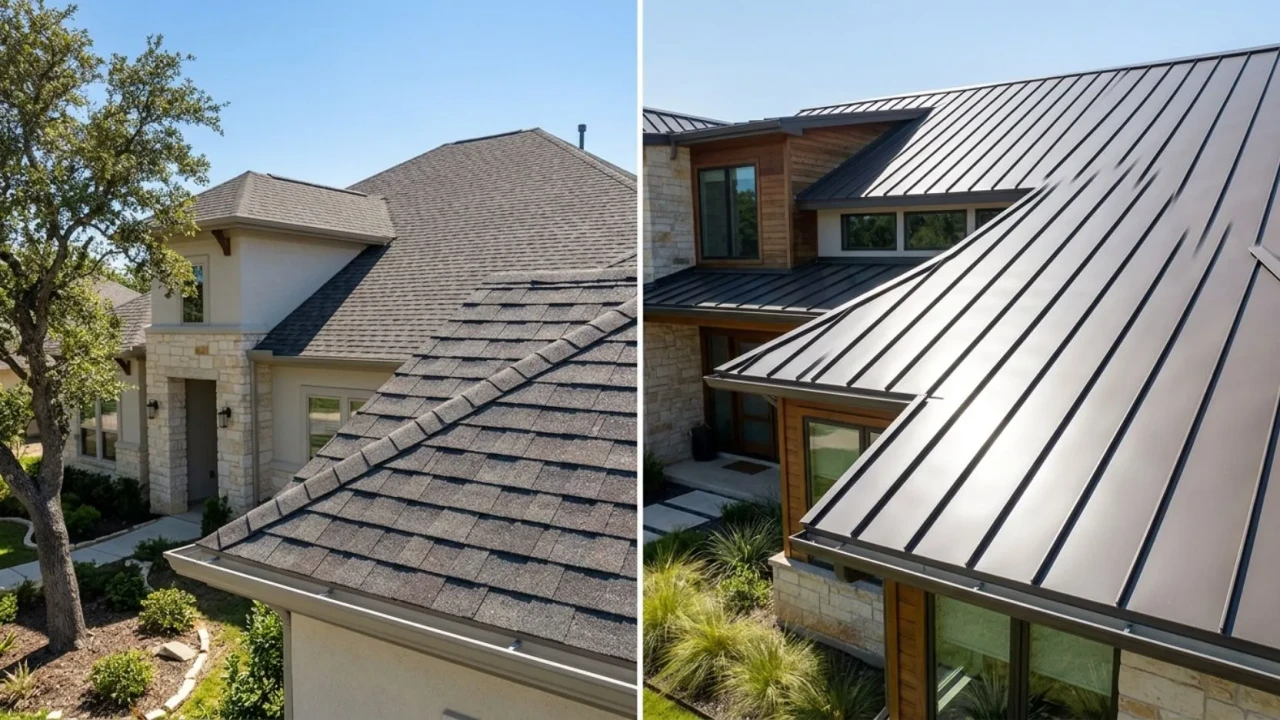
San Antonio roofs face long hours of summer sun, high heat, and the chance of hail or wind storms, so homeowners here weigh durability alongside cost and appearance. Asphalt shingles are a common pitched-roof covering; metal and tile are also used, and flat or low-slope sections usually need a membrane instead of shingles. Ask the technician to explain which options suit your roof shape and pitch during the inspection.
| Material | What it is | Where it often fits |
|---|---|---|
| Architectural asphalt shingle | Layered asphalt shingles nailed to a sheathed deck | Many pitched roofs |
| Standing seam metal | Interlocking metal panels with concealed fasteners | Homes where the owner wants a clean metal panel look |
| Exposed-fastener metal panel | Metal panels screwed through the face | Outbuildings and simpler metal roofs |
| Clay or concrete tile | Heavy molded tile units laid over underlayment | Spanish and Mediterranean home styles |
| Low-slope membrane | A single-ply or built-up sheet for flat areas | Flat or low-slope sections like porches and additions |
Compare the RRSATX asphalt roofing and metal roofing pages when you prepare your questions. This guide does not quote a price or lifespan for any material; a reliable figure needs a defined scope and a current estimate for your roof.
Permits and building code for a new roof
A roof replacement inside the city needs a permit, and the work has to meet the adopted code.
The City of San Antonio Development Services Department says a permit is required for repairing or replacing a roof. [1] A homeowner can obtain the permit or hire a registered Home Improvement Contractor for non-structural work. [1] The International Residential Code sets the basics for the assembly: asphalt shingles are fastened to a solidly sheathed deck, with not less than four fasteners per strip shingle, and underlayment, drip edge, and flashing are applied as the code and the manufacturer’s instructions direct. [2]
Code is adopted and amended locally, so confirm the requirements for your property and scope with the City of San Antonio Development Services Department before work begins. For a plain-language overview, see roofing permits: what homeowners need to know.
Property protection and full tear-off
On installation day, the crew protects the property before anything comes off the roof.
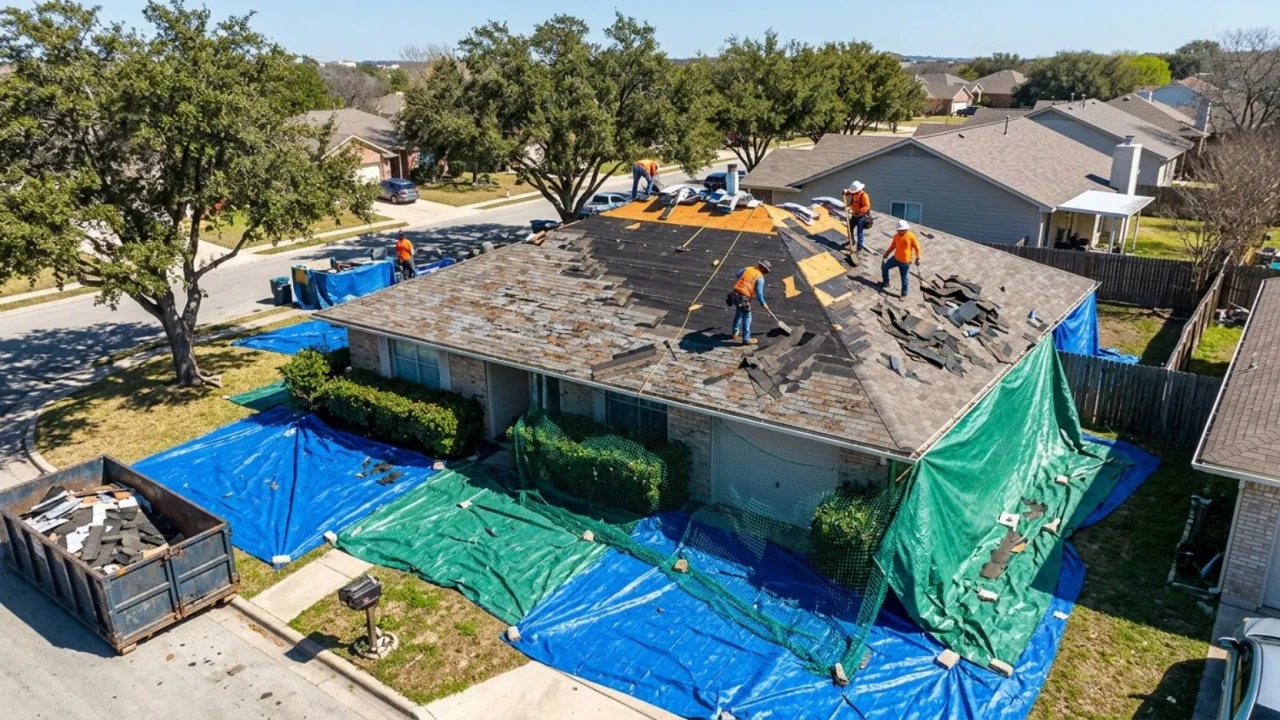
Tarps and sheets of plywood shield landscaping, the foundation, windows, the pool, and outdoor equipment from falling debris. The old roofing is then removed. Under the building code, a roof replacement includes removing the existing roof coverings down to the roof deck. [2] The code allows a roof recover without tear-off in some cases, but not where the existing roof is water-soaked or has deteriorated, or where there are already two or more layers of roof covering. [2]
A full tear-off exposes the deck so hidden problems can be found and fixed, which is why RRSATX recommends asking for a tear-off quote when you replace a roof. Ask how debris will be contained and hauled, and confirm that the property will be swept for stray nails at the end.
For the trade-offs between covering and removing an old roof, read roof overlay vs full tear-off.
Decking inspection and repair
With the old roof gone, the deck is visible, and this is where hidden problems show up.
The deck is the plywood or OSB sheathing the whole roof rests on. The crew walks it for soft spots, water staining, rot, and damaged sheets. Because asphalt shingles must be fastened to a solidly sheathed deck, [2] any failing sheets are replaced before new material goes down, and fasteners will not hold well in compromised wood. This is the step the earlier estimate should have priced, so a per-sheet rate agreed up front keeps replacement from becoming a dispute.
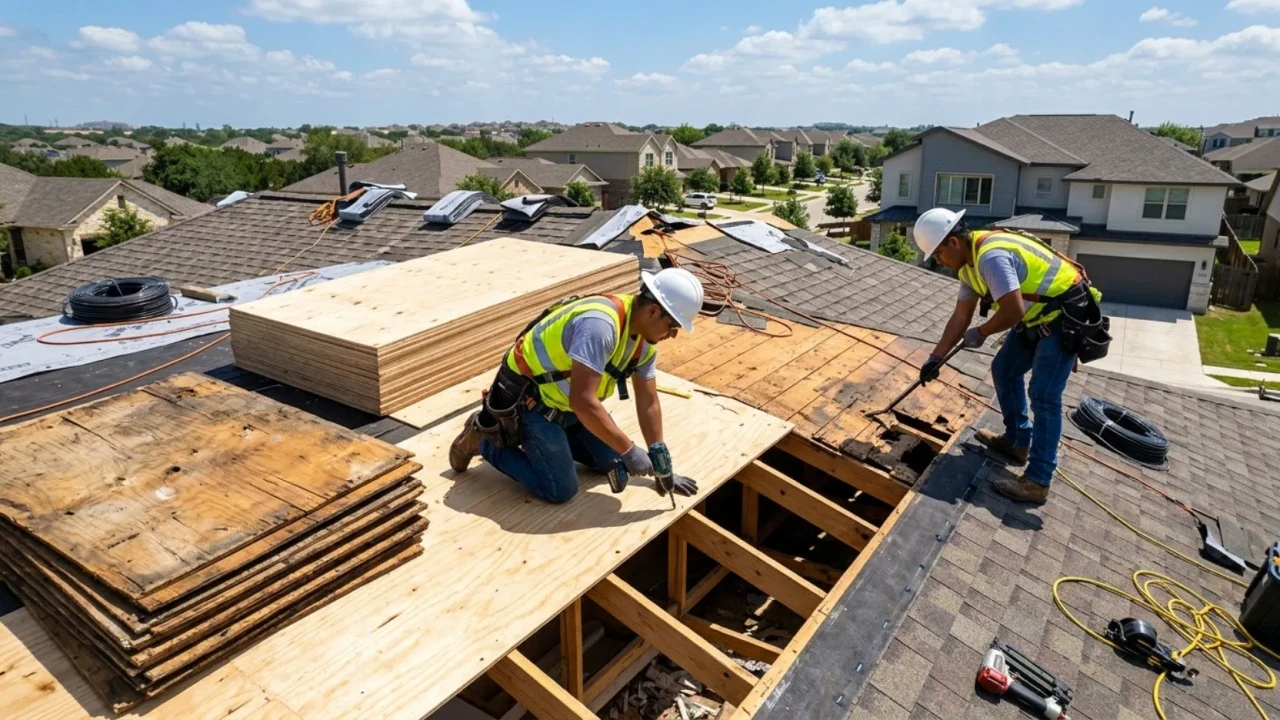
For why this layer matters, read how roof decking impacts longevity.
Underlayment and drip edge over the deck
The underlayment is the layer most homeowners never see, and it quietly protects the deck.
The Asphalt Roofing Manufacturers Association says underlayment provides a secondary layer of protection beneath the shingles to shield the deck from wind-driven rain. [4] It describes felt and newer synthetic underlayments, and a self-adhering membrane that is used at eaves and as secondary protection on ridges, hips, and valleys, and around penetrations. [4] The building code sets how many layers apply by slope and requires a drip edge at the eaves and rake edges of shingle roofs. [2]
This is a spot where corners can be cut, so when you compare estimates, confirm the underlayment type and where any self-adhering membrane is being applied. For more, see what is a roofing underlayment.
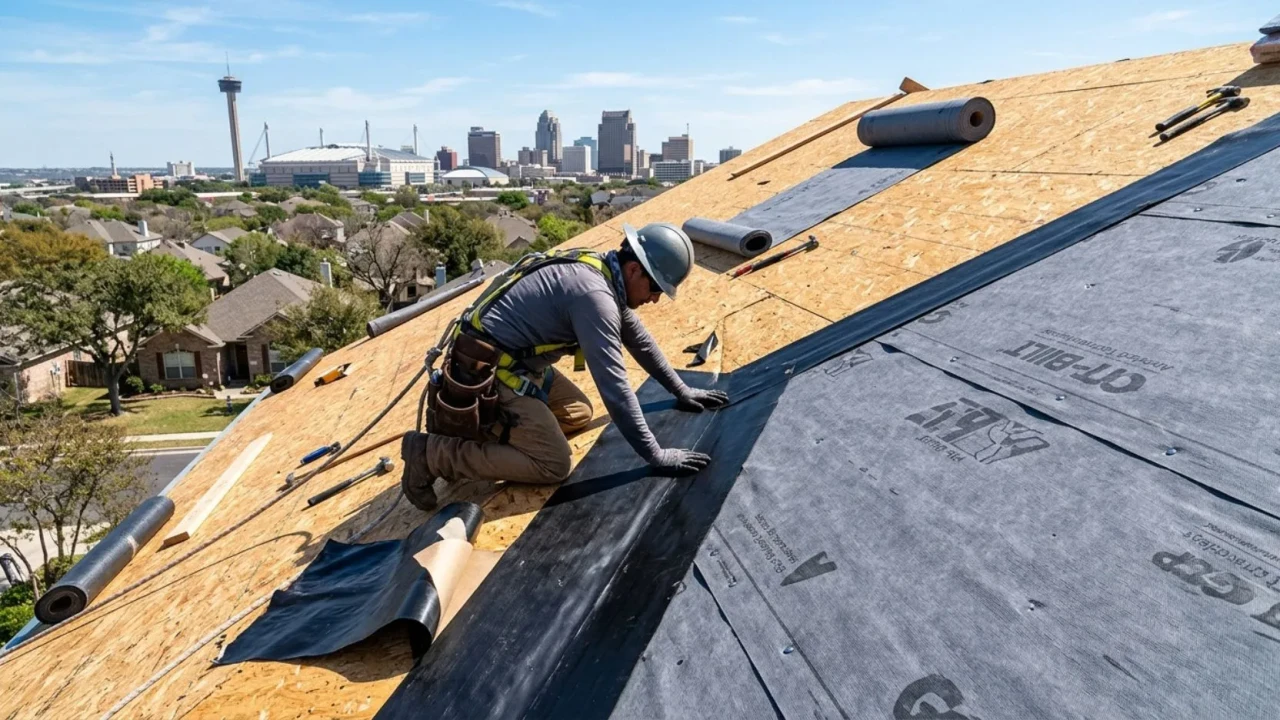
Flashing at valleys and penetrations
Leaks can start at a transition or a penetration, not only in the open field of shingles.
Flashing is the metal that seals the vulnerable points: roof-to-wall transitions, chimneys, skylights, valleys, and pipe penetrations. The building code requires flashing to be installed so moisture cannot enter the wall and roof, and asphalt shingle flashing follows the manufacturer’s approved instructions. [2] On a careful installation, new flashing is fitted at these points rather than reusing old, corroded metal, and pipe boots are replaced rather than left in place.
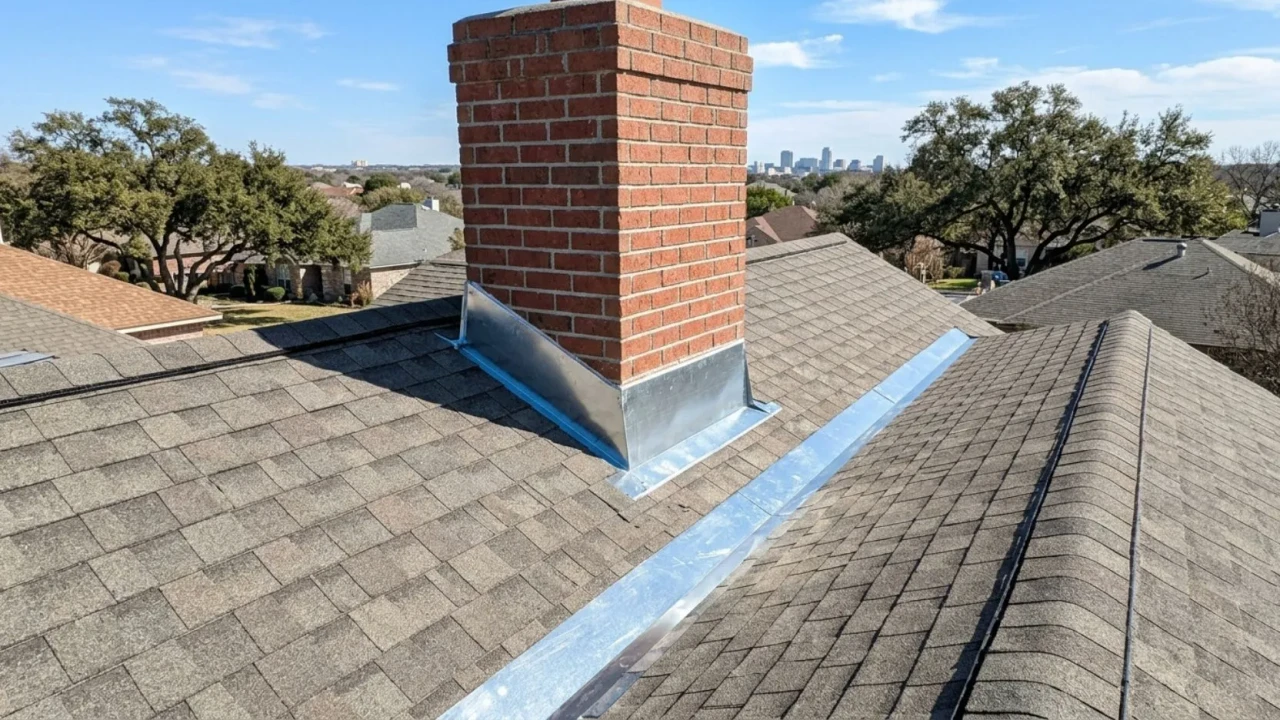
Once the waterproofing and flashing are set, the surface material goes on, laid in courses from the eaves up with a starter strip at the eaves and cap at the ridge. To learn the detailing, read roof flashing types.
Roofing and insurance: keep the two separate
A roofing estimate describes the work; it does not decide what your policy will pay.
The Texas Department of Insurance says a roofer or contractor cannot act as a public insurance adjuster on a claim if it is also doing the work, and it is illegal in Texas for a contractor to offer to waive, rebate, or absorb a policyholder’s deductible. [3] A contractor can provide an estimate and discuss the technical details, but the insurer and your policy decide coverage.
What RRSATX recommends
Keep your estimate, photos, and insurer letters together, ask your insurer to confirm coverage and your responsibilities in writing, and treat a contractor’s estimate as a scope of work rather than a promise of what will be paid. No roofer can promise a claim outcome.
Next steps: what you can do, and what needs a pro
You can prepare safely from the ground and indoors; leave the roof itself to a professional.
Before and during a roof installation, there is plenty you can do without climbing up. Walking on a roof is not one of them.
- Look at the roof from the ground and take photos; binoculars help.
- Check ceilings and walls indoors for stains or damp patches.
- Gather any past estimates, repair records, and your current roof’s details.
- Read your insurance policy so you understand coverage and your deductible.
- Ask for the permit and the written scope, and keep every document on file.
Leave the on-roof assessment, the measurements, the tear-off, and the installation to a crew with the equipment to work safely. A technician walks the roof during an RRSATX inspection, so you do not have to. When you are ready, start with a roof replacement conversation or a free roof inspection.
Local roofing service
About Affordable Roofing Contractors San Antonio
Affordable Roofing Contractors San Antonio, also known as RRSATX, provides roof inspections, roof repair, roof leak repair, roof replacement, and asphalt, metal, and tile roofing in San Antonio. Our roof inspections and leak inspections are free, with no fee and no obligation, and you get a free written estimate before any work starts. A technician walks the roof during the inspection. When you call, tell us your roof material if you know it and what you are planning.
- Phone
- (713) 504-2341
- sales@affordableroofingcontractorssanantonio.com
- Address
- 4324 Monterey St, San Antonio, TX 78237
- Contact
- Request a free roof inspection
Roof installation in San Antonio: questions answered
Do I need a permit to install a new roof in San Antonio?
Inside San Antonio city limits, yes. The City of San Antonio Development Services Department says a permit is required for repairing or replacing a roof, and the work must meet the current code. Confirm the requirements for your property with the city. [1]
Is a full tear-off always required?
The code treats a roof replacement as removing the existing coverings down to the deck. A roof recover without tear-off is allowed in some cases, but not where the roof is water-soaked or deteriorated, or where two or more layers already exist. [2]
How long does a roof installation take?
It depends on roof size, pitch, access, the material, the condition of the deck, and the weather. Ask your contractor for a written schedule for your specific roof, and expect summer heat or storms to shift timing.
What should a written estimate include?
Look for an itemized scope: the surface material, the underlayment and where any self-adhering membrane goes, the flashing scope, the tear-off, a per-sheet price for deck replacement, and the cleanup, rather than one lump sum.
Can my roofer handle my insurance claim?
No. The Texas Department of Insurance says a contractor doing the work cannot act as a public adjuster on that claim, and cannot waive or absorb your deductible. Your insurer and policy decide coverage. [3]
How do I book a roof installation estimate with RRSATX?
Call (713) 504-2341 or use the contact page. The roof inspection and written estimate are free, with no obligation to proceed.
Explore the roofing topic
More help planning a new roof
Planning a roof installation?
Ask RRSATX for a free roof inspection and a written estimate for your San Antonio home.