
[et_pb_section fb_built=”1″ admin_label=”section” _builder_version=”4.16″ global_colors_info=”{}”][et_pb_row admin_label=”row” _builder_version=”4.16″ background_size=”initial” background_position=”top_left” background_repeat=”repeat” global_colors_info=”{}”][et_pb_column type=”4_4″ _builder_version=”4.16″ custom_padding=”|||” global_colors_info=”{}” custom_padding__hover=”|||”][et_pb_code _builder_version=”4.27.6″ _module_preset=”default” hover_enabled=”0″ sticky_enabled=”0″]
Zinc roofing is one of the longest-lasting metal roof options available, but it comes at a premium price. This guide breaks down the full cost of a zinc roof in San Antonio, what drives that cost up or down, how zinc compares to aluminum and other metal options, and whether the investment makes sense for your property.
Zinc is one of the oldest roofing metals in the world and one of the least commonly discussed in the San Antonio market. That is not because it is rare or unavailable. It is because zinc roofing lives at the high end of the metal roofing price range, and most roofing contractors in Texas do not carry it or install it regularly. When a San Antonio homeowner starts researching zinc roofs, they are usually surprised by two things: how long zinc lasts and how much it costs upfront.
This guide answers the core question directly. A zinc roof installed in San Antonio typically costs between $15 and $25 per square foot installed, which translates to $22,500 to $37,500 for a 1,500-square-foot roof. The range is wide because zinc roofing cost is driven by panel profile, roof complexity, pitch, and whether you choose raw zinc or pre-weathered zinc with a factory patina. This guide breaks all of that down so you know exactly what you are paying for and whether it fits your situation.
The upfront cost of zinc roofing looks high next to asphalt shingles or painted steel. But zinc requires no periodic recoating, no painting, and no surface treatment throughout its lifespan. It self-repairs minor scratches through its natural patina process. When you amortize the cost of zinc over 80 or more years and subtract the painting, coating, and replacement cycles that other roofing materials require, zinc’s total lifetime cost per year is often lower than materials that cost less to install. That is the number that matters for a long-term property decision.
Material Cost
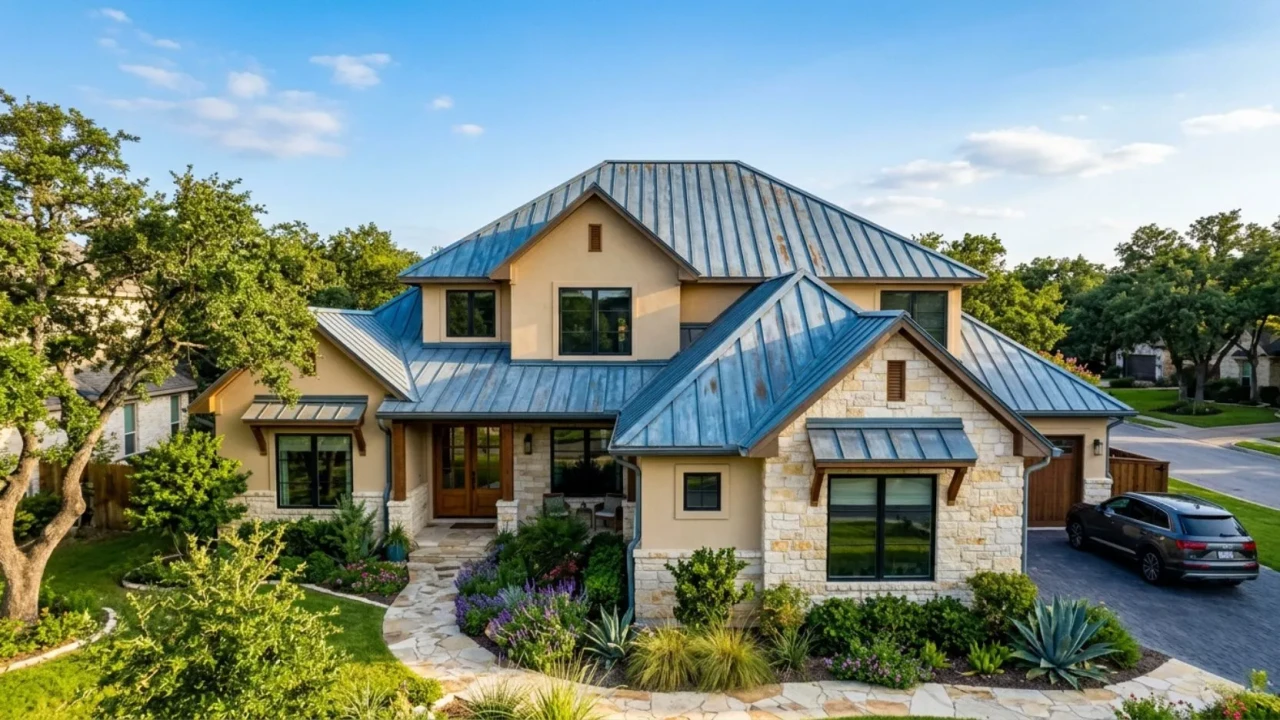
Zinc roofing panels are priced differently from painted steel or aluminum because zinc is sold by weight and specification, not just by the square foot. The grade of zinc, its thickness (measured in gauge), and whether it has been factory pre-weathered all affect the material price your contractor pays before a single panel goes on your roof.
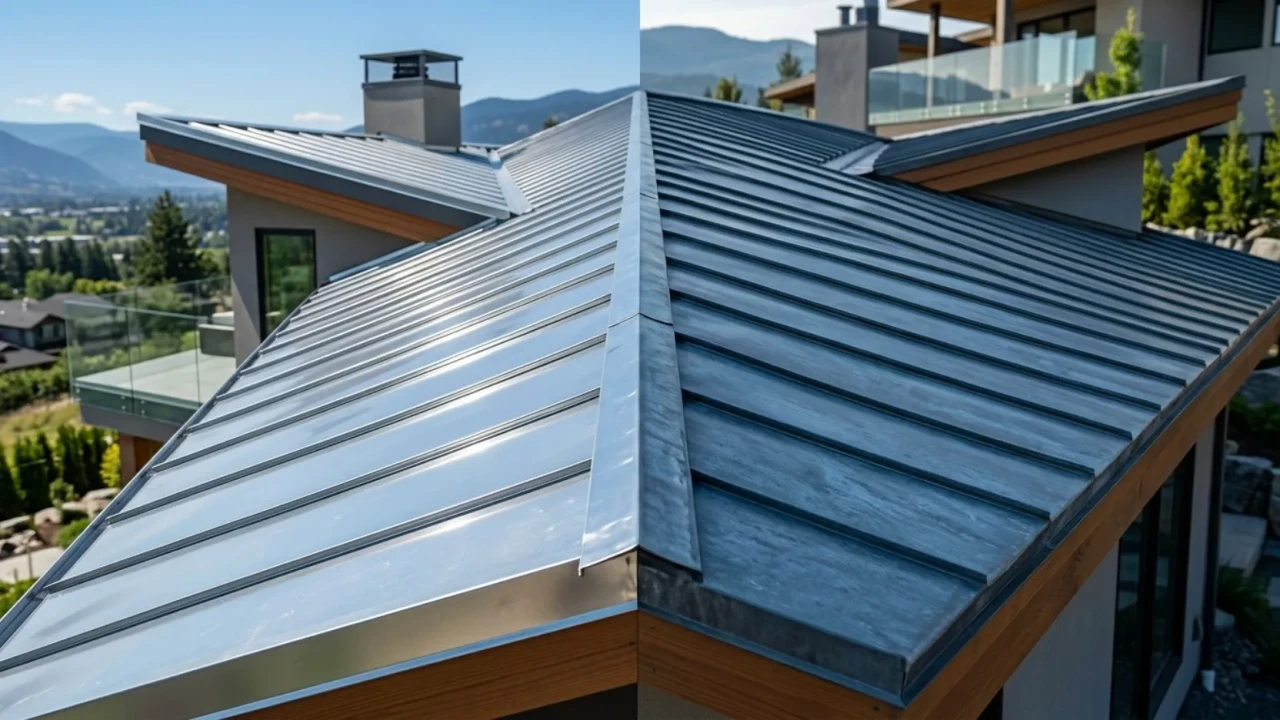
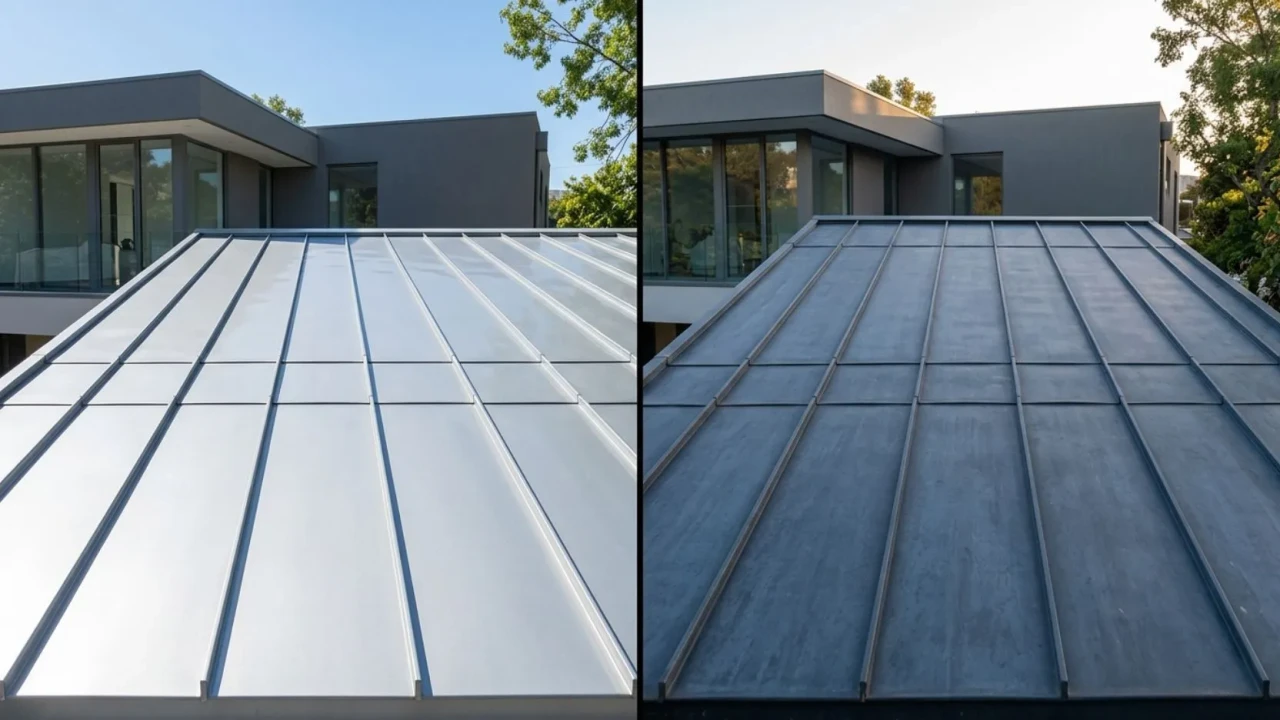
Raw zinc (natural finish): Raw zinc arrives from the mill with a bright, silvery appearance. Over the first two to five years, it develops the classic blue-grey patina that most homeowners associate with zinc roofing. Raw zinc panels are slightly less expensive at the material level, but the patina development period means the roof will look different from year to year as it weathers.
Pre-weathered zinc: Pre-weathered zinc has been treated at the factory to accelerate the patina process. It arrives with the finished grey-blue appearance already established. Pre-weathered zinc costs 10 to 20 percent more at the material level but delivers a consistent, finished appearance from day one. For homeowners who want the classic zinc look without a multi-year weathering period, this is the standard choice.
- Panel gauge specified in the contract: minimum 0.65mm for residential applications
- Raw or pre-weathered clearly stated along with the expected patina timeline for raw zinc
- Zinc alloy grade confirmed: most residential zinc roofing is titanium-zinc (TitanZn) for improved strength
- All trim and flashing specified in matching zinc, not galvanized steel or aluminum
- Material lead time confirmed before project deposit is made
- Panel profile chosen and detailed in writing: standing seam, flat lock, or corrugated
Installation
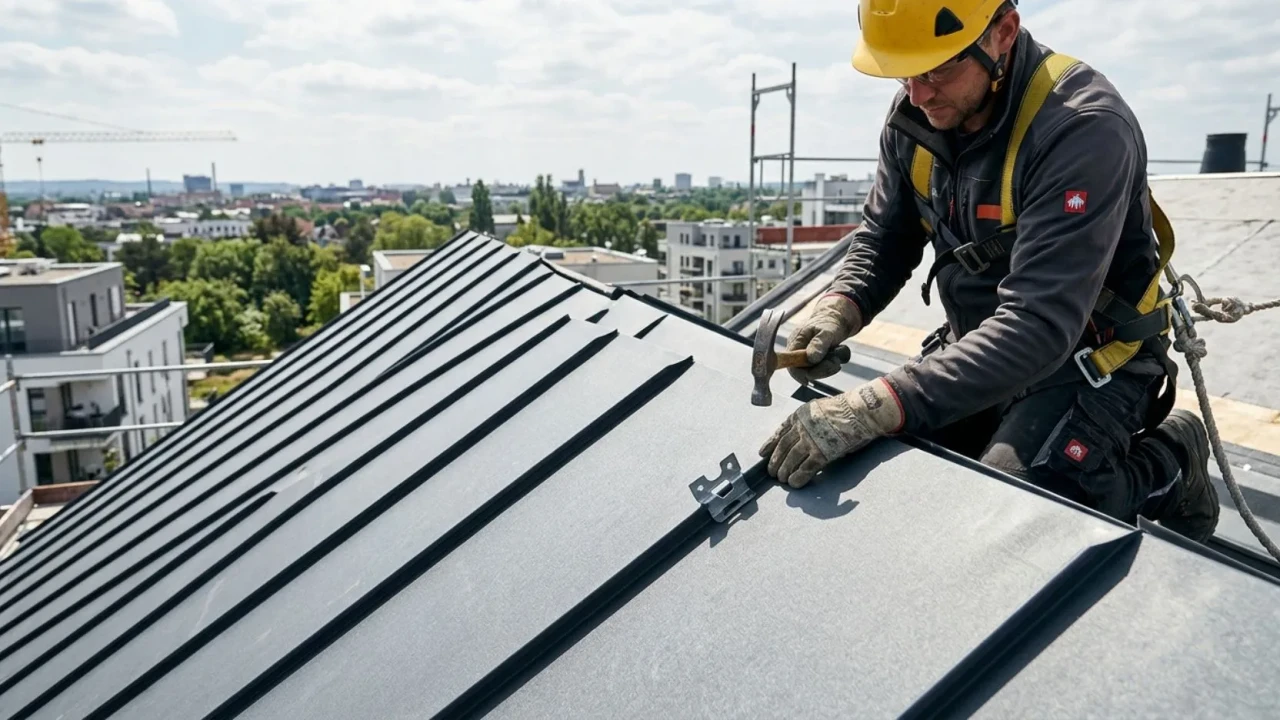
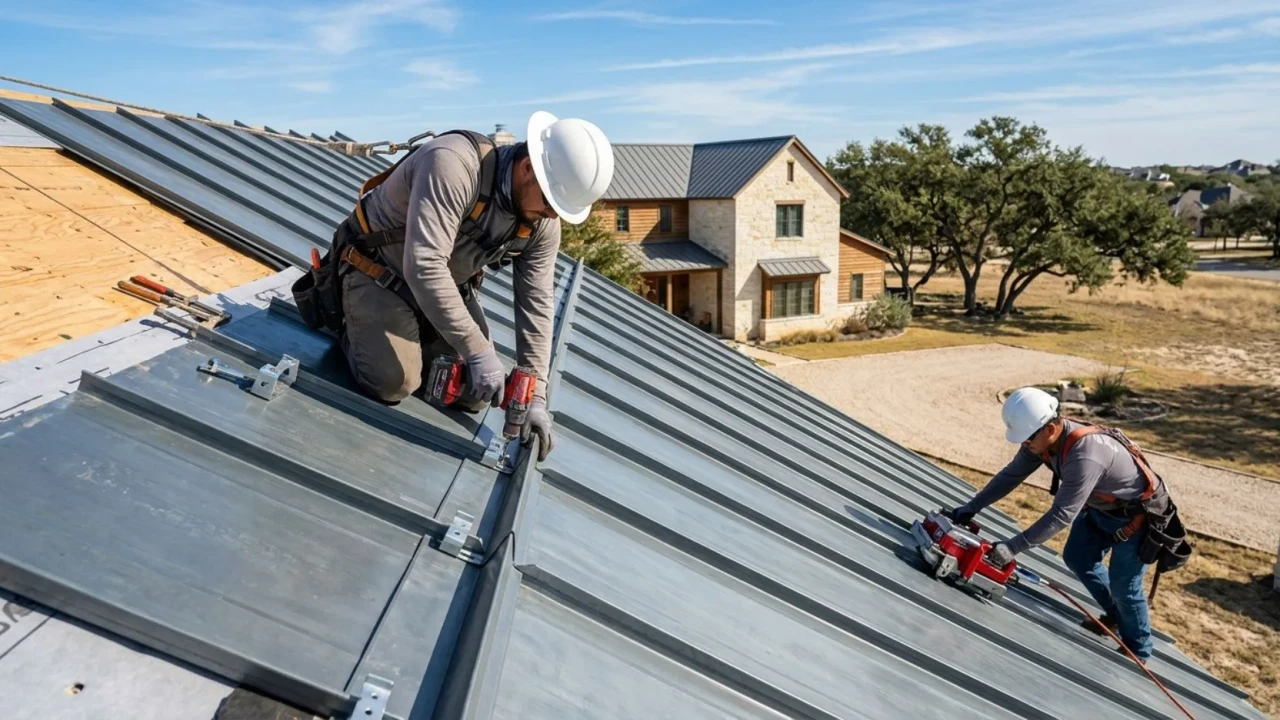
Zinc is not a panel-and-screw system like exposed-fastener steel roofing. It requires concealed clip fastening systems, specific expansion joint allowances, and careful handling to avoid fingerprinting or surface contamination during installation. Contractors who do not regularly work with zinc often make installation errors that compromise the patina development or create noise problems as the panels expand and contract. This is why installation labor for zinc runs $8 to $15 per square foot in San Antonio, compared to $4 to $7 per square foot for standard steel panel installation.
Roof complexity is the single biggest variable in zinc installation labor cost. A simple rectangular gable roof with no penetrations and a moderate pitch can be quoted at the lower end of the labor range. A hip roof with multiple dormers, skylights, chimneys, and HVAC penetrations can push the labor cost to the high end or beyond. Every change in roof plane requires custom-cut zinc trim pieces and careful flashing work that takes more time and skill than panel installation.
Ask your zinc roofing contractor specifically how many zinc roofs they have installed in the last two years, not just how many metal roofs they have installed. Zinc is a different material from steel and aluminum. It expands and contracts at a different rate, requires different clip spacing, and must be isolated from incompatible metals to prevent galvanic corrosion. A contractor with strong steel experience but no zinc experience can make costly errors that are not visible at completion but create problems within five years. In San Antonio, truly zinc-experienced metal roofers are a smaller group than general metal roofers.
- Contractor confirms zinc-specific installation experience, not just general metal roofing
- Concealed clip fastening system specified , not exposed screws through zinc panels
- Expansion joint spacing confirmed for San Antonio’s temperature range, typically every 10 feet
- All zinc panels isolated from incompatible metals (copper, untreated steel) to prevent galvanic corrosion
- Underlayment specified: non-bituminous, zinc-compatible underlayment only
- All penetrations to receive custom-fabricated zinc flashing, not lead or aluminum boot flashing
Cost Comparison
One of the most useful things a San Antonio homeowner can do when evaluating zinc roofing cost is compare it side by side with the other premium metal options. Zinc is consistently more expensive than painted steel and aluminum, but it is typically less expensive than copper. The performance differences between these materials are real and should be part of the cost comparison, not just the install price.
| Roofing metal | Installed cost (San Antonio) | Lifespan | Maintenance requirement | Self-healing |
|---|---|---|---|---|
| Painted steel (standing seam) | $8 to $14 per sqft | 40 to 60 years | Recoating every 10 to 20 years | No |
| Aluminum (standing seam) | $10 to $18 per sqft | 50 to 70 years | Minimal; anodized coating holds well | No |
| Zinc | $15 to $25 per sqft | 80 to 100+ years | None; patina is self-maintaining | Yes; minor scratches self-repair |
| Copper | $25 to $40 per sqft | 100+ years | None; patina is self-maintaining | Yes |
| Stone-coated steel | $9 to $16 per sqft | 40 to 70 years | Hail can chip coating; periodic inspection needed | No |
The most direct comparison for most San Antonio homeowners is zinc versus aluminum. Both are corrosion-resistant without painting. Both work well in the Texas heat. But zinc outlasts aluminum by 20 to 30 years and self-repairs minor surface scratches, while aluminum does not. If you are planning to own your property for more than 20 years, zinc’s longer lifespan starts to close the cost gap with aluminum on a per-year-of-service basis.
- Total installed cost compared side by side with aluminum and painted steel for the same project
- Lifespan difference calculated against the expected ownership period of the property
- Maintenance cost projection built out for all three options over 30 years
- Insurance premium impact confirmed with your carrier; some carriers offer premium reductions for Class 4 metal roofing
- Resale value impact discussed with a local real estate agent familiar with the San Antonio market
- HOA approval confirmed if applicable, as zinc’s patina appearance requires advance approval in some communities
Budget Guide
The most practical way to understand zinc roofing cost is to look at total project budgets for real home sizes common in San Antonio. The ranges below reflect full installed cost including old roof tear-off and disposal, new zinc-compatible underlayment, panels, trim, flashings, labor, and a standard workmanship warranty. They assume a moderately complex hip roof, which is the most common residential profile in the San Antonio market.
When collecting zinc roof quotes in San Antonio, ask every contractor to break the estimate into four line items: materials, labor, tear-off and disposal, and accessories. Zinc roof quotes that come back as a single lump sum are difficult to compare and easy for a contractor to pad. Breaking the quote into these four categories lets you compare contractors accurately, identify where cost differences are coming from, and verify that the material specification is the same across all quotes. A significant price difference between two quotes is almost always explained by a material gauge difference, a pre-weathered vs. raw zinc substitution, or a change in the underlayment specification.
Tear-off and disposal of the existing roof adds $1 to $3 per square foot to the total project cost depending on the number of existing layers and the weight of the material being removed. In San Antonio, many older homes still have two layers of asphalt shingles from back-to-back roofing cycles. If your home has two layers, you are looking at additional tear-off cost before the zinc installation even begins.
- Itemized quote received with material, labor, tear-off, and accessories broken out separately
- Number of existing roof layers confirmed; two-layer tear-off adds to the total
- Decking inspection included in the scope; any rotten or damaged decking replaced before zinc is installed
- Underlayment specified as zinc-compatible and non-bituminous
- Final payment tied to completed inspection, not to a calendar date
- Minimum of two written quotes collected from contractors with documented zinc experience
Worth It?
Zinc roofing is not the right answer for every San Antonio homeowner. It is a premium product with a premium price, and the return on that investment depends heavily on how long you plan to own the property, what you value in a roofing system, and what your alternatives are. Here is an honest breakdown of when zinc makes sense and when it does not.
| Situation | Zinc recommendation | Reasoning |
|---|---|---|
| Long-term ownership (20+ years) | Strong fit | The full lifespan advantage and zero maintenance cost make financial sense when you will benefit from the full service life of the material. |
| Planning to sell within 5 to 10 years | Weak fit | You will not recoup the premium over aluminum or steel in resale value within a short holding period. Consider premium aluminum or steel instead. |
| Architectural or design-driven project | Strong fit | Zinc’s natural patina and distinct profile are often specified for custom homes, historic restorations, and design-forward projects where aesthetics are a primary driver. |
| Historic or older home requiring authentic materials | Strong fit | Zinc has been used in European roofing for over 150 years. It is an appropriate and historically authentic material choice for period properties. |
| Tight roofing budget with immediate need | Not a fit | Zinc is not a budget roofing solution by any measure. If cost is the primary constraint, painted steel standing seam delivers strong performance at a lower price point. |
| Commercial property with long ownership horizon | Strong fit | Zinc’s virtually zero maintenance requirement and long life are compelling for commercial owners who manage roof maintenance costs across a portfolio. |
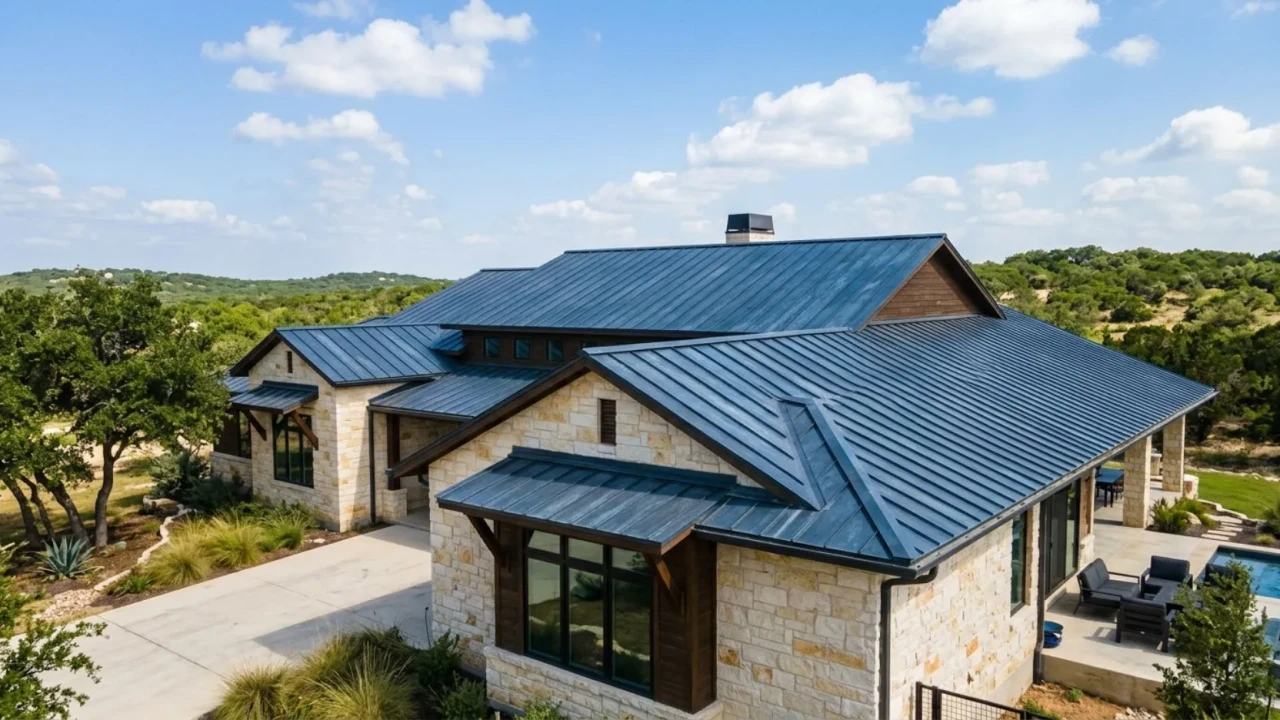
These price ranges reflect real San Antonio market rates in 2026 for zinc roofing projects. All figures represent fully installed cost including tear-off, underlayment, materials, labor, and trim. Costs vary based on roof pitch, access difficulty, panel profile, and site-specific conditions. Every estimate should be confirmed in writing before work begins.
| Project type | Typical total cost (San Antonio) | Key variables | Notes |
|---|---|---|---|
| Small residential (under 1,500 sqft roof) | $22,500 to $37,500 | Roof complexity, panel profile, pre-weathered vs. raw | Minimum order quantities may apply for very small projects |
| Mid-size residential (1,500 to 2,500 sqft roof) | $22,500 to $62,500 | Number of penetrations, pitch, hip vs. gable geometry | Most common San Antonio residential zinc project range |
| Large residential (2,500 to 4,000+ sqft roof) | $37,500 to $100,000+ | Complexity, dormers, pitch, multi-plane geometry | Custom fabrication often required for complex profiles |
| Commercial low-slope zinc (flat lock or seam) | $18 to $28 per sqft installed | Drainage system, parapet detail, penetration count | Requires specialist contractor with commercial zinc experience |
| Zinc accent or feature section only | $3,000 to $12,000 | Section size, integration with existing roof, profile matching | Common for dormers, bay windows, or architectural feature roofs |
| Pre-weathered zinc upcharge | $1,500 to $5,000 added to base project cost | Project size, proportion of pre-weathered panels specified | Eliminates weathering period appearance variation |
- Roof square footage measured or estimated; get a professional measurement for accurate budgeting
- Roof complexity assessed: simple gable, hip with dormers, or complex multi-plane
- Number of penetrations counted: chimneys, skylights, vents, HVAC curbs
- HOA or deed restriction review completed if applicable
- Budget range confirmed and compared to aluminum and painted steel alternatives
- Expected ownership period factored into the material decision
- Contractor confirms zinc-specific installation experience with references or project photos
- Quote is itemized: materials, labor, tear-off, and accessories listed separately
- Panel gauge and alloy (titanium-zinc recommended) specified in the written quote
- Raw or pre-weathered zinc clearly stated with patina timeline explained
- Underlayment specified as zinc-compatible, non-bituminous product
- Concealed clip fastening system confirmed, not through-panel screws
- All trim and flashing materials specified in matching zinc
- Minimum of two quotes collected from contractors with documented zinc project experience
- Material lead time confirmed in writing and accounted for in the project schedule
- Existing decking inspection included in scope before panels are ordered
- Attic ventilation reviewed for zinc-compatible airflow requirements
- Certificate of insurance received and verified: minimum $1 million general liability
- Workmanship warranty terms documented separately from material warranty
- Final payment structure confirmed: hold back a portion until the roof passes inspection
How much does a zinc roof cost per square foot in San Antonio?
How long does a zinc roof last in San Antonio’s climate?
Is zinc roofing worth the cost compared to aluminum in San Antonio?
Does zinc roofing require any maintenance in San Antonio?
What is the difference between raw zinc and pre-weathered zinc roofing?
Can zinc roofing be installed over an existing roof in San Antonio?
Get a free zinc roof estimate in San Antonio
Tell us about your project and we will walk you through zinc roofing cost, compare it side by side with aluminum and steel options for your specific roof, and give you a written estimate at no cost.
[/et_pb_code][/et_pb_column][/et_pb_row][/et_pb_section]