
[et_pb_section fb_built=”1″ admin_label=”section” _builder_version=”4.16″ global_colors_info=”{}”][et_pb_row admin_label=”row” _builder_version=”4.16″ background_size=”initial” background_position=”top_left” background_repeat=”repeat” global_colors_info=”{}”][et_pb_column type=”4_4″ _builder_version=”4.16″ custom_padding=”|||” global_colors_info=”{}” custom_padding__hover=”|||”][et_pb_code _builder_version=”4.27.6″ _module_preset=”default” hover_enabled=”0″ sticky_enabled=”0″]
The honest answer for San Antonio homeowners: yes, but not automatically. Your savings depend on your insurer, your policy type, and how you document the upgrade. This guide tells you exactly what to expect, what to ask, and how to make sure you collect every dollar of discount you are entitled to.
If you are weighing the cost of a metal roof against the cost of replacing your asphalt shingles, the insurance discount is one of the most compelling financial arguments in metal roofing’s favor. A metal roof that qualifies for a Class 4 impact-resistance rating can reduce your homeowners insurance premium by anywhere from 10 to 30 percent, depending on your carrier and your current policy. In San Antonio, where hail events are a regular part of the weather calendar, that discount is very real and your insurer has a strong financial reason to offer it.
But the savings are not automatic. Switching to a metal roof does not guarantee a lower premium. You have to know which roof products qualify, how to document the installation for your insurer, and which carriers in Texas are most likely to reward the upgrade with meaningful savings. This guide covers all of it.
Not every metal roof qualifies for the maximum insurance discount. The rating system that matters to your insurance company is the UL 2218 impact-resistance classification, which runs from Class 1 to Class 4. Class 4 is the highest and the one that unlocks the biggest premium reductions in Texas. Many metal panels achieve Class 4 by design, but you must confirm the specific product’s rating and provide that documentation to your insurer. A metal roof installed without this documentation may receive no discount at all, even if it would qualify.
Why It Works
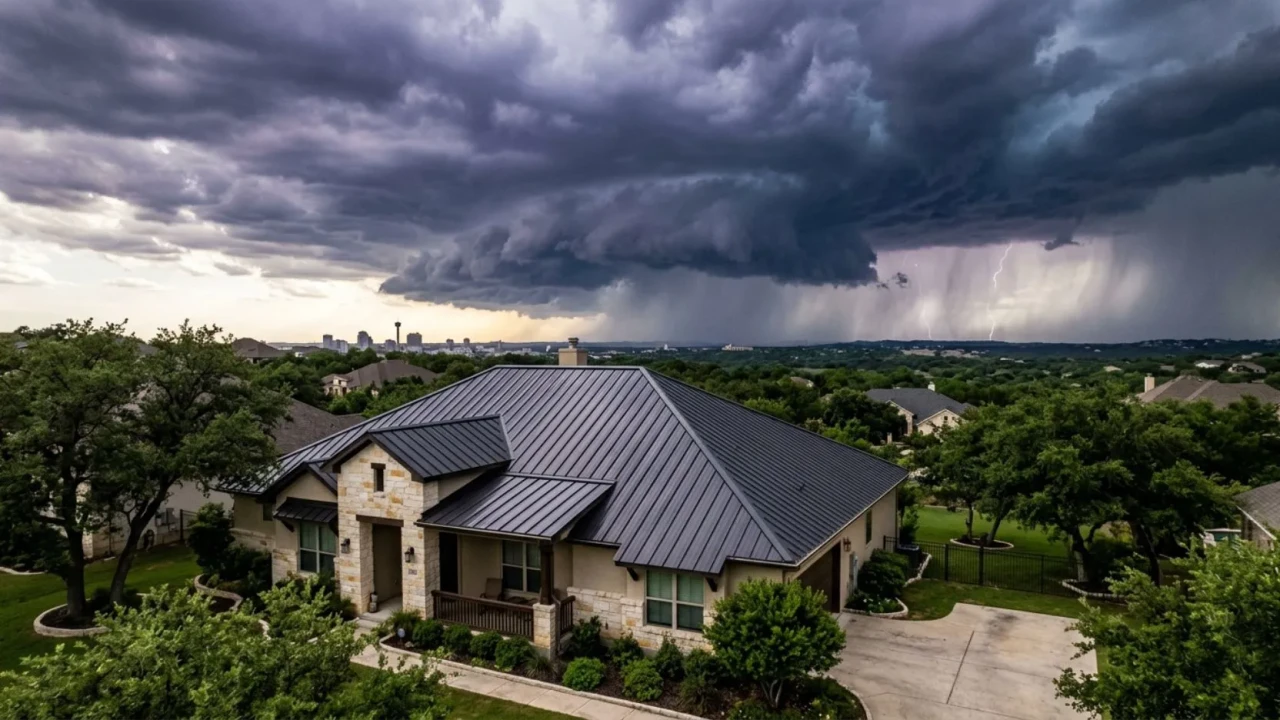
Insurance companies offer discounts on metal roofs because those roofs cost them less money to insure. The math is simple: metal roofs are more resistant to hail, wind, fire, and impact damage than asphalt shingles. Fewer claims means the carrier pays out less over the life of the policy. They pass a portion of that reduced risk back to the homeowner as a lower premium.
In Texas, this calculation is especially significant. Bexar County and the surrounding area receive frequent hail events, many of them producing hailstones large enough to cause significant damage to standard asphalt roofs. Insurance carriers operating in this market know exactly what a hail-resistant roof is worth to their loss ratios, and the discounts reflect it.

Fire resistance matters too. Metal roofs carry a Class A fire rating, the highest available. In a state where wildfire and ember exposure are real risks in and around the greater San Antonio area, this rating contributes to the lower risk profile that your insurer is pricing.
Wind resistance is a third factor. Metal roofs, particularly standing seam systems, hold up under high-wind conditions far better than asphalt shingles, which can lose tabs in gusts well below the wind speeds that cause structural damage to a properly installed metal roof.
- Metal roofs produce fewer hail damage claims than asphalt in Texas weather conditions
- Class A fire rating reduces fire-related claim exposure across the policy lifespan
- 40 to 70 year lifespan means no full-replacement claim during the life of most mortgages
- Wind resistance reduces storm claim frequency in high-wind events
- Texas DOI rules create an expectation that carriers price impact-resistant roofing accurately
Class 4 Rating
The UL 2218 standard is the testing protocol that insurance carriers use to classify roofing materials for impact resistance. In the test, a two-inch steel ball is dropped from varying heights onto a roofing sample. The height of the drop that the sample can survive without cracking, splitting, or fracturing determines its class rating. Class 1 survives the lowest drop; Class 4 survives the highest a two-inch ball dropped from 20 feet, simulating the impact energy of large hailstones.
Most metal roofing panels achieve Class 4 by design. The thickness of the metal, the profile of the panel, and the coating system all contribute to the rating. However, not every metal panel is tested and certified to UL 2218 Class 4. When you are selecting a metal roof specifically to qualify for the insurance discount, you need to confirm that the specific product being installed carries the Class 4 certification and that the manufacturer can provide documentation to support an insurance discount request.
| Roof type | Typical UL 2218 rating | Insurance discount potential | Notes |
|---|---|---|---|
| Standing seam steel (26 gauge) | Class 4 | High 15 to 30% | The gold standard for both performance and insurance discount eligibility in Texas |
| Stone-coated steel | Class 4 | High 15 to 30% | Verify the specific product’s UL 2218 certification not all brands are tested |
| Aluminum panels (standing seam) | Class 4 (most) | High 15 to 25% | Lighter gauge aluminum may require verification of specific product rating |
| Corrugated metal (exposed fastener) | Class 3 to 4 | Moderate 10 to 20% | Discount eligibility depends on the specific product and carrier policy |
| Standard asphalt shingles | Class 1 to 2 | None for impact resistance | No impact resistance discount; premium baseline for comparison |
| Class 4 asphalt shingles | Class 4 | Moderate 10 to 15% | Less durable than metal but qualifies for the impact discount; shorter lifespan than metal |
Ask your roofing contractor for the product data sheet and UL 2218 test report for the specific panel being installed before you sign the contract. The panel manufacturer’s name, model number, and Class 4 certification number are what your insurance company needs to process the discount. A reputable San Antonio metal roofing contractor will have this documentation ready and can help you submit it to your carrier. If a contractor cannot provide the UL 2218 test report for the panel they are proposing, that is a red flag worth taking seriously before you sign anything.
- Contractor provides the specific panel manufacturer, model number, and gauge before installation
- UL 2218 Class 4 test report confirmed for the exact product being installed
- Documentation saved as a PDF you will need it for the insurance discount request
- Carrier contacted before installation to confirm their discount process and required documentation format
- Written warranty from the manufacturer includes the impact-resistance classification
Real Savings
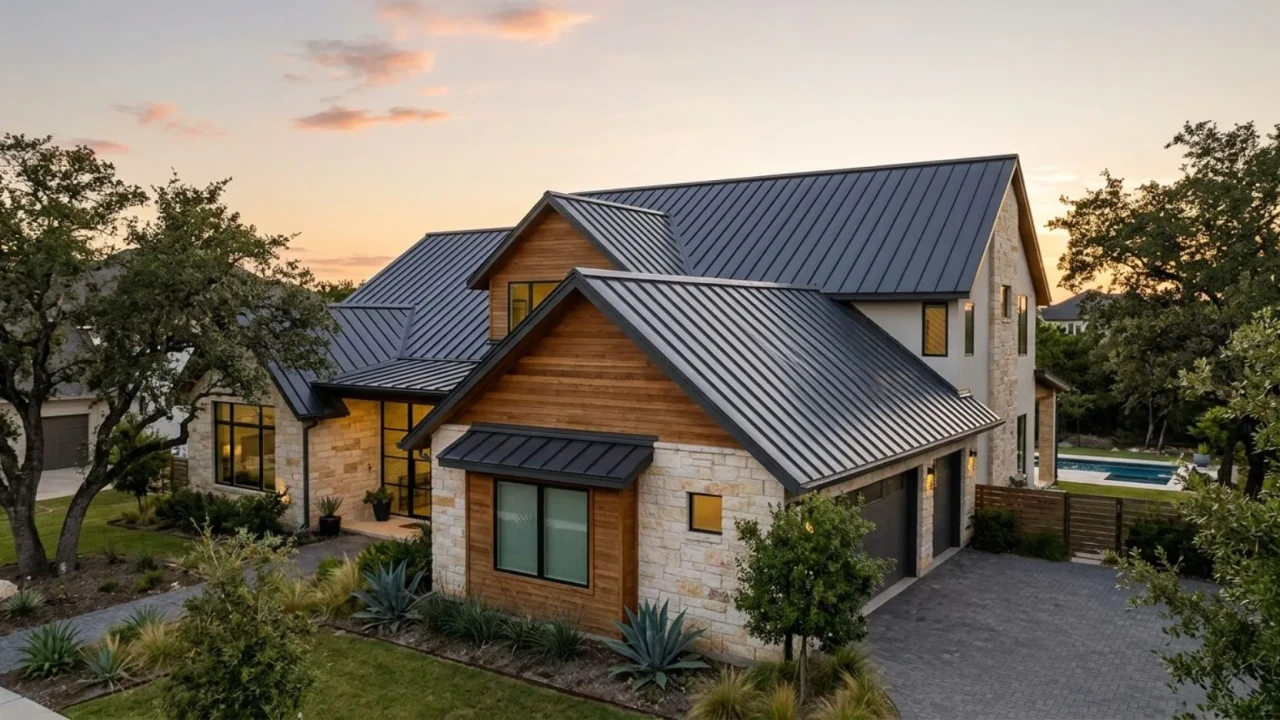
The honest answer is that your savings depend on your current premium, your carrier, and the specific discount your policy offers for impact-resistant roofing. In San Antonio, where homeowners insurance premiums are above the national average due to hail exposure, the dollar value of the discount tends to be higher than in markets with milder weather. A 15 percent discount on a $3,000 annual premium is $450 per year. Over 10 years, that is $4,500 in savings from the insurance reduction alone, before you count avoided deductibles and avoided out-of-pocket repair costs.
Beyond the direct premium discount, there is a second financial benefit that rarely appears in the headline number: avoided deductibles. After a significant hail event, San Antonio homeowners with standard asphalt roofs often face a wind and hail deductible of 1 to 2 percent of the home’s insured value. On a home insured for $350,000, that is a $3,500 to $7,000 out-of-pocket cost every time a hail claim is filed. A metal roof that survives the same storm without damage means that deductible is never triggered.
- Pull your current annual homeowners insurance premium from your declaration page
- Identify the wind and hail deductible on your current policy (typically 1 to 2% of insured value)
- Call your carrier and ask specifically: “What discount do you offer for a UL 2218 Class 4 impact-resistant roof?”
- Multiply the discount percentage by your current premium to get the annual dollar savings
- Add in the avoided deductible value, weighted by the frequency of hail events in your area
- Compare the total 10-year savings figure against the price difference between a metal roof and asphalt replacement
Getting the Discount
The most common reason San Antonio homeowners with new metal roofs fail to collect the full insurance discount is incomplete documentation. The carrier does not automatically know you have a new roof. They do not automatically know it is Class 4 rated. And they do not automatically apply the discount when the policy renews. You have to initiate the process, and you have to provide the right information in the format the carrier requires.
This is not complicated, but it is easy to overlook in the weeks after a major roofing project. Here is the exact sequence to follow:
The day your new metal roof is completed, ask your contractor for a packet that includes: the manufacturer’s product data sheet with the UL 2218 Class 4 certification, the installation invoice showing the product name and quantity installed, and any manufacturer warranty paperwork. Put this in a folder and call your insurance carrier the same week. Tell them you have completed a roof replacement with a UL 2218 Class 4 impact-resistant material and ask what they need to apply the premium discount. Do not wait for your renewal date. Many carriers can apply the discount mid-term and issue a prorated credit for the remainder of your current policy period.
After you have submitted documentation to your current carrier and confirmed the discount, the next smart move is to get competing quotes from other carriers using your new roof as a selling point. A Class 4 metal roof makes you a significantly more attractive risk to any Texas homeowner insurer, and some carriers may offer you a better overall rate than your current provider even after the discount is applied. Do not assume loyalty to your current carrier is worth the premium difference.
- UL 2218 Class 4 test certificate for the specific panel product received from contractor
- Manufacturer product data sheet with model number and gauge on file
- Contractor invoice showing the product name, quantity, and installation date saved
- Carrier contacted within 30 days of installation with documentation packet
- Discount confirmed in writing either by email or on your updated declaration page
- Competing carrier quotes obtained using the new Class 4 documentation
- Policy reviewed to confirm wind and hail deductible terms have not changed
Carrier Guide
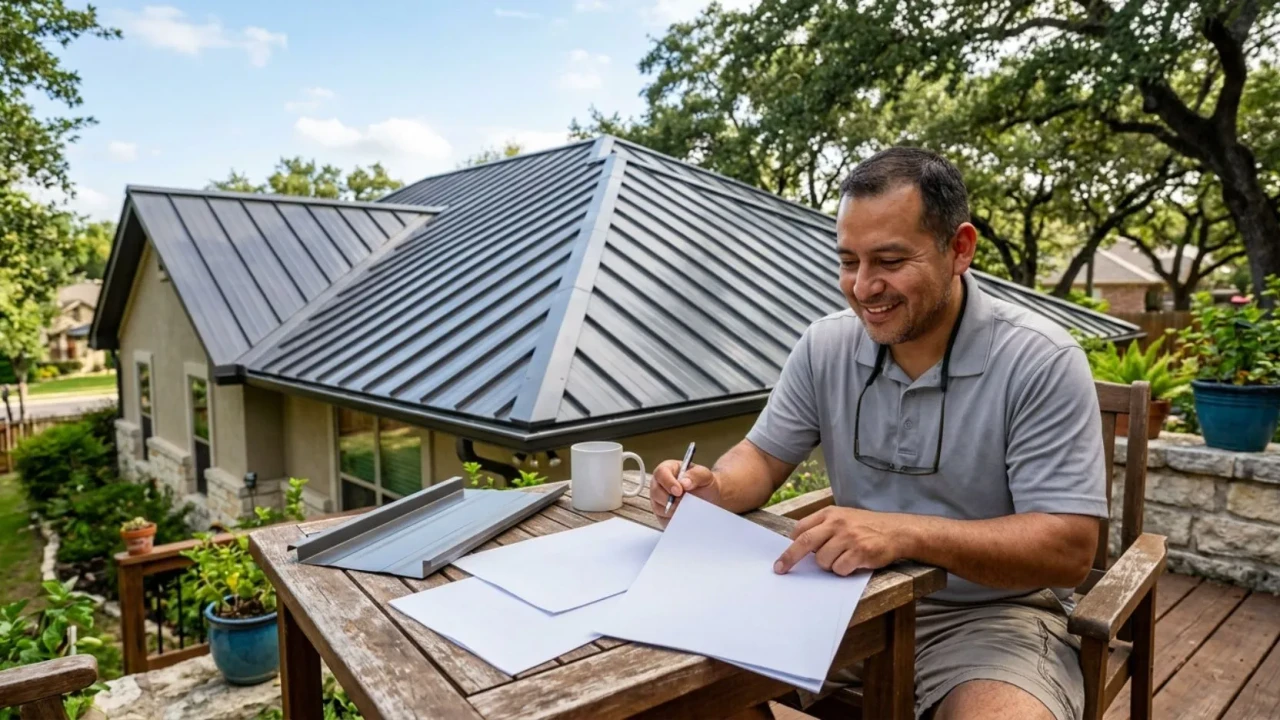
Every major homeowners insurance carrier operating in Texas is required to price impact-resistant roofing materials accurately, but the size of the discount and the documentation requirements vary significantly from one company to the next. Some carriers have built impact-resistant roofing discounts directly into their rate structure and apply them readily with a single form submission. Others treat the discount as an exception that requires more back-and-forth to apply. Knowing which carriers are most proactive about this can save you money and frustration.
| Carrier | Impact-resistant roof discount | Documentation required | Notes for San Antonio homeowners |
|---|---|---|---|
| State Farm | Up to 20% in Texas | UL 2218 cert + contractor invoice | One of the most straightforward carriers to work with on this discount in Bexar County |
| USAA | Up to 25% in Texas | Product data sheet + install documentation | Available to military families and veterans; competitive rates on metal roofing |
| Allstate | Up to 20% in Texas | UL 2218 cert + proof of installation | Discount applied at renewal unless you request mid-term review |
| Travelers | Up to 15% in Texas | Product certification + invoice | Often competitive on total premium for newer homes with metal roofing |
| Farmers | Varies by policy type | Requires agent review | Discount amount varies significantly by agent and local office get it in writing |
| Texas Farm Bureau | Available varies | Agent review required | Strong presence in Bexar County; discount varies by coverage type and home location |
A captive agent who works for a single carrier can only offer you that carrier’s rates and discount structure. An independent insurance agent who works with multiple carriers can shop your Class 4 metal roof documentation across several companies at once and find the carrier offering the best total rate for your specific home, coverage needs, and new roof. In San Antonio’s competitive insurance market, this step alone can identify savings well beyond the discount your current carrier is offering.
- Contact your current carrier first to understand what discount they will apply
- Ask specifically for the discount percentage in writing before shopping competitors
- Work with an independent insurance agent in San Antonio to compare multiple carriers at once
- Bring the full documentation packet (UL 2218 cert, product data sheet, contractor invoice) to every carrier quote
- Compare total annual premium after discount not just the discount percentage across carriers
- Review the wind and hail deductible terms on each quote, not just the premium

The insurance discount is real and meaningful, but it is only one piece of the financial case for a metal roof. When you look at the full 30-year cost of ownership, the comparison between a metal roof and repeated asphalt replacement becomes even more compelling for San Antonio homeowners.
| Cost factor | Standard asphalt (30 years) | Metal roof (30 years) | Metal roof advantage |
|---|---|---|---|
| Initial installation cost | $8,000 to $14,000 | $18,000 to $35,000 | Asphalt lower upfront |
| Replacements needed over 30 years | 1 to 2 full replacements | None roof outlasts the period | $8,000 to $28,000 saved on replacements |
| Insurance premium savings (15% discount) | None | $400 to $800 per year | $12,000 to $24,000 saved over 30 years |
| Avoided hail damage deductibles | $3,500 to $7,000 per event | Near zero for Class 4 roof | $7,000 to $21,000 saved across multiple events |
| Maintenance costs | $1,500 to $4,000 over 30 years | $500 to $1,500 over 30 years | $1,000 to $2,500 saved |
| Home resale value impact | Neutral to negative as roof ages | Positive buyers value metal roofs | $5,000 to $15,000 in added home value |
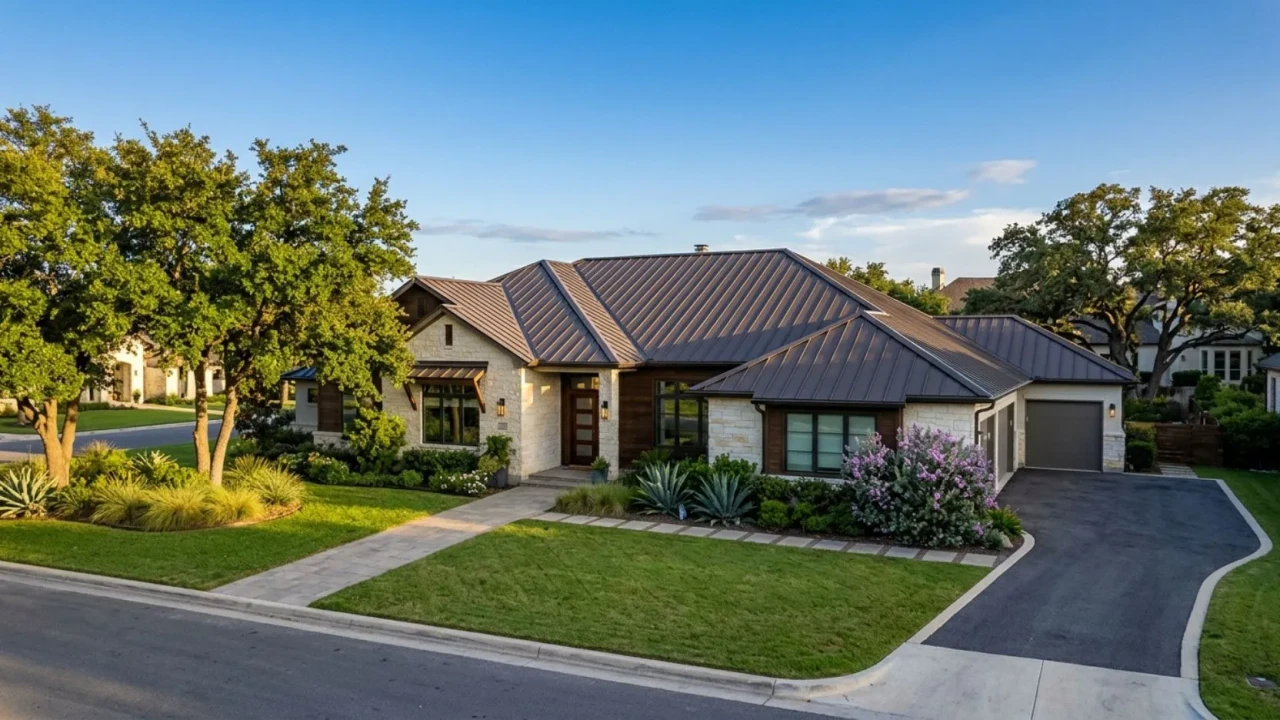
The upfront cost difference between a metal roof and an asphalt replacement is real, and it is the number that most homeowners focus on. But when you total the replacement costs, the insurance savings, the avoided deductibles, and the maintenance difference over 30 years, the metal roof consistently comes out ahead for San Antonio homeowners who plan to stay in their home for a decade or more.
- Metal panel product confirmed as UL 2218 Class 4 rated before signing the roofing contract
- Current carrier contacted to confirm the discount percentage and documentation requirements
- Wind and hail deductible on your current policy reviewed and noted
- Contractor asked to provide the UL 2218 test report and manufacturer product data sheet before installation day
- Written quote from contractor specifies the panel product name, manufacturer, gauge, and Class 4 rating
- Contractor leaves a copy of the product data sheet and UL 2218 certification on site
- Installation invoice or receipt confirms the product name, quantity installed, and installation date
- Manufacturer warranty paperwork received and filed alongside the product documentation
- Photos of the completed installation taken for your own records
- Current carrier contacted and documentation packet submitted for impact-resistant roof discount
- Mid-term premium adjustment requested do not wait for the next renewal cycle
- Updated declaration page reviewed to confirm the discount has been applied
- At least two competing carrier quotes obtained using your Class 4 documentation
- Independent insurance agent consulted if carrier quotes vary significantly
- Wind and hail deductible reviewed on any new policy before switching carriers
Will any metal roof lower my insurance premium, or does it have to be a specific type?
How much will my homeowners insurance go down with a metal roof in San Antonio?
Does my insurance company automatically apply the discount when I install a metal roof?
Is a metal roof worth it financially just for the insurance savings?
What documentation does my insurer need to apply the metal roof discount?
Should I switch insurance carriers after installing a metal roof?
Get a free metal roof estimate in San Antonio
Tell us about your home, your current roof, and your insurance situation. We will give you a clear written estimate for a Class 4 metal roof installation and help you understand exactly what you can expect to save on your premiums.
[/et_pb_code][/et_pb_column][/et_pb_row][/et_pb_section]