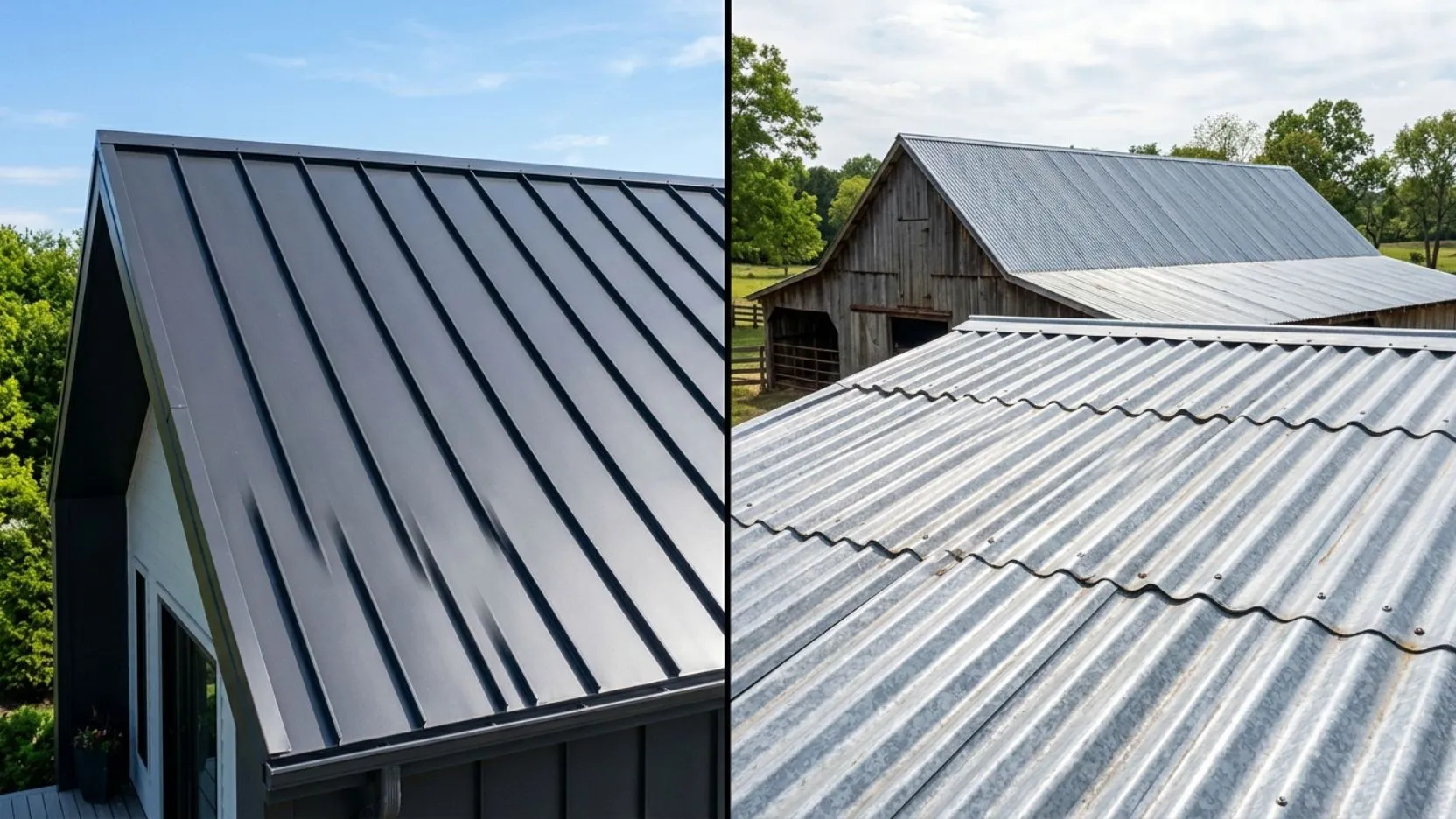
Standing seam and corrugated are the two most common metal roofs in San Antonio, and they are not built the same way. This guide compares them head to head on cost, lifespan, leak resistance, and how each one holds up to Texas heat and hail, so you can choose the right system for your home or building.
If you are putting a metal roof on a home or building in San Antonio, the choice almost always comes down to two systems: standing seam and corrugated. They both last far longer than asphalt shingles, they both reflect heat, and they both stand up to Texas weather better than most roofing on the market. But they are built on two completely different ideas about how to keep water out, and that one difference drives everything else, including price, lifespan, and how often you will be calling a roofer.
The short answer is that standing seam is the better roof for most San Antonio homes and long-term owners, but it costs more, and corrugated is still the smarter choice in plenty of real situations. This guide breaks down exactly where each one wins, so the decision is based on your roof, your budget, and how long you plan to own the property, not on a sales pitch.
On a corrugated roof, the screws go straight through the face of the panel and are exposed to the weather. On a standing seam roof, the panels lock together at raised vertical seams and the fasteners are hidden underneath, never touching rain or sun. Almost every advantage standing seam has, and the entire reason it costs more, traces back to this single design choice. Keep it in mind as you read, and the rest of the comparison makes sense.
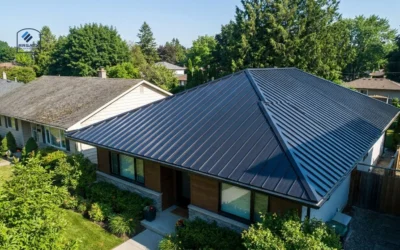
Standing seam panels run vertically from the ridge to the eave and lock together at raised seams, usually 1 inch to 1.75 inches tall. The panels attach to the roof deck with clips that are hidden underneath the seam, so no fastener ever penetrates the exposed surface of the roof. Many systems also let the panels float, which means they can expand and contract with temperature changes without working the fasteners loose.
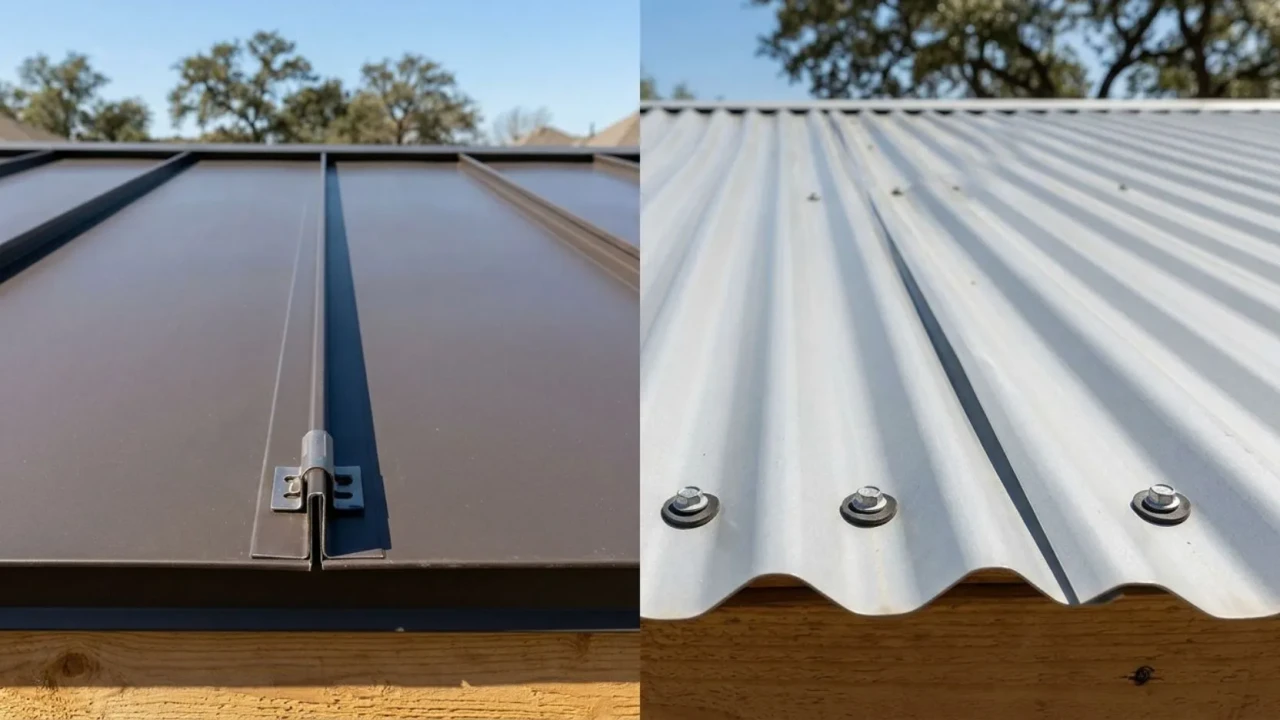
Standing seam: Concealed clips, hidden fasteners, raised interlocking vertical seams. Nothing punctures the weather surface, and the panels can move with heat. This is the more advanced and more expensive system.
Corrugated: Through-fastened panels with a repeating wavy or ribbed profile. Screws driven straight through the panel face into the deck or purlins, each one sealed by a small rubber washer. Faster to install, far cheaper, and the exposed fasteners become the maintenance point over time.
- Look for raised vertical seams with no visible screws : that is standing seam
- Look for rows of small exposed screw heads across the panel face : that is corrugated or exposed-fastener
- Standing seam seams are typically straight and uniform from ridge to eave
- Corrugated has a repeating wave or rib pattern running the length of the panel
- If you can count the screws from the ground, you have an exposed-fastener roof
There is no getting around it: corrugated is the budget choice and standing seam is the premium choice. Corrugated panels are cheaper to manufacture, and because the screws go straight through the face, they go up faster with less specialized labor. Standing seam costs more for the material and a lot more for the labor, because the seams have to be locked or mechanically seamed and the panels are often cut and formed to fit your specific roof.
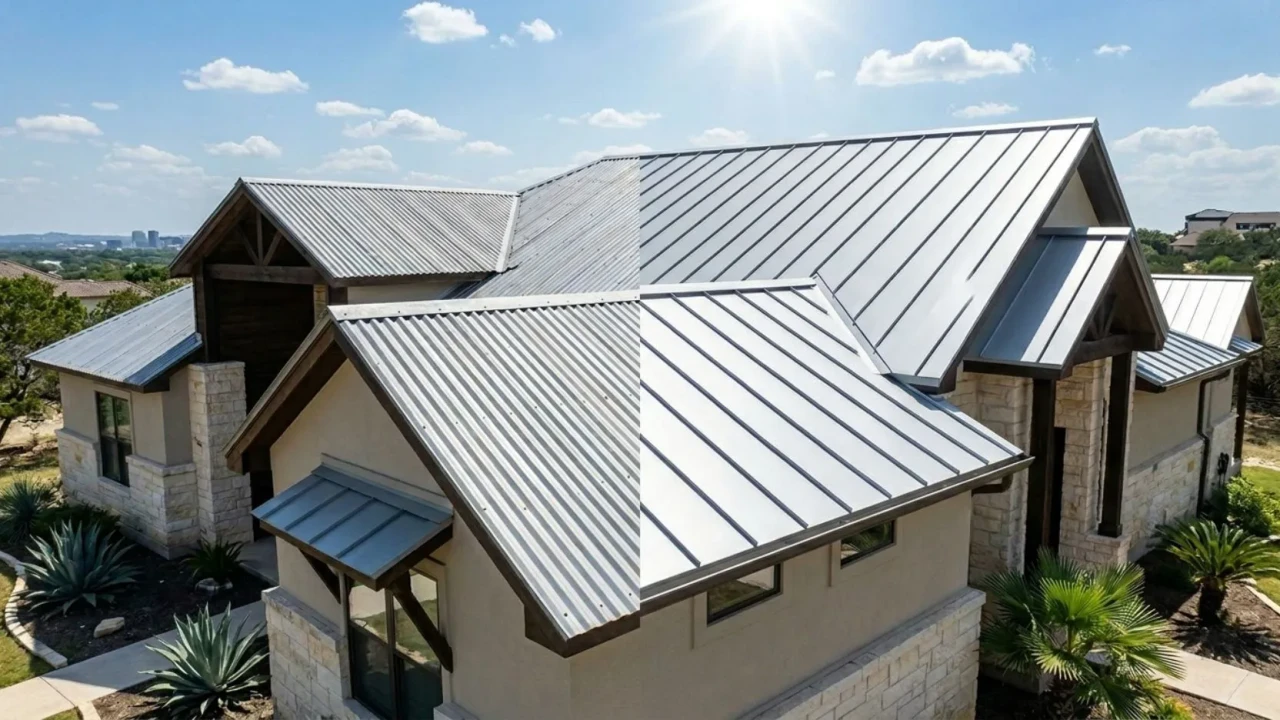
Where the money goes: on corrugated, most of your spend is the panels and a quick fastening job. On standing seam, the panels cost more and the seaming labor costs a great deal more, which is why the two systems land so far apart on price.
The trade-off to weigh: corrugated saves you money on installation day, while standing seam aims to save you money across the decades by lasting longer and asking for less maintenance. The right answer depends entirely on how long you plan to keep the roof.
Compare cost per year of service, not just the sticker price. A corrugated roof that lasts 30 years and a standing seam roof that lasts 50 years tell a very different story when you divide the price by the lifespan. If you plan to own the property for the long haul, the higher up-front cost of standing seam often works out to a lower cost per year, and you avoid the disruption of a second re-roof. If you plan to sell within a few years, corrugated may simply make more sense.
- Get a written quote for both standing seam and corrugated on your specific roof
- Ask how the price breaks down between material and labor for each system
- Divide each quote by the expected lifespan to compare cost per year
- Factor in how long you plan to own the property before deciding
- Confirm the panel gauge and coating quoted : a cheap quote may use thinner metal
Both roofs will outlast asphalt shingles, but they do not last the same amount of time. The difference comes back to the fasteners. On a corrugated roof, every exposed screw relies on a small rubber washer to keep water out. Under San Antonio sun and heat, those washers harden, crack, and shrink, and the screws themselves back out as the panels expand and contract. Each aging fastener becomes a potential leak point, and a typical corrugated roof has thousands of them.
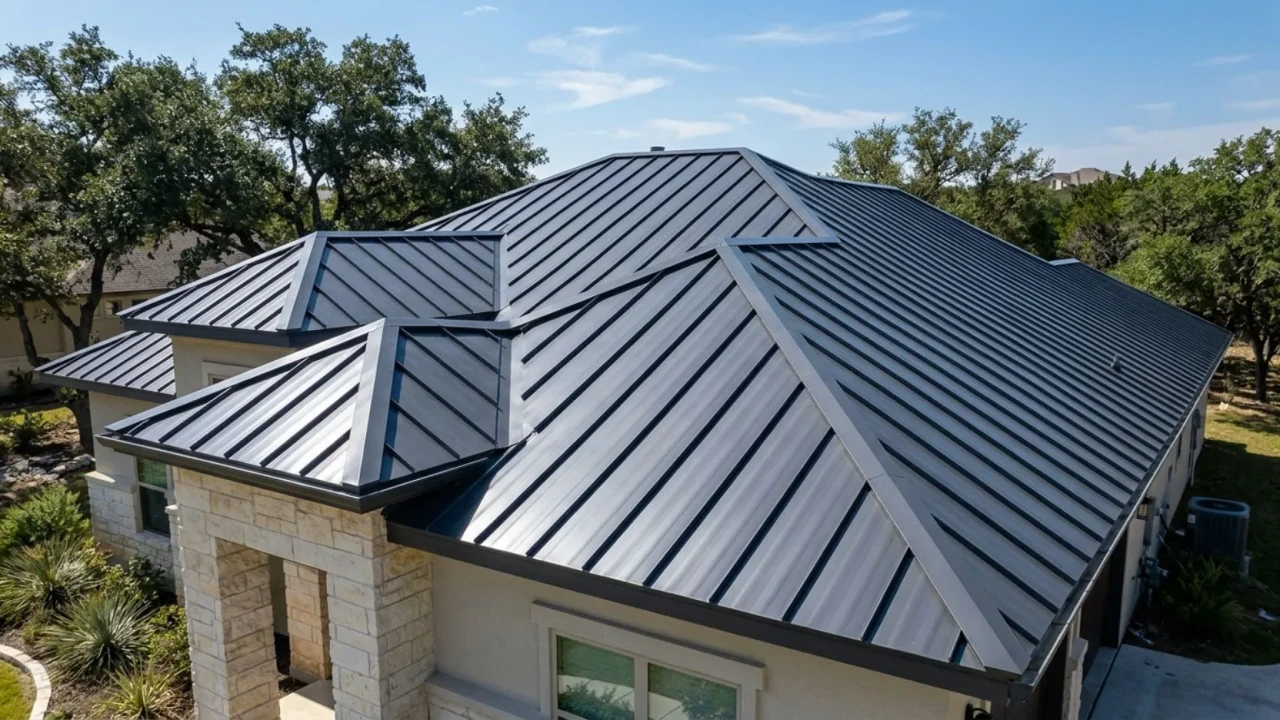
Standing seam lifespan: Commonly 40 to 70 years with quality material and proper installation. Because no fasteners are exposed and the panels can move with temperature, there is far less for the weather to attack over the decades.
Corrugated lifespan: Commonly 25 to 40 years. The panels themselves can last a long time, but the exposed fasteners and washers usually need attention or replacement well before the metal does, and missed maintenance shortens the roof's real-world life.
Where leaks start: On standing seam, leaks tend to come from flashing and penetrations, not the field of the roof. On corrugated, the most common leak source is the fastener field itself as washers age out across the roof.
A corrugated roof can serve a San Antonio property very well, but only if the exposed fasteners are inspected and re-secured on schedule. A reasonable plan is a professional inspection every two to three years, with a fastener replacement pass somewhere around the 12 to 15 year mark. Owners who skip that maintenance are the ones who end up with widespread leaks and an early replacement. Standing seam is much more forgiving of neglect, which is part of what you are paying for.
- Standing seam: plan for flashing and penetration inspections, not fastener worries
- Corrugated: budget for a fastener inspection every two to three years
- Corrugated: plan a fastener replacement pass around year 12 to 15
- Both: have the roof inspected within 30 days of any major hail event
- Both: confirm the coating and gauge, which affect real lifespan as much as the profile
San Antonio sits in one of the most active hail corridors in the country, the summers are long and brutally hot, and spring storms bring high wind. A metal roof here has to deal with all three, and the two systems handle them differently.
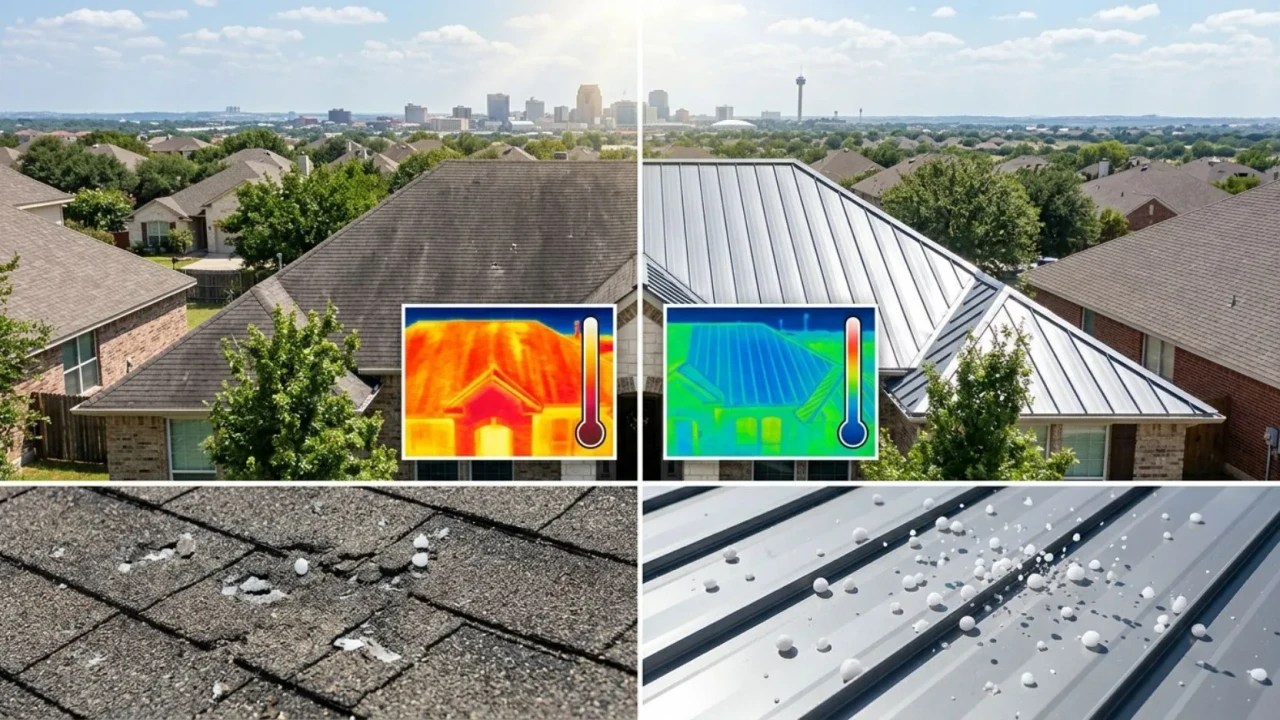
Heat: Both reflect solar heat well, especially in light colors with reflective coatings. Standing seam has the edge for thermal movement, since its panels are designed to expand and contract without stressing the fasteners. Corrugated handles the heat fine but pays for it slowly at the fastener field.
Hail: Neither metal roof is hail-proof, but standing seam tends to resist denting and seam separation better because of its heavier gauges and concealed seams. Corrugated and other exposed-fastener panels are more prone to denting and to seam stress from large hail.
Wind: A properly installed standing seam roof with concealed clips generally carries strong wind ratings. Corrugated relies on its exposed screws to hold down, so wind performance depends heavily on the fasteners being correct and intact.
After any significant hail event in San Antonio, get a professional inspection within 30 days, no matter which system you have. Texas homeowners insurance generally covers sudden hail and wind damage but not normal wear or deferred maintenance. Document the storm date and the damage with photos, and get your own independent estimate. On corrugated roofs in particular, hail can stress fasteners and seams in ways that are not obvious from the ground, so a roof-level inspection is the only reliable way to know what the storm actually did.
- Choose a heavier gauge in active hail zones, whichever system you pick
- Confirm the wind rating of the specific panel and clip or fastener system
- Pick a reflective coating to cut summer attic heat on either roof
- Inspect within 30 days of hail of 1 inch or larger
- Keep dated photos and your own estimate for any insurance claim
On looks, standing seam has the clean, modern, vertical-line appearance that most San Antonio homeowners picture when they imagine a high-end metal roof. Corrugated has a more utilitarian, ribbed look rooted in agricultural and industrial buildings, though it has become popular on modern farmhouse and ranch-style homes too. Neither one is objectively better looking; it depends on the style of the building and what you want it to say.
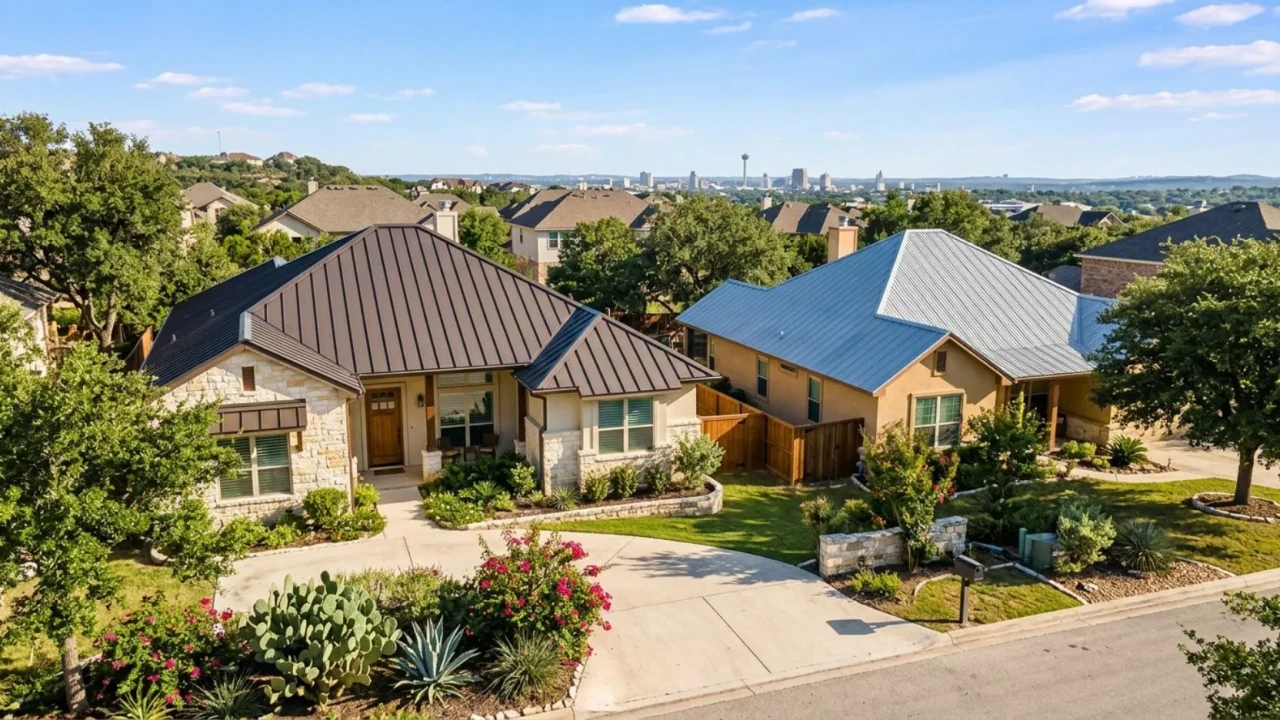
Choose standing seam if: you plan to own the property long term, you want the longest life and the lowest maintenance, you are roofing a primary residence where appearance matters, or you want the strongest hail and wind performance for the San Antonio climate.
Choose corrugated if: the budget is the deciding factor, you are roofing a barn, shop, porch, carport, or outbuilding, you have a large simple roof where the savings really add up, or you are comfortable keeping up with fastener maintenance over the years.
The honest bottom line: for most San Antonio homes and long-term owners, standing seam is worth the extra cost. For budget projects, outbuildings, and owners who do not mind maintenance, corrugated is a perfectly sound roof that will serve well.
- Decided how long you plan to own the property
- Quotes in hand for both systems on your specific roof
- Matched the look to the style of the building
- Confirmed you are comfortable with the maintenance the chosen system needs
- Verified the contractor is licensed, insured, and experienced with the system you chose
This table sums up the head-to-head comparison at a glance. Use it to narrow down which system fits your roof, then get written quotes for both before you commit. Every project is different, and the right choice depends on your budget, your timeline, and the building itself.
| Factor | Standing seam | Corrugated | Winner |
|---|---|---|---|
| Fastener system | Concealed clips, no exposed screws | Exposed screws through the panel face | Standing seam |
| Installed cost per sq ft | $9 to $16 or more | $5 to $9 | Corrugated |
| Expected lifespan | 40 to 70 years | 25 to 40 years | Standing seam |
| Leak resistance over time | Very high, few exposed weak points | Good early, depends on fastener upkeep | Standing seam |
| Maintenance demand | Low, mostly flashing and penetrations | Moderate, fasteners need periodic attention | Standing seam |
| Hail and wind performance | Strong, heavier gauges and hidden seams | Fair to good, exposed fasteners are the risk | Standing seam |
| Installation speed | Slower, skilled seaming labor | Faster, simpler to fasten | Corrugated |
| Best fit | Homes and long-term ownership | Budget jobs, barns, shops, outbuildings | Depends on the project |
- How long do you plan to own this property : a few years or the long haul
- Is this a primary residence where appearance matters, or an outbuilding
- What is your real budget, including the better gauge and coating, not just the base price
- Are you comfortable keeping up with fastener maintenance on a corrugated roof
- How important is the lowest possible maintenance over the next few decades
- Written quote for both systems on your specific roof, not a phone estimate
- Cost broken down between material and labor for each system
- Panel gauge and coating specified, so a cheap quote is not hiding thin metal
- Wind rating and hail performance stated for the panel and clip or fastener system
- Cost per year of service calculated by dividing each price by its expected lifespan
- Licensed and insured, with at least $1 million general liability coverage
- Experienced specifically with the system you are choosing, not just metal roofs in general
- Able to show recent local standing seam or corrugated installations in San Antonio
- Workmanship warranty offered in writing, separate from the material warranty
- Honest enough to quote both systems and explain the trade-offs for your roof
Not sure which metal roof is right for your San Antonio property?
Tell us about your roof and how long you plan to own it. We will inspect it for free, walk you through standing seam and corrugated for your specific situation, and give you clear written quotes for both at no cost.