
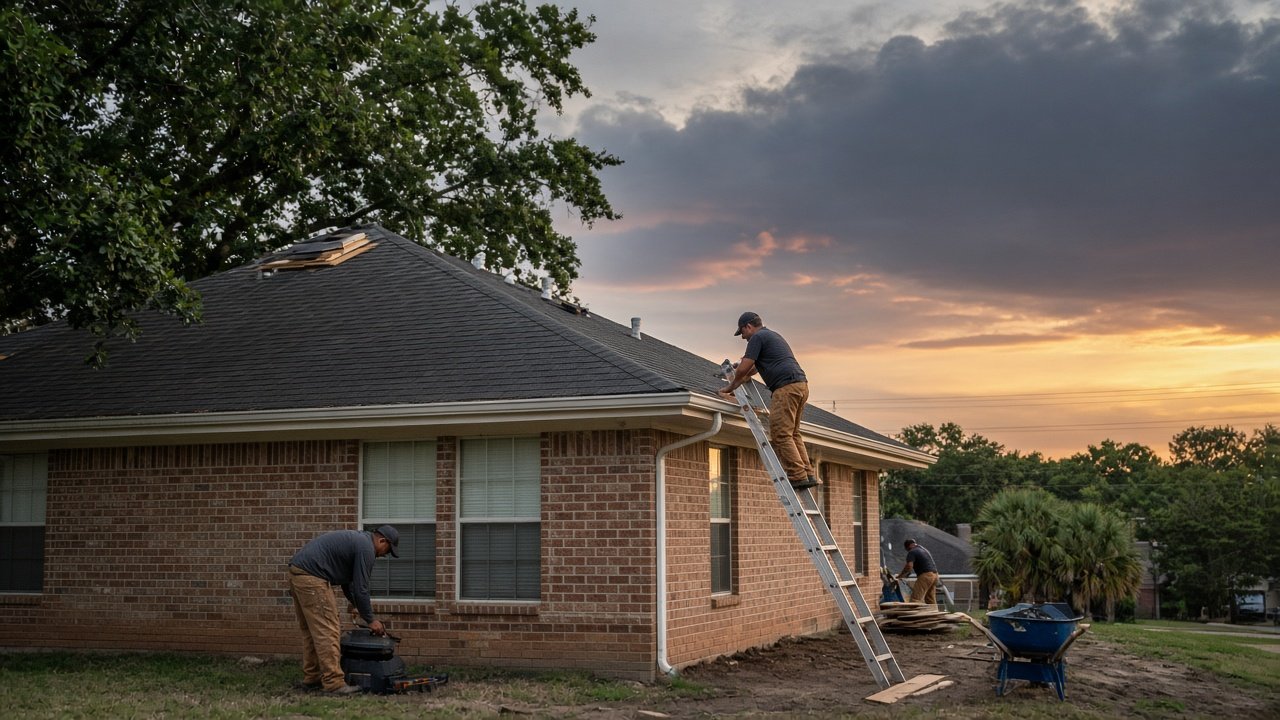
Roofing project planning · San Antonio, Texas
When Do Roofers Stop Working? San Antonio Work Times and Weather Calls
Your roof job is on the calendar, and you want to know when the crew will pack up each day and what makes them stop early. This guide covers the City of San Antonio’s approved construction times, the weather and safety calls that end a workday, and what a responsible crew does before it leaves.
The short answer
When do roofers stop working in San Antonio? Construction is approved only during the City’s approved construction times, and crews stop sooner when weather makes the roof unsafe. [1] Lightning, rain, extreme heat, frost or ice, and strong wind are all reasons to come down. [2][3][4] A good crew also quits with enough daylight left to leave your roof watertight and your yard clean.
When do roofers stop working? San Antonio’s approved construction times
The City of San Antonio sets the time of day when construction work is approved. Roofing crews plan their workdays around those rules.
The City’s Development Services Department explains the rules in an information bulletin on the Construction Noise Ordinance. It lists the approved construction times below and says construction is not allowed on New Year’s Day, Memorial Day, the Fourth of July, Labor Day, Thanksgiving, or Christmas Day. Contractors can request a waiver from the City’s Building Official to work outside the approved times. [1]
| Day | Approved construction times |
|---|---|
| Monday through Friday | 7:00 a.m. to 8:00 p.m. |
| Saturday | 8:00 a.m. to 8:00 p.m. |
| Sunday | 9:00 a.m. to 5:00 p.m. |
| New Year’s Day, Memorial Day, Fourth of July, Labor Day, Thanksgiving, Christmas Day | Construction not allowed |
City rules can change. Check the City of San Antonio’s current rules before you rely on this table.
Approved to work doesn’t mean working to the end of the window
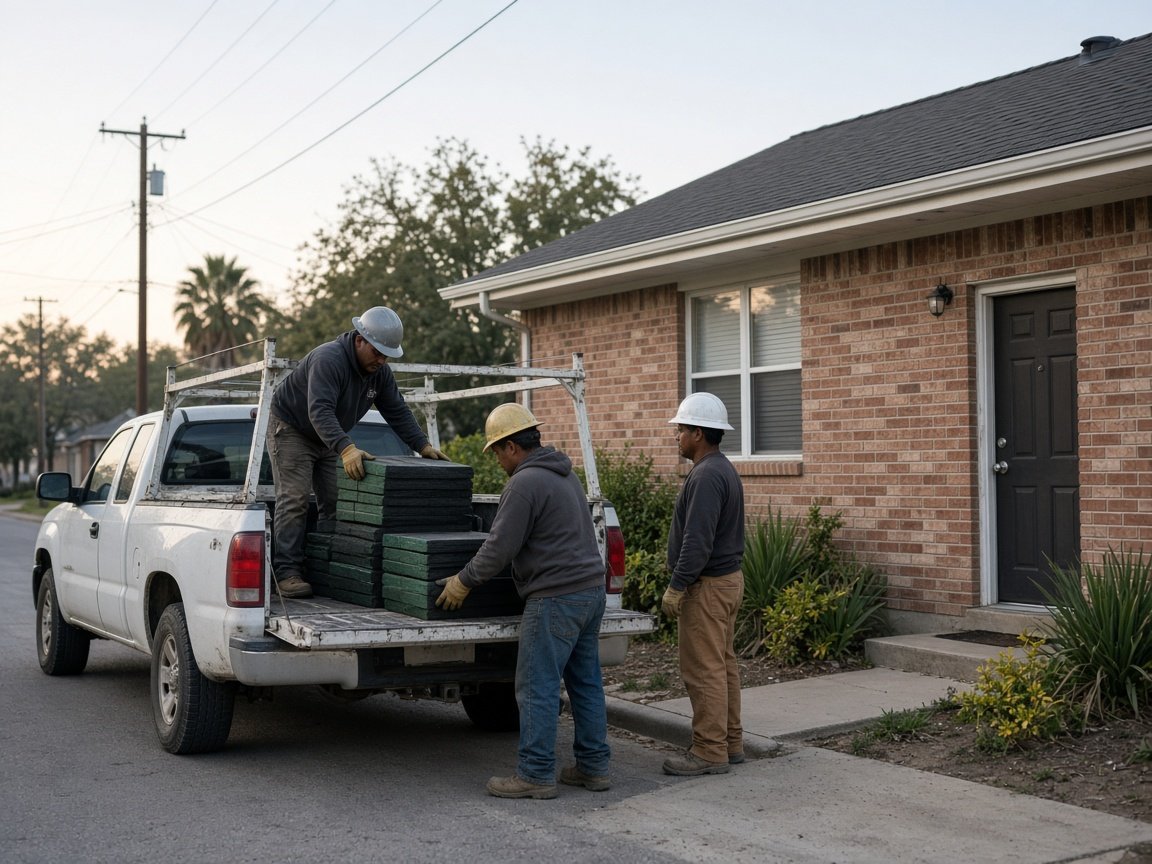
The City’s times are the outer limits of the work window, not a target. A crew doesn’t have to work right up to the limit.
In RRSATX’s experience, a crew plans each day around a simple goal: the roof must be watertight and the site clean before anyone leaves. That means the crew stops tearing off old shingles early enough to cover every open section, secure materials, and sweep for nails while there’s still good light. On a big tear-off day, you may see the crew finish the roofing work and then spend a good stretch on cleanup.
If you want a sense of how a full install day unfolds, see what to expect on roofing installation day.
Lightning: the clearest reason roofers stop working
A roof is a high, exposed place to be in a thunderstorm. OSHA lists roofing among the outdoor jobs at higher risk for lightning. [2]
OSHA’s lightning fact sheet tells employers to treat lightning as an occupational hazard, check weather reports before work, and consider rescheduling when storms are expected. Its rule of thumb is simple: “When thunder roars, go indoors.” Workers should watch for darkening clouds and increasing wind, and take shelter in an enclosed building or a hard-topped metal vehicle. OSHA also says employers should have a lightning safety plan that spells out when to stop work and when it’s safe to resume. [2]
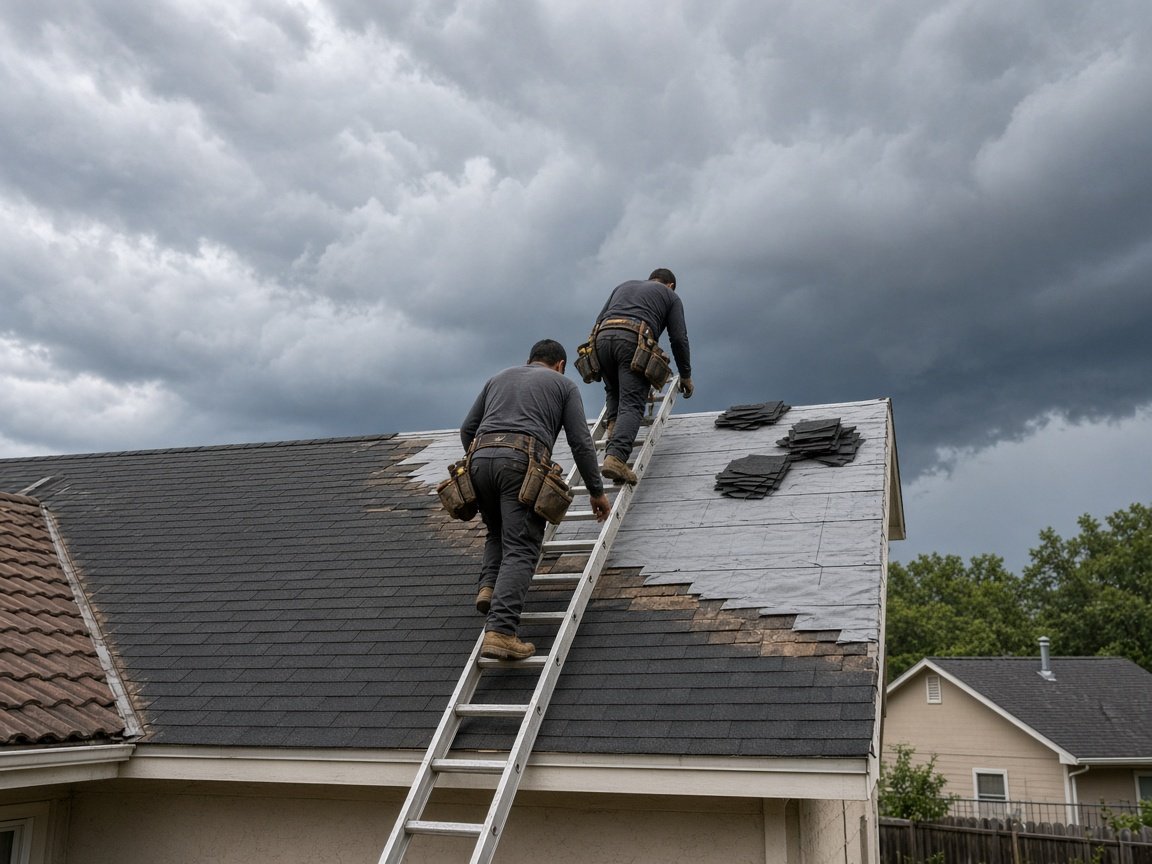
San Antonio’s spring and summer storms can build fast. If you see the crew leave the roof on a day that started sunny, that’s the plan working.
Rain and wet roofs
Wet shingles and underlayment are slippery, and you can’t properly close up a roof in the rain. Rain stops roofing for both safety and quality reasons.
In RRSATX’s experience, a light shower can still end the day if it makes the deck or underlayment slick. The crew’s priority shifts from installing to keeping water out: tarping open areas and checking edges. Shingles also shouldn’t go down over wet underlayment or wet decking, so the crew waits for the roof to dry before picking up where it left off. If rain is in the forecast, a careful crew tears off only as much as it can dry in before the weather turns. For more on how crews plan around wet weather, see roofing installation in rainy weather.
South Texas heat and summer work times
Heat changes when crews work and how often they rest. OSHA’s heat guidance comes down to water, rest, and shade. [3]
OSHA says employers should provide cool water, workers should drink frequently, and workers need a cool place to rest, such as shade. When heat stress is high, employers should require breaks, and OSHA is clear that skipping breaks in hot conditions is not safe. [3]
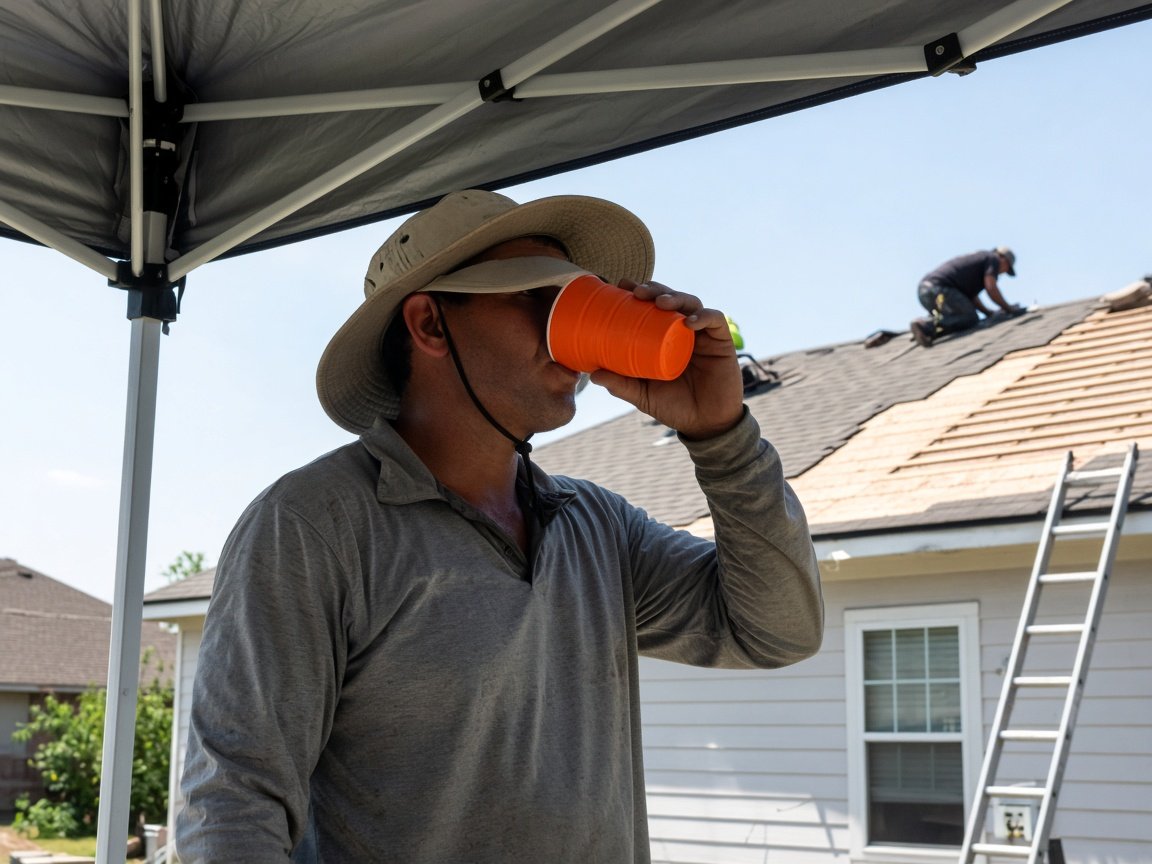
In RRSATX’s experience, summer crews in San Antonio often start early to get the heaviest work done in the cooler part of the day, and they may wrap up earlier in the afternoon. For how the calendar affects roof projects, see the best season for roof work.
Cold mornings, frost, and ice
San Antonio winters are mild, but a cold snap can delay the start of work. Frost and cold shingles both slow things down.
The Asphalt Roofing Manufacturers Association says to follow the shingle manufacturer’s instructions for cold-weather application. It warns that nearly invisible ice or frost makes a roof hazardous, so crews should wait until the surface is free of it. Cold shingles can crack or break when handled. Shingle sealant strips are thermally activated and need sun and warmth to seal, so in cold conditions shingles may need to be hand-sealed. [4]
On a frosty morning, that can mean a later start rather than an early quit.
Strong wind
Gusty wind makes a roof unsafe even on a clear day. It’s one of the less obvious reasons crews stop.
In RRSATX’s experience, strong gusts make it dangerous to carry shingle bundles and rolls of underlayment across a roof, because the material can act like a sail. Wind can also lift loose underlayment and unsealed shingles. When gusts pick up, crews pause, secure what’s on the roof, and wait for conditions to settle. Strong wind often comes just ahead of a San Antonio thunderstorm, so a gusty afternoon can be the first sign that the day is about to end.
What a good crew does before it stops working for the day
No section of your roof should be left open overnight. Whatever the reason for stopping, the roof gets protected first.
- Dry-in or tarp every open area. Exposed decking gets underlayment or a secured tarp before the crew leaves.
- Secure loose materials. Bundles, rolls, and tools are tied down, brought down, or stored so wind can’t move them.
- Lower ladders. Ladders come down or are secured so no one can climb them overnight.
- Check edges and transitions. The crew looks over where new and old roofing meet.
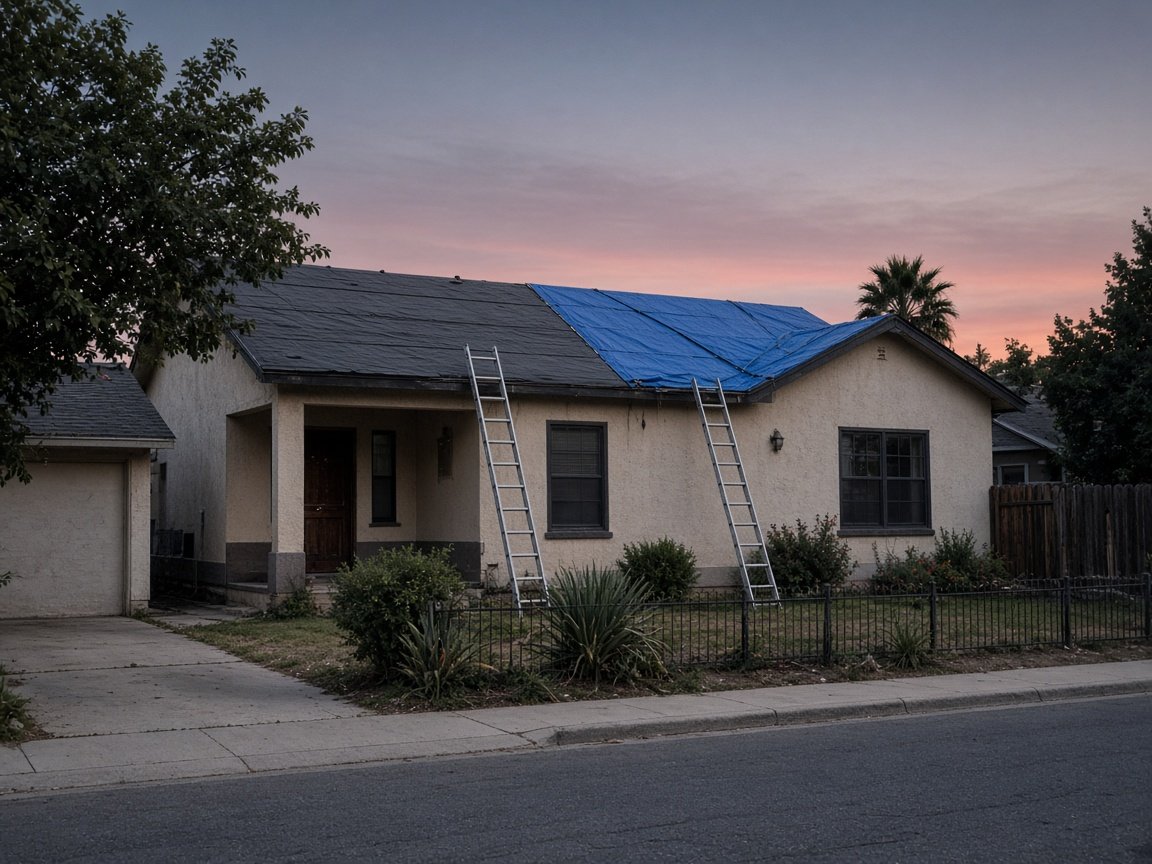
For how temporary roof covers are fastened, see how to tarp a roof without nails.
End-of-day cleanup and walk-through
Cleanup is part of the workday, not an extra. Loose nails and shingle scraps are a hazard for your family, pets, and tires.
- Magnet sweep. The crew rolls a magnetic sweeper across the lawn, driveway, and beds to pick up nails.
- Bag debris. Shingle scraps and wrappers go into the dumpster or bags.
- Walk the site with you. If you’re home, the crew lead can show you what was done and what’s next.
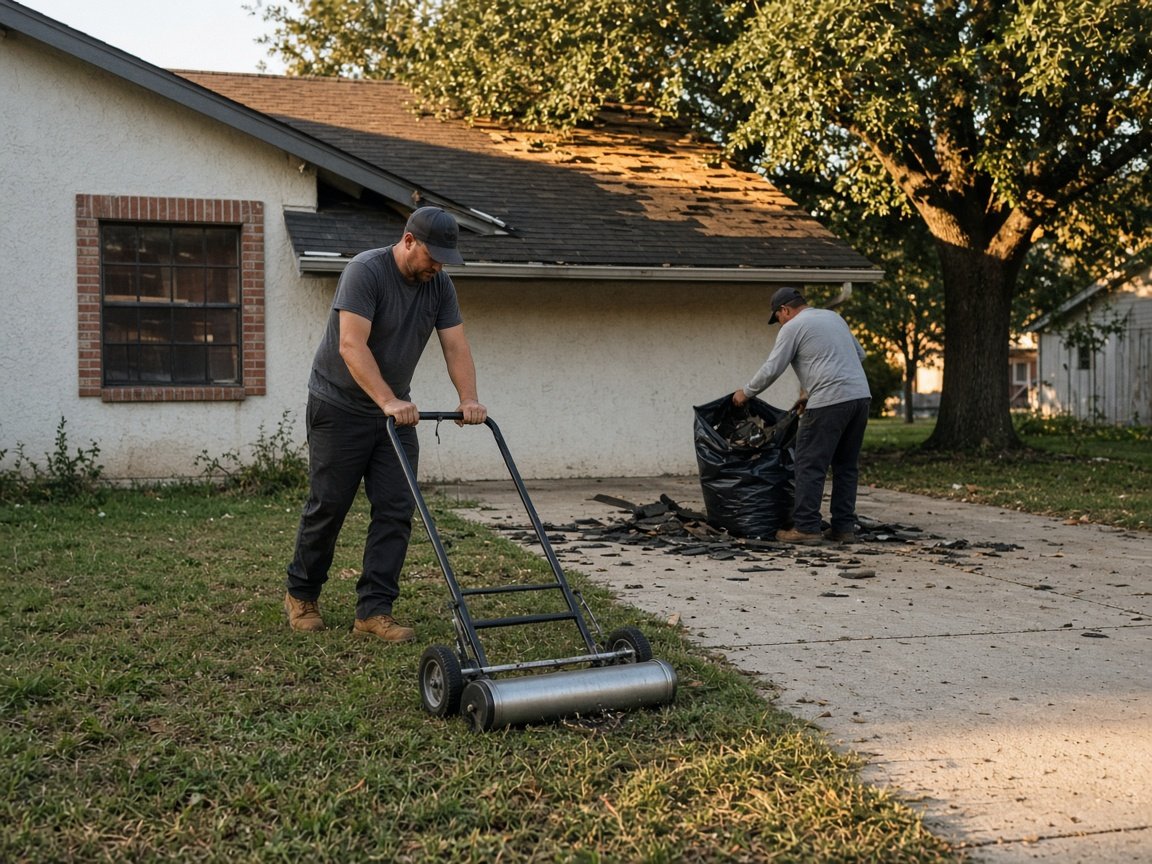
For keeping your household safe while work is under way, see roofing safety tips for install day and whether you can stay home during installation.
Weather delays and your roofing schedule
A weather delay is a safety call, not a lost job. A crew that stops for lightning or wind is doing what it should.
In RRSATX’s experience, the best thing you can do is ask up front how the crew communicates delays: who calls you, how you’ll hear about a new start, and what happens to a roof that’s partly done. For how a project typically runs from start to finish, see the new roof installation timeline and roof replacement timeline explained.
Planning your project with RRSATX
RRSATX handles roof replacement and roof repair across San Antonio. Not sure what your roof needs? Start with a free roof inspection. If a storm opens up your roof, call for emergency roof repair.
Local roofing service
About Affordable Roofing Contractors San Antonio
Affordable Roofing Contractors San Antonio, also known as RRSATX, provides roof replacement, roof repair, roof inspections, emergency roof repair, and asphalt, metal, and tile roofing in San Antonio. When you call, ask how your crew schedules the work, handles weather, and protects your roof between workdays.
- Phone
- (713) 504-2341
- sales@affordableroofingcontractorssanantonio.com
- Address
- 4324 Monterey St, San Antonio, TX 78237
- Contact
- Request a free roof inspection
When roofers stop working: questions to ask your roofer
What time will the crew arrive and quit?
Ask your roofer. The City sets approved construction times, [1] but each crew plans its own start and finish inside that window based on the job, the weather, and daylight.
Can roofers work on Sundays or holidays in San Antonio?
The City’s bulletin lists approved construction times on Sundays and says construction is not allowed on certain holidays, including Thanksgiving and Christmas Day. Contractors can request a waiver from the Building Official. [1]
What happens if the weather turns mid-day?
The crew should come off the roof, cover any open areas, and secure materials. Ask how they’ll let you know when work will pick up again.
How is my roof protected overnight?
Open sections should be dried in with underlayment or covered with a secured tarp before the crew leaves. Ask your roofer to show you before they go.
Who do I call outside work times if something goes wrong?
Ask for a contact number before work starts. For RRSATX projects, call (713) 504-2341.
Is it a bad sign if the crew leaves early?
Not usually. Lightning, rain, heat, and wind are all good reasons to stop. What matters is that your roof is watertight and the site is clean when they go.
Explore the roofing topic
More help planning your roof project
Plan your roof project with a crew that respects the weather
Ask RRSATX for a free roof inspection and a clear plan for your San Antonio project.