
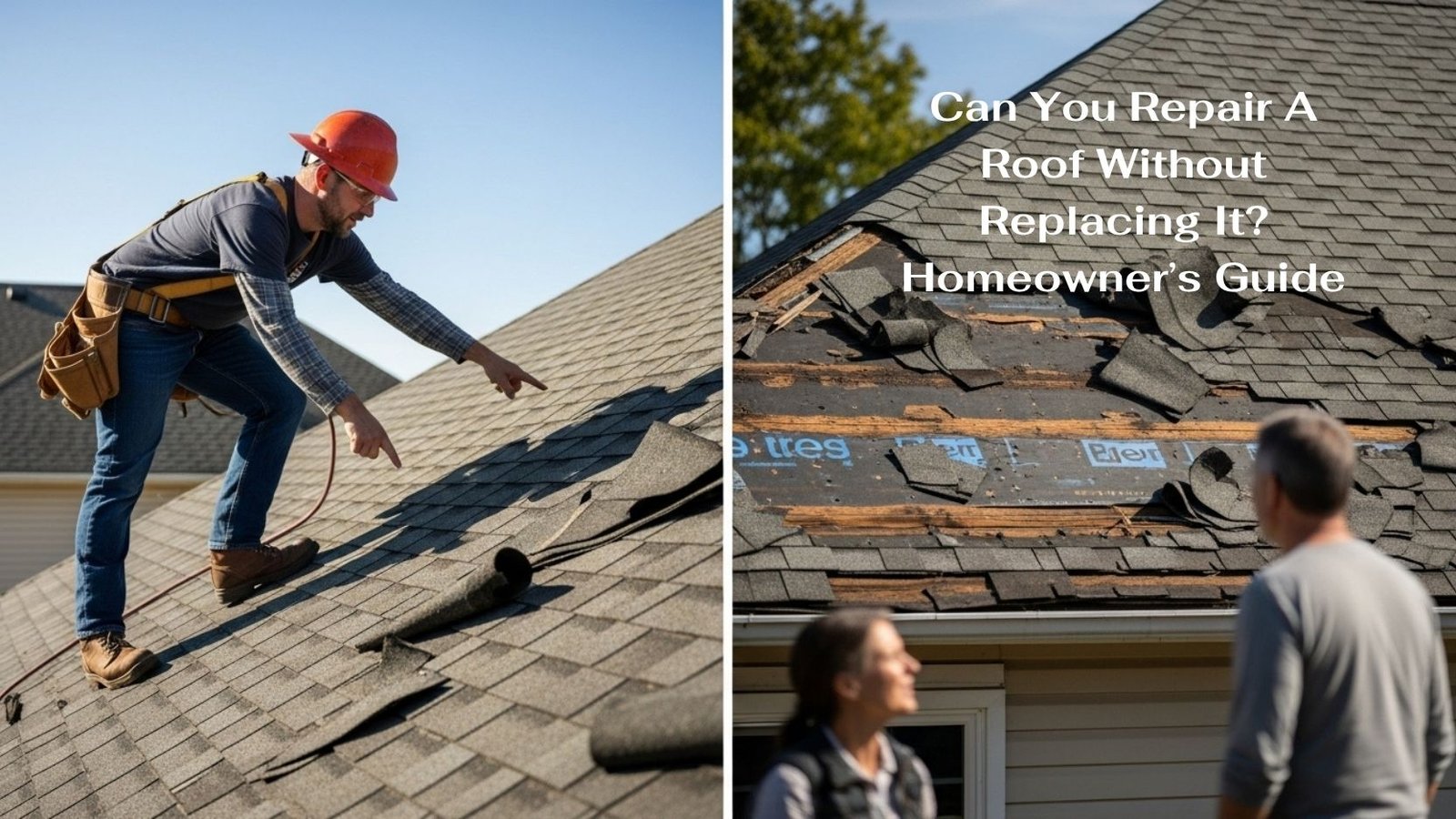
When your roof starts showing wear, your first thought might be, “Do I need to replace the whole thing?” The good news: not always. Many roofing issues can be fixed with targeted repairs, saving you thousands of dollars and extending your roof’s lifespan.
In this guide, we’ll walk you through how to tell when your roof can be repaired, what fixes work best, and when replacement is the smarter move.
Signs Your Roof Can Be Repaired
Not every leak or missing shingle means disaster. Some problems are small enough to fix without a full replacement.
According to experts at Roofing Insights, “If the damage is limited to one area, repairs are often all you need.” That means if you spot a few cracked shingles, damaged flashing, or small leaks after a storm, you can likely patch those sections.
This Old House notes that common repairable issues include:
- Missing or curled shingles
- Cracked flashing around chimneys or vents
- Minor water leaks in one area
- Moss buildup on shingles
These are all signs your roof can be saved with timely repairs.
How to Repair Common Roof Issues
If you’re comfortable with basic home maintenance, you can handle some small roof repairs yourself—just make sure to follow safety steps.
Here’s how to tackle common fixes:
- Loose or missing shingles: Remove damaged shingles and replace them with new ones. Secure with roofing nails and seal edges with roofing cement.
- Small leaks: Find the leak source inside the attic, then seal it from the roof using patching compound or roofing tape.
- Flashing repair: Replace cracked flashing around chimneys or skylights using metal flashing kits.
For larger or more complicated damage, it’s safer and often more cost-effective to hire a professional. Bob Vila’s roof repair guide advises homeowners to “always call a pro if you suspect structural issues or widespread water damage.”
When Replacement Is the Better Option
There are times when patching won’t be enough. If your roof has multiple leaks, sagging areas, or visible mold, repairs might only delay the inevitable.
According to HomeAdvisor, the average asphalt shingle roof lasts 20–25 years. If yours is older than that, replacement may be more cost-effective in the long run.
Here are signs it’s time to replace:
- Shingles are curling or missing across large areas
- Frequent leaks after rain
- Roof deck sagging or soft spots
- Major storm damage or rot
While repairs may cost between $400 and $1,500, a full replacement ranges from $5,000 to $12,000—but it also adds resale value and peace of mind.
Preventive Maintenance Tips
The best way to avoid expensive roofing surprises is with regular upkeep. Angi recommends roof inspections every 1–2 years, especially after severe weather.
Here are simple habits to extend your roof’s life:
- Keep gutters clean to prevent water pooling.
- Trim overhanging branches.
- Check for loose shingles after storms.
- Schedule professional inspections regularly.
As one roofing contractor told Angi, “Regular roof checks can catch small issues before they turn into replacements.”
What this means for your San Antonio roof
So, can you repair a roof without replacing it? Absolutely—if the damage is small and caught early. Simple repairs, like fixing a leak or replacing a few shingles, can extend your roof’s life for years. But when your roof shows widespread wear or structural damage, replacement is the smarter move.
When in doubt, call a roofing professional for an inspection. A quick check can save you from future headaches and help you make the best choice for your home.