
[et_pb_section fb_built=”1″ admin_label=”section” _builder_version=”4.16″ global_colors_info=”{}”][et_pb_row admin_label=”row” _builder_version=”4.16″ background_size=”initial” background_position=”top_left” background_repeat=”repeat” global_colors_info=”{}”][et_pb_column type=”4_4″ _builder_version=”4.16″ custom_padding=”|||” global_colors_info=”{}” custom_padding__hover=”|||”][et_pb_code _builder_version=”4.27.6″ _module_preset=”default” hover_enabled=”0″ global_colors_info=”{}” sticky_enabled=”0″]
A new roof is one of the highest-impact investments a San Antonio homeowner can make before selling or refinancing. This guide covers exactly how much value a new roof adds, how metal and asphalt compare, what appraisers and buyers actually care about, and when replacing your roof before listing makes financial sense.
If you are a San Antonio homeowner thinking about replacing your roof before selling, refinancing, or simply protecting your property value, the question you need answered is a practical one: how much money will a new roof actually put back in your pocket? The answer is more nuanced than a single number, but it is also more encouraging than many homeowners expect.
A new roof does not just add resale value. It removes a major buyer objection, helps you qualify for better homeowner’s insurance rates, supports a higher appraisal, and in the case of a metal roof, delivers durability that asphalt cannot match over the long term. This guide breaks down every angle of the equation so you can make an informed decision about whether replacing your roof makes financial sense for your specific situation in San Antonio.
Homeowners often focus on whether a new roof raises the appraised value by more than it costs. That is one part of the equation, but not the whole picture. A new roof also eliminates inspection-driven price reductions, prevents deals from falling through over roof condition issues, and gives you negotiating leverage that an aging roof takes away. In the San Antonio market, where buyers are well-informed and inspections are thorough, a roof in poor condition is one of the top reasons a sale slows down or falls apart entirely.
ROI and Resale
The most widely cited figure in the roofing industry is the Cost vs. Value report published annually by Remodeling magazine, which tracks the return on investment homeowners receive on major home improvements at resale. For roof replacement, the national average ROI has consistently landed in the range of 60 to 70 percent. That means if you spend $20,000 on a new roof, you can expect to recover roughly $13,000 to $14,000 of that at closing in added resale value.
That number surprises some homeowners, because 68 percent sounds like a loss. What the figure does not capture is the value on the other side of the ledger: the price reductions buyers demand when a roof is aging or failing, the deals that fall through at inspection, and the insurance savings a new roof generates over the years you continue living in the home before selling.
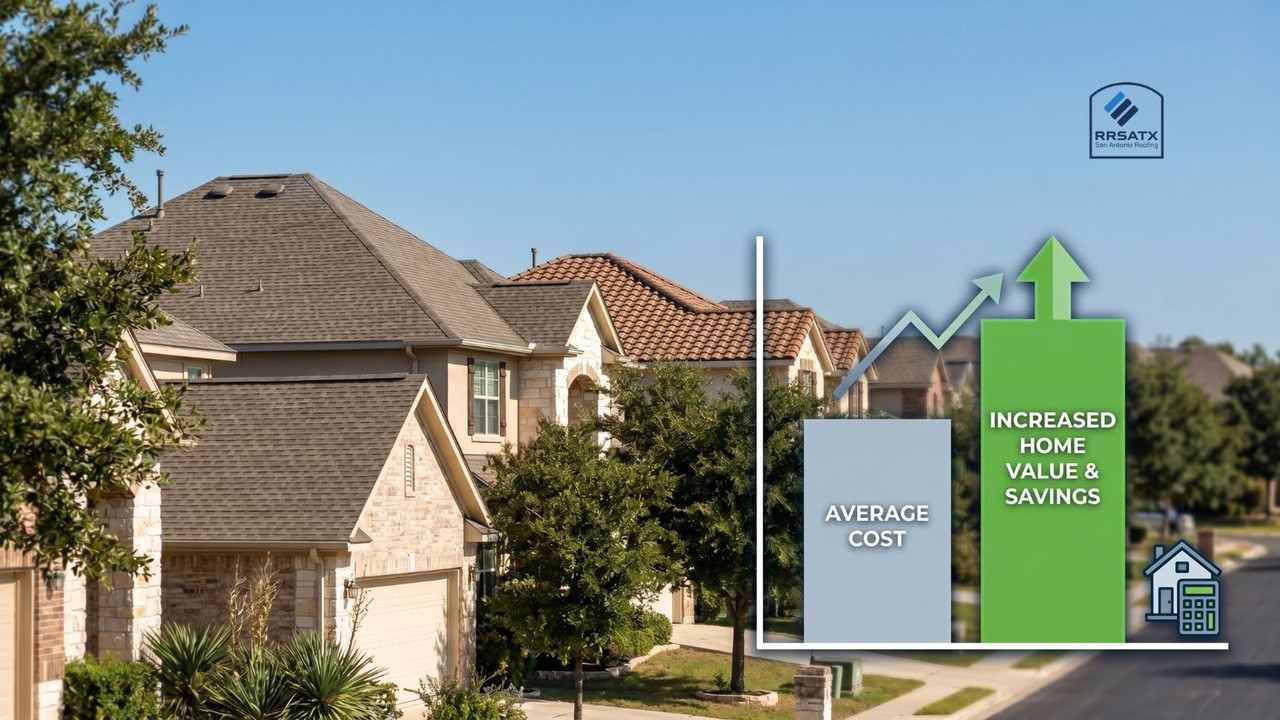
Why San Antonio ROI trends higher than the national average: The Texas real estate market moves fast. Buyers in San Antonio are accustomed to thorough inspections, and roof condition is one of the first things flagged. A home with a new roof generates cleaner offers, fewer contingencies, and stronger appraisal support than a comparable home with an aging or damaged roof.
The hidden return: insurance savings: A new roof, particularly a Class 4 impact-resistant metal roof, can reduce your annual homeowner’s insurance premium in Texas by 20 to 30 percent. Over five to ten years of continued ownership, those savings add a meaningful secondary return on the roof investment that does not show up in resale-only calculations.
- Get a written estimate for roof replacement before deciding whether to sell as-is or replace first
- Ask your real estate agent for data on comparable homes with new versus aging roofs in your neighborhood
- Request an insurance quote with a new roof factored in to calculate the annual premium savings
- Consider the full holding period: insurance savings over five or more years add to the total return
- Factor in avoided inspection-driven price reductions, which commonly run $5,000 to $15,000 in San Antonio
- Compare asphalt and metal replacement costs side by side against their respective value-add and insurance benefits
If you are choosing between a new asphalt shingle roof and a new metal roof before selling or as a long-term investment in your San Antonio home, the difference in value delivered is significant. Asphalt is the less expensive upfront option, but metal delivers a higher resale premium, a longer lifespan, lower insurance costs, and better performance under the specific weather conditions San Antonio homes face every year.
Standing seam metal roofs, in particular, have moved from a specialty product to a mainstream choice in the San Antonio residential market. Buyers who have done their homework understand that a metal roof means they are unlikely to face a roof replacement in their ownership window. That expectation translates directly into willingness to pay more for the home.
| Factor | Asphalt shingles | Metal roof | Advantage |
|---|---|---|---|
| Installation cost (2,000 sq ft home) | $8,000 to $14,000 | $18,000 to $40,000 | Asphalt (lower upfront) |
| Typical resale value added | $8,000 to $14,000 | $15,000 to $35,000 | Metal (higher value-add) |
| Expected lifespan in San Antonio | 15 to 25 years | 40 to 70 years | Metal (significantly longer) |
| Insurance premium impact in Texas | Standard rate | 20 to 30% reduction (Class 4) | Metal (meaningful annual savings) |
| Hail damage resistance | Moderate | High (especially standing seam) | Metal |
| Energy efficiency in Texas heat | Standard | Cool-roof coatings reduce cooling cost | Metal |
| Buyer appeal in San Antonio market | Expected baseline | Premium differentiator | Metal |
In neighborhoods where comparable homes are still on asphalt shingles, a metal roof is a genuine competitive advantage on the listing. Buyers comparing your home to a similar property will weigh the cost of roofing the other home within their ownership window. If your home has a 50-year metal roof installed two years ago and the comparable has a 15-year-old asphalt roof, the buyer’s calculation includes a likely $15,000 to $25,000 future roofing cost on the competing property. That math supports a higher offer price on yours, even before factoring in the insurance savings they will enjoy from day one.
- Request quotes for both asphalt and metal replacement so you have real numbers to compare
- Ask for an insurance quote comparison under both roof types to quantify the annual premium difference
- Check whether your neighborhood’s home values support the premium cost of metal at resale
- Consider your planned ownership period: metal pays back more the longer you stay in the home
- Verify the metal roof panel profile and color are consistent with the neighborhood aesthetic
- Confirm the metal roof carries a manufacturer’s warranty of at least 40 years on the material
Appraisal Impact
This is the area where homeowner expectations most often diverge from how appraisal actually works. Many homeowners expect that spending $25,000 on a new metal roof will add $25,000 or more to the appraised value. Appraisers do not work that way. They establish value primarily through comparable sales, not through a line-item accounting of improvements. What they do, however, is adjust downward for condition deficiencies, including a roof that is near or past its useful life.
In practical terms, a new roof is most valuable in the appraisal process as a condition protector, not as a direct value multiplier. An appraiser who would have noted deferred maintenance on an aging roof and applied a condition adjustment will not apply that adjustment to a home with a recently installed roof. Depending on the condition of the old roof, that avoided adjustment can be meaningful.
There is one scenario where a new roof has a direct and measurable impact on appraisal: when the home is being purchased with FHA or VA financing. These loan programs require the appraiser to confirm that the roof has a minimum remaining useful life, typically two to three years. A roof that is 20 or more years old in San Antonio will often fail this test, even if it is not actively leaking. When a buyer using FHA or VA financing cannot complete the purchase because of the roof, the seller either replaces it or loses the deal. Replacing the roof before listing eliminates this category of risk entirely.
- Have your roof age assessed by a professional contractor before listing to understand where it stands
- If the roof is 15 or more years old, request a remaining-useful-life estimate in writing
- Confirm whether your expected buyer pool includes VA or FHA purchasers, who trigger stricter roof condition requirements
- Ask your appraiser or real estate agent whether the current roof condition would trigger a condition adjustment in the local market
- Document the installation date, material, and warranty of any new roof with receipts and permit records for the appraiser’s file
- Provide the appraiser with the manufacturer’s warranty document, which supports the roof’s remaining useful life claim
Buyer Appeal
Before any formal appraisal happens, buyers and their agents are already factoring roof condition into their offer strategy. In the San Antonio market, buyers who see a listing with an aging roof or roof-related disclosures often build in a discount before submitting an offer. They are accounting for the cost of replacement or repair, the uncertainty about what an inspection will reveal, and the friction of negotiating roof issues after the fact.
A new roof, shown prominently in the listing description and confirmed in the seller’s disclosure, removes all of that uncertainty. Buyers who would have padded their offer with a roof contingency buffer no longer need to. This is one of the clearest ways a new roof translates into a higher sale price, not just a higher appraisal value.
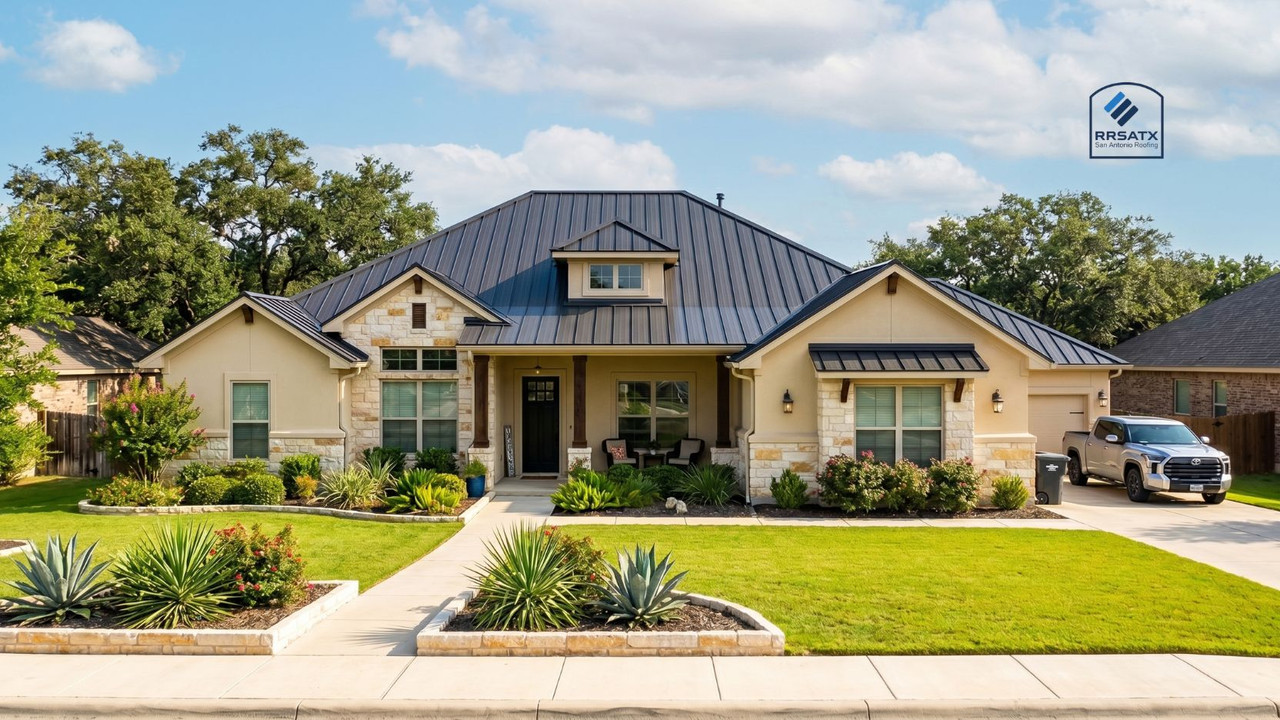
Curb appeal and first impressions: A new roof is one of the most visible improvements to a home’s exterior. In San Antonio neighborhoods where standing seam metal roofs are becoming more common, a clean new metal or architectural shingle roof signals to buyers that the home has been well cared for. A faded, stained, or visibly aging roof sends the opposite message before a buyer even walks through the door.
Inspection contingency negotiating power: Once a buyer’s inspector flags the roof, the seller loses leverage. Whatever the inspector documents becomes the basis for a renegotiation, a repair request, or a walkaway. A new roof eliminates the inspection’s most significant leverage point. Sellers with new roofs commonly receive cleaner offers with fewer post-inspection repair demands.
Make the new roof a headline feature in your listing, not a footnote. Your real estate agent should call out the roof age, material, and warranty in the listing description and on any feature sheets. Buyers and their agents actively search for listings with updated roofs. A 2025 or 2026 standing seam metal roof with a 40-year manufacturer’s warranty is a competitive feature that belongs in the first paragraph of the property description, not buried in the disclosure documents.
- New roof installation date, material, and warranty documented and included in the seller’s disclosure
- Manufacturer warranty certificate and contractor installation warranty available for buyer review
- Real estate agent briefed to highlight roof age and material in the listing description
- Permit for the roof replacement pulled and closed, which provides an official record of the installation
- Before-and-after photos of the roof available to share with buyers during showings
- Insurance discount details available to share with prospective buyers who ask about ongoing ownership costs
Timing and Strategy
Not every homeowner needs to replace their roof before selling, and not every roof replacement will generate a positive net return at closing. The decision comes down to an honest assessment of three variables: how much the current roof condition is costing you in buyer discounts, how much a replacement costs in today’s San Antonio market, and how much of that cost you expect to recover in a cleaner, higher-priced sale.
The clearest cases for pre-sale replacement are when the roof is at or past its expected lifespan, when visible damage or staining is already affecting buyer perception, or when the home is likely to attract buyers using VA or FHA financing. In these situations, replacing the roof before listing is almost always the better financial decision compared to absorbing the inspection-driven discounts and deal uncertainty that come with an aging roof.
| Scenario | Recommended approach | Reasoning |
|---|---|---|
| Asphalt roof 15 or more years old in San Antonio | Replace before listing | Inspectors will flag it and buyers will discount it. Replacement eliminates both risks and broadens the eligible buyer pool. |
| Roof with visible storm damage, staining, or missing shingles | Replace before listing | Visible damage generates pre-offer discounts and post-inspection repair requests. It also signals broader deferred maintenance to buyers. |
| Roof 5 to 12 years old with no visible damage | Inspect and hold | A professional inspection report confirming remaining useful life is sufficient for most conventional buyers. Replacement is unlikely to generate a positive net return at this age. |
| Metal roof installed within the last 20 years | Document and market | A properly maintained metal roof is a selling advantage. Get a professional inspection to confirm condition and use it as a listing feature. |
| Expected VA or FHA buyer pool | Replace if roof is near end of life | Government loan appraisals require minimum remaining useful life. A marginal roof condition can disqualify the home for a large segment of San Antonio buyers. |
| Selling for land value or teardown | No replacement needed | If the buyer’s intent is demolition or full renovation, roof condition has no bearing on the transaction outcome. |
- Professional roof inspection completed to establish current condition and remaining useful life
- Replacement cost quote obtained from at least two licensed San Antonio roofing contractors
- Real estate agent consulted on how roof condition typically affects offers in your specific neighborhood
- Buyer demographic considered: VA and FHA buyers require a certifiable remaining useful life on the roof
- Insurance premium comparison obtained for current versus new roof to quantify the ongoing savings available to the buyer
- Permit pulled for any replacement work so the installation is documented in public records for the buyer’s lender and appraiser
These estimates reflect real San Antonio market conditions in 2026. Actual value added depends on your specific neighborhood, home size, buyer pool, and the condition of your existing roof. Use these figures as a planning baseline, not a guarantee.
| Roof type | Typical installation cost | Estimated value added at resale | Insurance impact | Best for |
|---|---|---|---|---|
| 3-tab asphalt shingles | $8,000 to $12,000 | $7,000 to $11,000 | Standard rate | Budget replacement; short-term hold |
| Architectural asphalt shingles | $10,000 to $16,000 | $9,000 to $14,000 | Minor reduction in some policies | Mid-market homes; conventional buyer pool |
| Exposed-fastener metal panels | $15,000 to $25,000 | $14,000 to $22,000 | 15 to 20% reduction (Class 4 rated) | Long-term ownership; value-add resale |
| Standing seam metal roof | $22,000 to $40,000 | $20,000 to $35,000 | 20 to 30% reduction (Class 4 rated) | Premium homes; maximum resale and insurance value |
| Stone-coated steel | $18,000 to $32,000 | $16,000 to $28,000 | 15 to 25% reduction | Buyers who want a traditional look with metal performance |
- Professional roof inspection completed with a written report and remaining useful life estimate
- Replacement quotes obtained from at least two licensed, insured San Antonio roofing contractors
- Real estate agent consulted on comparable sales and how roof condition affects offers in your area
- Insurance broker contacted for a premium comparison between your current roof and a new metal or impact-resistant replacement
- Buyer financing types evaluated: are VA and FHA buyers likely in your price range?
- Permit pulled by the contractor and confirmed closed before listing the home
- Installation date, contractor information, material brand, and warranty terms documented in writing
- Manufacturer’s warranty certificate obtained and stored with home improvement records
- Before-and-after photos taken and saved for the listing and disclosure package
- New insurance premium established with the new roof classification on file
- New roof age, material, and warranty highlighted in the listing description
- Seller’s disclosure updated to accurately reflect the new roof installation date and details
- Warranty documents available for buyer review during due diligence
- Insurance discount details prepared to share with buyers who ask about ownership costs
- Permit record available to provide to the buyer’s lender or appraiser on request
How much does a new roof increase home value in San Antonio?
Does a new roof help sell a house faster in San Antonio?
Is a metal roof worth the extra cost for resale value in San Antonio?
Will a new roof increase my home’s appraised value dollar for dollar?
Can a buyer’s VA or FHA loan fall through because of my roof?
How long before selling should I replace my roof in San Antonio?
Find out exactly what a new roof will add to your San Antonio home’s value
We will inspect your current roof, give you a written replacement estimate, and walk you through how a new roof affects your resale value and insurance costs. Free inspection, no obligation.
[/et_pb_code][/et_pb_column][/et_pb_row][/et_pb_section]