
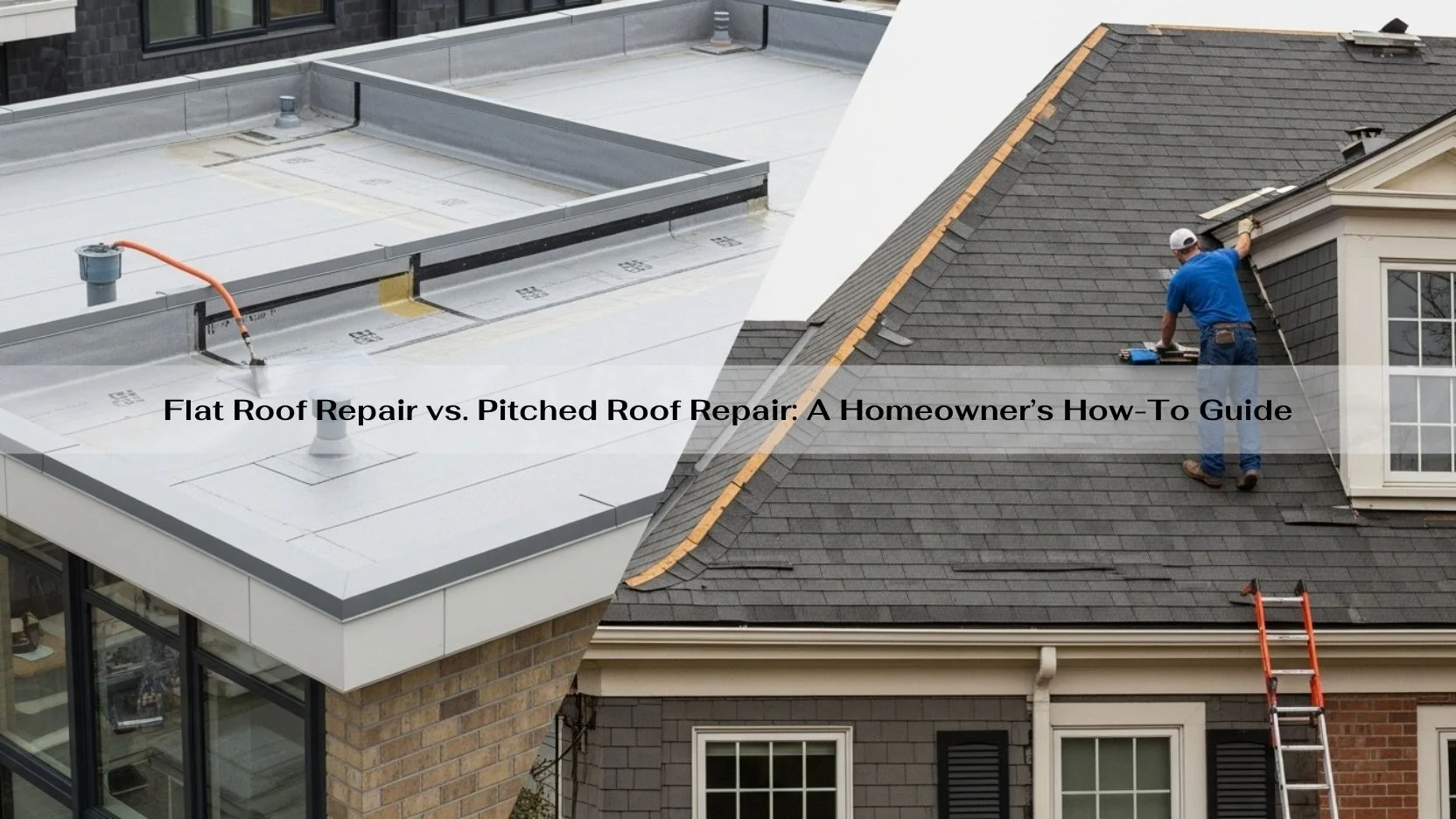
If your roof is leaking, cracked, or aging, one of the biggest questions you might face is whether your flat or pitched roof will be easier and cheaper to repair. The truth is, both types have strengths and challenges and the right choice depends on your home’s design, climate, and long-term plans.
Let’s break it down in simple terms so you can make the right call for your home and budget.
Understanding the Basics
A flat roof isn’t completely flat; it has a slight slope to let water drain. You’ll often find them on modern or commercial buildings. Flat roofs are easy to walk on and maintain but can collect water more easily, which leads to leaks if not maintained.
A pitched roof, on the other hand, has a noticeable slope. This design naturally pushes water and snow off the surface, making it less prone to leaks. According to The Spruce’s roofing guide, pitched roofs generally last longer because of their natural drainage and ventilation benefits.
“Flat roofs look sleek and modern, but pitched roofs are built to handle rain and snow better,” says a roofing professional on Yelp reviews.
How Repairs Differ
Flat roof repairs are usually quicker and simpler. Most homeowners or contractors fix them by sealing cracks, patching membrane layers (like EPDM or TPO), or adding a waterproof coating. Because you can easily walk on the surface, these repairs are straightforward and affordable.
Pitched roof repairs involve working on a slope, which means higher safety risks and specialized skills. Repairs often include replacing shingles, tiles, or flashing and because of the steep angle, labor costs can rise.
Homeowners on Reddit’s HomeImprovement forum often mention that flat roofs require attention every couple of years, while pitched roofs can go longer without repairs if well-maintained.
Cost and Maintenance Factors
The cost difference between flat and pitched roof repairs can be significant. According to HomeAdvisor, flat roof repairs typically range from $300 to $1,000, while pitched roof repairs cost $400 to $1,500 depending on materials and damage.
However, the lower upfront repair cost of a flat roof may not mean long-term savings. As one homeowner shared on Angi’s roofing repair guide, “Flat roofs may look cheaper upfront, but long-term upkeep can surprise you.”
Flat roofs generally require more frequent inspections every one to two years to spot cracks or drainage problems. Pitched roofs, with their natural runoff, can often go three to five years between maintenance checks.
Climate and Energy Efficiency
Your local climate plays a huge role in how your roof performs. In rainy or snowy areas, pitched roofs do better since water and snow slide off easily. Flat roofs can struggle with pooling water, leading to leaks if not properly sealed.
That said, flat roofs have unique advantages. They can support green roofing systems or solar panels, which can boost your home’s energy efficiency. Meanwhile, pitched roofs provide better insulation and airflow, keeping your attic and upper floors cooler in summer and warmer in winter, as explained in The Spruce’s roofing insights.
How to Choose the Right Option
- Evaluate your roof’s condition. If your flat roof has multiple leaks, it might be time for a full resurfacing instead of patching.
- Consider your local climate. Pitched roofs are ideal for heavy rain or snow zones.
- Think about long-term costs. Flat roofs might cost less to fix now, but you’ll likely need more frequent repairs.
- Get professional help. Roofing repairs, especially on pitched roofs, can be dangerous. Always hire a certified contractor from reputable sources like Yelp roofing reviews.
Final Thoughts
So, which is better flat roof repair or pitched roof repair? There’s no one-size-fits-all answer. Flat roofs win in accessibility and modern aesthetics, while pitched roofs offer better drainage, durability, and fewer long-term headaches.
If you’re unsure, schedule an inspection with a trusted roofer to assess your roof’s current condition and environment. A little expert advice can save you a lot of money (and stress) in the long run.