
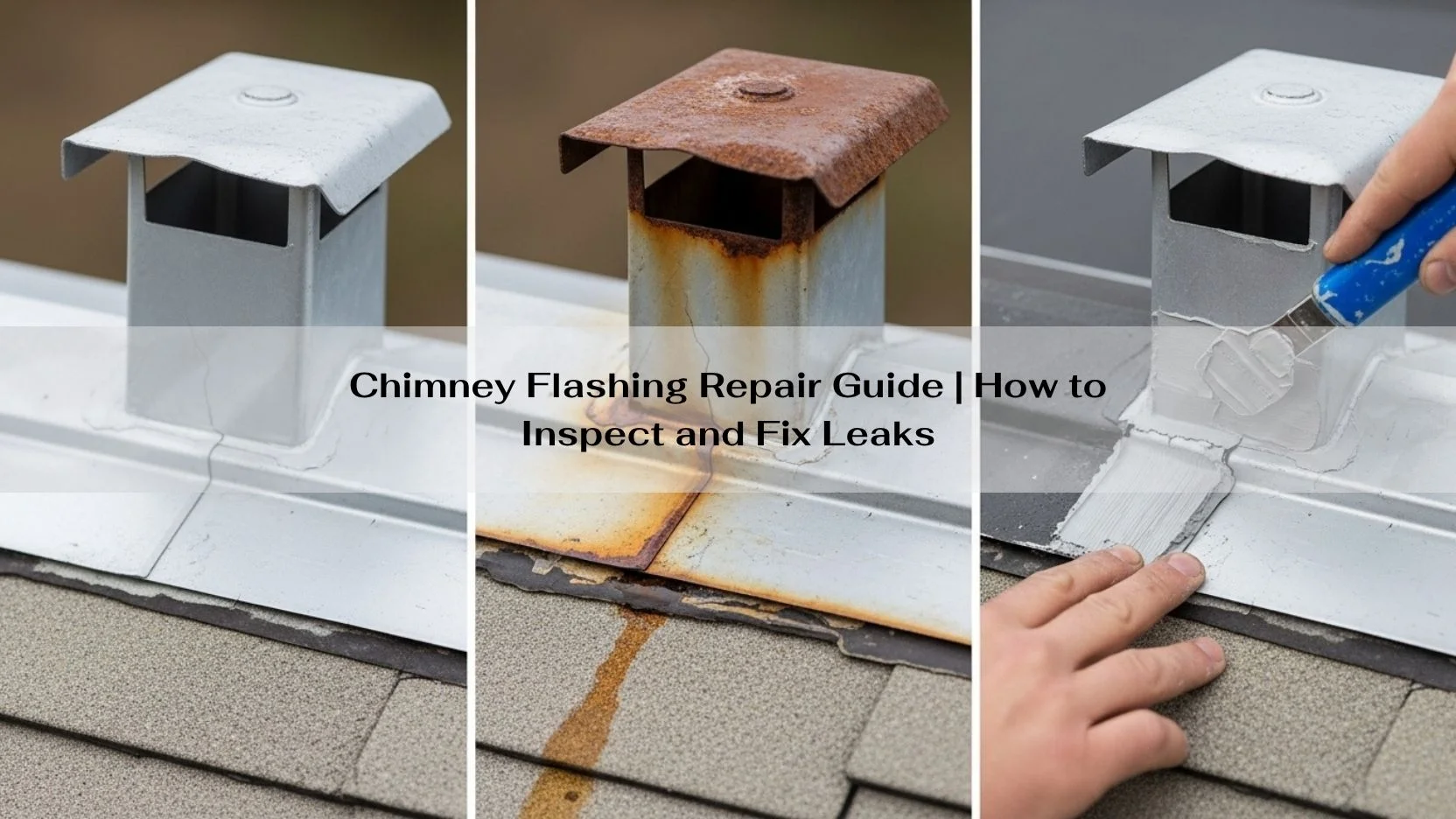
A small leak around your chimney might seem harmless, but it can quickly turn into a major problem. Water damage can ruin ceilings, walls, and even your attic if chimney flashing isn’t in good shape. This guide will teach homeowners how to inspect, repair, and maintain chimney flashing to keep their homes safe and dry.
Understanding Chimney Flashing
Chimney flashing is the metal barrier that seals the gap between your chimney and roof. It prevents water from seeping in and causing damage. Flashing can be made of aluminum, copper, or galvanized steel, and comes in different types, including step flashing, counter flashing, and cap flashing.
“I didn’t realize my ceiling stains were from old flashing until I checked up close,” says one homeowner Angi: Chimney Flashing Maintenance. Leaks usually happen when flashing corrodes, cracks, or separates from the chimney or shingles.
Signs You Need Repairs
Homeowners should watch for these warning signs:
- Rust or Corrosion: Metal flashing exposed to the elements may start to rust.
- Cracks or Separation: Look for gaps where the flashing meets shingles or masonry.
- Water Stains: Brown or yellow stains on walls and ceilings are often a clue.
- Loose Nails or Sealant Gaps: Check for missing fasteners or cracked caulking.
Regular inspections help spot these issues early HomeAdvisor: Chimney Flashing Repair.
How to Repair Chimney Flashing
Some minor repairs can be done by homeowners, but always prioritize safety.
- Inspect Safely: Use a sturdy ladder, wear non-slip shoes, and avoid wet or icy conditions.
- Seal Small Gaps: Apply roofing cement to minor cracks or separation areas.
- Replace Damaged Sections: Remove and replace rusted or bent flashing if necessary.
- Secure Flashing: Refasten loose flashing with nails or screws, and reseal with caulking.
“I tried fixing the flashing myself, but it was tricky on a steep roof, so I called a professional,” shares a homeowner Reddit Homeowners Discussions.
Maintaining Flashing to Prevent Future Damage
- Routine Inspections: Check your chimney flashing before and after storms.
- Clean Debris: Remove leaves, branches, and dirt that can trap water.
- Check Sealant: Reapply caulking or roofing cement where it’s worn.
- Professional Maintenance: For major issues, hire licensed roofing contractors The Spruce: Inspecting Chimney Flashing.
Conclusion
Chimney flashing protects your home from water damage, but it needs attention. Look for rust, cracks, separation, water stains, and loose fasteners. Inspect safely, perform minor repairs, and call professionals when needed. By staying proactive, homeowners can prevent leaks, save money, and keep their homes dry.