
When you invest in a new roof, one of the first things you want to know is how long it will last. A roof is a big part of your home’s safety and value, so understanding its lifespan helps you plan ahead. Many homeowners say the same thing: “I just want my roof to last without stress.” This guide breaks everything down in simple terms so you know what to expect.
What Determines a Roof’s Lifespan?
The life of a roof depends on a few things: the material, the weather, and the quality of the installation.
Professionals often say, “A roof is only as good as the team that installs it.” This is true. Even the best materials can fail early if the work is poor.
Your local weather also plays a big role. Strong sun, heat, storms, and humidity can wear down a roof faster. According to insights from home experts on Angi , roofs in hot or storm-heavy areas often age quicker than expected.
Average Lifespan by Roofing Material
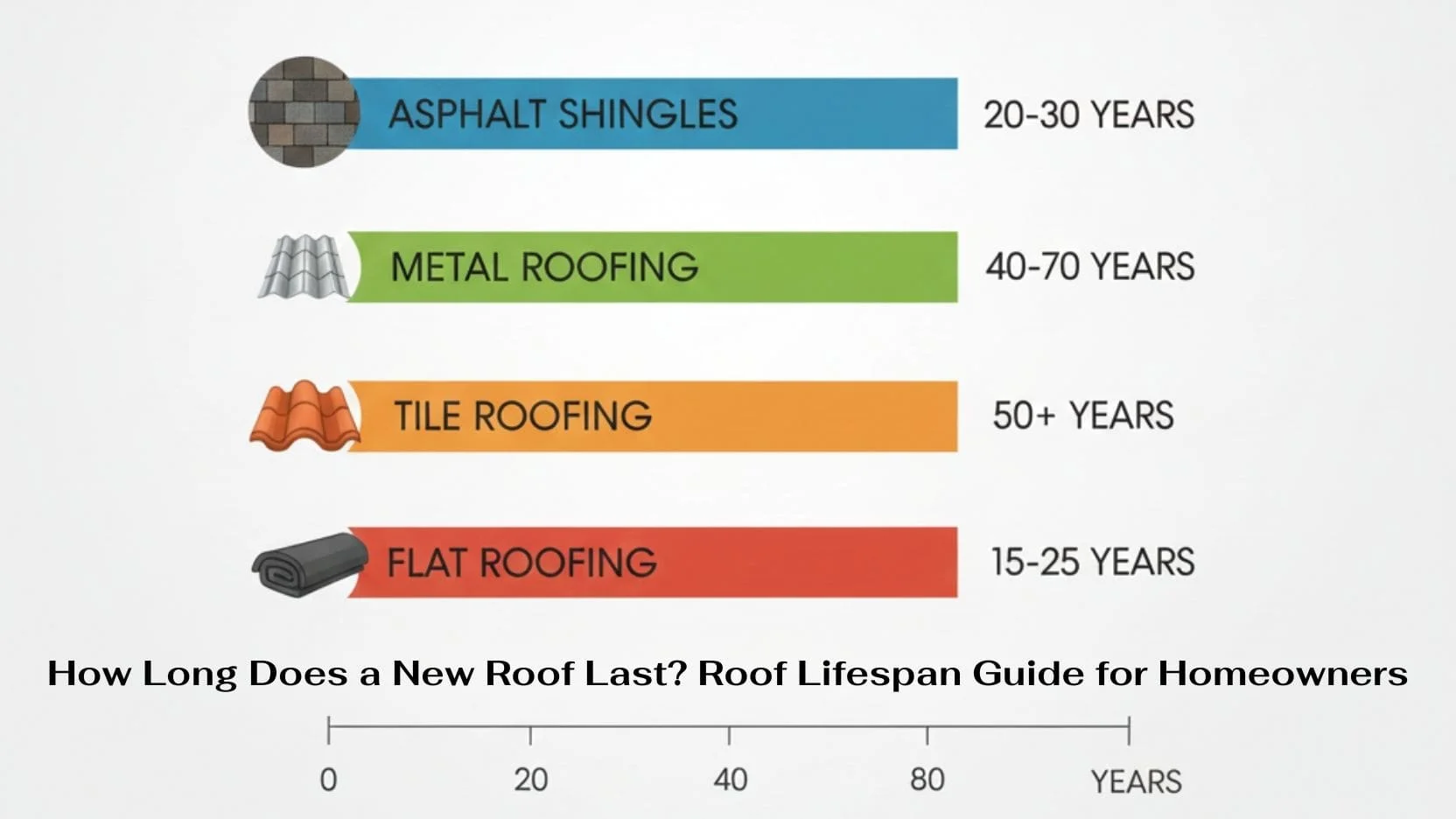
Different materials last for different lengths of time. Here’s a simple breakdown based on real-world homeowner reports and industry sources like HomeAdvisor and Wikipedia:
- Asphalt shingles: 20–30 years. This is the most common choice for homes because it’s affordable and dependable.
- Metal roofing: 40–70 years. Great for long-term value and strong weather resistance.
- Tile roofing (clay or concrete): 50+ years. These roofs are heavy but last a very long time.
- Flat roofing: 15–25 years. Often used on commercial buildings or modern home designs.
One homeowner on Reddit shared, “Switching from asphalt to metal was the best long-term decision I made. It cost more at first, but I don’t worry about storms anymore.”
How Weather Impacts Roof Longevity
Your roof protects your home from the elements every day, and some climates are tougher than others.
Sun exposure can dry out shingles. Heavy rain can weaken older roofs. Wind can loosen shingles or panels over time. Yelp reviews show many homeowners reporting shorter roof lifespans in storm-heavy states.
If you live in an area with hurricanes, hail, or high heat, you may need to choose stronger materials or plan for more frequent inspections.
How Maintenance Extends Roof Life
Even the best roof needs care. Simple maintenance steps can add years to your roof’s life.
Here’s what helps:
- Clean your gutters so water can flow properly.
- Check for missing or damaged shingles after storms.
- Trim branches that hang over your roof.
- Schedule yearly roof inspections.
A roofer once said, “Small fixes now stop big headaches later.” This is true for almost every homeowner.
Conclusion
So, what’s the lifespan of a new roof? Most roofs last between 20 and 50 years depending on the material, weather, and care. A strong installation and regular maintenance go a long way.
If you want your roof to reach its full lifespan, choose quality materials, hire experienced installers, and keep up with simple care.