
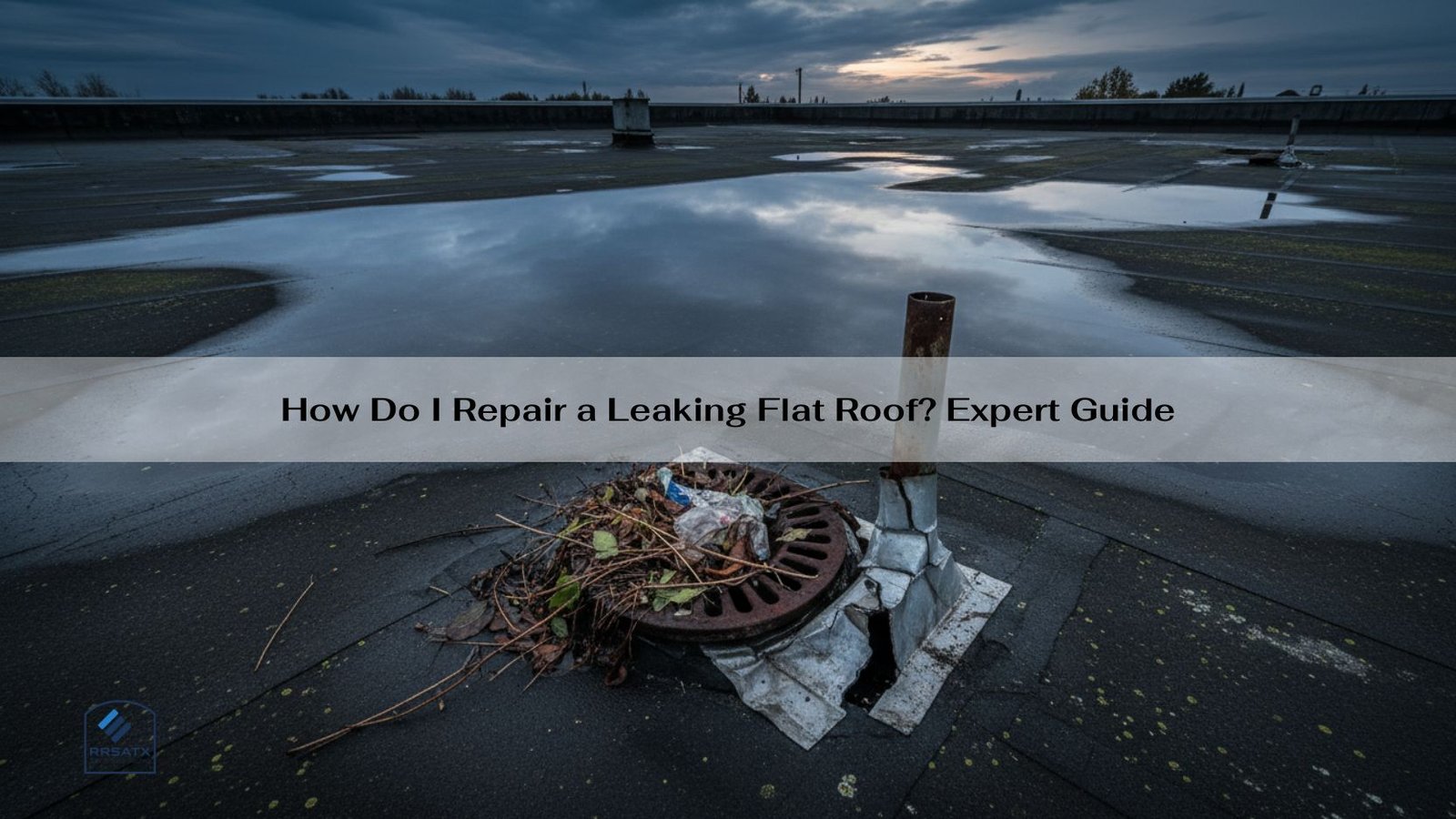
Flat roof leaks are rarely “minor.” If you’re asking how do I repair a leaking flat roof, chances are water has already found a way past the membrane and once that happens, damage accelerates quickly. From soaked insulation to hidden structural rot and interior mold, flat roof leaks demand fast, informed action.
This guide is written from real-world roofing experience, not theory. You’ll learn how to respond immediately, understand the most common causes, evaluate repair options, and know when professional help is the smartest move. The goal is simple: stop the leak, limit damage, and protect the roof long term.
Key Takeaways
- Flat roof leaks worsen fast and should never be ignored
- Immediate damage control can prevent interior and structural loss
- Most leaks come from seams, flashing, drains, or ponding water
- The visible leak is often not the true source
- Temporary fixes buy time but rarely solve the problem
- Professional diagnosis prevents repeat failures and wasted money
- Emergency leaks can create safety and electrical hazards
- Preventive maintenance is far cheaper than reactive repairs
Immediate Actions: What to Do First
When a flat roof starts leaking, your first priority is safety and damage control.
Do this immediately:
- Move furniture, electronics, and valuables away from the leak
- Place containers to catch dripping water
- Relieve ceiling bulges carefully to prevent collapse
- If water is near electrical fixtures, shut off power in that area
What NOT to do:
- Don’t puncture the roof membrane blindly
- Don’t apply random sealants without identifying the source
- Don’t walk on a wet or unstable roof without proper safety gear
If water intrusion continues or spreads, professional intervention becomes urgent. Delays multiply repair scope and cost.
Common Causes of Flat Roof Leaks
Failed Seams and Membrane Joints
Flat roofs rely heavily on seams. Over time, thermal movement, UV exposure, and poor installation cause them to separate. Early signs include small bubbles, wrinkles, or hairline openings.
Flashing Breakdown
Flashing around HVAC units, skylights, vents, and parapet walls is a frequent failure point. Cracked or lifted flashing lets water bypass the membrane entirely.
Ponding Water
Flat roofs aren’t perfectly flat; they’re designed to drain. When drainage fails, standing water accelerates membrane deterioration and forces water into weak points.
Drain and Scupper Issues
Clogged or poorly sealed drains allow water to back up under the roofing system. Interior leaks often appear far from the actual blockage.
Aging or UV-Degraded Roofing Material
Even high-quality flat roofing systems have a lifespan. Brittle surfaces, surface cracking, and thinning membranes are warning signs that repairs may be limited in effectiveness.
Why Flat Roof Leaks Are Often Misdiagnosed
Flat roofs don’t leak directly downward. Water can travel laterally across decking before showing up inside. This is why DIY repairs often “fix” the wrong spot.
Professionals use:
- Moisture scanning
- Infrared imaging
- Controlled water testing
- System-specific inspection protocols
Accurate diagnosis prevents repeat failures and unnecessary repairs. It’s not upselling, it’s cost control.
Repair Methods: Temporary vs Permanent Solutions
Temporary / Emergency Repairs
Used to stop active leaks until full repairs are scheduled.
- Roofing tape or emergency patches
- Temporary sealants at visible breaches
- Drain clearing to reduce ponding
Limitations: These do not address underlying system failures.
Permanent Repairs
Depend on roof type and damage extent:
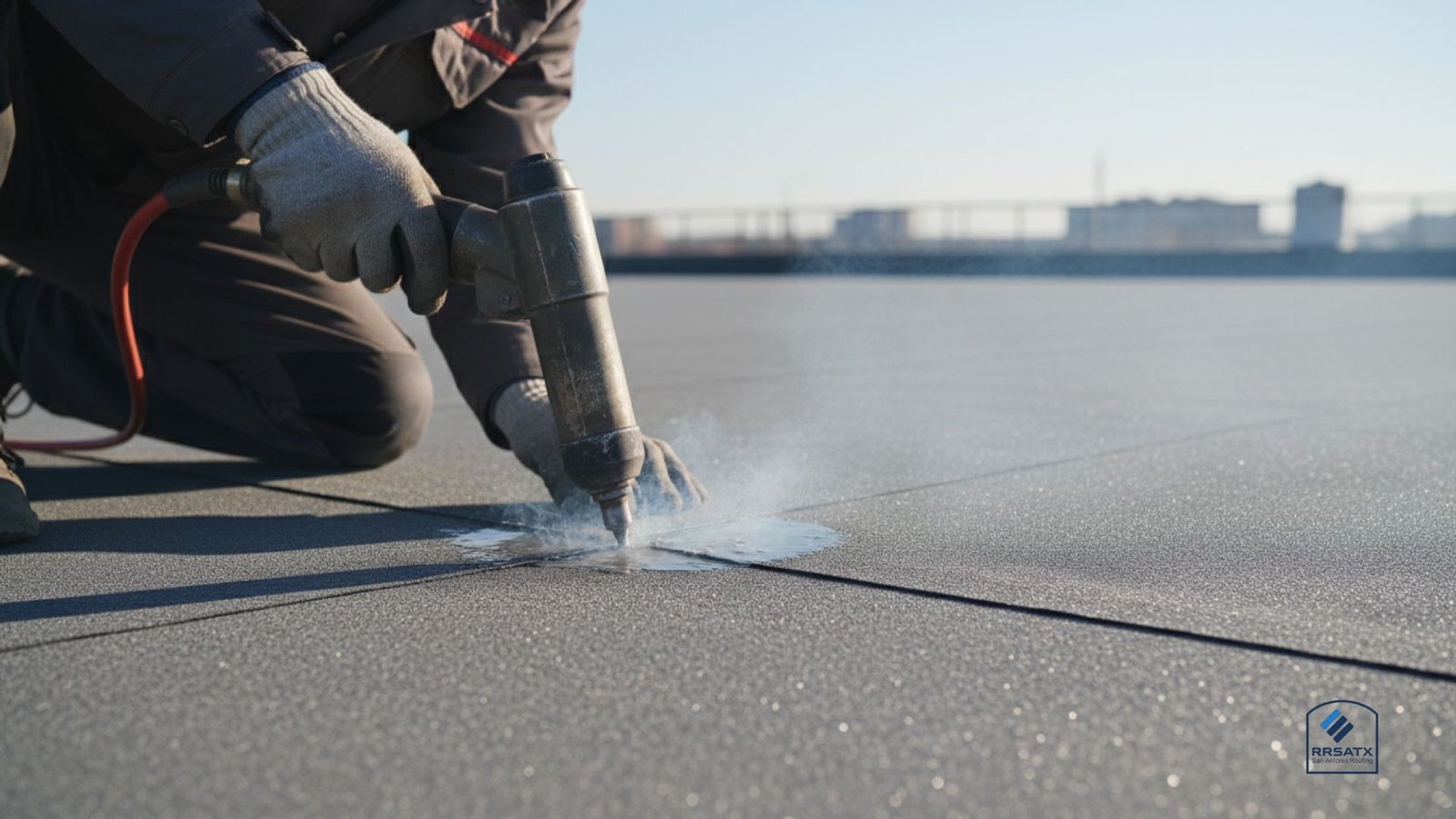
- Seam reinforcement and heat-welded repairs
- Flashing replacement
- Localized membrane replacement
- Drain system correction
Professionals select materials compatible with the existing roofing system to avoid premature failure.
Why Professional Flat Roof Repair Matters
Flat roofing systems are technical by design. Experience matters.
Professional service ensures:
- Correct material compatibility
- Proper surface preparation
- Long-term waterproofing performance
- Reduced risk of repeat leaks
- Compliance with manufacturer standards
DIY or low-cost fixes often void warranties and shorten roof life.
Emergency and Time-Sensitive Situations
Immediate action is critical when:
- Water is entering near electrical systems
- Ceiling materials are sagging or collapsing
- Leaks worsen during storms
- Commercial operations or inventory are at risk
Fast response limits insulation saturation, mold growth, and structural deterioration saving thousands in secondary damage.
Preventive Measures That Save Money
Proactive maintenance outperforms reactive repairs every time.
Best practices include:
- Semi-annual roof inspections
- Drain and scupper cleaning
- Early seam and flashing repairs
- Post-storm evaluations
Maintenance programs extend roof lifespan and reduce emergency repair frequency.
Cost Considerations
Flat roof repair costs depend on:
- Leak severity and spread
- Roof system type
- Accessibility and safety requirements
- Emergency vs scheduled work
Early repairs are significantly cheaper than addressing soaked insulation, deck damage, or interior restoration.
Choosing the Right Professional
Look for providers who offer:
- Proven flat roof experience
- Transparent inspections and documentation
- Clear repair recommendations
- Long-term performance focus
- Honest assessment not fear-based selling
The right professional treats your roof like an asset, not a transaction.
Conclusion: Repairing a Leaking Flat Roof the Right Way
If you’re still asking how do I repair a leaking flat roof, the answer depends on speed, accuracy, and execution. Quick action limits damage. Correct diagnosis prevents repeat leaks. Professional repairs protect the entire roofing system, not just the visible problem.
Flat roof leaks are solvable but only when handled with experience and precision. Address the issue early, fix it properly, and your roof can continue performing for years without surprise failures.