
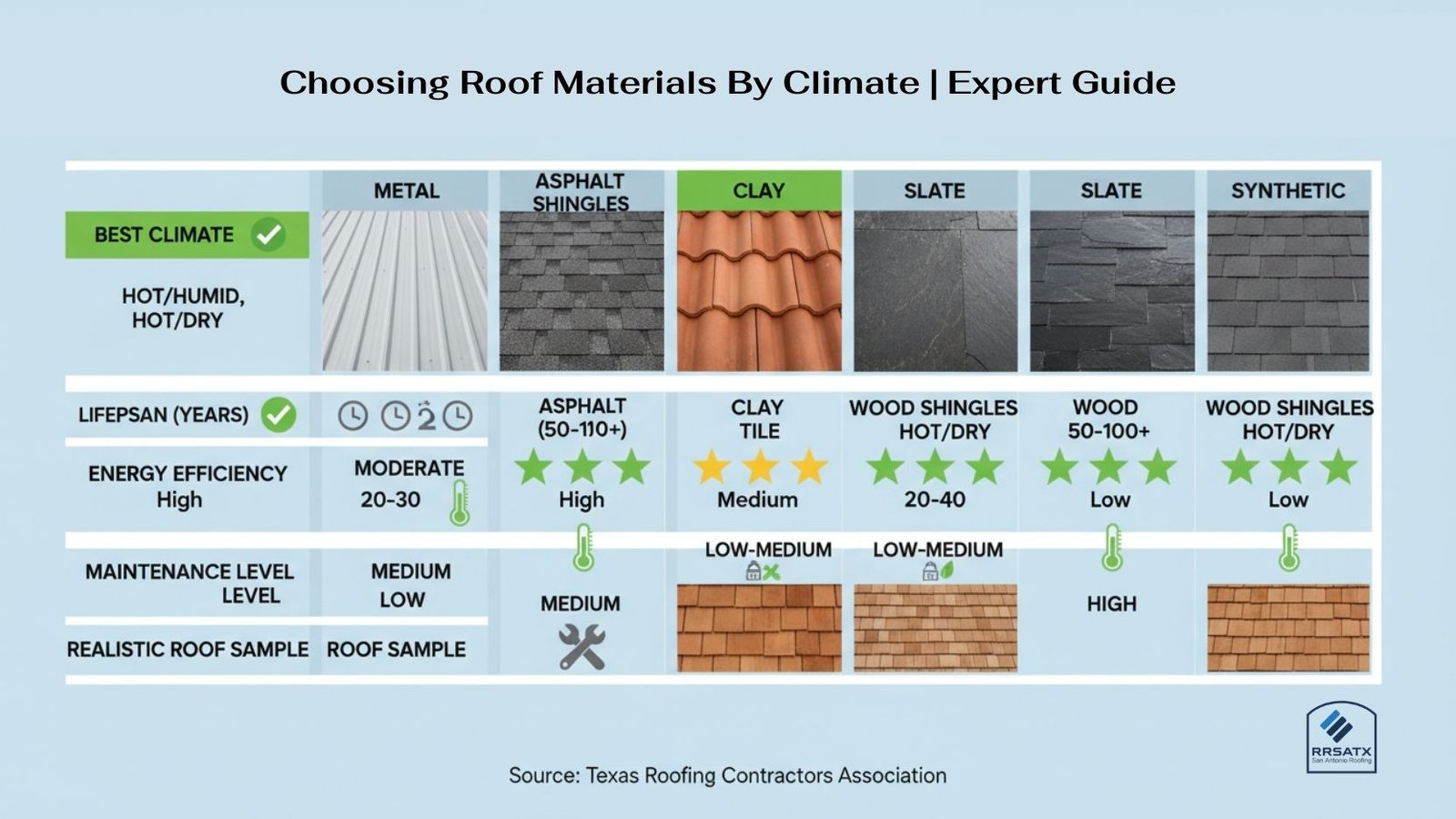
Choosing roof materials by climate is one of the most overlooked yet most critical decisions homeowners and property developers make. Your roof is not just a structural feature; it is a climate-response system that must endure temperature extremes, moisture, wind forces, and solar radiation year after year.
In hot, storm-prone regions like South Texas, the wrong roofing material can lead to premature failure, rising energy costs, and costly repairs. This guide provides a research-driven, field-tested framework for choosing roof materials by climate, helping you select options that deliver durability, efficiency, and long-term value.
Why Climate Should Drive Roofing Decisions
Your local climate dictates how fast roofing materials degrade, how much energy your home consumes, and how frequently maintenance is required.
A roof that performs perfectly in dry Arizona may fail quickly in humid Houston. Climate affects roofing in five key ways:
- Thermal expansion and contraction
- UV radiation intensity
- Moisture penetration and mold risk
- Wind uplift and storm damage
- Ice, snow, and freeze-thaw cycles
Ignoring these variables is one of the leading causes of premature roof failure, not poor installation alone.
According to insights shared by HomeAdvisor roofing professionals climate-mismatched roofs account for a significant percentage of early replacements due to material fatigue and moisture-related damage.
Understanding Major Climate Categories For Roofing
Before choosing materials, classify your regional climate. Most areas fall into one of these categories:
| Climate Type | Characteristics | Roofing Risk |
| Hot & Dry | Intense sun, low humidity | UV cracking, fading |
| Hot & Humid | Heat + moisture | Mold, rot, algae |
| Cold & Snowy | Freeze-thaw cycles | Ice dams, cracking |
| Coastal | Salt air, storms | Corrosion, uplift |
| Storm-Prone | High winds, hail | Impact, blow-offs |
Each climate requires a different roofing strategy.
Best Roofing Materials By Climate Type
Roofing For Hot & Dry Climates
Best options:
- Clay tiles
- Concrete tiles
- Standing seam metal
- Cool roofing membranes
Why they work:
- High reflectivity reduces heat absorption
- Natural airflow prevents trapped heat
- UV-resistant surfaces resist cracking
Avoid:
- Traditional asphalt shingles
- Dark, heat-absorbing materials
The U.S. Department of Energy explains how cool roofing materials reduce heat absorption and cooling costs.
Roofing For Hot & Humid Climates
Best options:
- Metal roofing
- Architectural shingles with algae resistance
- Synthetic slate
- Modified bitumen (for flat roofs)
Why they work:
- Resist moisture infiltration
- Prevent mold and algae growth
- Improve airflow and ventilation
Avoid:
- Untreated wood shingles
- Poorly ventilated tile systems
According to Angi roofing experts, moisture control and ventilation are essential in humid climates
Roofing For Cold & Snowy Climates
Best options:
- Metal roofing
- Slate
- Architectural shingles
- EPDM rubber roofing
Why they work:
- Shed snow efficiently
- Resist cracking from freeze-thaw cycles
- Reduce ice dam formation
Avoid:
- Flat roofs without drainage
- Low-grade shingles
The Insurance Institute for Business & Home Safety highlights how metal roofs reduce snow load risks
Roofing For Coastal Regions
Best options:
- Aluminum or zinc metal
- Clay tiles
- Concrete tiles
- High-wind architectural shingles
Why they work:
- Corrosion-resistant
- Withstand salt exposure
- Resist hurricane uplift
The Federal Alliance for Safe Homes explains how salt air accelerates roof corrosion near coastlines
Roofing For Storm & Hail-Prone Areas
Best options:
- Impact-resistant shingles (Class 4)
- Standing seam metal
- Synthetic composite roofing
Why they work:
- Absorb hail impacts
- Resist tearing
- Reduce insurance claims
State Farm confirms that Class 4 shingles significantly reduce hail damage claims
Roofing Material Comparison By Climate
| Material | Best Climate | Lifespan | Energy Efficiency | Maintenance |
| Metal | All climates | 40–70 yrs | Excellent | Low |
| Asphalt Shingles | Moderate | 20–30 yrs | Moderate | Medium |
| Clay Tile | Hot/Dry | 50+ yrs | Excellent | Low |
| Slate | Cold/Moderate | 75+ yrs | High | Low |
| Wood Shingles | Dry | 25–40 yrs | Moderate | High |
| Synthetic | Variable | 30–50 yrs | High | Low |
How Climate Impacts Roofing Costs
Climate influences not just material choice but total ownership cost.
In hot climates:
- Reflective roofs reduce cooling bills by 10–25%
In cold climates:
- Ice-resistant roofing reduces structural repairs
In storm zones:
- Impact-rated materials reduce insurance premiums
The cheapest roof upfront often becomes the most expensive over 20 years if climate compatibility is ignored.
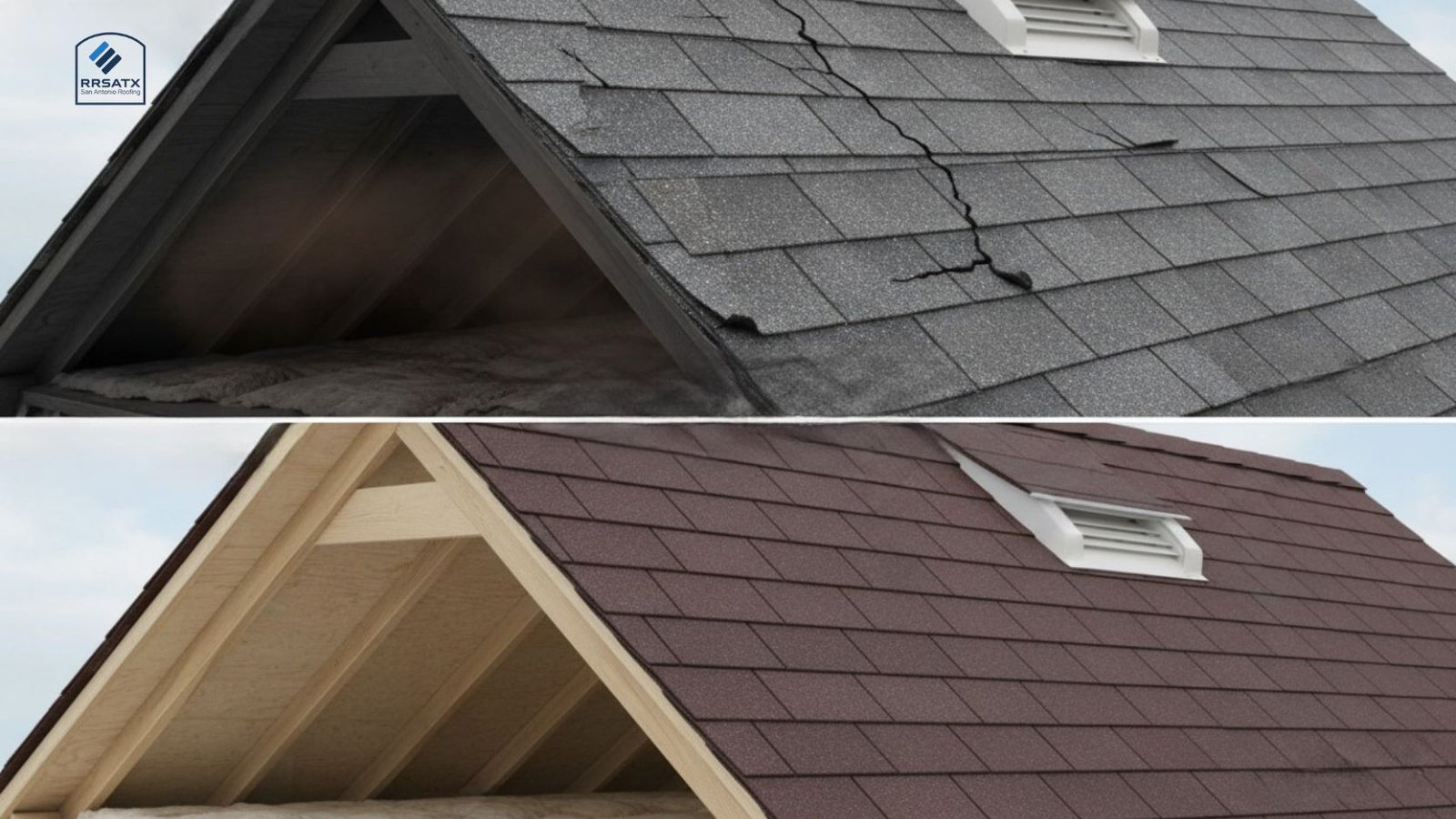
Ventilation: The Climate Multiplier Most Homeowners Miss
Even the best roofing material fails without proper ventilation.
Climate-smart ventilation ensures:
- Heat escapes in summer
- Moisture evaporates in winter
- Shingles last longer
- Energy bills decrease
According to the Roofing Contractors Association, poor ventilation is responsible for up to 40% of premature roof failures.
Climate-Based Roofing In San Antonio & Houston
South Texas presents a unique roofing challenge:
- Extreme heat
- High humidity
- Violent storms
- Intense UV exposure
That’s why at RRSATX: San Antonio Roofing Company, climate-adaptive roofing is central to every installation.
Why RRSATX Is Trusted Across Texas
- Top-rated roofing contractor in San Antonio and Houston
- Trusted by 1,000+ homeowners
- Over 100+ 5-star reviews
- One of San Antonio’s oldest father–son roofing contractors
- Residential & commercial specialists
- Roof repair, replacement & FREE 12-point roof inspections
Their 12-point metal roof inspection checks:
- Hidden leaks
- Structural wear
- Storm damage
- Weak points before failure occurs
Contact: Email: info@roofrepairsanantoniotx.com Call: 713-504-2341, Open 24 hours
How To Choose The Right Roof For Your Climate
- Identify your primary climate risks
- Shortlist materials rated for those conditions
- Check local building codes and HOA rules
- Compare lifecycle cost, not just install price
- Verify impact, fire, and wind ratings
- Confirm ventilation compatibility
- Choose a licensed, climate-experienced contractor
Common Roofing Mistakes By Climate
- Installing dark shingles in hot climates
- Using untreated wood in humid regions
- Ignoring ice protection in cold zones
- Skipping corrosion-resistant fasteners near coasts
- Underestimating wind uplift ratings
These errors often shorten roof life by 30–50%.
Why Climate-Specific Roofing Outperforms Generic Roofing
Generic roofing treats all homes the same. Climate-specific roofing treats every environment differently because nature does.
According to roofing data from Angi and HomeAdvisor, climate-adapted roofs last 20–35% longer than non-adapted systems
That longevity translates into:
- Lower replacement frequency
- Reduced repair costs
- Higher resale value
- Better insurance outcomes
Final Thoughts: Climate Is The First Roofing Decision, Not The Last
Choosing roof materials by climate is not just a technical decision it is a financial, structural, and comfort decision that impacts your property for decades.
A roof that matches your climate:
- Performs better
- Costs less over time
- Protects more effectively
- Increases home value
If you’re in Texas or surrounding areas, partnering with a climate-aware contractor like RRSATX ensures your roof is not just installed but engineered for where you live.