
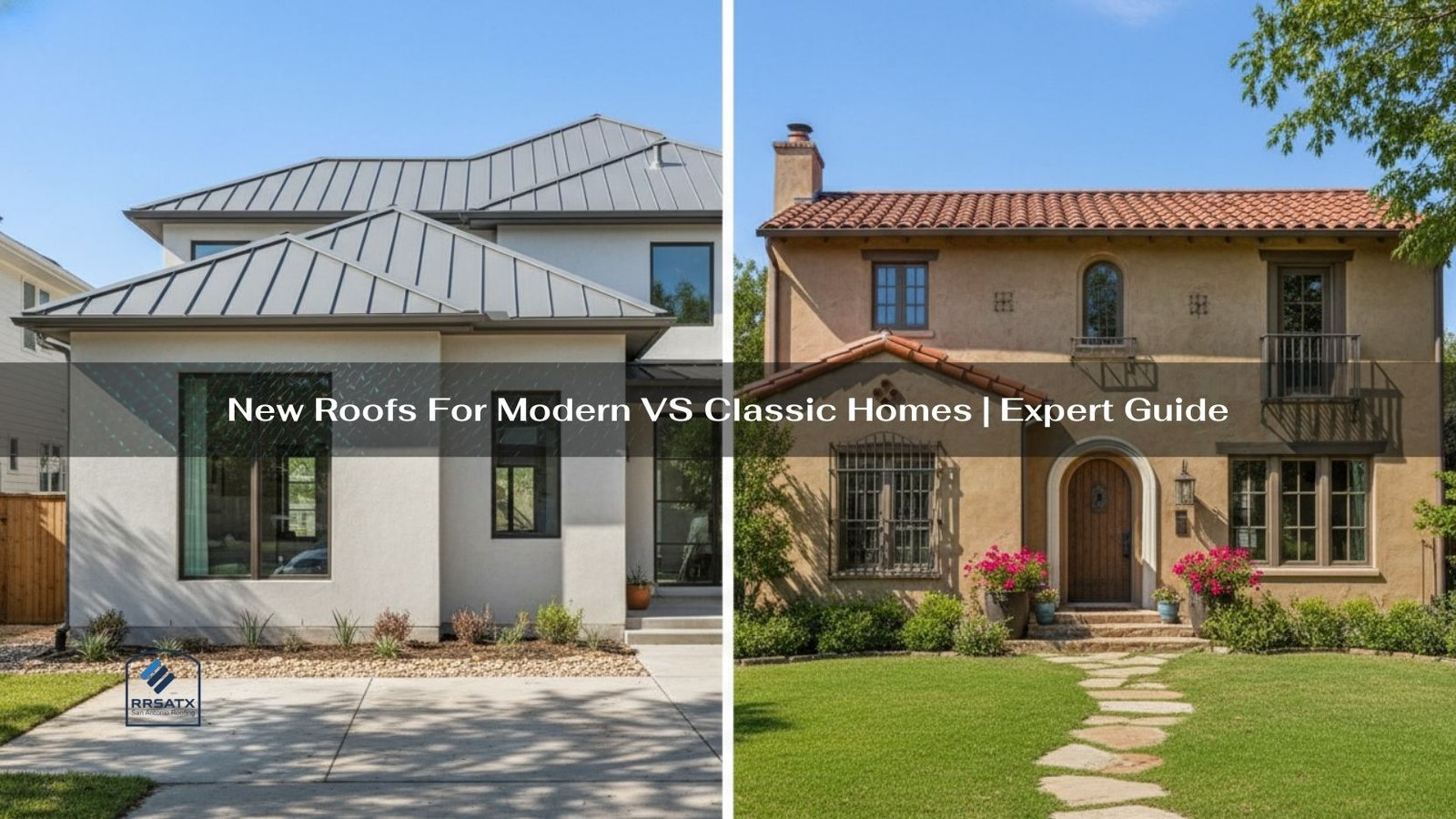
Choosing a new roof isn’t just about protection, it’s about preserving architectural integrity while meeting modern performance standards. Whether you’re replacing the roof on a sleek contemporary home or restoring a historic Victorian, the materials, pitch, and design must align with your home’s character while delivering decades of reliable performance.
In San Antonio and across Texas, where architectural styles range from Spanish Colonial Revival to minimalist modern designs, homeowners face unique challenges. The right roofing choice respects your home’s aesthetic DNA while standing up to intense UV exposure, occasional hail storms, and temperature swings that can exceed 40 degrees in a single day.
This comprehensive guide breaks down everything you need to know about selecting, installing, and maintaining roofs for both modern and classic homes from material compatibility and cost considerations to design principles that enhance curb appeal and property value.
Understanding Architectural Roofing Compatibility
Your roof serves as the fifth elevation of your home, the plane that completes its three-dimensional presence. In architectural terms, roof design must achieve visual harmony with wall materials, window proportions, and overall building mass.
Why Architectural Style Matters In Roofing
According to architectural design principles documented by the National Association of Home Builders, roofing represents approximately 40% of a home’s visible exterior, making it the single most influential element in establishing architectural character.
Mismatched roofing creates what designers call “style confusion” when elements from different architectural periods or movements clash rather than complement. A Spanish tile roof on a mid-century modern ranch doesn’t just look wrong; it fundamentally undermines the design intent of both styles.
Modern homes typically feature:
- Low-pitch or flat roof systems (0/12 to 4/12 pitch)
- Clean, uninterrupted rooflines
- Minimal or concealed eaves
- Integration with horizontal architectural elements
- Contemporary materials showcasing industrial aesthetics
Classic homes traditionally incorporate:
- Steeper roof pitches (6/12 to 12/12 or higher)
- Prominent eaves and decorative brackets
- Complex rooflines with multiple planes
- Historical material references
- Ornamentation that reflects period detailing
The Performance VS. Aesthetics Balance
While architectural compatibility drives material selection, modern building science has evolved significantly. Today’s roofing products must satisfy multiple criteria simultaneously:
- Structural integrity under regional weather loads
- Thermal performance meeting or exceeding energy codes
- Longevity justifying initial investment
- Maintainability within reasonable homeowner capabilities
- Aesthetic authenticity preserving architectural intent
The challenge lies in finding products that check all boxes. A 1920s Craftsman bungalow deserves the visual texture of wood shake, but modern alternatives can deliver that appearance while offering superior fire resistance and longer service life.
Modern Home Roofing: Design Principles And Material Choices
Modern architecture emerged in the early 20th century with pioneers like Frank Lloyd Wright, Ludwig Mies van der Rohe, and Le Corbusier, who rejected historical ornamentation in favor of functional simplicity. Today’s modern homes continue this legacy through minimalist expression and honest use of materials.
Defining Characteristics Of Modern Roof Design
Modern roofing emphasizes:
Geometric Simplicity
Clean lines without decorative elements. Roof planes meet walls crisply, often with minimal or no overhang. When eaves exist, they’re typically flat soffits without ornamental brackets.
Low-Slope Systems
Many modern homes feature roof pitches between 1/12 and 3/12, creating the appearance of near-flat roofs. This horizontal emphasis reinforces the modern aesthetic of buildings that hug the landscape rather than reach skyward.
Material Honesty
Modern design philosophy celebrates materials in their authentic state. Metal appears as metal, concrete as concrete. Imitation products like composition shingles mimicking other materials conflict with this transparency principle.
Integrated Technology
Modern roofs often incorporate solar panels, green roof systems, or advanced drainage solutions as visible design elements rather than afterthoughts.
Optimal Materials For Modern Homes
Standing Seam Metal Roofing
The quintessential modern roofing material, standing seam metal delivers the clean, linear aesthetic modern design demands. Vertical ribs create shadow lines that emphasize geometry while concealing fasteners for an uninterrupted surface.
Performance specifications:
- Lifespan: 40-70 years with proper maintenance
- Pitch compatibility: Suitable for slopes as low as 0.25/12 with proper detailing
- Gauge options: 22-gauge to 26-gauge steel, or aluminum
- Finish durability: Kynar 500/Hylar 5000 PVDF coatings offer 30-year fade warranties
Modern homes in San Antonio particularly benefit from metal roofing’s solar reflectivity. Light-colored metal roofs can reflect up to 70% of solar radiation, according to the Cool Roof Rating Council, reducing cooling loads significantly during Texas summers.
Single-Ply Membrane Systems (TPO/EPDM)
For genuinely flat or near-flat roofs common in contemporary designs, single-ply membranes provide reliable waterproofing without the visual bulk of traditional materials.
TPO (Thermoplastic Polyolefin) membranes offer heat-welded seams creating monolithic waterproofing. White TPO surfaces can achieve solar reflectance values above 0.80, qualifying for ENERGY STAR certification in all U.S. climate zones.
Application requirements:
- Minimum slope: 0.25/12 for adequate drainage
- Professional installation essential (membrane performance depends on seam integrity)
- Regular maintenance: Biannual inspections to identify membrane punctures or seam failures
- Expected lifespan: 20-30 years
Modified Bitumen Systems
These torch-down or cold-applied systems suit modern designs requiring completely flat roof aesthetics with enhanced puncture resistance. Though less common in residential applications, modified bitumen works well for modern homes with rooftop deck areas.
Architectural Considerations
Modern homes often incorporate:
Parapet Walls
Raised walls extending above the roof surface hide roofing materials entirely, creating the illusion of a true flat roof. Parapets require careful flashing details where the roof membrane terminates against vertical surfaces.
Cantilevered Overhangs
When modern homes do include eaves, they’re often structurally cantilevered slabs rather than traditional framed overhangs. Metal roofing transitions cleanly across these horizontal planes.
Exposed Fastener Metal
While standing seam represents the premium modern option, exposed fastener metal panels can work on modern farmhouse or industrial-inspired designs where a more utilitarian aesthetic fits the overall concept.
Color Selection For Modern Roofs
Modern homes typically employ neutral, understated palettes:
- Grays (from light silver to charcoal): Universal compatibility with modern materials like steel, concrete, and glass
- Black or dark bronze: Dramatic contrast, especially effective on white or light-colored homes
- Natural metal tones: Unpainted zinc, copper, or weathering steel (Corten) that develops distinctive patina
- White or light neutrals: Maximum energy efficiency in hot climates
Avoid traditional brown, green, or terracotta tones that reference historical or natural materials inconsistent with modern design philosophy.
Classic Home Roofing: Preserving Historical Authenticity
Classic homes represent distinct architectural movements, each with specific roofing traditions developed over decades or centuries. Proper restoration or replacement honors these traditions while incorporating modern performance standards.
Major Classic Styles And Their Roofing Traditions
Victorian (1840-1910)
Victorian homes showcase complex roof forms with multiple intersecting planes, steep pitches (often 10/12 or steeper), decorative gables, and ornamental details.
Traditional materials:
- Wood shake or shingle
- Slate (premium homes)
- Early composition shingles (later Victorian period)
Modern equivalents:
- Architectural asphalt shingles with dimensional profile
- Synthetic slate
- Class A fire-rated wood alternatives
Craftsman/Bungalow (1905-1930)
Craftsman design emphasized handcrafted quality and natural materials. Roofs typically featured moderate pitches (6/12 to 8/12) with wide, sheltering eaves supported by decorative brackets.
Traditional materials:
- Wood shake (thick, hand-split cedar)
- Clay tile (in western regions)
Modern approach:
- Premium architectural shingles with high-definition shadow lines
- Synthetic shake products replicating split-wood texture
- Metal shingles designed to simulate shake appearance
Colonial Revival (1880-1955)
These homes reference Georgian and Federal-period architecture with symmetrical facades and side-gabled or gambrel roofs at medium to steep pitches.
Traditional materials:
- Wood shingle (smooth, uniform appearance)
- Slate (especially on high-style examples)
Modern solutions:
- Three-tab or architectural shingles in traditional colors
- Synthetic slate in gray, black, or multi-toned blends
- Metal shingles with colonial-style profiles
Spanish Colonial Revival (1915-1940)
Particularly relevant in San Antonio, these homes feature low-pitched roofs (3/12 to 5/12) with clay tile, curved parapets, and stucco walls.
Traditional materials:
- Barrel clay tile (Mission tile)
- S-tile (Spanish tile profile)
Modern options:
- Lightweight concrete tile (50-60% lighter than clay)
- Composite tile products
- Metal roofing with tile profiles (for weight-sensitive structures)
Material Deep-Dive: Classic Home Applications
Asphalt Architectural Shingles
The most common roofing material in America works well on many classic styles when properly specified.
For classic homes, choose:
- Dimensional/architectural grades (not basic three-tab) for visual depth
- Traditional color palettes: weathered wood tones, slate grays, aged black
- Appropriate weight class: Minimum 240-260 lb/square; premium options reach 400+ lb/square
- Warranty tiers: 30-year warranties minimum; lifetime warranties for best durability
Quality architectural shingles can replicate the shadow lines and texture variation of wood shake at a fraction of the cost. According to data from HomeAdvisor, architectural shingle installation averages $350-550 per square in Texas markets, making it accessible for most homeowners.
Clay and Concrete Tile
Tile roofing delivers unmatched longevity and authentic appearance for Spanish, Mediterranean, and Mission-style homes.
Clay tile characteristics:
- Lifespan: 50-100+ years
- Weight: 850-1,000 lb/square
- Pitch requirements: Minimum 4/12 for most profiles
- Color stability: Natural clay maintains color indefinitely
- Cost: $800-1,600+ per square installed
Concrete tile advantages:
- Lower cost than clay ($600-1,200 per square)
- Lighter weight (reduced structural requirements)
- Wide color range through pigmentation
- Comparable durability (40-50 years typically)
Both require structural verification before installation. Many older homes need reinforcement to safely carry tile loads, adding $2,000-8,000+ to project costs depending on extent of required work.
Slate Roofing
Natural slate represents the pinnacle of traditional roofing, a centuries-old material still quarried and installed using time-honored techniques.
Performance characteristics:
- Lifespan: 75-200 years depending on slate quality
- Weight: 800-1,500 lb/square
- Pitch requirements: Minimum 4/12; 6/12+ preferred
- Regional variations: Vermont, Pennsylvania, and Virginia slates each have distinct characteristics
- Cost: $1,500-3,000+ per square installed
Real slate makes most sense when:
- Restoring a historically significant property
- The existing structure already supports slate weight
- Long-term ownership justifies premium investment
- Local historical commissions require authentic materials
Synthetic Slate and Shake
Modern polymer and composite products convincingly replicate natural materials while offering practical advantages.
Quality synthetic products provide:
- Class A fire ratings (natural wood shake cannot achieve this)
- Lighter weight (350-450 lb/square vs. 800+ for slate)
- Enhanced impact resistance
- 50-year limited warranties
- Cost range: $600-1,100 per square installed
Look for products with:
- Variable color blending (avoiding artificial uniformity)
- Textured surfaces replicating natural material characteristics
- Authentic thickness profiles
- UV stabilizers preventing color fade
Respecting Historical Accuracy
If your classic home sits in a designated historic district or qualifies for historical tax credits, material choices may face regulatory scrutiny. Many preservation boards require:
- Visible-from-street standards: Front-facing roof slopes must use historically appropriate materials; rear slopes may allow modern alternatives
- Material approvals: Specific products pre-approved by architectural review committees
- Installation methods: Traditional techniques like slate hook application rather than modern fastening
- Color restrictions: Palettes matching documented historical ranges
Contact your local historical preservation office before finalizing plans. In San Antonio, the Office of Historic Preservation reviews projects within designated districts.
Material Comparison: Modern VS. Classic Applications
Different materials suit different architectural contexts. This analysis helps match products to design intent.
Material Performance Matrix
| Material | Modern Homes | Classic Homes | Lifespan | Weight (lb/sq) | Cost Range/Sq |
| Standing Seam Metal | Excellent | Poor-Fair* | 40-70 yrs | 50-150 | $700-1,400 |
| Exposed Fastener Metal | Good** | Poor | 25-40 yrs | 40-100 | $400-800 |
| Architectural Shingles | Fair | Excellent | 25-35 yrs | 240-400 | $350-650 |
| Synthetic Slate/Shake | Poor | Excellent | 40-50 yrs | 350-500 | $600-1,100 |
| Natural Slate | Poor | Excellent | 75-200 yrs | 800-1,500 | $1,500-3,000+ |
| Clay Tile | Poor | Excellent*** | 50-100+ yrs | 850-1,000 | $800-1,600+ |
| Concrete Tile | Poor-Fair | Excellent*** | 40-50 yrs | 600-850 | $600-1,200 |
| TPO/EPDM Membrane | Excellent | N/A | 20-30 yrs | 45-60 | $500-900 |
| Modified Bitumen | Excellent | N/A | 20-25 yrs | 200-300 | $450-850 |
Metal can work on some classic styles (Gothic Revival, certain Victorian commercial buildings) when using appropriate profiles and finishes
Modern farmhouse and industrial styles specifically
Spanish Colonial, Mediterranean, Mission styles primarily
Critical Selection Factors
Visual Texture and Scale
Modern design favors smooth, monolithic surfaces. Classic styles require texture, shadow, and human-scale detail.
A standing seam metal roof reads as a single continuous surface perfect for modern aesthetics, wrong for a Victorian. Conversely, the dimensional texture of architectural shingles provides the detail classic homes need but introduces visual complexity that conflicts with modern minimalism.
Color Reflectivity and Material Honesty
Modern homes can leverage highly reflective white or light metal surfaces for energy efficiency without aesthetic conflict. Classic homes typically require darker, traditional colors for period accuracy, sacrificing some reflective performance.
However, modern “cool roof” technology now offers darker colors with enhanced infrared reflectivity. Special pigments reflect infrared wavelengths (which carry heat) while maintaining visible color, allowing dark roofs to perform more like light ones.
Installation Complexity and Roof Form
Simple roof forms with minimal penetrations suit modern materials like standing seam metal or single-ply membranes. Complex classic rooflines with dormers, valleys, and intersecting planes increase installation complexity regardless of material but particularly challenge flat-roof systems.
Maintenance Requirements
Modern materials generally require less maintenance:
- Metal roofing: Minimal; periodic inspections for fastener integrity
- Membranes: Biannual inspections; immediate puncture repair
- Tile: Periodic replacement of broken units; valley flashing maintenance
- Shingles: Algae cleaning in humid climates; wind damage inspection
- Slate: Minimal material maintenance; periodic flashing replacement
Wind and Impact Resistance
Texas weather includes hail threats and occasional severe wind events. Material selection should account for:
- Impact ratings: Class 3 or Class 4 UL 2218 for hail-prone areas (qualifies for insurance discounts)
- Wind ratings: ASTM D3161 Class F (110 mph) minimum; Class H (150 mph) for exposed locations
- Fastening methods: Proper attachment schedules for regional wind loads
Metal roofing typically offers superior wind performance due to interlocking panel design. Tile performs well in wind when properly fastened but vulnerable to impact damage. Quality architectural shingles with proper installation achieve excellent ratings in both categories.
Cost Analysis: Investment Expectations By Style
Roofing represents a significant investment typically $8,000-25,000+ for average homes, with larger or complex projects exceeding $50,000. Cost factors vary substantially between modern and classic approaches.
Modern Home Roofing Costs
Standing Seam Metal
- Material cost: $3-7 per square foot
- Labor cost: $4-7 per square foot
- Total installed: $700-1,400 per square (100 sq ft)
- Typical 2,000 sq ft roof: $14,000-28,000
Premium for:
- Architectural-grade metal (thicker gauges, superior finishes)
- Complex roof geometry
- Structural framing modifications for low-slope applications
- Integrated solar panel mounts or green roof systems
TPO/EPDM Membrane (Flat/Low-Slope)
- Material cost: $1.50-3 per square foot
- Labor cost: $3.50-6 per square foot
- Total installed: $500-900 per square
- Typical 2,000 sq ft roof: $10,000-18,000
Additional costs:
- Tapered insulation systems for positive drainage: +$2-4/sq ft
- Parapet wall flashing: $15-30 per linear foot
- Roof walkway pads: $200-500
- Penetration flashings: $75-200 each
Classic Home Roofing Costs
Architectural Asphalt Shingles
- Material cost: $1.50-3.50 per square foot
- Labor cost: $2-3.50 per square foot
- Total installed: $350-650 per square
- Typical 2,500 sq ft roof: $8,750-16,250
Higher costs for:
- Complex rooflines with multiple valleys and dormers
- Steep pitches requiring additional safety equipment
- Premium “designer” shingle lines with enhanced warranties
- Complete tear-off and deck replacement
Clay or Concrete Tile
- Clay material: $4-9 per square foot
- Concrete material: $3-6 per square foot
- Labor cost: $4-8 per square foot
- Total installed clay: $800-1,600+ per square
- Total installed concrete: $600-1,200 per square
- Typical 2,500 sq ft roof: $15,000-40,000
Critical additional expenses:
- Structural reinforcement: $2,000-8,000+ (required for many older homes)
- Deck upgrades: $3-6 per square foot if existing deck inadequate
- Custom trim tiles for edges and ridges: $8-15 per linear foot
- Waterproofing underlayment upgrades: +$0.75-1.50 per square foot
Natural Slate
- Material cost: $8-18 per square foot
- Labor cost: $7-12 per square foot (specialized installation)
- Total installed: $1,500-3,000+ per square
- Typical 2,500 sq ft roof: $37,500-75,000+
Slate installation requires:
- Specialized contractors with slate experience (limited availability)
- Structural engineering for load verification
- Custom copper or stainless steel flashings: $25-50+ per linear foot
- Snow guards in applicable regions: $3-8 per square foot
Long-Term Cost Considerations
Initial investment tells only part of the story. Total cost of ownership includes:
Lifespan Economics
A $12,000 architectural shingle roof lasting 30 years costs $400/year. A $25,000 metal roof lasting 50 years costs $500/year. The metal roof delivers superior long-term value when accounting for one avoided replacement cycle.
Similarly, a $40,000 tile roof lasting 75 years costs $533/year versus two or three shingle replacements over the same period costing $24,000-36,000.
Maintenance Expenses
- Metal: $200-400 annually for inspections and minor repairs
- Tile: $300-600 annually for broken tile replacement and flashing maintenance
- Shingles: $250-500 annually for algae cleaning, sealing, and wind damage repair
- Slate: $400-800 annually for specialized maintenance and flashing work
Energy Cost Impacts
Cool metal roofing can reduce cooling costs by 10-25% in hot climates according to the U.S. Department of Energy. For a San Antonio home with $200 monthly summer cooling costs, a reflective roof saves $20-50/month during peak season ($200-500 annually).
Over a 30-year period, $300 annual savings compounds to $9,000+ (not accounting for likely utility rate increases), substantially offsetting higher initial metal costs.
Insurance Premiums
Impact-resistant roofing materials often qualify for homeowner insurance discounts:
- Class 3 impact rating: 10-15% premium reduction typically
- Class 4 impact rating: 15-35% premium reduction
- Metal roofing: Additional 5-15% for fire resistance
On a $2,000 annual premium, a 25% discount saves $500/year $15,000 over 30 years.
Climate Considerations For San Antonio And Texas Homes
Texas presents unique roofing challenges: intense solar exposure, periodic hail events, occasional freeze-thaw cycles, and high humidity promoting algae growth. Material performance varies significantly under these conditions.
Solar Heat Management
San Antonio receives approximately 2,800 hours of sunshine annually among the highest in the United States. Summer roof surface temperatures regularly exceed 170°F, creating thermal stress on roofing materials and driving cooling costs.
Cool Roof Technology
Modern cool roof products use specialized coatings reflecting solar radiation while emitting absorbed heat efficiently.
Cool roof performance metrics:
- Solar reflectance: Percentage of solar energy reflected (higher is better)
- Thermal emittance: Ability to release absorbed heat (higher is better)
- Solar Reflectance Index (SRI): Combined metric accounting for both factors
Metal roofing with light-colored PVDF finishes can achieve:
- Solar reflectance: 0.65-0.70
- Thermal emittance: 0.85-0.90
- SRI: 80-100+
Even architectural shingles now incorporate cool roof technology. “Cool” shingles with special granules can achieve SRI values of 30-40 despite dark colors significantly better than traditional shingles (SRI 5-20).
Attic Ventilation Integration
Proper ventilation works synergistically with cool roofing. Texas building codes require minimum 1:150 ventilation ratio (1 sq ft ventilation per 150 sq ft attic space), but 1:300 with balanced intake and exhaust.
Effective systems include:
- Ridge vents (continuous exhaust along roof peak)
- Soffit vents (continuous intake at eaves)
- Gable vents (supplementary on complex roofs)
- Solar-powered attic fans (active ventilation for extreme heat)
Modern homes with flat or low-slope roofs require alternative ventilation strategies since traditional attic space doesn’t exist. These homes typically use insulated roof deck assemblies (hot roofs) with ventilation above the insulation layer or unvented assemblies meeting code requirements for vapor management.
Hail Resistance
The “Hail Alley” region extending from Texas through Oklahoma experiences more hail than anywhere else in America. San Antonio sees significant hail events every few years, with catastrophic storms like the April 2016 event causing hundreds of millions in damage.
Impact Rating Standards
UL 2218 testing classifies materials:
- Class 1: Withstands 1.25-inch diameter steel ball
- Class 2: Withstands 1.5-inch diameter steel ball
- Class 3: Withstands 1.75-inch diameter steel ball
- Class 4: Withstands 2-inch diameter steel ball
Class 4 materials survive impacts equivalent to golf ball to baseball-sized hail without functional damage (cosmetic marking may occur).
Material Performance in Hail
Metal roofing (Class 4 typically):
- Dents but rarely punctures
- Maintains water-shedding function after impact
- Cosmetic appearance affected (significant concern on modern homes where aesthetics are paramount)
Impact-resistant shingles (Class 3 or Class 4):
- Modified asphalt formulations with styrene-butadiene-styrene (SBS) polymers
- Larger, heavier granules
- Reinforced mat construction
- Successfully resist cracking and granule loss from impact
Tile (varies):
- Concrete tile: Class 3 or Class 4 depending on formulation
- Clay tile: Typically Class 2-3; vulnerable to cracking from large hail
- Broken tiles are relatively easy to replace individually
Slate (Class 4 inherently):
- Extreme hardness resists impact damage
- Individual slates may crack but rarely cause systemic failure
Moisture And Algae Management
Texas humidity combines with organic materials (pollen, dust) on roof surfaces to create ideal conditions for algae growth. Blue-green algae (Gloeocapsa magma) appears as dark streaking, particularly on north-facing slopes.
Algae-Resistant Products
Many shingle manufacturers now incorporate copper or zinc granules that leach algaecidal compounds when wet, preventing algae colonization.
Look for products certified by:
- ARMA (Asphalt Roofing Manufacturers Association) algae-resistance standards
- Explicit “algae-resistant” or “algae-inhibiting” warranties (typically 10-20 years)
Metal and tile roofing resist algae naturally due to inorganic composition and lack of nutrient-containing surfaces.
Proper Drainage Design
Texas also experiences intense rainfall events (flash flooding). Proper drainage prevents water pooling:
- Minimum roof slope: 2/12 for shingles; 0.25/12 for membrane systems
- Adequate gutter sizing: Minimum 5-inch K-style or 6-inch half-round for Texas rainfall rates
- Downspout capacity: One 3×4-inch downspout per 600-800 sq ft of roof area
- Emergency overflow scuppers: Required on flat roofs to prevent structural loading from ponded water
Wind Performance
Coastal Texas regions (Houston, Corpus Christi) face hurricane risks, while all of Texas experiences severe thunderstorm winds.
Building codes in Texas require:
- Wind Zone II (110 mph): Most inland areas including San Antonio
- Wind Zone III (120 mph): Coastal regions
- Wind Zone IV (140 mph+): Extreme coastal areas
Proper installation matters as much as material choice. Even premium shingles fail when installed with inadequate fasteners or improper overlap. Quality contractors follow:
- Manufacturer specifications exactly (number and placement of fasteners)
- Enhanced attachment schedules for edge zones (roof perimeter experiences higher wind loads)
- Proper starter strip installation
- Sealed tabs in high-wind zones
Structural Requirements And Engineering Differences
Roof loads impact structural design significantly. Understanding load requirements helps avoid costly surprises during installation.
Dead Load Considerations
Dead load refers to the permanent weight of roofing materials themselves.
Typical Dead Loads by Material:
- Asphalt shingles: 2-4 pounds per square foot (psf)
- Standing seam metal: 0.5-1.5 psf
- TPO/EPDM membrane: 0.45-0.6 psf
- Concrete tile: 6-8.5 psf
- Clay tile: 8.5-10 psf
- Slate: 8-15 psf (varies by thickness)
Modern structures designed for shingle replacement can accommodate metal roofing easily (substantial dead load reduction). However, converting from shingles to tile or slate requires structural verification and often reinforcement.
Structural Evaluation Process
Before installing heavy materials like tile or slate on classic homes:
- Load calculation: Structural engineer calculates existing roof framing capacity
- Code comparison: Compares capacity to required loads for new material plus applicable safety factors
- Deficiency identification: Identifies undersized members, inadequate spans, or weak connections
- Reinforcement design: Engineers solutions (often adding rafters, reducing spans with purlins, or strengthening ridge beams)
- Permit submission: Submits engineered plans for building department approval
Structural reinforcement costs vary widely:
- Minor reinforcement (adding collar ties, strengthening connections): $2,000-5,000
- Moderate reinforcement (adding rafters, installing purlins): $5,000-12,000
- Major reinforcement (replacing inadequate framing, foundation work): $12,000-30,000+
Modern Home Structural Considerations
Modern homes with flat or low-slope roofs face different structural challenges:
Ponding Water
Flat roofs must be engineered for ponding water the progressive accumulation that occurs when drainage is inadequate. Building codes require:
- Deflection limits preventing ponding (L/240 max deflection typically)
- Secondary drainage (overflow scuppers or secondary drain systems)
- Load capacity for 12+ inches of water in worst-case drainage failure scenarios
Rooftop Equipment
Modern homes increasingly incorporate rooftop elements:
- HVAC equipment
- Solar panels (5-15 psf additional load)
- Green roof systems (30-150+ psf saturated weight)
- Rooftop decks (100 psf live load minimum)
Each requires structural evaluation and often supplemental framing.
Energy Efficiency Across Architectural Styles
Roofing significantly impacts whole-building energy performance. Optimization strategies differ between modern and classic homes.
Modern Home Energy Strategies
Insulated Metal Panels (IMPs)
Some modern homes use structural insulated metal panels functioning as both roof structure and finished ceiling. These systems provide:
- R-values of R-20 to R-50+ (depending on thickness)
- Elimination of thermal bridging through framing
- Fast installation (panels span long distances)
- Contemporary exposed ceiling aesthetic
Green Roof Systems
Vegetated roofing suits modern homes architecturally while providing energy benefits:
- Evaporative cooling reducing surface temperatures by 30-50°F
- Additional insulation (R-value increases 0.6-1.0 per inch of growing medium)
- Stormwater management (retaining 40-80% of precipitation)
- Extended membrane life (vegetation protects from UV and thermal cycling)
Green roof systems add substantial cost ($15-35 per square foot installed) and complexity but can make sense for environmentally focused modern homes, particularly in urban contexts.
Solar Integration
Modern homes’ simple roof forms and minimal shade from architectural elements make them ideal for solar panels. Metal roofing specifically facilitates solar installation through:
- Clamp-type mounts (no roof penetrations required)
- Compatible lifespans (40-50 years for both systems)
- Complementary aesthetics (industrial appearance consistency)
Classic Home Energy Optimization
Radiant Barriers
Classic homes with traditional attic spaces benefit from radiant barrier installation reflective material (typically aluminum foil laminated to reinforced paper or plastic) installed on the underside of roof sheathing.
Radiant barriers reduce radiant heat transfer from hot roof sheathing into attic space, lowering attic temperatures 20-30°F. This translates to:
- 5-10% cooling cost reduction in hot climates
- Reduced strain on HVAC equipment
- More comfortable upper floors
Cost: $0.25-0.50 per square foot for material; often installed during reroofing when roof sheathing is accessible.
Proper Insulation Levels
Many older classic homes contain inadequate attic insulation (often R-19 or less). Current Texas energy code requires R-38 minimum, with R-49 recommended for optimal performance.
Upgrading attic insulation provides:
- 15-25% heating and cooling cost reduction (according to ENERGY STAR)
- Improved comfort (more even temperatures throughout home)
- Reduced HVAC cycling (equipment lasts longer)
Blown-in cellulose or fiberglass costs $1.50-2.50 per square foot installed, one of the highest-return energy efficiency investments available.
Ventilated Roof Assemblies
Classic homes with steep pitches and traditional attics perform best with ventilated assemblies continuous air space between roof sheathing and insulation allowing heat and moisture to escape.
Key components:
- Soffit vents (intake at eaves)
- Ridge vents (exhaust at peak)
- Adequate vent chutes maintaining clear airflow paths
- Properly sealed ceiling penetrations preventing air leakage into attic
Cool Roof Performance Data
Studies document cool roof performance. Research published by Lawrence Berkeley National Laboratory found:
- Cool roofs reduce cooling energy use 10-30% in hot climates
- Peak demand reduction (2-8 PM) reaches 15-40%
- Combined reflectivity and emittance matters more than either factor alone
San Antonio homeowners with 2,500 sq ft of roof can expect:
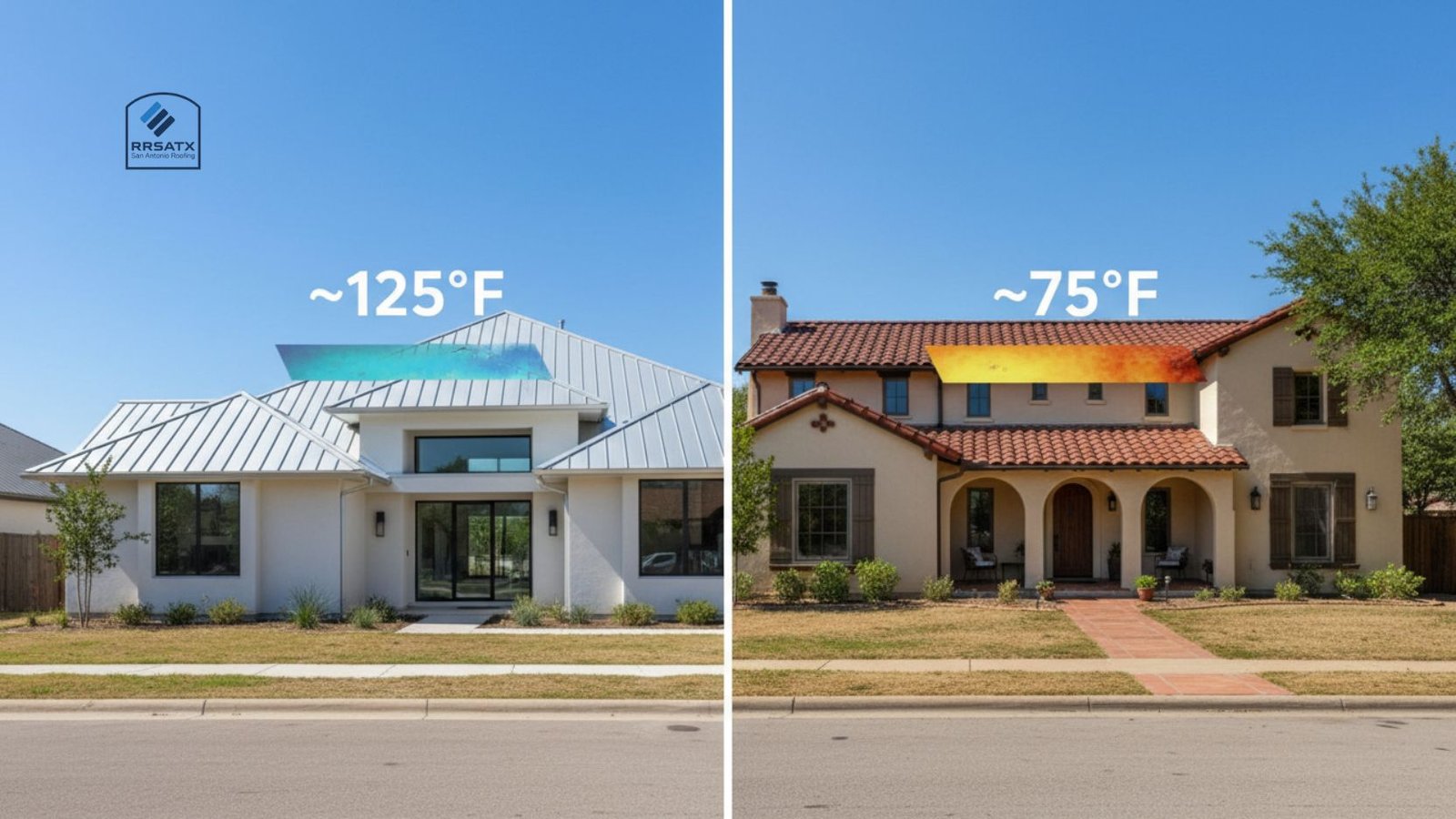
- Traditional dark shingle roof surface temperature: 170-180°F
- Cool technology shingle roof surface temperature: 140-150°F
- Metal cool roof surface temperature: 120-130°F
- Cooling cost reduction: $200-500 annually for cool shingles; $400-800 annually for reflective metal
Permitting And HOA Considerations
Roofing projects require navigating regulatory requirements and community standards.
Building Permits
Texas requires building permits for roof replacement in virtually all jurisdictions. The permit process verifies:
Structural adequacy: Plans demonstrate roof framing can support new material loads
Code compliance: Materials and installation meet current building code (even if original home predates current codes)
Proper flashing and waterproofing: Details show adequate protection at vulnerable areas
Wind resistance: Attachment schedules meet regional wind requirements
Permit costs vary:
- San Antonio: $50-500 depending on project value
- Houston: $75-600 depending on project value
- Smaller jurisdictions: $25-200 typically
Reputable contractors handle permitting as part of their service. Avoid contractors suggesting you can “skip the permit” (illegal and potentially voids insurance coverage).
HOA Restrictions
Homeowner associations frequently regulate roofing:
Material specifications: Many HOAs require specific materials (commonly tile in certain neighborhoods)
Color restrictions: Approved color palettes, often limited to maintain neighborhood consistency
Architectural approval: Submitting plans and samples to architectural review committee before work begins
Timelines: Deadlines for completion (preventing homes with partial roof replacements visible indefinitely)
Review your HOA’s Covenants, Conditions, and Restrictions (CC&Rs) and architectural guidelines before selecting materials. Many HOAs respond to approval requests within 30-45 days, so factor this timeline into your project schedule.
Some HOAs impose fines ($100-500+ per day) for unapproved work expensive lessons in procedural compliance.
Historic District Requirements
Properties in designated historic districts face additional scrutiny:
Material authenticity: Preference or requirement for traditional materials
Visible surfaces: Different standards for street-facing versus non-visible slopes
Documentation: Photographic evidence of existing conditions and proposed changes
Professional consultation: Certificates of Appropriateness requiring architect or preservation consultant involvement
San Antonio maintains several historic districts (King William, Lavaca, Monte Vista, and others) each with specific guidelines. The Historic and Design Review Commission (HDRC) reviews projects at monthly public hearings.
Timelines extend significantly in historic districts often 60-90 days from initial application to approval. However, properties in historic districts may qualify for:
- Federal Historic Preservation Tax Credits (20% of qualified rehabilitation expenses)
- Texas Historic Preservation Tax Credit (25% of qualified expenses)
- Property tax exemptions on increased value from improvements
These incentives can substantially offset costs of required traditional materials.
Making Your Final Decision: A Framework
Selecting the optimal roofing system requires balancing multiple factors. This decision framework guides the process.
1. Establish Architectural Compatibility Requirements
For Modern Homes:
- Is low-slope or flat roof aesthetic essential to design?
- Does the design emphasize material honesty (favoring metal, membrane)?
- Will solar panels be integrated?
- Are there rooftop access needs (deck, mechanical equipment)?
For Classic Homes:
- What specific architectural style is the home? (This largely determines appropriate materials)
- Are there historical designation requirements?
- Does the existing roof provide a precedent to follow or depart from?
- Are HOA restrictions in place?
2. Assess Structural Capacity
Required Analysis:
- What is the existing roof framing? (2×4, 2×6, 2×8 rafters? Trusses?)
- What is the current material weight?
- What is the proposed material weight?
- Does the weight increase exceed 15%? (If yes, engineering evaluation required)
A structural engineer charges $400-800 for basic roof evaluation, a worthwhile investment preventing expensive surprises mid-project.
3. Calculate Total Cost Of Ownership
Create Comparison Table:
For each candidate material, document:
- Initial installation cost
- Expected lifespan
- Annual maintenance cost
- Expected energy cost impact
- Insurance premium impact
- Cost per year of service
Example calculation:
Material Option A: Architectural Shingles
- Initial cost: $12,000
- Lifespan: 30 years
- Maintenance: $300/year × 30 = $9,000
- Energy costs: Baseline
- Total 30-year cost: $21,000
- Annual cost: $700
Material Option B: Standing Seam Metal
- Initial cost: $22,000
- Lifespan: 50 years
- Maintenance: $200/year × 50 = $10,000
- Energy savings: -$400/year × 50 = -$20,000
- Insurance savings: -$200/year × 50 = -$10,000
- Total 50-year cost: $2,000
- Annual cost: $40
This analysis often reveals that premium materials deliver superior long-term value despite higher upfront costs.
4. Evaluate Climate Performance
For San Antonio Specifically:
Priority factors:
- Solar reflectivity (primary concern for cooling costs)
- Impact resistance (hail protection and insurance qualification)
- Wind resistance (adequate for 110 mph Wind Zone II minimum)
- Moisture management (algae resistance, proper drainage)
Rank candidate materials:
- Excellent climate performance: Metal, Class 4 shingles, concrete tile
- Good climate performance: Standard architectural shingles, clay tile
- Fair climate performance: Three-tab shingles (not recommended)
5. Consider Contractor Availability and Expertise
Material choice means nothing without proper installation. Verify:
Contractor qualifications:
- Licensed and insured
- Manufacturer-certified for specific products
- Demonstrated experience with your chosen material
- References from similar projects
Red flags:
- Significantly lowest bid (typically indicates shortcuts)
- Pressure tactics or time-limited “special pricing”
- Requests for large upfront payments (30% deposit maximum is standard)
- Inability to provide proof of insurance
- No local references
Quality roofing contractors typically book 3-8 weeks out during peak season (spring and fall). Emergency repairs receive priority, but planned replacements require patience.
Conclusion
Choosing new roofs for modern vs. classic homes requires understanding that architecture and performance must work together, not against each other. Modern homes demand materials that honor minimalist aesthetics and integrate contemporary technologies standing seam metal, single-ply membranes, and innovative systems that embrace rather than disguise their function.
Classic homes deserve materials respecting their historical context while meeting modern performance standards, dimensional shingles replicating traditional profiles, tile maintaining century-old aesthetic traditions, or synthetic products that convincingly replicate natural materials without their limitations.
For San Antonio homeowners specifically, climate performance cannot be compromised. Texas sun, hail, and heat demand materials engineered for extreme conditions: reflective surfaces combating solar gain, impact-resistant construction protecting against hail, and robust warranties backing long-term performance.
The optimal choice balances architectural integrity, structural compatibility, long-term cost-effectiveness, and climate-appropriate performance. Invest time in this decision: your roof protects everything beneath it and defines your home’s character for decades to come.
When you’re ready to move forward, work with experienced professionals who understand both the technical requirements and aesthetic sensibilities your project demands. At RRSATX: San Antonio Roofing Company, our 25 years of experience spans both modern and classic homes across San Antonio and Houston. We offer free 12-point inspections examining your roof’s condition and suitability for different material options, providing honest guidance about what will work best for your specific home.
Quality roofing represents one of the most significant investments you’ll make in your property. Choose materials that honor your home’s design, protect your investment, and perform reliably under Texas conditions. The right roof doesn’t just cover your home, it completes it.
Ready to explore roofing options for your modern or classic home? Contact RRSATX: San Antonio Roofing Company for your free roof inspection and expert consultation: Call 24/7: 713-504-2341, Email: info@roofrepairsanantoniotx.com
Serving San Antonio, Houston, and surrounding Texas communities with honest, expert roofing solutions since 1999.