
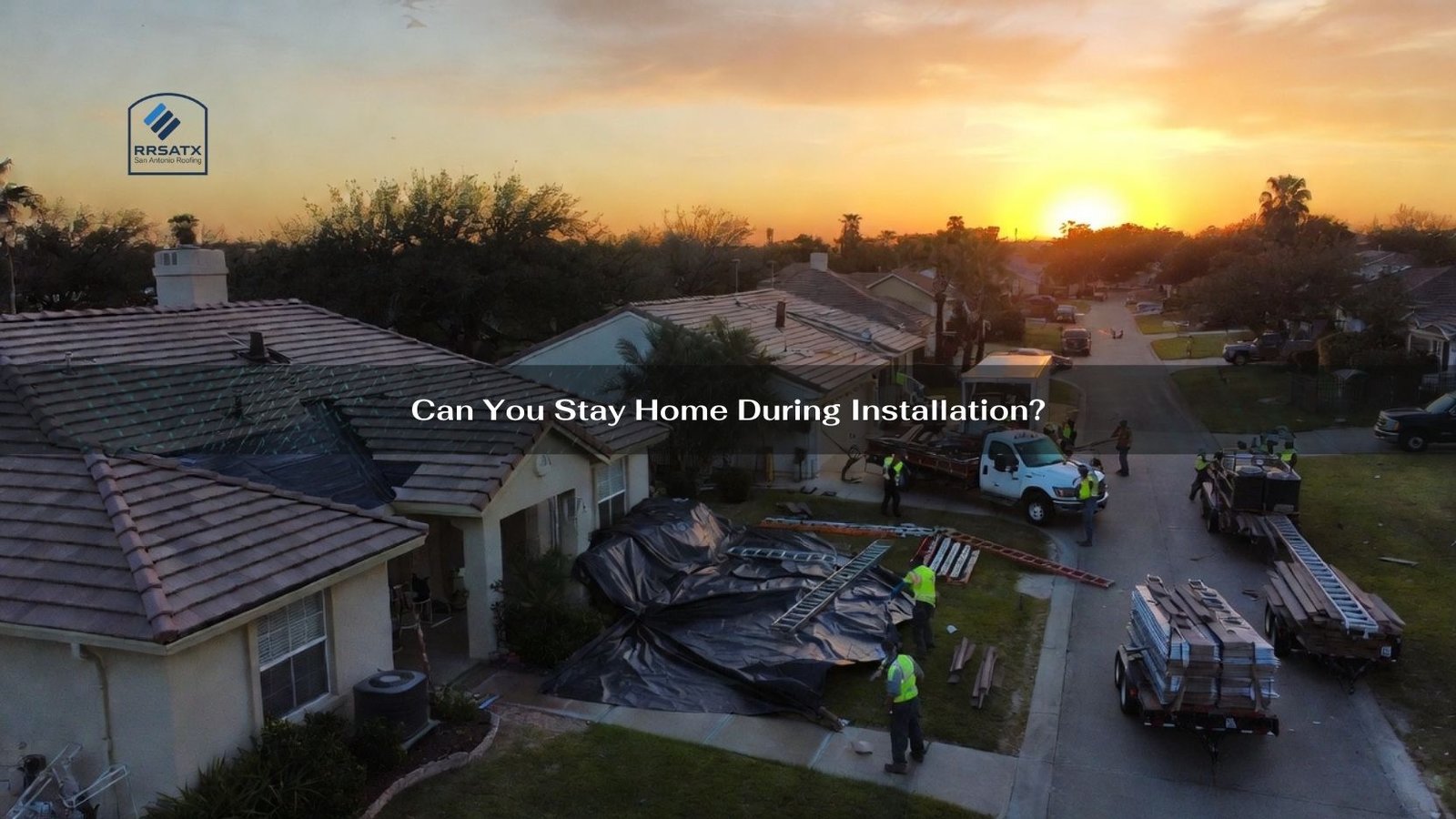
Can You Stay Home During Installation? What San Antonio Homeowners Need to Know
The question comes up on nearly every roofing project: Do I have to leave, or can I stay home during roof installation?
It’s completely reasonable to ask. Your home is your space, you may work remotely, have children or pets, or simply want to keep an eye on the crew. The short answer is yes, you can stay home but whether you should depends on several factors that most roofing companies never bother to explain upfront.
This guide breaks it all down so you can make the right call for your situation.
The Short Answer: Yes, But Read This First
Staying home during a roof replacement or repair is generally permitted and safe as long as you’re not directly under the work area and the roofing crew is professional, licensed, and insured.
However, “permitted” and “comfortable” are two different things. A full roof replacement is one of the loudest, most disruptive home improvement projects you’ll ever experience. If you work from home, have young children, or own anxious pets, the noise and activity level may make staying home more stressful than it’s worth.
That said, many homeowners in San Antonio prefer to be present and there are smart reasons to do so.
What Actually Happens During Roof Installation
Understanding the process helps set realistic expectations. According to roofing industry guides on Angi, a standard residential roof replacement follows these stages:
Day of Installation Typical Timeline:
| Phase | What’s Happening | Noise Level |
| Setup (6–8 AM) | Crew arrives, unloads equipment, sets up tarps | Moderate |
| Tear-off (8–10 AM) | Old shingles removed, decking exposed | Very High |
| Deck inspection & repair | Rotten or damaged decking replaced | High |
| Underlayment & flashing | Protective layers installed | Moderate |
| Shingle/material installation | New roof system installed | High |
| Cleanup & inspection | Debris removal, nail sweep, final walkthrough | Low |
Most residential roof replacements in San Antonio take one full day, though larger homes or complex roof systems may run into a second day. Repairs are significantly shorter, often 2–5 hours.
The peak noise window tear-off and nailing is typically between 8 AM and early afternoon.
Reasons You Might Want To Stay Home
Staying home isn’t just about comfort. There are practical, legitimate reasons to be present:
You can answer questions in real time. Experienced roofers sometimes uncover unexpected issues: rotted decking, improper flashing, hidden damage once the old roof comes off. If you’re on-site, decisions get made faster and you avoid delays.
You can oversee material delivery and placement. Ensuring shingles match your selection and that materials are staged correctly (away from landscaping, HVAC units, and driveways) is easier when you’re there.
You maintain access to your home. Power, water, and interior access may be needed by the crew. Being home removes friction.
You can document the project. Taking photos of the work in progress is smart for warranty purposes and insurance records.
Reasons You Might Want To Leave
Equally valid here’s why many experienced homeowners choose to step out for the day:
The noise is genuinely intense. Pneumatic nail guns, hammering, and material drops create sustained noise levels that can exceed 85–90 decibels comparable to standing near a lawn mower for hours. If you’re on calls, have a newborn, or are sensitive to noise, this is a serious consideration.
Falling debris is a real hazard. Even with professional tarps and safety protocols, nails, shingles, and small debris can land in unexpected places. The perimeter around your home is an active work zone.
Pets can become highly stressed or escape. Dogs and cats react strongly to loud, unfamiliar activity above them. The crew will likely need to access side gates or yards, increasing the chance of an escape. HomeAdvisor’s contractor safety tips consistently recommend securing or relocating pets during major exterior projects.
Children may be difficult to keep safe and settled. If you have young kids at home, managing their curiosity about the crew and equipment while also managing the noise is a real challenge.
Safety Considerations You Can’t Ignore
Whether you stay or go, safety is non-negotiable.
Stay out of the attic. During active installation, the decking above is being walked on, nailed through, and stressed. Don’t be in the attic while work is overhead.
Keep children and pets away from the work perimeter. Set a clear boundary typically 10–15 feet from the roofline on all sides.
Watch for roofing nails. Even with magnetic nail sweepers (which every professional crew should use), nails occasionally end up in grass, mulch, and driveways. Walk your property carefully after the crew leaves.
Protect valuables near exterior walls. Vibration from hammering can shake wall-mounted artwork, mirrors, and shelving. Take a few minutes before the crew arrives to secure or remove fragile items.
Verify the crew’s insurance before work begins. A licensed, insured roofing contractor protects you from liability if a worker is injured on your property. Ask for proof of general liability and workers’ compensation coverage upfront.
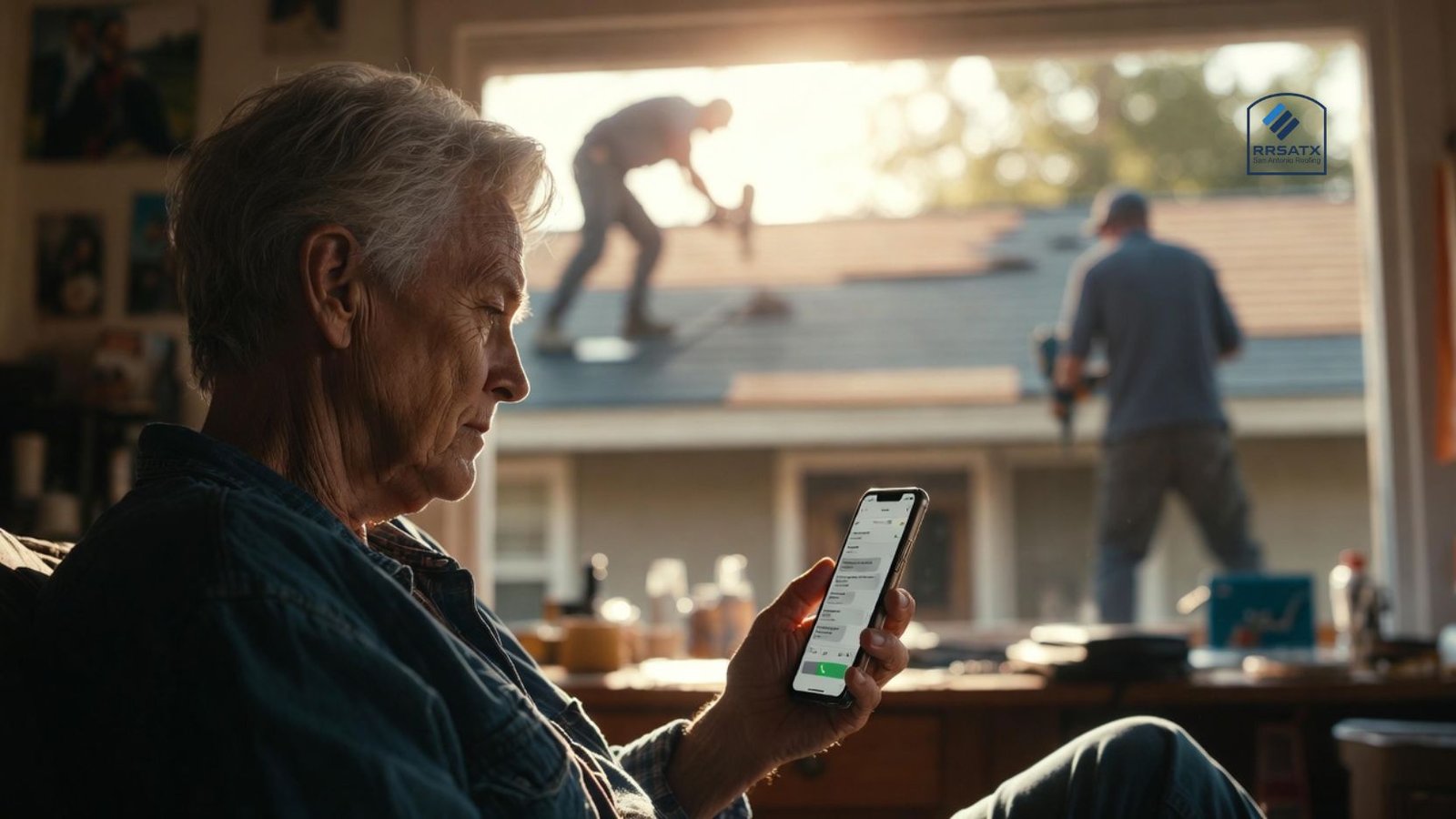
Tips If You Decide To Stay Home
If staying home is your preference, here’s how to do it comfortably and smartly:
- Work from the quietest room in the house, typically an interior room on the ground floor, away from the roof slope being worked on first.
- Use noise-canceling headphones if you have important calls or need to concentrate.
- Move vehicles out of the driveway the night before so the crew can stage materials and equipment without interruption.
- Prepare a clear path to your electrical panel, attic access, and any areas the contractor may need to reach.
- Communicate your schedule to the project manager if you have a call at 10 AM that can’t be interrupted, let them know so they can plan tear-off timing around it when possible.
- Keep a direct line to your project manager throughout the day. A professional roofing crew will designate a point of contact on-site.
What To Expect From A Professional Roofing Crew
The quality of your experience whether you stay or leave comes down almost entirely to the professionalism of the crew.
A reputable San Antonio roofing contractor will:
- Arrive on time and brief you on the day’s plan before starting
- Lay protective tarps over landscaping, AC units, and the perimeter
- Keep the work zone organized and minimize debris spread
- Communicate proactively if they discover unexpected damage or need your decision on something
- Complete a magnetic nail sweep of your entire property before leaving
- Walk you through the finished work and answer any questions before final payment
What separates average contractors from trusted ones isn’t just the roofing, it’s the entire experience from first call to final cleanup. According to homeowner reviews on Yelp’s roofing contractor category, the most common complaints about roofing companies aren’t about the roof itself, they’re about communication failures, unexpected charges, and poor cleanup. Choose your contractor with that in mind.
FAQs
Do I Need To Be Home When The Roofers Arrive?
It’s strongly recommended to be there at the start of the job to review the scope of work, confirm material selections, and ask any last-minute questions. After that, your physical presence is optional.
Should I Turn Off My HVAC During Roof Installation?
It’s a good idea to turn off your HVAC system during active tear-off to prevent dust and debris from being drawn into the system. Your roofer should advise you on this.
Will Roofers Need Access To My Attic?
Possibly. Inspecting decking from below or checking ventilation may require brief attic access. Confirm this with your contractor before the project begins.
How Do I Handle My Dog During Roof Installation?
The safest approach is to relocate your dog to a friend’s home, doggy daycare, or a boarding facility for the day. If that’s not possible, keep them in an interior room with white noise or a TV on, and ensure all exterior gates are locked.
What If It Rains On Installation Day?
Reputable contractors will communicate proactively about weather delays and will never install roofing over wet decking. Your project manager should notify you the day before if weather is a concern.
Ready for a Roof Project? Start with a Free Inspection
If you’re planning a roof repair or replacement in San Antonio, the most important first step isn’t choosing materials or scheduling installation, it’s knowing exactly what your roof needs.
RRSATX: San Antonio Roofing Company offers a completely free, no-obligation 12-point roof inspection that checks for hidden leaks, storm damage, structural wear, and weak points before they become expensive problems.
As one of San Antonio’s oldest family-owned roofing contractors father and son, in business since 2000 RRSATX has built its reputation on transparent pricing, honest recommendations, and craftsmanship that holds up to Texas weather.
Call or text anytime: 713-504-2341, Serving San Antonio, Houston, Katy, and surrounding areas , 4324 Monterey St, San Antonio, TX 78237 , Open 24 hours