
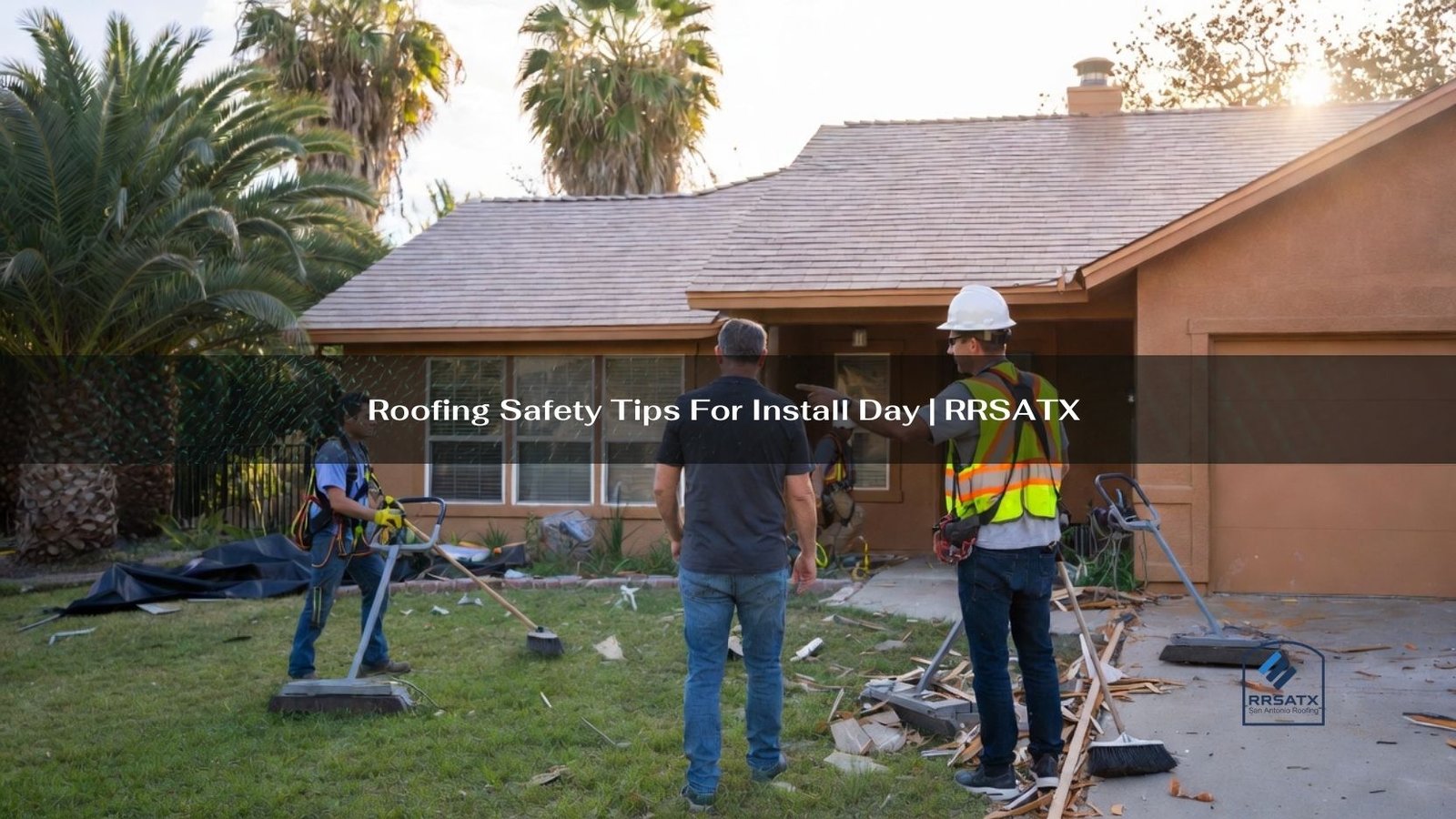
Roofing Safety Tips for Install Day: What Every Homeowner and Crew Needs to Know
When a roofing crew pulls up to your house on install day, the last thing on most homeowners’ minds is safety, that’s the contractor’s job, right? Partially. But roofing is consistently ranked among the most hazardous construction trades in America. According to OSHA’s fatal injury statistics, falls from roofs account for a disproportionate share of construction fatalities each year and most are preventable.
Whether you’re overseeing a professional crew or understanding what a quality contractor should be doing on your property, knowing the roofing safety tips for install day puts you in a far stronger position as a homeowner and it may literally save a life.
Why Roof Install Day Is The Highest-Risk Moment
Roof installation day concentrates everything that makes roofing dangerous: steep slopes, heavy materials, power tools, and workers moving quickly under time pressure. The risk isn’t just theoretical. According to data from the Bureau of Labor Statistics, roofing consistently ranks in the top 5 most dangerous occupations in the U.S. by fatal injury rate.
The specific hazards on install day include:
- Falls from height the leading cause of roofing fatalities
- Struck-by incidents tools, shingles, or debris falling on bystanders
- Overexertion injuries from lifting bundles of shingles (each weighing 50–80 lbs)
- Electrical contact near overhead power lines
- Heat-related illness especially critical in Texas summers
Understanding these risks is the foundation of every other safety decision made that day.
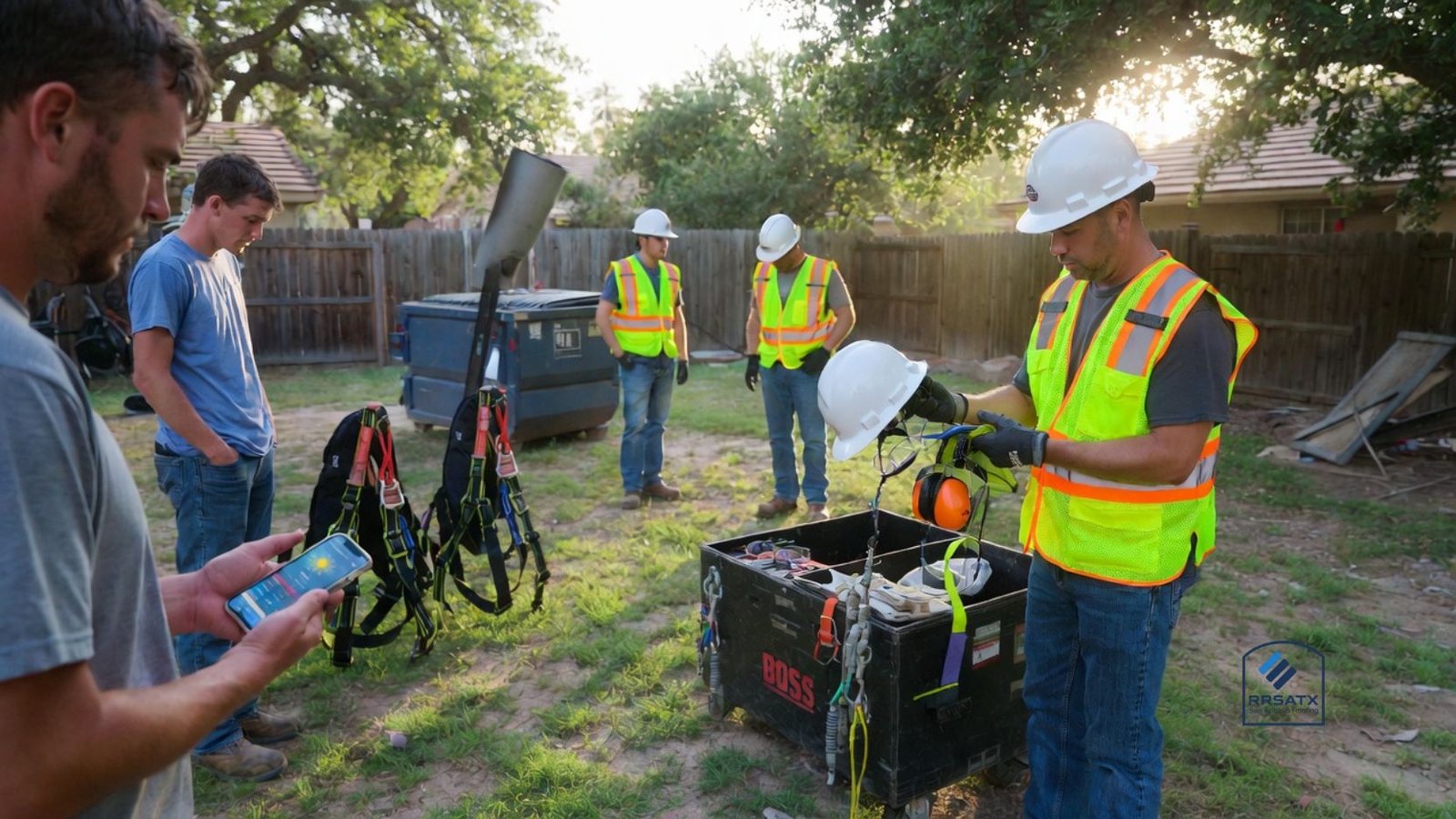
Pre-Installation Safety Checklist
A professional roofing crew should complete a site safety assessment before anyone steps onto the roof. This isn’t optional, it’s the mark of a contractor who takes their responsibility seriously.
Before work begins, verify the following:
- All workers are briefed on the day’s tasks and hazards
- A competent safety supervisor has been designated on-site
- The work zone is clearly marked with cones or barriers
- Ladders are inspected, rated for load capacity, and properly secured
- Roof decking condition has been assessed for soft spots or rot
- Dumpster or debris chute is positioned safely (away from foot traffic)
- Personal Protective Equipment (PPE) is distributed and worn
- Weather forecast has been reviewed
This checklist isn’t exhaustive but a crew that skips it isn’t operating to professional standards.
Fall Protection: The Non-Negotiable Standard
OSHA’s 29 CFR 1926.502 requires fall protection for any roofing work performed at 6 feet or more above a lower level. No reputable contractor should be on your roof without it.
There are three primary systems used on residential and commercial installs:
Personal Fall Arrest System (PFAS)
Workers wear a full-body harness connected to a lanyard and anchor point. This is the gold standard for steep-slope roofing and is required when working near eaves or roof edges.
Safety Net Systems
More common on large commercial projects, nets are rigged below the work area to catch falling workers or materials.
Guardrail Systems
Temporary guardrails installed along roof edges are often used in combination with PFAS on larger flat or low-slope roofs.
What to look for as a homeowner: Ask your contractor what fall protection system they use. If the answer is vague, non-existent, or “we’ve never had an accident,” that’s a red flag. A properly protected crew is a sign of a company that builds safety into their standard operating procedures, not something bolted on after an incident.
Weather Conditions And When To Delay
In San Antonio, the weather can shift fast. Heat, storms, and high winds are all legitimate reasons to stop or postpone install day and a safety-first contractor won’t hesitate to make that call.
Temperature And Heat
Working on a dark shingle surface in 95°F Texas heat can push the surface temperature above 150°F. Heat exhaustion and heat stroke are real risks. Signs of heat illness include dizziness, nausea, confusion, and cessation of sweating.
Mitigation strategies include mandatory hydration breaks every 15–20 minutes, rotating workers off the roof surface, and early morning start times to avoid peak heat hours (typically 11 AM–3 PM).
Wind
OSHA recommends pausing work when wind speeds exceed 25 mph. On a roof, high winds turn unsecured shingles and tools into projectiles. Roofing in high winds also compromises the integrity of the installation itself; shingles may not seat properly.
Rain And Wet Surfaces
A wet roof deck is extraordinarily slippery. Even a mild drizzle can create dangerous conditions. No legitimate contractor should be installing shingles in rain adhesive strips that won’t seal properly, and the fall risk becomes severe.
Industry rule of thumb: If conditions wouldn’t be safe enough to stand on, no work should happen.
Material Handling And Staging Safety
Bundles of asphalt shingles weigh between 50 and 80 lbs. Metal panels can be heavier and harder to maneuver. Improper staging and lifting technique is a top cause of musculoskeletal injuries in the roofing industry.
Safe staging practices include:
- Distributing shingle bundles evenly across the roof deck to prevent localized overloading
- Never stacking more than 3 bundles high on the roof surface
- Using a roofing hoist or conveyor for second-story and steeper roofs (this protects both workers and your landscaping)
- Clearing staging areas of tripping hazards coiled wire, nail guns, and loose felt paper
- Securing all tools when not in active use
On the ground, ensure the dumpster placement doesn’t block emergency vehicle access to your property. Debris chutes should direct materials away from foot traffic zones, windows, and HVAC equipment.
Electrical Hazard Awareness
Overhead power lines adjacent to homes represent a serious, underestimated risk during roof installs. Metal ladders and long roof panels can easily make contact if crews aren’t aware of line locations.
OSHA requires that workers maintain a minimum clearance distance from energized power lines 10 feet for lines under 50kV. Before any install begins, your contractor should identify the location of all overhead utilities.
If your roof installation requires work near power lines, the roofer should contact the local utility provider to request a temporary power shutoff or protective sleeve, a simple step that eliminates the risk entirely.
What Homeowners Should Do On Install Day
You hired a professional crew, but that doesn’t mean your only job is to stay out of the way. Here’s what responsible homeowners should do:
Before the crew arrives:
- Clear the driveway for material and equipment access
- Move vehicles out of the garage and driveway
- Cover HVAC units, outdoor furniture, and landscaping near the home
- Secure pets indoors falling debris and strangers on the roof are stressors for animals
During installation:
- Keep children and non-essential adults out of the work zone
- Designate a single point of contact for crew communication
- Don’t climb onto the roof yourself ever
- Take note of whether workers are using fall protection (it matters for liability too)
After installation:
- Walk the perimeter of your home with the project manager for a debris sweep
- Confirm all nails and sharp debris have been cleared from the yard and gutters
- Ask for your warranty documentation before the crew leaves the property
How To Verify Your Roofer Is Following Safety Standards
Not every contractor prioritizes safety equally. Before signing a contract or even allowing a crew on your roof verify these credentials:
| Verification Item | Why It Matters |
| Active general liability insurance | Covers property damage during install |
| Workers’ compensation coverage | Protects you if a worker is injured on your property |
| OSHA 10 or OSHA 30 certification | Indicates trained safety awareness |
| Haag Engineering certification | Industry standard for forensic damage assessment |
| State contractor license | Required for legal operation in Texas |
According to Angi’s contractor vetting guidance, homeowners who verify insurance and licensing before work begins are significantly less exposed to liability if an incident occurs on their property.
Ask directly: “Can I see your certificate of insurance?” A legitimate contractor will hand it over without hesitation.
FAQs
Q: Do I Need To Be Home During Roof Installation?
You don’t need to be present the entire time, but it’s advisable to be available by phone and present for the start and end of the workday. You should be on-site for the final walkthrough.
Q: Is It Safe To Stay Inside The House During A Roof Install?
Generally, yes though expect noise. The interior can vibrate significantly during tear-off and nailing. It’s safest to stay away from attic access points and skylights during active work.
Q: What If I Notice A Worker Not Using Fall Protection?
Politely raise the concern with the on-site supervisor. If no action is taken, contact the contractor’s office directly. If the unsafe behavior continues, you have the right to pause the work and the legal standing to do so on your own property.
Q: How Long Does A Standard Residential Roof Install Take?
Most residential replacements in San Antonio are completed in one to two days depending on size, pitch, and material type. Weather delays are the most common reason for extension.
Q: Can Roof Installation Damage My Gutters Or Siding?
It can, if proper protection isn’t used. Ask your contractor about how they protect adjacent surfaces before work begins. A good roofer will address this proactively.
Schedule a Safe, Professional Roof Installation in San Antonio
Safety on install day doesn’t happen by accident, it happens because you hired the right contractor.
At RRSATX: San Antonio Roofing Company, every installation follows strict OSHA safety protocols, with Haag Certified Inspectors and a crew that’s been protecting San Antonio homes for over 25 years. We’re fully licensed, insured, and committed to transparent communication from day one with no surprises, no pressure tactics.
Whether you need a minor repair, a full replacement, or just want to know the honest condition of your roof, we offer a FREE 12-Point Roof Inspection with zero obligation.
Call us now: 713-504-2341 We’re open 24 hours a call anytime.
Serving San Antonio, Houston, Katy, and surrounding areas. Family-owned since 2000.