
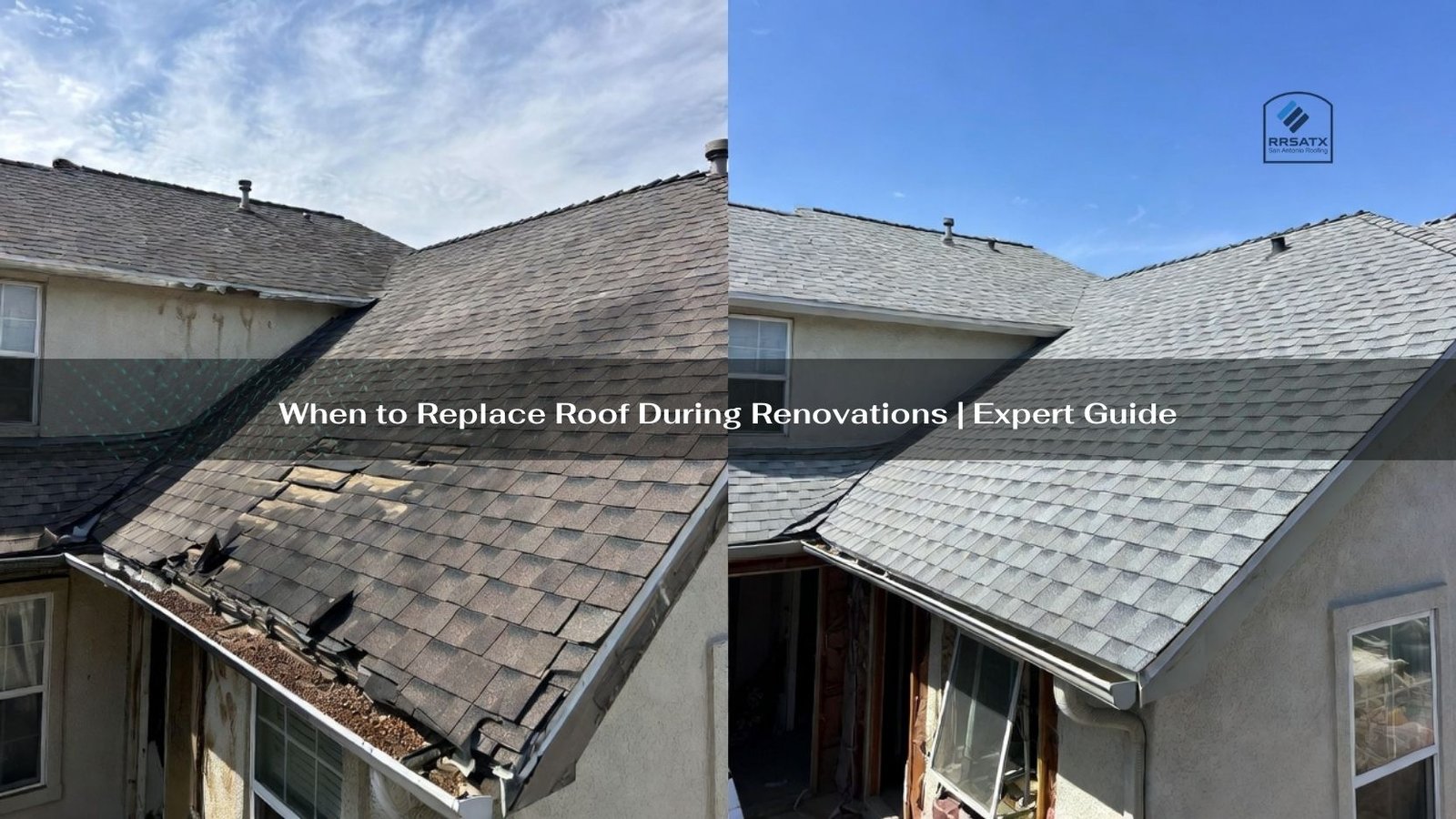
When to Replace Roof During Renovations: The Complete Homeowner’s Guide
Planning a home renovation is exciting until you look up and wonder whether that aging roof should be part of the project. Replacing your roof at the right time during renovations can save you thousands of dollars, prevent structural headaches, and maximize your investment. Get the timing wrong, and you could be tearing apart freshly installed ceilings, insulation, or siding to deal with water damage that a timely roof replacement would have prevented.
This guide breaks down exactly when to replace your roof during renovations, what warning signs to watch for, and how to coordinate the work like a seasoned contractor would.
Why Roof Timing Matters During A Renovation
Most homeowners think of a roof replacement as a standalone project. But during a full or partial renovation, the roof is foundational literally. Every interior upgrade you make is vulnerable to whatever is happening above it.
According to Angi’s roofing cost research, water intrusion from a failing roof is one of the top causes of interior renovation damage, forcing homeowners to redo work they’ve already paid for.
The core principle is simple: your roof protects everything else. If it’s compromised, no amount of new drywall, insulation, flooring, or kitchen cabinetry is safe. Sequencing your roof replacement correctly within a broader renovation plan isn’t just smart, it’s essential project management.
Five Clear Signs You Need A Roof Replacement Before Or During Renovations
Before committing to any renovation budget, a thorough roof assessment should be your first step. Here are the critical indicators that replacement not repair is the right call:
Persistent Water Leaks Or Staining
Interior water stains on ceilings and walls are often misread as plumbing issues. If leaks reappear after patching, the roof deck or underlayment may be compromised. Starting interior renovations without addressing this is a costly mistake.
Missing, Cracked, Or Curling Shingles
Shingle deterioration accelerates in climates with extreme temperature swings and hail exposure conditions common across San Antonio and South Texas. When shingles are missing or curling at the edges, the roof’s waterproofing layer is broken.
Granule Loss In Gutters
Asphalt shingles shed granules as they age. Heavy granule buildup in gutters signals that shingles are nearing the end of their service life, typically a 3–5 year warning window before full failure.
Sagging Roof Deck
A sagging roofline indicates structural compromise, rotting decking, failed rafters, or prolonged moisture intrusion. This is a non-negotiable replacement trigger that must be resolved before any interior work begins.
Roof Age Near Or Beyond Expected Lifespan
If your roof is approaching the end of its rated lifespan, renovation is the ideal time to replace it proactively rather than reactively. Material lifespans vary widely:
| Roofing Material | Average Lifespan |
| Asphalt Shingles | 20–30 years |
| Metal Roofing | 40–70 years |
| Tile Roofing | 50+ years |
| Flat/TPO Roofing | 15–25 years |
When To Replace The Roof First VS. Last
This is the most practical question homeowners face, and the answer depends on what else is being renovated.
Replace The Roof First When:
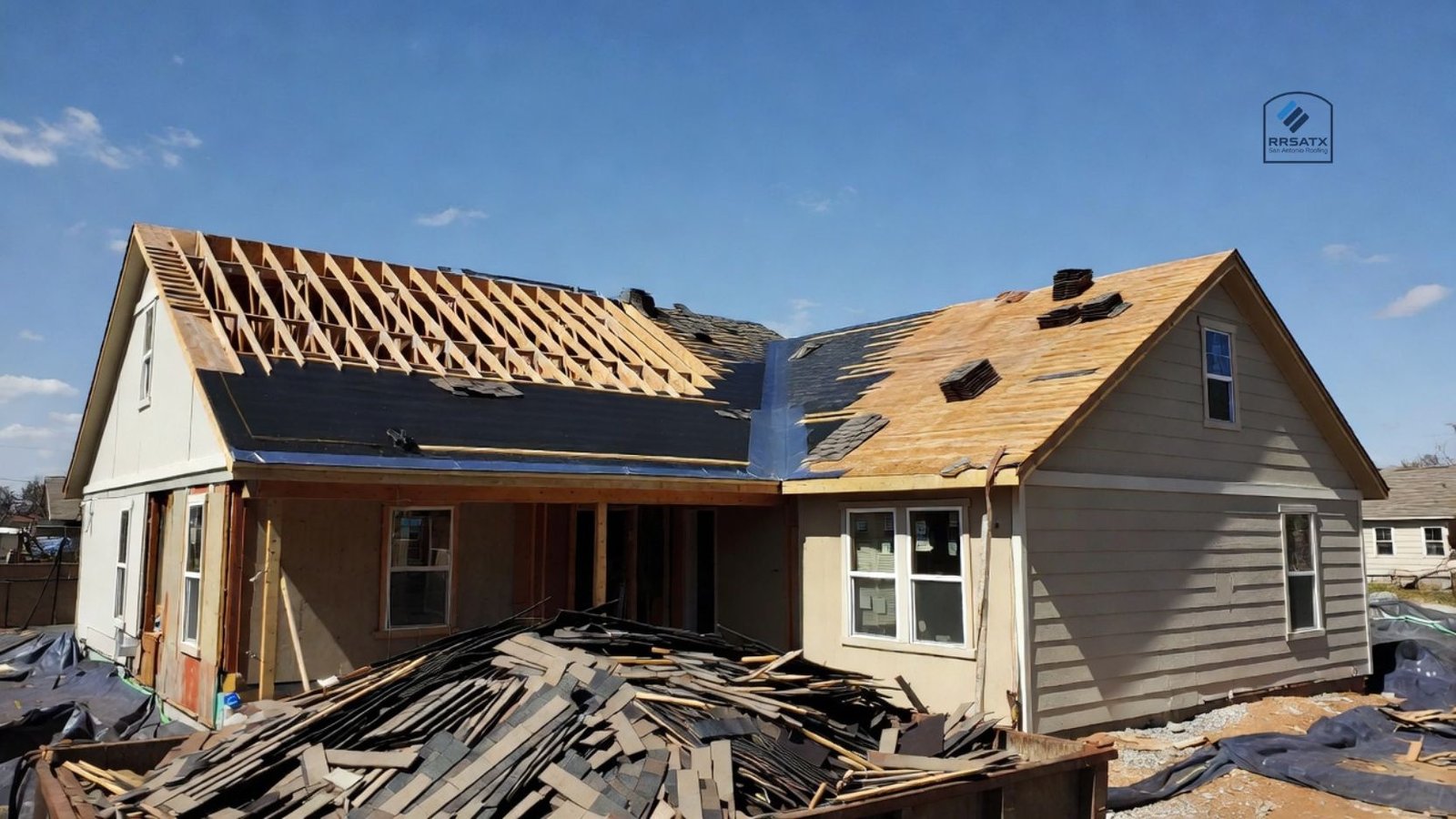
- You’re renovating the attic or top floor. New insulation, ceiling work, or an attic conversion requires a dry, sealed envelope above. Any roof work done after could disrupt or damage the new interior finishes.
- There is active leaking or visible water damage. No interior work should begin until the water source is eliminated.
- Structural repairs are involved. Rafter replacement, decking repair, or load-bearing changes require roof access first.
- You’re adding solar panels or skylights. These require careful flashing integration that must be planned with the roofing system.
You Can Defer The Roof When:
- The roof has 5+ years of reliable life remaining and passes a professional inspection.
- The renovation is limited to lower floors or exterior areas unconnected to the roofline.
- You’re in a phased renovation and the roof phase is already budgeted and scheduled within 12 months.
The rule of thumb: When in doubt, replace the roof first. The cost of water damage to new renovation work far exceeds the inconvenience of sequencing roof work early.
Renovation Projects That Almost Always Require A New Roof
Certain renovation scopes make roof replacement practically mandatory. If your project involves any of the following, add a roof assessment to the critical path:
Full Home Gut Renovations When walls, ceilings, and insulation are being replaced entirely, it makes no sense to leave an aging roof in place. The labor and disruption cost of doing the roof separately later will be significantly higher.
Attic Conversions or Additions Converting an attic into livable space whether a bedroom, office, or ADU demands a sound, well-insulated roof above it. This is also the optimal time to upgrade to a higher R-value roofing system.
Major Exterior Remodels If you’re replacing siding, fascia, soffits, or gutters, bundling a roof replacement into the scope creates efficiencies and ensures all exterior envelope components are aligned in age and performance.
Post-Storm Restoration Projects According to HomeAdvisor’s storm damage guide, hail and wind events frequently cause damage that isn’t visible from the ground. If a renovation is triggered by storm damage, a comprehensive roof inspection should always be included before work scopes are finalized.
How Age And Material Affect Your Decision
Understanding your roof’s material composition is critical to making an informed replacement decision during a renovation.
Asphalt Shingles are the most common residential roofing material in the U.S. and across Texas. A 20-year-old asphalt roof entering a major renovation project should almost always be replaced, even if it appears visually intact. The underlayment and flashing are likely degraded beyond what surface inspection reveals.
Metal Roofing is increasingly popular in San Antonio due to its resilience against heat and hail. If your metal roof is under 20 years old and has no visible fastener issues or panel damage, it may not need replacement during a renovation. However, any penetrations created during renovation (new HVAC vents, skylights) should be professionally flashed.
Tile Roofing is durable but fragile under foot traffic. Renovation activity that requires rooftop access HVAC work, solar installation, chimney repair can crack tiles. Pre-renovation inspection and post-renovation repair should be standard practice.
Flat/Commercial Roofing used on some residential structures or home additions is highly sensitive to membrane puncture. Any renovation that involves rooftop equipment or structural modifications requires professional assessment of the membrane integrity.
Roof Replacement Costs: What To Budget
Renovation budgets are notoriously tight, so understanding realistic roofing costs helps homeowners make financially sound decisions rather than deferring necessary work.
In San Antonio, TX, typical roof replacement costs range from $5,185 to $6,861 for a standard residential roof, depending on size, pitch, and material. Here’s a more detailed cost breakdown by material:
| Material | Cost per 100 sq. ft. |
| Asphalt Shingles | $146 – $238 |
| Metal Roofing | $682 – $892 |
| Tile Roofing | $480 – $631 |
| Flat Roofing | $119 – $196 |
Pro tip: Bundling your roof replacement with other exterior work (gutters, soffits, fascia) frequently reduces total project cost by 10–15% due to shared labor mobilization. Always ask your contractor about scope bundling discounts.
One more financial consideration: homeowners insurance in Texas often covers storm-related roof damage. Before finalizing your renovation budget, have a licensed roofer document any hail or wind damage you may recover a significant portion of replacement costs through your policy.
How To Coordinate Your Roofing Work With Other Contractors
Poor contractor coordination is one of the top reasons home renovations go over budget and schedule. When a roof replacement is part of a larger renovation, sequencing matters:
1: Start with a professional roof inspection. Before finalizing your renovation scope, get a written assessment of the roof’s condition. This becomes the basis for your scheduling decisions.
2: Schedule roofing as the first exterior trade. Roofing work should precede siding, window installation, and any exterior painting to prevent damage from roofing debris and to ensure proper flashing integration.
3: Coordinate with HVAC and electrical contractors. New roof penetrations for vents, pipes, or conduit must be flashed by the roofer. Schedule these trades to work in tandem or have your roofer return to flash after mechanical rough-in.
4: Protect interior work during roofing. If interior finishes are already installed when roofing begins (a sequencing error to avoid), ensure your roofer uses proper dust and debris containment.
5: Final inspection before drywall or insulation is closed. Before interior walls and ceilings are closed in, confirm the roof and attic are fully sealed. This is your last low-cost opportunity to catch issues before they become expensive.
Work With San Antonio’s Trusted Roof Replacement Experts
If you’re planning a home renovation in San Antonio or the surrounding area, don’t let roofing be an afterthought. The cost of replacing a roof after renovation work is complete or worse, after water damage undoes thousands of dollars in interior finishes far exceeds the cost of replacing it proactively as part of your project.
RRSATX: San Antonio Roofing Company specializes in residential and commercial roof replacements across San Antonio and Houston, TX. We work exclusively with the most trusted roofing brands in America and offer the full range of materials asphalt shingles, metal roofing, tile, and flat roofing systems to match your home’s needs and renovation goals.
Here’s what sets us apart:
- 100+ 5-star reviews from verified San Antonio homeowners
- Free roof inspections no obligation, no pressure
- Transparent, competitive pricing with no hidden fees
- Deep knowledge of San Antonio’s climate and building requirements
- Available 24/7 for storm damage response
San Antonio Location: 4324 Monterey St, San Antonio, TX 78237, Call or Text: 713-504-2341 Email: info@roofrepairsanantoniotx.com
Schedule Your Free Roof Inspection Today →
Final Takeaway
Knowing when to replace your roof during renovations comes down to three factors: the roof’s current condition, its age relative to its expected lifespan, and the scope of the renovation itself. When these factors align an aging roof, a significant renovation, and signs of wear replacement isn’t just recommended, it’s the financially intelligent choice.
Treat the roof as what it is: the first line of defense for every dollar you invest in your home below it.