
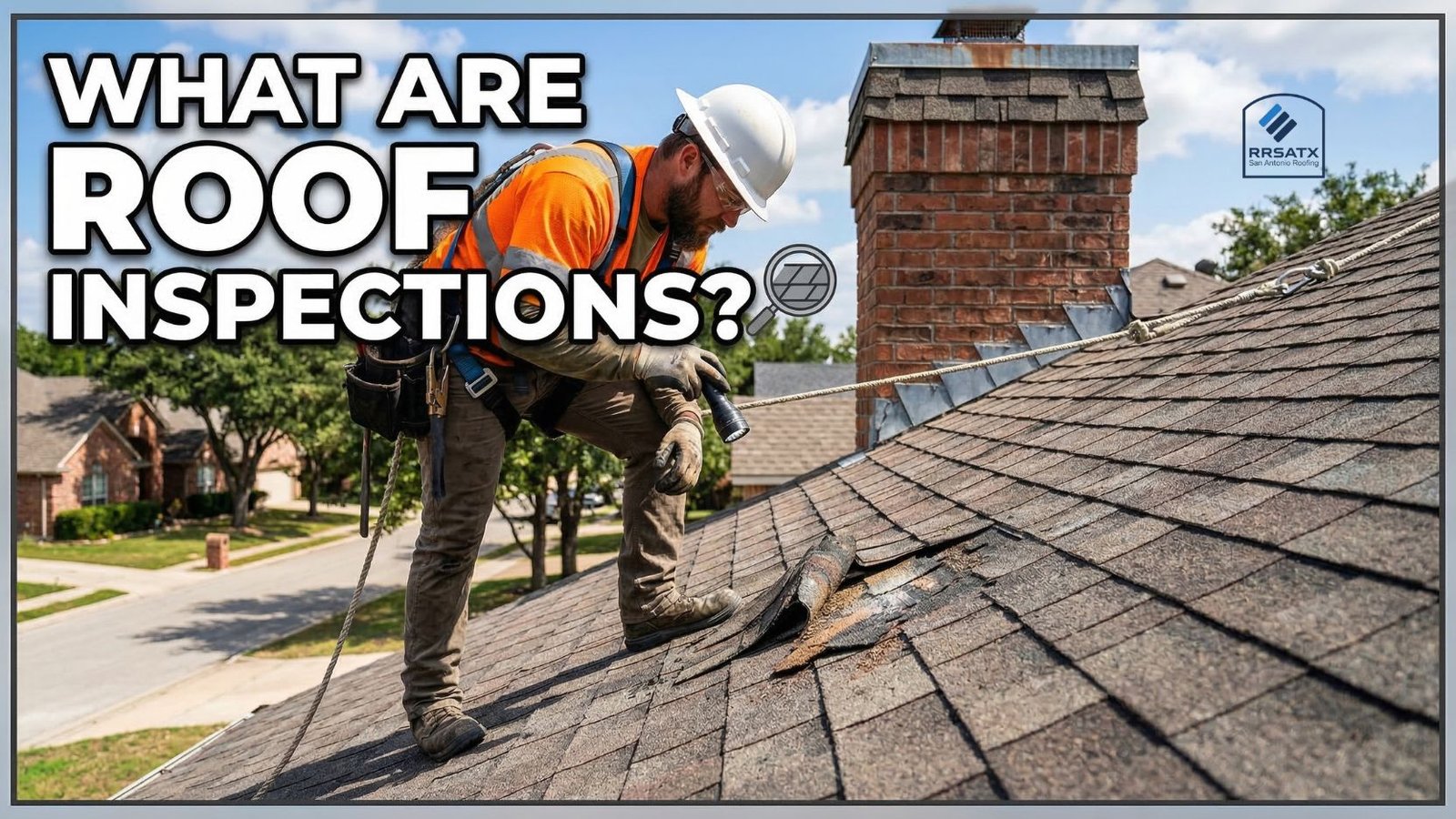
RRSATX: San Antonio Roofing Company is a family-owned roofing company serving San Antonio since 2000, with hands-on experience evaluating roofs damaged by South Texas heat, hail, wind, and heavy rain. Based on that local experience, a roof inspection is a professional check of your roof’s condition to find leaks, storm damage, wear, drainage issues, and signs that repairs or replacement may be needed.
In simple terms, a roof inspection tells you whether your roof is still protecting the property properly or if hidden problems are developing.
What Are Roof Inspections, Exactly?
A roof inspection is a structured review of the entire roofing system, not just the shingles or metal panels you can see from the ground.
A proper inspection usually looks at:
- Roofing materials
- Flashing and roof penetrations
- Gutters and drainage
- Roof decking or structure
- Attic or ceiling signs of moisture
- Storm damage and aging
Key takeaway: A roof inspection is meant to catch problems early, before they turn into expensive interior damage.
Why Are Roof Inspections Important In San Antonio?
Roof inspections matter in San Antonio because local weather can wear roofs down faster than many owners expect.
Common local stress factors include:
- Long periods of UV exposure
- Summer heat
- Hailstorms
- Strong winds
- Heavy rain
These conditions can cause shingles to crack, flashing to loosen, sealant to fail, and metal panels to expand and contract over time. For homeowners with roofs 15 to 20 years old, regular inspections are especially important.
What Does A Standard Roof Inspection Include?
A standard roof inspection includes both exterior and interior checks. The goal is to find visible damage and warning signs of hidden moisture problems.
| Inspection area | What gets checked | Why it matters |
| Roof surface | Missing shingles, cracked tiles, rust, dents, punctures, granule loss | Surface damage often leads to leaks |
| Flashing | Chimneys, skylights, vent pipes, valleys, wall joints | Flashing failure is a common cause of water entry |
| Drainage | Gutters, downspouts, standing water, roof edges | Poor drainage can shorten roof life |
| Structure | Sagging areas, soft spots, uneven roof lines | Structural issues may point to rot or long-term moisture |
| Interior signs | Ceiling stains, attic moisture, mold, wet insulation | Interior clues often confirm active roof leaks |
Answer: If a roof inspection is done correctly, it checks the full roofing system, not just the top layer.
What Problems Can A Roof Inspection Find?
A roof inspection can identify both active damage and early warning signs.
Common issues include:
- Roof leaks
- Missing or lifted shingles
- Storm damage from hail or wind
- Cracked sealant
- Rusted metal panels or fasteners
- Damaged flashing
- Soft decking
- Ponding water on flat roofs
- Poor attic ventilation
- Mold or water staining
Some problems are obvious, like a missing shingle after a storm. Others are hidden, like slow water intrusion around a vent pipe or chimney flashing.
Key takeaway: The main value of a roof inspection is finding problems before they spread into insulation, framing, drywall, or electrical areas.
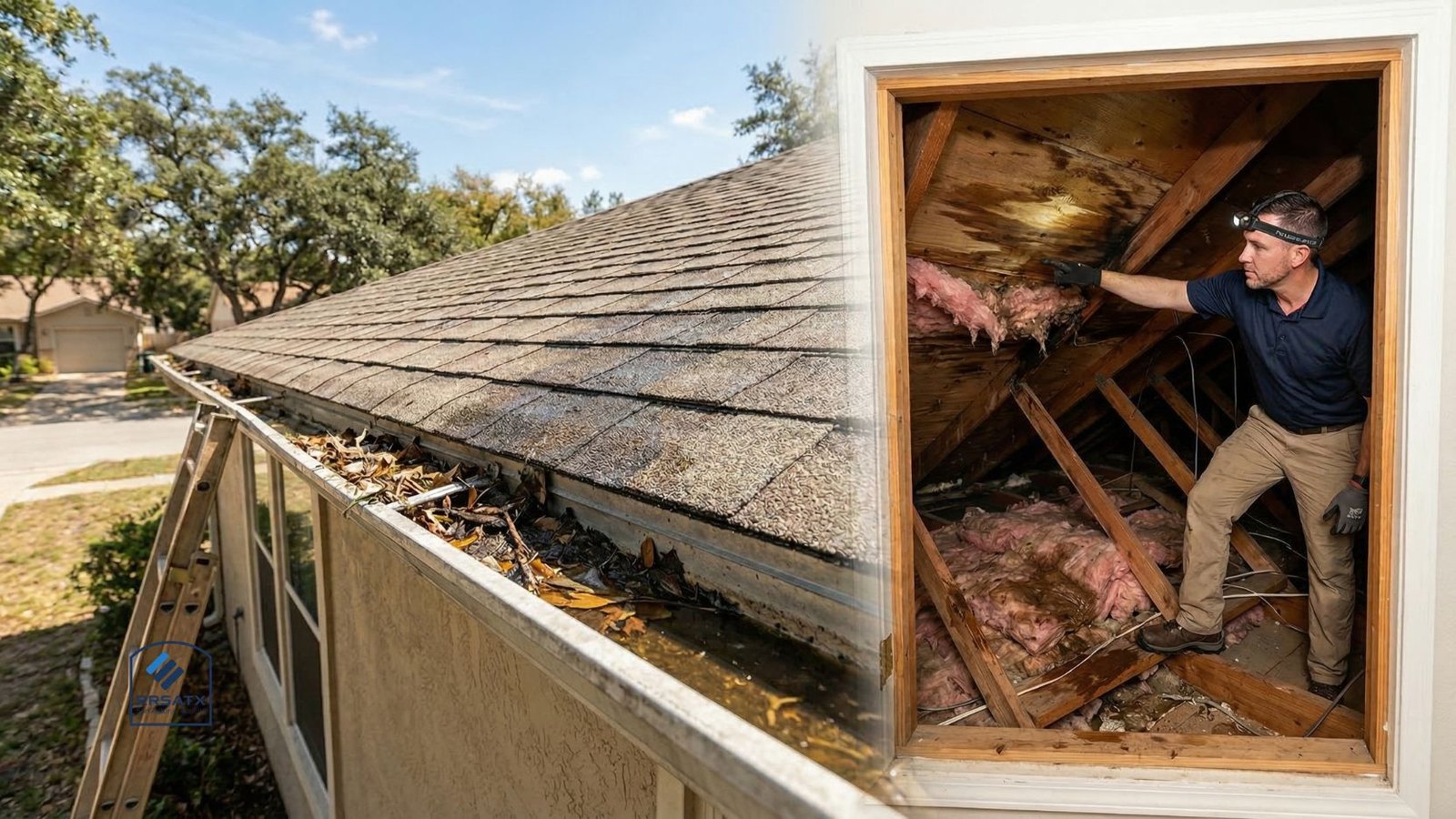
Do Roof Inspections Include The Attic, Gutters, And Ventilation?
Yes, they should. A complete roof inspection includes the supporting parts of the roof system, not just the outer covering.
Attic Inspection
The attic can reveal:
- Water stains on the decking
- Damp insulation
- Mold growth
- Poor airflow
- Daylight coming through the roof boards
Gutter And Drainage Check
Inspectors also look for:
- Clogged gutters
- Loose downspouts
- Overflow marks
- Water is backing up at the roof edge
- Drainage issues on low-slope or commercial roofs
Ventilation matters because trapped heat and moisture can shorten roof life. This is a major issue in hot climates like San Antonio.
Are Commercial Roof Inspections Different From Residential Roof Inspections?
Yes. The purpose is similar, but the details are different.
Residential inspections often focus on:
- Shingles
- Tile
- Valleys
- Pipe boots
- Attic moisture
Commercial inspections often focus on:
- Flat or low-slope membranes
- Seams and penetrations
- Rooftop HVAC areas
- Ponding water
- Roof drains
- Foot-traffic damage
For commercial building owners, inspections are often part of ongoing maintenance and can help reduce repair costs over time.
When Should You Schedule A Roof Inspection?
You should schedule a roof inspection when there is a reason to suspect damage, aging, or risk.
Common times include:
- After hail or wind storms
- When you notice a ceiling stain or leak
- Before buying or selling a home
- When filing or supporting an insurance claim
- If the roof is 15 to 20+ years old
- As part of routine commercial maintenance
For many Texas properties, annual inspections and post-storm inspections are practical ways to stay ahead of damage.
What Happens After A Roof Inspection?
After the inspection, you should receive a clear summary of the roof’s condition.
A useful inspection result should explain:
- What damage was found
- Whether the roof needs repair, maintenance, or replacement
- Which issues are urgent
- Which issues should be monitored
- Whether storm damage is present
- What areas were documented with photos
This is especially helpful for home buyers, home sellers, landlords, and insurance-related situations, where written documentation matters.
FAQs
How Long Does A Roof Inspection Usually Take?
Most residential roof inspections take 30 minutes to 2 hours, depending on roof size, pitch, access, and whether attic or interior areas are checked.
Can A Roof Inspection Help With An Insurance Claim?
Yes. A documented inspection can help identify visible storm damage and document the roof’s condition after hail or wind events.
How Often Should A Roof Be Inspected In Texas?
For many properties, once a year and after major storms is a smart schedule, especially for older roofs or buildings with a history of leaks.