
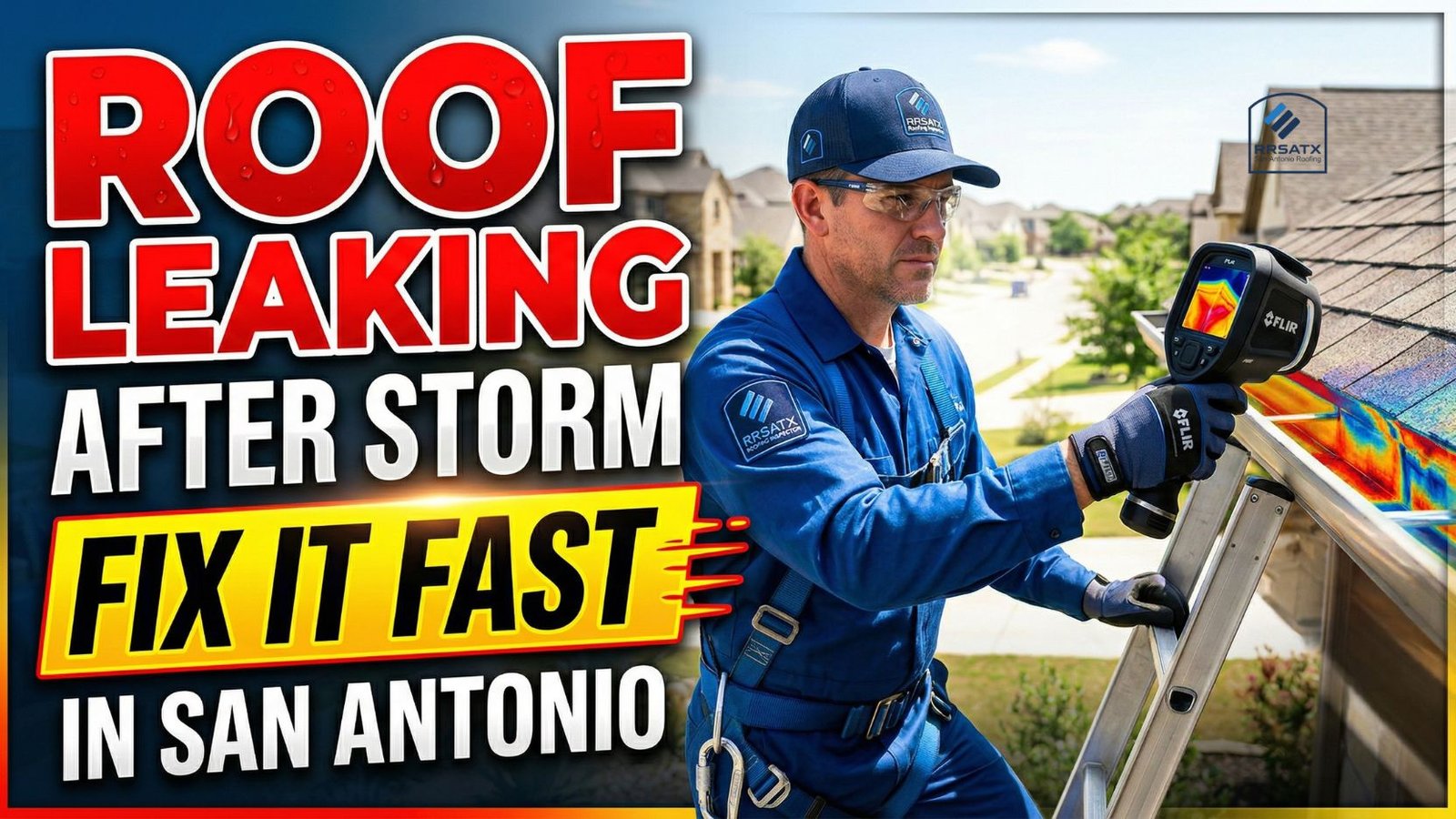
For San Antonio property owners, a roof leak after a storm usually means wind-lifted shingles, flashing failure, hail damage, clogged drainage, or water entering through a vulnerable roof penetration. The fastest and safest response is to contain the interior leak, document the damage, avoid climbing on a wet roof, and schedule a professional roof inspection as soon as possible.
This matters in San Antonio because storms here can bring hail, strong wind, intense rain, and sudden pressure changes that expose weak points fast. For homeowners, commercial owners, buyers, sellers, and insurance claim situations, a quick response can reduce interior damage and make the repair or replacement decision much clearer.
What Should You Do First If Your Roof Is Leaking After A Storm?
Your first priority is to limit interior damage and stay safe. Do not start with a roof climb. Start inside the property.
Take these steps immediately:
- Move furniture, electronics, and valuables away from the leak
- Place a bucket or container under dripping water
- Use towels or plastic sheeting to protect flooring
- Relieve any bulging ceiling area carefully if water is trapped
- Take photos of the leak, ceiling stains, and any visible storm impact
- Check the attic, if safe, for active water entry
- Call for a professional roof inspection
If water is close to light fixtures or electrical systems, turn off power to the affected area if you can do so safely.
Key takeaway: The fastest way to “fix” a storm leak in the moment is damage control inside the building and fast documentation, not risky DIY work on a slick roof.
Why Does A Roof Start Leaking After A Storm?
Most post-storm leaks happen because the storm did not create the weakness from scratch; it exposed a part of the roof that was already vulnerable. Heavy rain then finds its way through.
Common causes in San Antonio include:
- Wind-lifted or missing shingles
- Damaged flashing around chimneys, walls, and vents
- Hail impact that cracks shingles or membranes
- Loose vent boots or roof penetrations
- Clogged gutters causing water backup
- Aging roofing materials weakened by Texas heat
- Flat roof ponding on commercial buildings
A roof may look fine from the ground but still have hidden storm damage.
Can You Temporarily Stop A Roof Leak Yourself?
Yes, in some cases you can reduce interior damage temporarily, but most storm-related roof leaks still need professional repair. Temporary action is not the same as a permanent fix.
Safe short-term steps include:
- Using a tarp only if it can be installed safely and correctly
- Placing buckets and absorbent materials indoors
- Drying wet areas quickly to reduce mold risk
- Removing soaked insulation if advised by a professional
- Keeping records of all damage for insurance
Avoid these mistakes:
- Climbing onto a wet or storm-damaged roof
- Smearing roofing cement over unknown problem areas
- Ignoring attic moisture because the drip “stopped”
- Waiting several days to report visible storm damage
Key takeaway: Temporary leak control helps, but post-storm roof leaks almost always need inspection to confirm whether repair or replacement is the right solution.
How Do You Know If The Storm Damage Is Minor Or Serious?
Minor damage is usually isolated and repairable. Serious damage affects multiple parts of the roof, causes interior water intrusion, or compromises the roof system.
Here is a quick comparison:
| Sign | More Likely Minor Repair | More Likely Serious Damage |
| Leak source | One isolated area | Multiple areas or unknown source |
| Shingle condition | A few displaced shingles | Widespread lifting, cracking, or missing shingles |
| Interior damage | Small drip or stain | Ceiling bubbling, soaked drywall, attic saturation |
| Roof age | Newer roof | Older roof nearing end of life |
| Storm impact | Light wind/rain | Hail, high wind, or debris strike |
If your roof is older, a storm may push it past the point where repairs make financial sense.
What Storm Damage Should Homeowners In San Antonio Look For?
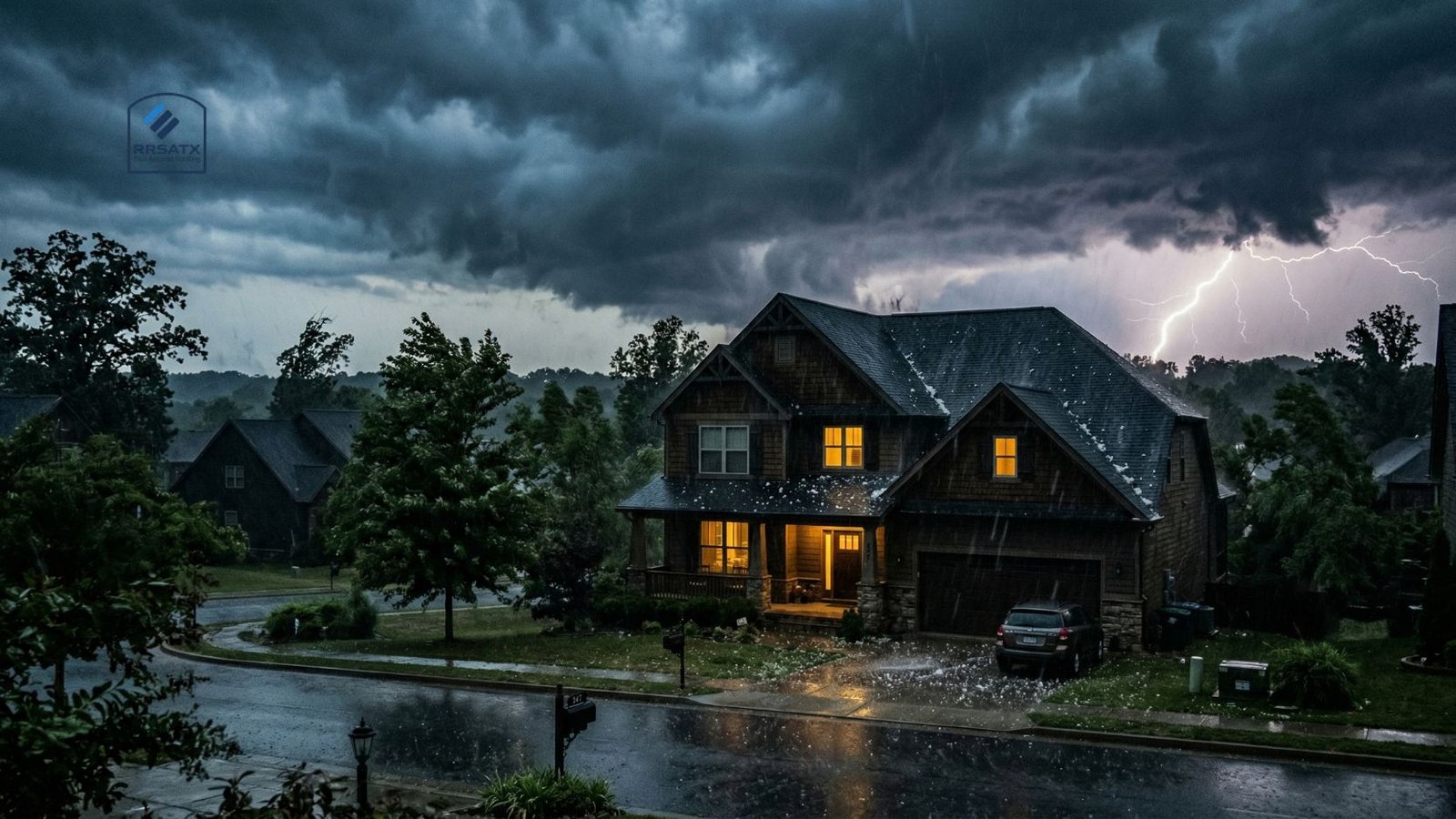
Look for visible roof changes, interior moisture, and signs of impact around the home. In San Antonio, hail and wind often damage more than just shingles.
Check for:
Exterior Warning Signs
- Missing shingles
- Curling or creased shingles
- Exposed underlayment
- Denting on metal vents or flashing
- Gutter damage
- Debris on the roof
- Fallen branches
Interior Warning Signs
- Ceiling stains
- Dripping water
- Damp attic insulation
- Musty smell
- Peeling paint near the ceiling
- Warped drywall
Commercial Roof Warning Signs
- Ponding water
- Membrane punctures
- Open seams
- Leaks near HVAC units or penetrations
Properties near Monterey Street, Nakoma Drive, and surrounding San Antonio neighborhoods may all face the same regional storm patterns, but roof age and material condition often determine how badly a storm affects the structure.
Should You File An Insurance Claim For A Leaking Roof After A Storm?
You should consider filing a claim if the leak is tied to a recent covered storm event and the damage appears significant. Documentation is critical.
A claim may make sense if:
- The leak started right after hail or wind
- There is visible exterior damage
- Interior finishes were damaged
- The repair scope appears larger than a simple patch
- A roofing professional identifies storm-related impact
Before filing, gather:
- Date of the storm
- Photos and videos
- Notes on when the leak started
- Interior damage records
- A professional inspection report, if available
Not every leak leads to a covered claim, especially if the roof failed due to age or lack of maintenance. But a documented inspection helps clarify that.
How Fast Should A Roof Leak Be Repaired After A Storm?
A storm-related roof leak should be addressed immediately, even if the drip seems small. Water can travel far from the entry point and continue damaging insulation, decking, ceilings, and framing.
Fast action matters because delays can lead to:
- Mold growth
- Rotting wood
- Damaged insulation
- Ceiling collapse
- Higher repair costs
- Insurance complications due to worsening loss
In hot and humid conditions, moisture problems can escalate quickly.
When Is A Roof Repair Enough, And When Is Replacement The Better Option?
Repair is enough when damage is limited and the roof still has useful life. Replacement is better when damage is widespread, the roof is aging, or repeated leaks suggest system failure.
A repair may be enough if:
- Damage is isolated to one section
- Flashing or one penetration failed
- The roof is relatively new
- No major decking damage is found
Replacement may be better if:
- The roof is 15–20+ years old
- There are multiple leak points
- Shingles are brittle or storm-fractured across several slopes
- Previous repairs have not held
- Insurance scope supports larger replacement work
Key takeaway: If a storm reveals several weak areas at once, replacement is often the more reliable long-term fix.
Who Should You Call For A Leaking Roof In San Antonio?
Call a local roofing contractor who handles storm inspections, leak diagnostics, and written repair or replacement scopes. Local knowledge matters because San Antonio roofs face specific weather stress, attic heat issues, and insurance-related storm conditions.
When choosing help, look for:
- A local business presence
- Proof of insurance
- Storm damage inspection experience
- Clear written estimates
- Experience with residential or commercial roof systems relevant to your property
FAQs
Can A Roof Leak Stop On Its Own After The Storm Ends?
The dripping may stop, but the roof problem usually does not. Water can remain trapped in underlayment, decking, insulation, or drywall.
Is A Small Roof Leak After A Storm An Emergency?
Yes, it should be treated urgently. Even a small leak can lead to hidden moisture damage and mold if ignored.
Should I Tarp My Roof After A Storm?
Only if it can be done safely. Improper tarping can be dangerous and may not stop water entry if the leak path is hidden.