
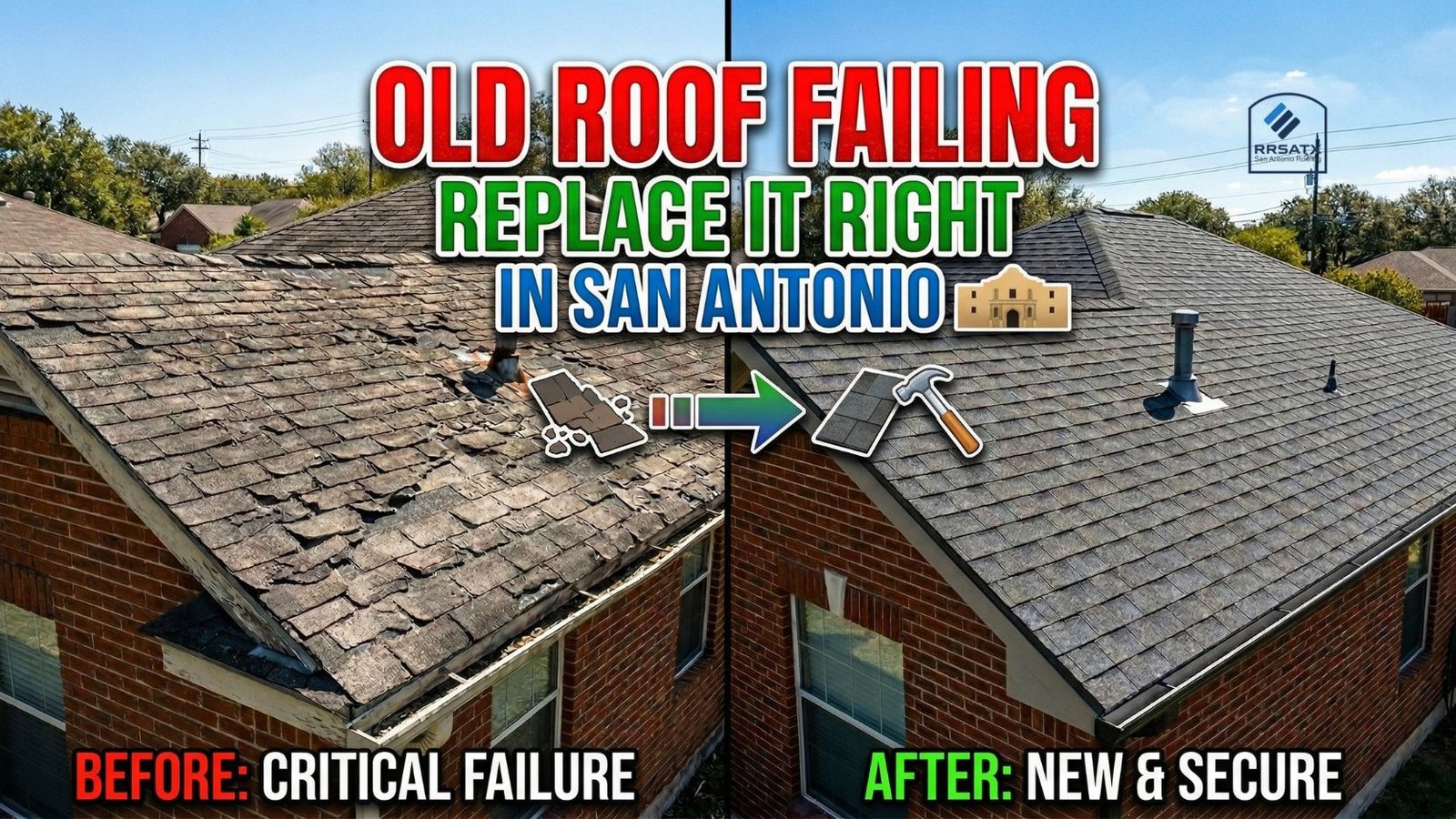
If your old roof is failing, the right move is usually to replace it before leaks, decking damage, mold, or storm exposure turn a roofing problem into a structural and interior repair problem. In San Antonio, an aging roof should be replaced the right way by evaluating roof age, material condition, ventilation, flashing, underlayment, and storm history, not just by swapping shingles.
This guide is built for San Antonio homeowners, property owners, and commercial decision-makers dealing with roofs that are 15–20+ years old, actively leaking, or showing visible wear. In South Texas, heat, UV exposure, hail, wind, and poor attic ventilation can cause old roofs to fail faster than owners expect.
How Do You Know An Old Roof Is Actually Failing?
An old roof is failing when it no longer protects the structure consistently and repair issues keep returning. Age matters, but condition matters more.
Common signs of roof failure include:
- Repeated leaks
- Curling, cracked, or missing shingles
- Granule loss in gutters
- Soft spots or sagging areas
- Stains on ceilings or walls
- Mold or moisture in the attic
- Loose flashing around vents, chimneys, or valleys
- Storm damage that exposed weak areas
A roof does not have to collapse to be failing. If it allows water in, loses materials in wind, or shows wear across multiple sections, it is already underperforming.
Key takeaway: A failing roof is not just “old.” It is a roof that can no longer reliably keep water and heat where they belong.
How Old Is Too Old For A Roof In San Antonio?
For many asphalt roofs in San Antonio, 15–20 years is the range where replacement becomes more likely, especially after storms or prolonged heat exposure. Some roofs last longer, but local conditions can shorten service life.
Here is a useful general guide:
| Roof Type | Typical Lifespan | San Antonio Risk Point |
| 3-tab asphalt shingles | 15–20 years | 15+ years |
| Architectural shingles | 20–30 years | 18–25 years depending on exposure |
| Metal roofing | 40+ years | Depends on fasteners, coating, and installation |
| Tile roofing | 40+ years | Underlayment often needs earlier replacement |
| Flat/commercial membrane | 15–30 years | Depends on drainage, seams, and ponding |
South Texas sun can dry out roofing materials, reduce flexibility, and make older shingles more vulnerable to wind and hail impact.
Should You Repair An Old Roof Or Replace It?
If the roof is old and failing in more than one area, replacement is usually the better long-term decision. Repairs make sense when the damage is isolated and the rest of the roof still has useful life.
Repair may still work if:
- The roof is relatively younger
- Damage is confined to one section
- Flashing or one penetration failed
- The decking underneath is still sound
Replacement is usually smarter if:
- The roof is near the end of its lifespan
- Leaks have happened more than once
- Shingles are brittle, curling, or missing in several areas
- Previous repairs have not lasted
- Matching old materials is difficult
- You are preparing to sell or refinance
Key takeaway: If every repair feels like buying a little more time, you are probably already at replacement stage.
What Does It Mean To Replace A Roof The Right Way?
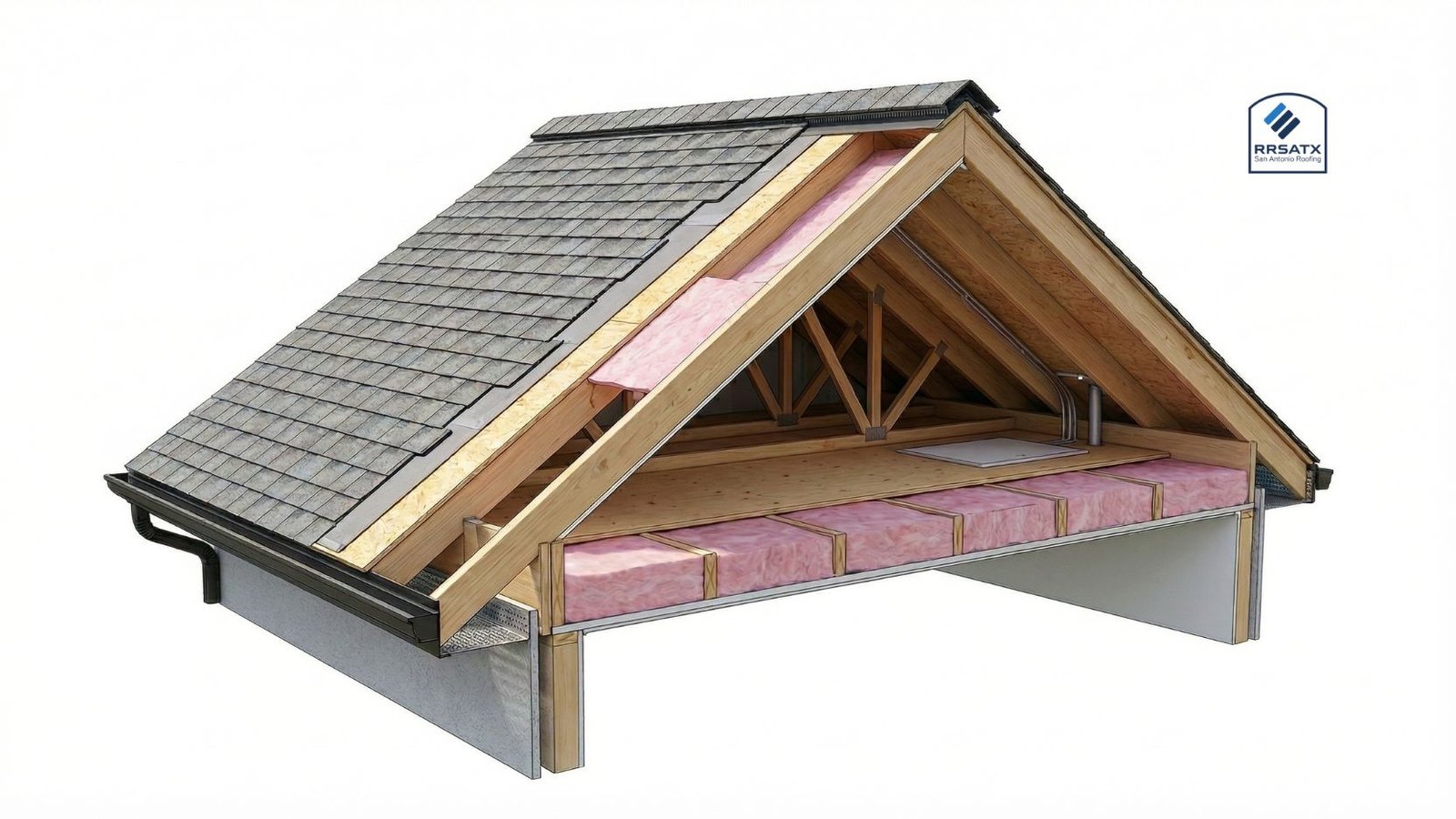
Replacing a roof the right way means replacing the full roofing system, not just the visible top layer. A quality replacement addresses everything that affects performance and lifespan.
A proper roof replacement should evaluate:
- Shingles or roofing membrane
- Underlayment
- Flashing
- Drip edge
- Ventilation
- Roof decking condition
- Pipe boots and penetrations
- Ridge caps and accessories
- Drainage details on low-slope roofs
If a contractor only talks about shingle color and price, that is not enough. The system below the shingles often determines whether the new roof performs well.
Why Does Ventilation Matter So Much When Replacing An Old Roof?
Ventilation matters because poor attic airflow can shorten roof life, raise cooling costs, and trap moisture. In San Antonio, this is especially important because attic temperatures can become extreme.
Proper ventilation helps by:
- Reducing excess attic heat
- Limiting moisture buildup
- Protecting decking and underlayment
- Improving shingle performance
- Supporting warranty compliance in some systems
An old roof often fails faster when hot air has nowhere to escape. Replacing the roof without addressing ventilation can limit the benefit of the new system.
What Should Homeowners In San Antonio Expect During An Old Roof Replacement?
A roof replacement should start with a full inspection and a clear written scope of work. The contractor should explain what will be removed, what will be replaced, and what happens if hidden damage is found.
A typical process includes:
- Inspection of current roof condition
- Material and system recommendation
- Written estimate and project scope
- Tear-off of old roofing materials
- Decking inspection and replacement if needed
- Installation of underlayment, flashing, and roofing materials
- Ventilation and accessory updates
- Cleanup and final walkthrough
For older homes and buildings in San Antonio, hidden deck damage is not uncommon if leaks have been active for some time.
Can A Failing Old Roof Affect A Home Sale, Insurance, Or Property Value?
Yes, an old failing roof can create problems in real estate transactions, insurance underwriting, and property value perception. Buyers, sellers, and insurers all pay close attention to roof condition.
A failing roof can:
- Trigger buyer concerns during inspection
- Delay or complicate closing
- Reduce negotiating power
- Limit insurance options
- Increase future maintenance costs
- Lower confidence in the property overall
For sellers, replacing a failing roof before listing can remove a major objection. For buyers, identifying roof age and replacement needs early can help avoid surprise expenses.
What Should Commercial Property Owners Watch For With Aging Roofs?
Commercial roofs often fail differently than residential roofs. Instead of curling shingles, the warning signs are usually seam failure, ponding water, punctures, and trapped moisture.
Commercial owners should watch for:
- Ponding water after rain
- Soft or wet insulation
- Membrane cracks or blisters
- Open seams
- Leaks around rooftop equipment
- Repeated patch repairs
- Interior staining at ceiling tiles
Low-slope roofs require careful drainage and membrane evaluation, especially after heavy San Antonio rain events.
How Do You Replace An Old Roof Without Overspending?
The best way to control cost is to replace the roof before damage spreads and to compare detailed scopes, not just prices. Budget-conscious owners should focus on long-term value.
To avoid overspending:
- Replace before structural damage grows
- Get 2–3 written estimates
- Compare materials, flashing, ventilation, and warranty details
- Ask what is included if decking is damaged
- Avoid cheap bids that skip critical components
- Consider lifecycle value, not just upfront cost
Key takeaway: The cheapest roof replacement can become the most expensive if it leaves ventilation, flashing, or water protection unresolved.
FAQs
Can I Wait Another Year If My Old Roof Is Only Leaking A Little?
Usually that is risky. Small leaks often lead to larger decking, insulation, and interior damage over time.
Is It Worth Replacing A 20-Year-Old Roof Before Selling?
Often, yes. A new roof can reduce inspection issues and improve buyer confidence, especially if the old roof is visibly worn.
Will Insurance Pay For An Old Roof Replacement?
Not usually for age alone. Insurance may help if a covered storm event caused damage, but normal wear and age-related decline are typically not covered.