
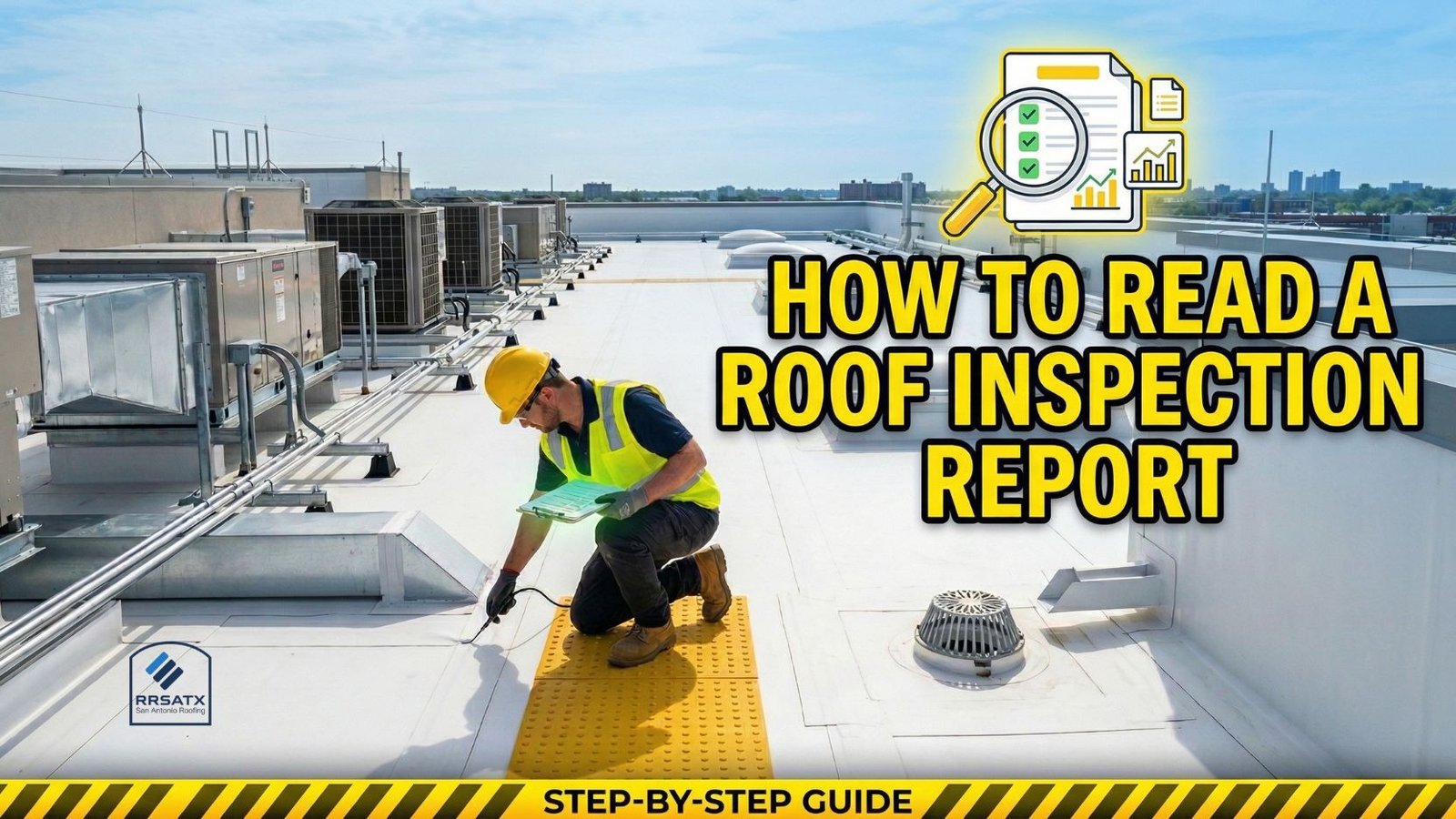
At RRSATX: San Antonio Roofing Company, roof inspections are a regular part of helping property owners make repair, replacement, maintenance, and insurance decisions. With decades of roofing experience represented within the company and day-to-day exposure to San Antonio’s hail, wind, heat, and heavy rain, we know that many homeowners receive inspection reports they do not fully understand.
To read a roof inspection report, focus first on the roof’s overall condition, documented damage, leak risk, remaining service life, and the inspector’s recommended next steps. The most important sections usually tell you whether the roof needs immediate repair, monitoring, maintenance, or full replacement.
What Is The Most Important Part Of A Roof Inspection Report?
The most important part is the summary of condition and recommendations. That section tells you what the inspector believes matters most right now.
Start by looking for:
- Overall roof condition
- Active leak concerns
- Storm-related damage
- Structural concerns
- Repair recommendations
- Replacement recommendation, if any
If the report contains a rating system such as good, fair, poor, or failed, do not stop there. Read the explanation behind that rating.
Key takeaway: A “fair” roof may still have urgent flashing or leak issues, while a “poor” roof may still be temporarily repairable depending on the damage pattern.
What Sections Are Usually Included In A Roof Inspection Report?
Most roof inspection reports include material condition, visible damage, flashings, penetrations, drainage, interior signs of moisture, and photos. Commercial reports may also include membrane seams, ponding, and rooftop equipment areas.
Common sections include:
- Roof type and material
- Approximate age, if known
- Surface condition
- Flashing condition
- Penetrations such as vents, skylights, or chimneys
- Drainage condition
- Interior water intrusion signs
- Storm damage notes
- Photos and inspector comments
- Recommended action steps
Typical Roof Inspection Report Sections
| Section | What it tells you |
| Roof material | What system is installed |
| Condition notes | Visible wear or damage |
| Flashing and penetrations | Common leak points |
| Drainage | Water-shedding performance |
| Interior findings | Signs of moisture entry |
| Recommendations | What to do next |
If one of these sections is missing, the report may be less useful for decision-making.
How Do You Understand Roof Condition Terms Like Fair, Poor, Or Serviceable?
Roof condition terms are only helpful when they are supported by details. Words like “fair” or “poor” should never be treated as complete answers by themselves.
Here is a practical way to interpret common terms:
- Good: Roof appears functional with no major visible concerns
- Serviceable: Roof is still performing but may have age or wear
- Fair: Roof has noticeable wear and likely needs repair or close monitoring
- Poor: Roof has significant issues and may be nearing replacement
- Failed or compromised: Roof is not reliably protecting the structure
Always ask what specific observations support the rating, such as:
- Missing shingles
- Granule loss
- Open seams
- Flashing separation
- Ponding water
- Soft decking
- Repeated leak evidence
What Damage Findings In A Roof Inspection Report Matter Most?
The most important damage findings are the ones that affect waterproofing, structural integrity, or near-term roof life. Cosmetic issues matter less than problems that allow water in.
Pay close attention to findings involving:
- Active leaks
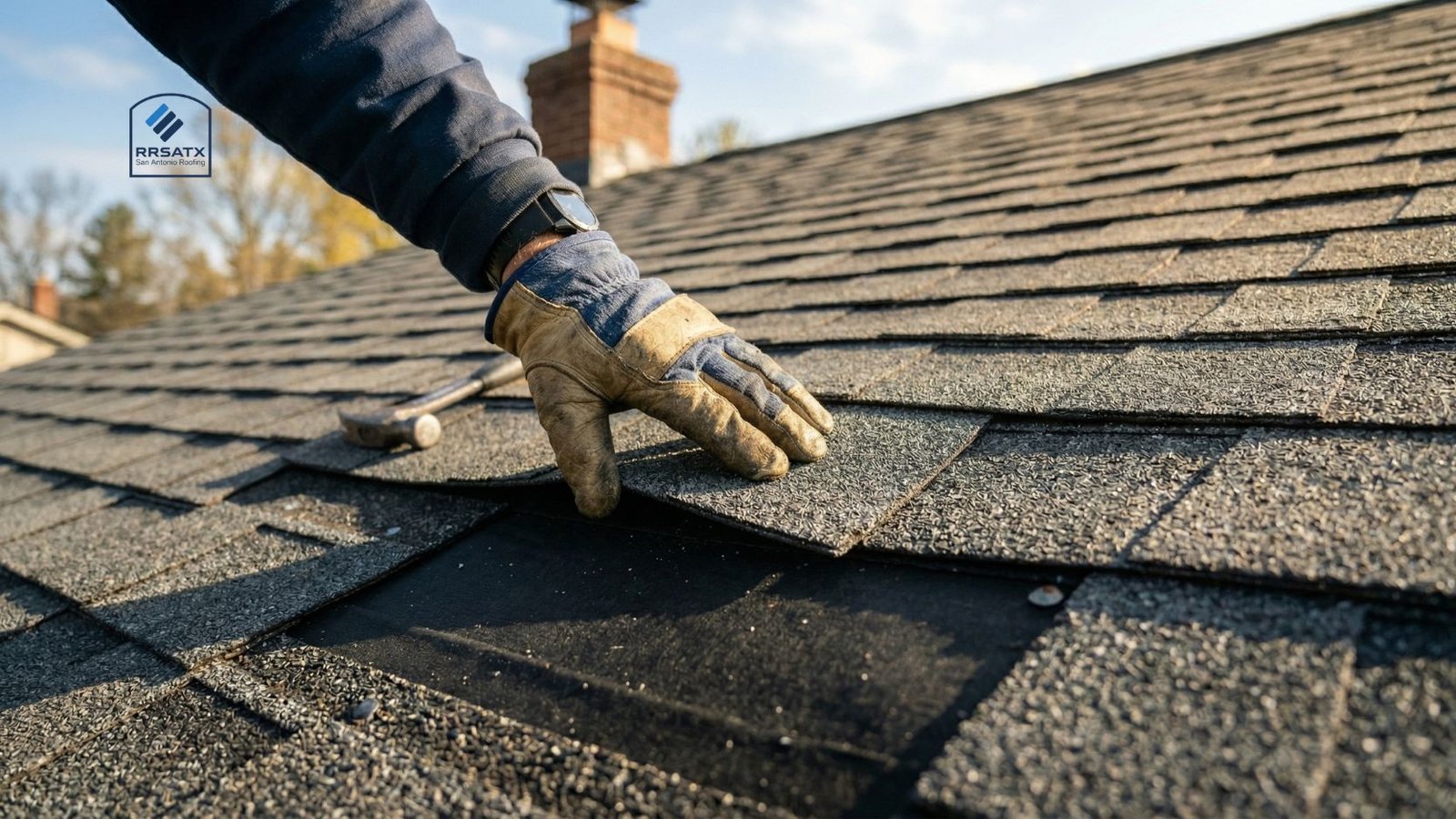
- Missing or lifted shingles
- Flashing failure
- Soft or sagging decking
- Hail impact
- Wind damage
- Exposed underlayment
- Open seams on flat roofing
- Ponding water
- Mold or moisture in the attic
High-Priority VS Lower-Priority Findings
| Finding | Priority |
| Active leak | High |
| Sagging decking | High |
| Flashing separation | High |
| Open roof membrane seam | High |
| Minor surface discoloration | Lower |
| General weathering with no leak | Moderate |
| Small isolated cosmetic marks | Lower |
Key takeaway: Not every defect has the same urgency. Focus first on anything that can lead to water intrusion or structural damage.
How Do You Tell If The Report Points To Repair Or Replacement?
You can usually tell by looking at the scope, spread, and severity of the issues documented. If the report shows isolated problems, repair may be reasonable. If it shows widespread deterioration, replacement may be the better long-term choice.
Signs the report leans toward repair:
- Damage limited to one section
- Flashing issue in a localized area
- Minor storm damage
- Isolated missing shingles
- No major structural concerns
Signs the report leans toward replacement:
- Roof is near end of life
- Repeated repairs have already failed
- Damage is widespread across multiple slopes
- Significant granule loss or brittle materials
- Multiple active leaks
- Structural concerns or sagging
If the recommendation is not clear, ask the contractor to explain:
- Why repair is or is not practical
- How long a repair is expected to last
- Whether replacement is based on age, damage, or both
What Should You Look For In The Photos And Notes?
Photos and notes should support the conclusions in the report. A useful roof inspection report does not just make claims. It shows what the inspector saw.
Review whether the photos clearly document:
- Damaged shingles or panels
- Flashing gaps
- Leak staining
- Ponding water
- Penetration wear
- Storm impact
- Drain blockage
- Roof edge issues
The notes should explain:
- Where the issue is located
- Why it matters
- Whether it appears recent or long-term
- What action is recommended
If the report says the roof is in poor condition but provides few images or vague notes, ask for clarification.
How Should Buyers, Sellers, And Insurance Claim Homeowners Read The Report Differently?
The same report may matter differently depending on why it was ordered. Your next step depends on your goal.
For homeowners:
- Focus on leak risk, urgency, and repair budget
For buyers:
- Focus on remaining roof life, hidden damage, and likely future cost
For sellers:
- Focus on issues that may affect negotiations or delay closing
For insurance-related cases:
- Focus on storm-damage documentation, date-related context, and visible cause of damage
For commercial owners:
- Focus on drainage, membrane condition, penetrations, and maintenance planning
What Should You Do After Reading A Roof Inspection Report?
After reading the report, you should separate issues into urgent, short-term, and longer-term items. Then ask for a clear explanation of options.
A practical next-step process is:
- Identify urgent leak or structural concerns
- Review whether repair is possible
- Compare repair versus replacement value
- Save photos and documentation
- Use the report for maintenance, sale, or insurance purposes
If you are in San Antonio and need local inspection help or clarification, RRSATX: San Antonio Roofing Company serves from:
- 4324 Monterey St, San Antonio, TX 78237, USA
- 318 E Nakoma Dr #210, San Antonio, TX 78216
FAQs
What Does “Serviceable Condition” Mean On A Roof Report?
It usually means the roof is still functioning, but it may show wear, age, or smaller issues that should be monitored or repaired.
Should I Worry If The Report Mentions Flashing Damage?
Yes. Flashing problems are a common cause of leaks and should not be ignored.
Can A Roof Inspection Report Help With An Insurance Claim?
Yes. A detailed report with photos and documented storm-related findings can be useful when reviewing roof condition and damage.