
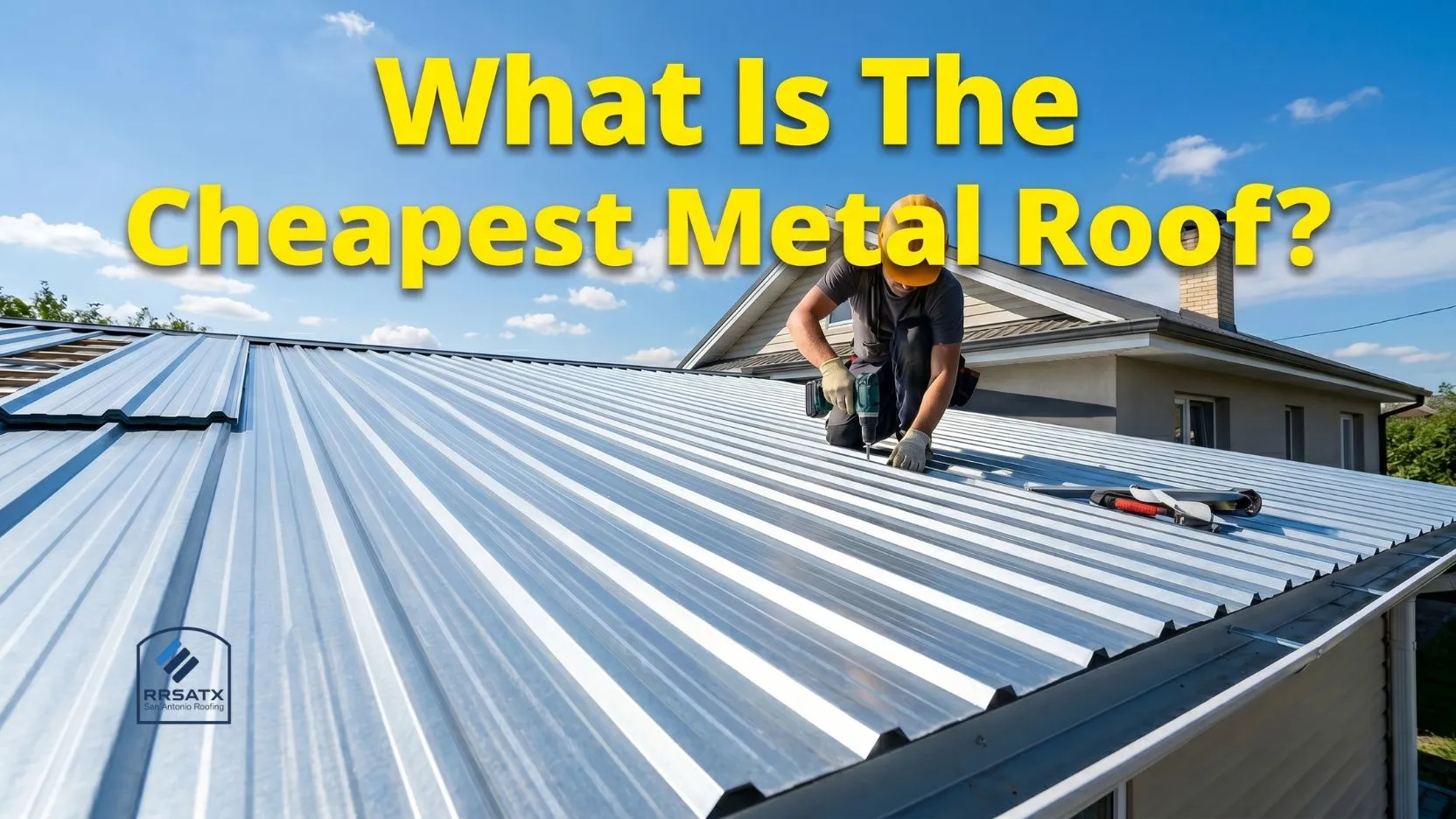
The cheapest metal roof for most San Antonio jobs is corrugated Galvalume steel or exposed-fastener R-panel—not bare steel and not copper. Installed in 2026, budget corrugated often lands around $3.50 to $5.50 per sq ft; R-panel is close behind. That puts metal only slightly above mid-grade asphalt while lasting two to three times longer.
“Cheapest at the supply house” and “best value on your house” are different decisions. Bare galvanized panels look cheap on a quote and fail early in humid South Texas sun. Galvalume-coated corrugated or R-panel costs a little more and routinely delivers 40 to 60 years.
On a 1,500 sq ft San Antonio roof, a solid budget metal install often totals roughly $5,000 to $12,000 depending on gauge, paint, and tear-off. Landlords and homeowners who want metal durability without standing-seam pricing live in this band.
By the end of this guide, you’ll know which budget metal types win on price, what San Antonio installed ranges look like in 2026, which upgrades (gauge, Kynar, underlayment) are worth it, and which bid red flags turn a “cheap” roof into a 12-year problem.
Table of Contents
- Corrugated Steel: The Lowest Entry Price
- R-Panel: Texas Budget Workhorse
- Budget Standing Seam and Stone-Coated
- Where Cheap Metal Bids Go Wrong
- Cheapest Metal Types Compared
- Common Questions About Cheap Metal Roofs
- Next Steps for San Antonio Homeowners
Corrugated Steel: The Lowest Entry Price
Corrugated Galvalume is the least expensive metal roofing material by the square foot. The wave profile stiffens thin steel so 29-gauge panels stay workable on barns, sheds, ADUs, and budget residential roofs.
San Antonio installed ranges (materials + labor, typical):
- Materials only: about $0.70–$1.20 / sq ft
- Installed corrugated Galvalume: about $3.50–$5.50 / sq ft
- 1,500 sq ft home: roughly $5,000–$8,000
- 2,000 sq ft home: roughly $8,000–$13,000
- Upgrade 29-gauge → 26-gauge: about +$0.50 / sq ft (better hail dent resistance)
Galvalume-coated panels last about 40–60 years; painted finishes often 30–50 with maintenance. Bare steel without Galvalume is a false economy in our climate.
Practical rule: never accept “metal panels” on a quote—require Galvalume (or better) and the gauge in writing.
Thin corrugated can be louder in heavy rain. Fine for garages and outbuildings; on a primary residence or rental, ask about rigid foam insulation board (~$800–$1,500) to cut noise and add R-value.
R-Panel: Texas Budget Workhorse
R-panel / PBR is the most common budget metal roof in Texas. Low-profile ribs look more finished than classic corrugated at similar cost. Minimum slope is typically 3:12. Exposed hex-head screws with EPDM washers hold the panels; plan a fastener check every 10–15 years.
Installed in San Antonio: about $4.00–$6.50 / sq ft.
- 29-gauge Galvalume on 1,500 sq ft: roughly $6,000–$10,000
- 26-gauge Kynar-painted on 1,500 sq ft: roughly $8,000–$14,000
Kynar 500 costs more than SMP paint but holds color under Texas UV; SMP often chalks in 10–15 years. For a house or long-hold rental you will see from the street, Kynar is the upgrade that pays.
Practical rule: for a San Antonio primary roof, budget for 26-gauge and a documented paint system—not the absolute cheapest 29-gauge SMP bid.
Budget Standing Seam and Stone-Coated
Snap-lock standing seam (entry standing seam) hides fasteners in the seams. No face screws means less washer maintenance. Installed: about $7–$12 / sq ft; 1,500 sq ft often $10,000–$18,000; 2,000 sq ft with Kynar roughly $15,000–$25,000. Lifespan: 50–70 years. Use 26-gauge minimum (24-gauge preferred) and floating clips to limit oil-canning.
Stone-coated steel mimics tile, shake, or shingle and helps with HOAs that dislike exposed ribs. Installed: about $6.50–$11 / sq ft; 1,500 sq ft often $10,000–$22,000 depending on profile. Lifespan: 40–70 years. Get HOA approval in writing with a sample before ordering.
Where Cheap Metal Bids Go Wrong
Three cuts ruin budget metal in San Antonio: wrong gauge, wrong coating, unqualified install.
- 29-gauge on a main house dents under golf-ball hail and can crack coatings; 26-gauge usually costs only $0.40–$0.60 / sq ft more.
- Bare galvanized without Galvalume can lose protection in 15–20 years of Texas UV.
- Skipping synthetic underlayment to save $200–$400 turns a panel leak into a deck problem.
- SMP instead of Kynar can save $1,000–$3,000 now and cost more when you recoat or replace faded panels at year 12–15.
Bid red flags: no gauge or coating named; underlayment optional; trim/ridge listed as add-ons; no insurance or license proof; workmanship warranty missing.
Cheapest Metal Types Compared
All ranges below are San Antonio 2026 installed estimates for a standard residential roof with tear-off of one asphalt layer, synthetic underlayment, and standard trim.
| Metal roof type | Installed cost / sq ft | Expected lifespan | Best for | Main limitation |
|---|---|---|---|---|
| Corrugated Galvalume, 29-ga | $3.50–$5.50 | 40–60 yrs | Garages, sheds, rural budget homes | Noise; dents in big hail |
| Corrugated Galvalume, 26-ga | $4.00–$6.00 | 40–60 yrs | Homes in hail-prone areas | Still noisy; exposed fasteners |
| R-panel 29-ga Galvalume | $4.00–$6.50 | 40–60 yrs | Budget residential / rentals | Fastener maintenance; SMP fade |
| R-panel 26-ga Kynar | $5.50–$8.00 | 50–70 yrs | Best exposed-fastener value | Fastener checks every 10–15 yrs |
| Snap-lock standing seam | $7.00–$12.00 | 50–70 yrs | Low-maintenance long holds | Higher upfront cost |
| Stone-coated steel | $6.50–$11.00 | 40–70 yrs | HOAs; traditional look | Costs more than R-panel |
Practical rule: require panel gauge, coating, paint system, and underlayment on every written quote before you compare prices.
Common Questions About Cheap Metal Roofs
What is the cheapest metal roof for a San Antonio house?
29-gauge corrugated Galvalume at about $3.50–$5.50 / sq ft (~$5,000–$8,000 on 1,500 sq ft). For a primary residence in our hail climate, most experienced crews recommend 26-gauge corrugated or R-panel instead.
Is cheap metal better than asphalt?
Usually yes for owners who stay. Budget metal at $4–$6 / sq ft often outlasts mid-grade asphalt (15–20 years here) by 2–3×. If you sell in 5–7 years, asphalt may recoup more of its cost at closing.
How does metal compare to shingles on price?
Mid-grade asphalt: about $3.00–$4.50 / sq ft ($4,500–$6,750 on 1,500 sq ft). Budget metal: $3.50–$6.50 / sq ft. Premium architectural shingles can hit $5+ / sq ft—same band as budget metal with half the life.
Galvalume vs galvanized?
Galvanized is zinc over steel. Galvalume is aluminum-zinc alloy and resists corrosion longer in San Antonio, especially at cut edges. Spec Galvalume for any long-life Texas roof.
Is cheap metal loud in the rain?
It can be—especially 29-gauge without insulation board. With a solid deck and attic insulation, the difference vs asphalt is often smaller than people fear. Foam board under panels is the quiet fix.
Best cheap metal for a San Antonio rental?
26-gauge R-panel with Kynar 500—best balance of cost, hail resistance, appearance, and low attention for 20+ years. In HOA neighborhoods, stone-coated steel is the next step up.
Next Steps for San Antonio Homeowners
Decide your minimum lifespan and gauge (26-gauge for most homes), check HOA rules, and collect itemized quotes that name gauge, coating, paint, underlayment, trim, tear-off, and workmanship warranty (at least two years).
If you want a budget-smart San Antonio metal roof without cutting the specs that matter—RRSATX can help. Call 713-504-2341 or schedule online.