Why are metal roofs so expensive

Why Are Metal Roofs So Expensive?

Home 9 Metal Roofing San antonio 9 Why Are Metal Roofs So Expensive?
Why Are Metal Roofs So Expensive? Complete Cost Breakdown | Affordable Roofing Contractors San Antonio
Metal Roofing Cost Guide San Antonio, TX

Metal roofs cost two to three times more than asphalt shingles upfront. This guide breaks down every cost driver, compares materials side by side, and explains what you actually get for the price over a 50-year lifespan.

Why metal roofs cost more Metal roof price breakdown San Antonio Cost vs value · 50-year lifespan Steel · Aluminum · Copper · Stone-coated Updated 2026
T
Ted
With over 30 years of residential and commercial metal roofing experience across San Antonio and Bexar County, our crews have installed and replaced thousands of metal roofs in the Texas climate. Every guide we publish comes from real on-the-ground experience with Texas metal roofing conditions, not generic contractor advice.
affordableroofingcontractorssanantonio.com · Licensed and Insured · $2M Liability Coverage · 100+ Five-Star Reviews
$8-25/sqft
Installed cost range for metal roofing in San Antonio, depending on material and style
2-3x
Higher upfront cost compared to a standard asphalt shingle roof of the same size
50+yrs
Expected lifespan of a properly installed metal roof versus 20 to 25 years for asphalt
85%
Average resale value return on a metal roof installation, one of the highest in home improvement

If you have gotten a quote for a metal roof on your San Antonio home, the number probably stopped you cold. A metal roof costs significantly more upfront than the asphalt shingles most homes in Texas use, and for many homeowners, the first question is a fair one: what exactly makes it so expensive?

The short answer is that you are paying for raw material quality, specialized installation labor, a manufacturing process that turns raw steel or aluminum into a precision-engineered product, and a system that is genuinely built to last 50 years or longer through San Antonio heat, hailstorms, and high-wind events. But that short answer does not help you make a smart decision, so this guide breaks it all down.

We cover every factor that drives up the cost of a metal roof, what different metal roofing materials actually cost in San Antonio in 2026, how those costs compare to asphalt shingles over a 30-year window, and what questions to ask any contractor before you sign a contract.

The principle that makes every metal roofing cost decision clearer: upfront price and lifetime cost are not the same number

Most San Antonio homeowners compare metal roofing to asphalt shingles by looking at the installation quote alone. That comparison misses the full picture. Asphalt shingles in San Antonio typically need replacement every 20 to 25 years, and they require ongoing maintenance, repairs, and premature replacement after major hail events. A metal roof installed correctly today may outlast three asphalt shingle replacements. When you run the math across a 50-year window, the numbers look very different than they do at the contractor's quote stage.

Why are metal roofs so expensive?
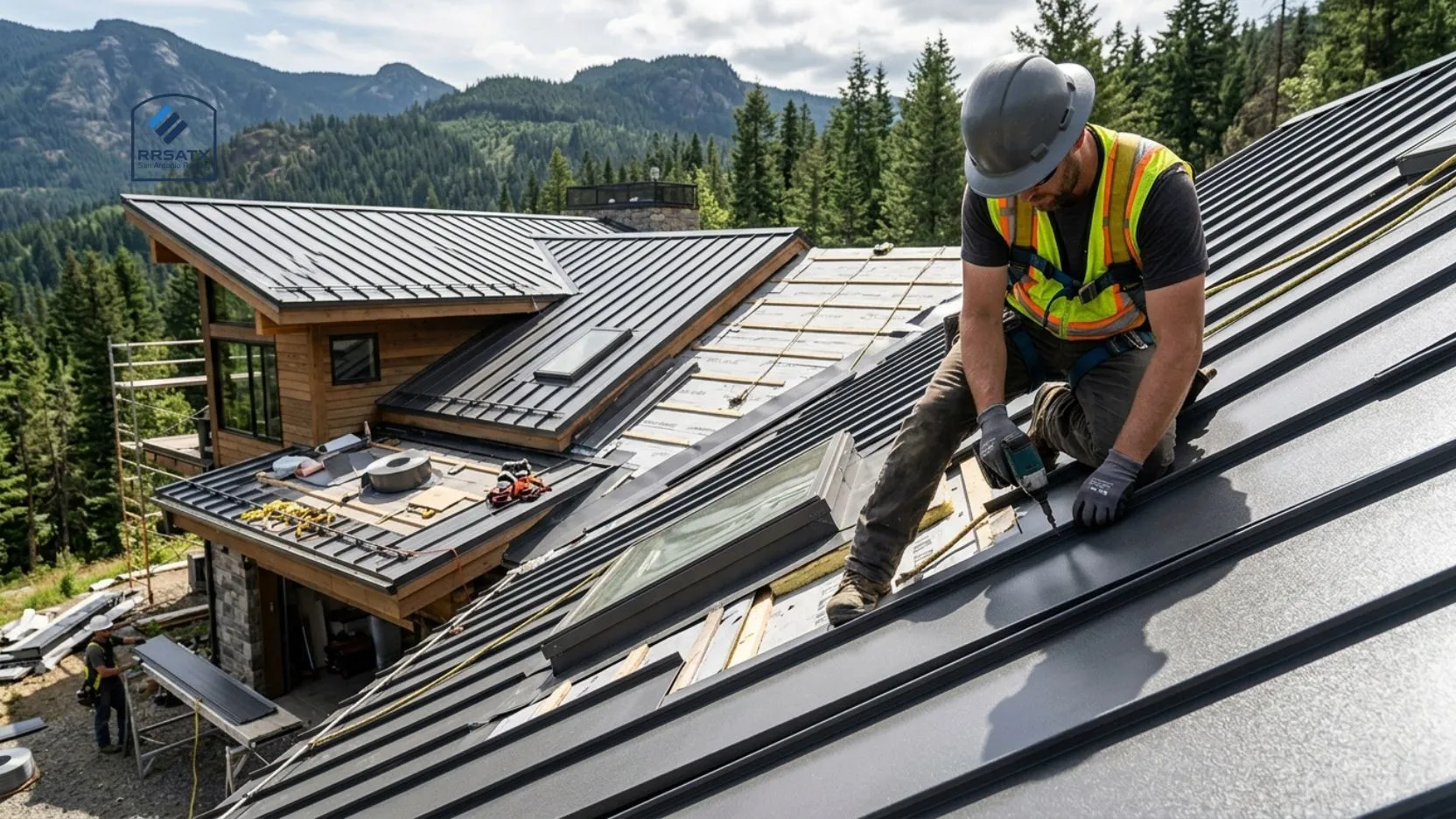
A standing seam metal roof installed on a San Antonio home. The seamless vertical panels and concealed fasteners are part of what drives the higher installation cost compared to exposed-fastener systems.
● ● ●
The six cost drivers behind metal roofing prices
Every reason metal roofs cost more than asphalt shingles, explained

Metal roofing is not expensive because contractors are padding their margins. The price reflects genuine cost at every stage of the supply chain, from raw material to manufacturing to the specialized installation crew who puts it on your roof. Here is exactly where the money goes.

01
Raw material cost: steel, aluminum, copper, and zinc are not cheap commodities
Metal is a commodity product priced on global markets. Asphalt is cheaper to produce at scale.
Raw Materials

The single biggest driver of metal roofing cost is the material itself. Galvanized steel, Galvalume-coated steel, aluminum, copper, and zinc are all significantly more expensive per square foot than the asphalt and fiberglass mat that goes into a standard shingle. This is not a contractor markup. It is the actual commodity price of the raw metal, plus the cost of processing it into a finished roofing product.

Steel (Galvalume or galvanized): The most common metal roofing material for residential use in San Antonio. Steel panels are coated with either a zinc-aluminum alloy (Galvalume) or pure zinc (galvanized) to resist corrosion. The base steel, the protective coating, and the paint system on top all add cost that asphalt shingles simply do not carry.

Aluminum: Lighter than steel, naturally rust-resistant, and more commonly used in coastal environments, aluminum panels cost more per square foot than steel. In San Antonio, aluminum is less common for residential roofs but is used in commercial applications and on structures where weight is a factor.

Galvanized steel: $1.50 to $3.00 per sq ft raw material Galvalume steel: $2.00 to $4.00 per sq ft raw material Aluminum: $2.50 to $5.00 per sq ft raw material Copper: $14.00 to $25.00+ per sq ft raw material Asphalt shingles (comparison): $0.80 to $1.80 per sq ft

Stone-coated steel adds another layer of cost on top of base steel pricing. The stone chip coating bonded to the panel surface requires an additional manufacturing step, and the resulting product has a textured, tile-like appearance that commands a premium. Stone-coated steel panels in San Antonio typically run $3.50 to $5.50 per square foot in raw material cost before installation.

Copper is in a category of its own. Copper roofing is a luxury product, and its price reflects global copper commodity markets. For perspective, a standing seam copper roof on an average San Antonio home can cost $40,000 to $80,000 or more for materials alone. It is chosen for its lifespan (100 years or more), its distinctive appearance, and the fact that it requires essentially no maintenance.

San Antonio note: metal roofing material prices fluctuate with steel and aluminum commodity markets. A quote from 2024 may differ meaningfully from one in 2026 even for the same product. Always get a current written quote before making a budget decision based on estimates you found online more than six months ago.
Material cost questions to ask your contractor
  • What is the gauge (thickness) of the steel panel being quoted? Thicker gauge costs more and performs better.
  • Is the panel Galvalume-coated, galvanized, or aluminum? Each has a different corrosion resistance profile.
  • What paint or coating system is on the panel? A Kynar 500 finish lasts significantly longer than a standard polyester coat.
  • What warranty does the manufacturer offer on the coating? Look for 30-plus years on a residential product.
  • Is the material price locked in the quote, or is it subject to commodity market changes before delivery?
02
Manufacturing cost: turning raw metal into a precision roofing product is not simple
Roll-forming, coating, and quality control add significant cost that shingle manufacturing does not carry
Manufacturing

A bag of asphalt shingles comes off a high-volume production line at a relatively low cost per unit. A standing seam metal roof panel is a completely different manufacturing story. The metal coil has to be roll-formed into precise panel profiles, cut to length, and often custom-formed on-site or at a regional facility to match the exact dimensions of your roof. That process involves specialized equipment, skilled operators, and quality control steps that add real cost.

Standing seam panels, in particular, are often roll-formed to the exact length of your roof slope so there are no horizontal seams, which is one of the key features that makes them weather-resistant. That custom forming requires a mobile roll-forming machine brought to or near the job site. The equipment alone represents a significant capital investment that gets reflected in the price of every job it is used on.

Roll forming: Shapes flat metal coil into panel profiles with precise rib geometry Coating line: Applies zinc, Galvalume, primer, and finish coat in sequence Cut-to-length: Panels cut to exact roof dimensions to eliminate horizontal seams Quality control: Coating adhesion, dimensional tolerances, and paint testing

Corrugated metal panels and exposed-fastener R-panels are simpler to manufacture and are available in standard lengths, which is why they cost less than standing seam. But even the most basic metal roofing product carries a manufacturing cost profile that is higher than shingle production, because the base material is more expensive to process, form, and coat than fiberglass mat and asphalt.

San Antonio tip

Ask your contractor whether panels are being custom roll-formed for your specific roof or sourced from stock lengths. Custom-formed panels cost more but eliminate horizontal seams, which are one of the most common leak points on exposed-fastener metal roofs. For a standing seam system, on-site or job-site-adjacent roll forming is the right approach for a quality installation.

Why are metal roofs so expensive?
Standing seam panels interlock at the raised seam without exposed fasteners. This manufacturing precision is a core reason for the higher cost compared to corrugated or R-panel systems.
03
Labor cost: metal roofing installation requires specialized skills that most shingle crews do not have
A correctly installed metal roof takes longer and requires more experienced workers than a shingle replacement
Labor

In San Antonio, a basic asphalt shingle replacement on an average-sized home can be completed in a single day by a four-to-six person crew. Metal roofing installation takes longer on almost every job. The panels are heavier, the seam geometry requires precision, the flashing work is more complex, and the fastener placement for concealed systems has to be exact to allow for thermal expansion without causing panel buckling or leak points.

$2-5/sqft
basic
Corrugated or R-panel exposed fastener systems: Simpler installation with standard screws. Still requires a crew experienced with metal panels, but is the most accessible skill level in the metal roofing category and closest to shingle work in terms of complexity.
$4-8/sqft
standing seam
Standing seam concealed fastener systems: Requires a crew trained on the specific panel manufacturer's installation system. Seam geometry, clip placement, and expansion allowance must all be done to spec. Mistakes are expensive to correct and may void the manufacturer warranty.
$6-12/sqft
complex
Complex roof geometry, steep pitch, or architectural metal: Multiple valleys, hips, dormers, and steep slopes all add labor time and require more custom-cut pieces. A complex roof with many penetrations (skylights, multiple flashing points) is where labor costs grow fastest.

The labor premium for metal roofing reflects a real skill differential. A quality metal roofing crew in San Antonio has spent years learning panel-specific installation systems, thermal expansion management, and the flashing details that determine whether a metal roof lasts 50 years or develops leaks in 10. That experience is not easily replaced, and there are fewer crews available than there are shingle crews, which also supports higher wage rates.

Roof pitch matters significantly for labor cost. A low-slope commercial-style roof is faster to work on than a steep residential roof. In San Antonio, a 6:12 pitch roof costs more to install than a 3:12 pitch roof in labor alone. Any roof with a pitch above 8:12 will carry a steep-pitch surcharge from most contractors.
Labor cost questions to ask your contractor
  • Is your crew certified by the panel manufacturer? Some warranties require manufacturer-certified installation.
  • How many installations of this specific panel system has your crew completed in the last 12 months?
  • What is the crew size and estimated timeline for this installation?
  • Is there a steep-pitch surcharge for my roof, and at what pitch does it apply?
  • Who handles the flashing work: the same crew or a subcontracted sheet metal shop?
04
Tear-off, decking, and underlayment: costs before a single metal panel goes on the roof
What is under the metal matters as much as the panel itself, and those prep costs add up
Installation Prep

Before your new metal roof can go on, the existing roofing system usually needs to come off, the decking needs to be inspected and repaired, and a suitable underlayment needs to be installed. Each of those steps has a cost that gets added to the panel and labor bill. On a standard residential roof replacement in San Antonio, the tear-off and prep work can add $1.50 to $4.00 per square foot to the total project cost.

Shingle tear-off: $0.50 to $1.50 per sq ft including dumpster and disposal Decking inspection and repair: $60 to $120 per sheet for any damaged OSB or plywood Metal-specific underlayment: $0.30 to $0.80 per sq ft more than standard felt Multiple shingle layers: Extra tear-off cost if more than one layer of shingles is present

Metal roofing requires a specific underlayment designed for use under metal panels. Standard asphalt felt is not compatible because it can off-gas compounds that corrode the underside of metal panels, and it does not handle the temperature differentials under a metal roof well. Products like peel-and-stick synthetic underlayment or high-temperature felt are standard, and they cost more than the 15-pound felt used under shingles.

In some situations, a metal roof can be installed directly over existing shingles without tear-off. This approach saves on disposal costs and can be structurally acceptable when the existing shingles are flat, the decking is solid, and the local building code permits it. Bexar County's current codes allow this in most residential applications. However, it is not always the right choice, and any decking damage or moisture issues under the old shingles will be locked under the new roof if not addressed first.

Prep tip

Ask your contractor to walk the attic before quoting the job. Soft spots in the decking, signs of prior water damage, or inadequate ventilation are all prep costs that should be identified before the contract is signed. A reputable metal roofing contractor in San Antonio will include a decking inspection in the written quote and specify what additional cost would apply if decking replacement is needed.

Why are metal roofs so expensive?
High-temperature synthetic underlayment installed before metal panels. Metal-compatible underlayment costs more than standard felt but is required to prevent panel corrosion from below.
05
Flashing, trim, and accessories: the details that most quotes underestimate
Ridge caps, eave trim, valley flashing, and penetration boots are where corners get cut and leaks start
Accessories

A complete metal roofing system is not just the panels. It includes ridge caps, hip trim, eave and rake trim, valley flashing, pipe boots, skylight curbs, drip edge, and any custom-fabricated pieces for unusual roof transitions or architectural features. On a complex residential roof in San Antonio, these accessories can add $1,500 to $5,000 or more to the total project cost.

The materials for these pieces are typically the same metal as the panels, which means they carry the same raw material cost premium. Ridge caps on a standing seam roof, for example, are not stamped pieces from a catalog. They are formed to match the panel profile, painted to match the color, and sealed with a foam closure that fits the specific rib geometry. That level of matching and precision has a real cost.

$3-8/ln ft
ridge cap
Ridge cap and hip cap: Formed metal cap with foam closures sealed at ridge and hip lines. Must match panel profile for a proper weather seal. A typical San Antonio residential roof has 30 to 80 linear feet of ridge and hip combined.
$150-400
per boot
Pipe penetration boots: Custom-fitted rubber or metal boots sealed around plumbing vents and HVAC penetrations. Metal-compatible pipe boots cost more than shingle pipe flashing and are critical for preventing leaks at penetrations.
$2-5/ln ft
valley
Valley flashing: Open or closed valley flashing in matching metal. Valleys are the highest water-volume zones on any roof. Metal valley flashing is more durable and more expensive than the woven or closed shingle valley method.
The flashing and trim is where budget contractors cut corners. A contractor who gives a low quote on the panels but uses off-spec ridge closures, non-matching trim colors, or inadequate penetration boots is setting up the homeowner for leaks and callbacks within a few years. Always ask your contractor to specify the accessory components in the written quote, not just the panel type and square footage.
06
The lifetime cost comparison: what metal roofing actually costs per year versus asphalt shingles
Over 50 years, a metal roof in San Antonio is often cheaper than three asphalt shingle replacements
Long-Term Value

The upfront cost of a metal roof on an average 2,000-square-foot San Antonio home typically runs $18,000 to $45,000 depending on the material and panel system chosen. An asphalt shingle replacement on the same house runs $8,000 to $15,000. On paper, the metal roof looks significantly more expensive. But that comparison ignores how often you pay each of those bills.

In San Antonio's climate, asphalt shingles degrade faster than they do in cooler climates. Intense UV exposure, prolonged summer heat that exceeds 100 degrees, and hailstorms that hit Bexar County regularly all accelerate shingle wear. A 30-year architectural shingle warranty does not mean 30 years of reliable performance in San Antonio conditions. Realistic lifespan under San Antonio weather is 20 to 25 years, and that assumes the roof survives without major hail damage requiring partial or full replacement before it reaches that age.

Cost factor Asphalt shingles (50 yr window) Steel metal roof (50 yr window)
Initial installation cost $10,000 to $15,000 $18,000 to $30,000
Number of replacements needed (50 yr) 2 to 3 full replacements 0 replacements
Total material and labor cost (50 yr) $30,000 to $55,000 (inflation-adjusted) $18,000 to $30,000
Hail damage repair frequency Higher: shingles more vulnerable Lower: metal resists most hail events
Maintenance cost per decade $500 to $1,500 (sealant, repair) $200 to $600 (fastener, sealant check)
Insurance premium impact Standard rate Up to 30% discount with some Texas insurers
Energy cost impact Baseline 5 to 25% cooling cost reduction (reflective coating)
Home resale value contribution Standard Higher perceived value, faster sale in competitive markets

The insurance discount is worth noting for San Antonio homeowners specifically. Several Texas insurers offer meaningful premium reductions for homes with metal roofs, recognizing their hail resistance and reduced claim frequency. Over a decade, that discount can represent real savings that partially offset the higher upfront cost. Check with your current homeowners insurance provider before signing a roofing contract to understand what discount, if any, applies to your specific policy.

Why are metal roofs so expensive?
Metal roofing (left) and asphalt shingles (right) on comparable San Antonio homes. The higher upfront cost of metal is most accurately evaluated across the full roof lifespan, not the initial installation quote alone.
● ● ●
Material-by-material price comparison
Metal roofing cost by material type in San Antonio 2026

Prices below are fully installed costs per square foot including materials, labor, underlayment, and standard accessories on a straightforward residential roof. Complex geometry, steep pitch, or premium accessories will increase these numbers.

Material Installed cost per sq ft Expected lifespan Best for San Antonio notes
Corrugated steel (exposed fastener) $5 to $10 25 to 40 years Agriculture, outbuildings, budget residential Entry-level option; requires periodic fastener and sealant maintenance
R-panel / PBR panel steel $6 to $11 30 to 45 years Commercial, light industrial, residential Common on San Antonio commercial properties; durable and cost-effective
Standing seam steel (Galvalume) $10 to $17 40 to 60 years Residential and commercial, premium look Most popular upgrade choice for San Antonio homes; concealed fasteners reduce maintenance
Stone-coated steel $11 to $18 40 to 60 years Homeowners wanting tile or shingle aesthetic Popular in upscale San Antonio neighborhoods; hail resistant and visually versatile
Aluminum standing seam $13 to $21 40 to 70 years Corrosion-sensitive environments Less common in San Antonio residential than steel; used where galvanic corrosion is a concern
Copper $30 to $50+ 70 to 100+ years Luxury residential, historic properties Extremely rare in San Antonio residential; used on premium custom homes and historic landmarks
● ● ●
Why are metal roofs so expensive?
Stone-coated steel roofing installed on a San Antonio home. The textured appearance mimics traditional tile while delivering metal roofing durability. It is one of the more premium-priced steel options available.
Metal roof cost checklist for San Antonio homeowners
Use this before accepting any metal roofing quote or making a deposit
Before you get quotes
  • Know your roof's square footage: multiply length by width for each slope, then add 10% for waste
  • Identify your roof pitch: this directly affects both material quantity and labor cost
  • Count penetrations: skylights, chimneys, HVAC units, and pipe vents each add flashing cost
  • Check with your insurance company about any metal roof premium discount before signing
  • Decide whether you want a full tear-off or an over-roof installation and ask each contractor to quote accordingly
When reviewing quotes
  • Confirm the quote specifies panel brand, gauge, coating type, and paint system (not just "metal roof")
  • Check that underlayment type is specified: metal-compatible synthetic or high-temp, not standard 15-pound felt
  • Confirm all flashing and trim materials are itemized: ridge cap, eave trim, valley, and pipe boots
  • Ask for manufacturer warranty documentation and confirm the crew is certified to install that specific panel system
  • Ask about the workmanship warranty separately from the product warranty: these are different documents
  • Confirm the total quote is all-in: tear-off, decking repair allowance, accessories, and cleanup
Before you sign
  • Get at least two written quotes from licensed San Antonio metal roofing contractors
  • Verify the contractor's license with the Texas Department of Licensing and Regulation
  • Request a certificate of insurance showing at least $1 million general liability coverage
  • Confirm material delivery timeline and project start date in writing
  • Ask what additional cost would apply if hidden decking damage is found during tear-off
● ● ●
Common questions answered
FAQs
Q
How much does a metal roof cost in San Antonio?
A metal roof in San Antonio costs between $8 and $25 per square foot fully installed, depending on the material, panel system, and complexity of your specific roof. For an average 2,000-square-foot single-story home, that translates to a total project cost of roughly $18,000 to $45,000. Standing seam steel, the most popular upgrade choice for San Antonio residential properties, typically runs $10 to $17 per square foot installed. Stone-coated steel runs $11 to $18. Basic corrugated or R-panel metal roofing starts around $5 to $10 per square foot installed. These ranges assume a straightforward roof without extreme pitch, many penetrations, or extensive custom flashing work.
Q
Is a metal roof worth the extra cost in San Antonio?
For most San Antonio homeowners who plan to stay in their home for 15 years or longer, a metal roof is worth the higher upfront cost when the full lifespan is considered. The key factors are: San Antonio's harsh summer heat degrades asphalt shingles faster than national averages, the area sits in a high-frequency hail zone that regularly damages and shortens shingle lifespan, and Texas insurers often offer premium discounts for metal roofs that reduce the ongoing cost gap. A metal roof also typically adds more to resale value than a standard shingle replacement. For homeowners planning to sell within five years, the return on investment calculation is less favorable and depends heavily on the specific price premium in your San Antonio neighborhood.
Q
What is the cheapest type of metal roof for a San Antonio home?
Corrugated steel panels and R-panel (PBR panel) systems are the most affordable metal roofing options available in San Antonio, typically running $5 to $11 per square foot fully installed. Both use exposed fasteners and are available in standard lengths, which reduces both material and labor cost compared to standing seam systems. They are durable and legitimate roofing products used widely in residential and commercial applications across Texas, but they require more maintenance attention because the exposed fasteners and sealant at the overlaps need periodic inspection. If budget is the primary concern but you still want a metal roof, a quality exposed-fastener system with a Galvalume-coated panel and a Kynar finish coat is the most cost-effective starting point.
Q
Does a metal roof save money on energy bills in San Antonio?
Yes, in most cases. Metal roofs with reflective coatings reduce the amount of solar heat transferred into your attic and living space. In San Antonio, where cooling costs are the dominant home energy expense for most of the year, this can translate to meaningful savings on electricity bills. The actual reduction depends heavily on the color of the panel (lighter colors reflect more heat), the coating type (Kynar-based coatings with Cool Roof-rated pigments perform best), your attic insulation level, and your current HVAC efficiency. Homeowners who upgrade to a reflective standing seam metal roof in San Antonio commonly report cooling cost reductions in the range of 10 to 25 percent. That number is real but should not be the only justification for the investment: treat it as an ongoing benefit, not a primary payback calculation.
Q
How do I know if a metal roofing contractor in San Antonio is giving me a fair price?
Get at least two itemized written quotes from licensed contractors and compare them line by line, not just the total. A fair quote will specify panel brand, gauge, coating type, underlayment, all accessory materials, tear-off cost, and a decking repair allowance. It will also include labor separately from materials so you can see where the money goes. If a quote is significantly lower than others, ask exactly what panel system it is based on: cheaper quotes often use thinner gauge panels, lower-grade coatings, or exclude accessories that a complete installation requires. The lowest quote is not always a bad deal, but it requires the same scrutiny as the highest one. Texas law requires roofing contractors to hold a state license. Always verify the license number with the Texas Department of Licensing and Regulation before signing any contract.
Q
Will a metal roof lower my homeowners insurance in San Antonio?
Potentially, yes. Several Texas homeowners insurance companies offer premium discounts for homes with metal roofs, reflecting the lower likelihood of hail damage claims compared to asphalt shingle roofs. The discount amount varies by insurer, policy type, and the specific metal roofing product installed. Hail-impact-resistant ratings (Class 3 or Class 4 UL 2218 ratings) on the metal panels are what typically trigger the discount, and most quality metal roofing products qualify. Before signing a roofing contract, call your insurance agent and ask specifically whether the metal panel system you are considering qualifies for a premium reduction under your current policy. If it does, get the discount amount in writing and factor it into your long-term cost comparison.
Q
Can a metal roof be installed over existing shingles to save money?
In many cases, yes. Bexar County and most San Antonio municipalities currently allow metal roofing to be installed over one existing layer of asphalt shingles, provided the decking is structurally sound. This approach avoids tear-off costs, which can run $1,000 to $3,000 for an average residential roof, and eliminates landfill disposal fees for the old shingles. The trade-off is that any moisture issues or decking damage under the old shingles will be locked in and can continue to deteriorate undetected. A reputable contractor will inspect the existing shingles and attic before recommending an over-roof approach. If there is any evidence of prior leaks, soft spots, or inadequate ventilation, a full tear-off is the right call regardless of the cost savings.
More from RRSATX: San Antonio Roofing Company
Explore expert insights from RRSATX’s metal roofing guide series, covering leaks, durability, and the differences between standing seam and corrugated metal roofs. Learn what makes metal roofing a reliable choice for San Antonio homes and connect with Roof Repair TX for professional metal roofing services.

Get a free metal roof estimate in San Antonio

Tell us about your home, your current roof, and what you are looking for. We will give you a clear, itemized written estimate at no cost and walk you through every line on the quote.